Well Being

My visit to Farewell several weeks ago got me interested in finding out more about wells. Brownhills Bob showed me a map of the area around Farewell and it’s amazing to see how many other ‘well’ related placenames there are in that area alone e.g. Stoneywell, Cresswell, Coldwell, Nuns Well and my own personal favourite, Giddywell (wonder what was in the water there?!).

I’ll come back to these another time but for now I thought it would be interesting to find out a bit about what’s probably the most well known well in our area – St Chad’s Well here in Lichfield.

The well has changed a fair bit over the years. The earliest description of the well is said to come from Leland who visited in the 1500s and is quoted in a Lichfield history book published in 1819 as saying “…Stowe church on the east of the towne where is St Chad’s well a spring of pure water where is seen a stone in the bottom of it on which some say St Chad was wont naked to stand in the water and pray at this stone…”.

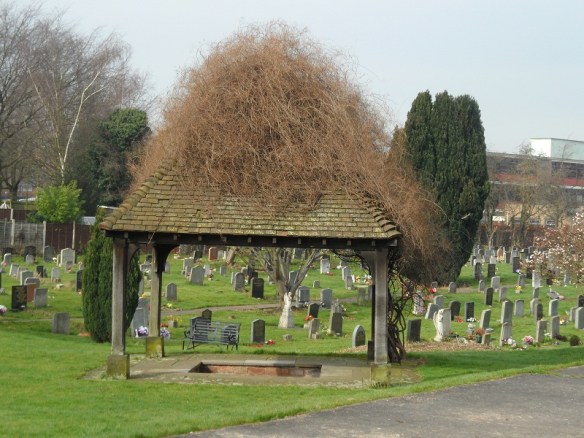
Today, St Chad’s Well looks like this.


Below is a picture of the well and church drawn by William Stukeley in 1736. As far as I know, it’s the oldest image of the well that there is.
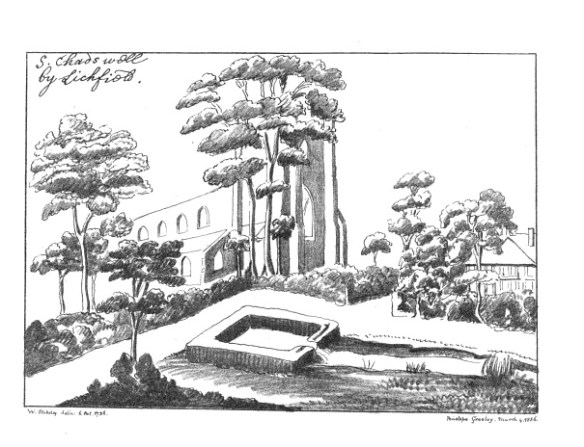
However, James Rawson reported that by 1833 the well had ‘degenerated into a most undignified puddle, more than 6 feet deep’. He seems to dispute Stukeley’s drawing, saying that there was no outlet for escape of water and the brook was not near to the well as depicted above. The well basin had become ‘filled up with mud and filth’ which Rawson believed was due to drainage in the surrounding meadows. As a result an octagonal building was erected over the well, which remained in place until 1947, when I understand that the well was actually moved to its present position and took on its current form. It would be interesting to see if there are any first hand accounts of this?

St Chad's Well, 1915. Image from Wikipedia

 
At some point it seems people may have thought the water in the well was harmful to drink. In a volume of ‘The Antiquary’, published in 1889 a Rev C F R Palmer is quoted as saying “It is popularly believed that it is dangerous to drink of the water of St. Chad’s Well, as it is sure to give a fit of the ” shakes,” Yet, in spite of the attendant’s remonstrances, I took a good draught, and, instead of ague, experienced only great refreshment in a fatiguing walk on a sultry day”. Like Rev Palmer, the lad in the photo looks like he’s about to take a good draught and doesn’t seem too concerned!

In 1806, Thomas Harwood wrote that ” The superstitious custom of adorning this well with boughs and of reading the gospel for the day at this and at other wells and pumps is yet observed in this city on Ascension Day”.  According to St Chad’s church website, the tradition of well dressing (mostly associated with our neighbours over in Derbyshire) was revived in 1995 to commemorate the 50th anniversary of Christian Aid. I think the last well dressing was in 2010 with a girl guide theme. I wonder if the custom will be revived again?

I had always assumed that the well and the spring were one and the same, but it seems that it was separate, or at least it became separate at some point. I don’t feel too bad about my ignorance though, as in 1923, the churchwarden Thomas Moseley said ‘no living person knew where the water came from’. In a book published in 1846, I’ve read that ‘The water of the well is sulphurated and near to it is a pretty iron pump giving water from a second well which is a superfine chalybeate’ and in an archaeological survey from 2006, it refers to a little brick building containing the spring. The survey was carried out as there was a proposal to build a visitors centre in the well’s vicinity. I understand that plans for the centre were abandoned in February 2008 but the survey makes for an interesting read and you can find it here.

Though plans for a visitors centre didn’t come to fruition, there is another project that will bring people to the well. On 1st April,  at 2.30pm the Bishop of Lichfield will be opening the first interpretation panel on the Two Saints Way, a pilgrimage route linking Lichfield Cathedral and St Chad’s Well with the shrine of St Werburgh at Chester Cathedral. I hope this is a success and I wish David Potts and all those involved……well!

Sources:

Some account of Croyland Abbey, read by JM Gresley by William Stukeley

A Short Account of ther City and Close of Lichfield by Thomas George Lomax, John Chappel Woodhouse and William Newling

The Gentleman’s magazine, Volume 217

www.saintchads.org.uk/sitebuildercontent/sitebuilderfiles/parishprofile2011.pdf

www.stchads.org.uk

 The Wanderings of a Pen & Pencil by F P Palmer (1846)

The Antiquary Vol 22

http://archaeologydataservice.ac.uk/catalogue/adsdata/arch-841-1/dissemination/pdf/oxfordar1-50626_1.pdf
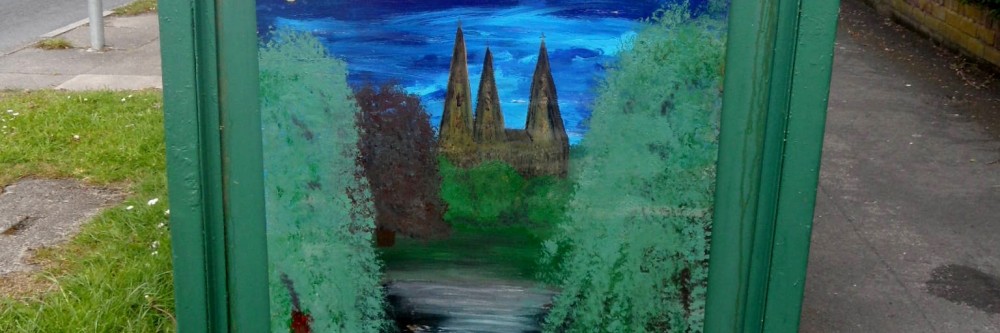


I Spy….

David Evans, who does some great work over on BrownhillsBob’s Brownhills Blog, has set a challenge! There are two photos below, and David wonders whether anyone knows where in Lichfield each of them were taken.
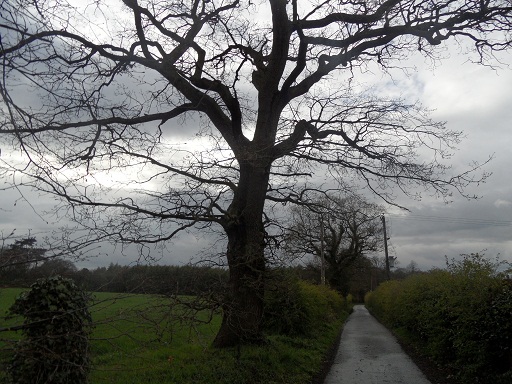
Where is this?


We have a clue for this one! 'A cut(let) above the rest, perhaps?'

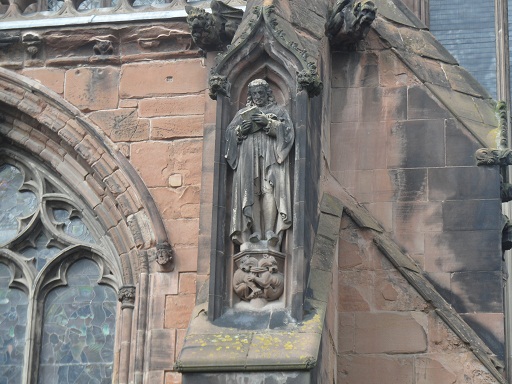
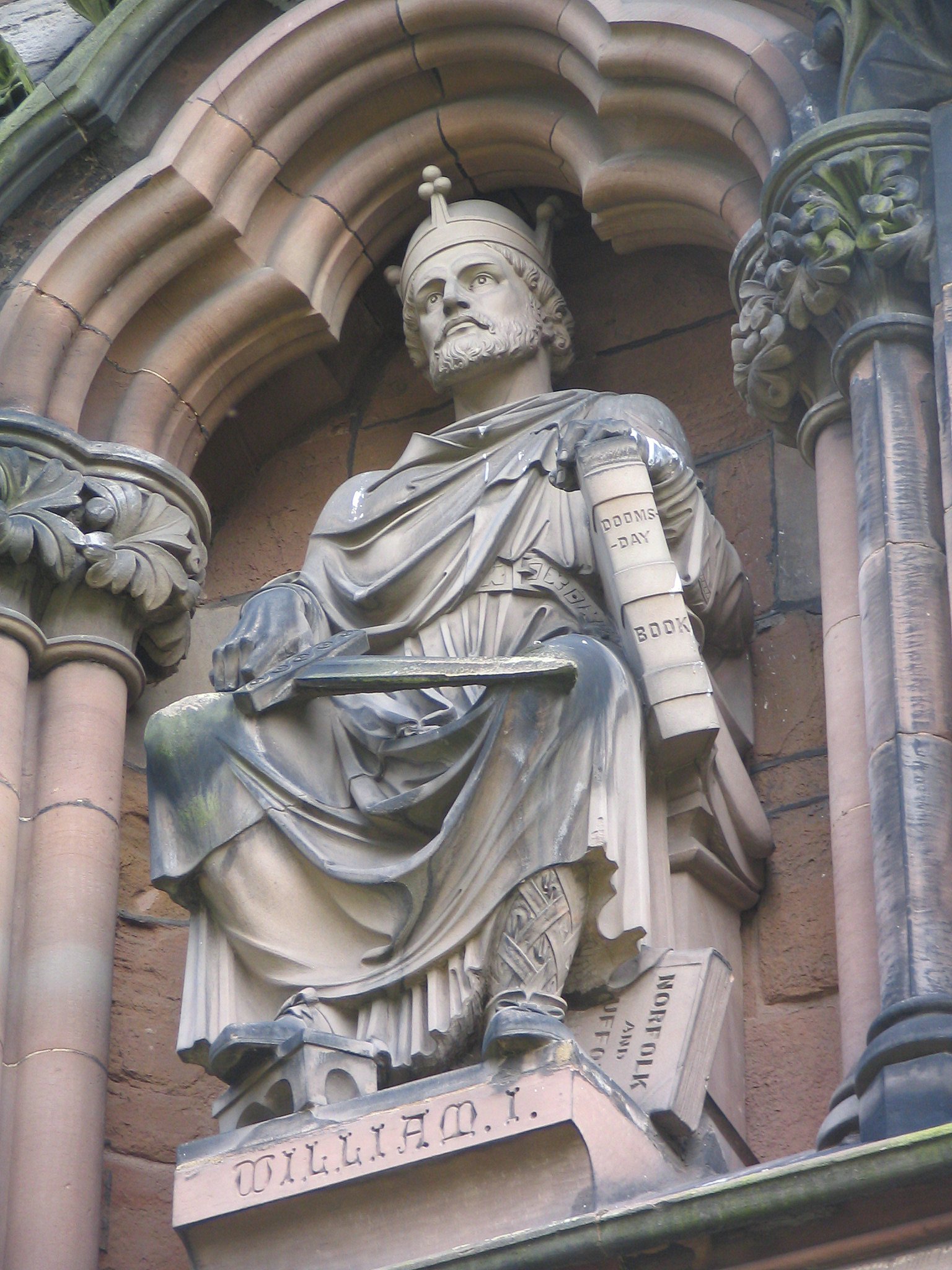
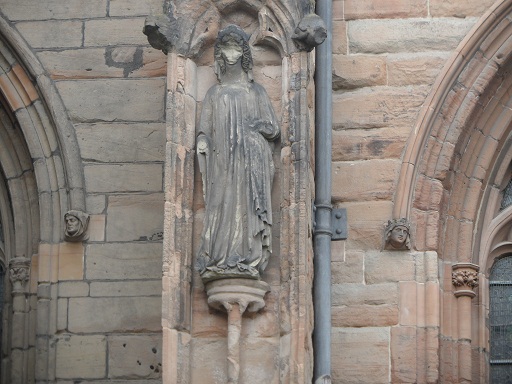
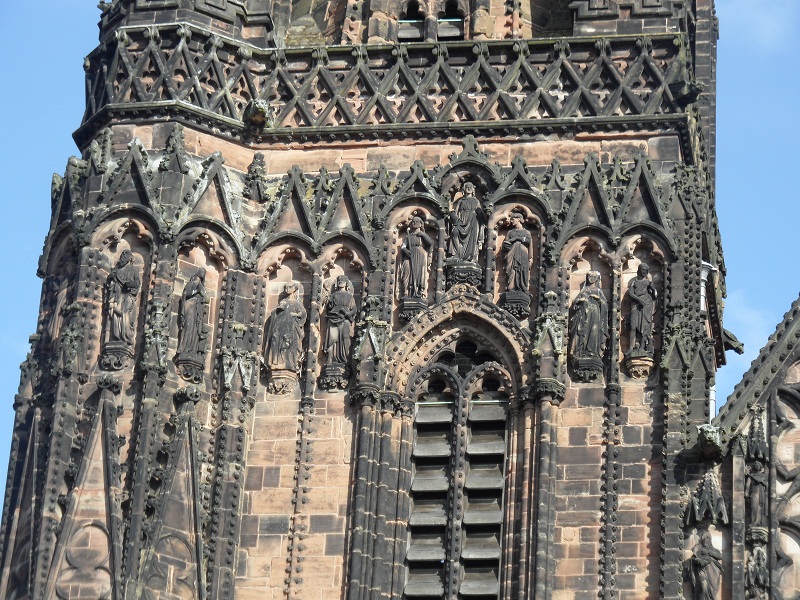
As Pat recently sent me an email about the remaining medieval statues on the Cathedral, this seems like a good subject for a third question! I’ve read that there are five original statues on the north west tower. Has anyone ever identified which they are? I think I’d hazard a guess that there are two of them on the following photo, but I’d be interested to know what others think.


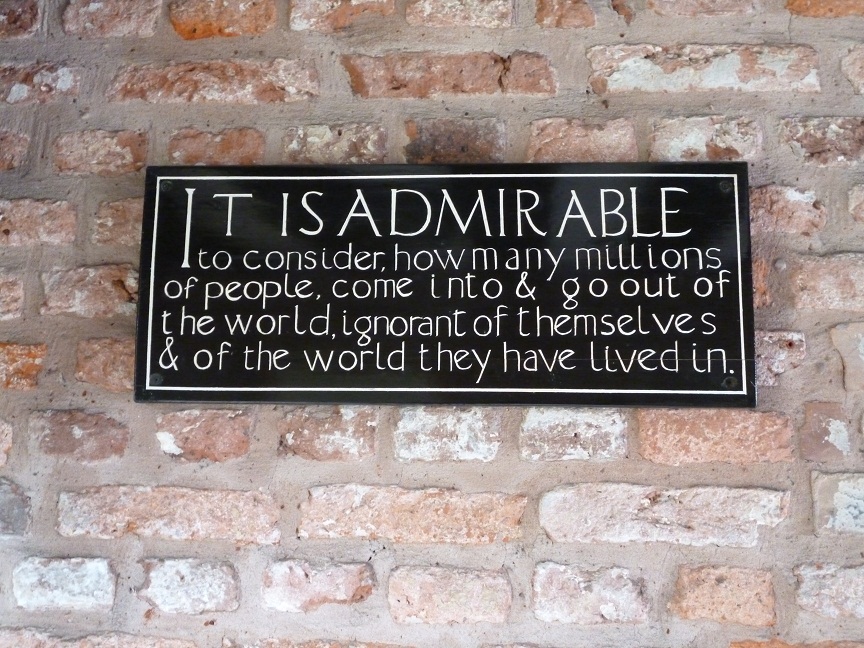
Thanks to David for contributing these photos, and encouraging us to keep our eyes open and not being one of the millions, as referred to on that sign!

Source:

Public sculpture of Staffordshire and the Black Country by George Thomas Noszlopy, Fiona Waterhouse

Tree Following: Sticking it out

To contrast with Leomansley Woods, I’m also following the newly planted cider orchard at The Walled Garden at Woodhouse Community Farm.

The majority of the orchard was planted on a cold but sunny day in January, but there were 8 more trees to be planted and so I went along last Sunday. Another sunny day, but a bit warmer this time!

There will be apples.....


.....one day.

Some buds are starting to form, but other than that, there’s not much change.  So it looks like it might be some time before we get to make any cider. Until then, sitting & chatting in the sun in the beautiful surroundings of the farm,  a cup of tea and one of Annamarie’s cakes will do just fine 🙂

By the way, The Walled Garden have their own website here where you can find out more about the farm and sign up for their community supported agriculture scheme.

Tree Following: Yellow

This week I went along to Leomansley Woods to do my first bit of tree following. It probably sounds ridiculous but choosing one tree wasn’t that easy. You can’t see the tree for the woods or something I suppose. In the end I decided on this tree, at the edge of the wood.

The surrounding debris & hazy memories of last year lead me to believe this is an Oak.

Jumbled branches


The trunk. I'll take a tape measure next time to get some clue to the tree's age?


Lichen


Is this a coaltit getting in on the act?

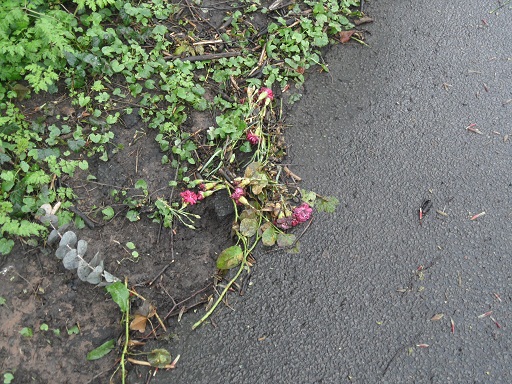
While I was there, I thought following the entrance to the woods, the woodland floor and the hedgerows running alongside the lane might be nice too.

The entrance to the woods. The path running alongside forms part of The Darwin Walk and will take you to Pipe Green

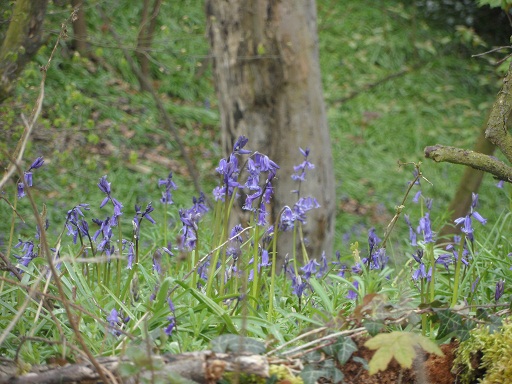
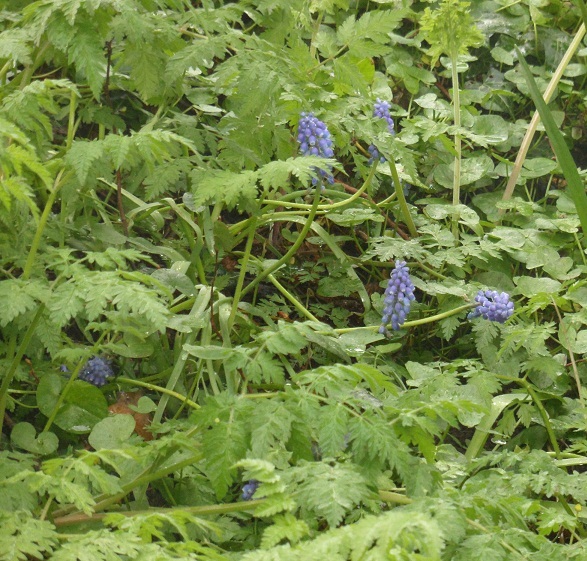
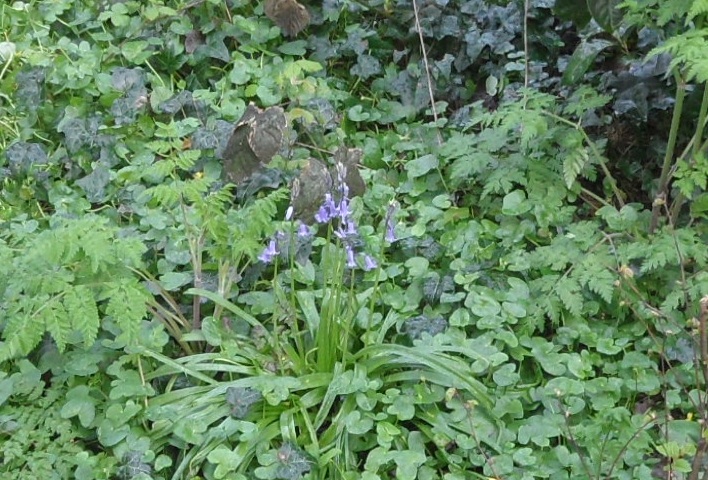
Judging by the green shoots, it won’t be long before the woods are covered in bluebells. I think though, the colour of March is going to be yellow.

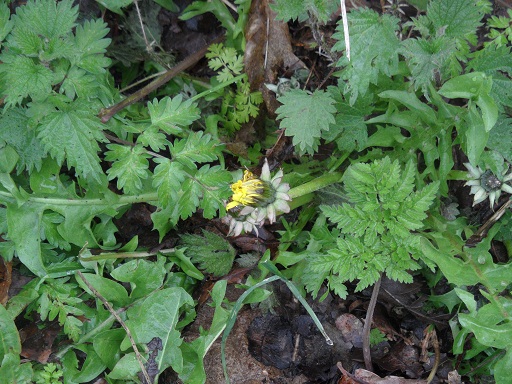
Lesser celandine?


Even I know that these are daffodils!


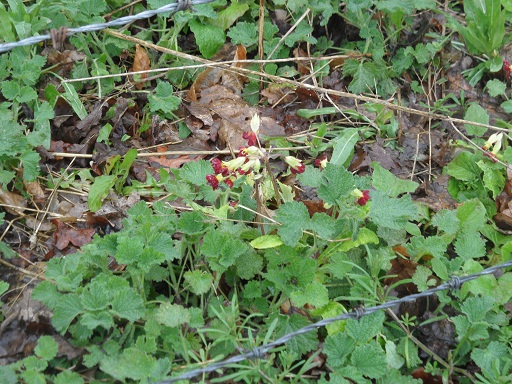
I don't know these though - they were growing in the hedgerow.

As a bit of a disclaimer (though if you read the captions above it hardly needs to be said!), I don’t know that much about trees & plants. I can’t tell my ash from my elder. One of the reasons I want to do this, is because it’ll be a good opportunity to learn more. For example, I now know what Lesser Celandine is, and that as one of the first flowers of the year, it is known as Spring Messenger. Slightly less picturesque is one of its alternative names – Pilewort.

I’ve already had some great input from a couple of people, on where to find interesting trees in our area. There could well be a ‘Tree Hunting’ spin off! So a big thanks to Roger and Pat for this – I shall be keeping my eyes open!

Also, over to the right are some links to people who actually know what they are talking about when it comes to flora and fauna, and they take some fabulous photographs to prove it! I definitely recommend taking a look!

Take a Bough

I’ve heard about a project called Tree Following via Gary Webb on Twitter, who is following a London Plane at Compton Verney. The project is being run by Lucy Corrander on her Loose and Leafy blog and the idea is to follow the life of a tree or a group of trees, returning at various points in the year to note the changes and what’s going on.

I love how trees reflect the changing seasons but also what they can tell us about our changing surroundings. For example, some like those at Beacon Park, are reminders of an old estate, when the buildings themselves are long gone.  I like the idea that each species of tree has a history, with its own uses and customs and also that there have been trees in the past which have been so important they have given their name to an area, such as the Shire Oak at Walsall Wood.

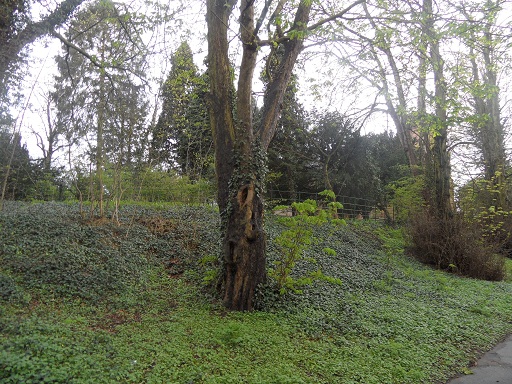
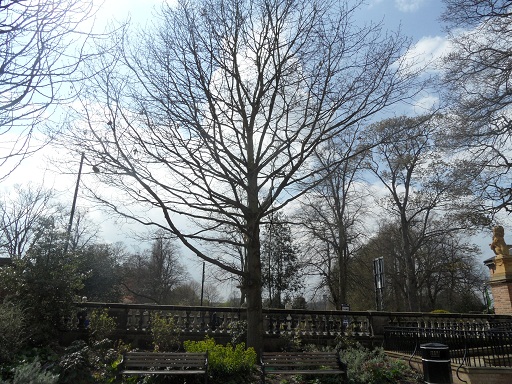
Which tree(s) should I follow though? Here are some contenders, in and around Lichfield.

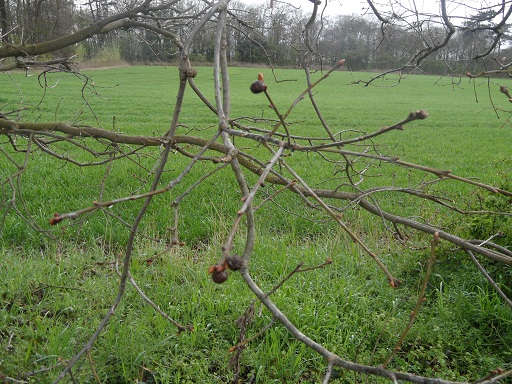
My current thoughts are that I’ll choose a tree at Leomansley Wood and also our cider orchard at Fisherwick. I hope the comparison between a mature woodland tree and an orchard sapling will be interesting. Although, as you can see from the photo, the cider trees aren’t much more than sticks at the moment, so we’ll see!

Bricks & Water

With traces of snow on the ground, but the sun shining, I headed back to Farewell last weekend.  Following my previous visit, I’d had a look at some old maps and another extremely helpful conversation with BrownhillsBob on the subject of wells. I was hopeful that this time I’d be able to find the site of the well, that gave the place its name.

This description of the well is from ‘A Tale of Fairwell’, set at the priory in 1527 and published in the early 1800s  – ‘Exactly in the centre, the sparkling tide of a large well or rather fountain leapt from a carved stone basin and hurrying hither and thither amidst rich grass floated under an arch in the wall into the pool that supplied the mill.’ Whether there is any element of truth in this description or whether it’s completely imagined, I don’t know!

All I could find is this hollow, which is marked on maps ranging from 1884 to the late 1960s, as a pond. The maps also show a well or spring to the north east marked as ‘Well’ or ‘Fare Well’.

 Just down from this old pond, is a small brook in which there are some big chunks of stone. This brings me onto the next question! What remains of the priory of St Mary, initially founded as a hermitage but shortly afterwards converted into a nunnery?

The priory was dissolved in 1527. It seems that the old nunnery chapel was retained as a church but most of it was rebuilt in 1747 in brick,  leaving only the stone chancel.

The two different parts of the church.

Pat suggested that a nearby wall might contain some of the stone from the earlier building(s).

A brick wall has been built around the church yard, and this too seems to incorporate some older stone?

A archaeological resistivity survey carried out in 1992 located areas of higher resistivity thought to relate to demolition debris from structures associated with the church. Staffordshire Record Office hold the results of the survey which ‘revealed significant archaeological remains relating to the priory, including walls of buildings and the remains of the precinct wall’. I wonder whereabouts?

Until I can get my grubby mitts on a copy of this or any other real evidence, I’ll just have to be content that Farewell is a lovely place to speculate about!

Back to Black

After finding out about the Millenium Gates at Christ Church, created by contemporary Master Blacksmith, David Tucker, at his Derbyshire forge, I was interested to see if there was any trace of the many smithys and forges Lichfield once had. Using a town plan of Lichfield from 1884 & trade directories from the late 19th and early 20th century, I came up with a list of those whose location I thought I could roughly identify.

A weathervane I spotted on my travels

The locations are: Upper St John St;  Lombard St; Bakers Lane (3 in this area according to the map!) and Beacon St.

I headed to Lombard St first but it occured to me on the way over, I wasn’t sure exactly what I was looking for anyway? There might be some sort of clue I suppose, but surely there wouldn’t be a sign saying this used to be a forge…..

Well almost! Apparently, behind this facade is a building dating back to the late 17th century. To the right of the house is the workshop in the photo below – the listed building description describes it as ‘an interesting building where further investigation might reveal other early features’.

Workshop on Lombard St.

Before getting too carried away though, on the 1884 map of Lichfield, the smithy is shown on the other side of Lombard St. So this contradiction is a bit of a puzzle…. At home I tried to find out more – on the 1881 census for Lombard St is a Mr Joseph Baxter, blacksmith and his wife Catherine. On the 1896 directory, there is a Mrs J Baxter, blacksmith, Lombard St and the 1901 census seems to confirm that Catherine Baxter, now a fifty year old widow, took over her husband’s trade and was working as a shoeing smith, at 3 Lombard St.

1884 map indicated the Lombard St smithy may have been around here?

Next stop was Bakers Lane. I wasn’t holding out any hope for anything here but in the interests of a comprehensive search I had a look. Plus I needed some milk. As suspected, on face value there doesn’t appear to be much left of anything here.

So I headed for Upper St John St, where it looks as though a smithy (possibly listed to Fred Meacham in 1900) existed either alongside or within the Lichfield Brewery. I couldn’t find anything obvious here on the street, but later at home I did find a newspaper story telling how in July 1903, Mr Meacham, a blacksmith at the City Brewery had a terrible accident being run over by a horse float, after helping in a hayfield. Although Mr Meacham sustained a serious injury, the 1911 census shows that he did return to work as a blacksmith.

Whilst looking at the newspaper archive I found this notice taken out by William Goodwin in the Friday July 11 1902 edition of the Mercury. In it, he advised ‘Nobility, Gentry, Farmers & Others’, that he had taken over the blacksmith’s shop on Beacon St, lately occupied by George Goodwin.

Is there any physical trace of the forge on Beacon St though? Well yes and no. While nothing seems to remain of the building (as far as I could see), the road next to The Feathers pub is ‘Forge Lane’ and the road off this one is ‘Smithy Lane’.

 Footnotes!

In exploring this subject and related matters, I’ve had some great discussions with and help from BrownhillsBob so a big thank you to him.

Although I couldn’t see anything at some of the locations, that’s not to say there is nothing there…..

A few doors up from Catherine Baxter on Tamworth St, in 1881, another widow, Louisa Wood is listed as a ‘Plumber & Decorator’. Ann Tricklebank on Sandford St seems to take over her husband’s trade as a tin worker. I’d not ever thought about the role of women in these traditionally male trades before, so this is something I’d like to find out more about.

Even in 2007, the idea of a female blacksmith seemed to create much excitement in a national ‘newspaper’ with talk of ‘hot stuff’ and ‘unladylike professions’ and ‘an ancient art more traditionally associated with barrel-chested macho men’.

Almost 200 years ago, there are seven blacksmiths listed in the 1818 Lichfield Directory and by 1834 there were 10 – in Market St, Birmingham Rd, Sandford St & Tamworth St, as well as some of those mentioned above.

In surrounding areas there are of course also traces of blacksmiths. For example, in Burntwood there’s a Forge Lane, an Old Forge at Fisherwick, and an old smithy in Fradley. Even further afield, you can see some photos of Staffordshire smiths on the Staffs Past Track website.  

Using the town plan for Lichfield prompted me to see if there was one for Cirencester, where in the late 19th century, my g-g-g-grandfather ran a pub. I had read a while back that it’s no longer a pub so I had a quick look at it on the town plan to see where it would have been. Funnily enough, at the rear of the pub is a smithy and in the 1901 census my g-g-g-grandfather is listed as a Blacksmith & Innkeeper. Maybe that explains why I’m interested in blacksmiths and erm, pubs 😉

Update 19.2.202

Bob has very kindly put a post on his blog about the forge, with four great old maps of Lichfield. There are some great comments and based on these it looks as though the workshop was the smithy & the 1884 town plan may have it wrong. Also, you’ll see that Roger (@ziksby on twitter) has found 34 blacksmiths on the 1881 census. 34!

Sources:

Lichfield Mercury Archives

1884 Town Plan Lichfield

Staffordshire General & Commercial Directory 1818

Whites History, Gazeteer & Directory of Staffordshire `1834

Kellys Directory of Staffordshire 1896, 1900 & 1912

Farewell Tour

From doing a bit of research on Cross in Hand Lane, I knew Farewell had been the site of Benedictine nunnery and also that the placename (sometimes spelt as ‘Fairwell’) refers to a nearby ‘fair or clear spring’. I had no idea what was left of either, the nunnery or the spring, so on the way home from Castle Ring, we stopped off for a look around.

St Bartholomew, Farewell

The most striking thing about the church is the mixture of  the two different building styles and materials. It seems the original church (which you can see here on the Staffordshire Past Track website) is thought to have contained parts of the nunnery which was dissoved in 1527.  Most of the old building was demolished & rebuilt in brick in 1745. However, the stone chancel remains. Below are a couple of photos  showing the contrast between the chancel and the rebuilt part of the church . I’m not sure but the bottom right corner of the older, stone built part of the building looks different again?

The two different parts of the church.

Have a look from a slightly different angle.

Whilst these renovations were being carried out, workman made a discovery. According to Richard Greene, in the south wall, six feet off the ground were three rows of earthen vessels. Each row contained vessels  of a different size (the smallest was 6 1/4 inches high) lying on their side, openings covered by a thin coat of plaster, facing towards to interior of the church.  All but three were broken in the process and one of them was kept at Richard Greene’s museum. You can see the picture here on the Staffs Pastrack website plus the letter written by Richard Greene to The Gentleman’s Magazine outlining the finds.

Initially, I found a couple of reference to the discovery of the Farewell Jars but no explanations or suggestions to why they were there.  Eventually, after a bit of searching, I came across a book on Church Lore (1), with a whole chapter devoted to ‘Acoustic Jars and Horses’ Skulls’ which specifically mentions the jars found at ‘Fairwell, Staffordshire’, describing how jars were used for enhancing the acoustics of a building. The idea is thought to date back to a Roman architect called Vitruvius. There are other examples of this idea throughout the country, and Europe, including St Andrews, Lyddington as below.

Acoustic jar in chancel wall, parish church of St. Andrews, Lyddington, Rutland 05/04/2009. Credit: Walwyn (taken from their Flickr photstream)

If you’re anything like me, you’ll be wondering what the ‘Horses’ Skulls’ element of the Church Lore chapter title was about. Apparently, animal skulls were also used to improve acoustics in a building and examples have been found in various places. Although this is fascinating, I’m not going to go into too much detail here as it isn’t directly related to Farewell. However, it is worth noting that there is some debate as to whether these skulls and to a lesser extent, the jars relate to something altogether different. Something along the lines of foundation sacrifices…

I’d love to know what others think about this and want to look more into this acoustic jar business. I’m also wondering where the rest of the nunnery, dedicated to St Mary, is ? I’m not saying farewell to Farewell, just yet….

Sources:
(1) Thomas Firminger Dyer Church Lore Gleanings, Chapter VII,

(2) Ralph Merryfield Folk-lore in London Archaeology Part 2, The Post Roman Period

Staffordshire Places website http://www.places.staffspasttrack.org.uk/

William Dugdale Monasticon Angelicanum

Lichfield Armour

On Wednesday, Pat sent me a link to a British Pathe film. The short film is from 1938 and shows boys and men dressed in armour for the Lichfield Bower. This on its own is fascinating stuff. However, this week it’s not only an interesting piece of footage but also a topical one!

The lead story in this week’s Mercury tells how the Bower Committee feel they have no choice but to sell off two of the four suits of armour they own (presumably some of those featured in the film?), to ensure the survival of the event.  You can read the full article here.

There’s so much more to be said on the Bower, about its history & its future and also its place in the Lichfield psyche. There is a great site for the Bower which explores some of the history behind this Lichfeldian tradition, as well as giving updates on this year’s festivities.

You can view a copy of the film by clicking here. I think the procession is travelling down Beacon St in the film, what does anyone else think? Huge thanks to Pat for his great contribution, as ever.

I don’t have any photos of the Bower Armour, but I do have a photo of a suit of armour I took somewhere else in Lichfield. Anyone else spotted this chap in ye olde city?


Edit 23/2/2012

Over on twitter, the Beacon Street Blog have spotted a story in the Lichfield Mercury, saying that the armour has been withdrawn from the sale, due to a dispute over ownership with Lichfield District Council.

The Gates of Christ Church

I often walk past the gates of Christ Church and was delighted when David Tucker, designer and creator of the gates, responded to my request for information about this wonderful part of our surroundings.

David is a Master Blacksmith based in Derbyshire and thanks to him I’ve discovered not just about this thoughtfully crafted, original ironwork we have here in Leomansley, but also something about this traditional craft in the 21st century.

Christ Church Millenium Gates by David Tucker

Here’s David’s own account of the creation of the gates:

These gates were commissioned to celebrate the Millennium and were completed and installed in the year 2000.

I am a Master Blacksmith and hand forge individually designed ironwork in response to the character and history of the setting. In this case, I was immediately struck by the lovely gothic arches and decided that I would like to reflect these strong forms in my gate. The gothic arch is synonymous with the church and I liked the idea of looking through my gates and seeing the same arches within the building.

Structure is important to me and I always try to create forms where all is not immediately apparent. I want the regular visitor to discover new facets and aspects to the design over time. The gates are made up of repeated downward-facing arcs and upward-facing gothic arches, placed on opposite sides of the gate, to re-inforce the forms and to create a three-dimensional structure. I love ‘honest’ and traditional methods of fixing and so chose to join the bars together with rivets and collars which just seem to say ‘here we are, holding these bars together’.

In the end, I designed three different options for the gate; a more traditional option, a cheaper option and this one, my own favourite and the most contemporary of the three. I was delighted when the commitee said that they would prefer an original and contemporary option, rather than pastiche. The gates were hand forged by me at my Derbyshire forge. I developed detailing such as hinges and latches etc. as I went along, so they would compliment the over-all design.


David's drawing of the gates


David does of course take commissions and it’s a pleasure to include his business card here.