Anchors Away

It’s the first day of Autumn today, meaning yesterday was the last day of Summer and it definitely went out with a bang. The storm seems to have subsided a little but the pounding rain continues its bleak fall and so I’m virtually visiting Streethay this afternoon. The village sits on the Roman Ryknild Street, just beyond the boundary of Lichfield City and, most appropriately given the weather, it’s a place with some watery links that I want to explore.

The Anchor Inn, had already been boarded up for two years when I took this photo in February 2017.

The new housing estates springing up around the outskirts of Lichfield are certainly controversial but one positive development at Streethay, is the arrival of Bod. I’m a big fan of the Titanic brewery bar and I do wonder whether this new influx of people would have kept Streethay’s previous pub ‘The Anchor’ afloat, if it had happened sooner. It was not to be however, and it closed in January 2015.

At Bod, I found a tiny mermaid swimming in a glass of porter….(with apologies to Eliza Carthy) Created by Louise from Under a Pewter Sky.

The building still survives and is now occupied by an Osteopathy Clinic and apartments but let’s go back in time to those days when it still served as an inn. It was clearly in existence by November 1848 when an inquest was held there on the body of Henry Crutchley, a fourteen year old lad who died after climbing onto an engine and slipping beneath the wheels of the wagons it was pulling, but was rebuilt around 1906, when the Lichfield Brewery Company was granted permission on the basis that ‘the house was in a most dilapidated condition and it was impossible to repair it’. I’ve yet to find a photo of its former form but I have found a reference in 1779 to a public house ‘known by the sign of the Queen’s Head’ which stood on the turnpike from Lichfield to Burton at Streethay and I’m wondering if this might be an earlier name. There are also mentions of a inn known as The Dog, around the same time and I’d like to sniff out where exactly that was.

The Anchor, when it was still afloat in 2009
Photo © David Rogers (cc-by-sa/2.0)

In the Lichfield Mercury in 1972 an advert for the Anchor appeared with a curious reference to the ‘Klondyke Bar’, inviting you to enjoy your drink, ‘in the pleasant atmosphere of the Gold Rush’. One of the new apartments built in the grounds of the Anchor has been named after this, with the estate agents’ details explaining it was named after the ‘large wooden drinking hut’. Now I was given many nicknames by my brother when we were growing up, and one of them was ‘Klondyke Kate’. Whilst I’d like to think it was based on American vaudeville actress who provided inspiration for Scrooge McDuck’s girlfriend, I suspect it was more likely a reference to the British female wrestler. The Anchor’s Klondyke however is clearly a reference to the gold in them thar Canadian hills in the 1890s and was decorated with old photos and posters and, erm, pheasants, in a bid to recreate a prospectors’ bar. Much more of a mystery is why a bar on the outskirts of Lichfield chose it as a theme. In May 1979, the new licensees Norma and George Wolley presumably asked themselves the same question and relaunched the annexe bar as ‘The Mainbrace’. The hut itself had originally been a first world war army hut and this brings us nicely to a really interesting period in the pub’s history.

During the Second World War, the pub was frequented by personnel from RAF Lichfield. Jean Smith, in an interview with Adam Purcell, described how she and fellow WAAFs would stop off for a half a pint there on the way back home to their quarters on the opposite side of the road. On winter nights, when it was announced that flights had been cancelled due to fog and rain, the women would get their gladrags on and head out to the inn. Soon, the sound of bikes being propped against the wall of the pub would be heard as the lads from the aerodrome arrived at The Anchor, and the grounded pilots would soon be filling the air with cigarette smoke and tunes from the piano. The full interview with Jean can be found here and it’s a fascinating read, which really captures what the atmosphere was like for those young people living their lives in Lichfield, surrounded by the ever present threat of death.

This post was actually intended to be a deep dive into the village as a whole but I’ve got a bit overboard with the history of the Anchor Pub and so we’ll have to return to Streethay and its moated manor and plunge pool, the brewery and the canal wharf, and the lost hamlet of Morughale another day because we’ve only just dipped our toe in…

Brewery Row, once home to workers from the Trent Valley Brewery

Sources

Birmingham Journal 25th November 1848

Lichfield Mercury 16th March 1906

https://www.onthemarket.com/details/8779282/

Lichfield Mercury 25th May 1979

Lichfield Mercury 7th April 1972

Adam Purcell, “Interview with Jean Smith,” IBCC Digital Archive, accessed September 22, 2024, https://ibccdigitalarchive.lincoln.ac.uk/omeka/collections/document/3488.

http://raf-lichfield.co.uk/Anchor%20Pub.htm

https://www.british-history.ac.uk/vch/staffs/vol14/pp273-282

The Woman in Black

I note from being nosey that another ghost walk materialises in Lichfield this evening. It’s inevitable that the streets of an ancient city known as the Field of the Dead are filled with stories of spectres and with groups of people who want to hear them.

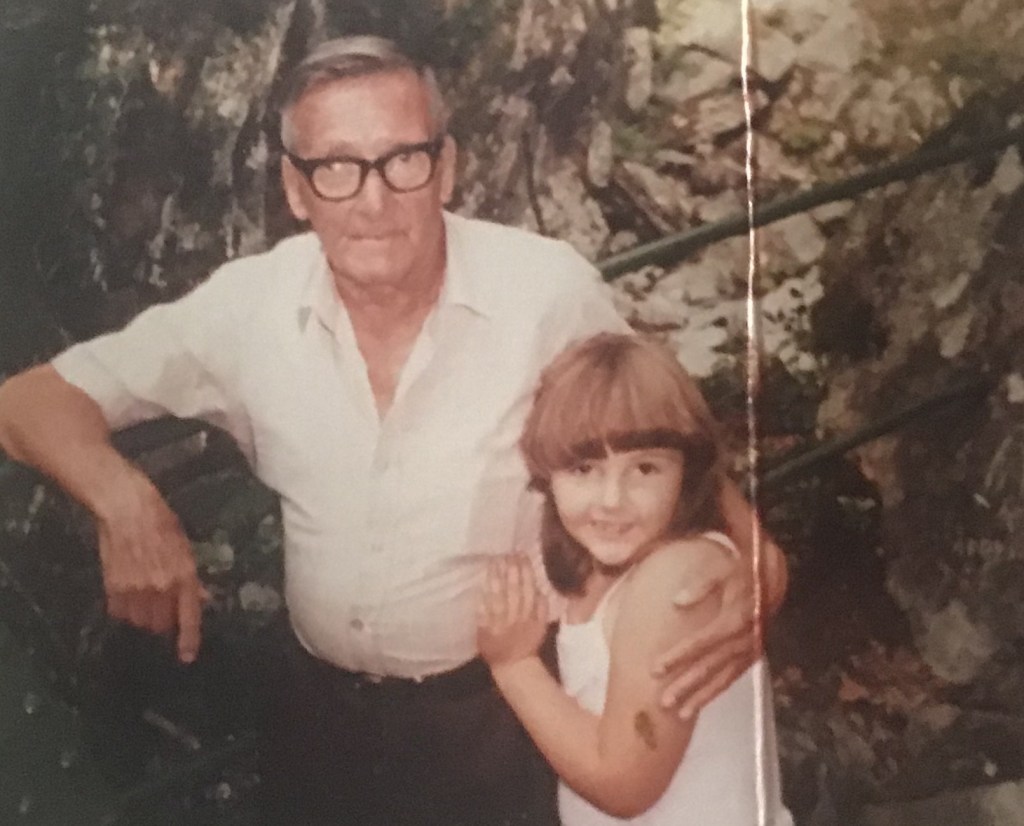
My beloved great-grandad and a young me at Devils Bridge. The really scary thing here is that fringe

I’ve been interested in the spooky side of life (or should that be death?) ever since I was a small child, and I think I can pinpoint the moment my interest was piqued by the paranormal. I remember a family holiday in Wales with my Mum reading aloud from a guidebook, telling us the tale of how the Bells of Aberdyfi still ring out from the drowned kingdom of Cantre’r Gwaelod and a visit to Devil’s Bridge in Aberystrwyth that same holiday sealed the deal. Although not with Old Nick, I hope. Forty years later, I know exactly which tales float my boat, or more aptly ghost ship, and the sceptics out there will probably explode at my next sentence. My supernatural stories need substance. There has to be something tangible in a tale that makes me believe that maybe, just maybe, it might be true…

Christ Church, Lichfield.

Much closer to home but I suspect beyond the realms of any city ghost tour, let me take you to the lanes of Leomansley and the winter of 1981. The Lichfield Mercury reported that over a period of four years, an elderly woman in black had been seen sporadically by several residents in the area surrounding Christ Church. Bill Thompson described her as five foot tall, aged around seventy, wearing spectacles and a black shawl over Victorian style clothes (what else?) and swore he’d seen her walk through his hallway wall and into the coal shed. One resident, Carol Lawrence, saw her whilst camping on the fields behind her cul-de-sac, and described her as ‘gliding towards the church’. Another haunt of hers seems to be the cottage on the edge of the church yard. Someone contacted me to say that during their time there, this mysterious lady of Leomansley was seen looking out of the cottage’s window and a friend of mine who lived there in the early 2000s experienced unexplained bangs, self-unlocking doors and the smell of recently extinguished but non-existent candles. The cottage was originally built to be the residence of the school master or mistress of Christ Church school. It later became a lodge for Beacon Place, the now demolished mansion whose grounds make up much of what is now Beacon Park, and then was home to the clerk and sexton at Christ Church for at least seventy years. Will we ever work our how the story of our woman in black fits into this local history?

The churchyard cottage

Her presence isn’t the only peculiar thing associated with the area. In the 1970s, when the houses around Christ Church were being modernised, a drainage trench was built in one of the gardens. That Friday evening, the sound of a crying child kept most of the residents awake for most of the night. When the sobs started again in the early hours of Sunday morning, Bill Thompson, a Mr Coleman and one of his sons became convinced someone had abandoned a baby and formed a search party. They scoured the gardens, the graveyard, and the grounds of Beacon Place (now the football pitches of Beacon Park) but found nothing. On Sunday night, the cries were heard again and the search resumed with the same result. On Monday, the trench was filled in and the night time noises were never heard again. Now, if I were to put on my sceptic’s cardigan, I would say the work had disturbed a den of foxes. I’ve heard their eerie screams echoing through the air on a winter’s night in Leomansley and, if I didn’t know better, I too would be convinced it was something more sinister. But, therein lies the flaw in my rational explanation. Are we to believe an entire street of residents, living in what was a rural setting back then, would not have recognised these nocturnal noises and been able to distinguish them from the cries of a distressed child?

Christ Church Gardens

I do know one thing. As summer turns to autumn and the nights draw in, when I’m walking through this part of Lichfield, I always have to wrap that sceptic’s cardigan around myself a little tighter to stop myself from shivering.

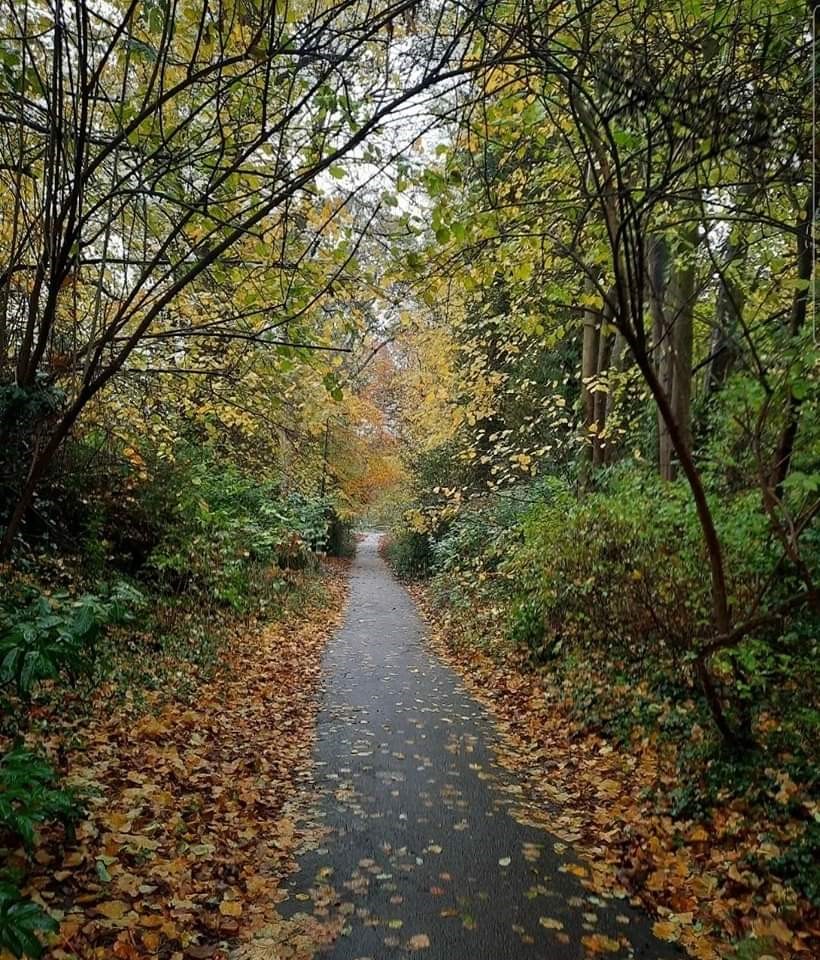
The lane leading from Leomansley to Lichfield, the original Walsall Rd

Sources

Lichfield Mercury 14th October 1881

Lichfield Mercury 28th September 1883

Lichfield Mercury 11th March 1910

Lichfield Mercury 6th January 1911

Lichfield Mercury 31st December 1981

Lichfield Mercury 24th May 1929

Battle Plans

Armed with a bag of Werther’s Originals and a vague plan about finding the site of Boudica’s final battle against the Romans, my friend (and countrywoman) and I headed down the A5 towards Atherstone.

By Boadicea by Colin Smith, CC BY-SA 2.0, https://commons.wikimedia.org/w/index.php?curid=107819273

Boudica’s burial place is one of Britain’s great mysteries. I thought for years that the warrior queen rested beneath a platform of Kings Cross Station but clearly I was on the wrong track. There is no trace of her there, or anywhere else for that matter, although plenty of places have been mooted as a possibility. Ever since Richard III was found under that car park, perhaps people are more comfortable putting forward their own research into such things. Even somewhere they flog burgers in Birmingham is apparently a contender for the final resting place of the scourge of the Roman Empire. If she genuinely is here, they really ought to consider changing the name to ‘Queen’s Norton’. Let’s be honest, it wouldn’t be the first time a significant piece of history has been linked to the foundations of a local fast food restaurant in the West Midlands. There are two Mummies beneath what was once another MaccyDs in Tamworth.

Despite several sites laying claim to being the scene of Boudica’s last battle, no archaeological evidence has turned up at any of them either. Claims have instead been based on descriptions of the battle ground from two Roman historians, Tacitus and Cassius Dio. It’s described as somewhere within a defile (a steep sided narrow gorge) with a wood behind it and open countryside in front of it, chosen to prevent ambushes from Boudica’s warriors. In 2004, archaeologist Jim Gould wrote an article in which he says the description of the site given by Tacitus is much too vague for positive identification. He believed it would never be identified on the ground, in the absence of an archaeological discovery.

One of the chief contenders is Mancetter, on the outskirts of Atherstone, or Manduessedum as it was known in Boudica’s time. If it is ever proved, then they ought to consider changing the name to ‘Womancetter’ but I think we are going to have to defile that thought away for now.

What we do have archaeological evidence of at Mancetter is a Roman fort, now occupied by the site of the church and manor house. As we stood nosing in at the gate of the latter, the gardener appeared and told us it dated back to the fourteenth century and had a priest hide and a secret tunnel leading to the church. Despite my enthusiasm for stories of this kind, experience tells me these architectural features often turn out to be a cupboard or a cellar. In this case however, it seems he may not have been leading us up the garden path. Well not entirely. According to the Atherstone News and Herald in June 1956, in what’s now known as the ‘Martyr’s Bedroom’, an escape route led to the roof via a sliding panel in, ahem, a cupboard

The manor was the home of the Protestant Glover brothers John, William and Robert. In 1555, the Bishop of Lichfield issued a warrant for their arrest but by the time the Mayor of Coventry arrived with men to carry out the orders two of the trio had escaped. Robert had been unable to flee as he was ill and was taken from his sick bed to Coventry and then to Lichfield where he dined at the Swan before being removed to a cell alongside a dungeon. I suspect this would have been the ‘church prison’, as described by Thomas Harwood which seems to have been underneath what’s now Number One, The Close, rather than the gaol at the Guildhall.

Robert Glover was burned at the stake in Coventry on 19th September 1555. His brother John eluded capture but died of an ague after living in the woods for some months. The Biishop’s Chancellor, Anthony Draycot was not about to let the whole business of him being a protestant lie though, informing the vicar that his body should be dug up and thrown over the churchyard wall. When the vicar pointed out that after six weeks the body stank and finding men willing to undertake the task would be tricky, Draycot instead ordered him to wait for 12 months and then throw the skeleton over the wall into the public highway. The third brother William also suffered post-death disgrace being refused a Christian burial in the town of Wem in Shropshire, his corpse instead being dragged by horses to a nearby field and buried there in unhallowed ground. Just in case a priest hole and secret tunnel haven’t given you your fill of folklore, you should know that Robert Glover’s ghost haunts the room from which he was taken.

Next door to the Glovers lived another Mancetter martyr, Joyce Lewis, who was burned at the stake in Lichfield on 18th December 1557. Despite a plaque in the Market Square recording this dark chapter of the city’s history I knew very little of her story until now. It seems Joyce fought to the death to defend her beliefs, asking the friends who visited her in prison how she might behave so, ‘her death might be more glorious to the name of God, comfortable to his people, and also most discomfortable unto the enemies of God’. The night before her execution she refused the offer of two priests to hear her confession and after fainting on route to the Market Square and being given a cup of water, she used it to drink to ‘the abolishment of papistry’. According to Foxe’s Book of Martyrs, ‘a great number, specially the women of that town, did drink with her; which afterward were put to open penance in the church by the cruel papists, for drinking with her’. I believe open penance would have been some sort of public punishment.

I may not have found the site of Boudica’s battleground on my journey up the A5 but it did lead me to the story of Joyce Lewis’s last stand much closer to home and how her final moments were spent surrounded by the solidarity of the women of Lichfield.

Sources:

https://ancientmonuments.uk/103961-roman-camp-mancetter

http://atherstonecivicsociety.co.uk/projectrm

https://www.archaeology.org/issues/95-1307/features/1090-boudicca-celtic-roman-empire-kings-cross

https://www.english-heritage.org.uk/visit/places/wall-roman-site/history/

https://www.patrickcomerford.com/2020_05_16_archive.html

Martyrologia, John Sundins Stamp

London Archaeologist Spring 2004, Boudica – yet again, Jim Gould

The Wizard and the Widow’s Curse

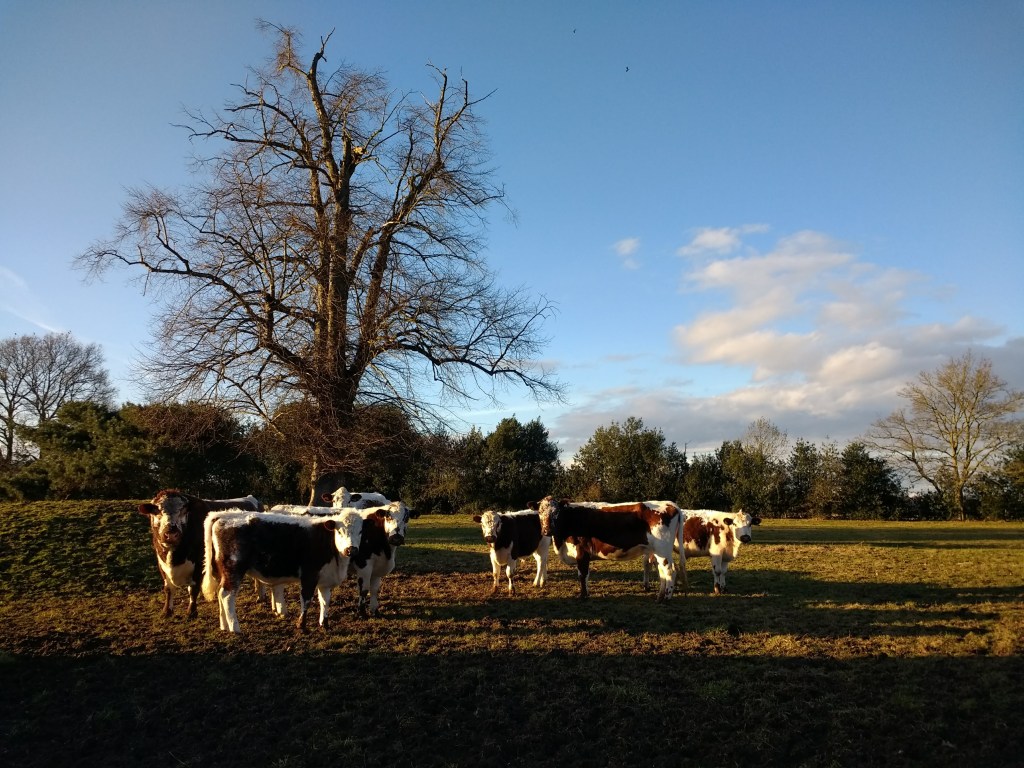
In certain magic circles, the story of the Wizard of Bromley Hurst is well-known. In the mid-nineteenth century, Thomas Charlesworth, a young dairy farmer living near Abbots Bromley, argued with his widowed mother over his choice of wife, who also happened to be his cousin. Old Mrs Charlesworth, who was probably younger than me at the time, apparently left the farm muttering he would never do any good and his cheeses would all tumble to pieces. In the months that followed, Thomas did indeed have trouble making cheese from the milk his herd produced, ‘a process which had up to that time been successfully performed’. The fact this coincided with the departure of his mother was surely not coincidence and Thomas leapt to the obvious conclusion. That his mum had been better than him at making cheese? Absolutely not. Young Farmer Charlesworth decided that his cheese-kettle and all of his cows had been cursed.

Cused cows? Pull the udder one

Local toll-gate keeper Sammons recommended he seek the help of a man named Tunnicliff who ran ‘The Royal Oak’ beerhouse four miles away at the somewhat appropriately named ‘Buttermilk Hill’. Many men and women who ran such establishments also had a side-hustle. Indeed, my own great-great grandfather ran a pub in Cirencester alongside a blacksmiths shop. Tunnicliff’s supplementary business though was black magic. The wizard agreed that the woes Thomas had recently incurred were due to the ‘Widow’s Curse’ and that he could take the spell a-whey. All he needed was a piece of Thomas’s wife’s dress and the names of all his cows. Oh and £7. His magic act is reported to have been making crosses over the doors with witch hazel twigs and waving his hands over the horses. It seems no-one at that point thought to ask exactly how bewitched horses affected the cheese-making process and Tunnicliff left the house, no doubt rubbing those same hands together at the thought of how easily he’d make his money that afternoon. So easily it seems that Tunnicliff decided to put in a nightshift.

The Charlesworths had an ‘awful night’. Outside in the yard came the sounds of loud yelling, groans and noises of various kinds. Thomas bravely asked someone else to look out to check if there were any animals under the windows but there was nothing to be seen. The following day, he went back to see a tired-looking Tunnicliff and told him about the sleepless night they’d experienced over a beer. Tunnicliff agreed to call in to see what he could do but back home at Bromley Hurst, Thomas experienced shooting pains in his chest, numbness of his limbs and shivering. Whilst these symptoms subsided around dinnertime, he decided to stay in bed an extra hour the following day. Tunnicliff turned up before he woke and took Thomas up a breakfast of ham, bread and coffee. Within half an hour, he was stricken with symptoms similar to those he’d suffered the previous day. Tunnicliff announced he was appointing himself the couple’s defender against the dark arts and would be sleeping in their room. Now comfortably settled in the Charlesworth’s home, he really decided to go big.

To explain Thomas’ ongoing suffering, Tunnicliff ‘revealed’ he was engaged in a battle with ‘Old Bull’ aka the wizard of Yeaverly place, and claimed that ‘a fresh secret has been communicated to me by the power which I possess, and I now tell you that everything you possess is bewitched. You will have to give me further sums of money to remove this betwitchment’. As well as carrying out his wizarding work, Tunnicliff was also taken on as a servant. Shortly after Elizabeth, their baby girl and her nursemaid all began experiencing the same symptoms as Thomas and tragically, it’s reported that the infant died of convulsions in the Autumn of 1856.

Things came to a climax on 11th February the following year, a night during which servants witnessed the family dog run through the house chased by a phantom hound, seemingly made of fire and Thomas Charlesworth was so seriously ill he lost conciousness and was believed to be close to death. Whether it was the terrified servants’ ultimatum that if Tunnicliff stayed they’d leave, or Elizabeth Charlesworth’s discovery that his all expenses paid trip to Derby to battle yet another wizard was entirely fictitious, the penny finally seemed to drop that Tunnicliff was more of a conman than a conjurer and was milking them dry. He was dismissed on the 17th February 1857 and when Thomas was miraculously cured of his supposedly supernatural symptoms shortly afterwards, he reported Tunnicliff to the authorities.

In a trial at Stafford, Tunnicliff’s defence was that Charlesworth was a drunk, as was his father before him. The case for the prosecution however was that the Charlesworths had been poisoned with white bryony root, also known as ‘the Devil’s Turnip’, found at Tunnicliff’s house. In the end, the judge ruled that the Wicked Wizard of the East (Staffordshire) was guilty of obtaining money on false pretences and he was sentenced to 12 months imprisonment with hard labour. Reading over the details of the case, I find it hard to believe he was found guilty only of deception and not of the murder of baby Elizabeth and attempted murder of her parents.

The Coach and Horses, Abbots Bromley

As if this story isn’t already strange enough there is just one more thing to throw into the mix of this heady potion. During the trial, Thomas told how Tunnicliff had been to Rake End to see his uncle/father-in-law William Charlesworth, to caution him to be careful or else come to harm. On 23rd May 1857, William Charlesworth’s body was found on the turnpike road to Lichfield. An inquest was held at the Coach and Horses, the last place he’d been seen alive, leading to the arrest of two men for his murder. Charles Brown was transported to Western Australia but George Jackson was hanged at Stafford. Dreadful is the mysterious power of fate.

Sources

Uttoxeter New Era 13 October 1875

https://trove.nla.gov.au/newspaper/article/273146076

Derbyshire Advertiser and Journal 7.11.1857

Staffordshire Advertiser 7th March 1857

Staffordshire Advertiser 15 August 1857

The Banshee at Weeford Rectory

In June 1863, Alice and Emmeline, daughters of the Rev Robert Cowpland were woken from their sleep at Weeford Rectory by an unearthly wailing. The only other member of the household to have been stirred by the sound was the family bulldog, who was found trembling with terror in a pile of wood. By the end of the month, their mother Jane was dead at the age of 57.

Many years passed, and then at around midnight on a still and calm August night in 1879, the sisters were again woken by, ‘ a terrible sound of shrieking or wailing, unlike anything which we have ever heard, except on the other occasion here mentioned, but louder’. The noise seemed to come from the passage leading past the door to their father’s bedroom, and so the sisters leapt from bed, lit candles and rushed from the room without even pausing to put on dressing gowns. Outside on the landing, they met their brother, the groom, the cook and the housemaid, all who had been woken by the supernatural sounds. Even the dogs in the house were said to be bristling with fear at the nocturnal noise which was later described by Alice Cowpland as being seemingly borne by a wind inside the house and amongst the rafters, an awful howling which seemed to rush past her, accompanied by a strong wind, although everything outdoors was perfectly still. As whatever it was left via a window, silence returned to the house save for the sobs of the cook. She knew what had just been amongst them and that it was a warning that her master’s days were now numbered.

Only the Rev Cowpland remained asleep throughout the banshee’s visit and confirmed at breakfast the following morning that he’d not heard a thing. As the cook had feared however, the wailing had been a warning and a fortnight later, on 9th September 1879, he died at the age of 75. It is somewhat ironic given the events of that evening, that the Lichfield Mercury describes him as having quietly passed away.

The church at Weeford where the Rev Cowpland is buried

By the middle of May 1885, Alice was married and living at The Firs in Bromyard. Her sister Emmeline was staying with her, and her brother Francis was at Upper House, Bishop’s Frome, around five miles away. Once again the two sisters, along with a woman called Emily Corbett and other servants, heard the wailing one night, though not as loud as it had been at Weeford and by the end of the month, Francis was dead.

At the end of August that year, the banshee returned again to The Firs. This time around, Alice not only heard the harbinger of death but she also saw one. On 1st September, she noticed a black dress in her bedroom, which rose up and took the form of a figure. It looked straight at her for a few seconds and she saw it was her sister Annie, her face pale and with a look of anguish. She was wearing a bonnet and a veil and the vision was so clear, she could see the freckles on her sister’s nose. The figure did not disappear instantly, but seemed to fade away. The same evening, a niece staying at the house also saw an apparition of Annie Cowpland. In her written account of those strange events, she says she was taking a bath when something compelled her to look towards a couch near the bed, where she noticed a figure dressed in black crepe. She immediately recognised it as her aunt and asked how it was that she was there. The figure then faded again. The following night at dinner, a message arrived at the house to say Annie Cowpland was dangerously ill. She died of diptheria two days later.

According to Alice, her mother Jane had sometimes experienced supernatural visits from those who were about to pass. In 1857, she saw her brother-in-law, the Rev William Cowpland, rector of Acton Beauchamp in Worcestershire, in her bedroom. She asked when he had arrived but received no response and the following day, a telegram arrived to say he had been found dead in his bed at the age of 55. Three years later, Jane heard footsteps in the hall of the Rectory at Weeford and saw William Dunn, a gardener at the house of a relative. It later transpired that he had died around the same time as his apparition had been seen, and shortly before his passing had expressed a wish to see Mrs Cowpland. In a way the strangest apparition of all occurred in 1862, when Mrs Cowpland saw an acquaintance of hers, known as Mrs F, at the foot of her bed. Again the appearance coincided with the time of death but as the two women weren’t close, Jane Cowpland always wondered why she had been the recipient of the woman’s final visit.

Alice passed away in 1915 and it would be fascinating to know if anything was heard from the banshee on the occasion of her death and indeed why it appears to have attached itself to them in the first place. It’s a subject that fascinates me given that I have my own family chronicles of deaths foretold, albeit in more hushed tones than the wails of the Cowplands’ banshee.

Sources

Proceedings of the Society for Psychic Research

The Séance at Fole Mill

As you will see on the signs heralding your crossover onto Staffordshire soil, it is officially known as the Creative County. I would say a more appropriate description is the Creepy County. Admittedly, its sinister side does reveal itself in a more subtle way than that of other counties perhaps (although we do now have a Ghost Museum in Stoke and Cannock Chase is, well, Cannock Chase). Many of its most intriguing stories take a bit of digging and on these dark winter nights, I like nothing more than taking a metaphorical spade to the archives to see what unearthly tales I can uncover. There are those who mock my endeavours and are all too quick to point out that ghosts and monsters don’t exist. Perhaps not, but tales about them certainly do and I believe it’s impossible to get a sense of a place without its stories.

Very derelict and there definitely wasn’t anybody there

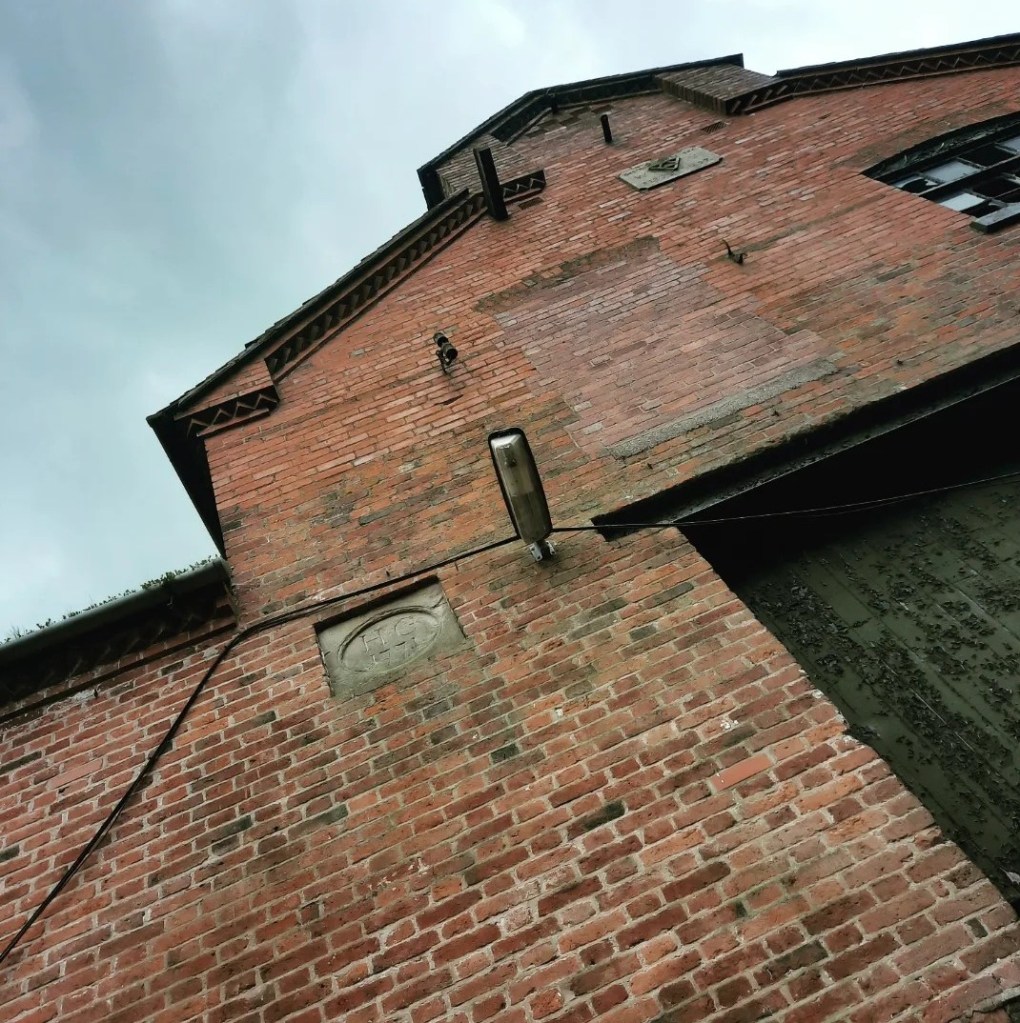
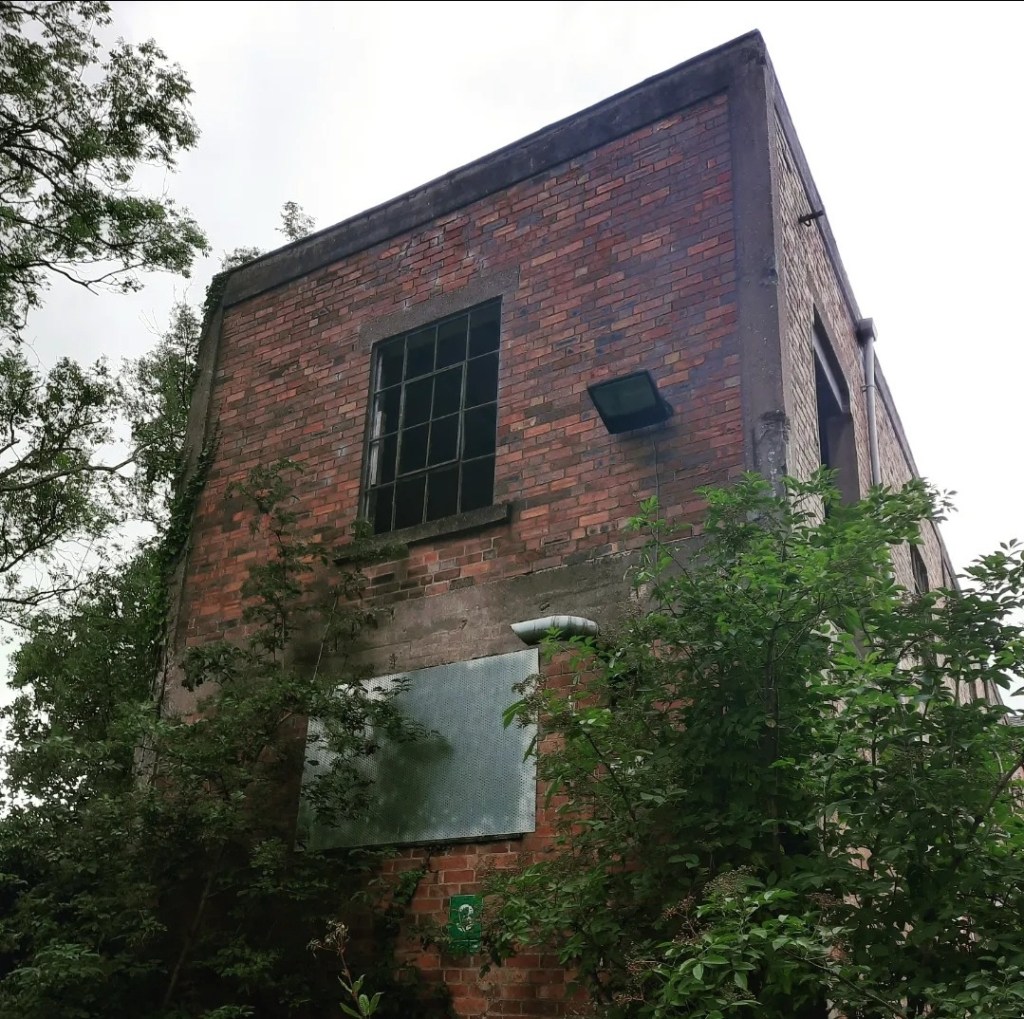
There is nothing more satisfying to me than an unexpected tale of the unexpected, leaping out from the landscape and that is what happened as I was driving home from Deadman’s Green in Uttoxeter recently. Ironically, my story doesn’t relate to the necro-named place, as one might imagine but to a nearby derelict mill turned dairy I spotted down a country lane. Too much of a scaredy Kate for urban exploring but always attracted by a bit of rural decay, I pulled over to have a nose from a safe distance. There were two stone plaques embedded into the red brick, which piqued my interest immediately. One read ‘H C 1771’ and the other ‘Destroyed by Fire WV Rebuilt 1897’. However, even I, as someone who is always writing about weird stuff, wasn’t prepared for what I found out.

I’ve just realised that I’m trying to build up the suspense when I’ve already given part of the game away in the title so I’ll fast forward to the story, taking us back in time to Victorian Staffordshire.

When staying with the Vernon family at Fole, sceptic turned spiritualist Dr George Sexton was enjoying a varied and lengthy conversation with his hosts, which lasted well into the early hours of the morning. Inevitably, the talk turned to Spiritualism and specifically, a séance which members of the household had taken part in at Fole Mill on the night of 17th November 1872. The medium was a young man named Manley, an assistant at the mill owned by the Vernons, and another recent convert to Spiritualism. As the participants (William Vernon, Jane Cooper, AC Manley, Thomas Atkins and E A Vernon) gathered around the table, Manley soon claimed he was in contact with a spirit, who spoke as follows,

“This is a very funny country. My name I will tell you. I am an old miller. I like a drop of beer when here. I was killed in a mill; I was doubled up, twisted round the shaft; it was something awful. My name is S_____ C______, and the name of the place Coddington Mill, Cheshire”.

Those present hadn’t heard of Coddington, never mind its mill, and signed a declaration to this effect. The following day however, they found details of it in a directory and so Mr Vernon decided to write a letter to ‘the Proprietor’.

“Dear Sir,

Would you oblige me whether a miller used to work at your mill by the name of S_____ C_______, and if killed in the mill and how, and kindly oblige me with the date of his death?”

On 29th November 1872, Albert Lowe of Coddington Mill replied,

“Dear Sir

S______ C______ was killed at Coddington, on September 6th 1860 in the fifty-third year of his age, and was buried in Coddington Churchyard. He was killed whilst in the act of putting a strap on a pulley to drive a grindstone, his coat having got entangle between the pulley and strap.

Your truly, Albert Lowe

I’ve checked back in the newspaper archive and there was indeed a fatal accident at Coddington involving the man named, on the date given and I am absolutely convinced there is more to this mill’s tale than meets the eye. Why did the Vernon family hold a seance there in the first place, unless it was just wealthy Victorians indulging in the ultimate parlour game? Were they motivated by something more than a mere desire to be entertained on a dark winter’s night in the Staffordshire countryside? After all, they didn’t have an excellent blog written by a woman from Lichfield to amuse them. Or a Channel Five documentary on Britain’s Favourite Cheese at Christmas (starts at 6.05pm folks). If we assume that young Manley was making it all up, how did he come by the information about the accident?

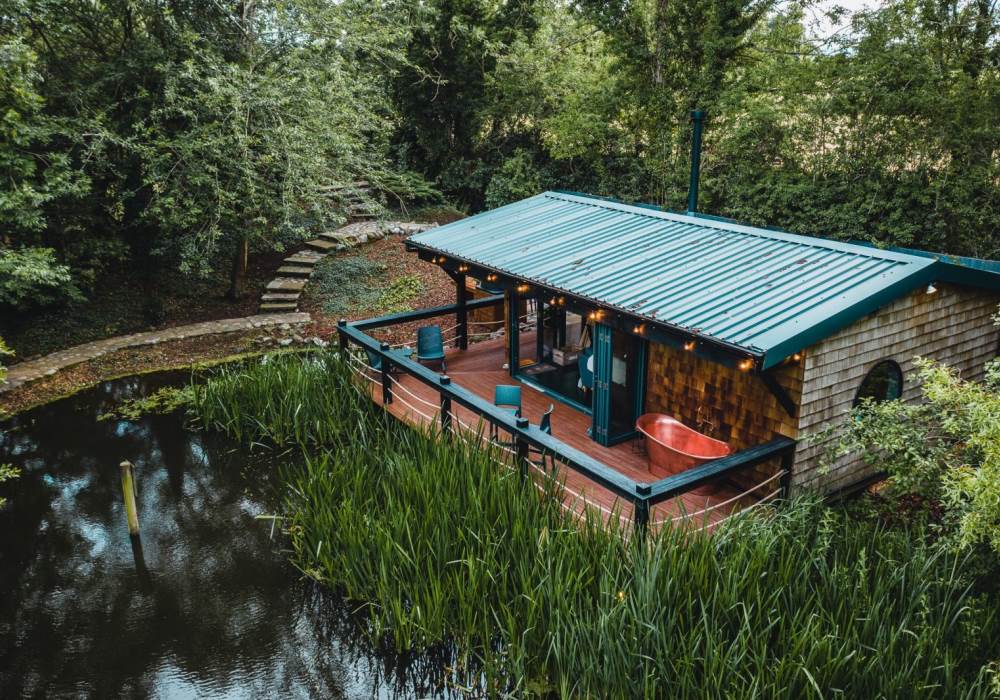
Even I, here on Team Believer, concede it highly unlikely that the spirit of the poor chap from Cheshire chose to make a fifty mile trip down the A500 to have a chat with a group of Staffordshire strangers twelve years after his death. Anyway, if I was him, I’d have stayed at Coddington Mill. It looks absolutely heavenly. If anyone wants to hire me to come and carry out a paranormal investigation there, just let me know…

Image (C) The Lakehouse at Coddington Mill

Sources

Wrexham and Denbighshire Weekly Advertiser September 8 1860

The Spiritualist, May 8th 1874

The Haunting

To the best of my knowledge, the following is based on a true account of unexplained events at rectory in Staffordshire in the 1930s, as recorded by Harry Price in his book ‘Poltergeist over England’. I have chosen not to reveal the exact location of the rectory in my post, nor the full names of those involved, as the current inhabitants might not consider finding out their house might be haunted to be a Halloween treat.

The new vicar and his family arrived in the village in March 1934 and soon settled into the house. Nothing out of the ordinary occurred until September that year when a young nephew came to stay. One evening, the boy felt unwell and so bedroom doors were left open, in case he needed assistance during the night . At around 4am in the morning Mrs H, the vicar’s wife, heard the sound of someone in bedroom slippers walking along the landing. Naturally assuming it to be her nephew, she sat up in bed and waited for him to come into the room. Nobody appeared, yet the sound of the footsteps continued. As they approached the bed, the air in the room turned icily cold. Convinced she was ‘up against something she had never experienced before’, Mrs H closed her eyes and reached for a small crucifix she had nearby. As she lay clutching the cross, she sensed somebody or something lean over her and her husband and heard it sigh deeply, before she felt the presence fade away. Mrs H believed it to be a small man in trouble but that he had gone out happier than he had come in.

Nothing else of note happened until the following September, when Mrs H was awakened by three loud raps and the sound of approaching footsteps once more. The vicar recalled her trembling with fear as she woke him.

The following September the family were on holiday and so if any paranormal activity did take place, it went unwitnessed by anyone. The following year was 1937 and on 12th September, the Rev H had his first first-hand experience, in the form of three loud thumps on the bedroom door at around 6.30am. A further strange occurrence took place around this time one evening when the couple were getting undressed for bed. The vicar had forgotten something and went to fetch it from another room, taking the candle with him. When he returned, he found his wife terrified, as the petticoat she was taking off had burst into flames as she pulled it over her head.  

On 17th September 1938 the vicar’s wife woke and heard two loud raps, presumably having been woken by the first. She woke her husband and announced ‘It has come’. Perhaps understandably, in April 1939, the vicar and his family moved to a parish in Northamptonshire. Whether his successors experienced anything paranormal in any of the subsequent Septembers is unknown.

The story as it stands is strange enough but there is a twist in the tale to tell you. The vicar had appealed to Price for any suggestion as to what might be causing the seemingly supernatural phenomenon as he was unable to find , ‘any local event of the past which occurred in September, and which would be likely account for it’. He wondered if it was related to the removal of the base of an ancient cross from the Rectory garden back into the church yard or the loan of a chalice and patten, dug up in the parish in 1823, to the Victoria and Albert Museum. I however have found something. In 1847, a local newspaper reported that the two young sons of the village’s then vicar were travelling in a cart when the horse pulling it took fright and bolted. The wagon overturned and the wheels passed over the elder of the two boys, leaving him with such catastrophic internal injuries that he died in his bedroom at the Rectory a few days later. And the month these tragic events took place in?

September.

With huge thanks to https://x.com/BUZZZZZZZZZZZZ

Bringing up the Bodies

Our city churchyards are full of those Lichfeldians who have left us. There are gaol keepers and executed prisoners, civil war soldiers and WW2 airmen, paupers and presumably, somewhere, plague victims (although that’s a whole other line of enquiry). Yet there are also others, denied the right to a Christian burial, laid to rest in unhallowed ground.

I’ve written before about Bessy Banks and the tragic tale of Lichfield’s ‘love-desperate maid’. The story seems to have been well known in the 17th and 18th centuries, being written about by both Anna Seward and David Garrick, and the place name ‘Bessy Banks’ Grave’ survived until the start of the 20th century, when the supposedly haunted spot was built on as the area around Dimbles Lane, once a ‘sunken road leading north from Lichfield’, was developed. Ironically, given that Bessy appears to have been denied a Christian burial and instead interred at a crossroads for taking her own life, her grave now seems to lie within the grounds of a Catholic church. Unfortunately, there are no records of any remains being uncovered on the site when St Peter and St Paul was built which may have answered at least some questions about Bessy and her story.

1815 Map of Lichfield showing Bessy Banks Grave

At other Lichfield locations, we have the opposite problem – skeletons without a story. In 1862, workmen digging the foundations of a building at the warehouse of the Griffiths Brewery on St John Street, adjoining the South Staffordshire Railway, found the bones of ‘a full-grown person’, which ‘had been there for many years’, about four feet from the surface. As the newspaper reports that only the head and arms were removed, I can only conclude that the remainder of the remains remain there.

A burial place at the old brewery

Then, in February 1967, a skeleton believed to be around four hundred years old, turned up four feet down from the existing ground level during excavations at the new shopping precinct at Castle Dyke. Most of the bones were crumbled but the teeth were in a good condition. So good in fact that the site foreman said, ‘I would have been pleased to own them’. What became of the body and its nice set of gnashers is unknown.

Could either body belong to a man named Gratrex, found hanging in Lichfield on Wednesday 7th September 1763 and buried in the highway after the Coroner’s Inquest issued a verdict of ‘felo de se’? If not, it seems there maybe another skeleton lying somewhere beneath the streets of Lichfield still to be unearthed.

Sources

Lichfield Mercury 2/2/1967

Burton Chronicle 18/9/1862

Aris’s Birmingham Gazette 12/9/1763

Queen of the Stone Age

One of the highlights of this weekend’s coronation, appearances from Floella Benjamin and the Grim Reaper through the arched door aside, was The Coronation Chair. It is possibly the most famous piece of furniture in existence, rivalled only by Lichfield’s Victoria Hospital Chair now in the Samuel Johnson Minor Injuries Unit. Royalist or not, there is something rather thrilling about a graffiti and bomb scarred throne on which the behinds of thirty eight kings and queens, and the rump of Oliver Cromwell, have sat.

A big chair for the NHS. Hip hip hooray!

Even more ancient than the chair is is the ‘Stone of Destiny’ it was built to incorporate. The sandstone block, used for centuries as the crowning seat of Scottish kings, was stolen by Edward I in 1296 and only officially returned to the people of Scotland seven hundred years later. Many myths, legends and rumours surround the stone’s origin and its authenticity but today there’s another mysterious coronation seat somewhere in Staffordshire that I want to investigate.

Are you sitting comfortably? Then we’ll begin.

In September 1959, the Western Mail carried a story about a seat-shaped stone, located in the grounds of Blithfield Hall, Staffordshire. Visitors to the hall were told it was the ‘Welsh Coronation Stone’, which caused a great deal of confusion in Cardiff as nobody knew whether a Welsh Coronation Stone was actually a thing or not. An official at the Welsh Folk Museum was also non-committal given, ‘It is one thing to have a Stone and another thing to have a stone around which a story or tradition may have arisen’. It seems there was also reticence to discuss such monumental matters here in Staffordshire for fear of the stone being returned to its rightful home. All that could be established was that the family heirloom/national treasure had arrived at Blithfield in the 1920s.

Dancing kings aka the Abbots Bromley Horn Dancers on the lawn on Blithfield Hall

Ten years on, around the time of Charles’ investiture as Prince of Wales in the Summer of 69, another reference to the stone appeared in the Rugeley Times. The then headmaster of Hill Ridware School is pictured in the hall’s inner courtyard looking at what the newspaper describes as ‘the Welsh equivalent of the Scottish Stone of Scone’ and ‘the seat on which early Welsh kings were crowned’. It says it came from the Bagot’s estate near Ruthin called ‘Pool Park’ and a virtual visit there via the Ruthin Local History Society reveals that a ceremonial ‘coronation stone’ dating to the 5th or 6th century is mentioned in the estate’s 1928 sales catalogue, which fits in with the date of the Blithfield stone’s arrival in Staffordshire. The society give the Welsh name of the stone as ‘Cadair y Frenhines’ (The Queen’s Throne) and says it was brought down from ‘Llys y Frenhines’ (The Queen’s Court) in the early 19th century, along with another ancient monument with Ogham and Latin inscriptions (1). The latter was moved to the museum in Cardiff in 1936 and replaced by a replica at its unoriginal location at Pool Park but according to the history society, the whereabouts of the Queen’s Throne is now ‘unknown’.

Claim of thrones

I’m certain that this missing stone is the one described as being at Blithfield but so many questions remain. Fifty plus years later, is the monument even still at the hall? Was it ever really used to crown queens, or indeed kings, or did it gain this reputation through Georgian whimsy and the fact it looks a bit like a chair? Hopefully if the royal chair is still to be found in the courtyard at Blithfield, the true backside story of The Queen’s Throne might finally be revealed.

Sources
https://www.scone-palace.co.uk/stone-of-scone

https://www.historicenvironment.scot/archives-and-research/archives-and-collections/properties-in-care-collections/object/the-stone-of-destiny-13th-century-medieval-edinburgh-castle-6132

https://www.megalithic.co.uk/article.php?sid=49523

https://www.ruthinhistoryhanesrhuthun.org/pool-park

An Inventory of the Ancient Monuments in Wales and Monmouthshire Volume 4

https://www.mythslegendsodditiesnorth-east-wales.co.uk/pool-park-ogham-stone

(1) In defence of Bagot, the chair was rescued from one of his tenants who had been using it as a horse block. Sadly, its said that the tenant simply went and fetched another ‘old stone’ in its place.

Lady Godiva’s Rooms

Lady Godiva was one of my childhood heroes along with Gladys from Hi-di-Hi and Hazel McWitch from Rentaghost. If I hadn’t already given my age away by referencing a Simply Red song I certainly have now.

Imagine my joy then when I discovered that my OG Lady G (see, I’m still down with the kids) is practically a neighbour of mine, separated by just six miles and 950 or so years. Well, in the summer at least. Her association with Coventry, where she rode naked through the streets to persuade her husband Earl Leofric to reduce the burden of taxation on the townspeople is well documented in art, literature and, as previously mentioned, an absolute banger from Mick Hucknall. Far less well known is the fact that the Saxon power couple had a holiday home in Staffordshire.

Godiva’s Cross. The fire pit may also have been used by Godiva and Leofric but this is not recorded anywhere.

Leofric died at his Kings Bromley estate in 1057 and was buried at St Mary’s Priory and Cathedral in Coventry. Where was the Lady laid to rest though?. According to the chronicler William of Malmesbury, Godiva was buried alongside her husband after her death ten years later but the Chronicle of Evesham Abbey claims she was laid to rest in, perhaps unsurprisingly, Evesham Abbey. Until any hard evidence turns up to the contrary I think we can also entertain the local legend that she is buried beneath the eponymous churchyard cross at All Saints, Kings Bromley. Samuel Lewis makes the claim in his 1848 book, ‘A Topographical Dictionary of England’ that,  ‘Leofric, the husband of the famous Lady Godiva, died here in 1057; and she was herself buried here’ and in Pigot’s Directory of 1842 it says, ‘The church, dedicated to All Saints, is a neat structure and contains the remains of Lady Godiva’.

Godiva and Leofric’s holiday home

Along with the question of what happened to Godiva after she died, the location of where she and Leofric lived is also a subject for speculation. A half timbered and thatched building in the village known as ‘The Bungalow’ was used as a tearooms in in the early 20th century. A brass tablet on one of its beams made the bold claim that the timber had been take from Godiva and Leofric’s residence which had stood previously on the site. In 1923, a spark from a Staffordshire County Council steamroller set fire to the thatch and the building went up in flames. Until very recently I had assumed this meant that any possible links to Lady G had been lost but someone on Facebook posted a photo of both the beam and the plaque pronouncing it to be part of the palace.

Yes the word reputed may be doing a lot of heavy lifting here but I do believe that there is often a grain of truth at the core of most local legends
(c) David Brown

Is this just another myth to add to the legends surrounding one of history’s most compelling characters or could there really be a tangible link to her life in someone’s living room in Staffordshire?

Sources:

Rugeley Times 13th March 1976

Lichfield Mercury 3rd July 1903

Tamworth Herald 30th June 1923

Birmingham Gazette 26 June 1923