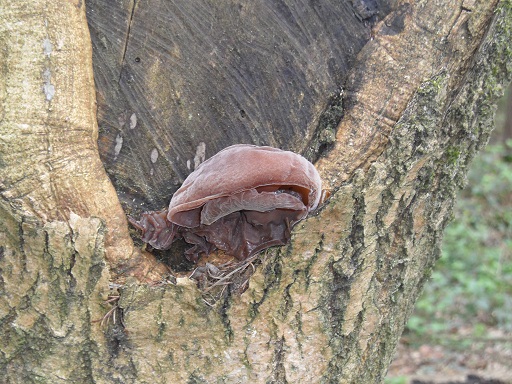
Tree following: Mayday

It took a bit of effort to drag myself out into the murky, wet evening. Glad I made the effort though. Before I’d even got to the woods, I had a treat when a heron swooped down onto a roof and remained there for a few moments before flying off in the direction of Waitrose. I’ve spotted a heron a couple of times near the old mill pool over there. On twitter, Brownhills Bob & someone from the Pipe Green Trust thought he may have been heading to a heronry at Aldershawe.

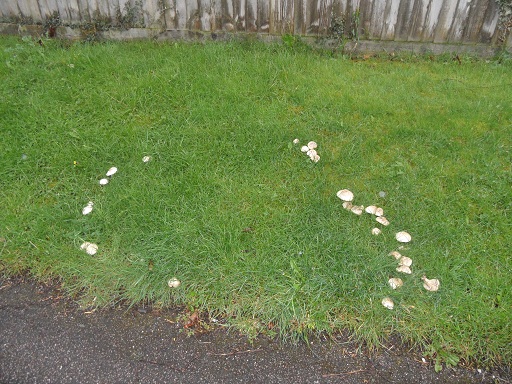
Another few steps and I found myself passing a slightly wonky fairyring of mushrooms. I didn’t get too near. I’ve read what happens to mortals who do…..

Once in the woods, the trees, plants and hedgerows glistened, but with drops of recent rainfall, rather than may dew.

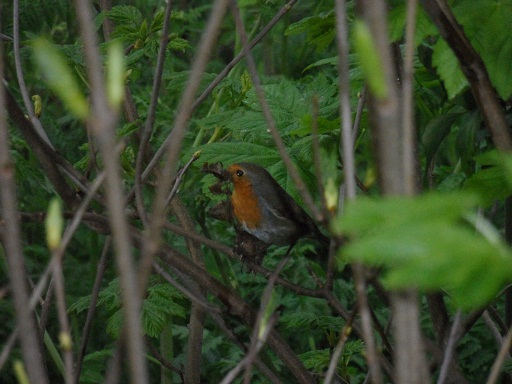
I wanted to measure my tree, to get an idea of how old it was. It soon became apparent that this was no task to undertake alone. The people in the flats overlooking the lane, and this robin that turned up to watch, probably wondered what on earth I was doing.

Happily, I managed to enlist someone’s help and we discovered that the trunk measured about 3.2m which could mean that it is anything from around 210 years old to around 130 years old. According to the Royal Forestry Society, a tree could grow between 1.5cm & 2.5cm per year, depending on things like location, soil quality.  So I’m going to read up on Mitchell’s Rule and then maybe I’ll have another go at estimating the age!

Tree measuring task completed, I headed back down the lane and met a couple out for a walk. They didn’t seem to mind the weather, in fact they thought it was lovely…….


Into the woods….

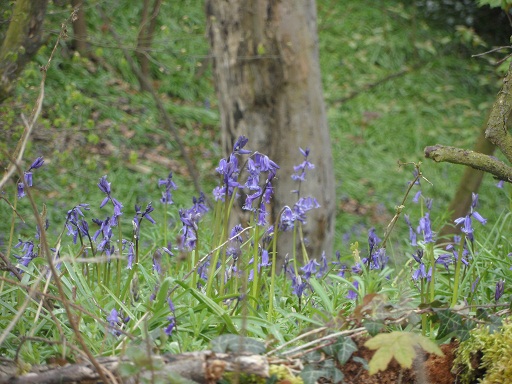
I was lured into the woods by the promise of wood anemones…..then along the path past the old Leomansley mill pools….and finally onto the edge of Pipe Green common.


You say Leamonsley, I say Leomansley

I still don’t think anyone is quite sure how this area of Lichfield is actually spelled. It’s not suprising, I’ve come across at least five different versions over the last five years! I remember there was an issue with signposts some years ago too. I’m going with Leomansley for consistency as this seems to be the current spelling that most would recognise.

Accoring to a transaction on pre-conquest Lichfield from the Staffordshire Archaeological & Historical Society, the name Leomansley contains elements indicating there may have been a Welsh settlement here around the 6th century.

Lemansyche

In ‘Lichfield: The cathedral close’, A History of the County of Stafford: Volume 14: Lichfield (1990), pp. 57-67, it tells us that

“in the 13th century the cathedral was described as being between Lemansyche and Way Clife. Gaia Lane may have been called Lemansyche as Shaw Lane, the extension of Gaia Lane on the west side of Beacon Street, is in the direction of Leamonsley”.

Edit 2/2/2012 : The origins of placenames is a fascinating but tricky subject. I did read a few days ago that ‘sike’ or ‘sitch’ could be a regional names for a small streams (especially one flowing through flat or marshy ground). Apparently the word was used especially when describing boundaries. It comes from the OE ‘sic’ and in the Midlands became ‘sich’ by the 1500s (2).

So could I be right in thinking that the Lemansyche referred to might be Leomansley Brook, which runs across Beacon Park? This would be in keeping with the boundary idea and also with the stream over marshy ground. As this excerpt from wikipedia says ‘The land on which Beacon Park now stands was originally low lying, poorly drained pasture alongside the Leamonsley Brook. The Museum Gardens and Recreation Grounds were the site of Bishops Fish Pool or Upper Pool. The pool was created when a causeway was built on Beacon Street in the 14th century separating it from Minster Pool. The area around Bishops Fish Pool in all directions was waterlogged marshland, this area south of Bird Street became known as the moggs from the 15th century and later Swan moggs’.

Is this feasible? As I said, a tricky subject, even for experts, and especially for dabblers like me!

Leamonsley

We are told by the County History that that the hamlet* of Leamonsley grew up around the fulling mill on Leamonsley brook in the early 1790s. In 1841 census there were 13 households, including that of the tenant of the mill; with the number rising to 27 households in 1851.

* a term often used to describe a village without a church

Lemondsley

In 1806, the Rev Thomas Harwood referred to “four closes of land, pasture and meadow, lying next together near the said city (Lichfield), called Lemondsley for which the rent of 10s per annum is now paid”.

Lemmonsly

In the book “Trade Tokens” by J.R.S.Whiting, and on http://www.windmillworld.com, there is a reference to a twopenny token of Lemmonsly Worsted Mill, Lichfield (John Henrickson). Henrickson is a “calico, cotton and shirting manufacturer” . The token shows a mill with trees at sides, and river. On the reverse is the arms of Lichfield between oak branches, and text “One pound note for 120 tokens”. A picture can be seen on Flickr following this link.

www.flickr.com/photos/30084068@N08/3305680975/in/photostream

There is no date on the token but John Henrickson let and ran the mill from around 1810 until he went bankrupt in 1815.

Leomansley Mill, now that sounds like an interesting place………..

Sources

‘Lichfield: The 19th century’, A History of the County of Stafford: Volume 14: Lichfield (1990), pp. 24-32. URL: http://www.british-history.ac.uk/report.aspx?compid=42338 .

(2) Edit 2/2/2012 http://voices.yahoo.com/shallow-shoal-shoot-sike-sitch-origins-forms-histories-5293647.html
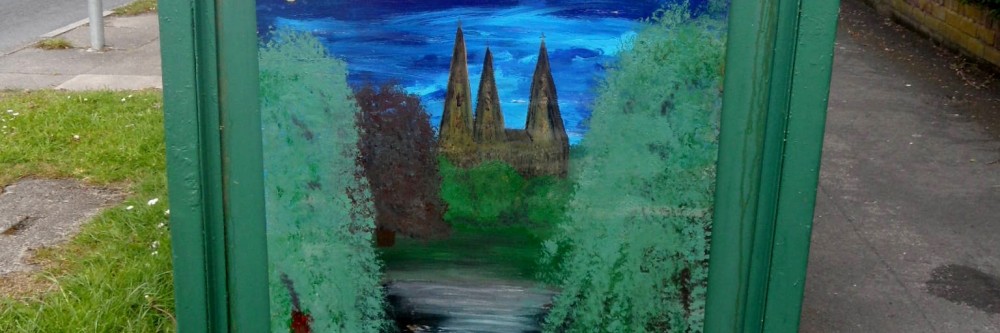
Milling about in Leomansley

Leomansley grew up around the mill built by John Hartwell in 1791, on the edge of Pipe Green. Pipe Green was a meadow which had originally been left to the poor widows of Beacon St as pasture for their geese and was being used as common land.(1) As compensation for cutting a watercourse through the green, Hartwell made an agreement to give the poor inhabitants of Beacon St 10 shillings worth of bread each year.(2) Probably a lot of dough in those days….

Bullocks on Pipe Green


Anyone who has been for a walk over there will know that Pipe Green is home to around 12 bullocks.  I remember there being an advert in the Lichfield Mercury a few years ago, asking for someone to graze their herd there
. It’s still owned by Pipe Green Trust, which is made up of residents of Beacon St.

Back to the mill, and in 1841, the census shows several Leomansley residents working as wool combers or spinners. I’m wondering if the row of cottages on Christchurch between Leomansley Wood and the Old Vicarage (Easter Hill) were purpose built for the mill’s employees? It appears that some of these people moved on once the mill closed around 1860, as on the 1881 census, several of the properties in ‘Old Leomansley’ are listed as ‘uninhabited’.

On the subject of employment, the 1881 census also shows several men employed in railway related work. In fact men from three neighbouring households were all platelayers and there was also a signal man and a coal heaver in the area. I’ve found a great post about platelayers and what their work involved at turniprail.blogspot.com. Once again, I’m speculating, but I wonder if the Leomansley platelayers were responsible for the Sandfields stretch of track on the Lichfield to Walsall line, which opened in 1849 and would have been just across the fields (which are now the Darwin Park estate). There is a photo from 1924 of the track at Sandfields on the South Staffs Railway website as well as plenty of other fantastic photos and other interesting things!

Sources:

1) History of the Cathedral & City of Lichfield by John Jackson 2) A Short Account of the City and Close of Lichfield by Thomas George Lomax, John Chappel Woodhouse and William Newling 3) ‘Lichfield: Economic history’, A History of the County of Stafford: Volume 14:Lichfield (1990)