Tree following: Tree Routes

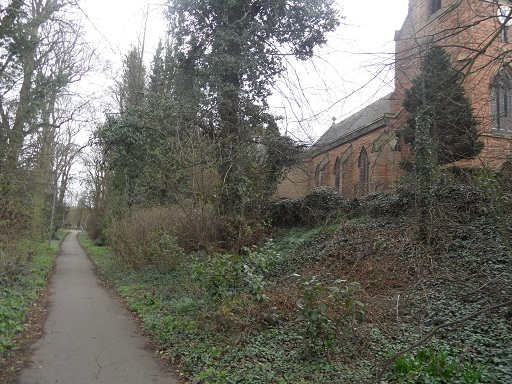
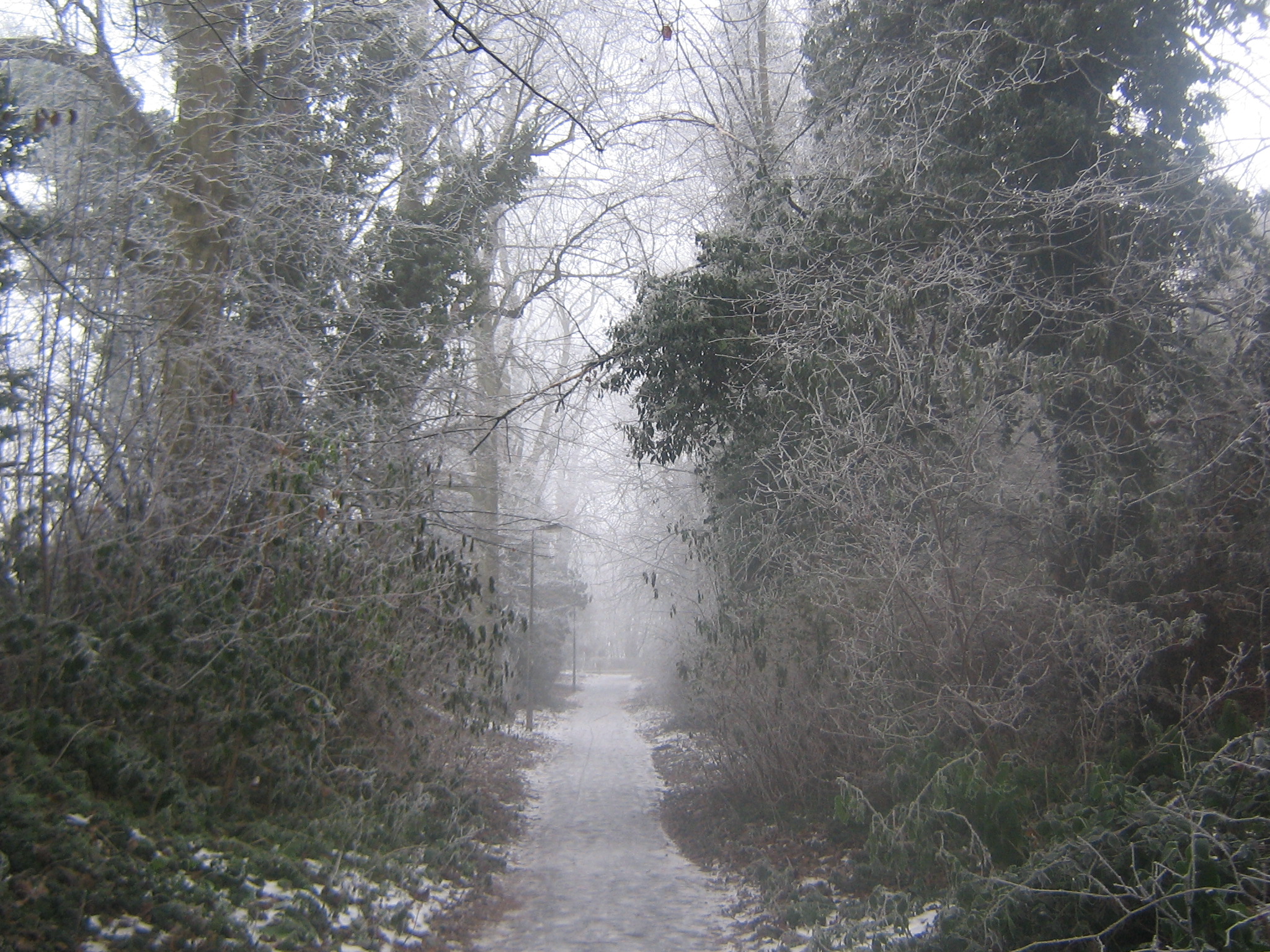
As far I understand it, the path running past Christ Church was at one point the old Walsall Rd, ‘realigned under an Act of 1832 with the new Queen Street and Walsall Road bypassing the route along Lower Sandford Street and what was later called Christchurch Lane. That lane takes its name from the church opened in 1847, and by then it had been continued south-west from the church to the new Walsall road, the old line from Lower Sandford Street having been turned into a drive for Beacon Place’.(1)

The path is surrounded by trees that I believe were planted in the mid-19th century by the Hinckleys of Beacon Place, the estate that occupied most of what is now Beacon Park between 1800-ish and 1964, when the house was demolished.

So that’s a bit of historical scene setting, now what about the tree!

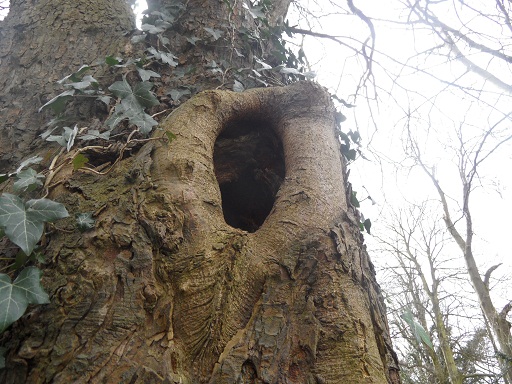
There’s one along this path in particular that seems to attract attention. Several people have commented on it in the past. I even heard a girl refer to it as ‘The Skeleton Tree’! I’m not even sure what kind of tree this is but how could I resist following it?!

How do holes like this form in a tree? As usual, on nature matters I can’t offer any upfront answers (though rest assured I shall be trying to find out, part of the reason I’m doing this is to learn things!) but I can give you a peep into the hole nearest to the ground.


And a close up of the one at the top…….


Nearby, the snowdrops are looking very shabby now.

I love to see these little flowers at the end of the winter, but I have to confess I’m even happier when I see these…

Not quite a host, but enough to signal that spring has arrived in this part of Lichfield! The wild garlic has also made an appearance. The aroma from the leaves is incredible, I’m sorry I can’t share it. No pretty white flowers yet though, let’s see what April brings for the Old Walsall Road!

Talking of Walsall, I’ve just found out that the brilliant & enthusiatic Morgan, a Walsall Countryside Ranger has started a Walsall Wildlife blog. She’s one of the most knowledgable people I know about nature and I’ve learnt loads from her (although clearly this is very much an ongoing education 😉 ). I really recommend that you check out this and the Walsall Wildlife flickrstream.  I bet Morgan even knows how those holes in the trees got there……!

Sources:

(1)’Lichfield: The 19th century’, A History of the County of Stafford: Volume 14: Lichfield (1990), pp. 24-32. URL: http://www.british-history.ac.uk/report.aspx?compid=42338  Date accessed: 25 March 2012.


The Gates of Christ Church

I often walk past the gates of Christ Church and was delighted when David Tucker, designer and creator of the gates, responded to my request for information about this wonderful part of our surroundings.

David is a Master Blacksmith based in Derbyshire and thanks to him I’ve discovered not just about this thoughtfully crafted, original ironwork we have here in Leomansley, but also something about this traditional craft in the 21st century.

Christ Church Millenium Gates by David Tucker

Here’s David’s own account of the creation of the gates:

These gates were commissioned to celebrate the Millennium and were completed and installed in the year 2000.

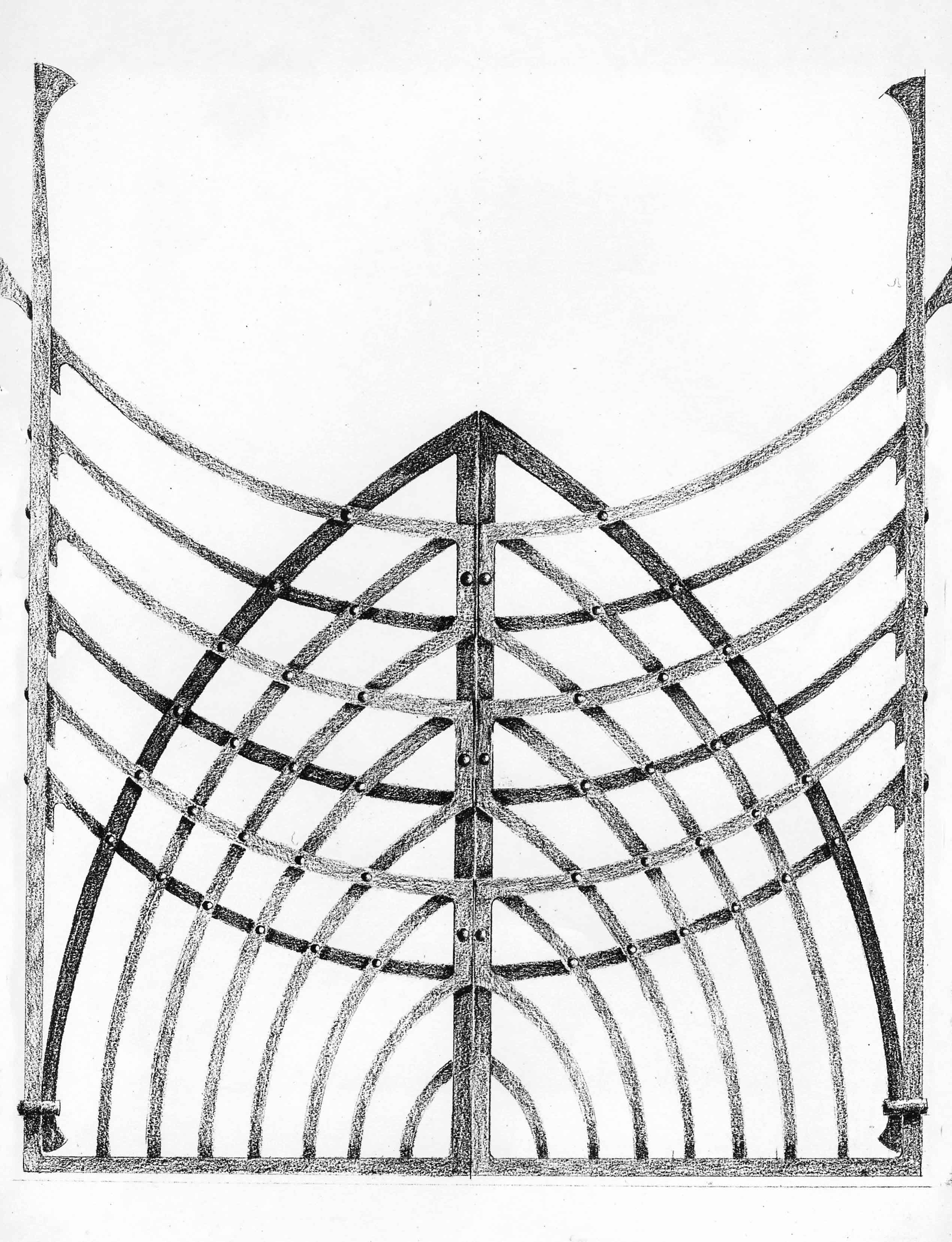
I am a Master Blacksmith and hand forge individually designed ironwork in response to the character and history of the setting. In this case, I was immediately struck by the lovely gothic arches and decided that I would like to reflect these strong forms in my gate. The gothic arch is synonymous with the church and I liked the idea of looking through my gates and seeing the same arches within the building.

Structure is important to me and I always try to create forms where all is not immediately apparent. I want the regular visitor to discover new facets and aspects to the design over time. The gates are made up of repeated downward-facing arcs and upward-facing gothic arches, placed on opposite sides of the gate, to re-inforce the forms and to create a three-dimensional structure. I love ‘honest’ and traditional methods of fixing and so chose to join the bars together with rivets and collars which just seem to say ‘here we are, holding these bars together’.

In the end, I designed three different options for the gate; a more traditional option, a cheaper option and this one, my own favourite and the most contemporary of the three. I was delighted when the commitee said that they would prefer an original and contemporary option, rather than pastiche. The gates were hand forged by me at my Derbyshire forge. I developed detailing such as hinges and latches etc. as I went along, so they would compliment the over-all design.


David's drawing of the gates


David does of course take commissions and it’s a pleasure to include his business card here.


Kindred Spirit

I’ve referenced J(ohn) W(alters) Jackson several times in this blog and really wanted to find out a bit more about him. So here we go….

Mr Jackson was 2 years old when he came to Lichfield in 1864. He was a music teacher and the organist at Christ Church. He lived at 81, Walsall Rd until he left the city to live with his son in Newport,  Shropshire in October 1940 at the age of 78. During his time in Lichfield he was ‘City Librarian’. The Lichfield Mercury reported that after his appointment the number of readers increased from 70 a week to 500.

In the 1930s and 40s, Mr Jackson had a local history column in the Lichfield Mercury in  which he answered readers’ queries and shared an assortment of historical facts, folklore and transciptions from old documents. Each ‘subject’ is given a paragraph at most, so if one snippet didn’t interest, the next one wasn’t far behind!

I thought I’d share one of my favorites with you, to give you a flavour of Mr Jackson’s work. I like this one especially because the ancient manor of Abnalls is one of my favourite places in Lichfield and I love a good ghost story (this one has the added bonus of an intrepid one-man paranormal investigation as well). So I’ll hand you over to Mr Jackson…..

“The Abnalls dates back to the time of Edward I. The present hall has taken the place of the ancient manor. Many years ago it was said to be haunted. Half a century ago considerable alarm was caused by reports of a spectre being seen by various passers-by at belated hours. The writer personally visited (at midnight when ghosts are said to appear) on several occasions but after patiently waiting saw nothing of a spectral character further than weird forms in the trees and bushes in the dim light, and on one occasion the gentle waving of a white nightgown pegged on a clothes line.”

The site of the old manor off Abnalls Lane. I know it doesn't look it from the photo but it is very intriguing place and a scheduled ancient monument.The aerial view from googlemaps reveals a lot more but I'm having trouble adding it to the post at the minute, so in the meantime, maybe do your own investigation & see if you can find it!

 This kind of history might not be to everyone’s taste (but then what is?) but it sure is to mine –  I think it’s entertaining, accessible and a great source of information. If you get the chance I highly recommend that you have a look at the Lichfield Mercury archives (warning – give yourself plenty of time as you’ll be engrossed).  

I love the way that us humans,  no matter what age we belong to, are curious about the stories of the places that surround us and the people that came before us (well, most of us are anyway). Investigate the blog list to the right of this post and you’ll find a lot of curious* & entertaining souls. I like to think that if Mr Jackson was around today, he’d be doing a blog. I hope he doesn’t mind being included on this one!

 *curious in the inquisitive sense, not in the strange sense. I think 😉

Beacon Place Part Two

Following on from my last post about Beacon Place, here are my initial attempts to discover what’s left of the estate.

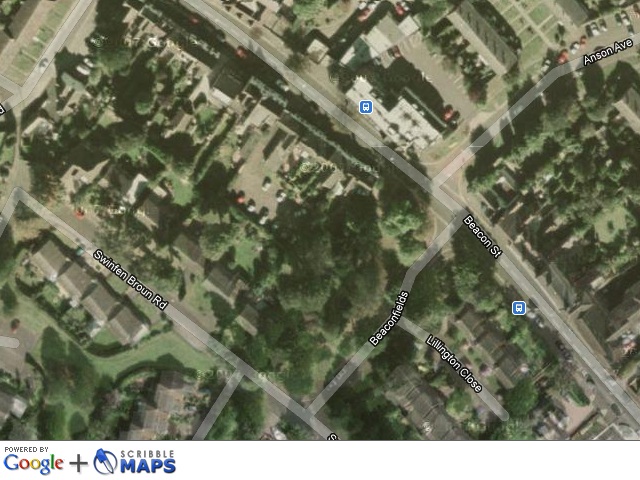
Here’s a map of the Beacon Place area from 1921. It shows the the Greenhough Rd lodge, the Beacon St lodge and the Sandford St lodge (although this isn’t indicated, it’s the building near to the PH on Lower Sandford St, in the parcel of land marked 332).  It doesn’t show the Christ Church Lane lodge, but I’ve covered this elsewhere anyway. Apart from the Sandford St Lodge, which I think would have been located near to Bunkers Hill car park, the lodges are still in existence. A lot of the trees are also still there, the line running down from the icehouse to Christ Church is still very much in evidence. The fish ponds also remain of course.

As we know the mansion no longer exists, and houses were built on the area. I think it was located somewhere in the region of Seckham Rd. What’s interesting, although I suppose it makes sense, is that the new roads in this area  seem to follow the line of the old carriage drives shown on the 1921 map. For example, if you compare the google map* below, the route of Swinfen Broun Rd is similar to the that of the carriageway from the Greenhough Rd lodge. Beaconfields seems to follow the line of the carriageway from the Beacon St lodge.

I think that the icehouse shown on the map is located between the Shaw Lane carpark and the pavilion near to the playground, where there is a definite bump in the ground which seems to correspond with the map. It doesn’t come over particularly well in the photograph unfortunately, so the next time you’re in Beacon Park, you’ll have to go and have a look yourself!

The footpath marked next to it on the map is also still in existence.

I think part of the estate’s boundary walls are between Beacon Mews and Beaconfields, on Beacon St.

There are also some walls running alongside Shaw Lane. I wonder what that gap in the wall was for? I should have taken a better picture of it!

So, these are my findings so far. I’m hoping there will be more. The map shows a couple of other buildings (e.g.two fairly near to Christ Church, some near to where the ice house), so I’d be interested to know what these were. 

If anyone has anything to add (or if I’ve made any mistakes – I’m not great with maps!), please let me know. Oh and if any one wants to see any other bits of the 1921 Lichfield map, get in touch.

*just a quick HT to Pastorm as that’s where I heard about scribblemaps from

Beacon Place Part One

Much of what is now Beacon Park in Lichfield once belonged to the Beacon Place (sometimes known as House) estate. The house is long gone, demolished in 1964, but I know that there are some remnants left over! I enjoyed my ‘treasure hunt’ around the old Fisherwick Estate and thought it might be interesting to do something similar a bit closer to home. To avoid this being too long a post, I’m doing it in two parts. Part one is a very brief history of the estate.

George Hand built Beacon Place in the late 18th century. 1 On the death of his widow Ann in 1826, the house was sold in an auction at the George Hotel on Tuesday 28th March 1826. Amongst other things, it was described as having contained a handsome staircase of Hopton Stone, lit by a skylight, a kitchen garden with hothouses and orchards, and good cellars under an excellent kitchen.2

From 1837, Beacon Place was the home of Richard and Ellen Jane Hinckley. As well as extending the house itself, they also gave land for the construction of Christ Church in 1847.  The Hinckley’s had their own pew at the church3, and could see it from the house. As I’ve mentioned before, the lane running alongside the church, over the A51 and into Beacon Park, is an old carriageway that would have led to the house (I think it was also the old Walsall Rd until 1832).4

The path between Christ Church and Beacon Park in winter

Richard and Ellen Jane Hinckley are buried in two of the three tombs behind Christ Church. The third tomb is that of Ellen’s son Hugh from her previous marriage to Hugh Acland. Hugh jnr. was one of the first people to be buried in the graveyard.5

Hinckley Tombs, Christ Church

A document at Lichfield Record Office gives an insight into how some of the rooms were furnished. The Inventory and Valuation of Beacon House for Probate on 2nd November 1870, following the death of Mrs Hinckley lists furniture, artwork and decorative items, and even some of the books that she owned.  For example, Mrs Hinckley’s dressing room contained a fire screen, bookshelves, a weather house, an easy chair, a small ivory bust, two cases of insects in glass, a Bible and five pieces of ornamental china. I think there were also portraits of her Father and second husband. The best dinner service used in the house was Ironstone China (from Staffordshire of course!). Some of the Hinckley’s silverware was engraved with family crests or initials. I wonder if there is any still around in someone’s cabinet!6

On Mrs Hinckley’s death the estate passed to her husband’s nephew Arthur Hinckley7  and it was sold at The Swan Hotel on Wednesday 27th October 1880 at 6 o’clock to Samuel Lipscomb Seckham (who I believe was renting Hanch Hall at the time and later also purchased Whittington Old Hall)8. Some of the items listed on the sales particulars are extensive pleasure grounds, flower and kitchen gardens, vineries, peach and hothouses, a coach house, stabling for 6 horses and a labourer’s cottage.  It was described as standing on an elevation which commands beautiful views of the Cathedral and of the open country with ornamental pools and plantations in view of the windows.9

So that’s a brief description of how it was, but what remains of the estate today? Part two to follow shortly!

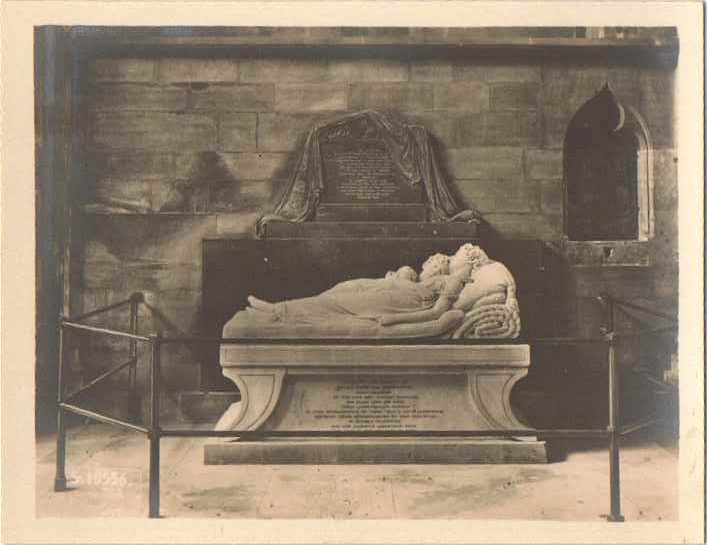
*Ellen Jane Hinckley was the mother of Marianne and Ellen-Jane Robinson, who are the subjects of the ‘Sleeping Children’ monument in Lichfield Cathedral. The plaque behind the monument belongs to her first husband, and father of the children, Rev Robinson. I learned something new about this well known sculpture recently from a friend who had been on a tour of the Cathedral. Sir Francis Chantrey, the sculptor, apparently left an uncarved piece of marble on the foot of one of the children, as he believed that only God was able to create perfection.

Edit 6/9/2011

There’s a program on BBC iPlayer called Romancing The Stone: The Golden Ages of British Sculpture. In part 2, Mavericks of Empire there is a section on Chantrey and the presenter Alistair Sooke visits Lichfield Cathedral and discusses the monument with the Head Verger. This link should take you to this part of the program http://www.bbc.co.uk/i/yml9v/?t=26m04s
An old photograph of The Sleeping Children Monument in Lichfield Cathdral

Sources:

1. ‘Lichfield: Manors and other estates’, A History of the County of Stafford: Volume 14: Lichfield (1990), pp. 67-72.

2. Sales particulars of Beacon House estate 1826, accessed at Lichfield Records Office

3. The Gentlemans Magazine By Sylvanue Urban Vol XXIX

4. ‘Lichfield: The 19th century’, A History of the County of Stafford: Volume 14: Lichfield (1990), pp. 24-32.

5. Cathedral City by Howard Clayton

6. Inventory & Valuation of Beacon House for Probate accessed at Lichfield Records Office

7. ‘Lichfield: Manors and other estates’, A History of the County of Stafford: Volume 14: Lichfield (1990), pp. 67-72.

8. https://lichfieldlore.co.uk/wp-content/uploads/2011/09/howell.pdf

9. Sales particulars of Beacon House estate 1880, accessed at Lichfield Records Office
The Carpenters Arms – a Lichfield Beer House

The Carpenters Arms was a pub on Christ Church Lane, sadly demolished before I moved to Lichfield.

1841 Census

Back in 1841, the premises wasn’t listed as a pub. The census entry just names James Page, Carpenter, his wife Maria and their family. Twenty years later, in 1861, Maria is the head of the household and a beerhouse keeper. The premises is known as the Carpenters Arms, Leomansley.

1861 census

I understand that premises like the Carpenters Arms existed all over Britain, thanks to the Beer House Act in 1830. In order to promote beer drinking, seen as a healthy alternative to gin and of course untreated water, the duty on beer was removed. In addition, for a small fee of two guineas, anyone could brew and sell beer. According to John Shaw, this is where we get the term ‘Public House’ from, along with terminology such as lounge (for upmarket customers) and bar (which stopped customers going into the private part of the house).1 The law did tighten up again in 1869, with the introduction of the Wine and Beer House Act, which meant a license for the premises had to be acquired from the local magistrate, who would of course refuse to renew a license for a beer house that was disorderly or unsuitable.

It seems the Carpenters Arms remained a beer house until February 1949, when a full license was applied for. Supporting the application, one customer said there were a lot of elderly people in the district who liked a short drink for medicinal purposes. Also, he explained that when a person took his wife, they liked a short drink, and you could not offer ladies a glass of beer!

Another customer reported how for whisky or other shorts, you had to go into Lichfield and if you weren’t a regular, it wasn’t often you got one.2

The application for the Carpenters Arms was granted and so, the Leomansley old folk didn’t have to go without their medicinal whisky and the ladies of Leomansley were able to drink in a ladylike fashion.

However, as previously mentioned, the pub closed in around 2002. The Rise apartments now occupy the site and unless I’m mistaken, I don’t think that there is an acknowledgment of the site’s history, which is a shame. It also seems a shame that, given the huge increase in population in Leomansley in recent years, the Carpenter’s Arms may have had a new lease of life had it managed to survive another few years. We’ll never know.

I’d be interested to know if any other Lichfield pubs started off as beerhouses….

Edit: This morning I remembered that there was some information about another Lichfield Beer House on the excellent BrownhillsBob’s Brownhills Blog. Sadly now also demolished, the Royal Oak started life at Sandyway Farm, Walsall Rd, now in the process of being redeveloped into residential properties. There had been an application to turn it back into a pub a couple of years ago, but I think it was rejected.

The pub moved up the road to the top of Pipehill in around 1868, but closed in the 1960s. Have a look at Bob’s post The Lost Pub of Pipehill for more information, plus photos and a really interesting discussion.

Sources:
1. The Old Pubs of Lichfield – John Shaw
2.The Lichfield Mercury archives accessed at Lichfield Records Office

Milling about in Leomansley

Leomansley grew up around the mill built by John Hartwell in 1791, on the edge of Pipe Green. Pipe Green was a meadow which had originally been left to the poor widows of Beacon St as pasture for their geese and was being used as common land.(1) As compensation for cutting a watercourse through the green, Hartwell made an agreement to give the poor inhabitants of Beacon St 10 shillings worth of bread each year.(2) Probably a lot of dough in those days….

Bullocks on Pipe Green


Anyone who has been for a walk over there will know that Pipe Green is home to around 12 bullocks.  I remember there being an advert in the Lichfield Mercury a few years ago, asking for someone to graze their herd there
. It’s still owned by Pipe Green Trust, which is made up of residents of Beacon St.

Back to the mill, and in 1841, the census shows several Leomansley residents working as wool combers or spinners. I’m wondering if the row of cottages on Christchurch between Leomansley Wood and the Old Vicarage (Easter Hill) were purpose built for the mill’s employees? It appears that some of these people moved on once the mill closed around 1860, as on the 1881 census, several of the properties in ‘Old Leomansley’ are listed as ‘uninhabited’.

On the subject of employment, the 1881 census also shows several men employed in railway related work. In fact men from three neighbouring households were all platelayers and there was also a signal man and a coal heaver in the area. I’ve found a great post about platelayers and what their work involved at turniprail.blogspot.com. Once again, I’m speculating, but I wonder if the Leomansley platelayers were responsible for the Sandfields stretch of track on the Lichfield to Walsall line, which opened in 1849 and would have been just across the fields (which are now the Darwin Park estate). There is a photo from 1924 of the track at Sandfields on the South Staffs Railway website as well as plenty of other fantastic photos and other interesting things!

Sources:

1) History of the Cathedral & City of Lichfield by John Jackson 2) A Short Account of the City and Close of Lichfield by Thomas George Lomax, John Chappel Woodhouse and William Newling 3) ‘Lichfield: Economic history’, A History of the County of Stafford: Volume 14:Lichfield (1990)