Tree following: …..bring May flowers

Leomansley Woods are lovely all year round but within the next few weeks they will be at the peak of their beauty. Well, I think so. You’ll have to visit and see if you agree.

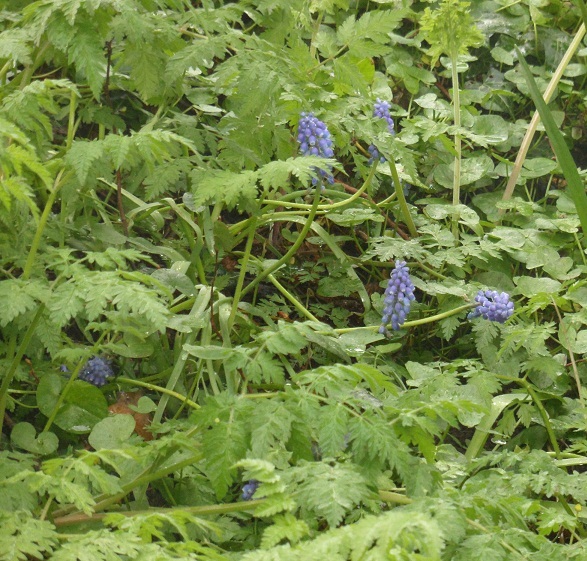
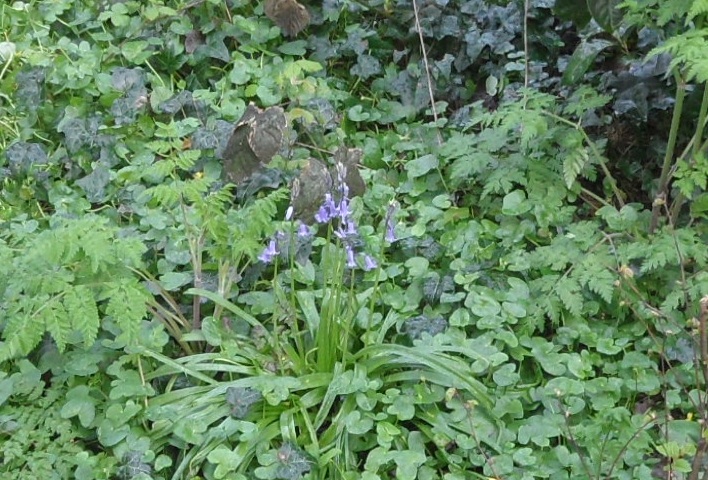
There’s just a smattering at the moment, but soon the bluebells will fill the gaps between the trees and paint the woodland floor with their colour.

Getting bluer by the day

I could put a photo on here from last year but why spoil the anticipation? It’s not long to wait now! In the meantime there’s plenty more going on of interest, although I confess I’m not always sure what exactly. I’m still fumbling my way through with a variety of Woodland Trust swatch books and a junior nature guide but I am learning slowly. I’ve realised that trying to identify the plants from photographs is not the way to do it. Clearly, it’s a bit tricky to see if the leaves smell of anything (for example, according to my book, hemlock has ‘the strong smell of mice’!) and it’s hard to see other subtle details from a photograph too.
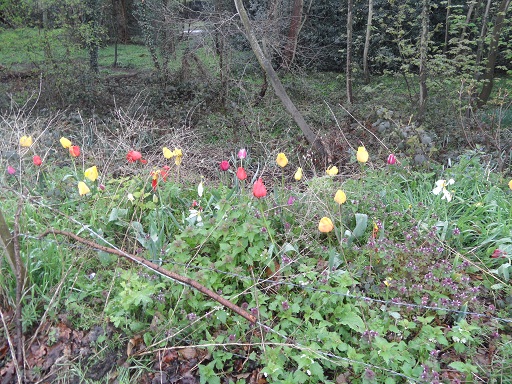
I know these are tulips.....

Fungus

This is some kind of fungus......

No idea???


No idea part 2????

The dandelions had closed up due to the rain (or maybe they’ were hiding, having heard of my plans to turn them into marmalade……).
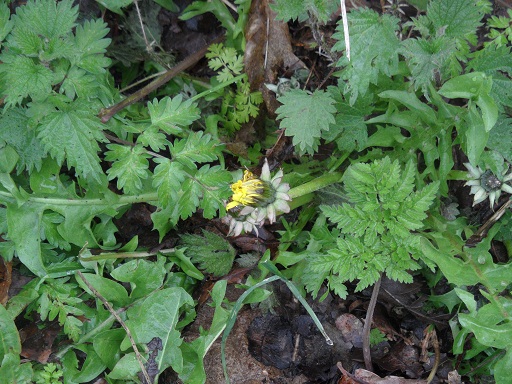
Not so dandy

Elsewhere along the lane, other plants were still showing evidence of the last downpour.

Raindrops on leaves

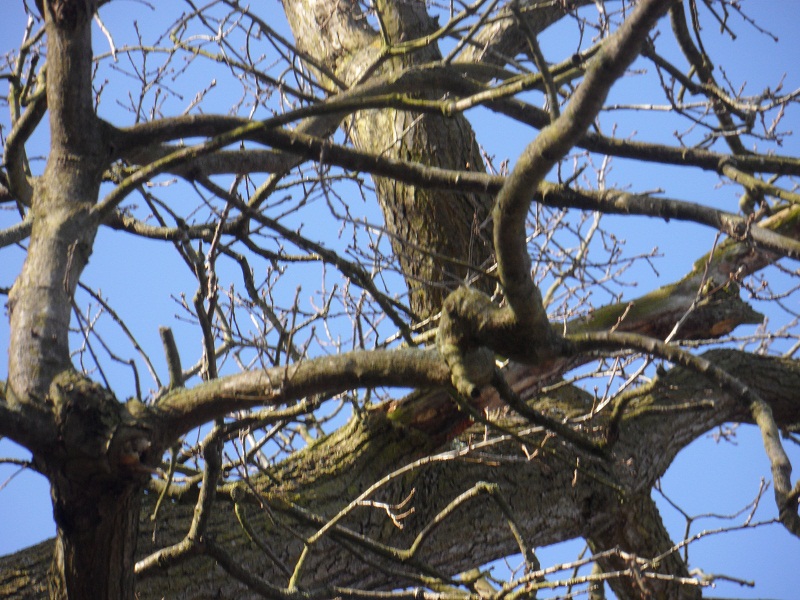
The tree itself now has buds and I’m pretty sure that it is an oak. The path running past the tree goes past Leomansley House/Manor and leads to Pipe Green. Pipe Green is a wonderful area of meadowland managed by a trust and they have an equally wonderful website with details of all the birds, plants and animals you might spot whilst you are there. Have a look at the website here and then go and visit! I’m going to go and see if I can spot the wood anemones.
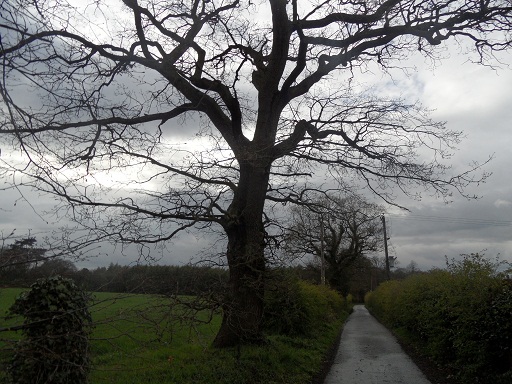
Oak Aged
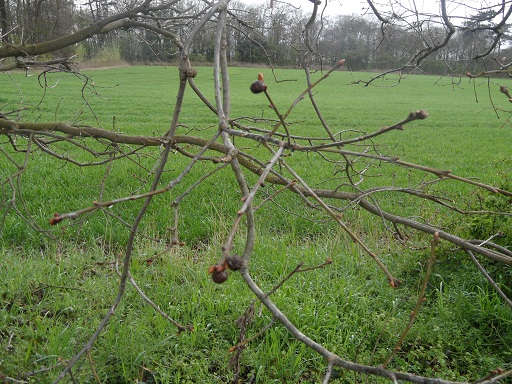
Galls & Buds come out to play

Following the sale of the Maple Hayes Estate, to which it belongs, Leomansley Wood now has a new owner. Let’s hope that it will now be cared for and managed as well as it should be.
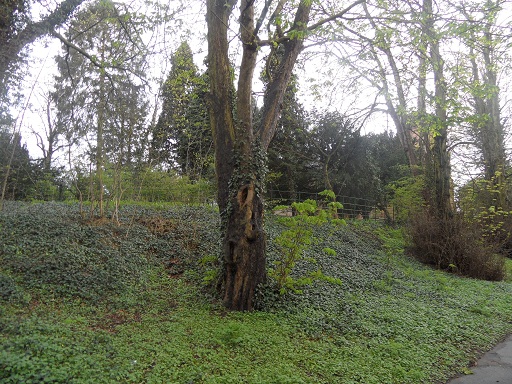


Tree following: April Showers…..

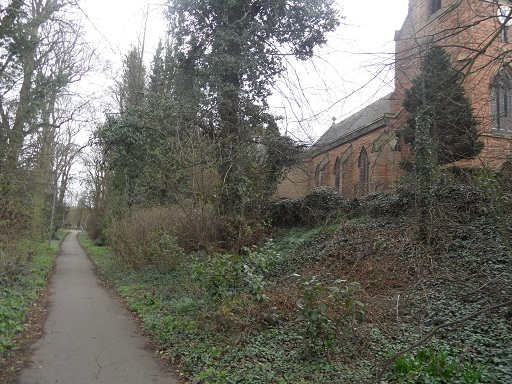
It was time to revisit my tree on the lane next to Christ Church.  

Now I think it might be a horse chestnut.

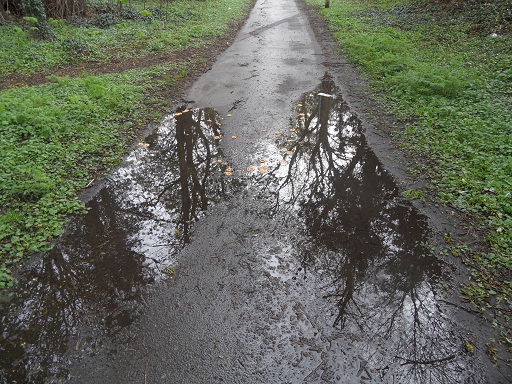
I managed to dodge the heavy showers that had been falling on and off all day, but there was plenty of evidence of them. The air had an earthy smell and looking back towards Christchurch Lane from the A51 end, I noticed the reflection of the trees in the puddles. I’m not sure whether the onion ring crisp spillage adds to or detracts from the scene.

Soggy Crisps

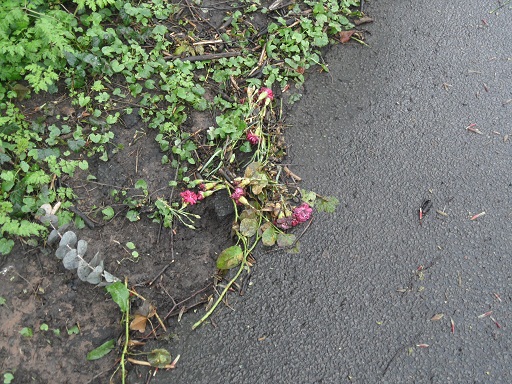
I bet that the crisps were an after school snack, dropped in the haste to get get home before the next shower, but I wonder how these flowers came to be here? From the nearby churchyard perhaps?

Discarded flowers

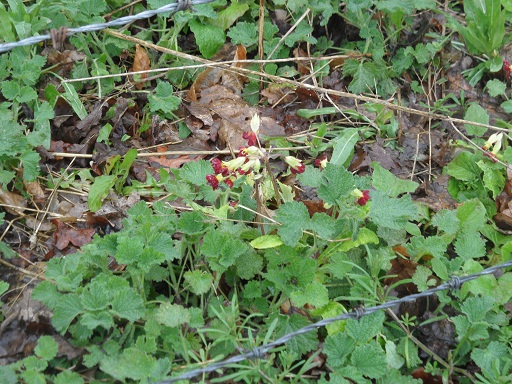
 It was good to see some new arrivals along the lane.


This reminds me. How are those bluebells in Leomansley Woods coming along?

Tree following: Tree Routes

As far I understand it, the path running past Christ Church was at one point the old Walsall Rd, ‘realigned under an Act of 1832 with the new Queen Street and Walsall Road bypassing the route along Lower Sandford Street and what was later called Christchurch Lane. That lane takes its name from the church opened in 1847, and by then it had been continued south-west from the church to the new Walsall road, the old line from Lower Sandford Street having been turned into a drive for Beacon Place’.(1)

The path is surrounded by trees that I believe were planted in the mid-19th century by the Hinckleys of Beacon Place, the estate that occupied most of what is now Beacon Park between 1800-ish and 1964, when the house was demolished.

So that’s a bit of historical scene setting, now what about the tree!

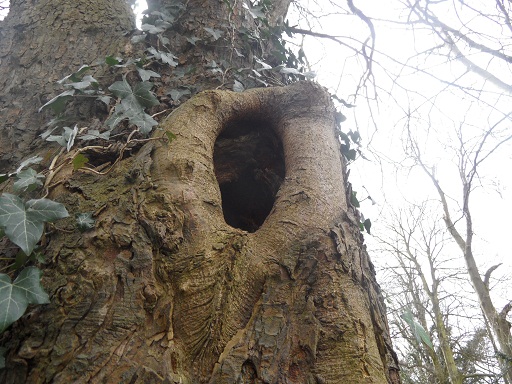
There’s one along this path in particular that seems to attract attention. Several people have commented on it in the past. I even heard a girl refer to it as ‘The Skeleton Tree’! I’m not even sure what kind of tree this is but how could I resist following it?!

How do holes like this form in a tree? As usual, on nature matters I can’t offer any upfront answers (though rest assured I shall be trying to find out, part of the reason I’m doing this is to learn things!) but I can give you a peep into the hole nearest to the ground.


And a close up of the one at the top…….


Nearby, the snowdrops are looking very shabby now.

I love to see these little flowers at the end of the winter, but I have to confess I’m even happier when I see these…

Not quite a host, but enough to signal that spring has arrived in this part of Lichfield! The wild garlic has also made an appearance. The aroma from the leaves is incredible, I’m sorry I can’t share it. No pretty white flowers yet though, let’s see what April brings for the Old Walsall Road!

Talking of Walsall, I’ve just found out that the brilliant & enthusiatic Morgan, a Walsall Countryside Ranger has started a Walsall Wildlife blog. She’s one of the most knowledgable people I know about nature and I’ve learnt loads from her (although clearly this is very much an ongoing education 😉 ). I really recommend that you check out this and the Walsall Wildlife flickrstream.  I bet Morgan even knows how those holes in the trees got there……!

Sources:

(1)’Lichfield: The 19th century’, A History of the County of Stafford: Volume 14: Lichfield (1990), pp. 24-32. URL: http://www.british-history.ac.uk/report.aspx?compid=42338  Date accessed: 25 March 2012.


Tree Following: Yellow

This week I went along to Leomansley Woods to do my first bit of tree following. It probably sounds ridiculous but choosing one tree wasn’t that easy. You can’t see the tree for the woods or something I suppose. In the end I decided on this tree, at the edge of the wood.

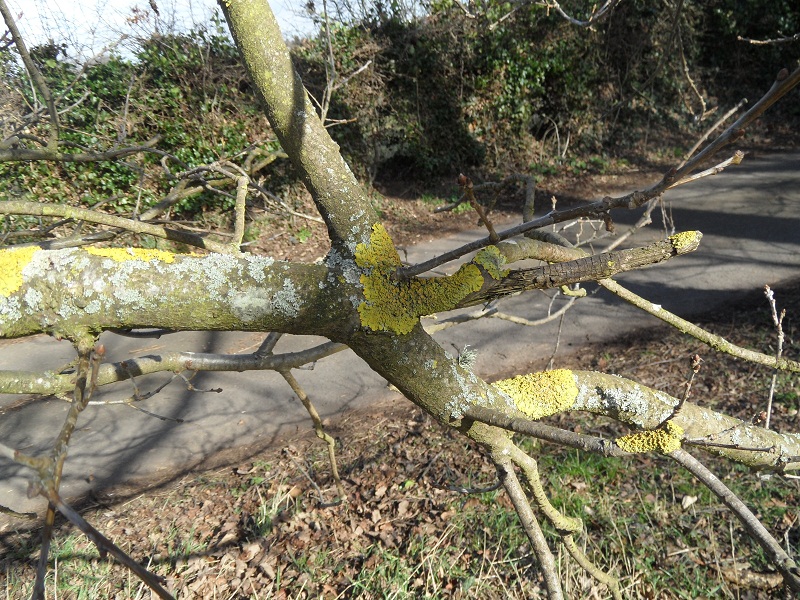
The surrounding debris & hazy memories of last year lead me to believe this is an Oak.

Jumbled branches


The trunk. I'll take a tape measure next time to get some clue to the tree's age?


Lichen


Is this a coaltit getting in on the act?

While I was there, I thought following the entrance to the woods, the woodland floor and the hedgerows running alongside the lane might be nice too.

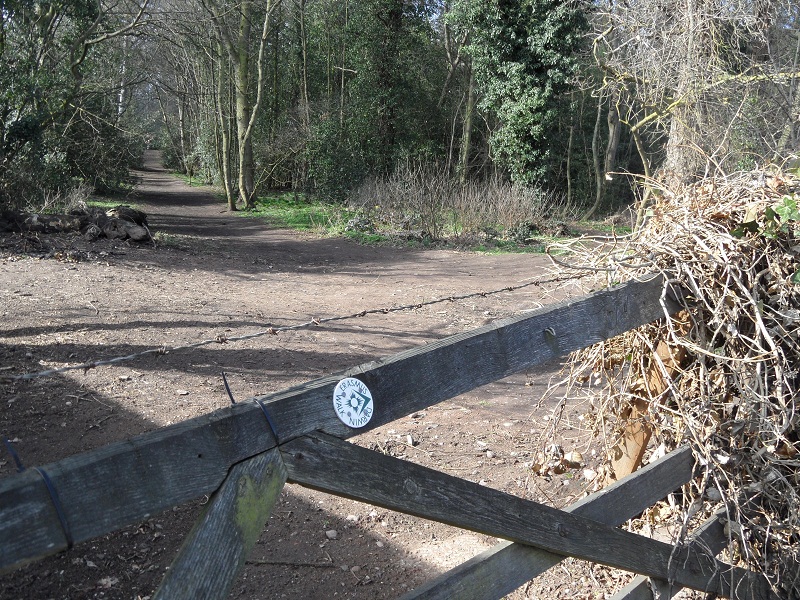
The entrance to the woods. The path running alongside forms part of The Darwin Walk and will take you to Pipe Green

Judging by the green shoots, it won’t be long before the woods are covered in bluebells. I think though, the colour of March is going to be yellow.

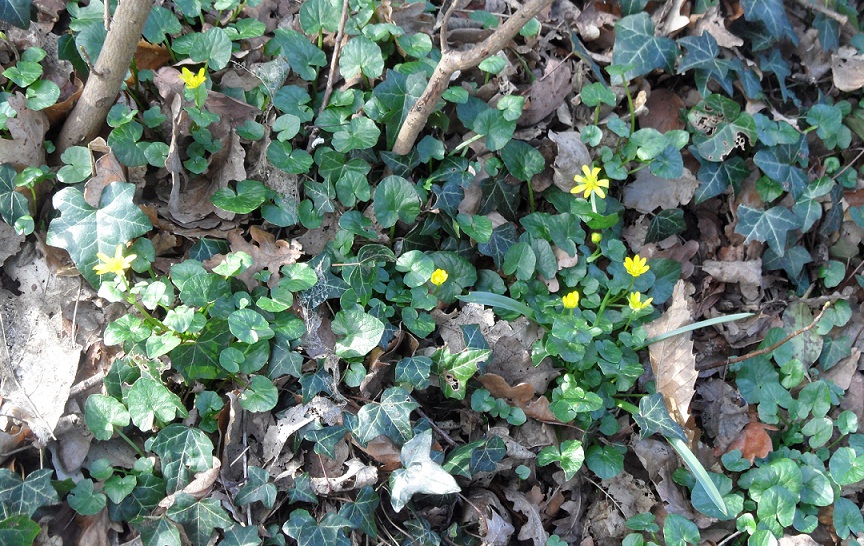
Lesser celandine?


Even I know that these are daffodils!


I don't know these though - they were growing in the hedgerow.

As a bit of a disclaimer (though if you read the captions above it hardly needs to be said!), I don’t know that much about trees & plants. I can’t tell my ash from my elder. One of the reasons I want to do this, is because it’ll be a good opportunity to learn more. For example, I now know what Lesser Celandine is, and that as one of the first flowers of the year, it is known as Spring Messenger. Slightly less picturesque is one of its alternative names – Pilewort.

I’ve already had some great input from a couple of people, on where to find interesting trees in our area. There could well be a ‘Tree Hunting’ spin off! So a big thanks to Roger and Pat for this – I shall be keeping my eyes open!

Also, over to the right are some links to people who actually know what they are talking about when it comes to flora and fauna, and they take some fabulous photographs to prove it! I definitely recommend taking a look!

The Gates of Christ Church

I often walk past the gates of Christ Church and was delighted when David Tucker, designer and creator of the gates, responded to my request for information about this wonderful part of our surroundings.

David is a Master Blacksmith based in Derbyshire and thanks to him I’ve discovered not just about this thoughtfully crafted, original ironwork we have here in Leomansley, but also something about this traditional craft in the 21st century.

Christ Church Millenium Gates by David Tucker

Here’s David’s own account of the creation of the gates:

These gates were commissioned to celebrate the Millennium and were completed and installed in the year 2000.

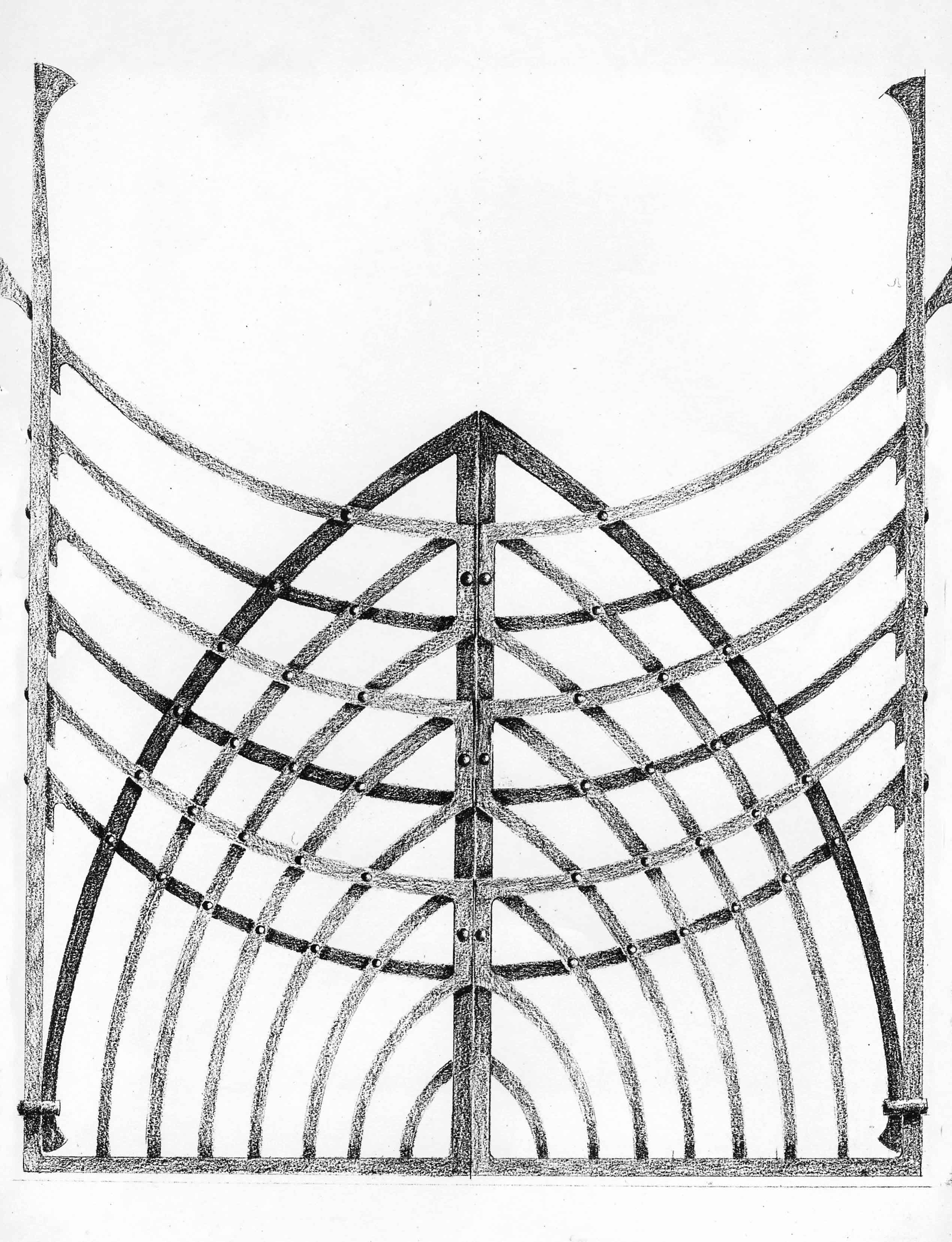
I am a Master Blacksmith and hand forge individually designed ironwork in response to the character and history of the setting. In this case, I was immediately struck by the lovely gothic arches and decided that I would like to reflect these strong forms in my gate. The gothic arch is synonymous with the church and I liked the idea of looking through my gates and seeing the same arches within the building.

Structure is important to me and I always try to create forms where all is not immediately apparent. I want the regular visitor to discover new facets and aspects to the design over time. The gates are made up of repeated downward-facing arcs and upward-facing gothic arches, placed on opposite sides of the gate, to re-inforce the forms and to create a three-dimensional structure. I love ‘honest’ and traditional methods of fixing and so chose to join the bars together with rivets and collars which just seem to say ‘here we are, holding these bars together’.

In the end, I designed three different options for the gate; a more traditional option, a cheaper option and this one, my own favourite and the most contemporary of the three. I was delighted when the commitee said that they would prefer an original and contemporary option, rather than pastiche. The gates were hand forged by me at my Derbyshire forge. I developed detailing such as hinges and latches etc. as I went along, so they would compliment the over-all design.


David's drawing of the gates


David does of course take commissions and it’s a pleasure to include his business card here.


A Bower Queen in Beacon Park

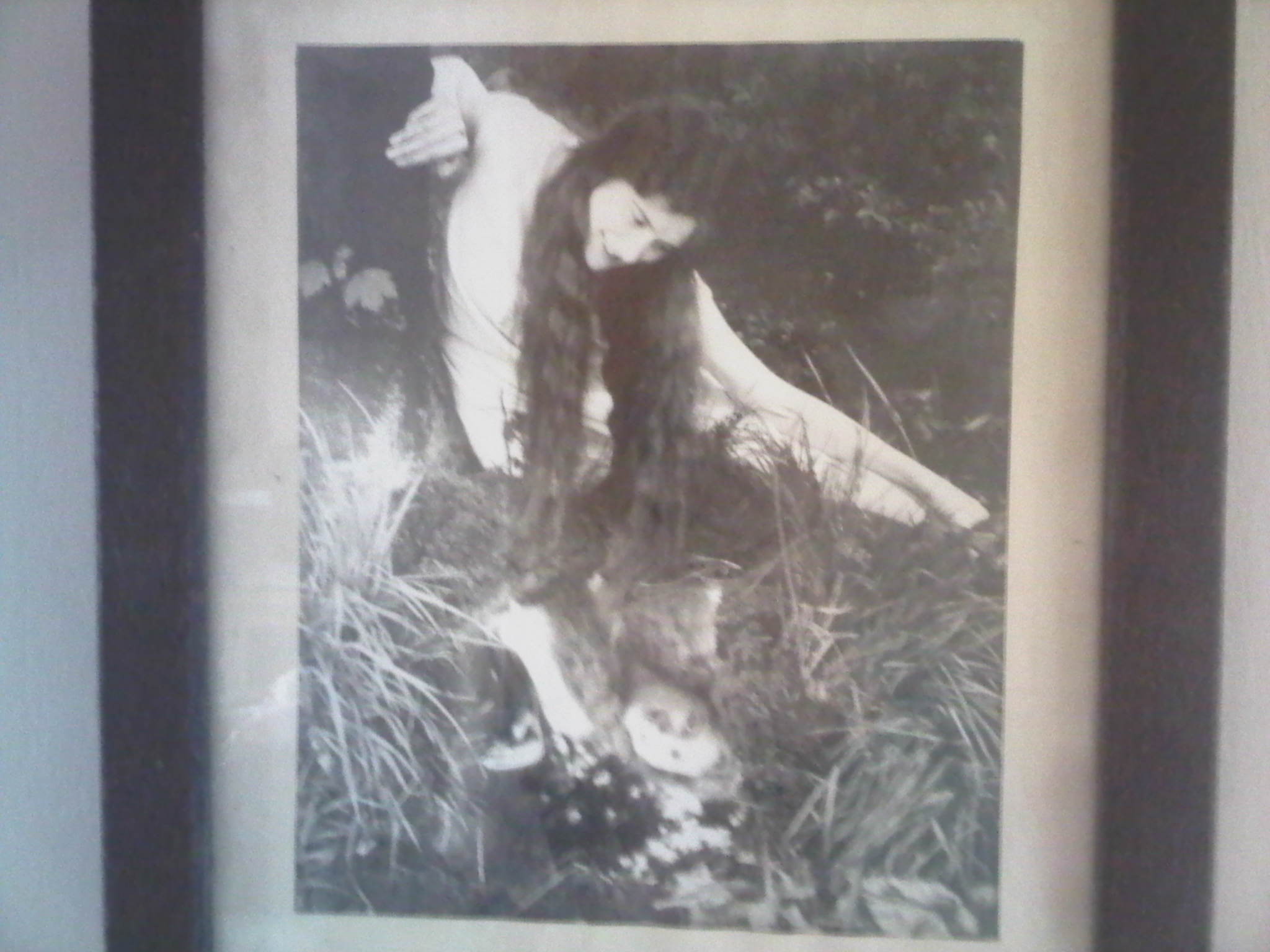
This beautiful photograph is of Clara Talbott, and it was her prize for being chosen as the Lichfield Bower Queen in 1931. Clara was the third Queen to be crowned and although other parts of the Bower date back to much earlier, it seems this tradition only began in 1929. The Lichfield Mercury reported that Clara’s ‘long auburn hair had provided a very favourable comparison with the more modern ‘bobs’ and ‘shingles’. It goes on to tell us that Clara was assisted by her ‘fair maids of honour’ Misses R Orton, M Barker, F Nevill and K Carroll.

A mirror was used to give the impression of a reflection in water.

The photograph belongs to Vickie Sutton, Clara’s granddaughter. She told me that the photograph was taken in woods around Leomansley, where the A51 western bypass now cuts through the woodland. I understand that these trees here were planted by the owners of the now vanished Beacon Place.

Woodland at the edge of Beacon Park and the old carriage driveway from Christ Church to Beacon Place, with the A51 through the middle!

Clara’s family farmed land on Beacon Park and once married, Clara and her husband Frederick Hatchett lived in The Lodge in Greenhough Rd. As the name suggests this was a lodge for Beacon Place and at one point was used as a laundry for the house – it was known as Laundry Lodge in 1891! Vickie has heard from a family member that it may also have been used a some sort of cafe for soldiers in the first world war. I haven’t been able to find any specific references to this yet but records show that Beacon Place was used by officers during WWI and was purchased by the war department in 1922. Cuthbert Brown remembers military figures entering Beacon Place in his wonderful book ‘Lichfield Remembered’.

Once again huge thanks to Vickie for allowing me to share this. The Beacon Place Estate is definitely on my list of things to explore. It may be long gone, but traces of it still linger on….

Sources:

Lichfield Mercury May 1931
A History of the County of Stafford: Volume 14: Lichfield (1990)
1891 Census
Lichfield Remembered by Cuthbert Brown
Chatting to Vickie Sutton, font of Lichfield knowledge!

You say Leamonsley, I say Leomansley

I still don’t think anyone is quite sure how this area of Lichfield is actually spelled. It’s not suprising, I’ve come across at least five different versions over the last five years! I remember there was an issue with signposts some years ago too. I’m going with Leomansley for consistency as this seems to be the current spelling that most would recognise.

Accoring to a transaction on pre-conquest Lichfield from the Staffordshire Archaeological & Historical Society, the name Leomansley contains elements indicating there may have been a Welsh settlement here around the 6th century.

Lemansyche

In ‘Lichfield: The cathedral close’, A History of the County of Stafford: Volume 14: Lichfield (1990), pp. 57-67, it tells us that

“in the 13th century the cathedral was described as being between Lemansyche and Way Clife. Gaia Lane may have been called Lemansyche as Shaw Lane, the extension of Gaia Lane on the west side of Beacon Street, is in the direction of Leamonsley”.

Edit 2/2/2012 : The origins of placenames is a fascinating but tricky subject. I did read a few days ago that ‘sike’ or ‘sitch’ could be a regional names for a small streams (especially one flowing through flat or marshy ground). Apparently the word was used especially when describing boundaries. It comes from the OE ‘sic’ and in the Midlands became ‘sich’ by the 1500s (2).

So could I be right in thinking that the Lemansyche referred to might be Leomansley Brook, which runs across Beacon Park? This would be in keeping with the boundary idea and also with the stream over marshy ground. As this excerpt from wikipedia says ‘The land on which Beacon Park now stands was originally low lying, poorly drained pasture alongside the Leamonsley Brook. The Museum Gardens and Recreation Grounds were the site of Bishops Fish Pool or Upper Pool. The pool was created when a causeway was built on Beacon Street in the 14th century separating it from Minster Pool. The area around Bishops Fish Pool in all directions was waterlogged marshland, this area south of Bird Street became known as the moggs from the 15th century and later Swan moggs’.

Is this feasible? As I said, a tricky subject, even for experts, and especially for dabblers like me!

Leamonsley

We are told by the County History that that the hamlet* of Leamonsley grew up around the fulling mill on Leamonsley brook in the early 1790s. In 1841 census there were 13 households, including that of the tenant of the mill; with the number rising to 27 households in 1851.

* a term often used to describe a village without a church

Lemondsley

In 1806, the Rev Thomas Harwood referred to “four closes of land, pasture and meadow, lying next together near the said city (Lichfield), called Lemondsley for which the rent of 10s per annum is now paid”.

Lemmonsly

In the book “Trade Tokens” by J.R.S.Whiting, and on http://www.windmillworld.com, there is a reference to a twopenny token of Lemmonsly Worsted Mill, Lichfield (John Henrickson). Henrickson is a “calico, cotton and shirting manufacturer” . The token shows a mill with trees at sides, and river. On the reverse is the arms of Lichfield between oak branches, and text “One pound note for 120 tokens”. A picture can be seen on Flickr following this link.

www.flickr.com/photos/30084068@N08/3305680975/in/photostream

There is no date on the token but John Henrickson let and ran the mill from around 1810 until he went bankrupt in 1815.

Leomansley Mill, now that sounds like an interesting place………..

Sources

‘Lichfield: The 19th century’, A History of the County of Stafford: Volume 14: Lichfield (1990), pp. 24-32. URL: http://www.british-history.ac.uk/report.aspx?compid=42338 .

(2) Edit 2/2/2012 http://voices.yahoo.com/shallow-shoal-shoot-sike-sitch-origins-forms-histories-5293647.html