The Queen’s Shoes

I’m not organised enough to do an ‘On this day in history…’ type post and so I’ve just missed the 565th anniversary of the Battle of Blore Heath. However, as I know a couple of good stories about it, here’s an ‘on this Monday just gone in history’ post instead.

The tales take place away from the blood and gore of the battlefield, a mile up the road at Mucklestone, the most westerly parish in Staffordshire. Its name may derive from the OE ‘micel’ meaning large and ‘stan’ meaning stone and it seems likely this is linked to the presence of two monoliths known as the Devil’s Ring and Finger. Satan’s stones are believed to have originally been part of a chambered tomb and the ‘ring’ stone has a porthole, apparently large enough for a person to climb through, or be passed through. Some say to do so increases fertility. Having been erroneously told that several gaps on a traumatic caving expedition were big enough to get these child-bearing hips through, I’ll stick to two kids and a small amount of dignity thank you. Talking of children, there was also a belief that passing them through the circle several times would cure them of any ailments, which seems like a strangely wholesome thing for the devil to do. Much more in keeping with the name is the local legend that the stones mysteriously appeared at the spot after a girl was murdered here.

geograph-227107-by-Mr-M-Evison (1) (1)

Queen Margaret of Anjou is said to have watched the Battle of Blore Heath from the church tower at Mucklestone. On seeing the standard of her Lancastrian commander Lord Audley fall (a cross marks the spot where he was slain), the queen knew defeat by the Yorkist army was imminent. In a fit of rage and frustration, she is said to have stamped her feet so hard that her footprints remained on the stone floor of the tower long after she fled to safety. This sounds preposterous I know but I do have a theory about this. The outline of shoes are often found carved into church roofs (I’ve yet to find a satisfactory explanation as to why) and if there was such graffiti on the church roof at St Mary’s in Mucklestone, someone may have decided that it fitted into the story very nicely. Obviously, if I’d got in touch with someone at the church to ask them if such graffiti existed to back up my theory that would have bee useful, but yeah, that thing about being organised…

Mucklestone church tower

The most well known element of the legend is that Margaret’s escape was aided by local blacksmith William Skelhorn who was ordered to reverse the shoes of the queen’s horse in an attempt to fool those who attempted to follow.  His reward was to be beheaded on his own anvil, which can be found in the churchyard opposite the site of the smithy. Whether the execution was carried out on the orders of the queen to ensure Skelhorn’s silence, or by her enemies, as punishment for assisting her, depends on who is telling the story.

skelhorn mucklestone anvil
A 19th century forgery by the parish clerk?

It’s not the only instance of the old horseshoes-on-backwards-to-disguise-your-tracks ruse to be found. Amongst others, Robert the Bruce supposedly did it to escape from London after being betrayed there (with tracks going in the opposite direction to Scotland, presumably). Logically and practically it seems an unlikely tactic for Queen Margaret or anyone else to use, and is crying out for someone to do a myth-busting style experiment. I’ll volunteer to dress up as the queen and get on a horse if necessary. I’d look great in a crown and I’ve been pony trekking. Twice.

The thing about myths and legends is that it’s relatively easy to bust them if you try. Once this happens, there are several different ways to go. Either ignore the evidence and keep telling it anyway because why ruin a good story with facts. Dismiss it as a lot of nonsense and as having no value whatsoever. Or sit yourself comfortably somewhere between the two positions, enjoying it as a story in its own right but also exploring where it came from and why, who told it and if any nuggets of truth are actually contained within.  The same themes and events turn up in our folklore time after time.

As with the horseshoe part of the myth, echoes of other aspects of the Mucklestone story can also be heard elsewhere. Over at Stoke Golding, in Leicestershire, local tradition has it that the villagers climbed onto the battlements of the church of St Margaret to watch the Battle of Bosworth on 22 August 1485, and later watched the Tudor King’s coronation at Crown Hill.  Did someone draw on these stories and create one to put Mucklestone on the map? Could someone like William Skelhorn, directly descended from and carrying on the same trade as his 15th century ancestor and a parish clerk in the mid-19th century have forged his family into history? Not too far-rier fetched is it?

Sources:

http://www.bloreheath.org/mucklestone.php

Fleming, G. (1896) Horse-shoes and Horse-shoeing

http://www.search.staffspasttrack.org.uk

Staffordshire Sentinel 17th August 1908

Staffordshire Advertiser 8th November 1865

Anchors Away

It’s the first day of Autumn today, meaning yesterday was the last day of Summer and it definitely went out with a bang. The storm seems to have subsided a little but the pounding rain continues its bleak fall and so I’m virtually visiting Streethay this afternoon. The village sits on the Roman Ryknild Street, just beyond the boundary of Lichfield City and, most appropriately given the weather, it’s a place with some watery links that I want to explore.

The Anchor Inn, had already been boarded up for two years when I took this photo in February 2017.

The new housing estates springing up around the outskirts of Lichfield are certainly controversial but one positive development at Streethay, is the arrival of Bod. I’m a big fan of the Titanic brewery bar and I do wonder whether this new influx of people would have kept Streethay’s previous pub ‘The Anchor’ afloat, if it had happened sooner. It was not to be however, and it closed in January 2015.

At Bod, I found a tiny mermaid swimming in a glass of porter….(with apologies to Eliza Carthy) Created by Louise from Under a Pewter Sky.

The building still survives and is now occupied by an Osteopathy Clinic and apartments but let’s go back in time to those days when it still served as an inn. It was clearly in existence by November 1848 when an inquest was held there on the body of Henry Crutchley, a fourteen year old lad who died after climbing onto an engine and slipping beneath the wheels of the wagons it was pulling, but was rebuilt around 1906, when the Lichfield Brewery Company was granted permission on the basis that ‘the house was in a most dilapidated condition and it was impossible to repair it’. I’ve yet to find a photo of its former form but I have found a reference in 1779 to a public house ‘known by the sign of the Queen’s Head’ which stood on the turnpike from Lichfield to Burton at Streethay and I’m wondering if this might be an earlier name. There are also mentions of a inn known as The Dog, around the same time and I’d like to sniff out where exactly that was.

The Anchor, when it was still afloat in 2009
Photo © David Rogers (cc-by-sa/2.0)

In the Lichfield Mercury in 1972 an advert for the Anchor appeared with a curious reference to the ‘Klondyke Bar’, inviting you to enjoy your drink, ‘in the pleasant atmosphere of the Gold Rush’. One of the new apartments built in the grounds of the Anchor has been named after this, with the estate agents’ details explaining it was named after the ‘large wooden drinking hut’. Now I was given many nicknames by my brother when we were growing up, and one of them was ‘Klondyke Kate’. Whilst I’d like to think it was based on American vaudeville actress who provided inspiration for Scrooge McDuck’s girlfriend, I suspect it was more likely a reference to the British female wrestler. The Anchor’s Klondyke however is clearly a reference to the gold in them thar Canadian hills in the 1890s and was decorated with old photos and posters and, erm, pheasants, in a bid to recreate a prospectors’ bar. Much more of a mystery is why a bar on the outskirts of Lichfield chose it as a theme. In May 1979, the new licensees Norma and George Wolley presumably asked themselves the same question and relaunched the annexe bar as ‘The Mainbrace’. The hut itself had originally been a first world war army hut and this brings us nicely to a really interesting period in the pub’s history.

During the Second World War, the pub was frequented by personnel from RAF Lichfield. Jean Smith, in an interview with Adam Purcell, described how she and fellow WAAFs would stop off for a half a pint there on the way back home to their quarters on the opposite side of the road. On winter nights, when it was announced that flights had been cancelled due to fog and rain, the women would get their gladrags on and head out to the inn. Soon, the sound of bikes being propped against the wall of the pub would be heard as the lads from the aerodrome arrived at The Anchor, and the grounded pilots would soon be filling the air with cigarette smoke and tunes from the piano. The full interview with Jean can be found here and it’s a fascinating read, which really captures what the atmosphere was like for those young people living their lives in Lichfield, surrounded by the ever present threat of death.

This post was actually intended to be a deep dive into the village as a whole but I’ve got a bit overboard with the history of the Anchor Pub and so we’ll have to return to Streethay and its moated manor and plunge pool, the brewery and the canal wharf, and the lost hamlet of Morughale another day because we’ve only just dipped our toe in…

Brewery Row, once home to workers from the Trent Valley Brewery

Sources

Birmingham Journal 25th November 1848

Lichfield Mercury 16th March 1906

https://www.onthemarket.com/details/8779282/

Lichfield Mercury 25th May 1979

Lichfield Mercury 7th April 1972

Adam Purcell, “Interview with Jean Smith,” IBCC Digital Archive, accessed September 22, 2024, https://ibccdigitalarchive.lincoln.ac.uk/omeka/collections/document/3488.

http://raf-lichfield.co.uk/Anchor%20Pub.htm

https://www.british-history.ac.uk/vch/staffs/vol14/pp273-282

Battle Plans

Armed with a bag of Werther’s Originals and a vague plan about finding the site of Boudica’s final battle against the Romans, my friend (and countrywoman) and I headed down the A5 towards Atherstone.

By Boadicea by Colin Smith, CC BY-SA 2.0, https://commons.wikimedia.org/w/index.php?curid=107819273

Boudica’s burial place is one of Britain’s great mysteries. I thought for years that the warrior queen rested beneath a platform of Kings Cross Station but clearly I was on the wrong track. There is no trace of her there, or anywhere else for that matter, although plenty of places have been mooted as a possibility. Ever since Richard III was found under that car park, perhaps people are more comfortable putting forward their own research into such things. Even somewhere they flog burgers in Birmingham is apparently a contender for the final resting place of the scourge of the Roman Empire. If she genuinely is here, they really ought to consider changing the name to ‘Queen’s Norton’. Let’s be honest, it wouldn’t be the first time a significant piece of history has been linked to the foundations of a local fast food restaurant in the West Midlands. There are two Mummies beneath what was once another MaccyDs in Tamworth.

Despite several sites laying claim to being the scene of Boudica’s last battle, no archaeological evidence has turned up at any of them either. Claims have instead been based on descriptions of the battle ground from two Roman historians, Tacitus and Cassius Dio. It’s described as somewhere within a defile (a steep sided narrow gorge) with a wood behind it and open countryside in front of it, chosen to prevent ambushes from Boudica’s warriors. In 2004, archaeologist Jim Gould wrote an article in which he says the description of the site given by Tacitus is much too vague for positive identification. He believed it would never be identified on the ground, in the absence of an archaeological discovery.

One of the chief contenders is Mancetter, on the outskirts of Atherstone, or Manduessedum as it was known in Boudica’s time. If it is ever proved, then they ought to consider changing the name to ‘Womancetter’ but I think we are going to have to defile that thought away for now.

What we do have archaeological evidence of at Mancetter is a Roman fort, now occupied by the site of the church and manor house. As we stood nosing in at the gate of the latter, the gardener appeared and told us it dated back to the fourteenth century and had a priest hide and a secret tunnel leading to the church. Despite my enthusiasm for stories of this kind, experience tells me these architectural features often turn out to be a cupboard or a cellar. In this case however, it seems he may not have been leading us up the garden path. Well not entirely. According to the Atherstone News and Herald in June 1956, in what’s now known as the ‘Martyr’s Bedroom’, an escape route led to the roof via a sliding panel in, ahem, a cupboard

The manor was the home of the Protestant Glover brothers John, William and Robert. In 1555, the Bishop of Lichfield issued a warrant for their arrest but by the time the Mayor of Coventry arrived with men to carry out the orders two of the trio had escaped. Robert had been unable to flee as he was ill and was taken from his sick bed to Coventry and then to Lichfield where he dined at the Swan before being removed to a cell alongside a dungeon. I suspect this would have been the ‘church prison’, as described by Thomas Harwood which seems to have been underneath what’s now Number One, The Close, rather than the gaol at the Guildhall.

Robert Glover was burned at the stake in Coventry on 19th September 1555. His brother John eluded capture but died of an ague after living in the woods for some months. The Biishop’s Chancellor, Anthony Draycot was not about to let the whole business of him being a protestant lie though, informing the vicar that his body should be dug up and thrown over the churchyard wall. When the vicar pointed out that after six weeks the body stank and finding men willing to undertake the task would be tricky, Draycot instead ordered him to wait for 12 months and then throw the skeleton over the wall into the public highway. The third brother William also suffered post-death disgrace being refused a Christian burial in the town of Wem in Shropshire, his corpse instead being dragged by horses to a nearby field and buried there in unhallowed ground. Just in case a priest hole and secret tunnel haven’t given you your fill of folklore, you should know that Robert Glover’s ghost haunts the room from which he was taken.

Next door to the Glovers lived another Mancetter martyr, Joyce Lewis, who was burned at the stake in Lichfield on 18th December 1557. Despite a plaque in the Market Square recording this dark chapter of the city’s history I knew very little of her story until now. It seems Joyce fought to the death to defend her beliefs, asking the friends who visited her in prison how she might behave so, ‘her death might be more glorious to the name of God, comfortable to his people, and also most discomfortable unto the enemies of God’. The night before her execution she refused the offer of two priests to hear her confession and after fainting on route to the Market Square and being given a cup of water, she used it to drink to ‘the abolishment of papistry’. According to Foxe’s Book of Martyrs, ‘a great number, specially the women of that town, did drink with her; which afterward were put to open penance in the church by the cruel papists, for drinking with her’. I believe open penance would have been some sort of public punishment.

I may not have found the site of Boudica’s battleground on my journey up the A5 but it did lead me to the story of Joyce Lewis’s last stand much closer to home and how her final moments were spent surrounded by the solidarity of the women of Lichfield.

Sources:

https://ancientmonuments.uk/103961-roman-camp-mancetter

http://atherstonecivicsociety.co.uk/projectrm

https://www.archaeology.org/issues/95-1307/features/1090-boudicca-celtic-roman-empire-kings-cross

https://www.english-heritage.org.uk/visit/places/wall-roman-site/history/

https://www.patrickcomerford.com/2020_05_16_archive.html

Martyrologia, John Sundins Stamp

London Archaeologist Spring 2004, Boudica – yet again, Jim Gould

The Wizard and the Widow’s Curse

In certain magic circles, the story of the Wizard of Bromley Hurst is well-known. In the mid-nineteenth century, Thomas Charlesworth, a young dairy farmer living near Abbots Bromley, argued with his widowed mother over his choice of wife, who also happened to be his cousin. Old Mrs Charlesworth, who was probably younger than me at the time, apparently left the farm muttering he would never do any good and his cheeses would all tumble to pieces. In the months that followed, Thomas did indeed have trouble making cheese from the milk his herd produced, ‘a process which had up to that time been successfully performed’. The fact this coincided with the departure of his mother was surely not coincidence and Thomas leapt to the obvious conclusion. That his mum had been better than him at making cheese? Absolutely not. Young Farmer Charlesworth decided that his cheese-kettle and all of his cows had been cursed.

Cused cows? Pull the udder one

Local toll-gate keeper Sammons recommended he seek the help of a man named Tunnicliff who ran ‘The Royal Oak’ beerhouse four miles away at the somewhat appropriately named ‘Buttermilk Hill’. Many men and women who ran such establishments also had a side-hustle. Indeed, my own great-great grandfather ran a pub in Cirencester alongside a blacksmiths shop. Tunnicliff’s supplementary business though was black magic. The wizard agreed that the woes Thomas had recently incurred were due to the ‘Widow’s Curse’ and that he could take the spell a-whey. All he needed was a piece of Thomas’s wife’s dress and the names of all his cows. Oh and £7. His magic act is reported to have been making crosses over the doors with witch hazel twigs and waving his hands over the horses. It seems no-one at that point thought to ask exactly how bewitched horses affected the cheese-making process and Tunnicliff left the house, no doubt rubbing those same hands together at the thought of how easily he’d make his money that afternoon. So easily it seems that Tunnicliff decided to put in a nightshift.

The Charlesworths had an ‘awful night’. Outside in the yard came the sounds of loud yelling, groans and noises of various kinds. Thomas bravely asked someone else to look out to check if there were any animals under the windows but there was nothing to be seen. The following day, he went back to see a tired-looking Tunnicliff and told him about the sleepless night they’d experienced over a beer. Tunnicliff agreed to call in to see what he could do but back home at Bromley Hurst, Thomas experienced shooting pains in his chest, numbness of his limbs and shivering. Whilst these symptoms subsided around dinnertime, he decided to stay in bed an extra hour the following day. Tunnicliff turned up before he woke and took Thomas up a breakfast of ham, bread and coffee. Within half an hour, he was stricken with symptoms similar to those he’d suffered the previous day. Tunnicliff announced he was appointing himself the couple’s defender against the dark arts and would be sleeping in their room. Now comfortably settled in the Charlesworth’s home, he really decided to go big.

To explain Thomas’ ongoing suffering, Tunnicliff ‘revealed’ he was engaged in a battle with ‘Old Bull’ aka the wizard of Yeaverly place, and claimed that ‘a fresh secret has been communicated to me by the power which I possess, and I now tell you that everything you possess is bewitched. You will have to give me further sums of money to remove this betwitchment’. As well as carrying out his wizarding work, Tunnicliff was also taken on as a servant. Shortly after Elizabeth, their baby girl and her nursemaid all began experiencing the same symptoms as Thomas and tragically, it’s reported that the infant died of convulsions in the Autumn of 1856.

Things came to a climax on 11th February the following year, a night during which servants witnessed the family dog run through the house chased by a phantom hound, seemingly made of fire and Thomas Charlesworth was so seriously ill he lost conciousness and was believed to be close to death. Whether it was the terrified servants’ ultimatum that if Tunnicliff stayed they’d leave, or Elizabeth Charlesworth’s discovery that his all expenses paid trip to Derby to battle yet another wizard was entirely fictitious, the penny finally seemed to drop that Tunnicliff was more of a conman than a conjurer and was milking them dry. He was dismissed on the 17th February 1857 and when Thomas was miraculously cured of his supposedly supernatural symptoms shortly afterwards, he reported Tunnicliff to the authorities.

In a trial at Stafford, Tunnicliff’s defence was that Charlesworth was a drunk, as was his father before him. The case for the prosecution however was that the Charlesworths had been poisoned with white bryony root, also known as ‘the Devil’s Turnip’, found at Tunnicliff’s house. In the end, the judge ruled that the Wicked Wizard of the East (Staffordshire) was guilty of obtaining money on false pretences and he was sentenced to 12 months imprisonment with hard labour. Reading over the details of the case, I find it hard to believe he was found guilty only of deception and not of the murder of baby Elizabeth and attempted murder of her parents.

The Coach and Horses, Abbots Bromley

As if this story isn’t already strange enough there is just one more thing to throw into the mix of this heady potion. During the trial, Thomas told how Tunnicliff had been to Rake End to see his uncle/father-in-law William Charlesworth, to caution him to be careful or else come to harm. On 23rd May 1857, William Charlesworth’s body was found on the turnpike road to Lichfield. An inquest was held at the Coach and Horses, the last place he’d been seen alive, leading to the arrest of two men for his murder. Charles Brown was transported to Western Australia but George Jackson was hanged at Stafford. Dreadful is the mysterious power of fate.

Sources

Uttoxeter New Era 13 October 1875

https://trove.nla.gov.au/newspaper/article/273146076

Derbyshire Advertiser and Journal 7.11.1857

Staffordshire Advertiser 7th March 1857

Staffordshire Advertiser 15 August 1857

The Banshee at Weeford Rectory

In June 1863, Alice and Emmeline, daughters of the Rev Robert Cowpland were woken from their sleep at Weeford Rectory by an unearthly wailing. The only other member of the household to have been stirred by the sound was the family bulldog, who was found trembling with terror in a pile of wood. By the end of the month, their mother Jane was dead at the age of 57.

Many years passed, and then at around midnight on a still and calm August night in 1879, the sisters were again woken by, ‘ a terrible sound of shrieking or wailing, unlike anything which we have ever heard, except on the other occasion here mentioned, but louder’. The noise seemed to come from the passage leading past the door to their father’s bedroom, and so the sisters leapt from bed, lit candles and rushed from the room without even pausing to put on dressing gowns. Outside on the landing, they met their brother, the groom, the cook and the housemaid, all who had been woken by the supernatural sounds. Even the dogs in the house were said to be bristling with fear at the nocturnal noise which was later described by Alice Cowpland as being seemingly borne by a wind inside the house and amongst the rafters, an awful howling which seemed to rush past her, accompanied by a strong wind, although everything outdoors was perfectly still. As whatever it was left via a window, silence returned to the house save for the sobs of the cook. She knew what had just been amongst them and that it was a warning that her master’s days were now numbered.

Only the Rev Cowpland remained asleep throughout the banshee’s visit and confirmed at breakfast the following morning that he’d not heard a thing. As the cook had feared however, the wailing had been a warning and a fortnight later, on 9th September 1879, he died at the age of 75. It is somewhat ironic given the events of that evening, that the Lichfield Mercury describes him as having quietly passed away.

The church at Weeford where the Rev Cowpland is buried

By the middle of May 1885, Alice was married and living at The Firs in Bromyard. Her sister Emmeline was staying with her, and her brother Francis was at Upper House, Bishop’s Frome, around five miles away. Once again the two sisters, along with a woman called Emily Corbett and other servants, heard the wailing one night, though not as loud as it had been at Weeford and by the end of the month, Francis was dead.

At the end of August that year, the banshee returned again to The Firs. This time around, Alice not only heard the harbinger of death but she also saw one. On 1st September, she noticed a black dress in her bedroom, which rose up and took the form of a figure. It looked straight at her for a few seconds and she saw it was her sister Annie, her face pale and with a look of anguish. She was wearing a bonnet and a veil and the vision was so clear, she could see the freckles on her sister’s nose. The figure did not disappear instantly, but seemed to fade away. The same evening, a niece staying at the house also saw an apparition of Annie Cowpland. In her written account of those strange events, she says she was taking a bath when something compelled her to look towards a couch near the bed, where she noticed a figure dressed in black crepe. She immediately recognised it as her aunt and asked how it was that she was there. The figure then faded again. The following night at dinner, a message arrived at the house to say Annie Cowpland was dangerously ill. She died of diptheria two days later.

According to Alice, her mother Jane had sometimes experienced supernatural visits from those who were about to pass. In 1857, she saw her brother-in-law, the Rev William Cowpland, rector of Acton Beauchamp in Worcestershire, in her bedroom. She asked when he had arrived but received no response and the following day, a telegram arrived to say he had been found dead in his bed at the age of 55. Three years later, Jane heard footsteps in the hall of the Rectory at Weeford and saw William Dunn, a gardener at the house of a relative. It later transpired that he had died around the same time as his apparition had been seen, and shortly before his passing had expressed a wish to see Mrs Cowpland. In a way the strangest apparition of all occurred in 1862, when Mrs Cowpland saw an acquaintance of hers, known as Mrs F, at the foot of her bed. Again the appearance coincided with the time of death but as the two women weren’t close, Jane Cowpland always wondered why she had been the recipient of the woman’s final visit.

Alice passed away in 1915 and it would be fascinating to know if anything was heard from the banshee on the occasion of her death and indeed why it appears to have attached itself to them in the first place. It’s a subject that fascinates me given that I have my own family chronicles of deaths foretold, albeit in more hushed tones than the wails of the Cowplands’ banshee.

Sources

Proceedings of the Society for Psychic Research

Memento Mori

Many people are familiar with the story of John Neve, William Weightman and James Jackson, the last men to be hanged in Lichfield on 1 June 1810, for the crime of forgery. Their shared headstone can be seen tucked away under the tower at St Michael’s, although they are buried elsewhere in the churchyard in a now unmarked a communal grave. One particularly poignant postscript to these events is that after his execution, the friends of John Neve commissioned three mourning rings to be made, each with an inscription to his memory and containing a lock of his hair. I wonder whether it was these same friends who erected a headstone as to my knowledge there are no memorials to any of the other executed criminals buried here?

Amongst them is another tragic trio, Thomas Nailor, Ralph Greenfield and William Chetland who met the same end for the same crime at the same place on 13th April 1801. Prior to their execution, two of the men had attempted to escape from Lichfield gaol by filing through their irons and putting them back together with shoe maker’s wax. Their cunning plan had been to knock down the gaoler when he came to lock them up for the night and they would have gotten away with it had it not been for pesky Joseph Vaughton, a private in the 38th regiment of foot, to whom Nailor had given a pattern of the wrench he wanted making and a Bailiff called Mr Scott who discovered the file they had been using. Headstone they may not have but incredibly a tangible link to this execution does apparently exist. In 1947, the Town Clerk of Lichfield received a letter from a Mr Clayton W McCall of Canada to say a morbid memento had turned up in an antique shop in Vancouver in the form of a silver salver, ‘Presented by the Corporation of the City of Lichfield to Revd. Bapt. Jno. Proby, Vicar of St Mary’s, for his pious attention to three unhappy convicts who were executed in that City April 13th 1801’. However, as with the rings, its current location is unknown.

One very unhappy convict sentenced to be hanged at the gallows on 6th September 1782 was 62 year old William Davis who had been convicted of horse theft. The Derby Mercury, reported that in his final moments, David’s behaviour was bold, paying little attention to anything that was said to him. Then, just as the executioner was about to send him eternity, Davis threw himself from the cart with such force, that the rope snapped. After much confusion and delay, the rope was replaced and Davis’s last earthly words are recorded as having been, ‘This is murder indeed!’.

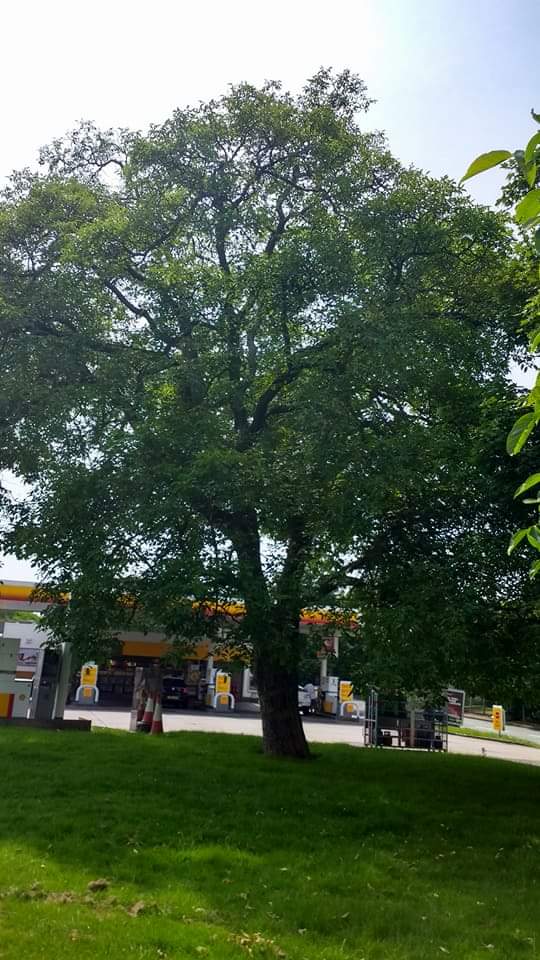
In 1935, the site of the old gallows was described as being ‘preserved and indicated to passers-by with an inscription recording its ghastly use in bygone days’. The area has developed significantly since then, but I was told by Janice Greaves, former Mayor and current Sheriff of Lichfield, that the exact spot where the gallows stood is now marked by a walnut tree growing on the patch of grass alongside the garage. There has been some discussion about what form the gallows actually took, but there is evidence to suggest that there was a permanent structure to which the cart carrying the condemned convicts would be brought. In Aris’s Birmingham Gazette it describes how ‘On Friday Night last, Richard Dyott Esq, who lives near Lichfield was going home from thence, he was stopp’d near the Gallows by two Footpads, who robb’d him of five Guineas, and in the Scuffle he lost his hat’.

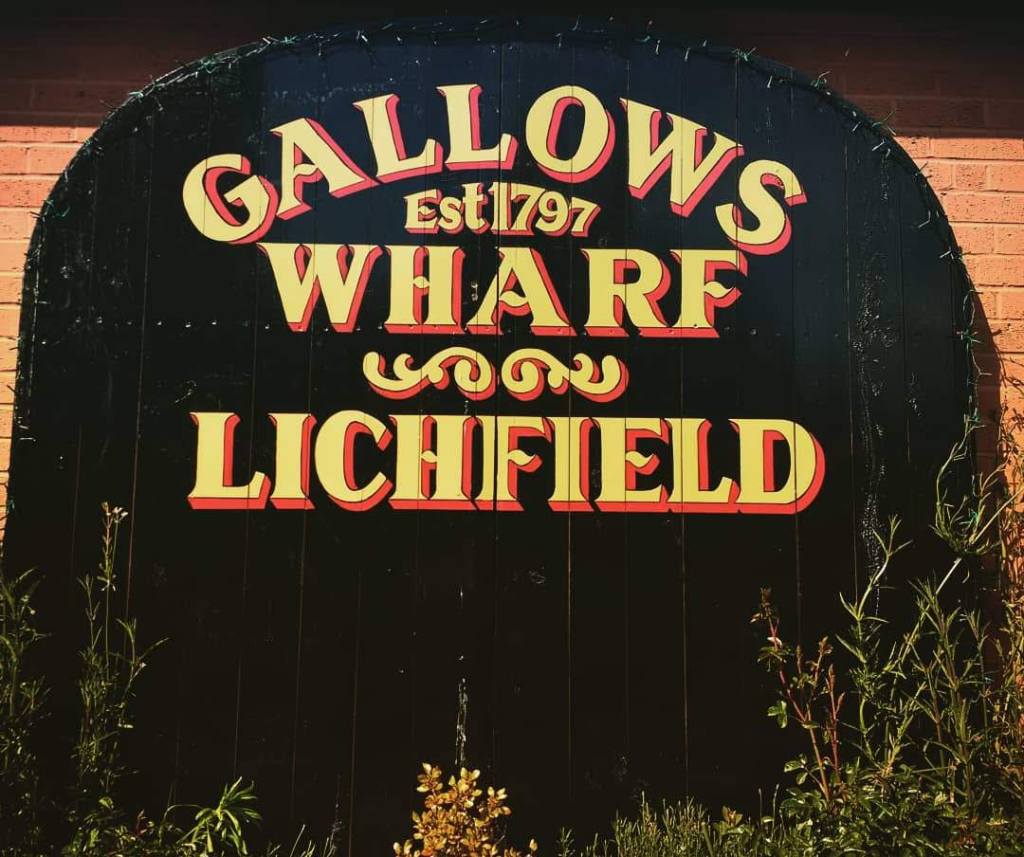
My plea to you this Halloween is to keep your eyes on Ebay for Neve’s mourning rings and the silver salver. If however you decide to take a wander over to Gallows Wharf in search of Richard Dyott’s hat, please be warned that an ex-executioner from centuries past appears to have been sentenced to linger at the spot and you may well feel a push from behind as he attempts to dispatch you to your doom.  

Sources

Evening Dispatch 31st March 1935

Aris’s Birmingham Gazette 3rd February 1752

Crime Scenery

I know. It’s been a while. You don’t know what I did this summer but I’d quite like to confess. There have been visits to gibbets, wells, shrines, mausoleums, derelict churches, ruined abbeys, tunnels and places with names which sound a bit rude. It’s less about serious history and more about a series of stories told by the landscape that surrounds us. Sometimes you have to listen very carefully to hear them (especially over the sound of my friend Jacky eating crisps), sometimes they shout in your face via an interpretation board funded by the parish council.  If you’re sitting comfortably*, then I’ll begin by sharing** evidence from some of the crime related activities we’ve been getting up to.

*unlike another friend Eddie the time we visited an old priory and had to stick him in the back of a van
**unlike Jacky with her crisps

Once upon a time, there was a little girl called Katie. When she grew up she wanted to be Mavis Cruet from Willo the Wisp. For a short while, she lived in Coleshill in North Warwickshire and almost everyday she’d walk past the town’s pillory. At the time she didn’t realise that it was a rare example combining three methods of corporal punishment i.e. stocks, a pillory AND a whipping post, and was last used in 1863, but she was curious all the same.

coleshill-pillory-michael-garlick

Coleshill Pillory by Michael Garlick from geography.org.uk http://creativecommons.org/licenses/by-sa/2.0/

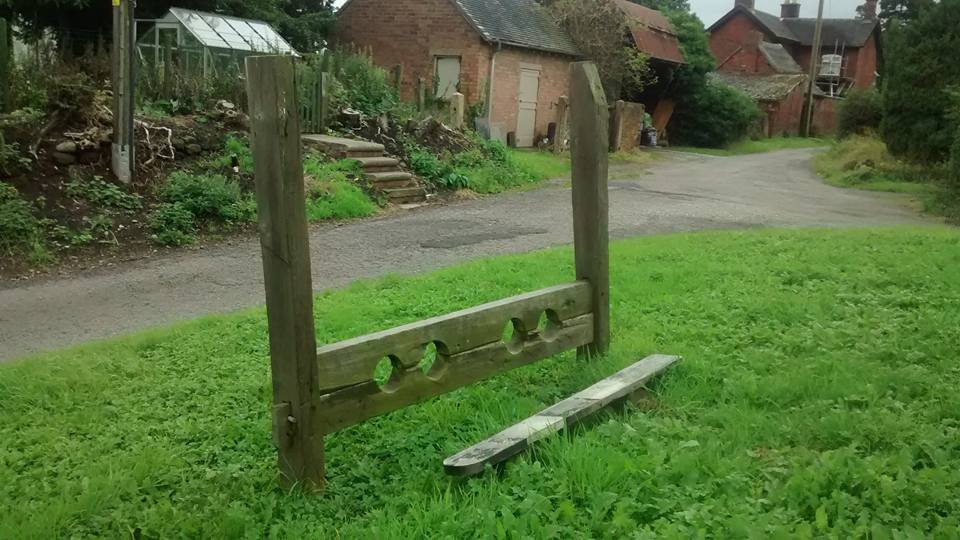
Many years passed and in August 2016,  Katie was visiting her parents in Stone in Staffordshire when she turned off too early towards Hilderstone. This was in no way down to her lack of navigational skills, there was a tree obscuring the ‘Hilder’ bit of the sign. Around the corner was a patch of grass with a set of stocks.

Stocks just after Hilderstone turning on A51 near Stone

Stocks just after Hilderstone turning on A51 near Stone

Despite extensive research (doing a google search), she couldn’t find any information on them. Katie hadn’t grown up to be Mavis Cruet, but she had continued to be curious. How many more sets of stocks were there around the country? Had anyone ever recorded them? Who had been publicly humiliated and punished here and what were the reasons? Our towns and cities are filled with monuments to the so-called great and good of society. Are these our monuments to those considered petty and bad who lived on its fringes? And so, after musing over these thoughts with friend Patti who already had a knowledge of and interest in this area, they decided to set up a discussion group called ‘Offending Histories’, with the aim of finding remaining physical evidence of crime and punishment across the Midlands and telling the sort of stories in which no one lives happily. Ever after or otherwise.

In just a month, we’ve already started to record a fascinating range of sites and objects. Here are some samples of the more local examples.

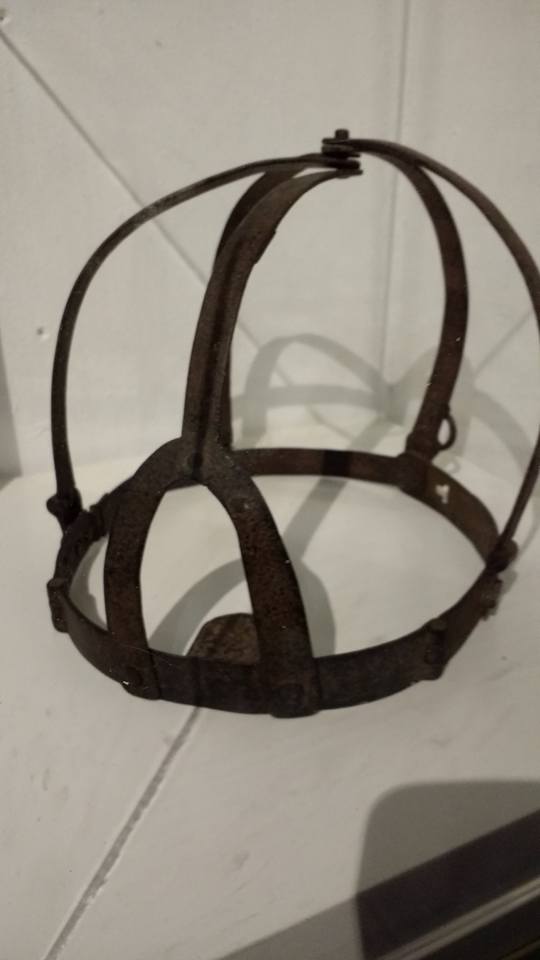
The old gaol cells in Lichfield have an example of a Scold's Bridle or brank on display. There's an excellent article from the Museum of Witchcraft and Magic exploring the history of these vile items here - http://museumofwitchcraftandmagic.co.uk/…/object-of-the-mo…/). Of particular interest is the following reference,

The old gaol cells in Lichfield have an example of a scold’s bridle or brank on display. There’s an excellent article from the Museum of Witchcraft and Magic exploring the history of these vile items here. Of particular interest is the following reference, “In 1789, the brank was used in Lichfield. A local farmer enclosed a woman’s head “to silence her clamorous Tongue” and led her round a field while boys and girls “hooted at her” “Nobody pitied her because she was very much disliked by her neighbours.”

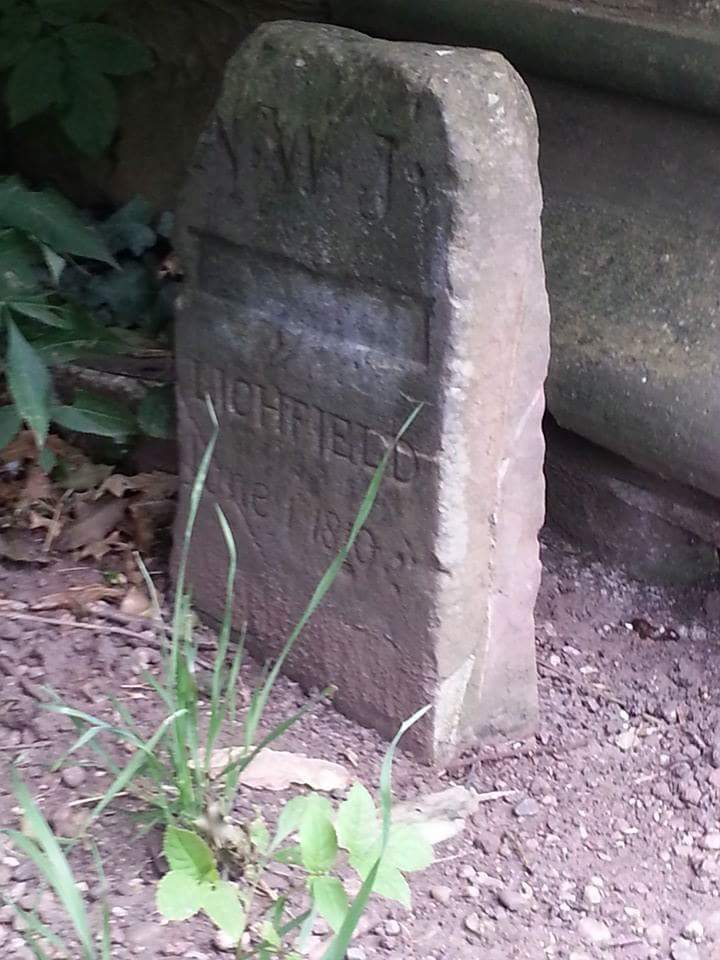
Outside St Michael's church is the relocated headstone of the last three men to be executed in the city. On 1st June 1810, Neve, Jackson & Weightman were taken by cart from the city gaol & publicly hanged for forgery at the city gallows (where Tamworth St, Upper St John St & the London Road cross). Interesting that at some point, the word 'hanged' appears to have been obliterated from the monument. Although this appears to be the only marker to executed criminals buried here, the church register records the names of others who were executed and buried e.g. John Wilson Sept 23rd 1583 and John Walle and Robert Hodgson described as prisoners executed and buried on 13 October 1587.

Outside St Michael’s church is the relocated headstone of the last three men to be executed in the city. On 1st June 1810, Neve, Jackson & Weightman were taken by cart from the city gaol & publicly hanged for forgery at the city gallows (where Tamworth St, Upper St John St & the London Road cross). Interesting that at some point, the word ‘hanged’ appears to have been obliterated from the monument. Although this appears to be the only marker to executed criminals buried here, the church register records the names of others e.g. John Wilson on Sept 23rd 1583 and, John Walle and Robert Hodgson described as prisoners executed and buried on 13 October 1587.

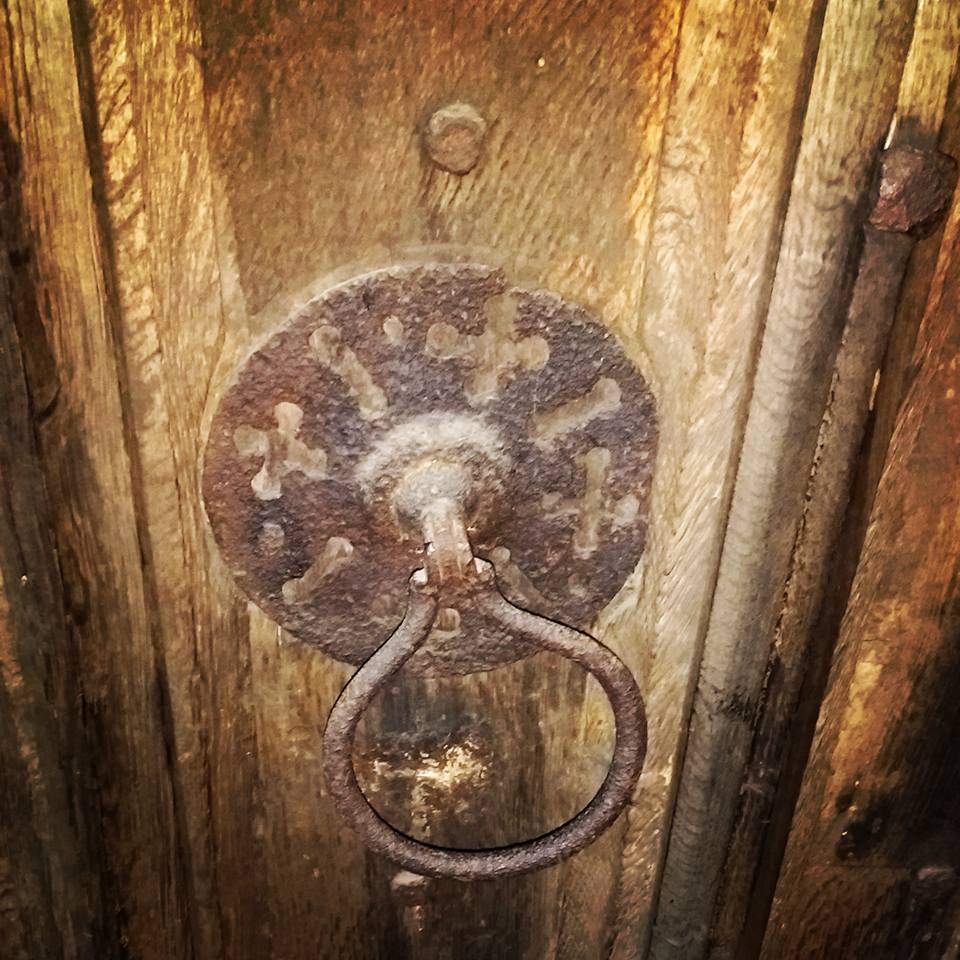
Patti pointed out this example of a sanctuary knocker on a door in Elford church, dating to circa 1450AD. By touchin the knocker, a fugitive from the law could be given sanctuary in the church for a period of time. If they made it that far. One example given by Karl Shoemaker in his book 'Sanctuary and Crime in the Middle Ages' tells of Elyas, a chaplain imprisoned in Staffordshire to await trial for murder, who 'killed the gaoler's attendant, escaped from the prison & fled towards the church'. The gaoler & others from Staffordshire pursued him and cut off his head before he could reach the church'. Another example comes from Colton History Society - in 1270 Nicholas son of William De Colton stabbed Adam, son of Hereward in a brawl; he fled to the church and took sanctuary. Claiming sanctuary was abolished 1623.

At St Peter’s in Elford, Patti pointed out this example of a sanctuary knocker on a door dating to circa 1450AD. By touching the knocker, a fugitive from the law could be given sanctuary in the church for a period of time (this seems to have been forty days which is a nice biblical number) . If they made it that far. One example given by Karl Shoemaker in his book ‘Sanctuary and Crime in the Middle Ages’ tells of Elyas, a chaplain imprisoned in Staffordshire to await trial for murder, who ‘killed the gaoler’s attendant, escaped from the prison & fled towards the church’. The gaoler & others from Staffordshire pursued him and cut off his head before he could reach the church’. Another example comes from Colton History Society – in 1270 Nicholas son of William De Colton stabbed Adam, son of Hereward in a brawl and fled to the church where he took sanctuary. Claiming sanctuary was officially abolished in 1623.

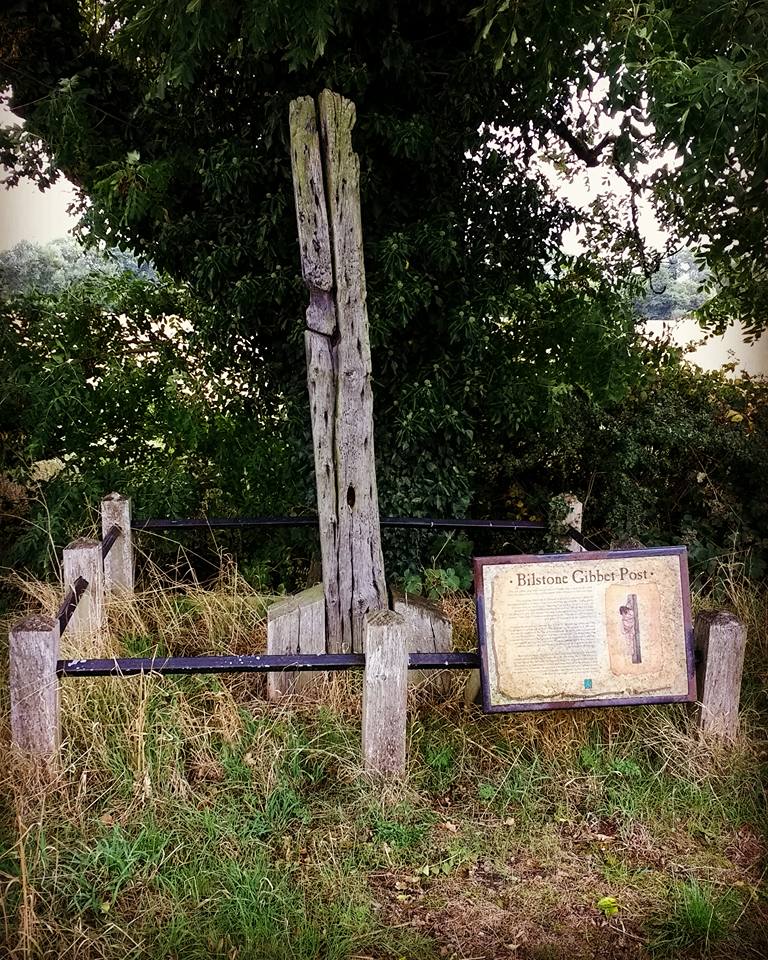
The Bilstone Gibbet Post, Leicestershire. Erected in March 1801 to display the body of local man John Massey, executed for murdering his wife Lydia and attemping to murder his step- daughter. Massey's headless skeleton, wrapped in chains, remained hanging from the post for seventeen years, his skull apparently being used as a candle holder in a pub in Atherstone. In the early twentieth century, the post was a venue for religious meetings but today, there are rumours of more unusual behaviour taking place here.

The Bilstone Gibbet Post, Leicestershire. Erected in March 1801 to display the body of local man John Massey, executed for murdering his wife Lydia and attempting to murder his step- daughter. Massey’s headless skeleton, wrapped in chains, remained hanging from the post for seventeen years, his skull apparently being used as a candle holder in a pub in Atherstone. In the early twentieth century, the post was a venue for religious meetings but today, there are rumours of more unusual behaviour taking place here.

Unable to find much on this pillor outside the Cock Inn at Stowe by Chartley, but it does appear to have been relocated here at some point.

Pillory outside the Cock Inn at Stowe by Chartley. Appears to have been relocated here at some point as not shown on early 19thc photographs of the pub

It is a dark subject at times but there are lighter moments too. Currently providing wry amusement is the question of how, and indeed why, was a seventeenth century cucking stool stolen from the church of St Edward at Leek? A meta-criminal mastermind at work? It’s very much an ongoing exploration and if you are interested or better yet, have something to contribute, and aren’t offended by an element of gallows humour, please do join our Offending History group here

Beaming

You’ve probably heard about the exciting developments in the Lichfield Waterworks Trust’s campaign to save Sandfields Pumping Station for the community. If you haven’t a) where have you been all weekend? and b) please take a look at chairman Dave Moore’s recent announcement here and a great post from the ever supportive Brownhills Bob here.

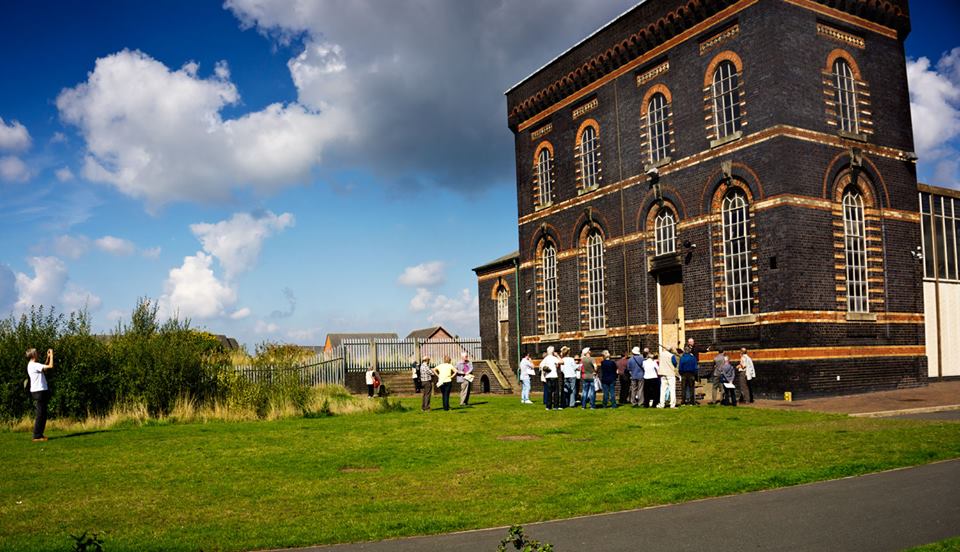
Sandfields Pumping Station. If you still don't know where this amazing place is, tell me and I'll take you there myself.

Sandfields Pumping Station. If you still don’t know where this amazing place is, tell me and I’ll take you there myself.

You probably won’t be surprised that I want to add my two penn’orth. For all its tangents and diversions, this is essentially a blog about Lichfield history and to be able to write a post saying that we are now going to be actively involved in preserving and promoting one of the most important architectural, industrial and social heritage sites in the city (and indeed country)…well, let’s just say I’ve had to pinch myself a few times.

One of the three waterwalks arranged by the Lichfield Waterworks Trust or the Heritage Weekend 2015

One of the three waterwalks arranged by the Lichfield Waterworks Trust for the Heritage Weekend 2015

On 19th September 2015,  the Trust took part in the Lichfield Heritage Weekend with three water themed walks around the city and a display in the museum at St Mary’s. We wanted to share the story of how Lichfield supplied clean drinking water to the Black Country during the cholera epidemics of the mid-nineteenth century and to highlight the heroic role Sandfields Pumping Station and its now unique Cornish Beam Engine played in this. Rather fittingly, the theme of the 2015 weekend was ‘Making History’ as here we are just five weeks later, in a position to do exactly that.

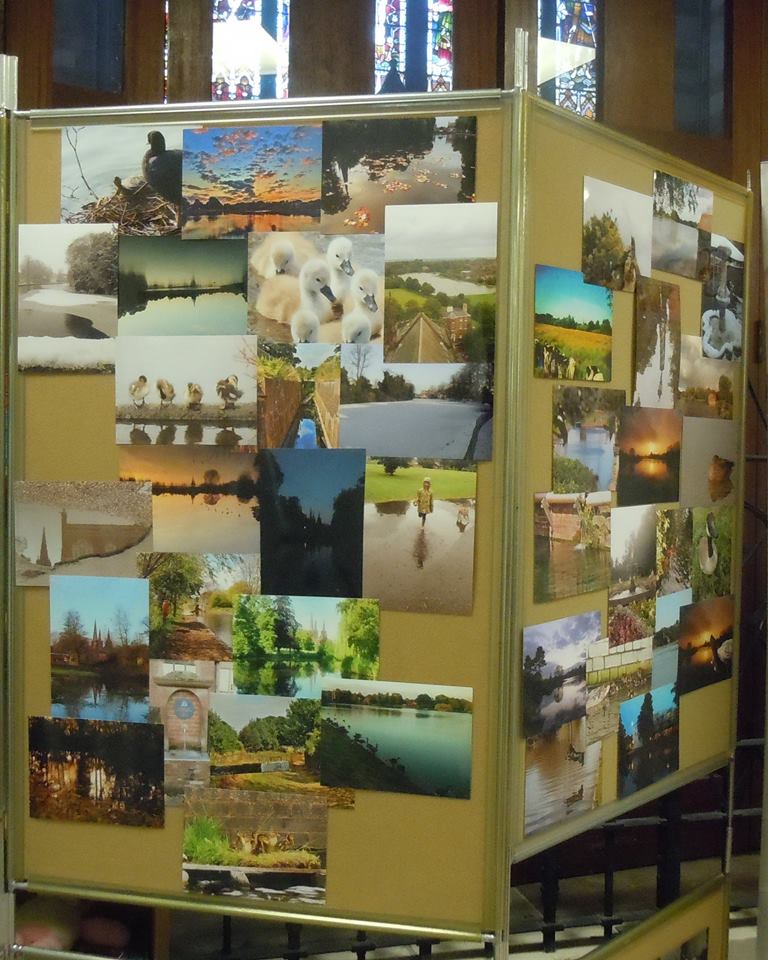
Our display of photos on the theme of Lichfield Water contributed by members of the public during Summer 2015.

Our display of photos on the theme of Lichfield Water contributed by members of the public during Summer 2015. (Photo by J Gallagher)

I’ve been grinning from ear to ear since I heard the news. Congratulations, thanks and respect must of course go to chairman Dave Moore and the other members of the Lichfield Waterworks Trust for their tenacity, dedication and hard work but also their optimism, vision and ability to talk me into wearing a boiler suit in public. Thanks also though to those of you came who came on a water walk, sent us a photo of a Stowe Pool sunset, visited John Child’s amazing model of a Newcomen engine at our stall in the Festival Market, lent us your name in support, picked up a leaflet, got really excited when you heard about the Hanch tunnel running below your feet, chucked your two penn’orth worth in our bucket during the Bower Procession and showed us in many other ways that you cared deeply about not only the past but also the future.

Some of the Waterworks Trust Gang collection during the Lichfield Bower 2015

Some of the Lichfield Waterworks Trust gang collecting during the Lichfield Bower 2015

As David and Bob both rightly say, the real hard work starts here and we’ll need your ongoing support as we embark on a new chapter in Lichfield’s water story. I’m hoping it’s going to be ‘Sandfields Pumping Station – built for the community and saved for the community by the community’. Sounds like a great way of making history to me.

A beaming Gill on last week's Arts & Heritage procession. She carries the boiler suit look off much better than I do.

A beaming Gill from the LWT on last week’s Arts & Heritage procession (she carries the boiler suit look off much better than I do).

Take Me to Church Mayfield

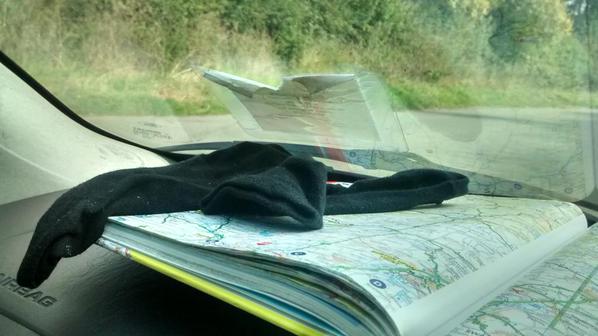
On my recent explorations of the North, I exchanged SatNav Woman for my Mum and a map. It’s a swings and drive several times around the roundabout looking for the right exit approach. SatNav Woman doesn’t get excited by finding places like ‘Gallows Green’ on the map or stopping to ask directions from bonny locals who call you ‘Me Duck’ (ok, that was both of us), but then she doesn’t send you text messages from the car when you’re having a moment with a thousand year old font or leave her wet socks to dry on the dashboard either.

Mum's Socks

From Croxden Abbey we headed to Mayfield, and specifically, Church Mayfield as I wanted to see the early sixteenth century tower at St John the Baptist. Completed by Thomas Rollestone in 1515, he added the inscription ‘Ainsi et mieux peut etre’. I don’t speak French but I understand this translates to something like ‘thus it is and better it could be’ and appears to be a variation on the Rollestone family motto. Some have interpreted this as an indication that Thomas thought he could have done a bit of a better job on the tower. My maths is as bad as my French, but I can just about work out that this year was its 500th anniversary and at the celebrations in April, someone made an edible replica of the church in gingerbread, something so brilliant that surely neither perfectionist Thomas Rollestone nor Mary Berry could find fault.

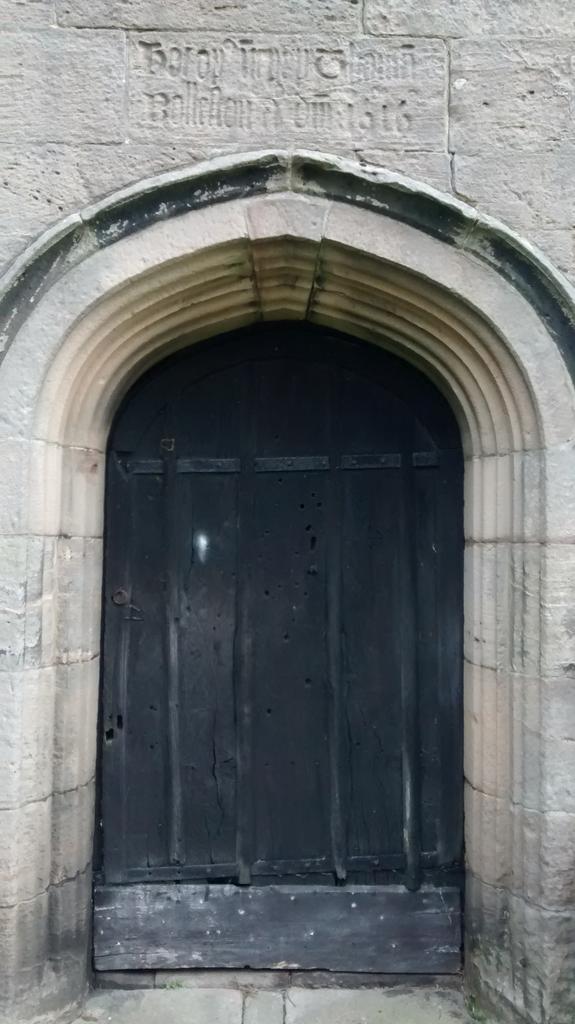
Tower door, Mayfield

Tower door, Mayfield

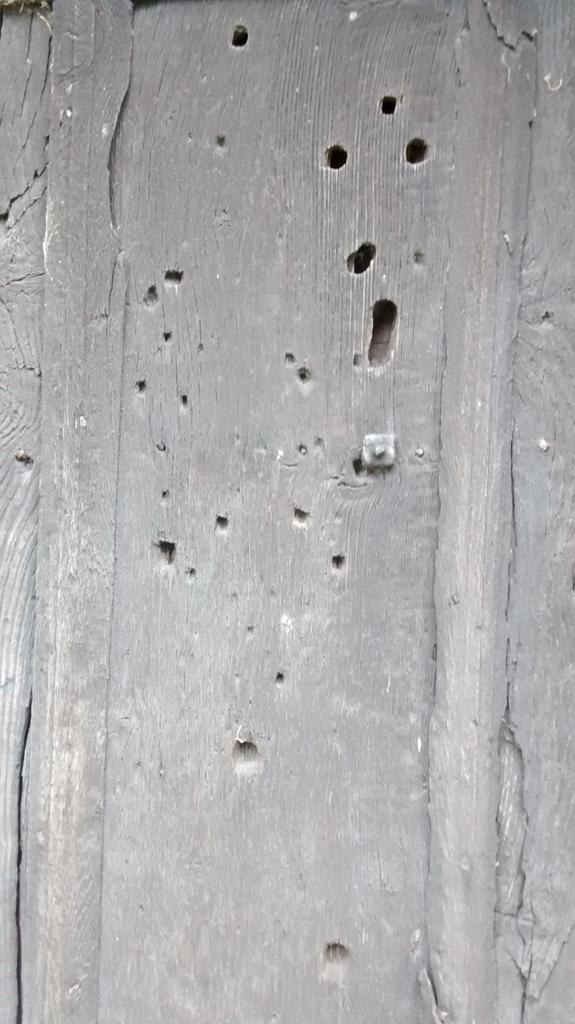
The door to the tower is peppered with holes and the story goes that on 7th December 1745 the retreating army of Bonnie Prince Charlie passed through Mayfield, murdering an innkeeper and a man who refused to hand over his horse before turning their muskets on the church door, behind which the terrified villagers had barricaded themselves. Although I came in peace, the door was also locked to me and so I had to be content exploring the churchyard.

Holes in the door

Holes in the door

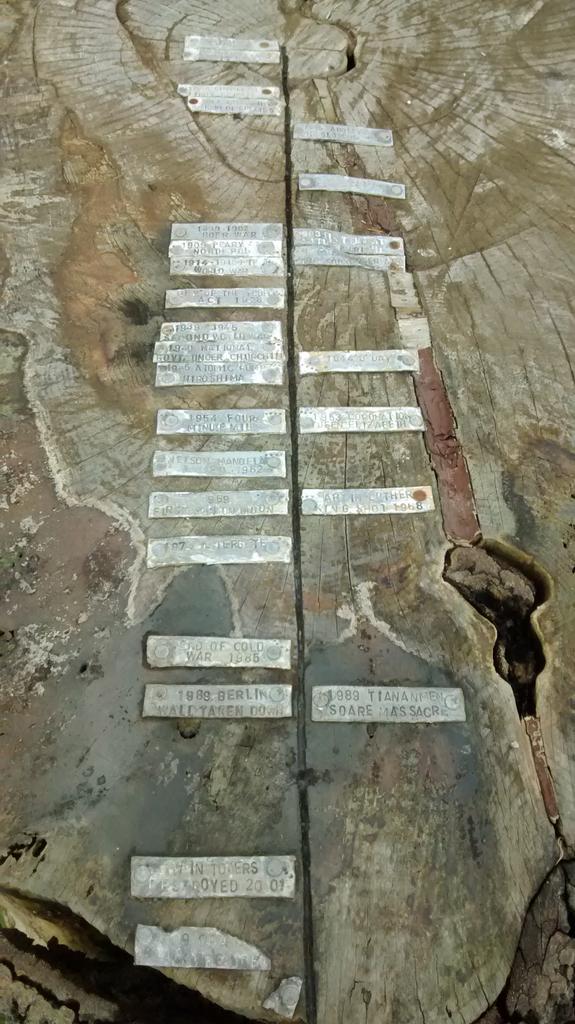
Underneath a yew tree there’s a medieval wayside cross moved here in the mid nineteenth century from Middle Mayfield, where it stood at a junction opposite a house known as ‘The Hermitage’ (an inscription on the door lintel reads ‘William Bott, in his old age, built himself a hermitage 1749).  Something else in the churchyard which I’ve never seen before but is so simple and effective that I’m not sure why, is a tree stump timeline, marking events in the church, village and the world during the lifetime of the Lebanese cedar which was one hundred and seventy seven years old when it was felled in 2008.

Tree time line Mayfield

En-route to our next destination (Cheadle),  we tried and failed to find the Hanging Bridge, spanning the River Dove, and also the Staffordshire/Derbyshire boundary. It was rebuilt in 1937 but, as you’ll see from the photo I’ve pinched from elsewhere, the arches of the original fourteenth century packhorse bridge are still visible. The name is said to refer to the executions of the Jacobite rebels which took place here following the trouble at Mayfield. However, as much as I’m a fan of folklore, I’m also a lover of linguistics and my suspicion the story was derived from the bridge’s name, and not vice versa, was confirmed by David Horovitz’s epic research into the place names of Staffordshire which reveals that the structure was first recorded as Le Hongindebrugge in 1296, nearly 450 years before Bonnie Prince Charlie’s troops are said to have met their end here. Of course that only raises more questions about what ‘hanging’ actually refers to here. I’ve been thinking about it for over an hour and now I’m handing it over to you, as the best I can come up with is a rope bridge. Ainsi et mieux peut etre….

Hanging Bridge, Mayfield by John M [CC BY-SA 2.0 (http://creativecommons.org/licenses/by-sa/2.0)], via Wikimedia Commons

Hanging Bridge, Mayfield by John M [CC BY-SA 2.0 (http://creativecommons.org/licenses/by-sa/2.0)%5D, via Wikimedia Commons


Sources:
http://www.mayfieldparishchurch.org/history-churchyard.html

Click to access 397633_vol2.pdf

‘Discovering Mayfield’ leaflet 2012 produced by Mayfield Heritage Group

Capturing The Castle

This year’s Heritage Open Days are now in full swing and yesterday a friend of mine took me on a grand day out to Astley Castle in Warwickshire. I’m sure I could find a tenuous link to Lichfield if I looked hard enough, but why be parochial when there’s an opportunity to share a stunning example of how even our most neglected historic buildings can be given a sustainable future? Even if it is in Warwickshire. Anyway, I really like castles.

Astley Castle exterior - new bricks built into ancient stones

Astley Castle exterior – new bricks built into ancient stones

I’ve never seen one quite like this though. Actuallly, it’s more fortified manor house than castle, but it has crenellations and a moat and has been associated with three English queens so let’s not quibble too much over nomenclature. The fortified manor house castle has fallen into varying states of disrepair at various points throughout its seven hundred year history but it was a fire in 1978, and the subsequent vandalism, theft and collapse, that rendered Astley a complete ruin. In the late 1990s, the Landmark Trust (1) attempted to rescue the property using conventional restoration and conversion methods but it was financially and technically impossible. However, the Trust refused to give up on Astley and returned to the property in 2005. Accepting that parts of the building were now beyond repair, they held an architectural competition with a brief to create a four bedroomed house to sleep eight people at the castle. Ideas ranged from building an new house in the grounds, which would have made the castle itself the world’s grandest garden shed (“Have you seen the tool box, love? Think it’s in the Jacobean wing, next to the hosepipe”.) to building a new house behind the retained facade (2). The design that won the competition, and went on to win the 2013 RIBA Stirling Prize was created by Witherford Watson and Mann architects. In my very humble opinion, it blends and bonds the ancient and modern together magnificently. I’ve seen it described as a reinvention rather than a restoration and perhaps that is the way forward. After all, as one of the project architects said, when you have a building that has been continually altered to meet the needs of its inhabitants over a span of seven hundred years, which point in time do you choose to restore it to?

A room with a view

A room with a view

astley castle ruins from windown

Another one

Of course, following our visit I now really want to stay there (I don’t have a bucket list but I am going to start one so I can put ‘have a bath at Astley Castle on it’). I’d say that about anywhere with a bed and a bit of history though. What’s different about Astley is it’s possibly the first historic building I’ve visited where ideas about the present and the future have captured my imagination more than stories about the past. At a place where those stories include that of the fugitive Henry ‘father of Lady Jane’ Grey hiding in a nearby hollow oak, being betrayed by a servant and executed at the Tower of London, and returning afterwards to haunt his former home minus his head, that’s quite an achievement.

Immerse yourself in history

Immerse yourself in history

(1) The Landmark Trust is a conservation charity which rescues at risk historic buildings by restores them using traditional techniques and makes them available for holiday lettings.

(2) Bingo! There’s our tenuous Lichfield link. I’m sure I remember this being proposed (and subsequently rejected) as an idea for the Victoria Hospital.

astley castle exterior