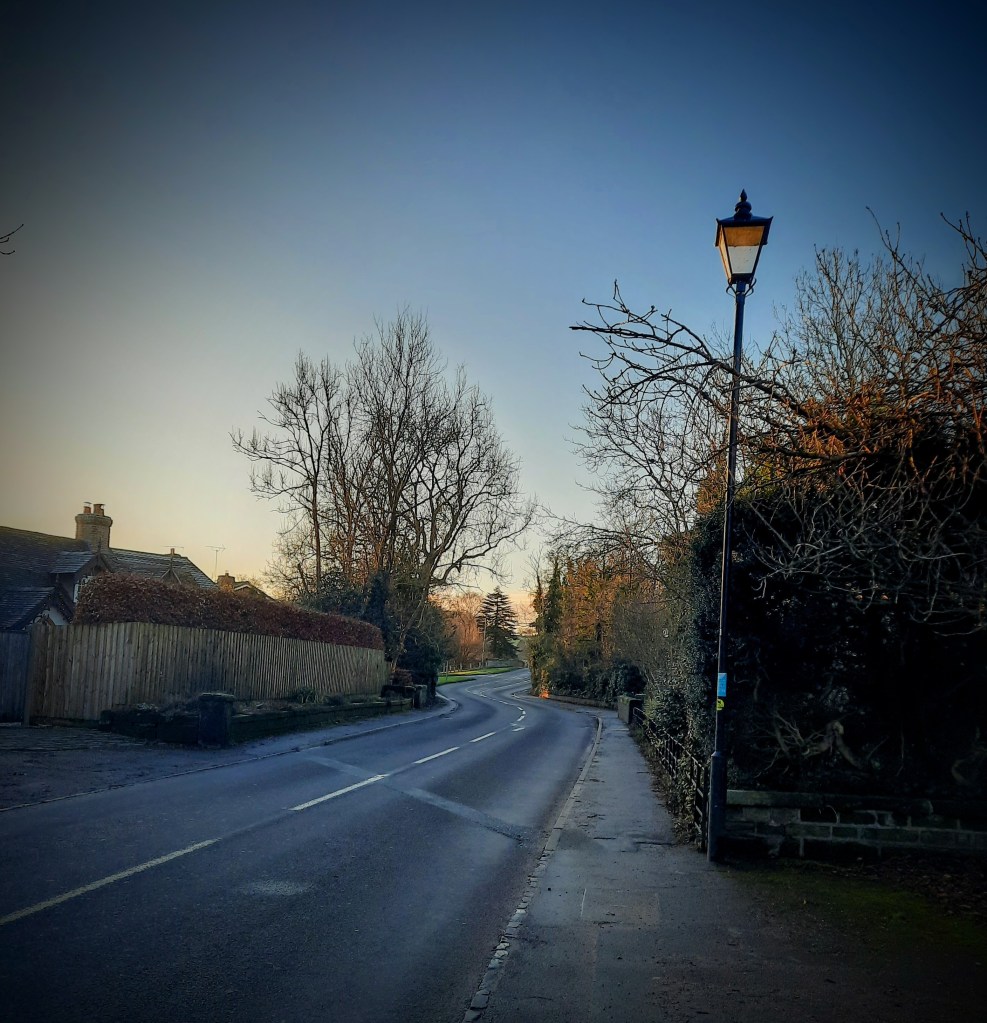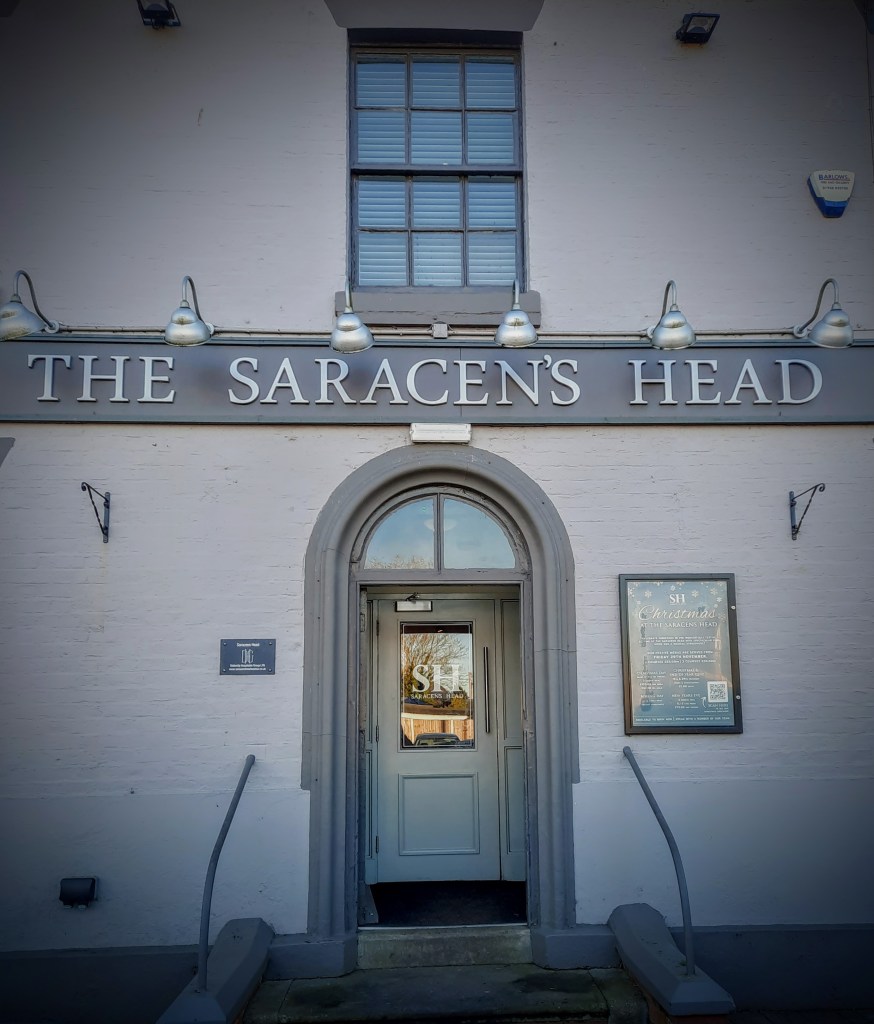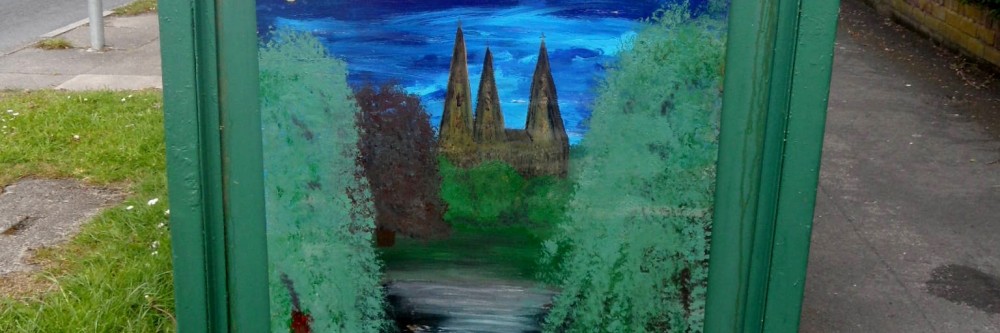
Highway to Hell

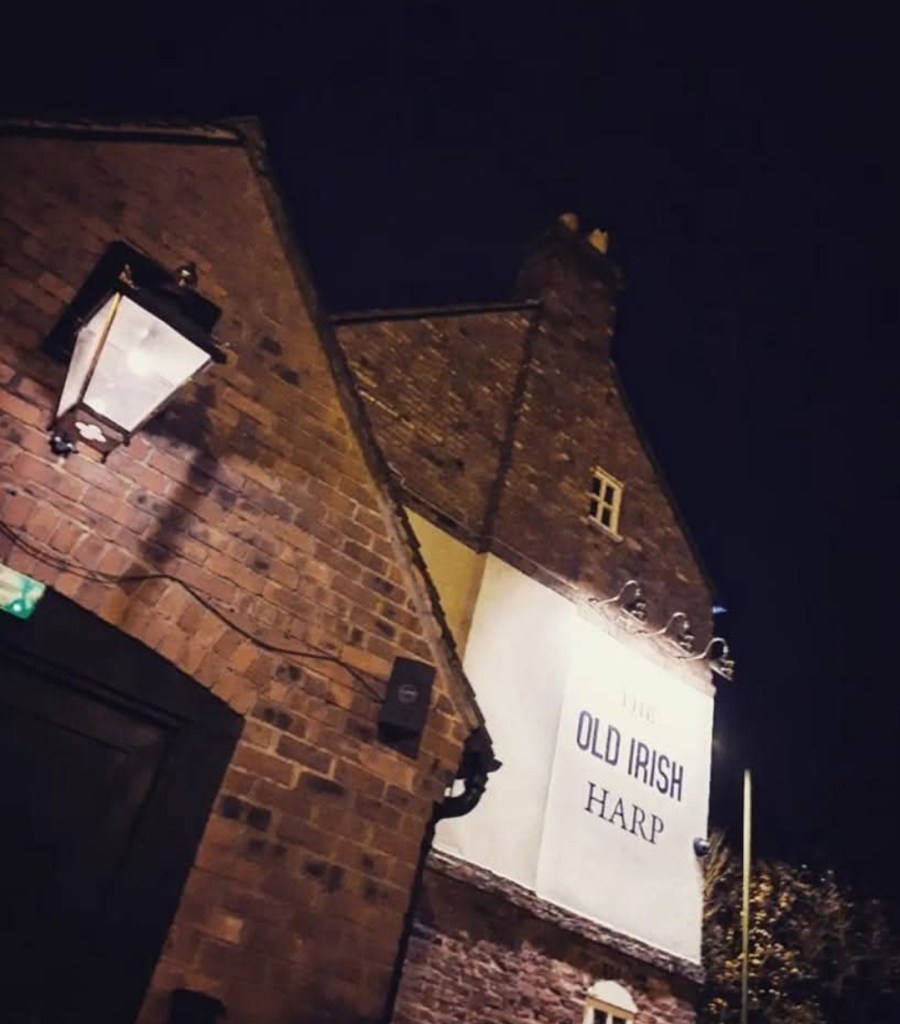
I feared from the looks on my family’s faces that my interest in the macabre may have gone too far when I happened to mention during a meal at the Old Irish Harp that an inquest on the body of a genteelly dressed woman found ‘wilfully murdered’ in a wood near Sutton Coldfield had taken place not far from where we were sat, albeit 250 years prior. I thought perhaps it was time to find a different hobby. Embroidery perhaps? A pleasant pastime for sure, but turns out that for me it’s no substitute for finding and sharing a ripping yarn. And now that we’ve established that I am beyond all redemption, I want to regale you with a post about crime and punishment on the mean streets of Staffordshire.

Back when the inquest took place it was just known as the ‘Irish Harp’.

On the evening of 26th October 1764, a little after 8 o’clock in the evening, Mr Thomas Hurdman of Alrewas was stopped by a footpad opposite St Michael’s churchyard. The Aris’s Birmingham Gazette cryptically reported the rogue was suspected to be a W_____ C_____ of Greenhill. I’m not sure why such nominal secrecy though, when they also published a description of him in the same report (not yet 20, about 5 feet 5 inches high, wide mouthed and wearing his own hair, if not altered, which was brown and short cut’). Despite being caught by one of the city’s constables, WC managed to quite literally give him the slip by sliding out of his coat, and legging it out of Lichfield in a linen frock. His freedom (and any semblance of anonymity) was short-lived however. In March the following year, newspaper reports reveal that the ID of WC was William Cobb and that he’d been sentenced by the High Steward of Lichfield, Fettiplace Nott, to be transported for his assault on Thomas Hurdman and making many violent threats of murder.

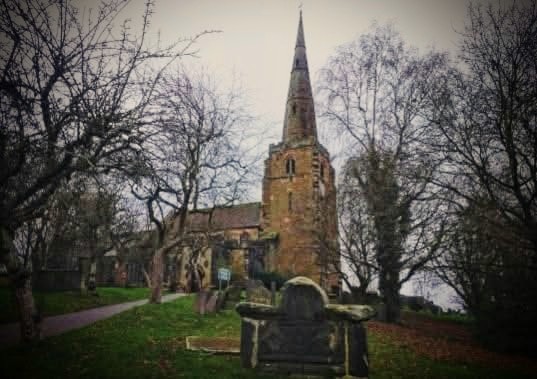
St Michael’s Lichfield is the graveyard for some who went to the gallows

Ashmoor Brook, up Cross in Hand Lane, was the scene of another robbery which went awry. In Lichfield March 1833, a notorious local character known as Crib Meacham, a name apparently derived from his success in various pugilistic encounters, was charged with robbing a Mr Lees of Stoneywell. According to Lees, Meacham was one of a gang of four who attacked him and his wife. The pair were in possession of a large sum of money but it was Mrs Lees who was holding the purse strings at the time and the thieves had allowed her to run away. She soon returned with assistance and it was the robbers turn to run, leaving a gagged Mr Lees unharmed but relieved of his relatively empty purse and hat. Meacham was arrested later that evening but as of yet, I cannot tell you anymore about him, neither the fights which earned him his nickname in the past nor the fate he earned from his part in the robbery.

Cross in Hand Lane is only just outside Lichfield but must have felt like the back of beyond travelling through here after dark

I can tell, however, tell you much more about Robert Lander aka Bradbury a cordwainer of Milford near Stafford who robbed Solomon Barnett, a wax chandler of Liverpool in March 1798. The newspaper reports at the time give not only a physical description (Lander was a stout built man, 5ft 5 inches, 25 years of age wearing a blue coat, a striped fancy coloured waistcoat, and thickest breeches, torn upon the left thigh and patched upon both the knees). It also gives his villain origin story, starting at his childhood home of Haywood near Stafford. When his Dad died, he inherited a few hundred pounds. At the age of 21 he got turned down for a job at the Board of Excise and so went to work for a gentleman in the wine and spirit trade instead. This, it seems, may have been the start of his downfall. During his employment he is said to have remained in a permanent state of intoxication, eventually absconding and taking with him a watch belonging to his master. He sold it at Stafford where he enlisted into a Regiment of Foot but ended up, somewhat ironically, in the shoe making business. This didn’t last long either and neither did his subsequent enlistment into four other regiments. His career in crime also came to an abrupt end when he was found guilty of the robbery of Solomon Barnett and sentenced to death at the Stafford Assize. When the judge prayed that the Lord would have mercy on his soul, it was reported Lander replied, ‘G__d d___n you and the gallows too. I care for neither’. I assume he said it in full but that his blasphemy was censored by the Chester Chronicle. He was executed in August 1798 and the parish register of St Mary’s Stafford records that, along with Edward Kidson, Robert Lander alias Bradbury was executed _ _ _ _ _ _ _.

These are all true crime stories, but it would’t be Lichfield Lore without a bit of folklore would it folks? You’ll be relieved to know I’m not going to go down the Turpin turnpike road but I am going to give a dishonorable mention to Tom ‘Artful’ Arnott, a highwayman who was supposedly executed, gibbeted and, eventually, buried at this crossroads in Cannock.

Although Arnott’s grave is marked on old maps there are no records of anyone of that name ever being executed. Intriguingly though, there is a record of a Thomas Arnott being buried on 1st September 1777 at St Luke’s in Cannock. Clearly a man can’t be buried in two places at once but it’s the right kind of era and area. Then there’s a Thomas Arnott mentioned in Aris’s Birmingham Gazette in October 1792 for absconding from his master’s service in Birmingham. Intriguingly, after given a description of him (35 years old, five feet five inches, marked with the Small Pox, dark lank hair, and lightly made, wearing a blue coat), it mentions that prior to his work as a stamp, press, lathe and die maker, he had been employed as a forger. Do they mean the criminal variety and if so, does this strengthen the case for him being our Tom? Just to add an extra layer of intrigue, there was yet another absconding Thomas Arnott, who was apprenticed to a Whitesmith in Worcester but ran away on 5th April 1803. He’s described as 5 feet two inches, black curled hair, wearing a blue coat with yellow buttons, a green striped cashmere waistcoat with yellow buttons and dark velveteen breeches. In that outfit, if he did become a highwayman, he’d have been a very dandy one indeed. Could any of these be the legendary Arnott? Did he even exist in the first place? All I do know is that this story is one T__B__C__________.

Arnott’s Grave. Unless it turns out to be at St Luke’s Cannock.

Sources
Aris’s Birmingham Gazette 5th November 1764

Aris’s Birmimgham Gazette 18th March 1765

Aris’s Birmingham Gazette 25th March 1833

Staffordshire Advertiser 24th March 1798

The Chronicle 7th September 1798

Chester Chronicle 17th August 1798

Aris’s Birmingham Gazette 8th October 1792

Aris’s Birmingham Gazette 2nd May 1803

Abra-cadaver

It’s Sunday and it’s Spooky Season (or October as we used to call it) and so hey presto, I’ve written a post about unorthodox burials in this old city where magic may have been involved. I think you’ll like this. Not a lot, but you’ll like it (kids, ask your parents).

As a point of reference and, just to show I don’t just completely conjure things up, there’s a great paper by Roberta Gilchrist, which deals with the archaeology of magic in medieval burials. It outlines the norm for Christian interments at that time as being a body wrapped in a shroud and lacking a coffin, personal items and grave goods and also explains that around two percent of excavated burials are exceptional to this. Excitingly but perhaps unsurprisingly, it turns out that some of these intriguing inhumations have turned up in the Field of the Dead (or Lichfield as the authorities insist on calling it).

Amongst the fourteen burials found beneath what’s now the beer garden of the Brewhouse and Kitchen on Bird Street were the remains of three females, including a woman who lived in the mid-fourteenth century, described by archaeologist Mark Neal as being quite elderly and in poor health. The discovery of so many skeletons here suggests it was the location of the cemetery for Lichfield’s Fransican Friary and the presence of women raises some interesting questions about who was allowed to be buried here and what their role may have been. Most puzzling of all however was the discovery of a body found with a 2mm thick layer of charcoal beneath it. Research shows that such burials are mostly associated with people of note in the early medieval period and predate the founding of the Friary in 1230. Was this the site of a high status Saxon buried before the Franscicans arrived? It is of course possible that this funerary ritual was continued beyond the Saxon period here in Lichfield but could we be looking at a site with a history stretching back further than we thought? The history of the Grey Friars site suddenly seems very grey indeed…

The other burning question is of course, what was the significance of the charcoal? There are some intriguing possibilities ranging from the practical, where the charcoal layer was a way of absorbing bodily fluids during putrefaction, to some sort of post-humous purification ritual designed to save the soul after a life of sin and to stop the dead from returning to haunt the living. I don’t think I’ll ever look at a barbecue in quite the same way again.

Lichfield Cathedral. Pure magic.

Five further charcoal burials were found during excavations at Lichfield Cathedral, one of them inside a stone structure believed to have been part of the original Saxon church. One of those burials was that of a priest buried with something variously described as a hazel wand, rod or staff, as well as a cross of twigs, a chalice and patten and a eucharistic wafer. Yes the symbolism is strong with this one. Several theories exist regarding the presence of the wooden wand, including it being provided for protection as the priest made his final journey through the valley of the shadow of death. Perhaps the most peculiar burial here is that of a priest in an 11th century stone coffin which had an opening directly over where the mouth would be positioned. It’s been interpreted as a libation tube, where the living could make offerings of food and drink to their dead relative. It’s a pagan practice mostly associated with the Romans, and as yet, no-one has come up with a satisfying explanation for it being present in a place of Christian worship.

There are also an incredible 49 burials recorded at the Cathedral where white quartz stones have been found inside graves, and even clutched in the hands of the occupants. Again, the exact symbolism of these is unknown, but archaeologist Warwick Rodwell suggested the answer may lie in Revelation 2:17. This is a passage of the New Testament where a white stone with a new name written on it is given by Christ to his followers as symbol of forgiveness and an invitation to the afterlife. I think. It seems to make sense until you realise that people were incorporating these white pebbles into their funerary rituals long before Christianity existed. As we are on the subject of magic, can we also take a moment to appreciate that John who presents the video I’ve linked to looks like he might be an actual wizard.

St Michael’s on Greenhill is a place of many mysteries

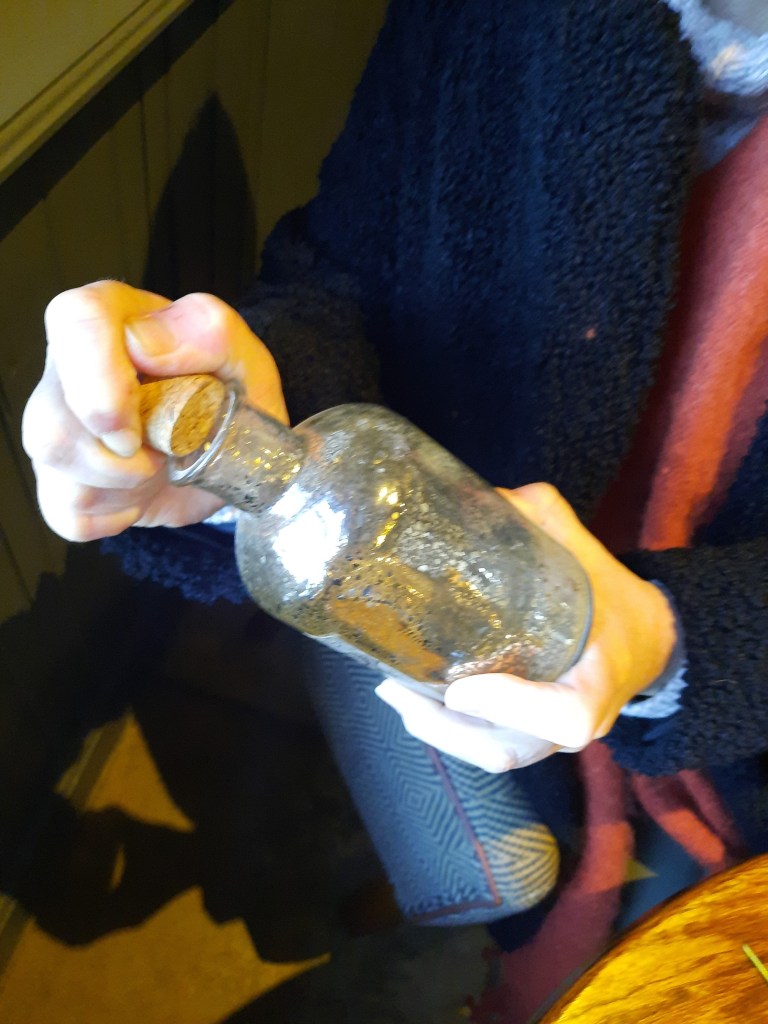
A seemingly more recent, but no less bemusing burial was unearthed at St Michaels on Greenhill in 1852. Two gravediggers dug up the rotten fragments of an elm coffin and found that buried with the bones inside it was a bottle filled with a liquid believed to be urine. It has the feel of folk magic to me, particularly as in 2021, a similar discovery was made at the Trinity Burial Ground in Hull. We know that witch bottles were used to protect people from harm and that examples have been found buried in the foundations of buildings. Was this something similar, designed to protect the grave from robbers perhaps, or other less earthly threats? Or was it just a final drink for the coffin’s inhabitant to enjoy on their way to wherever they were headed to next?

I make no apologies for asking so many questions and being unable to answer any of them in this post. Time and time again, through writing this blog and being part of the Lichfield Discovered team, I realise that there is still so much to be uncovered and understood about the incredible history of this city. And for me? Well, that’s magic.

Sources:
Lichfield Mercury 5th January 1990

1 Bird Street, Lichfield Report on a watching brief, Marches Archaeology Series 103, November 103

Stone, R. (1999). 1 Bird Street, Lichfield: archaeological watching brief. Cirencester: Cotswold Archaeology.

Charcoal Burial in Early Medieval England, James Holloway (2009)

Gilchrist, R. ORCID: https://orcid.org/0000-0002-1967-2558
(2008) Magic for the dead? The archaeology of magic in later
medieval burials. Medieval Archaeology, 52. pp. 119-159

Jonsson, Kristina. “Burial Rods and Charcoal Graves: New Light on Old Burial Practices.” Viking and Medieval Scandinavia 3 (2007): 43–73. Web.

Community and Belief: the Development of Anglo-Saxon Christian Burial Practice,
AD 700-1066, Alexandra Aversa Sheldon (2018)

The Queen’s Shoes

I’m not organised enough to do an ‘On this day in history…’ type post and so I’ve just missed the 565th anniversary of the Battle of Blore Heath. However, as I know a couple of good stories about it, here’s an ‘on this Monday just gone in history’ post instead.

The tales take place away from the blood and gore of the battlefield, a mile up the road at Mucklestone, the most westerly parish in Staffordshire. Its name may derive from the OE ‘micel’ meaning large and ‘stan’ meaning stone and it seems likely this is linked to the presence of two monoliths known as the Devil’s Ring and Finger. Satan’s stones are believed to have originally been part of a chambered tomb and the ‘ring’ stone has a porthole, apparently large enough for a person to climb through, or be passed through. Some say to do so increases fertility. Having been erroneously told that several gaps on a traumatic caving expedition were big enough to get these child-bearing hips through, I’ll stick to two kids and a small amount of dignity thank you. Talking of children, there was also a belief that passing them through the circle several times would cure them of any ailments, which seems like a strangely wholesome thing for the devil to do. Much more in keeping with the name is the local legend that the stones mysteriously appeared at the spot after a girl was murdered here.

geograph-227107-by-Mr-M-Evison (1) (1)

Queen Margaret of Anjou is said to have watched the Battle of Blore Heath from the church tower at Mucklestone. On seeing the standard of her Lancastrian commander Lord Audley fall (a cross marks the spot where he was slain), the queen knew defeat by the Yorkist army was imminent. In a fit of rage and frustration, she is said to have stamped her feet so hard that her footprints remained on the stone floor of the tower long after she fled to safety. This sounds preposterous I know but I do have a theory about this. The outline of shoes are often found carved into church roofs (I’ve yet to find a satisfactory explanation as to why) and if there was such graffiti on the church roof at St Mary’s in Mucklestone, someone may have decided that it fitted into the story very nicely. Obviously, if I’d got in touch with someone at the church to ask them if such graffiti existed to back up my theory that would have bee useful, but yeah, that thing about being organised…

Mucklestone church tower

The most well known element of the legend is that Margaret’s escape was aided by local blacksmith William Skelhorn who was ordered to reverse the shoes of the queen’s horse in an attempt to fool those who attempted to follow.  His reward was to be beheaded on his own anvil, which can be found in the churchyard opposite the site of the smithy. Whether the execution was carried out on the orders of the queen to ensure Skelhorn’s silence, or by her enemies, as punishment for assisting her, depends on who is telling the story.

skelhorn mucklestone anvil
A 19th century forgery by the parish clerk?

It’s not the only instance of the old horseshoes-on-backwards-to-disguise-your-tracks ruse to be found. Amongst others, Robert the Bruce supposedly did it to escape from London after being betrayed there (with tracks going in the opposite direction to Scotland, presumably). Logically and practically it seems an unlikely tactic for Queen Margaret or anyone else to use, and is crying out for someone to do a myth-busting style experiment. I’ll volunteer to dress up as the queen and get on a horse if necessary. I’d look great in a crown and I’ve been pony trekking. Twice.

The thing about myths and legends is that it’s relatively easy to bust them if you try. Once this happens, there are several different ways to go. Either ignore the evidence and keep telling it anyway because why ruin a good story with facts. Dismiss it as a lot of nonsense and as having no value whatsoever. Or sit yourself comfortably somewhere between the two positions, enjoying it as a story in its own right but also exploring where it came from and why, who told it and if any nuggets of truth are actually contained within.  The same themes and events turn up in our folklore time after time.

As with the horseshoe part of the myth, echoes of other aspects of the Mucklestone story can also be heard elsewhere. Over at Stoke Golding, in Leicestershire, local tradition has it that the villagers climbed onto the battlements of the church of St Margaret to watch the Battle of Bosworth on 22 August 1485, and later watched the Tudor King’s coronation at Crown Hill.  Did someone draw on these stories and create one to put Mucklestone on the map? Could someone like William Skelhorn, directly descended from and carrying on the same trade as his 15th century ancestor and a parish clerk in the mid-19th century have forged his family into history? Not too far-rier fetched is it?

Sources:

http://www.bloreheath.org/mucklestone.php

Fleming, G. (1896) Horse-shoes and Horse-shoeing

http://www.search.staffspasttrack.org.uk

Staffordshire Sentinel 17th August 1908

Staffordshire Advertiser 8th November 1865

The Wizard and the Widow’s Curse

In certain magic circles, the story of the Wizard of Bromley Hurst is well-known. In the mid-nineteenth century, Thomas Charlesworth, a young dairy farmer living near Abbots Bromley, argued with his widowed mother over his choice of wife, who also happened to be his cousin. Old Mrs Charlesworth, who was probably younger than me at the time, apparently left the farm muttering he would never do any good and his cheeses would all tumble to pieces. In the months that followed, Thomas did indeed have trouble making cheese from the milk his herd produced, ‘a process which had up to that time been successfully performed’. The fact this coincided with the departure of his mother was surely not coincidence and Thomas leapt to the obvious conclusion. That his mum had been better than him at making cheese? Absolutely not. Young Farmer Charlesworth decided that his cheese-kettle and all of his cows had been cursed.

Cused cows? Pull the udder one

Local toll-gate keeper Sammons recommended he seek the help of a man named Tunnicliff who ran ‘The Royal Oak’ beerhouse four miles away at the somewhat appropriately named ‘Buttermilk Hill’. Many men and women who ran such establishments also had a side-hustle. Indeed, my own great-great grandfather ran a pub in Cirencester alongside a blacksmiths shop. Tunnicliff’s supplementary business though was black magic. The wizard agreed that the woes Thomas had recently incurred were due to the ‘Widow’s Curse’ and that he could take the spell a-whey. All he needed was a piece of Thomas’s wife’s dress and the names of all his cows. Oh and £7. His magic act is reported to have been making crosses over the doors with witch hazel twigs and waving his hands over the horses. It seems no-one at that point thought to ask exactly how bewitched horses affected the cheese-making process and Tunnicliff left the house, no doubt rubbing those same hands together at the thought of how easily he’d make his money that afternoon. So easily it seems that Tunnicliff decided to put in a nightshift.

The Charlesworths had an ‘awful night’. Outside in the yard came the sounds of loud yelling, groans and noises of various kinds. Thomas bravely asked someone else to look out to check if there were any animals under the windows but there was nothing to be seen. The following day, he went back to see a tired-looking Tunnicliff and told him about the sleepless night they’d experienced over a beer. Tunnicliff agreed to call in to see what he could do but back home at Bromley Hurst, Thomas experienced shooting pains in his chest, numbness of his limbs and shivering. Whilst these symptoms subsided around dinnertime, he decided to stay in bed an extra hour the following day. Tunnicliff turned up before he woke and took Thomas up a breakfast of ham, bread and coffee. Within half an hour, he was stricken with symptoms similar to those he’d suffered the previous day. Tunnicliff announced he was appointing himself the couple’s defender against the dark arts and would be sleeping in their room. Now comfortably settled in the Charlesworth’s home, he really decided to go big.

To explain Thomas’ ongoing suffering, Tunnicliff ‘revealed’ he was engaged in a battle with ‘Old Bull’ aka the wizard of Yeaverly place, and claimed that ‘a fresh secret has been communicated to me by the power which I possess, and I now tell you that everything you possess is bewitched. You will have to give me further sums of money to remove this betwitchment’. As well as carrying out his wizarding work, Tunnicliff was also taken on as a servant. Shortly after Elizabeth, their baby girl and her nursemaid all began experiencing the same symptoms as Thomas and tragically, it’s reported that the infant died of convulsions in the Autumn of 1856.

Things came to a climax on 11th February the following year, a night during which servants witnessed the family dog run through the house chased by a phantom hound, seemingly made of fire and Thomas Charlesworth was so seriously ill he lost conciousness and was believed to be close to death. Whether it was the terrified servants’ ultimatum that if Tunnicliff stayed they’d leave, or Elizabeth Charlesworth’s discovery that his all expenses paid trip to Derby to battle yet another wizard was entirely fictitious, the penny finally seemed to drop that Tunnicliff was more of a conman than a conjurer and was milking them dry. He was dismissed on the 17th February 1857 and when Thomas was miraculously cured of his supposedly supernatural symptoms shortly afterwards, he reported Tunnicliff to the authorities.

In a trial at Stafford, Tunnicliff’s defence was that Charlesworth was a drunk, as was his father before him. The case for the prosecution however was that the Charlesworths had been poisoned with white bryony root, also known as ‘the Devil’s Turnip’, found at Tunnicliff’s house. In the end, the judge ruled that the Wicked Wizard of the East (Staffordshire) was guilty of obtaining money on false pretences and he was sentenced to 12 months imprisonment with hard labour. Reading over the details of the case, I find it hard to believe he was found guilty only of deception and not of the murder of baby Elizabeth and attempted murder of her parents.

The Coach and Horses, Abbots Bromley

As if this story isn’t already strange enough there is just one more thing to throw into the mix of this heady potion. During the trial, Thomas told how Tunnicliff had been to Rake End to see his uncle/father-in-law William Charlesworth, to caution him to be careful or else come to harm. On 23rd May 1857, William Charlesworth’s body was found on the turnpike road to Lichfield. An inquest was held at the Coach and Horses, the last place he’d been seen alive, leading to the arrest of two men for his murder. Charles Brown was transported to Western Australia but George Jackson was hanged at Stafford. Dreadful is the mysterious power of fate.

Sources

Uttoxeter New Era 13 October 1875

https://trove.nla.gov.au/newspaper/article/273146076

Derbyshire Advertiser and Journal 7.11.1857

Staffordshire Advertiser 7th March 1857

Staffordshire Advertiser 15 August 1857

The Banshee at Weeford Rectory

In June 1863, Alice and Emmeline, daughters of the Rev Robert Cowpland were woken from their sleep at Weeford Rectory by an unearthly wailing. The only other member of the household to have been stirred by the sound was the family bulldog, who was found trembling with terror in a pile of wood. By the end of the month, their mother Jane was dead at the age of 57.

Many years passed, and then at around midnight on a still and calm August night in 1879, the sisters were again woken by, ‘ a terrible sound of shrieking or wailing, unlike anything which we have ever heard, except on the other occasion here mentioned, but louder’. The noise seemed to come from the passage leading past the door to their father’s bedroom, and so the sisters leapt from bed, lit candles and rushed from the room without even pausing to put on dressing gowns. Outside on the landing, they met their brother, the groom, the cook and the housemaid, all who had been woken by the supernatural sounds. Even the dogs in the house were said to be bristling with fear at the nocturnal noise which was later described by Alice Cowpland as being seemingly borne by a wind inside the house and amongst the rafters, an awful howling which seemed to rush past her, accompanied by a strong wind, although everything outdoors was perfectly still. As whatever it was left via a window, silence returned to the house save for the sobs of the cook. She knew what had just been amongst them and that it was a warning that her master’s days were now numbered.

Only the Rev Cowpland remained asleep throughout the banshee’s visit and confirmed at breakfast the following morning that he’d not heard a thing. As the cook had feared however, the wailing had been a warning and a fortnight later, on 9th September 1879, he died at the age of 75. It is somewhat ironic given the events of that evening, that the Lichfield Mercury describes him as having quietly passed away.

The church at Weeford where the Rev Cowpland is buried

By the middle of May 1885, Alice was married and living at The Firs in Bromyard. Her sister Emmeline was staying with her, and her brother Francis was at Upper House, Bishop’s Frome, around five miles away. Once again the two sisters, along with a woman called Emily Corbett and other servants, heard the wailing one night, though not as loud as it had been at Weeford and by the end of the month, Francis was dead.

At the end of August that year, the banshee returned again to The Firs. This time around, Alice not only heard the harbinger of death but she also saw one. On 1st September, she noticed a black dress in her bedroom, which rose up and took the form of a figure. It looked straight at her for a few seconds and she saw it was her sister Annie, her face pale and with a look of anguish. She was wearing a bonnet and a veil and the vision was so clear, she could see the freckles on her sister’s nose. The figure did not disappear instantly, but seemed to fade away. The same evening, a niece staying at the house also saw an apparition of Annie Cowpland. In her written account of those strange events, she says she was taking a bath when something compelled her to look towards a couch near the bed, where she noticed a figure dressed in black crepe. She immediately recognised it as her aunt and asked how it was that she was there. The figure then faded again. The following night at dinner, a message arrived at the house to say Annie Cowpland was dangerously ill. She died of diptheria two days later.

According to Alice, her mother Jane had sometimes experienced supernatural visits from those who were about to pass. In 1857, she saw her brother-in-law, the Rev William Cowpland, rector of Acton Beauchamp in Worcestershire, in her bedroom. She asked when he had arrived but received no response and the following day, a telegram arrived to say he had been found dead in his bed at the age of 55. Three years later, Jane heard footsteps in the hall of the Rectory at Weeford and saw William Dunn, a gardener at the house of a relative. It later transpired that he had died around the same time as his apparition had been seen, and shortly before his passing had expressed a wish to see Mrs Cowpland. In a way the strangest apparition of all occurred in 1862, when Mrs Cowpland saw an acquaintance of hers, known as Mrs F, at the foot of her bed. Again the appearance coincided with the time of death but as the two women weren’t close, Jane Cowpland always wondered why she had been the recipient of the woman’s final visit.

Alice passed away in 1915 and it would be fascinating to know if anything was heard from the banshee on the occasion of her death and indeed why it appears to have attached itself to them in the first place. It’s a subject that fascinates me given that I have my own family chronicles of deaths foretold, albeit in more hushed tones than the wails of the Cowplands’ banshee.

Sources

Proceedings of the Society for Psychic Research

Rock and Roll

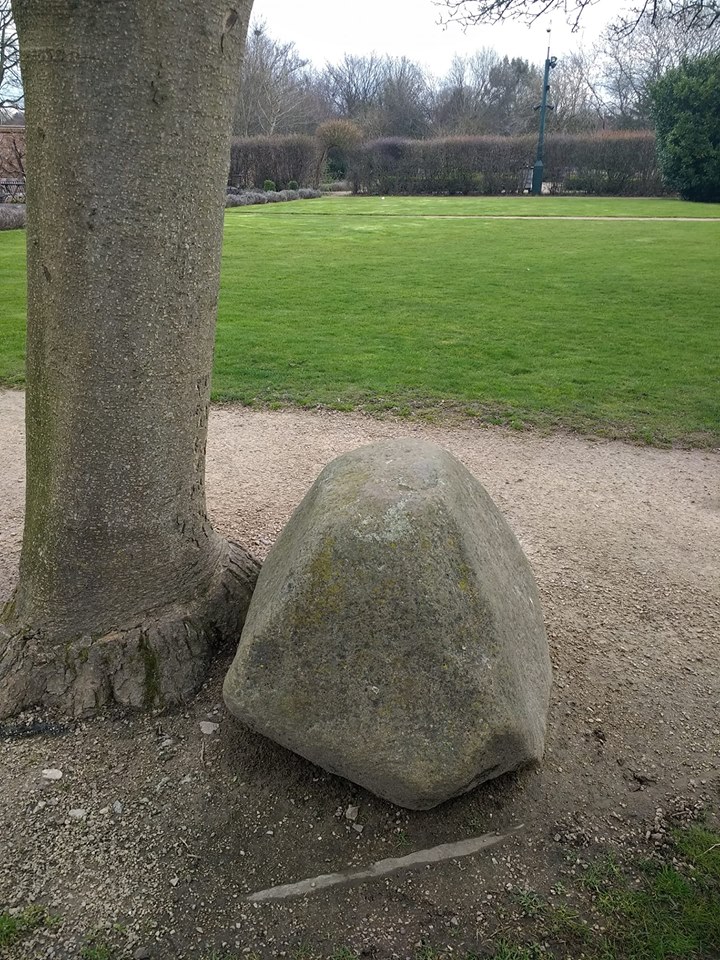
My friend thinks glacial boulders are rubbish and that this one on Cannock Chase is Staffordshire’s answer to Craggy Island’s stone of Clonrichert. She isn’t alone.  Some years ago, the Express and Star included it in a list of top ten terrible attractions describing it as ‘just a medium sized rock on a plinth’.

A medium sized rock on a plinth

Surely, though a landmark as well known as the Chase’s Glacial Boulder must have a story or two to tell? There’s often a lot of mythology connected to lithology. The Gilbert Stone in Birmingham was taken there by a giant to mark his territory and the Webb stone in Bradley was nicked from the church by Old Nick who wanted to use it to rebuild hell and women who take it a (rock) cake on Halloween get to see their future spouse.

A medium sized rock not on a plinth (aka The Gilbert Stone)

Well I have found this….The boulder was found in a pit in Brocton around 1950 and was originally placed at the top of the wonderfully named Pudding Hill at Milford by the Association of the Friends of Cannock Chase. In September 1954, it was pushed off the hill by a gang of wrong ‘uns and so the friends group decided to cement it to the top of Spring Hill, which at 450ft above sea level was a fair bit higher than Pudding Hill. This did not prevent the boulder from going roly-poly again though. In May 1958, it was found at the bottom of Spring Hill having been chipped from its concrete base. Five men from the area were later arrested and fined £13 9s 2d each. The Birmingham Post and Gazette reported that they had, perhaps unsurprisingly, come up with the idea in the pub. “We only did it because it was a challenge and they said it could not be moved”. Apparently it took them four hours.  It’s now located in a car park not on a hill which makes it easy to visit but do try not to get as excited as the couple spotted getting erotic on top of the erratic one boxing day.

I don’t think I’ve quite succeeded yet in my own challenge to convince my friend that Cannock Chase’s rolling stone is a rock star, but I’ll keep chipping away.

The Depths of Winter

Something happens to me once the clock strikes 12 on 25th December.  Maybe it’s a response to the sugar rush that comes from stealing the kids’ selection boxes, but my thoughts turn away from those Christmas lights to the darker side of local history.

Ooops

I always take my ghost stories and legends with a decent pinch of salt and if they’re served with a measure of good humour too, so much the better. As such, I was delighted to discover a story in the Lichfield Mercury from Friday 2nd September 1932, called ‘The Haunted Secret Passage of Lilleshall’.

In what sounds like my ideal night out, a group of archaeologists and diviners congregated in a candle lit vault next to the so-called dungeon at Lilleshall Abbey. As they waited to hear if diggers had located an underground tunnel, ‘the sounds of the shovels and picks ‘awoke eerie echoes in the leper’s cell above’.  The reason for the gathering, according to the BBC’s Domesday Reloaded site, was that in 1928 a caretaker and his family had moved into a cottage on the site and heard ghostly moaning from beneath the Abbey. At first, they attributed the sounds to the men working at Lilleshall Colliery. However, when it was discovered that the mine didn’t extend as far as the Abbey, and the son reported seeing a shadowy figure and the sounds of the pages of a book being turned, they began to suspect a more unearthly cause. A £50 prize was promised by the estate agent to anyone who could locate the subterranean passage the noises were believed to be coming from and people began turning up to try and solve the mystery in a variety of idiosyncratic ways. These included a man with a hazel twig he manipulated between his fingers, a white bearded professor, who refused to communicate with anyone and ‘went around the ruins with a little toffee hammer, sounding the ground at various places’ and an old tutor of the Duke of Sutherland, whose family owned the Abbey until 1917, who was relying on his memory to tell him where the entrance to the tunnel was.

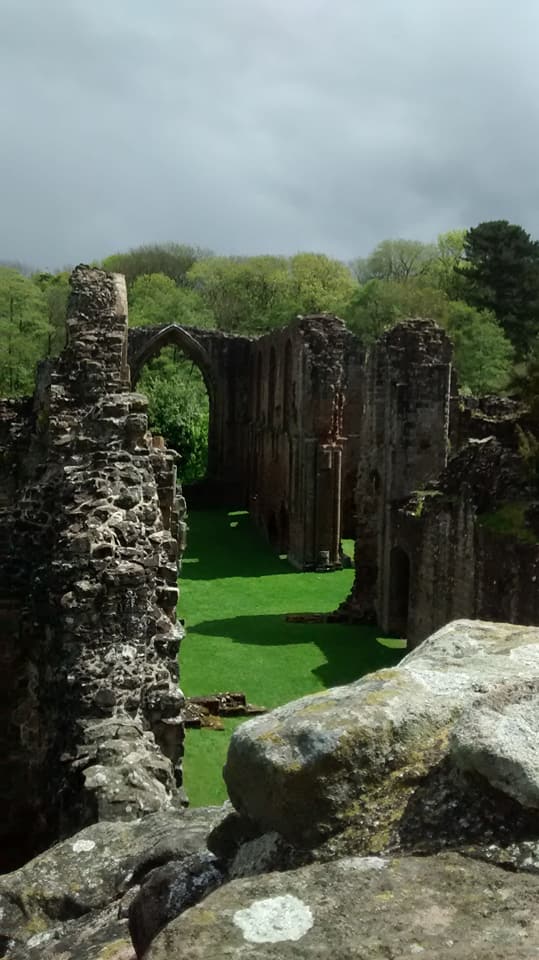
The ruins of Lilleshall Abbey

A psychic dental surgeon from Birmingham agreed to spend a night in the dungeon. Surely if anyone was going to find an old cavity, it would be him? However, as dawn broke the following morning, he was nowhere to be found, having fled in terror. Two young men who spent the night in one of the old Abbey cells reported ghostly footsteps and ‘a monk with a high-pitched voice saying prayers in a foreign language’. Although to be honest, that could just have been the frit Brummie dentist running away.

Lilleshall Abbey

The shenanigans also involved a Mr Noel Buxton, a member of the Cambridge Antiquarian Society, who declared he was prepared to stay on-site until the tunnel was found. I didn’t see him when I visited with friends last summer, so perhaps that means it was… The reports at the time are ambiguous – in the Birmingham Gazette on Friday 26th August 1932 it was reported that in a vault next to a dungeon, a diviner received a violent shock which led to the discovery of an underground passage. However, the estate agent said it had not yet been decided whether or not it was the tunnel they were looking for.

Diviner: OMG I did it! I found an underground tunnel!
Estate Agent: Yes…but is it the right underground tunnel?
Diviner: Yes. It is a tunnel and it is underground. Now give me my £50.
Estate Agent: Yes but if it was the right tunnel it would have ghostly monks in and as you can see, this one is phantom friar free. Sorry old chap, better luck next time. Um, please put the stick down…

So, whilst the competition and the talk of haunted dungeons were a clever bit of marketing to attract tourism, it’s fair to say that the notion of a underground tunnel at Lilleshall was not entirely without foundation. As well as the diviner’s discovery, in June 1886, in Eddowes’s Journal, and General Advertiser for Shropshire, and the Principality of Wales, a correspondent writes that his mother, then aged 75, visited the Abbey as a girl and remembered stories of an underground passage said to run from the Abbey to Longford Church, or Longford Hall,  and that once a heavy cart passing over Longford Fields broke into it, but ‘it was not explored on account of the air in it being so foul’. Was this the same tunnel that tuned up in the 1930s?

Lilleshall Abbey

I am genuinely fascinated by the idea of secret tunnels and subterranean passages because everyone else is so fascinated by them! As we’ve discussed before on the blog, Lichfield is apparently riddled with them (as is pretty much every city, town and village in the country) if the stories are to be believed. And that’s the £50 question – are they?

Notes

  1. Fascinating article here from November 2017 about how ten out of twelve water companies in the UK use water dowsing to find leaks and pipes https://www.theguardian.com/business/2017/nov/21/uk-water-firms-admit-using-divining-rods-to-find-leaks-and-pipes
  2. I am available for secret tunnel hunting – you do not have to pay me £50 and I can supply my own toffee hammer too.


The Leomansley Witch Project

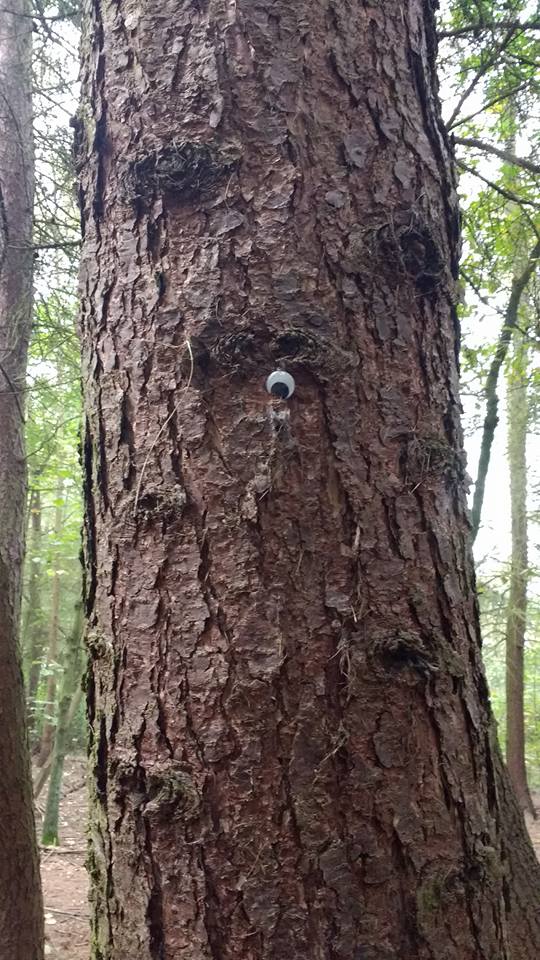
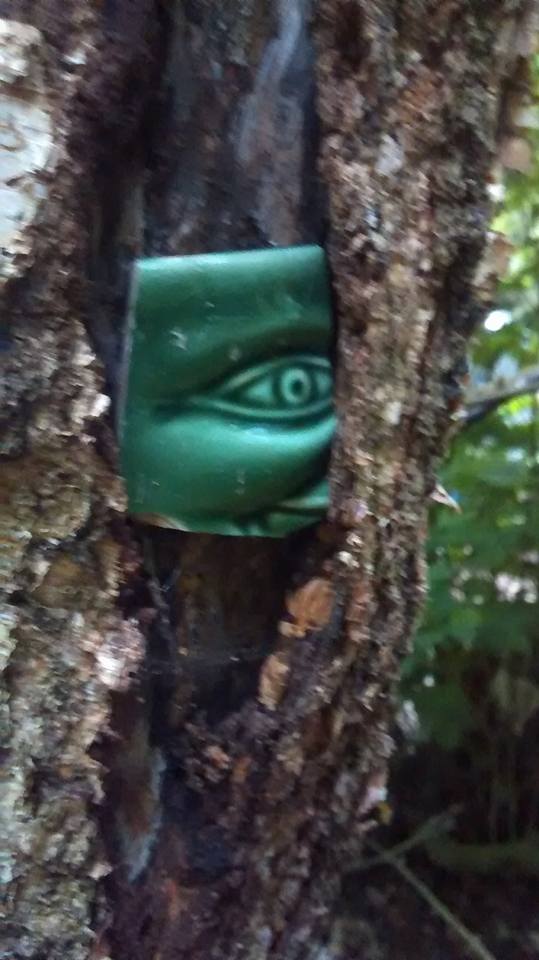
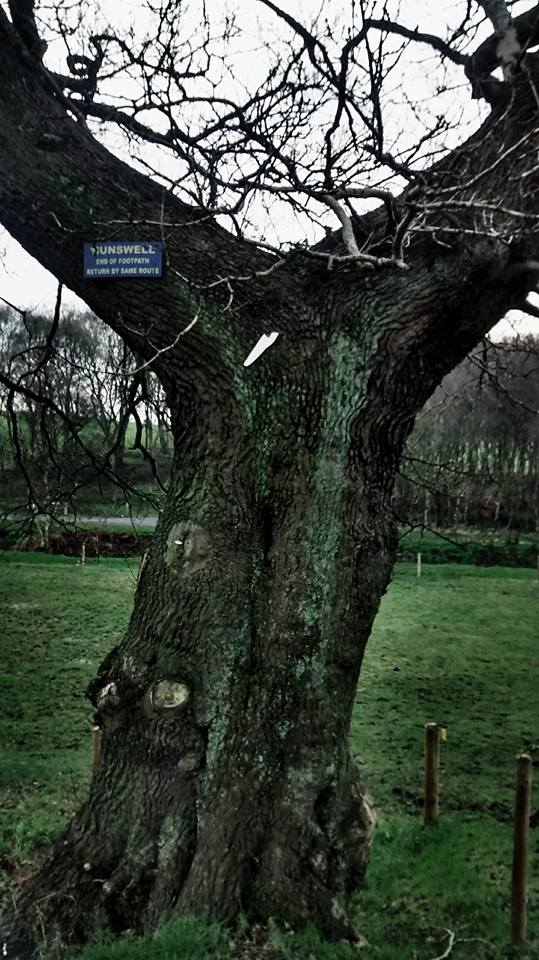
Imagine you’re watching a horror film. A woman heads into ancient woods which are shrouded in mist. And before long, she comes across a tree. With an eye stuck to it.

leomansley-mist

Chances are at this point in the film, you’d be shouting, ‘Don’t go in there. Run away!, whilst feeling smugly confident behind your cushion that you’d never be as stupid as to stay hanging around in mist shrouded woods where there are eyes stuck to trees. Well, I was in Leomansley Woods earlier this week. It was shrouded in mist and there was an eye on a tree. But did I leg it? No. And not just because I don’t do running under any circumstances.

woods-oct-16-2

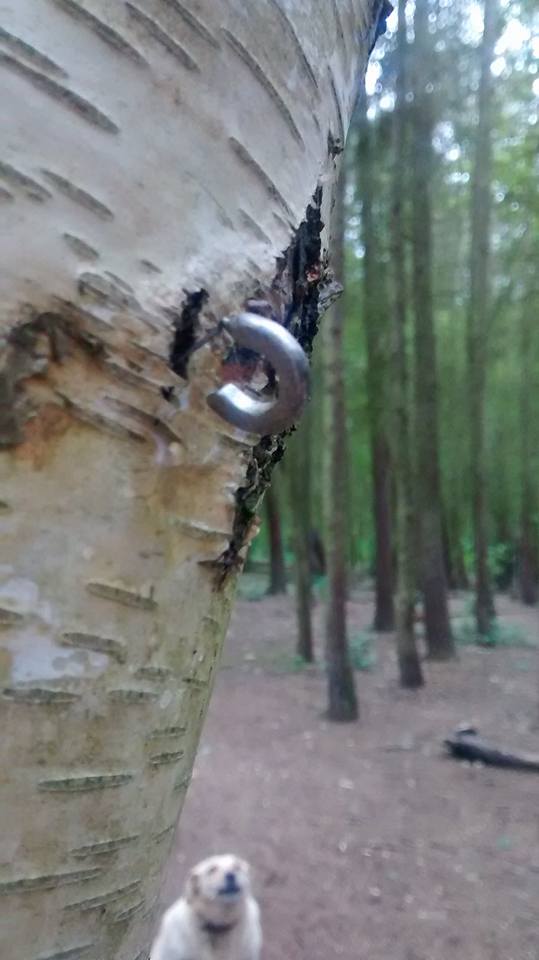
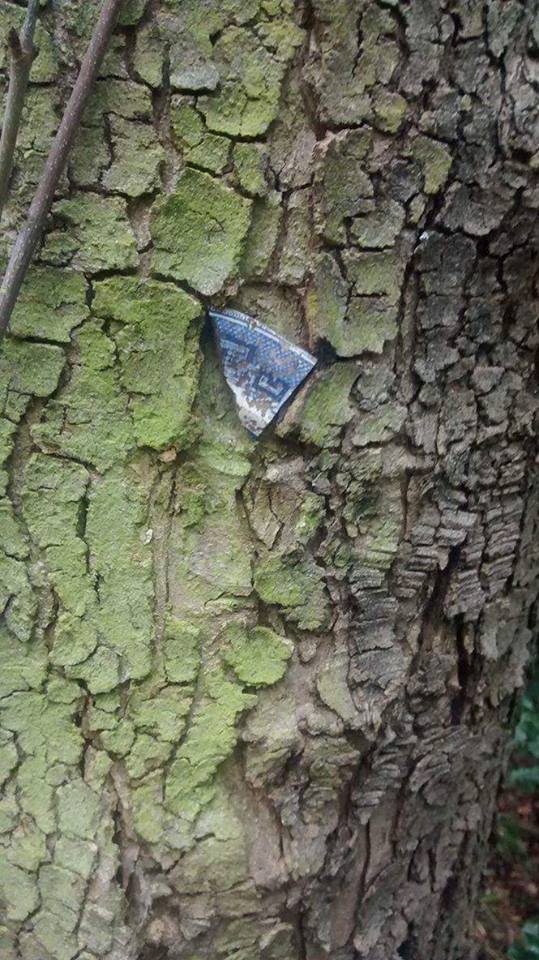
If something wicked that way had come, I had Finn the swamp dog to protect me and my experience of fighting off a clown in Beacon Park earlier in the month to draw upon. Crucially though, I know and love these woods and consider the tokens and trinkets that have been appearing there since the summer more curious than creepy, possibly symbols of someone else’s affection for them.

finn-swamp-dog

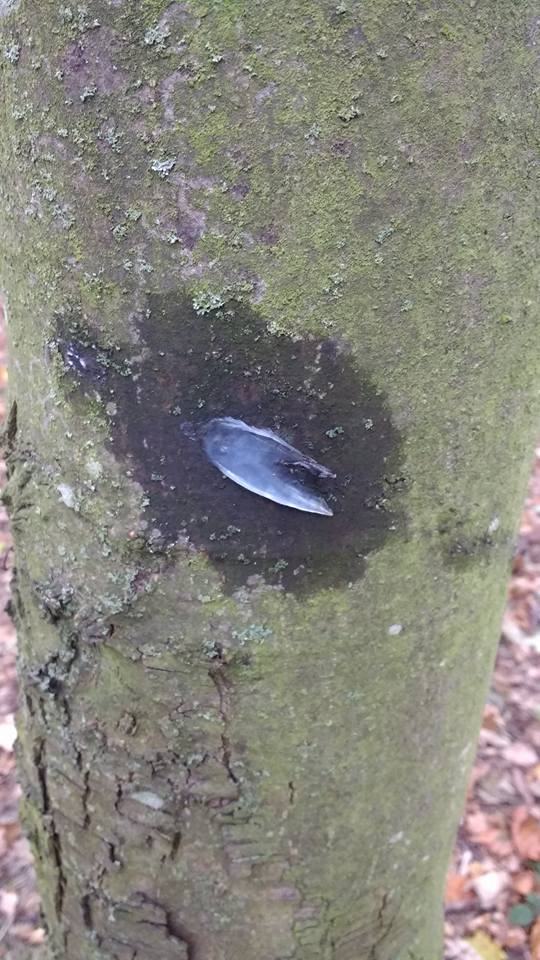
Back in 2004, when I was a newcomer to these parts, I remember getting a call from my sister telling me to go and take a look in the woods as somebody, or more likely somebodies, had created works of art in amongst the trees. There were mosaics created from leaves and petals, clay faces sculpted onto the trunks of trees and brightly coloured papers hanging from their branches. For reasons I can’t remember, I didn’t take any photographs but I can clearly recall the sense of mystery and magic someone had created in the woods that day. We never discovered who or why and there was no encore. The seasons turned and the years went by and then, early this summer, we began to notice things. At first it was subtle. A pebble placed here, a strip of silver birch bark there. It was the first piece of pottery appearing lodged in the knot of a tree that convinced us this was more than the handy work of squirrels and our overactive imaginations. Dog walks took on a new dimension as every day seemed to bring something new. I’m sure at its peak, others were joining in and making their own contributions. And this time I did bring my camera.

woods-june-2016-3

leomansley-woods-june-2016

woods-june-2016-6

woods-june-2016-4

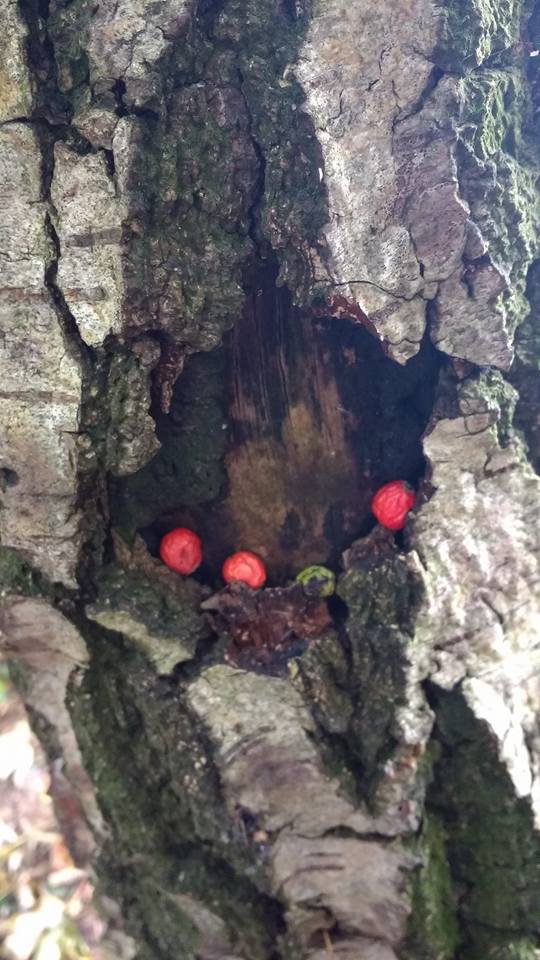
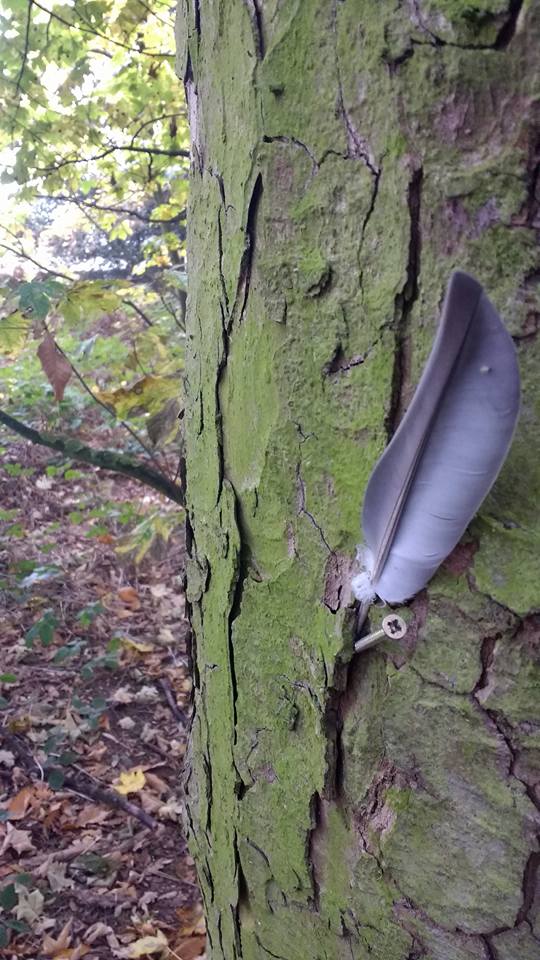
As the summer faded, the activity seemed to wane, and I’d assumed there would be no more. The other half took over the dog walks for a while but recently, for reasons involving a prolapsed disc, I took up the lead once again. Many of the original tree decorations had vanished but a handful of hawthorn berries, melted candle wax and a tickle of feathers (that’s genuinely and rather pleasingly the collective noun for them) had taken their place. Interestingly, others seem to be joining in once again, including the Leomansley contingent of the One Direction fan club.

leomansley-wood-berries

woods-oct-16-3

Woods Oct 2016.jpgwoods-oct-16

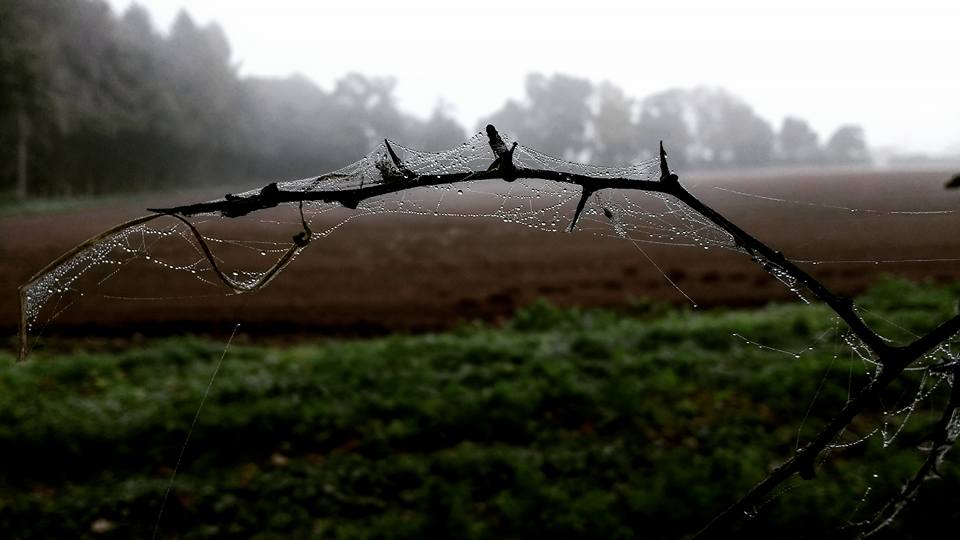
Once again, the who and why is a mystery, and perhaps that is how it should remain. Whether activity continues beyond the season of the witch or not, for me, Leomansley Woods will always remain a magical place.leomansley-cobweb

amelia-bluebellssun.jpg


Soul Sister

Friend and well hunting expert Pixy Led described Nun’s Well at Cannock Wood as being, “…perhaps the most hidden of all the springs and wells I have investigated”, and it was only thanks to his post about the site on his brilliant Holy and Healing Wells blog that this well hunting amateur was able to locate it. Between Pixy’s and my visits, it appears the site has been tidied up considerably and this is my attempt to do the same historywise, purely to satisfy my own curiosity.  It’s much more appealing than sorting out the cupboard under the stairs. Or cleaning for the Queen.

nuns well board

Nun’s Well is a spring rising in a chamber cut from rock with a sixteenth century Tudor style brickwork arch. Legend has it that the well has healing powers, specifically for sore eyes, and takes its name from a nun who was murdered there. Centuries after she was pushed to her death, two farm labourers discovered her earthly remains in the sealed up well and her ghost materialised before them. As Pixy points out on his blog, however, two of the best known works on Staffordshire folklore don’t even mention the well let alone its resident spirit.  I have found a reference in Robert Garner’s 1844 Natural History of the County of Stafford, which also doesn’t mention the ghost story but does offer an alternative explanation of how the well got its name,

“To descend to more recent times we lately visited a spot where one of our early monastic institutions was placed, Redmore, from which the nuns were soon removed to Polesworth because the gay cavaliers riding that way to hunt on Cannock Chase spoiled their devotions. With some trouble we found the solitary quadrangular site not far from Gentleshaw in some low ground embosomed in a wood through which a brook flows now ochrey from the scoriae of an ancient smelting place above and here also is a well considered medicinal and still called the nun’s well”.

It’s still not an entirely satisfactory version of events though (although there’s something undeniably satisfying about seeing something described as being embosomed in a wood. Must be the logophile in me).

nunswell sign

There does appear to have to have been a monastic institution near to the well. Records show that in 1141, King Stephen granted land at Radmore or Red Moor to two hermits called Clement and Hervey and their companions. Frequent disturbances from passing foresters, rather than gay cavaliers, interrupted the quiet contemplations of Clement, Hervey and co, causing them to ask Empress Matilda if she could find them somewhere a bit quieter. It’s recorded that she agreed to this on the condition that their religious house be converted to the Cistercian order. It seems the hermits kept their part of the deal, and the retreat became a Cistercian abbey but according to the History of the County of Warwick, the foresters continued to cause problems. As soon as Henry II ascended the throne in 1154, the now Cistercian Monks petitioned him to transfer them to his manor at Stoneleigh. Henry did so and traces of the original abbey can still be found at Stoneleigh Abbey, now a grand country house.

Whether anything of the original abbey remains at Radmore is where things get really messy. Ordnance Survey maps of the area from the 1880s onwards show the site of a priory near to the well (see the 1949 map incorporated in Brownhills Bob’s post on Gentleshaw Reservoir here). According to Walsall place names expert and tricycle rider Duignan this is actually a muck up on behalf of the surveyors who, “… have mistaken furnace slag for ancient ruins (of the abbey)”.  What he found on the site was, “heaps of furnace slag, evidently of great antiquity, with 300-400 year old oak tress standing on and beside the slag”. It seems from the description of the site given by Historic England that that these could mark the site of a medieval bloomery or iron furnace. A medieval moated site also exists in the vicinity and there are suggestions that this is the site of a royal lodge established by Henry II shortly after the monks moved on to pastures quieter. As Staffordshire County Council’s Historic Environment Character Assessment report says, ‘the precise location of the abbey is unknown, but it is believe to have stood near Courtbank Coverts near Cannock Wood where a scheduled moated site and bloomery survive’.

nuns well fence

So, in the area we have a moated site, a hunting lodge, iron working and a short-lived abbey (somewhere) but how and where does the nun fit in to all this? Duignan suggests the name arose as the land was owned by the nunnery at Farewell. I read an interesting line in the History of the County of Stafford’s section on the Abbey at Radmore which says, ‘King Stephen granted Radmore, probably between 1135 and 1139, to Clement, Hervey, and their companions as the site for a hermitage…Bishop Roger de Clinton confirmed this grant and gave the hermits permission to follow any rule they wished and to receive and instruct any holy women who came to them after adopting a rule”. That suggests to me that there may have been holy women here at Radmoor…nuns? Hardly the most watertight of etymological explanations I know but then I don’t think Duignan’s is that convincing either. Is it? Although Nun’s Well is not technically a wishing well, please do feel free to throw in your two pence worth.

nunswell water


Sources:

G C Baugh, W L Cowie, J C Dickinson, Duggan A P, A K B Evans, R H Evans, Una C Hannam, P Heath, D A Johnston, Hilda Johnstone, Ann J Kettle, J L Kirby, R Mansfield and A Saltman, ‘Houses of Cistercian monks: The abbey of Radmore’, in A History of the County of Stafford: Volume 3, ed. M W Greenslade and R B Pugh (London, 1970), p. 225 http://www.british-history.ac.uk/vch/staffs/vol3/p225 [accessed 4 March 2016].

https://historicengland.org.uk/listing/the-list/list-entry/1003750

‘Parishes: Stoneleigh’, in A History of the County of Warwick: Volume 6, Knightlow Hundred, ed. L F Salzman (London, 1951), pp. 229-240 http://www.british-history.ac.uk/vch/warks/vol6/pp229-240 [accessed 7 February 2016].

http://cistercians.shef.ac.uk/abbeys/stoneleigh.php

Take Me to Church Mayfield

On my recent explorations of the North, I exchanged SatNav Woman for my Mum and a map. It’s a swings and drive several times around the roundabout looking for the right exit approach. SatNav Woman doesn’t get excited by finding places like ‘Gallows Green’ on the map or stopping to ask directions from bonny locals who call you ‘Me Duck’ (ok, that was both of us), but then she doesn’t send you text messages from the car when you’re having a moment with a thousand year old font or leave her wet socks to dry on the dashboard either.

Mum's Socks

From Croxden Abbey we headed to Mayfield, and specifically, Church Mayfield as I wanted to see the early sixteenth century tower at St John the Baptist. Completed by Thomas Rollestone in 1515, he added the inscription ‘Ainsi et mieux peut etre’. I don’t speak French but I understand this translates to something like ‘thus it is and better it could be’ and appears to be a variation on the Rollestone family motto. Some have interpreted this as an indication that Thomas thought he could have done a bit of a better job on the tower. My maths is as bad as my French, but I can just about work out that this year was its 500th anniversary and at the celebrations in April, someone made an edible replica of the church in gingerbread, something so brilliant that surely neither perfectionist Thomas Rollestone nor Mary Berry could find fault.

Tower door, Mayfield

Tower door, Mayfield

The door to the tower is peppered with holes and the story goes that on 7th December 1745 the retreating army of Bonnie Prince Charlie passed through Mayfield, murdering an innkeeper and a man who refused to hand over his horse before turning their muskets on the church door, behind which the terrified villagers had barricaded themselves. Although I came in peace, the door was also locked to me and so I had to be content exploring the churchyard.

Holes in the door

Holes in the door

Underneath a yew tree there’s a medieval wayside cross moved here in the mid nineteenth century from Middle Mayfield, where it stood at a junction opposite a house known as ‘The Hermitage’ (an inscription on the door lintel reads ‘William Bott, in his old age, built himself a hermitage 1749).  Something else in the churchyard which I’ve never seen before but is so simple and effective that I’m not sure why, is a tree stump timeline, marking events in the church, village and the world during the lifetime of the Lebanese cedar which was one hundred and seventy seven years old when it was felled in 2008.

Tree time line Mayfield

En-route to our next destination (Cheadle),  we tried and failed to find the Hanging Bridge, spanning the River Dove, and also the Staffordshire/Derbyshire boundary. It was rebuilt in 1937 but, as you’ll see from the photo I’ve pinched from elsewhere, the arches of the original fourteenth century packhorse bridge are still visible. The name is said to refer to the executions of the Jacobite rebels which took place here following the trouble at Mayfield. However, as much as I’m a fan of folklore, I’m also a lover of linguistics and my suspicion the story was derived from the bridge’s name, and not vice versa, was confirmed by David Horovitz’s epic research into the place names of Staffordshire which reveals that the structure was first recorded as Le Hongindebrugge in 1296, nearly 450 years before Bonnie Prince Charlie’s troops are said to have met their end here. Of course that only raises more questions about what ‘hanging’ actually refers to here. I’ve been thinking about it for over an hour and now I’m handing it over to you, as the best I can come up with is a rope bridge. Ainsi et mieux peut etre….

Hanging Bridge, Mayfield by John M [CC BY-SA 2.0 (http://creativecommons.org/licenses/by-sa/2.0)], via Wikimedia Commons

Hanging Bridge, Mayfield by John M [CC BY-SA 2.0 (http://creativecommons.org/licenses/by-sa/2.0)%5D, via Wikimedia Commons


Sources:
http://www.mayfieldparishchurch.org/history-churchyard.html

Click to access 397633_vol2.pdf

‘Discovering Mayfield’ leaflet 2012 produced by Mayfield Heritage Group