Paths that Cross

On my way to pick up some tickets from the Garrick the other day, I passed Lichfield Library. I couldn’t resist popping in to have a quick peek at the local history section to see if they had any more information on the history on the grammar school,  following on from Gareth’s graffiti photographs.  (They did. A whole book in fact and I’ve updated the post accordingly!). So inevitably, my quick peek turned into two hours.

There was an added bonus to the visit too. Anyone who read my Cross City and Cross County posts will know that I was hoping there would be an ancient cross somewhere in Lichfield. Well, I finally found one! Actually that’s a fib. What I found is a photograph in a book of archaeologists finding one. A decorated cross shaft was discovered built into the foundations of the north wall of the nave of Lichfield Cathedral. It’s thought to be Saxon or Saxo-Norman, and could be a surviving remnant of the earlier church on the site. I wish I could share a photograph here, but all I can do is tell you that it’s on plate 1 in the ‘South Staffordshire Archaeological and Historical Society Transactions 1980-1981 Volume XXII’ book, on the local history shelves at the library!.

I have a confession to make. Generally, I’ve thought that places like the Cathedral are so well known, there’s nothing much left to say. Yet, now I recognise that this was wrong. Whether it’s the magnificent discovery of the Lichfield Angel in 2003, the downright curious tale of a live frog embedded in one of the stones used to repair the Cathedral during the restoration*, or rolls of parchment, beer and tobacco found in the gilded balls on the top of the central spire – the Cathedral, as everywhere, is made of stories, as much as it is made of stone. There are those we know well, those we don’t, and those that haven’t even been told yet.  We need to make sure we  are listening, just as Gareth was when he discovered and questioned that graffiti on the walls of the old Grammar school.

*I’m not making this up…..but someone else may well have been!

Perspexive

This morning, I went to the dentist. On the way home I walked past St John’s Hospital. With the sun shining, I decided to pop in and allow myself a minute to take in the lovely surroundings and the calm atmosphere of the courtyard, before heading home.

At least that was my intention. As hospitable as ever, someone in the courtyard came over to welcome me, and invited me to have a look around the chapel. Never one to miss an opportunity to be nosey, I accepted with thanks.

I have been inside once before, but that visit was dominated by standing in front of John Piper’s striking window for the first time. Today, I sat on a back pew and found myself next to a perspex window. A small sticker told me that the stonework behind the perspex was the remains of a Norman water stoup. I understand that this would once have held holy water, into which those entering the chapel could dip their fingers, and make the sign of the cross. Apparently, many stoups were destroyed during the reformation but whether this is the case here I don’t know.  As the chapel has been heavily restored and altered over the centuries, I was delighted to have this chance encounter with part of the older fabric of the chapel.   Unfortunately, as I hadn’t anticipated there being many photo opportunities on a trip to the dentists, I had no camera. But the chapel is open everyday until 5pm, so if you can, please do go and take a look yourself, and enjoy visiting the grounds at the same time.

This got me thinking about the idea of layers of history within buildings, where generations of people have made their mark, by accident or by design, for better or for worse.  When I was volunteering at the Guildhall, someone told me I could get out using the back door. It was news to me that there was a back door but once through it, I made the even more exciting  discovery that  traces of the older building were still in evidence. For example, whilst the main hall and the front of the Guildhall date to the mid 1800s, the blocked window on the photograph below is thought to date to the 16thc.

Brickwork from different periods, round the back of the Guildhall

Another couple of examples to be going on with – what’s gone on here with all the different brickwork at this house in The Close?

This metal….thing, above a restaurant on Bird St, must have played some role in the building’s past, but what?

And when we’re talking about layers of history, should we also consider the present and future of buildings? I notice that the Angel Croft hotel has unsurprisingly made its annual appearance on the English Heritage At Risk register…..

Sources

http://www.british-history.ac.uk/report.aspx?compid=37864

Another Johnson

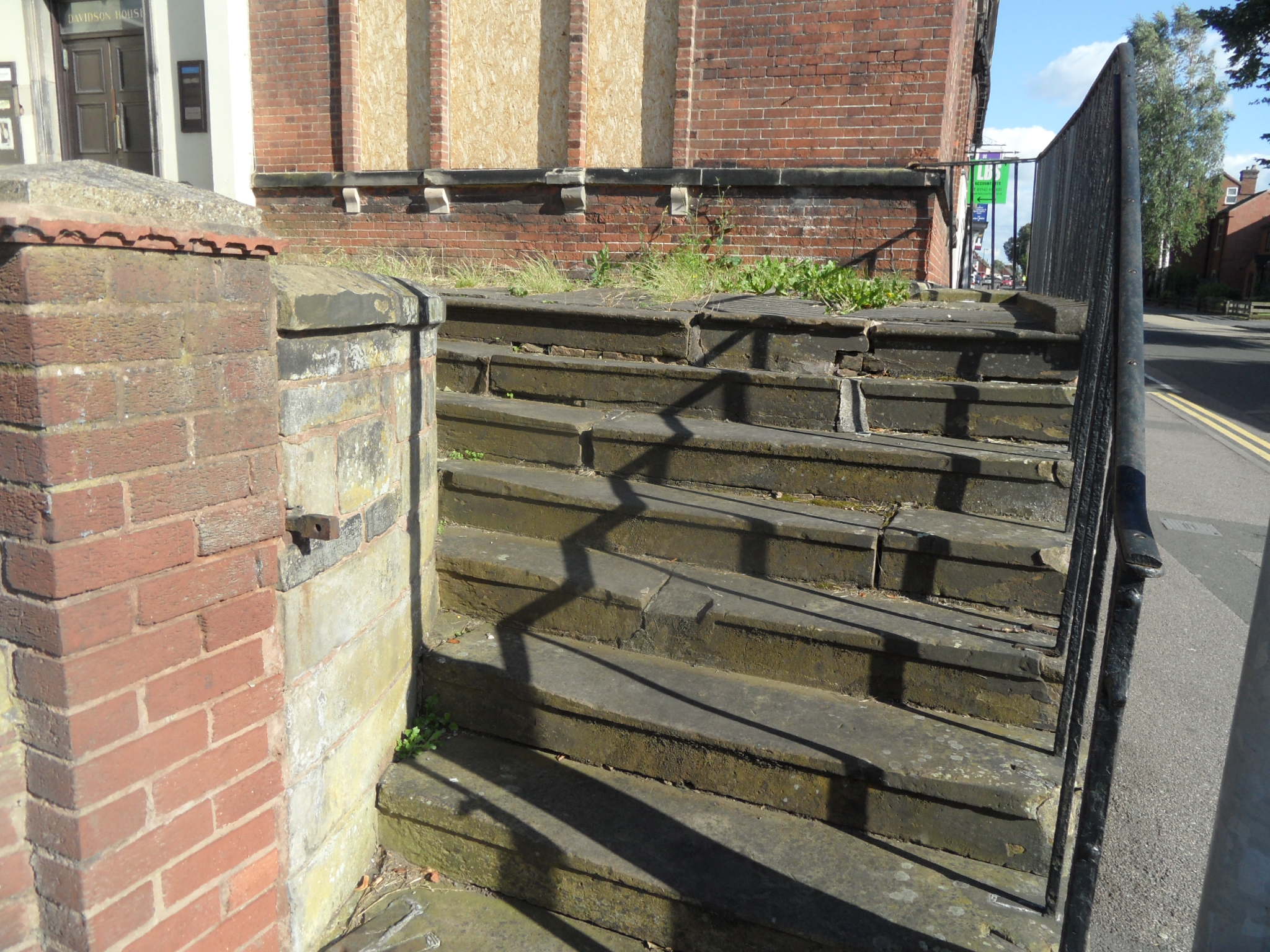
Davidson House on Upper St John St was once home to another Johnson from Lichfield. Thomas Johnson, an architect lived here from 1834 and ran his business, Johnson & Son from here until his death in 1853. I understand that Thomas Johnson jnr went on to work with James Trubshaw, and married his eldest daughter.


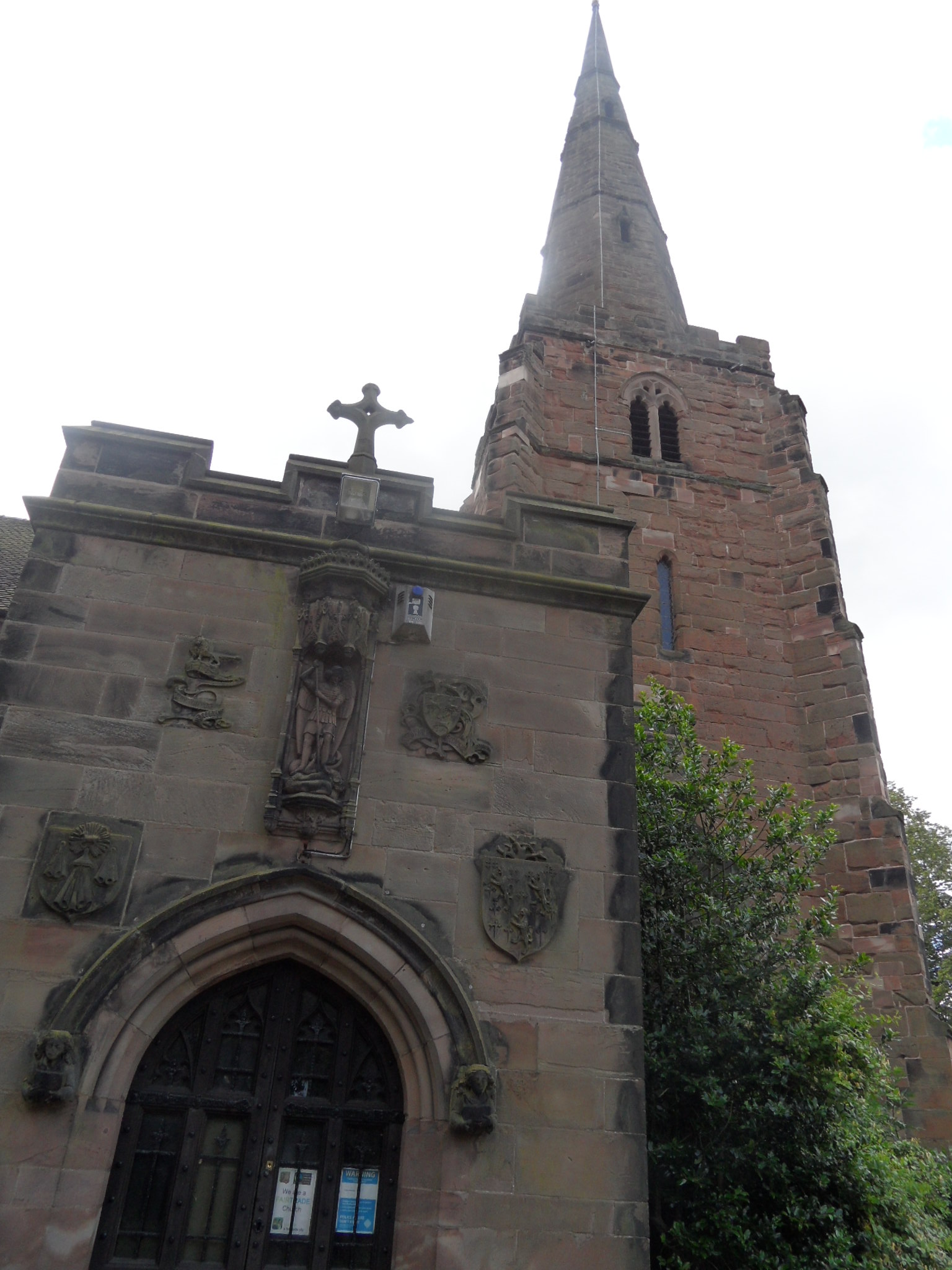
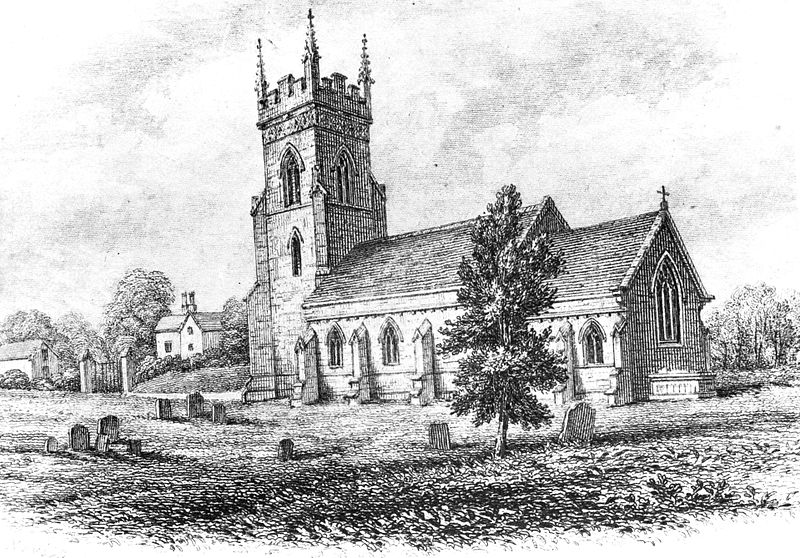
Although people might not have heard of Johnson and Son they will probably know some of the buildings they were involved with. Below are some examples of their Lichfield work, and it seems that they also worked on buildings further afield.

Christ Church, circa 1850 (from wikipedia)

Corn Exchange Lichfield (from LDC flickr stream)

The Old Grammar School, C18 rear
wing, school room and front wall of c1849, by Thomas Johnson
and Son of Lichfield

Back to Davidson House and I’ve read that it was the home of the South Staffordshire Regiment Old Comrades Association and the South Staffordshire Regiment Museum collection from 1938 until 1963, when it was moved to its current site at Whittington. The name ‘Davidson House’ apparently relates to  Brigadier-General Charles Steer Davidson who donated the property to the regiment.

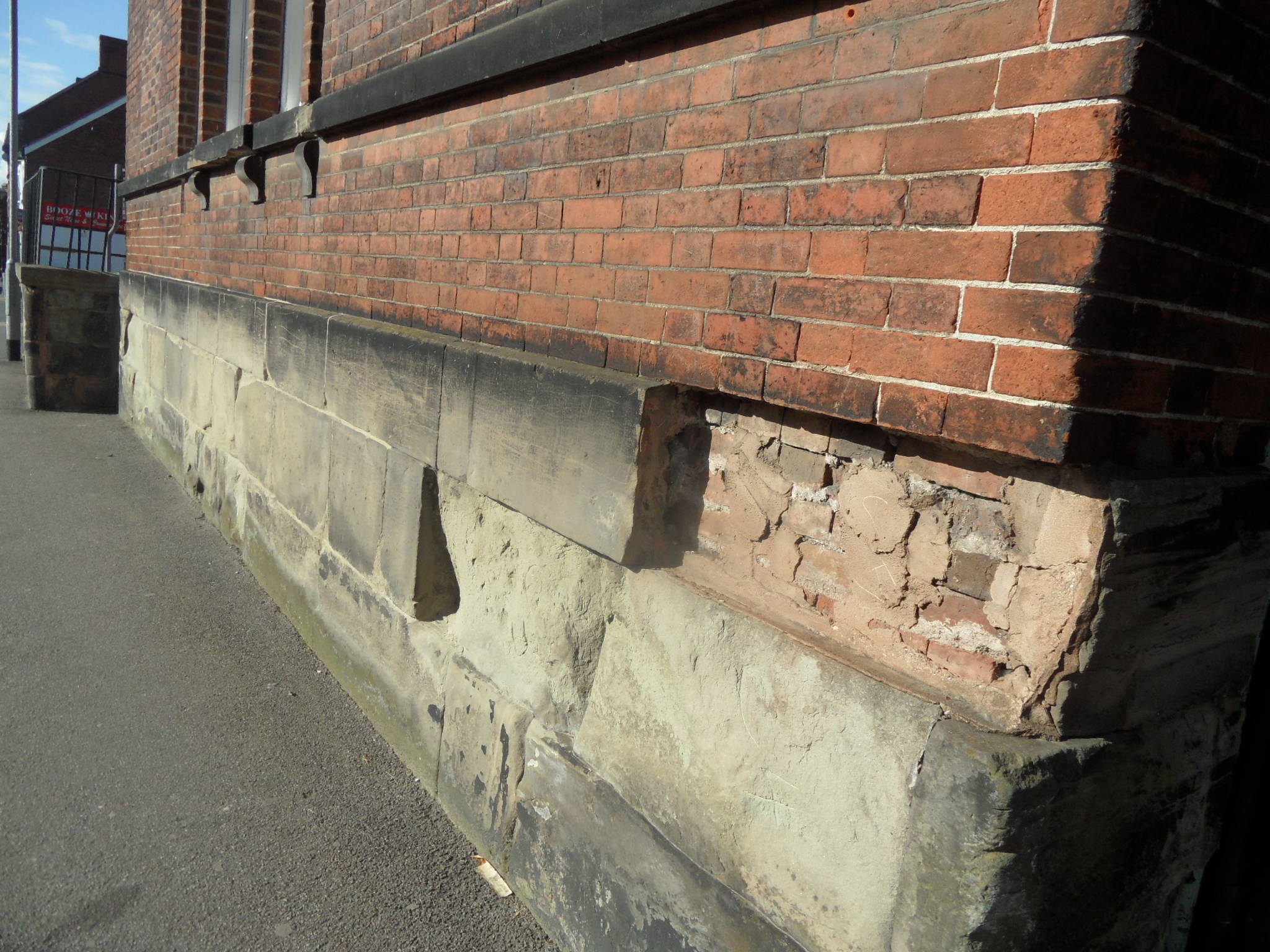
As ever, plenty of questions. Did the Johnsons employ local people? What about the rest of the family? Where did their materials come from? Who was it built for originally.  Who owned the house between the Johnsons and the Brigadier-General? Who was Charles Steer Davidson? What happened when the museum left and what is the future for it? It looks like it needs a bit of TLC right now, with its boarded up windows and crumbling stonework. There’s a book ‘Staffordshire and the Gothic Revival’ by Michael J Fisher that I’d like to have a look at to find out more about the Johnsons and their contemporaries.

There’s still plenty more to find out about Davidson House and its inhabitants but I like how by finding out a little about one Lichfield building,  I’ve found out more about some of the others too. And they just happen to be some of my favourites!

Sources:

http://www.britishlistedbuildings.co.uk

http://staffordshireregimentmuseum.com/