Gathering Moss

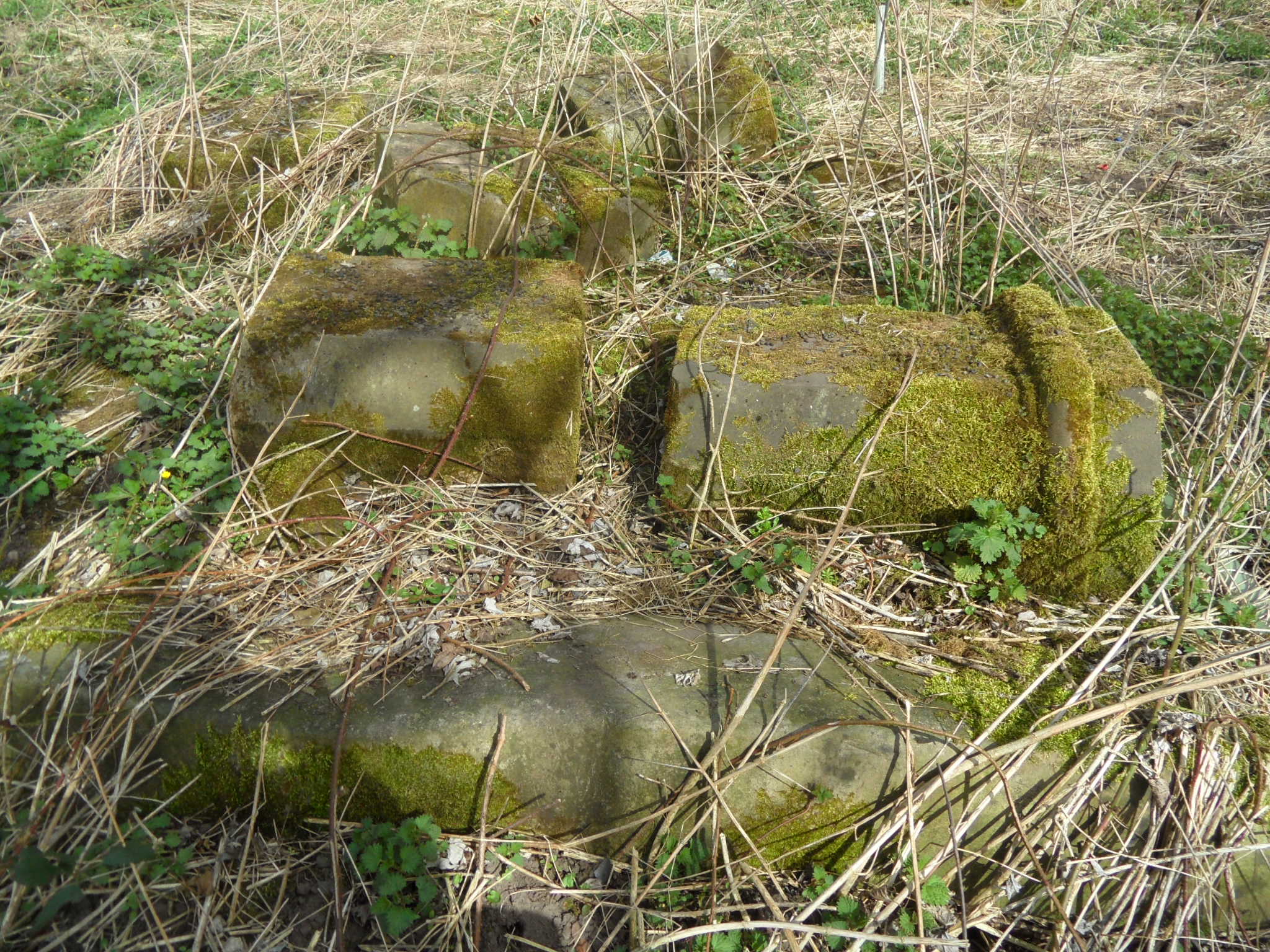
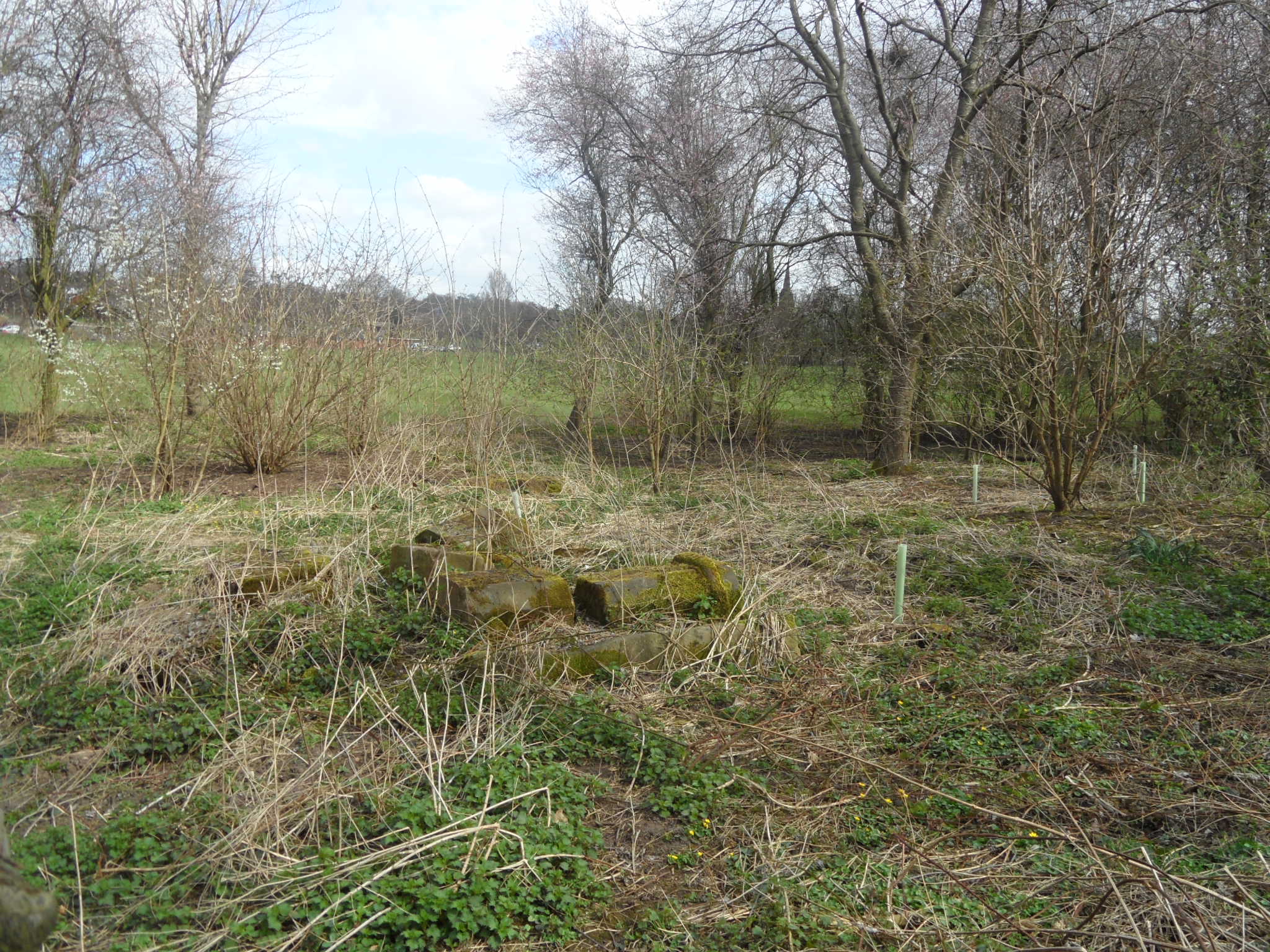
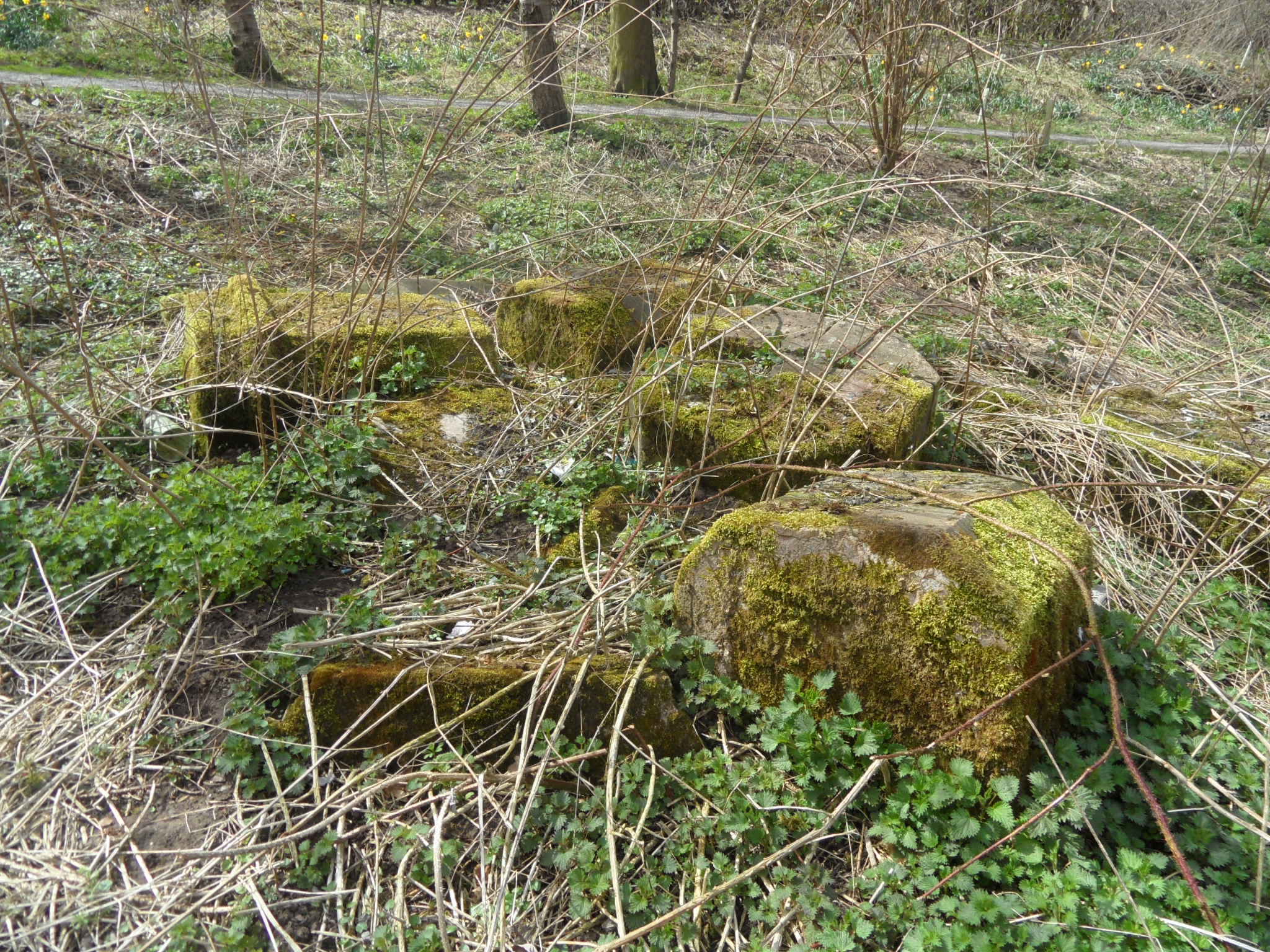
Walking around the edge of Beacon Park, I noticed a pile of moss covered stones in the undergrowth that I’d never seen before.  To me, they look like part of an old building, possibly pillars? It’s a long shot I know, but does anyone recognise them or have any idea as to where these pillars (if that’s what they are!) may have come from?

Whilst on the subject of ‘parts of old buildings found in unexpected places’, I have to mention my old favourite Fisherwick Hall. Back in January, I wrote an article for the Lichfield Gazette which mentioned that the hall had been demolished, but that parts of it had been reused elsewhere. After lying around for some years covered in moss, the pillars from Fisherwick went to the George Hotel in Walsall – you can read the great post written about the hotel by Stuart Williams of Walsall Local History Centre here. However,  I had no idea what had happened to the pillars, following the demolition of the hotel in the 1930s. Therefore, I was delighted when Paul (the editor of the Lichfield Gazette) told me that someone had contacted him, saying that some years ago he had seen them lying on a patch of ground near to the cricket ground in the Highgate area of Walsall. The gentleman described them as lying in pieces and covered with moss and lichen. Sounds familiar! Coincidentally, the site the gentleman described is a stone’s throw from where some of my relatives live, and so the next time I visited I went to take a look, but I had no luck in finding them. So near, yet so far….

Back to our Beacon Park stones, and someone from the Beacon Street Area Residents’ Association has very kindly said that he will ask the people in the know i.e. the Parks team and the Civic Society if they can shed any light on the matter. In the meantime, he’s left me pondering the fact that parts of the old bandstand and cycle track are also apparently also still around in the park somewhere…

Beacon Park bandstand c.1905
Source: Wikimedia Commons

Pilgrims' Progress

In trying to find out more about the ferry that may have taken pilgrims across the water to the Cathedral, I came across an interesting description of what they may have found there on their arrival.

A document described as an ‘indenture chirograph’ (1), two feet five inches long and eleven inches wide, lists the goods found in the sacristy in 1345. A transcript of the original Latin is included in the ‘Collections for a History of Staffordshire 1886, Part II, Vol VI’, edited by the William Salt Society. Thankfully, there is also a translation alongside, so that I don’t have to fumble my way through using google translate! (2)
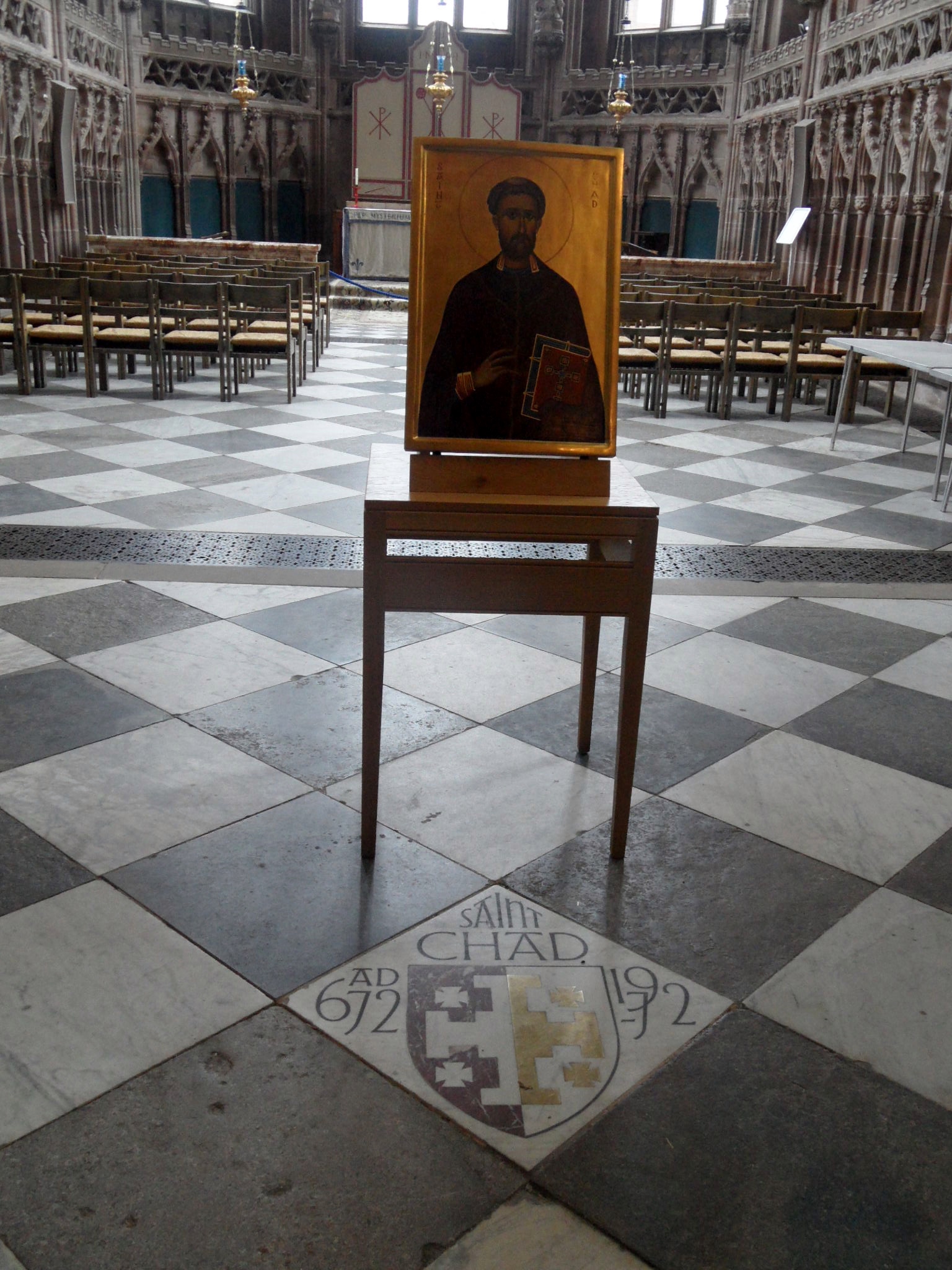
A tile and a simple portrait mark the place where Chad’s shrine once stood.

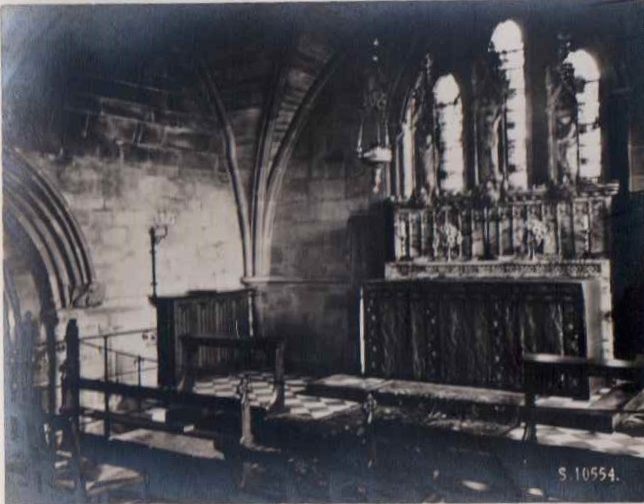
The first part of the inventory lists the various relics owned by the Cathedral, including of course those of Saint Chad. Chad died in 672AD and around 700AD his bones were moved to a new church, on or near to the site of the present Cathedral. It’s thought that the Lichfield Angel, discovered in 2003 whilst work was being carried out on the nave, may have been part of the original shrine, and that it may have been destroyed by Vikings. By the time the inventory was made in 1345, the holy bones seem to have been kept in several different places within the Cathedral. Chad’s skull was kept in the thirteenth century Saint Chad’s Head Chapel ‘in a painted wooden case’. The Cathedral website describes how initially pilgrims would ascend a staircase in the wall, walk around the head, and then exit down a second stairway which still exists today.
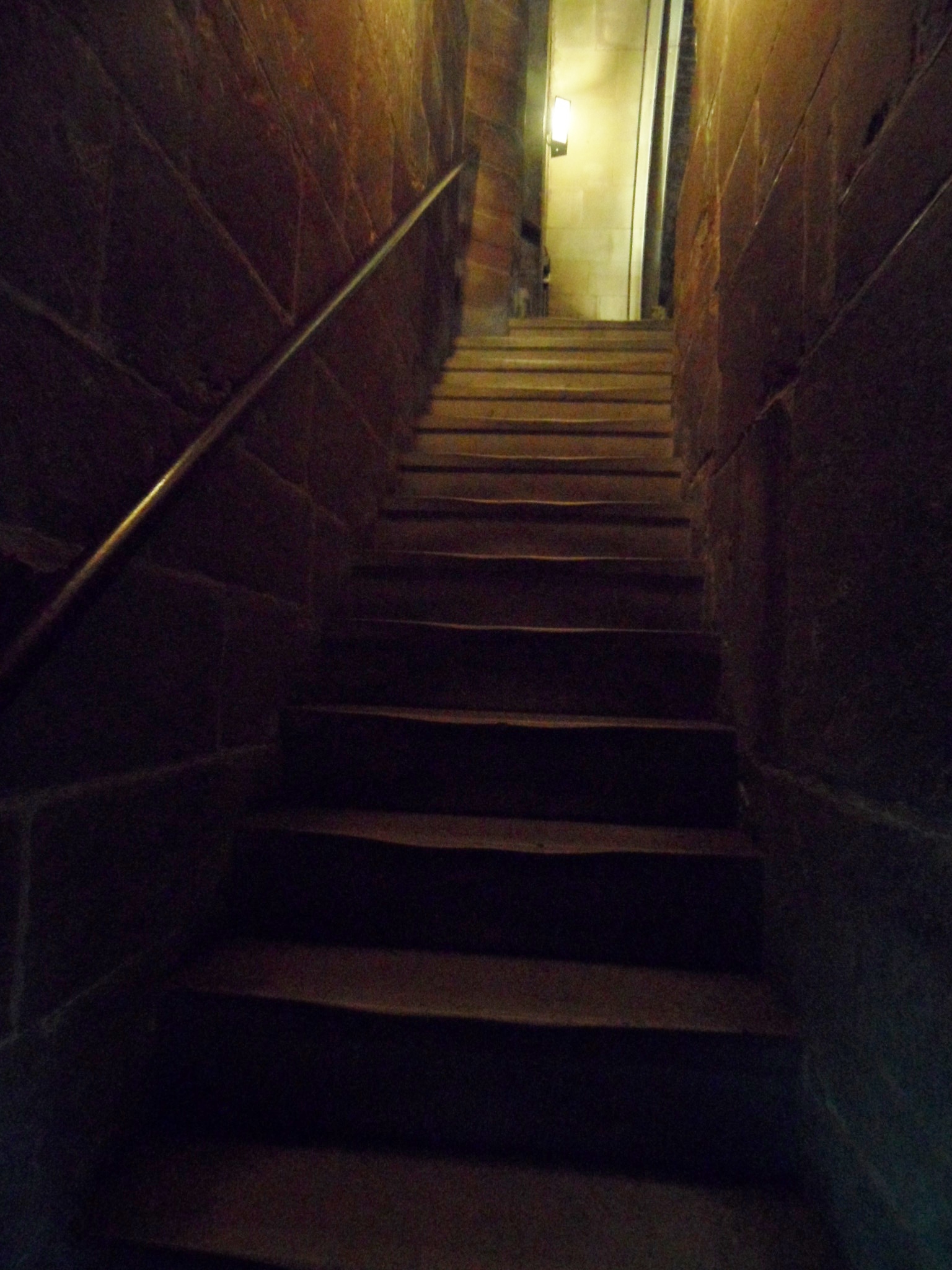
Staircase which pilgrims may have used to exit St Chad’s Head Chapel

An old photograph of St Chad’s Chapel

Eventually, due to the volume of traffic, one of the staircases was closed and the relic was shown to pilgrims from the balcony outside the chapel.  There is also mention of an arm of Blessed Chad, and other bones in a portable shrine, as well as the great shrine of St Chad. The latter was described as being decorated with statues and adorned with precious gifts and jewels and stood in the Lady Chapel of the Cathedral until the reformation. It’s believed that some of the Saint’s bones are now kept in the Roman Catholic Cathedral of St Chad’s in Birmingham, enshrined on 21 June 1841, the day that the Cathedral was consecrated. (3)
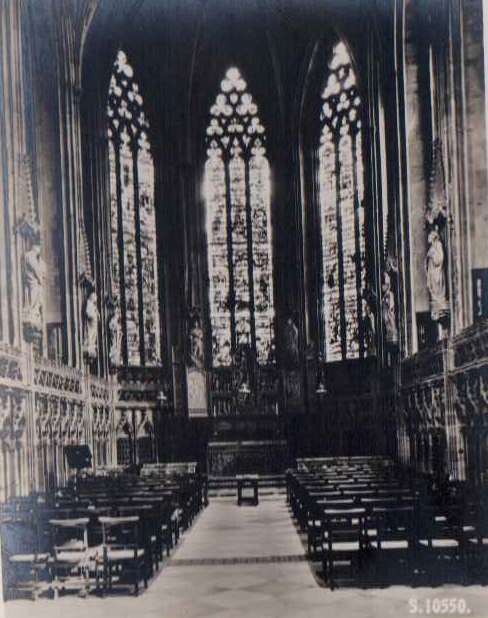
An old photo of the Lady Chapel

It wasn’t just the relics of Saint Chad that were owned by the Cathedral. Other items recorded in 1345 include:

Some of Mount Calvary and Golgotha, a piece of the rock standing upon which Jesus wept bitterly and wept over Jerusalem, some of the bones of the Eleven Thousand Virgins, part of the finger and cowl of St William, some of the bread of St Godric and some of the wood of the cross of St Peter

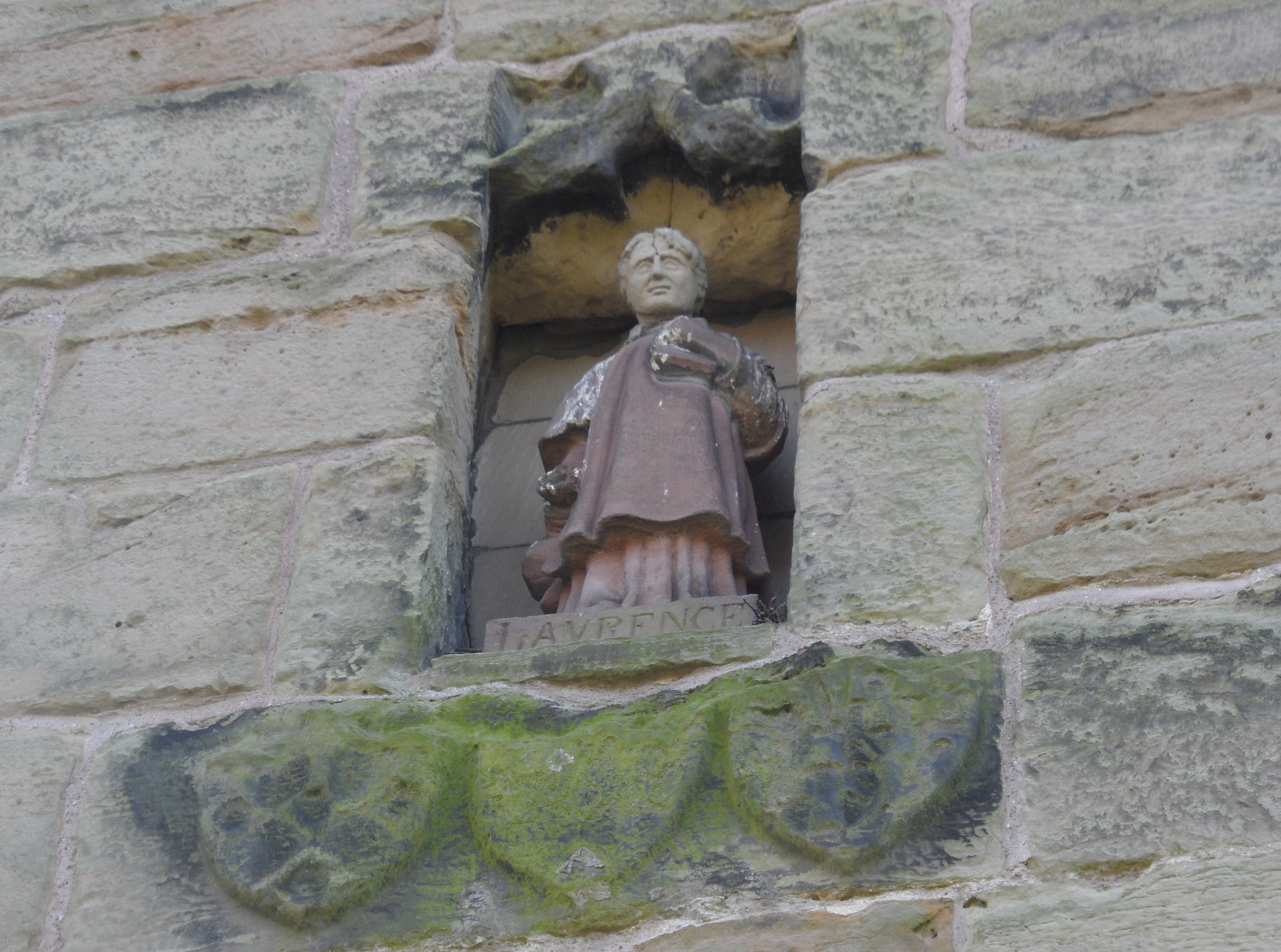
There were also said to be some of St Lawrence’s bones, part of his tomb and a piece of the gridiron he was executed on. (4) Interestingly, it’s said that at number 23, The Close, different coloured bricks have been used on the south wall to depict this this symbol of St Lawrence’s martyrdom. Since I read about this, I have a look every time I walk past, but as of yet, have not managed to spot it!

Statue of St Lawrence at the church named after him in Walton on Trent, which sits on the border between Staffordshire and Derbyshire

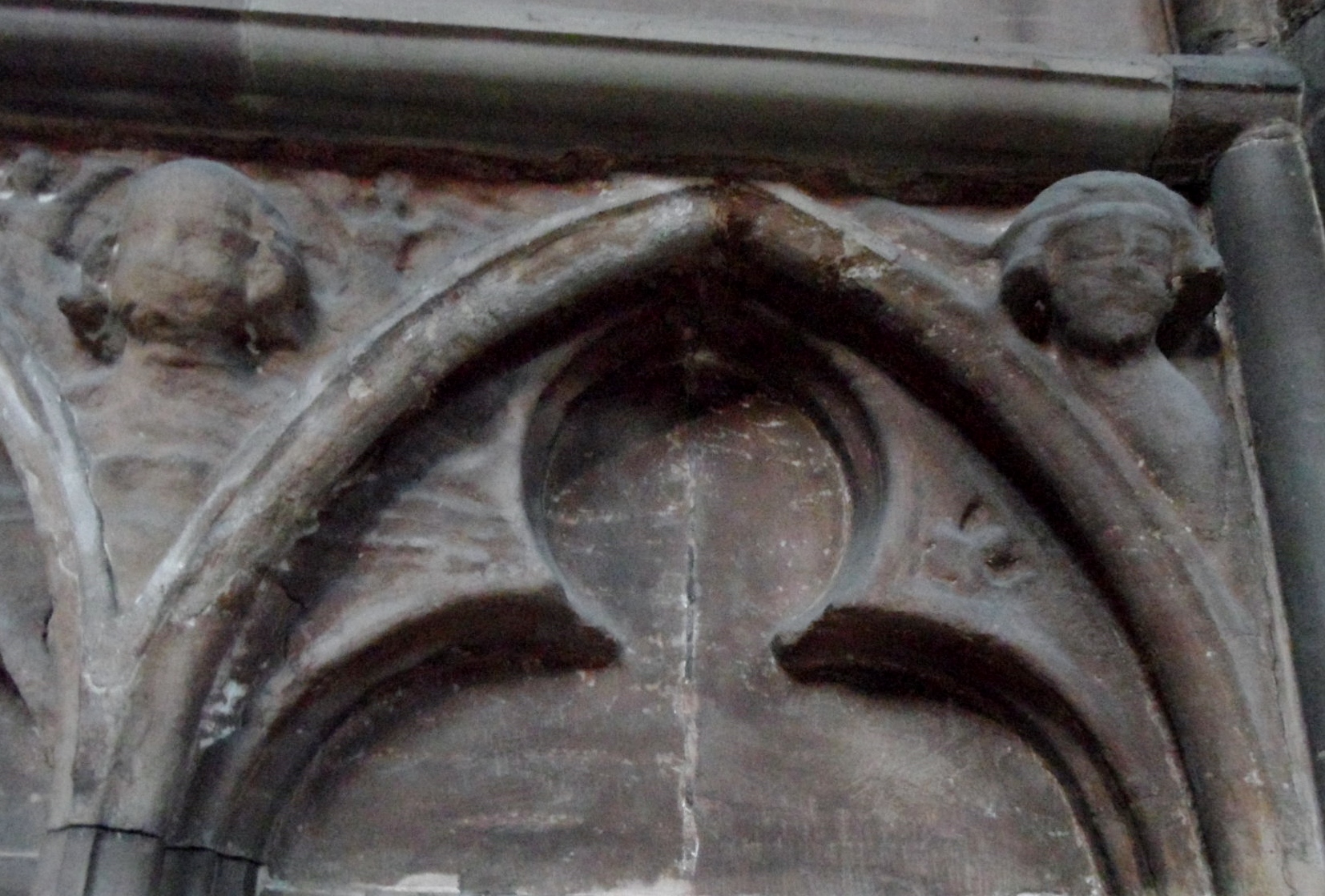
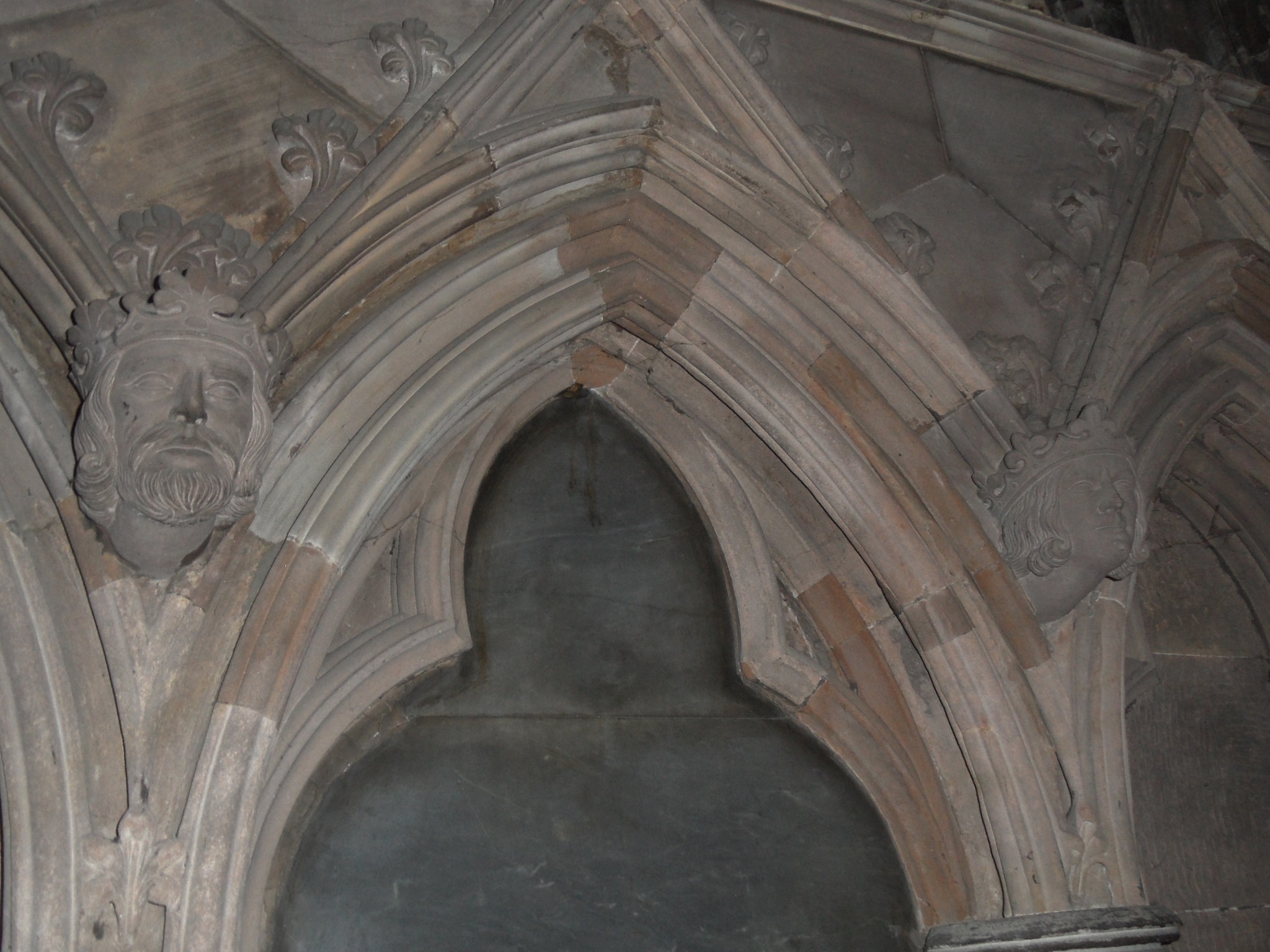
Saint Chad’s skull may be long gone but the pilgrims still come, and on certain occasions have their feet washed at the pedilavium, a medieval feature thought to be unique to Lichfield. There are also plenty of other heads to be found at Lichfield Cathedral. Some are scarred and defaced, whilst others have been restored. They are a reminder of the medieval craftsmen who created the church, those who tried to destroy it and those whose skills and labour restored Lichfield Cathedral to the mirabilis edificii that it is today (ok, I admit I used google translate for that one!).

The medieval pedilavium where pilgrims still sit to have their feet washed.

Notes:

1) I believe this refers to a document that would have been written in duplicate on the same piece of parchment, and then divided into two with a serrated edge, so that when both parts were brought back together and compared, you could be sure that each was genuine and not a forgery.

(2) A footnote says ‘This transcript and translation were originally undertaken for ‘The Journal of the Derbyshire Archaeological Society’, and are now reprinted after careful revision and correction. It was the joint work of W H St John Hope, FSA and the compiler of this catalogue’. Thanks very much folks!

(3) The relics of St Chad were apparently smuggled out of Lichfield after the reformation and eventually ended up in Birmingham, a journey of thirty miles that took 300 years! You can read more about that journey here. I don’t think anyone knows what happened to the other relics.

(4) In a nutshell the legend of St Lawrence is that he was a Deacon of Rome, and when asked by the Prefect of Rome to assemble the treasures of the church  for him,  he brought him the poor and suffering, stating it was they who were the true treasures of the church. The legend says he was executed by being roasted over a gridiron (but some say he was most likely beheaded).

Sources: 

Collections for a History of Staffordshire 1886, Part II, Vol VI’, edited by the William Salt Society

Lichfield Cathedral Website – http://www.lichfield-cathedral.org/History/the-gothic-cathedral.html

Lichfield: The cathedral close’, A History of the County of Stafford: Volume 14: Lichfield (1990), pp. 57-67
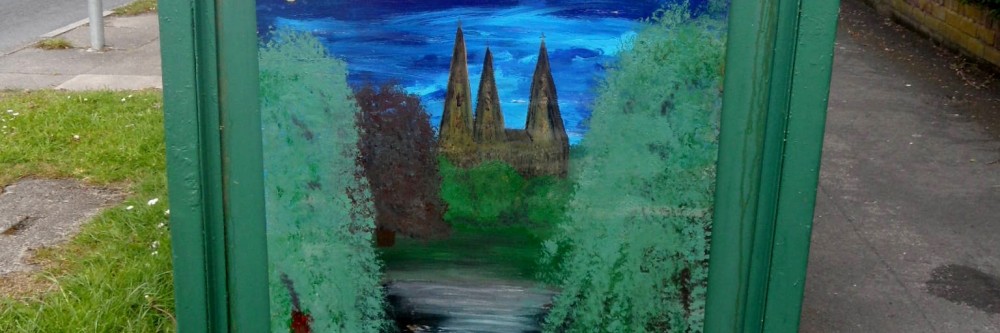
Christ Church Open Day

I’m delighted to see that Christ Church, Lichfield is having an open day. On Saturday 9th March, between 10am and 4pm, visitors will be able to explore this wonderful Victorian building and its architectural features, including the lovely chancel ceiling, original Minton tiles and stained glass, with the help of local history enthusiasts.

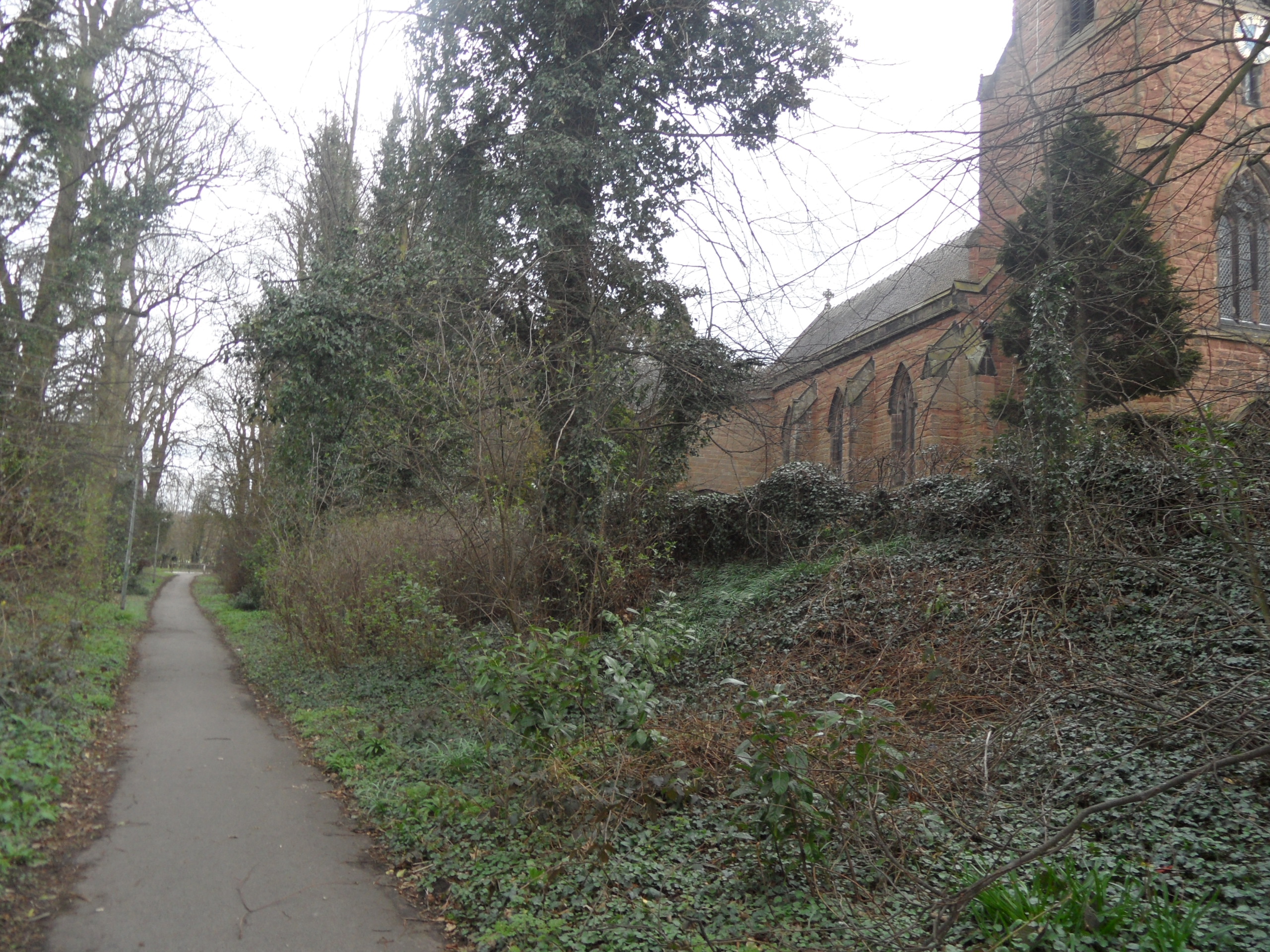
The grounds are lovely at this time of year, and a quick check of my photographs from last March tells me that the wild garlic and daffodils should be coming through in the lane alongside the church, so don’t forget to have a look outside as well as in.  There are also the intriguing stone heads around the inside and outside the building, that I wrote about back in January and am still none the wiser about (although I did see some very similar ones at St Michael’s –  a church that Thomas Johnson the architect was involved in restoring a few years before her started work here at Christ Church)!

The open day is being run by the new Friends of Christ Church, a group whose aim is to support the preservation, conservation and enhancement of the church and its grounds. I understand that anyone who becomes a member will receive an annual newsletter with details of upcoming events and projects to get involved in, and also a copy of the excellent book “Christchurch: A History”, which tells the story of the church, and the associated buildings in the area such as Christ Church School, The Old Vicarage, the cottage in the churchyard and Beacon Place (gone but not without a trace….).

More information can be found at www.christchurch-lichfield.org.uk/events or by email friendsofccl@btinternet.com.


Familiar Looking

Always happy to be distracted from shopping, I had a wander down Quonians Lane to take a photo of a door (that’s a whole different post!).  Everyone loves Quonians Lane with its strange name and its carvings and plaques. Annette Rubery wrote a lovely piece about it back in May, which you can read here.  I love Quonians Lane too, although now my visits are tinged with sadness that the company, whose workers created these wonderful objects and many more across the city, the county and the country, is no more.

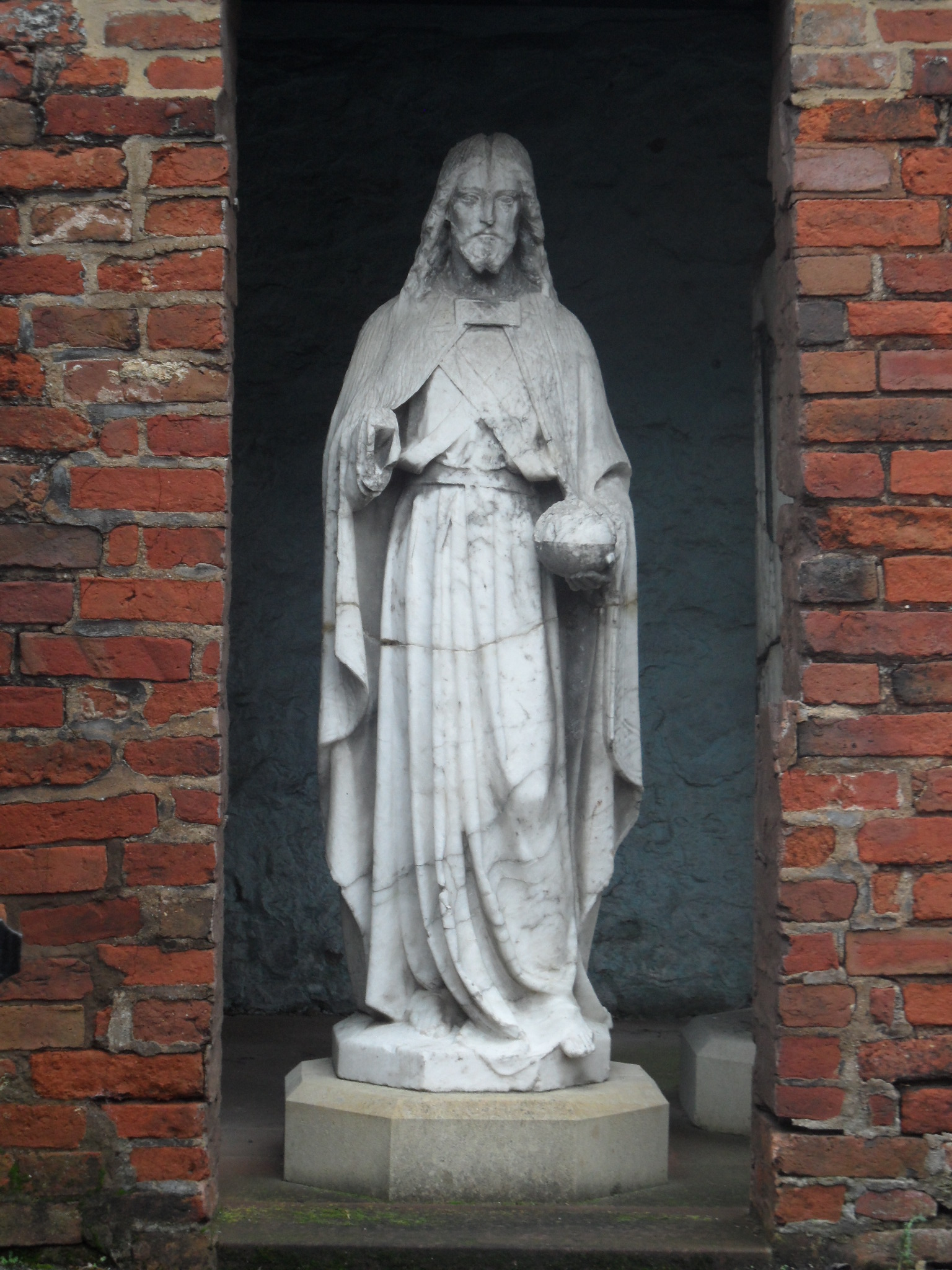
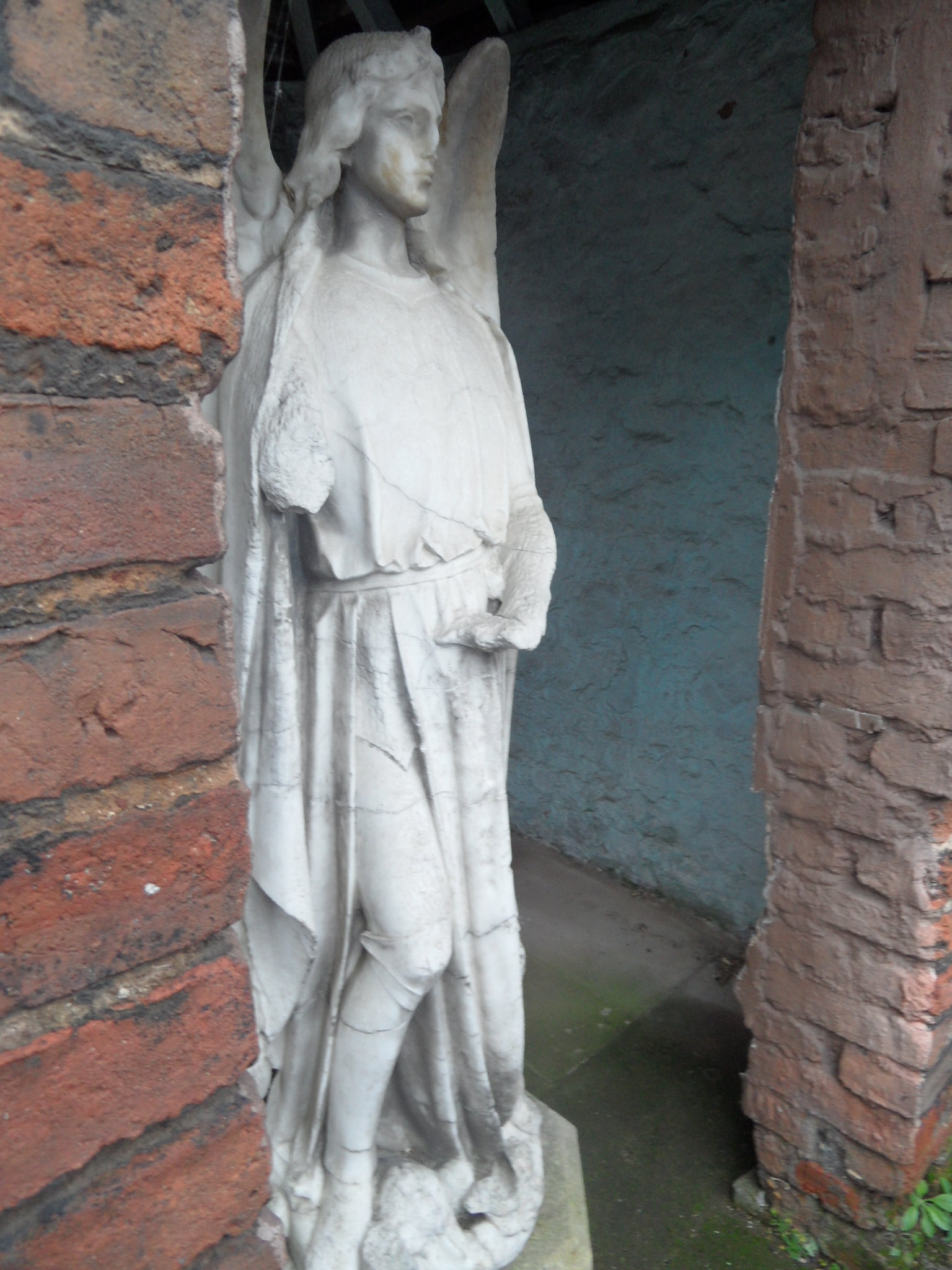
I saw the triangular roof of a small outbuilding above the brick wall and went to have a look, thinking it would be quite interesting in its own right. It was a lovely surprise to find these two marble statues stood in the doorways. If you want to see them for yourselves, go down Quonians Lane, and just after you get to the headless angel take a right, through the wall.

So the moral of this story once again is what I say in my ‘About Lichfield Lore‘ spiel.  “Go out and have a look at what’s around you. Then when you’ve done that, go back and have another look!”  I believe this more with each day I do this blog. I think that you can make new discoveries in the same place, depending on a whole range of things including the weather, your mood, what you’re thinking about at the time, the time of day or year or who you’re with. Actually I might change that to include having a smell/touch/listen too. Not sure about taste because I’m not sure I should be encouraging the kind of thing this young man got up to here…..

Anyway, today is a perfect day for me to bang on about this, as it’s the day we heard the news that around ninety further objects had been found at the Staffordshire Hoard site, three years after the original discovery was made. If that doesn’t convince you of the merits of having at least a second look, then I don’t know what will….


Halfpenny For Your Thoughts

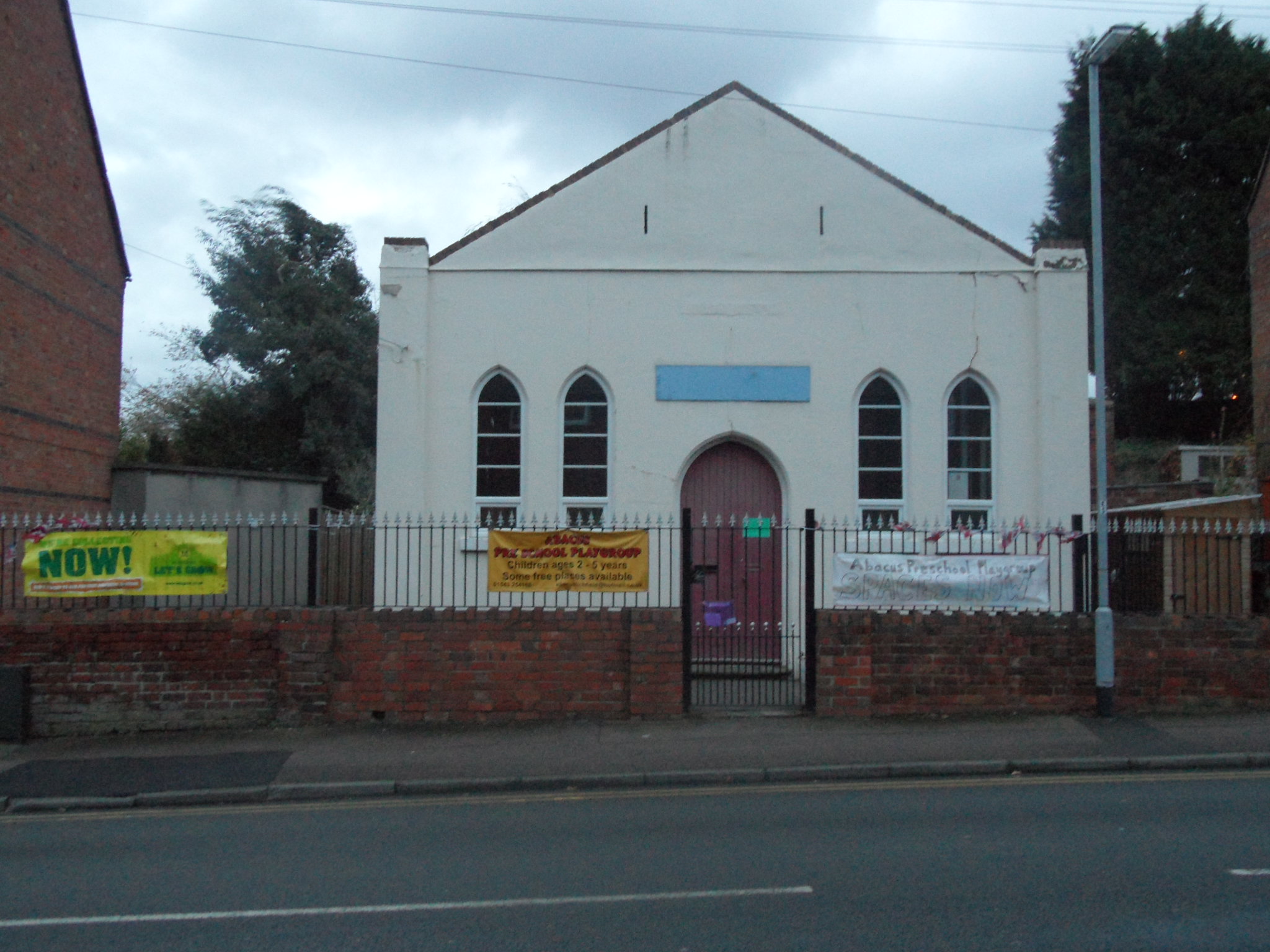
There’s a saying ‘It’s what is on the inside that counts…’, and it’s rather appropriate for describing Frank Halfpenny Hall, a plain and unassuming building half way up George Lane. The hall is home to the wonderful Abacus Pre-School, and inside is a place full of colour and music, imagination and laughter.

Frank Halfpenny Hall, George Lane, Lichfield

People have many fond memories of the hall. Responses to requests for information on  the Lichfield Facebook group show that this is a building that’s been an important part of the community over the years. People talked about attending Sunday school there, still having the ‘Peter and Jane Go to School’ book from their last day at playgroup, eating school dinners there when at St Chad’s school and regular jumble sales being hosted. It was even the venue for one woman’s wedding reception!

The hall is named after Frank Halfpenny, a Labour councillor, who I believe went on to become Lichfield’s first Labour mayor in 1965. He was the Sheriff of Lichfield, when war broke out in 1939 and the photograph below shows him maintaining the tradition of the Sheriff’s ride that September, accompanied by just one other rider.

Frank Halfpenny ensuring the tradition of the Sheriff’s Ride is maintained. Photograph used with thanks to Annette Rubery http://www.annetterubery.co.uk/

Cllr Halfpenny bought the hall and in 1958, donated it to the Lichfield and Tamworth Constituency Labour Party. I’ve been told that the hall was used as the Labour Party HQ during the two general elections of 1974 (in May the Conservative Party held the Lichfield and Tamworth seat but lost it to Labour in the October election later that year). It had originally been built as a Primitive Methodist Chapel in 1848 and a map from 1884 shows it had 130 seats for the congregation. It the 1930s, it was used by the Salvation Army.

Sources:

Lichfield: Town government’, A History of the County of Stafford: Volume 14: Lichfield(1990), pp. 73-87

Lichfield: Roman Catholicism and Protestant nonconformity’, A History of the County of Stafford: Volume 14: Lichfield (1990), pp. 155-159

http://en.wikipedia.org/wiki/Lichfield_and_Tamworth_(UK_Parliament_constituency)

Features and Reviews

Hopefully, anyone reading the blog recently has found the old graffiti interesting. I know that Gareth and I, and (for a few days at least!) a large broadcasting corporation did. After all of the excitement, I thought it was time for a bit of musing….

The discoveries (or perhaps rediscoveries is more accurate) in the Lichfield District Council offices got me thinking about the potential for other ‘unseen’ history out there. There’s unseen in the sense of being hidden away from view –  in attics, down pub cellars and down the bottom of the garden. However, I also think that something in plain view can be unseen –  people may pass by everyday, but no longer see what’s actually there or the potential of it, due to familiarity. During discussions about the graffiti, someone said to me, “I’ve walked past that graffiti loads of times and never even thought about it”.

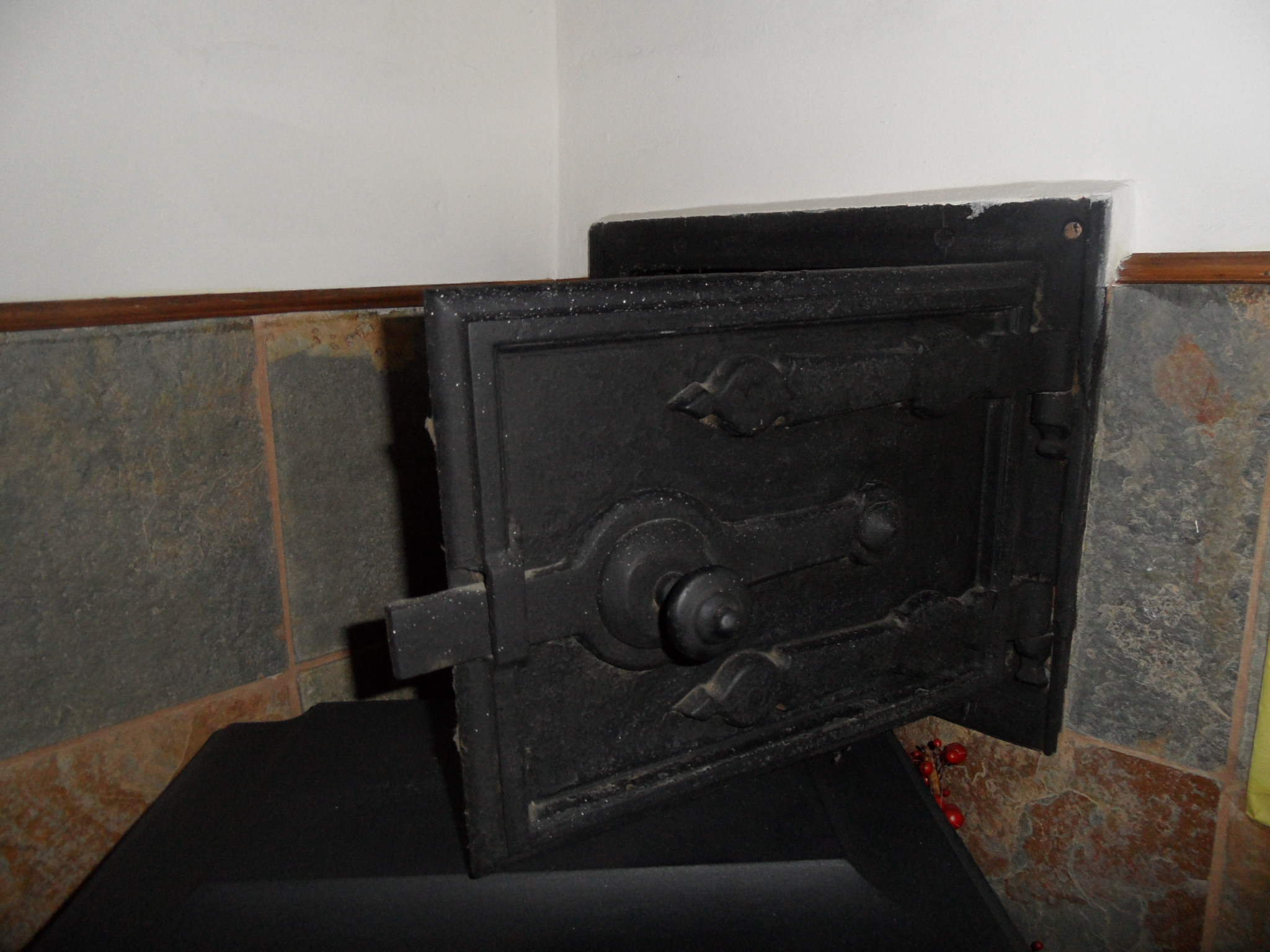
The bread oven above is in the house of someone I know. I remember them buying the property years ago and excitedly telling me after their first viewing with the estate agent, “It has an old bread oven!”. When they moved in we all keen to peer inside but prior to taking the photo, it was last interacted with as part of an Easter Egg hunt.  However, taking the photo to show a friend, sparked a whole new conversation about the oven. Was it original? If so, would this have been the kitchen? Wasn’t it once divided into two houses? How was it laid out back then? Why was the house built in the first place? And so on….My point is, sometimes, we need to look with a fresh pair of eyes to see what’s in front of our nose.

I don’t think that the history in question even has to be a specific feature like the bread oven. I find the traces of people’s everyday lives fascinating. I visited a house in The Close last Christmas. Unfortunately, I hadn’t had nearly enough mulled wine to pluck up the courage to ask if I could take photos, so I’ll have to describe it. There were stone steps down into the cellar, worn away in the centre by centuries worth of footsteps. There were attic beams with layers of fading wallpaper still clinging to them up in the attic. To describe the place as ‘lived in’ would be an understatement.  The next question inevitably is ‘lived in by who’? Actually, photos wouldn’t really have done the place justice anyway because it was more than a visual thing. You wanted to touch, as well as see. ….

I’m really hoping that Lichfield District Council open their offices up for the next heritage weekend, so that people get to look around what was one the Old Grammar School for themselves. I’m not suggesting people throw the doors of their homes open to the public, but perhaps if we want to explore the history of the city and all its inhabitants, we sometimes need to look at the ‘normal’ buildings and places, where people lived and worked, and still do! I’m by no means detracting from those special, extraordinary buildings like the Cathedral, just saying that sometimes it might be worth looking again a little closer to home.

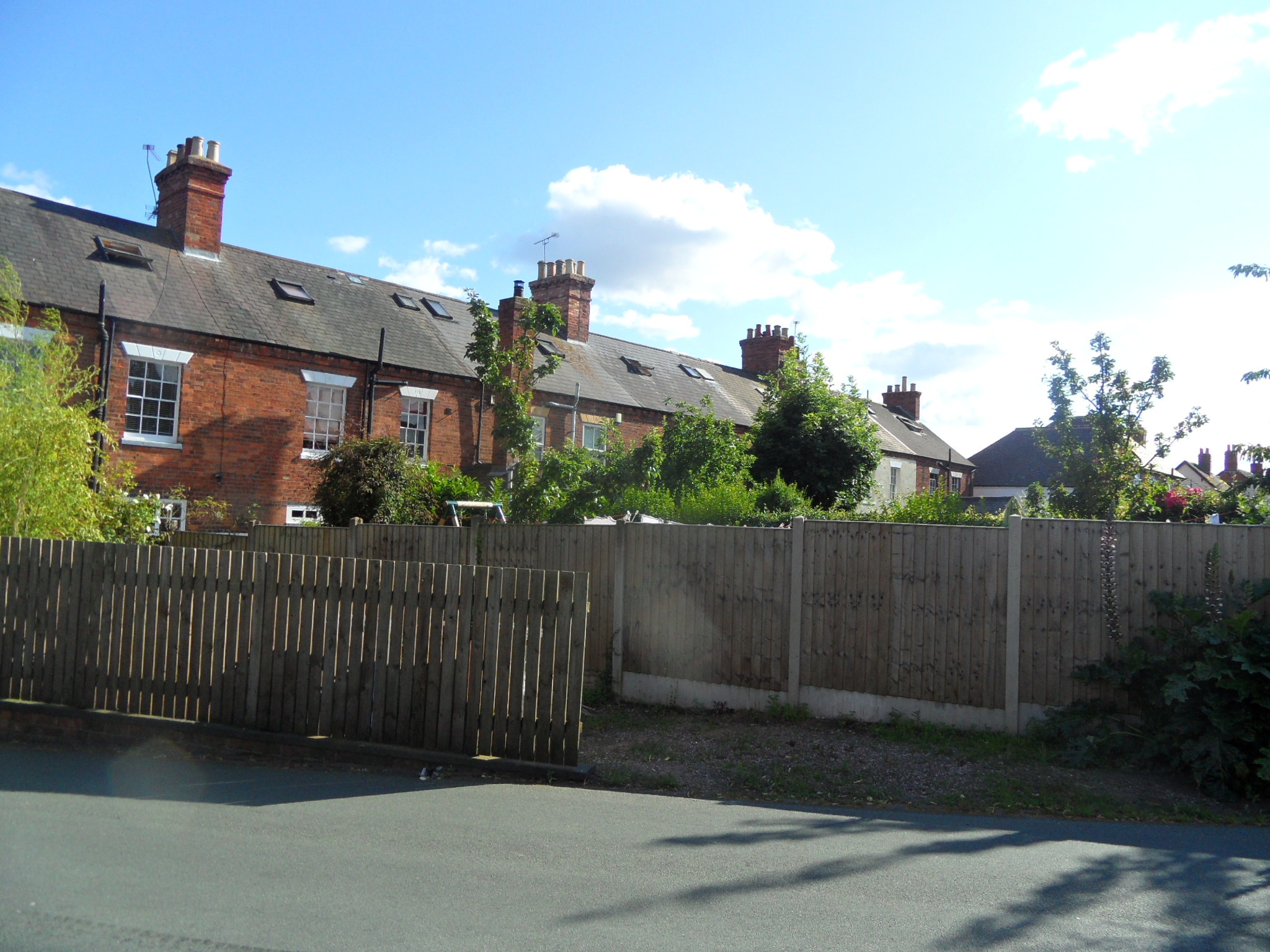
One of these terraced houses in Leomansley still has a tall chimmney at the back. An old washroom?

A wall brace on Greenhill. Does that say R Crosskex? Who was that? See edit below.


A selection of objects found in the garden Of Vicky Sutton’s Nan’s house near to Beacon Park (not including the pink flowery plate!).

The remains of a cherry orchard can still be found near…Cherry Orchard!

Edit:

After I woke up properly, I realised this actually said R Crosskey. I found a book about Henry William Crosskey, a geologist and Unitarian minister from Lewes (1) and found that his younger brother, Rowland Crosskey came to Lichfield as an apprentice ironmonger. He emigrated to Australia for a while and then,  after he returned to England, he started a business in Birmingham. Afterwards, he took over the Lichfield firm where he had served his apprenticeship. In 1868 he became Mayor of Lichfield and donated a civic sword to the City (Is this the one still used in processions today?).  He died in 1890. From census records, it looks like his home and business premises were initially in Market St. In 1888, he was in Bore St, trading as a ‘Military Camp and Store Furnisher’ with premises on the Burton Rd in partnership with Charles John Corrie. Also, just as a point of interest, Rowland was his Mother’s maiden name.


(1)Henry William Crosskey, LL.D., F.C.S. : his life and work by Richard Agland Armstrong; with chapters by E. F. M. MacCarthy and Charles Lapworth. http://www.ebooksread.com/authors-eng/e-f-m-maccarthy-richard-acland-armstrong.shtml

(2) London Gazette 1888


Through Doors and Windows

Anyone who has read the Written into Lichfield History and Making your Mark posts, will know that Gareth Thomas has been exploring the Lichfield District Council Offices, and very kindly sharing the photos here on the blog.  Gareth’s doing this because the buildings were once the Lichfield Grammar School, and generations of pupils, dating back to the 17th century have left their mark on the building.

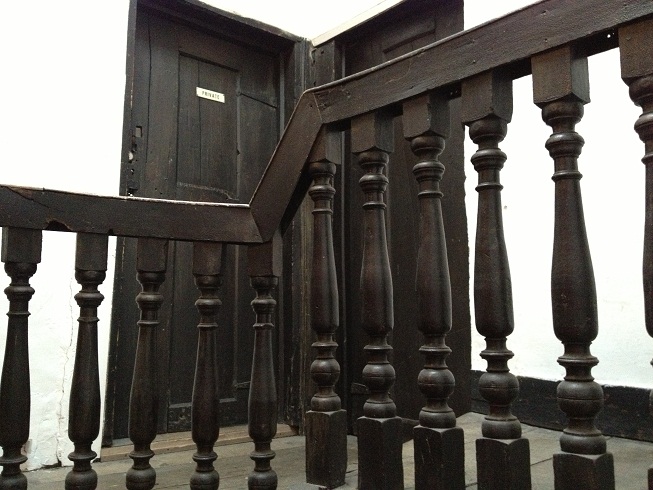
I like the idea that even those who didn’t go as far as leaving their name still left a trace on the worn bannisters and floorboards

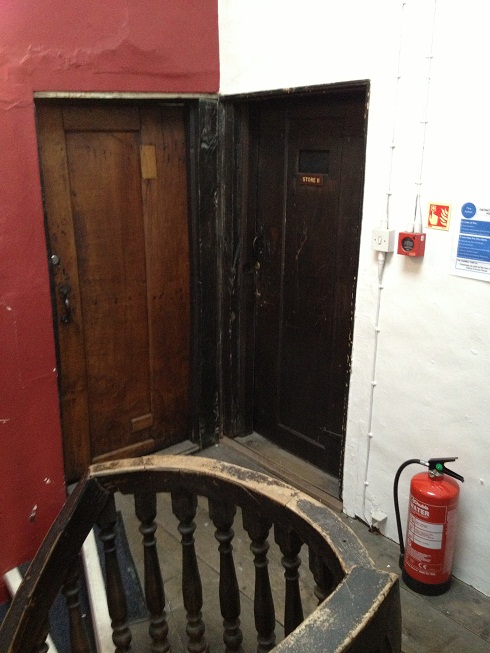
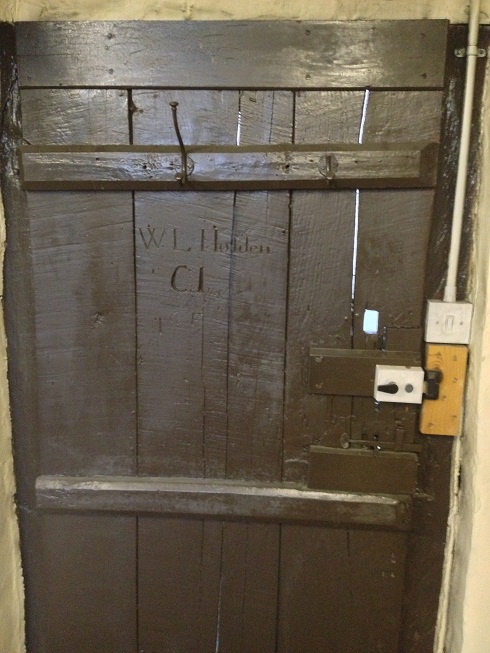
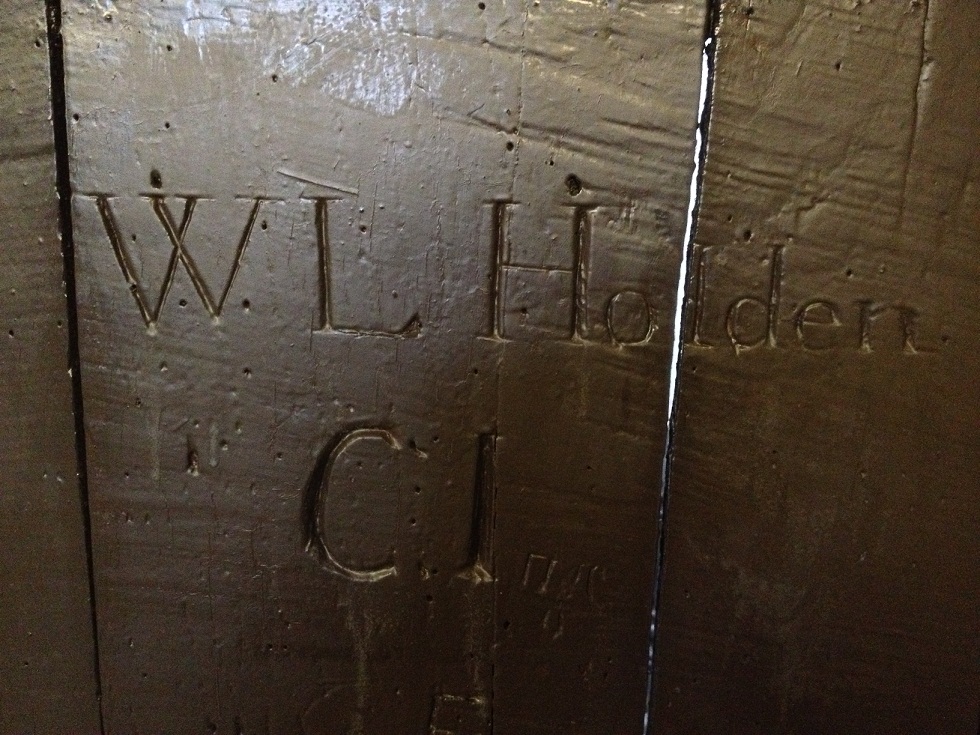
Last time, we got as far as the attic doors, where someone called ‘Watkins’, carved his name in February 1714/5. Amongst the other graffiti is the name WHoll, and Roger Jones (Ziksby) put forward the idea that this could be William Holl the engraver, which certainly warrants further investigation.  Back then the doors would have lead to the dormitories for the boarders at the school. Now thanks to Gareth, we get to have a look at what lies behind those potentially three hundred year old doors……

Who was WL Holden? Does C1 refer to his form or something else?

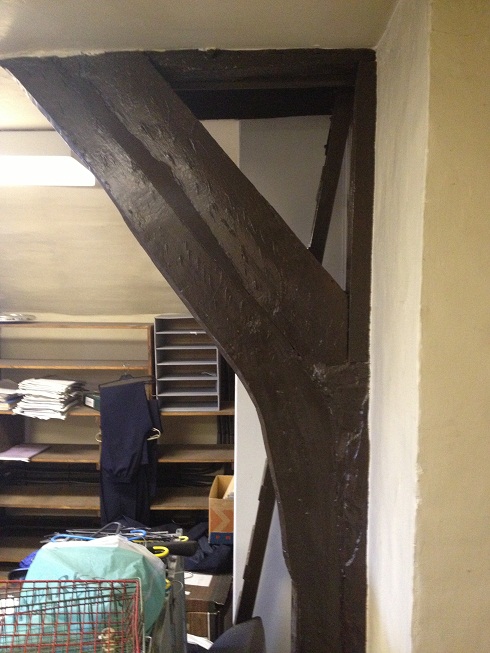
To us these are old timber beams, yet once they were brand new, and according to the Lichfield Conduit Lands archives, mostly donated in the form of individual trees!


Gareth has taken some photographs from the windows. Not only does this give an interesting perspective of the city, it also invites you to imagine what the boys would have seen looking out of this window, what’s changed and what’s the same.

In around 1813, Cowperthwaite Smith was appointed headmaster of the school with a salary of £170 per annum, plus rent free accomodation. At the time, board, lodging & tuition was being charged at between 40 and 50 guineas a year for each scholar. In 1828, according to the ‘Account of Public Charities in England and Wales’, there were 18 boarders, and around 30-40 students in total. It goes on to say that the only scholars receiving their education free at the school were the ‘six children of poor men born within the City’ (who were also given money for books, and slightly more curiously brooms, when the school was first endowed).  The people of Lichfield were apparently not happy that their grammar school was no longer a free school.

By then end of Cowperthwaite Smith’s time as headmaster in the 1840s, no boys at all were coming to the school. Allegations were made in the Wolverhampton Chronicle that Lichfield Grammar School had been closed for six years due to the the misconduct of the master. It claimed he was violent towards the children in his care, and that ‘his treatment of two boys on two separate subjected his modes of punishment to investigation before the magistrates one boy having subsequently confined to his bed under surgical advice for a fortnight’.

The newpaper was sued for its attempt to injure Cowperthwaite’s ‘good name fame and credit’ as a schoolmaster and clergyman, and ‘to bring him into public scandal infamy and disgrace’ and ‘to hold him up to public contumely scorn and ridicule and to vex harass oppress impoverish and wholly ruin (him)’. I’m trying to piece together exactly what happened as best I can from the court cases that followed these allegations and I’m hoping that the original newspaper reports might be available. There’s also a vast amount of information at Lichfield Record Office that I’d like to look through, and I think it’s best not to speculate or comment further until I have read more on this.

I am also working on another post as Gareth’s investigations took him to another part of the building, where he made another fantastic discovery, including our oldest dated graffiti yet.  In the meantime, Gareth, do you fancy going up that ladder in the attic?

(1) A Concise Description of the Endowed Grammar Schools of England and Wales, Nicholas Carlise 1818

http://hansard.millbanksystems.com/commons/1846/apr/01/the-lichfield-grammar-school

http://www.lichfielddc.gov.uk/info/100004/council_and_democracy/588/history_of_district_council_house/2

http://eagle.cch.kcl.ac.uk:8080/cce/persons/DisplayPerson.jsp?PersonID=19831

Perspexive

This morning, I went to the dentist. On the way home I walked past St John’s Hospital. With the sun shining, I decided to pop in and allow myself a minute to take in the lovely surroundings and the calm atmosphere of the courtyard, before heading home.

At least that was my intention. As hospitable as ever, someone in the courtyard came over to welcome me, and invited me to have a look around the chapel. Never one to miss an opportunity to be nosey, I accepted with thanks.

I have been inside once before, but that visit was dominated by standing in front of John Piper’s striking window for the first time. Today, I sat on a back pew and found myself next to a perspex window. A small sticker told me that the stonework behind the perspex was the remains of a Norman water stoup. I understand that this would once have held holy water, into which those entering the chapel could dip their fingers, and make the sign of the cross. Apparently, many stoups were destroyed during the reformation but whether this is the case here I don’t know.  As the chapel has been heavily restored and altered over the centuries, I was delighted to have this chance encounter with part of the older fabric of the chapel.   Unfortunately, as I hadn’t anticipated there being many photo opportunities on a trip to the dentists, I had no camera. But the chapel is open everyday until 5pm, so if you can, please do go and take a look yourself, and enjoy visiting the grounds at the same time.

This got me thinking about the idea of layers of history within buildings, where generations of people have made their mark, by accident or by design, for better or for worse.  When I was volunteering at the Guildhall, someone told me I could get out using the back door. It was news to me that there was a back door but once through it, I made the even more exciting  discovery that  traces of the older building were still in evidence. For example, whilst the main hall and the front of the Guildhall date to the mid 1800s, the blocked window on the photograph below is thought to date to the 16thc.

Brickwork from different periods, round the back of the Guildhall

Another couple of examples to be going on with – what’s gone on here with all the different brickwork at this house in The Close?

This metal….thing, above a restaurant on Bird St, must have played some role in the building’s past, but what?

And when we’re talking about layers of history, should we also consider the present and future of buildings? I notice that the Angel Croft hotel has unsurprisingly made its annual appearance on the English Heritage At Risk register…..

Sources

http://www.british-history.ac.uk/report.aspx?compid=37864

Bell Vista

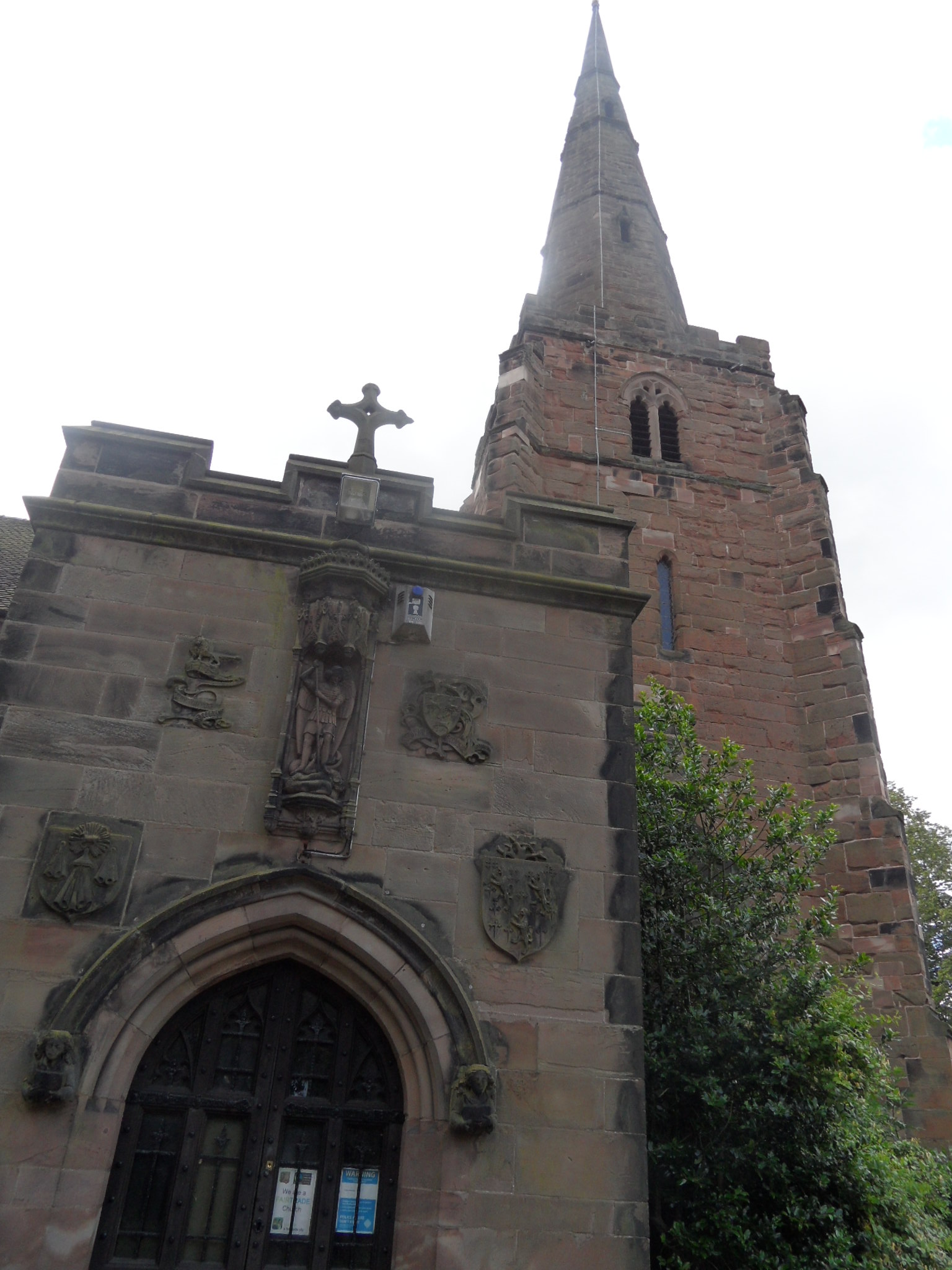
A while ago, I wrote about the architect Thomas Johnson and how he had been involved in the restoration of the church of St Michael on Greenhill in 1842/3. In the newspaper archive, I found a report of a meeting of parishioners held at the church, prior to these restoration works.

The article is a bit blurry and hard to read but after much squinting it seems that there was concern that the church was at risk of ‘being reduced to ruins’ and that the churchwardens had appointed Mr Johnson to assess the extent of the dilapidations.  His diagnosis was that the roof, ceiling, spire and a portion of the walls were so unsafe that a large sum of money would be needed to keep up the building. The parishioners expressed their surprise at how bad the situation was. To illustrate just how bad things had got, it was revealed that rabbits had managed to get into the mausoleum of the Marquis of Donegal (he of Fisherwick) and were breeding in the coffins. The outcome was that the land owning parishioners agreed to increase their rates to pay for the necessary work which according to the County History included

 “the reroofing of the nave, the repair of the side aisles and the nave clerestory, the reintroduction of Perpendicular windows in the north aisle, the rebuilding of the north porch, and the remodelling of the south aisle with new buttresses and a south door in place of a window. The gallery was removed. The mausoleum and the vestry room were replaced by a stokehold over which a clergy vestry was built with doors into the chancel and the south aisle; an organ loft was built over the vestry”.

St Michael’s above Stowe Pool

I have never been into the church myself. However, I notice via facebook that the church will be open for viewing tomorrow (between 3pm & 5.30pm) during the launch of the Bell Restoration Fund. You can find out more on their facebook page here and you can read the great article Annette Rubery wrote about the fund here.

The church is of course featured on the ward banner for this part of Lichfield (along with what I had assumed was the Greenhill Bower House, although looking at it again now I’m not so sure…)

Although I’ve never been inside the church, I have been to the churchyard. With claims on Wikipedia that it could be a Mercian tribal necropolis, the site of one of the earliest settlements in Lichfield or the burial place of followers of St Amphibalus, it certainly merits a post of its own one day!

Steps leading up to the churchyard

Edit: I’ve just been thinking about the building on the ward flag, below the church. Could it in fact be the gateway to the old Lichfield Union Workhouse (subsequently St Michael’s Hospital).

Sources:

Lichfield Mercury Archive

Lichfield: Churches’, A History of the County of Stafford: Volume 14: Lichfield (1990), pp. 134-155


Another Johnson

Davidson House on Upper St John St was once home to another Johnson from Lichfield. Thomas Johnson, an architect lived here from 1834 and ran his business, Johnson & Son from here until his death in 1853. I understand that Thomas Johnson jnr went on to work with James Trubshaw, and married his eldest daughter.


Although people might not have heard of Johnson and Son they will probably know some of the buildings they were involved with. Below are some examples of their Lichfield work, and it seems that they also worked on buildings further afield.

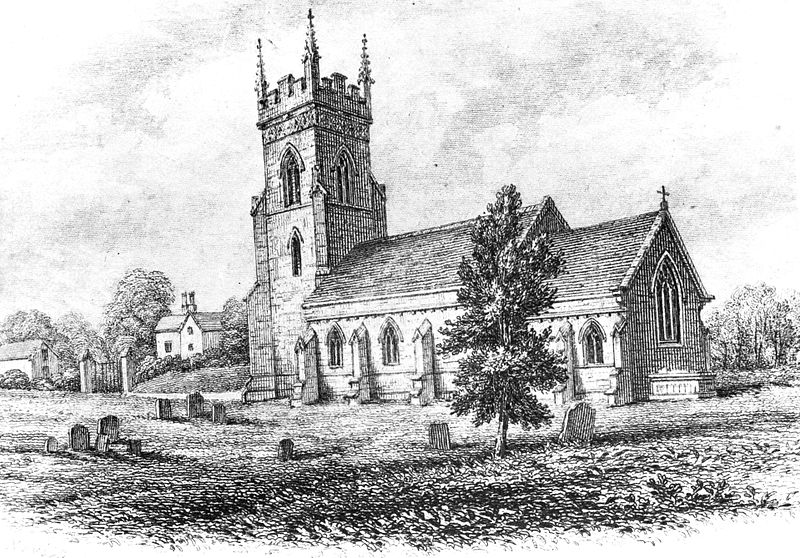
Christ Church, circa 1850 (from wikipedia)

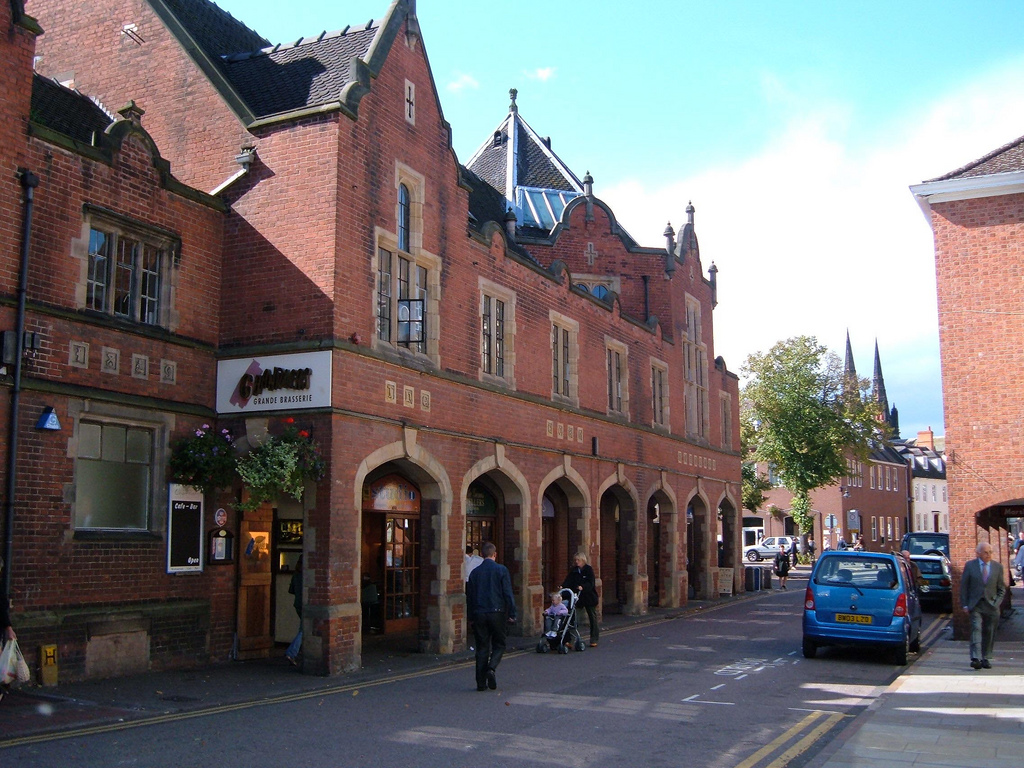
Corn Exchange Lichfield (from LDC flickr stream)

The Old Grammar School, C18 rear
wing, school room and front wall of c1849, by Thomas Johnson
and Son of Lichfield

Back to Davidson House and I’ve read that it was the home of the South Staffordshire Regiment Old Comrades Association and the South Staffordshire Regiment Museum collection from 1938 until 1963, when it was moved to its current site at Whittington. The name ‘Davidson House’ apparently relates to  Brigadier-General Charles Steer Davidson who donated the property to the regiment.

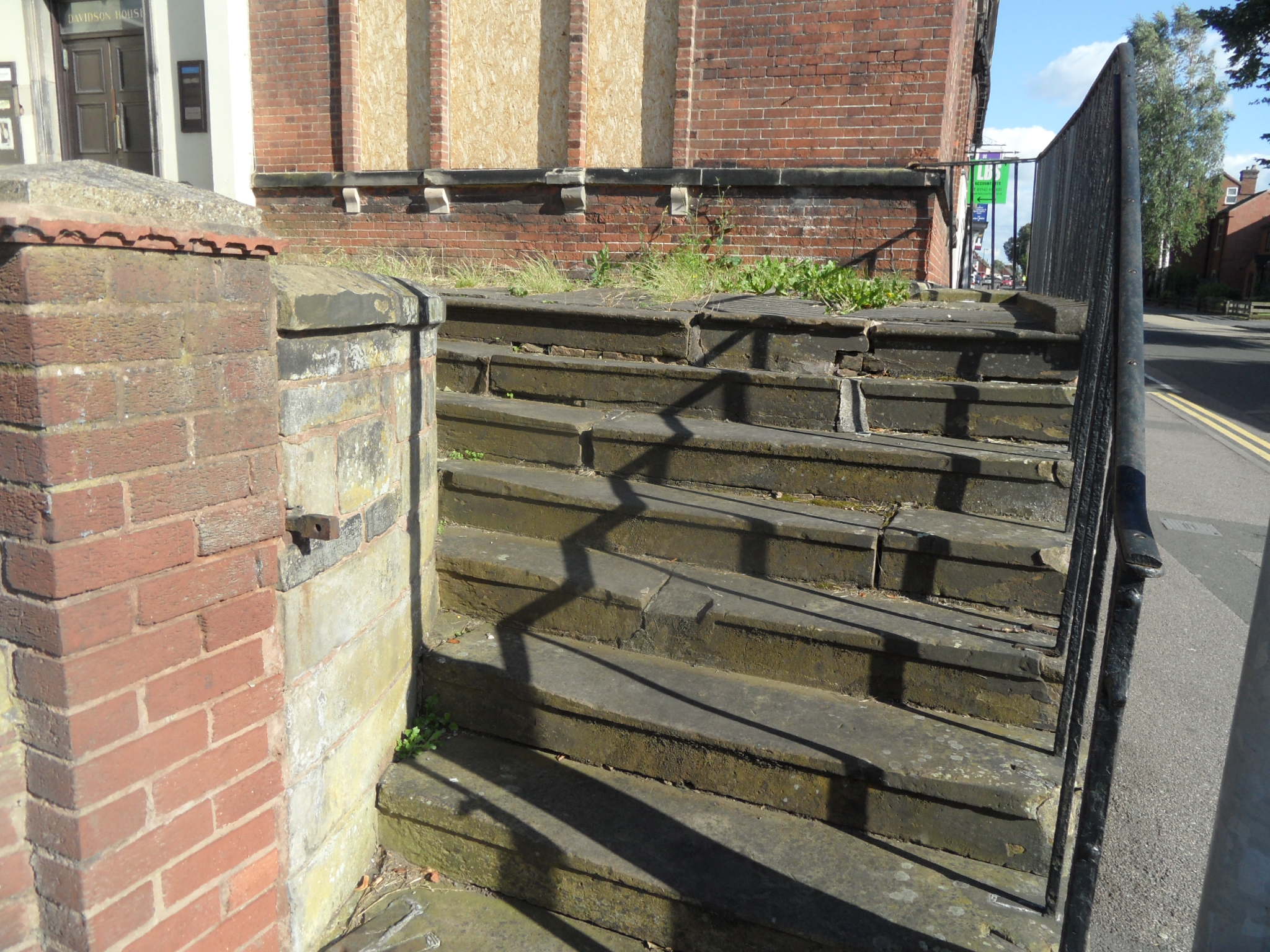
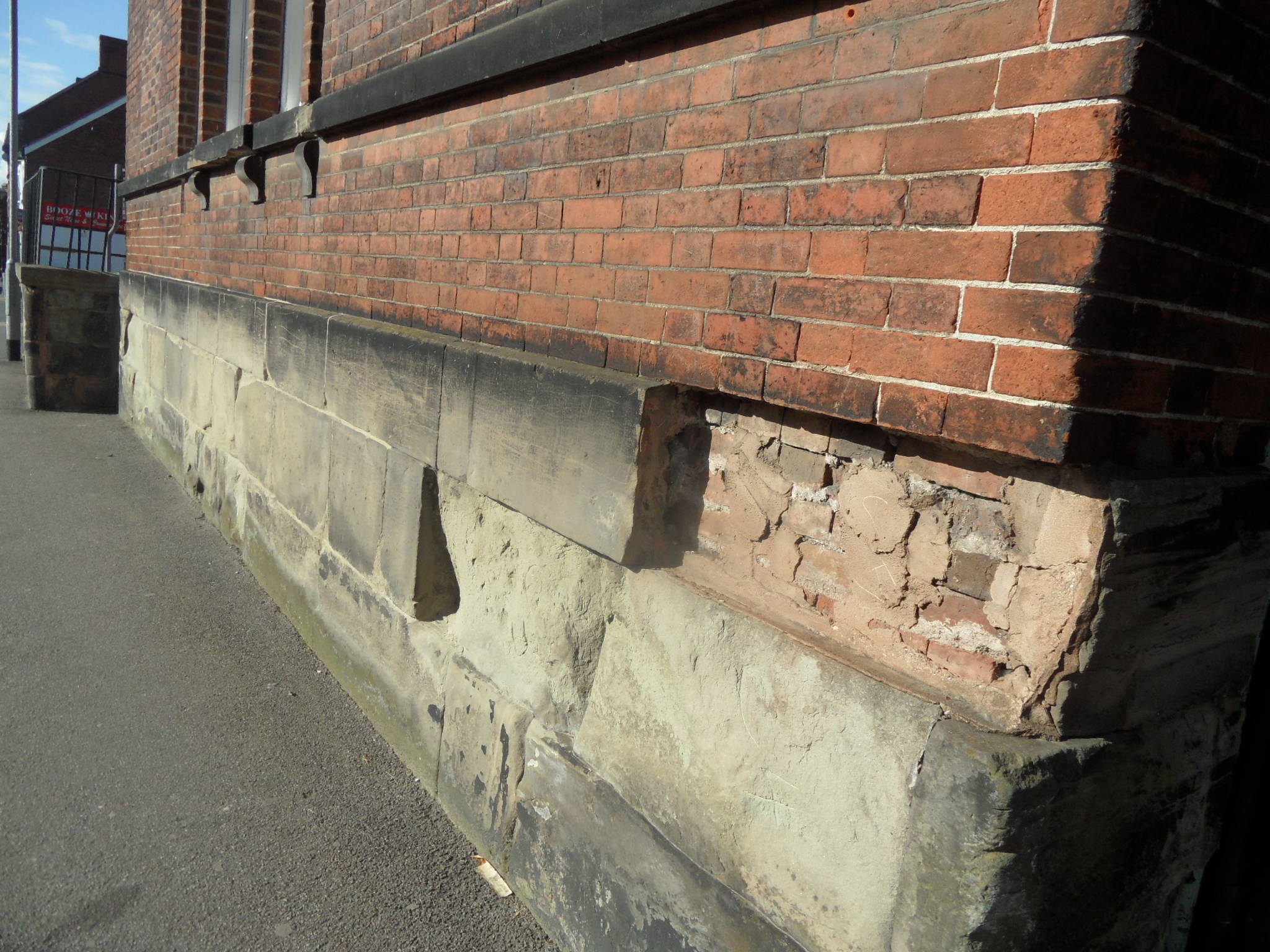
As ever, plenty of questions. Did the Johnsons employ local people? What about the rest of the family? Where did their materials come from? Who was it built for originally.  Who owned the house between the Johnsons and the Brigadier-General? Who was Charles Steer Davidson? What happened when the museum left and what is the future for it? It looks like it needs a bit of TLC right now, with its boarded up windows and crumbling stonework. There’s a book ‘Staffordshire and the Gothic Revival’ by Michael J Fisher that I’d like to have a look at to find out more about the Johnsons and their contemporaries.

There’s still plenty more to find out about Davidson House and its inhabitants but I like how by finding out a little about one Lichfield building,  I’ve found out more about some of the others too. And they just happen to be some of my favourites!

Sources:

http://www.britishlistedbuildings.co.uk

http://staffordshireregimentmuseum.com/