Last Christmas

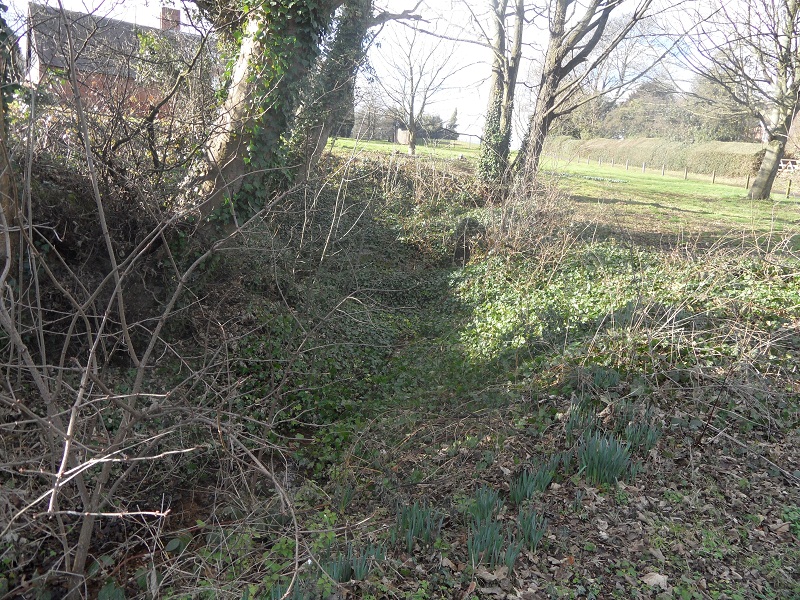
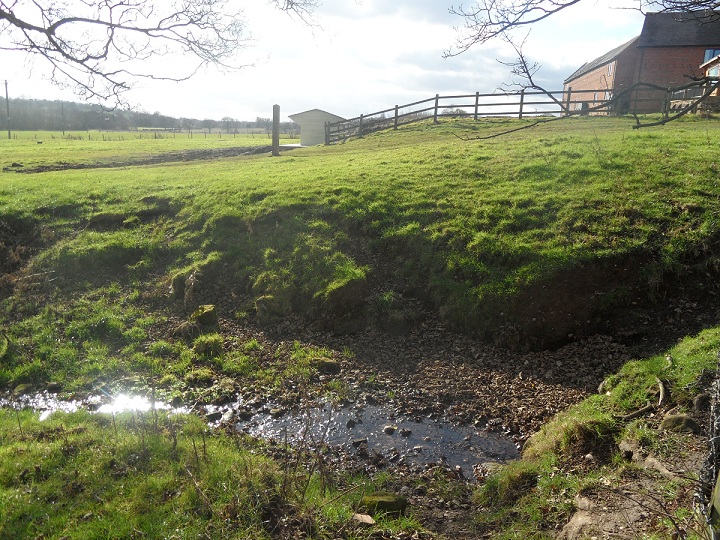
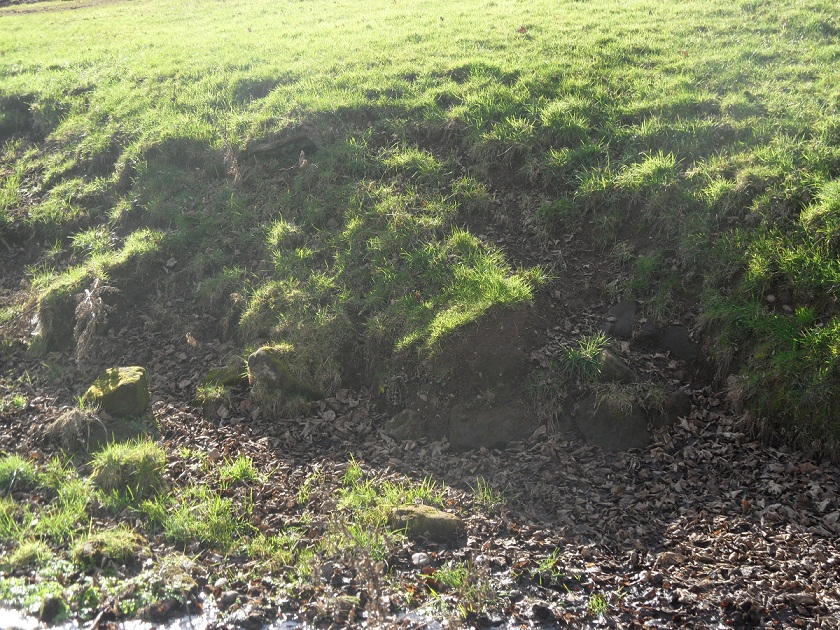
I started this blog around this time last year. I was looking for the medieval conduit in the woods at Pipe Hill and thought I’d start a blog to record this & all of the other things I found out about Lichfield just in case anyone else was interested.

A year on and I’ve had a fantastic time exploring Lichfield and its nearby places. The best thing by far has been the discussions that have taken place whether on here, twitter, facebook, by email or sometimes even in real life! So thanks for reading, contributing and making this a joy to do. Happy Christmas to everyone, I’m really excited about &  looking forward to all that’s to come in 2012.

By the way, I still haven’t found that conduit head…New Years Resolution number 1?

Shopping Daze

Dam St is one of the most wonderful places in Lichfield, offering a winning combination of varied architecture, independent shops, duck feeding and ice-cream on route to the Cathedral. 

Three small signs above the shops at the Market Square end may well go unnoticed. They say ‘J Dean Putney Maker’ and have little hooks on them. A quick google search leads to the website of ‘Deans Blinds & Awnings’ established 1894 and tells how the company was started by a policeman’s son called Tom Dean, and was taken over by his brother John. It seems John Dean and subsequent generations of his family were involved in the ownership of Fulham FC as well as manufacturing blinds and awnings.


J Dean Putney


The listed buildings describes them as ‘late C19 shop fronts with bracketed cornice and canvas canopies’. Another look at these buildings and you can also see the chains attached to these awnings, which presumably must still be there, tucked away from sight. I wonder when they were rolled shut for the last time? What kind of shop was this when these canopies were added? There was a drapers & silk merchants in this area of Dam St in 1914, could this have been it?

J Dean 2 with Metal erm thing

On the second photo, there is also a metal….thing. I first came across these in Tamworth, where nearly every shop seems to have one albeit slightly newer looking.

Tamworth version of 'the metal thing'. They have lots of interesting things on buildings in Tamworth including mermaids.

Someone got in touch on flickr and suggested they were holders for flags or Christmas trees. I was in Bakewell in Derbyshire last week where they seem to be using them for the latter, as you can see here in the Matlock Mercury. Looks pretty, doesn’t it! I’m guessing the Dam St one was a flag holder but am more than happy to be proved wrong by memory or photographic evidence or just a convincing argument as to what else it might be 😉

You can also have a look at the Street View here, perhaps whilst eating a mincepie by a roaring fire (although it is out of date, as The Staffs Bookshop is now Realwoods).

Last weekend someone spotted something else interesting high up on another building in the city centre. I’m not saying anymore, as I’m hoping that they might consider doing something on this themselves. No matter how well you think you know your surroundings, there are always still things to discover. So whilst out and about shopping in the 8 (is that all!) shopping days left until Christmas try looking at Lichfield from a different angle. Who knows what you might notice…..

Edit 23/12/2011

Pat’s been on googlemaps and has spotted not only a whole load of these brackets on Tamworth St but also one actually in use outside the Scales! So I think that definitely answers this little Lichfield mystery!

Written in Stone

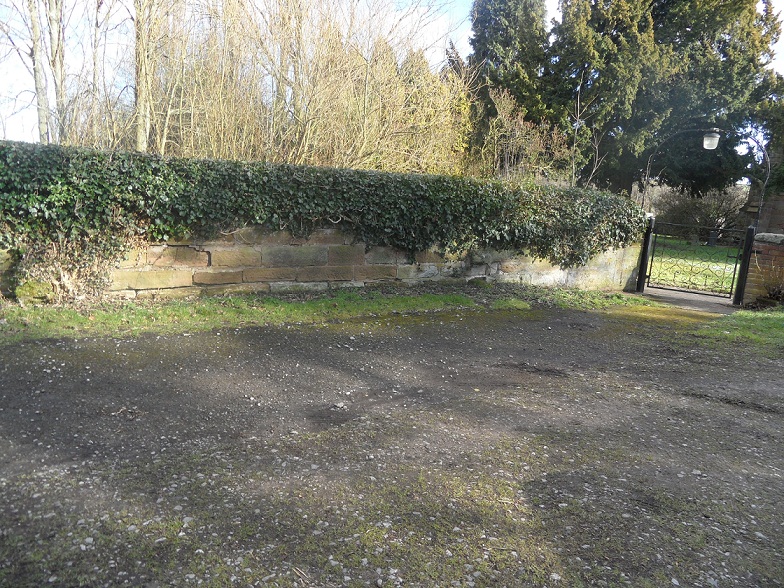
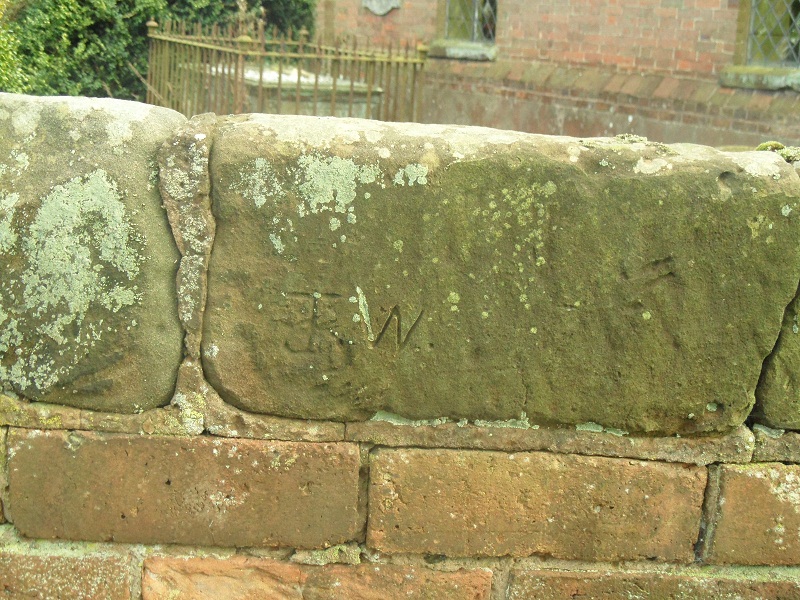
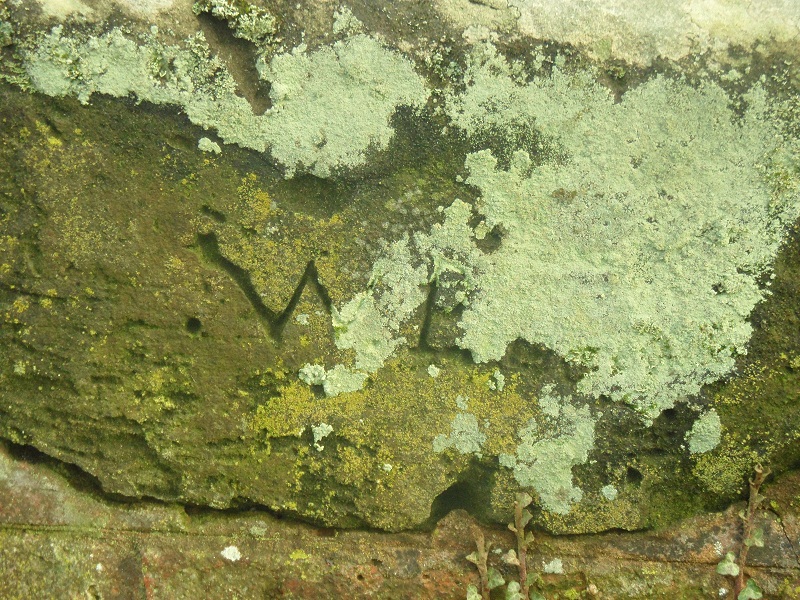
Walking past Newtons College in The Close, I noticed two lots of graffiti on the same building. One lot is spraypainted (I think) and looks like a name (it’s not the best penmanship ;)), the other consists of initials and a date of 1920. You can see these both below in the gallery.

I have no problem with the second one, in fact I enjoy finding a name or something else carved into stone. I do however have a problem with the first one. Why I am ok with PE leaving his or her mark in 1920 but not the graffiti artist in 2011?

Slightly different, but still maybe relevant, there was a recent story about Sex Pistols graffiti being historically and archaeologically important.

I’m still trying to work through my thoughts on this whole area. In the meantime, if anyone has any thoughts, or opinions of their own, please get in touch 🙂

 Edit 6/12/2011

Off on a bit of a tangent, a couple of stories about graffiti with a story! Thanks to Mark from Tamworth Time Hikes for letting me know about this one in Sheffield, which in turn reminded me of this one in Hagley, Worcestershire. Not at all to do with Lichfield, but of interest on the theme of graffiti I hope you’ll agree. Anyone know of any more?

 A bit later on 6/12/2011….some of my photos of graffiti…..

The Kenilworth photo reminds of going there as a little girl and noticing this kind of graffiti for the first time.  I temporarily abandoned my quest for portcullises, drawbridges and moats (which always disappointed by not being filled with water anyway) and played ‘Who can find the oldest graffiti?’. I remember seeing a date in the 1700s and realising that I was just one of the latest in a long, long line of people who had been there. I suppose, in a way those people, rightly or wrongly, became a part of the history of that building themselves. There are loads of photographs of this kind of graffiti around, there’s a whole flickr group here. I wonder if this kind of immortality was their aim or if it was more a case that they got fed up of looking for portcullises, and it gave them something to do?It seems some of our old vandals seemed happy to be easily identified, like Mr Joel Churchill at Kenilworth.  Perhaps it was an acceptable thing to do at the time?

Edit 9/12/2011

Another bit of Lichfield graffiti from the excellent Beacon Street Blog here.

Kindred Spirit

I’ve referenced J(ohn) W(alters) Jackson several times in this blog and really wanted to find out a bit more about him. So here we go….

Mr Jackson was 2 years old when he came to Lichfield in 1864. He was a music teacher and the organist at Christ Church. He lived at 81, Walsall Rd until he left the city to live with his son in Newport,  Shropshire in October 1940 at the age of 78. During his time in Lichfield he was ‘City Librarian’. The Lichfield Mercury reported that after his appointment the number of readers increased from 70 a week to 500.

In the 1930s and 40s, Mr Jackson had a local history column in the Lichfield Mercury in  which he answered readers’ queries and shared an assortment of historical facts, folklore and transciptions from old documents. Each ‘subject’ is given a paragraph at most, so if one snippet didn’t interest, the next one wasn’t far behind!

I thought I’d share one of my favorites with you, to give you a flavour of Mr Jackson’s work. I like this one especially because the ancient manor of Abnalls is one of my favourite places in Lichfield and I love a good ghost story (this one has the added bonus of an intrepid one-man paranormal investigation as well). So I’ll hand you over to Mr Jackson…..

“The Abnalls dates back to the time of Edward I. The present hall has taken the place of the ancient manor. Many years ago it was said to be haunted. Half a century ago considerable alarm was caused by reports of a spectre being seen by various passers-by at belated hours. The writer personally visited (at midnight when ghosts are said to appear) on several occasions but after patiently waiting saw nothing of a spectral character further than weird forms in the trees and bushes in the dim light, and on one occasion the gentle waving of a white nightgown pegged on a clothes line.”

The site of the old manor off Abnalls Lane. I know it doesn't look it from the photo but it is very intriguing place and a scheduled ancient monument.The aerial view from googlemaps reveals a lot more but I'm having trouble adding it to the post at the minute, so in the meantime, maybe do your own investigation & see if you can find it!

 This kind of history might not be to everyone’s taste (but then what is?) but it sure is to mine –  I think it’s entertaining, accessible and a great source of information. If you get the chance I highly recommend that you have a look at the Lichfield Mercury archives (warning – give yourself plenty of time as you’ll be engrossed).  

I love the way that us humans,  no matter what age we belong to, are curious about the stories of the places that surround us and the people that came before us (well, most of us are anyway). Investigate the blog list to the right of this post and you’ll find a lot of curious* & entertaining souls. I like to think that if Mr Jackson was around today, he’d be doing a blog. I hope he doesn’t mind being included on this one!

 *curious in the inquisitive sense, not in the strange sense. I think 😉

Standing Stones

Police Mutual is on my route into central Lichfield. It’s also our spec for watching the Bower procession (from where my parents always tut about the Festival Gardens being used as a car park, but I digress…..).

I always think of the sea when I look at the sculpture in the entrance. However, I’ve never gone up to the front door for a closer look. So whilst out for a walk on a Sunday, with the office closed, I decided to have a peep through the glass doors.

Standing Stones – Please DO NOT attempt to skim these across Minster Pool

On reflection it was probably a you had to be there moment, but at the time I was delighted to discover the stones weren’t actually behind glass. “They’re are outside! Look!”, I yelled to an unenthusiatic Mr G. I walked around the stones a couple of times, because I could! It’s fast becoming something of a cliche, but once again I found myself thinking, “All the times I’ve walked past here & I didn’t know!”. On my third or fourth lap, a man walking past gave me a bemused look (possibly thinking I’d come straight from the Queens Head) and Mr G was trying to shuffle off in the direction of Greggs. As there was no further clue to what the stones represented or their purpose,  I took a photo and followed.

Back home, I discovered that the sculpture is called ‘Standing Stones’, and is an abstract in glass fibre reinforced concrete, designed by Marcus Hole in 2000.  And the sea connection? Well,  they are supposed to be larger versions of the water-smoothed pebbles that, if you’re anything like me, you pick up on the beach for closer examination. Go and have a look at the giant Lichfield ones & see what you think….they’re outside you know!

As always, one thing leads to another, and it got me thinking more about public sculpture & art. I believe the most recent in Lichfield,  is said to be the “Formation of Poetry”, by Peter Walker (who coincidentally shares the name with the author of the PMAS book!). It was commissioned to celebrate Dr Johnson’s Tercentenary and can be found in the Tesco carpark.

The Formation of Poetry

Intriguingly though, Pat has told me about an artwork commissioned to celebrate the millenium in Lichfield, that seems to have disappeared. It looks like an angel and answers to the name ‘Vision & Youth’. Perhaps a bit of detective work is needed, which is quite appropriate as it was the Police Mutual book which started all this off 😉

Sources:

Public Sculpture of Staffordshire & the Black Country – George T Noszlopy & Fiona Waterhouse

http://www.malvern-net.co.uk/mal-net/m_biznes/carlytinkler/news/2000_12.htm

http://52weeksofart.com/main.php/2010/11/21/the-formation-of-poetry-model

Mutual Interest

Pat (who knows so much about Lichfield, that I think he should start his own blog!) was on holiday in Wales when he spotted a book about Lichfield’s very own Police Mutual Assurance Society (PMAS). The history of the friendly society was written by Peter N Walker, whose ‘Constable’ books published under the pen name Nicholas Rhea were made into the Heartbeat series. Pat very generously bought the book in the hope that it would be of interest, which it certainly has been.

PMAS, founded in 1866 is one of Lichfield’s biggest employers. The HQ, was built on former gasworks on Queen St by the Linford group, which up until its collapse in October this year was also one of Lichfield’s largest employers. Work started on the site in 1969, after the society outgrew its premises in Greenfield Crescent, Edgbaston, Birmingham where it had been since 1954.

The original part of the building was opened in 1970.

The orginal part of the building was opened in March 1970 by Princess Alexandra.  According to the Mercury, not many people knew that the building was to be called ‘Alexandra House’ until the princess arrived. Possibly today, not many people know why it’s called ‘Alexandra House’. However, on that cold spring day in Lichfield, there was much excitement about the Royal Visit from Princess Happiness as the Lichfield Mercury  christened her (which to be fair is catchier than her full title Her Royal Highness Princess Alexandra Helen Elizabeth Olga Christabel, The Honourable Lady Ogilvy, Royal Lady of the Most Noble Order of the Garter, Dame Grand Cross of the Royal Victorian Order). There was a band from the Junior Soldiers Company of Whittington Barracks, a marquee erected behind the new building and 2,000 cheering school children (who would be round about 50 now? Wonder if anyone remembers it?).

The building won praise from Lichfield Civic Society who crowned it ‘Best New Building’ 1972 saying the bold design had produced a building which invited entry and which looks as if something is happening inside. I think that’s interesting because I think that this kind of architecture is the kind most people would turn their noses up at today….

PMAS HQ was extended in 1990 & 2000

The PMAS HQ was extended in 1990 and again in 2000.  In 1990, originals from the Ladybird book ‘The Policeman’ were acquired and hung in the boardroom.

Mr Fabricant, MP for Lichfield,  once said in an interview with the Mercury, “I believe one of the most interesting modern buildings in the region is the Police Mutual building in Queen Street in Lichfield. Its modern extension is elegant and blends in well with its surroundings”.   I have to agree.  What will people think of it in years to come though?

So following on from this I’ve had a few rambling thoughts for another day….
I’m not ready to explore this just yet but at some point, I really would like to consider this idea of ‘future heritage’ and how opinions will shift on what is and what isn’t valuable & attractive.  Also, even if it isn’t ancient, pretty, haunted or associated with a famous inhabitant, I do think the history of anywhere people come together, like a workplace, is really important. Another interesting idea to explore is the impact of a workplace on a community? For example, when PMAS moved to Lichfield in 1954, many people apparently sold up in Brum & moved nearer to the new HQ. Also, how has the closure of Linford affected the city? I saw on twitter the other day that Wolverhampton Archives currently have an interesting project about local businesses in that area called ‘Taking Account of our Past’, which is definitely worth a look.

As ever, if any one has any thoughts, questions or comments on any of the above, I’d love to hear them 🙂 I do have a little bit more to add on PMAS HQ in relation to the stones at the entrance, which always remind me of the sea…..

Sources:

The Story of the Police Mutual Assurance Society by Peter N Walker


Fruit & Nut

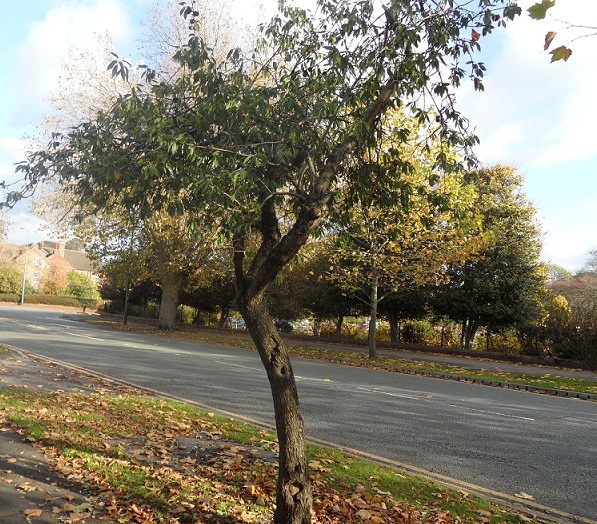
Following on from the apple tree & walnut tree post, Pat (someone who makes a fantastic contribution to this blog via his comments & in other ways), got in touch to say that he knew of an almond tree in Lichfield.

I admit that I don’t know much about thses things, but to me that seems unusual. I associate almonds with warmer climates and so I didn’t expect one to be growing near to the Friary car park. However, there it was, boughs laden. With a lemon tree also growing nearby, perhaps this part of Lichfield has a mediterranean micro-climate?!

Something that I didn’t know until today was that almonds, are not true nuts, but are part of the ‘prunus’ family, together with apricots, cherries & peaches. The edible part of almonds is the seed, but only for the sweet variety. As Pat pointed out these almonds are likely to be wild, bitter almonds and therefore contain cyanide!   So, don’t get picking them to grind up into your Bakewell Tart …

Many thanks to Pat, for sharing this information.

Meripilus Giganteus & Wealhhnutu

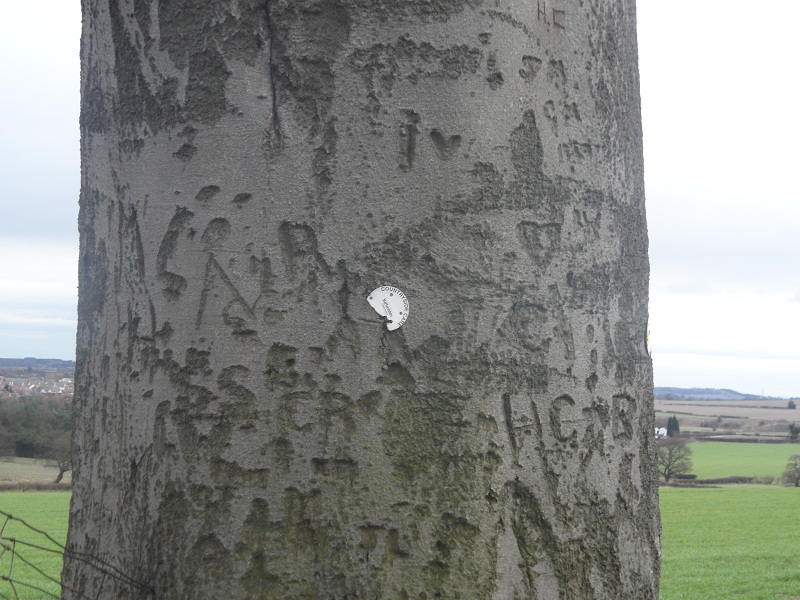
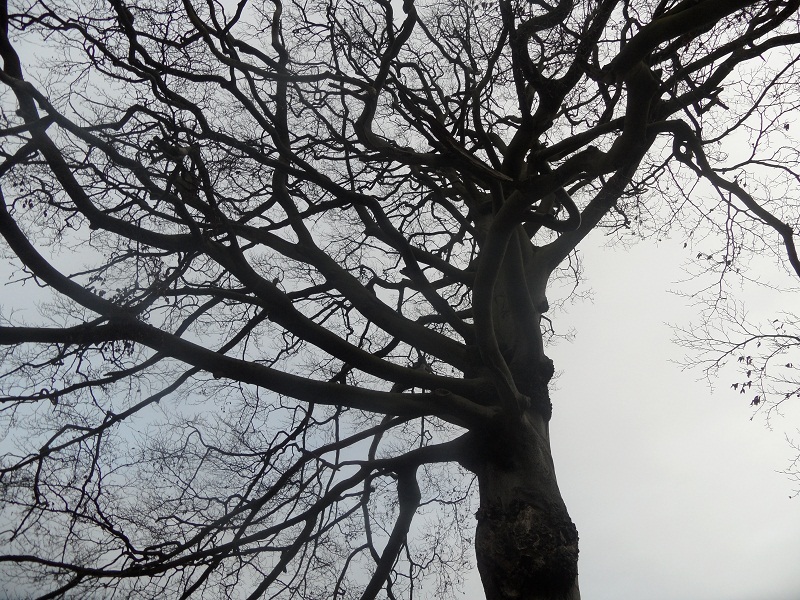
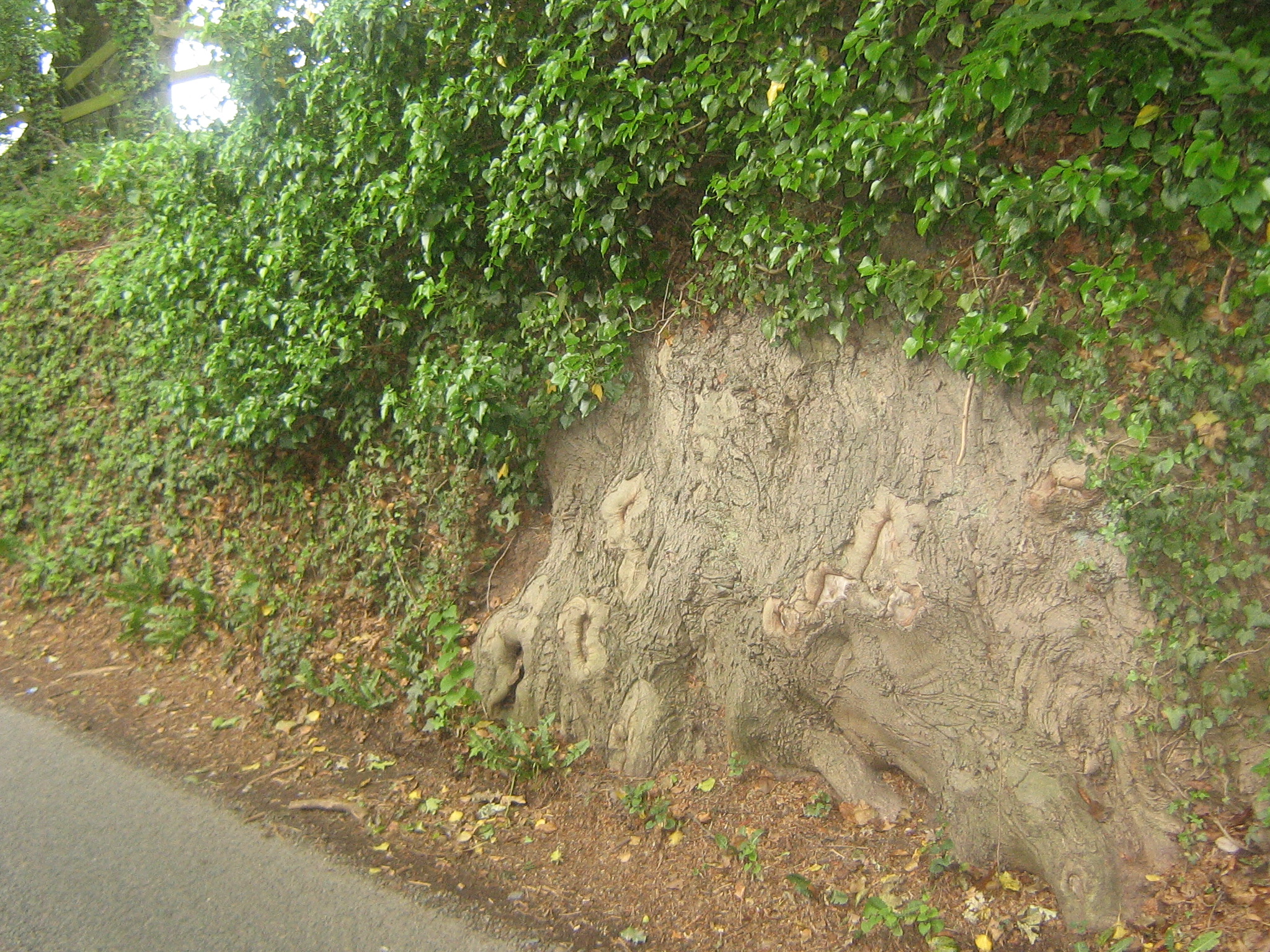
Lorna from the Monks Walk Group has been in touch to say that unfortunately the beech tree in the gardens has been lost due to the Meripilus Giganteus fungus. The good news is that Staffordshire County Council is providing a walnut tree as a replacement.


I don’t know much about fungi or walnuts, so I did a quick bit of research. Apparently, Meripilus Gigantus also known as Giant Polypore is a common cause of death for mature beech trees. It seems we can’t even get our revenge on this fungus by eating it as, although not poisonous, it doesn’t taste particularly good.  However, it is sometimes eaten by mistake as it looks like the Hen of the Woods, which is a tasty, edible fungus (and very good in risotto according to Morgan from Walsall Wildlife!).

In one of my all time favourite books, ‘England in Particular’, the entry for walnuts tells us that the trees were originally brought to Britain by the Romans (the Old English was wealhhnutu which means ‘foreign nut’)and amongst other places were planted in monastery gardens, so it seems that Staffordshire County Council have made an appropriate choice!

A huge walnut wood was planted to the north-east of Ashby de la Zouch around 10 years ago. Jaguar Lount wood is the largest plantation of walnut trees in Britain and as you might guess from the name, the project was sponsored by Jaguar Cars and it includes an area where they are researching the the growth of different varieties for timber and for their nuts. You can see the Forestry Commission leaflet here.

Of course, it probably goes without saying that perhaps most importantly of all, walnuts are a crucial ingredient in Walnut Whips. Much tastier than Meripilus Gigantus.

Sources:
England in Particular – Sue Clifford & Angela King

Can I borrow £18k please?

Ian, who often makes a great contribution to this blog via the comments section,  has spotted something intriguing on ebay.

For £18,000 you can buy a statue of a prophet, said to originally be from Lichfield Cathedral.

The statue's orginal home?

Get your bid in here! http://www.ebay.co.uk/itm/Stone-Sculpture-Lichfield-Cathedral-statue-/350449588131?pt=UK_Antiques_Architecural_RL&hash=item51986c57a3

So of course, I want to know the story of the statue and my initial thoughts & questions are:

It was discovered 3 miles from Lichfield – I wonder where?

Who took it there and why?

I’m a bit confused by ‘dates to 1650’. Do they mean the statue was sculpted at this time, or comes from the Cathedral of this time?

Are there any other parts of the ‘old’ Cathedral anywhere else? For example, we know that most of the damaged statues on the West Front were taken down in 1744/1749.(1) What happened to them all?

Can anyone lend me £18,000 as I think this would look great in my garden?

Huge thanks to Ian for this great spot and it would be great to hear any theories anyone has about this prophet.


Sources:

(1)  ‘Lichfield: The cathedral’, A History of the County of Stafford: Volume 14: Lichfield (1990), pp. 47-57. URL: http://www.british-history.ac.uk/report.aspx?compid=42342  Date accessed: 03 November 2011.


Malus John Downie

I’ve been going on about the Elford Pippin since before the summer, but a few days ago I noticed this at the Friary by the Festival Gardens in Lichfield.

First raised in Whittington in 1875

Another local apple. Unlike the Elford Pippin this one is still around. Actually, I looked for its ‘rich, orange red fruits’ today (it’s in season in October) but I couldn’t find any evidence of the tree at the Festival Gardens. However,  you can still buy it from all good tree shops! It was apparently raised by a Mr E Holmes at Whittington & was named after his friend and fellow nurseryman John Downie.  I hear that the apples are the finest of all crabs – good to eat when ripe and make an excellent jelly.

It seems quite an appropriate day to do this post, as there is an association between apples & Halloween. Along with apple bobbing, I can also remember being told that if I peeled an apple and threw the peel over my shoulder it would show me the initial of who I’d marry. I seem to recall doing this several times over until I got the initial I wanted…..There was something about sticking apple pips to your face as well!

I had thought aboutdoing a post about spooky goings on in the area, mainly because I wanted to do a post with the title ‘Witchfield’ 😉 Sadly,  I ran out of time but if anyone does have any tales to share…….