One Sweet Apple…..

On my way up to Borrowcop Hill,  a house name jumped out at me  – Sweet Apple Cottage. Unlike its neighbours, it made no obvious allusion to its surroundings. It’s here on Borrowcop Lane.

Sweet Apple Cottage, Borrowcop Lane

The name is on the kind of plaque you often see on similar Victorian houses, together with the date of 1883, so I don’t think it’s a case of more recent owners just choosing a quaint name.
My first thoughts were perhaps it referenced an orchard.  However, a search on google has turned up one possible clue.  A place called Sweet Apple Court elsewhere in the country was named after a man called Sweetapple.  It’s apparently a Saxon surname, one that I’d never heard of until today.  So was there a Sweetapple in Lichfield that gave his unusual name to this house?  Or is there another explanation?

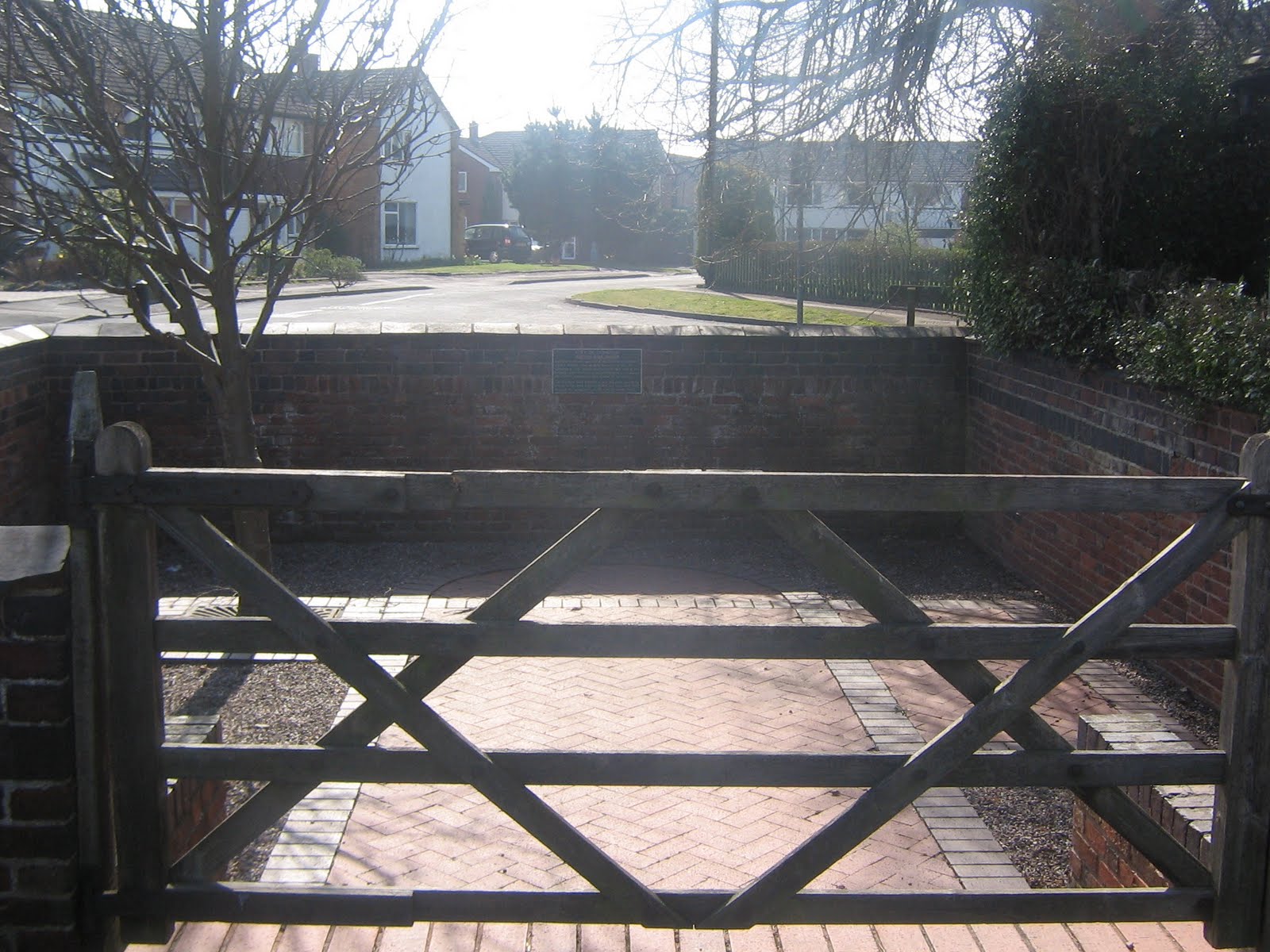
Pinfolds in Lichfield

Last night on Twitter, I was complaining about slugs snacking on my tomato plants. Down at the allotments, we are all in competition with rabbits, pigeons and field mice as to who gets to the fruit and veg first. Thankfully, I do not also have to contend with cattle, as people in years gone by did! Stray animals were a serious threat to food production and so pinfolds and pounds were erected, where the rogue livestock could be impounded. The animals would be released to their owners on payment of a fine, although there were stories of animals mysteriously disappearing from the pounds overnight….!  In England in Particular’s section on pinfolds, they liken the animals to today’s wrongly parked cars! (1)

Here in Lichfield in the 1500s, the person responsible for rounding up and impounding the animals was the ‘Warden of the Fields’. By the mid 1600s, the job title had changed to ‘Pinner’. Two Pinners were elected in Lichfield, with one taking responsibility for St Chad’s parish and the other St Michael’s parish. They were appointed at the ancient manorial court of St George,  which still takes place every year.

We are lucky to have a well preserved pinfold here in Lichfield, located at Pinfold Road (where else?), where Beacon St becomes the Stafford Rd. The listed building description says the present structure dates to the 18th century, but that it has earlier origins. According to the County History, there was an earlier pinfold in Beacon Street by 1645, near the corner of the later Anson Avenue.  This was removed in 1809 and replaced by the Stafford Rd pinfold.

The County History also says that another pinfold stood at Greenhill in 1498 and it is thought it was relocated in the early 19th century to the junction of Broad Lane and Boley Lane. I have had a look at www.old-maps.co.uk and the Boley pinfold can be seen on a 1955 map of Lichfield, but has disappeared by 1966.  Sadly, no trace of it exists. The Greenhill pinfold can still be seen on John Snape’s 1781 plan of Lichfield .


The terms pounds and pinfolds both seem to be used interchangeably in Lichfield, although pounds is the more common of the two. A fantastic website called Pounds and Pinfolds has been set up, the intention of which “is to raise awareness of these modest buildings by identifying all of the surviving examples, recording their location and condition and encouraging their restoration or preservation”. Our pinfold doesn’t feature on the National Register that the website is compiling, so I’m sending details over to them for inclusion.


This little fellow must have been rounded up last night….

Sources

1.England in Particular by Sue Clifford & Angela King
2. www.thurgartonhistory.co.uk
3.
History of the County of Stafford: Volume 14: Lichfield (1990)
4.www.lichfield.gov.uk

For what the bell tolls…

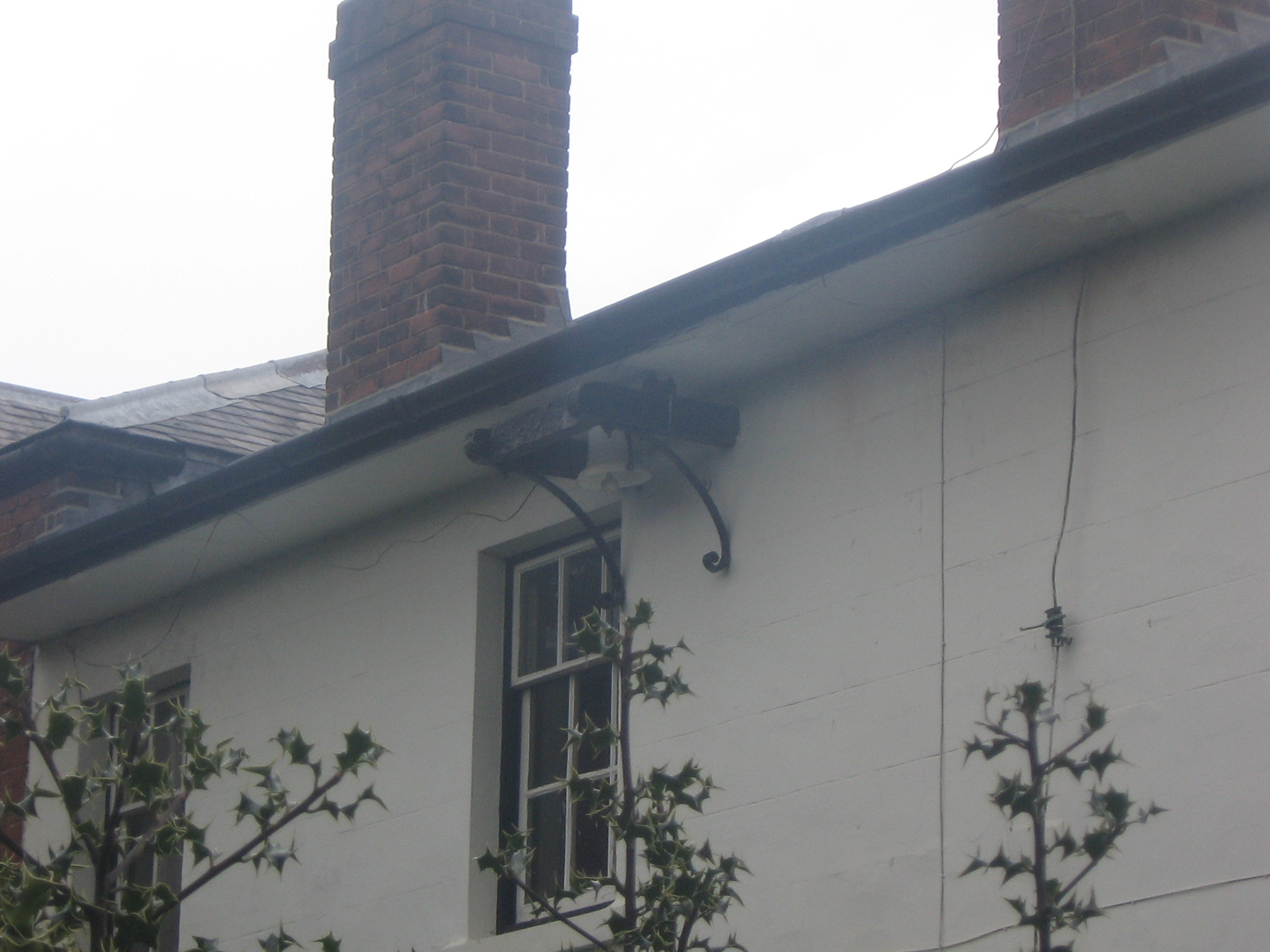
Easter Hill is the former vicarage of Christ Church at Leomansley built in the 1840s, around the same time as the church.  The older front part of the house is divided into flats and the rear, added later, is now a separate house.
What has always puzzled me is the bell on the left side of the building, under the eaves.

I have always assumed the bell had a religious use e.g. to call people to church, but couldn’t understand why this would be necessary.  Christ Church has always had a bell and it is easily within earshot of its flock.  In 1851 there were only 27 households in Leomansley.  However, BrownhillsBob came up with the suggestion that it could be a firebell, used to alert the local brigade and distinct from the church bell.  Bob has informed me there is such a bell on the council house at Brownhills.  This secular use seems much more likely and definitely warrants investigation.

If anyone else has any suggestions as to what the bell could have been for, please let me know!


Lichfield Castle

Lichfield Castle isn’t a spectacular ruin like Kenilworth nor a well-preserved motte and bailey like Tamworth. Our castle is a conundrum and the mystery of where it stood has intrigued people for centuries.

Almost 500 years ago John Leland wrote that there had been a castle of ancient time in the south end of the town, but that nothing remained.  He noted that there was a place called Castle Field , where there were dykes, but concluded that it was more likely that the castle would have stood in the Close, with the ground being somewhat castle-like.

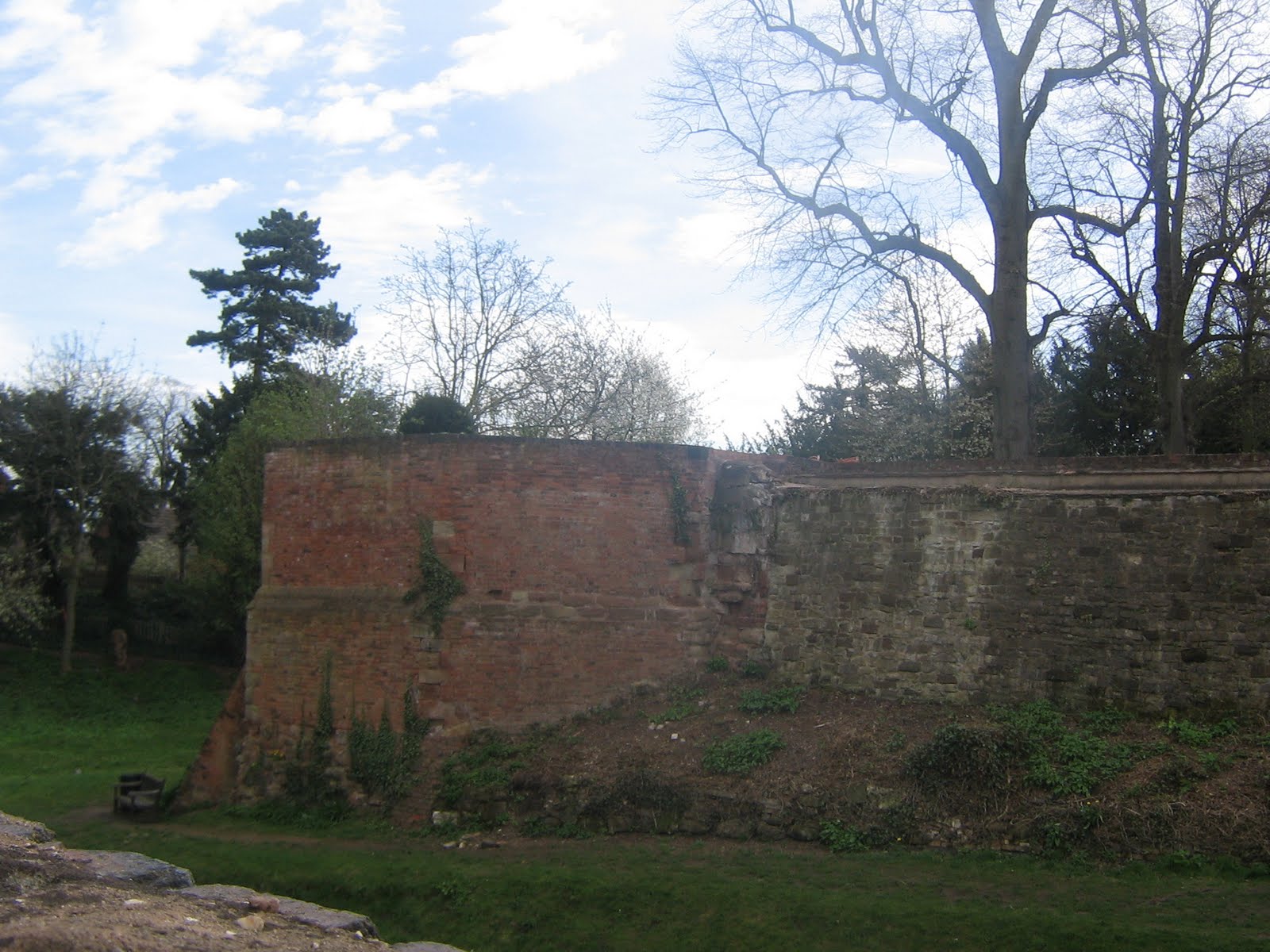
Remains of North East Tower, as seen from Gaia Lane

Richard II spent Christmas 1397, in Lichfield Castle, consuming 200 tuns of wine and 2000 oxen.Two years later, the King’s fortunes had changed and he was imprisoned in Lichfield on route from Chester to London.Some accounts just say he was incarcerated in Lichfield Castle, others specify a tower in the Close and the County History of Stafford, says that the Richard was held in the Archdeacon of Chester’s house in Beacon Street. J Gould’s report on Lichfield Archaeology & Development says that if King Richard was imprisoned in the fortified Close, it would most likely have been in the North East tower, the footings of which can be still be seen. The tower was said to have been 52 feet high, 20 foot above the rest of the buildings.In some versions of the story it is reported that an unsuccessful attempt was made to escape through a window!

To add to my confusion, Thomas Harwood wrote in his History of Lichfield, that King Richard spent Christmas in the Close and that later he was imprisoned in the magnificent tower in the Close, built by Bishop Clinton. However, in Sampson Erdeswick’s Survey of Staffordshire (which I understand was written in the late 16th Century, with a version edited by Thomas Harwood published in the 1844) both the castle and Bishop Clinton’s fortifications are listed, seemingly as two separate entities ‘The castle, in which Ric. II. kept his Christmas in 1397, and in which, two years afterwards, he was confined; the city walls; bishop Clinton’s costly fortifications ; with the beautiful western gate, are all levelled. The castle stood on an eminence on the south side of Tamworth-street, the site of which is now occupied by small houses and gardens”.

The case for the Tamworth Street site seems to consist of the place names in that area (Castle Dyke, Castle Field (historic)) and (rather tenuously) a large amount of ox bones dug up in the 1800s in nearby ‘Oxenbury Field’ that were said to be the remains of Richard’s Christmas feast. It seems traces of old stonework found in this area were locally considered proof of a castle here but a report by the South Staffordshire Archaeological & Historical Society (SSAHS) discounts these as merely the cellars of domestic buildings.

English Heritage’s description of Lichfield Castle on Pastscape also says that no evidence was found by field investigators in the Tamworth St area, in 1958 or 1974. One explanation given to the placenames found in the area, is that they relate to an Anglo-Saxon fort on Borrowcop Hill. The description also includes the opinion of a Phillip Davis* on the matter “There is some doubt as to whether a castle existed in Lichfield. However, the tradition of a castle in the town is a very strong one. My personal view is that there was a timber castle of some sort in the town in the early 12th century (probably started at the same time as Tamworth and Stafford, i.e. circa 1070) but that the work by Clinton was probably done on the Cathedral Close, and the castle was basically defunct at this time.”

So, it seems there could have been two castles, with references to each becoming confused and muddled over the years.It seems the castle relating to King Richard was the fortified Close and there may also have been an Anglo-Saxon castle.As ever, this raises more questions.Why did the original Lichfield Castle vanish, yet Tamworth’s and Stafford’s castles still stand strong today?Was it abandoned after the fortification of the Close or before? Did it stand on Borrowcop Hill?The mystery of Lichfield Castle continues….

*I’m assuming this is the same Phillip Davis from  The Gatehouse Website

Sources:

Lichfield Close in the Middle Ages by William Beresford

The Reliquary and illustrated archaeologist vol 7

The Itinerary of John Leland in or about the years 1535-1543.

Lichfield: The cathedral close’, A History of the County of Stafford: Volume 14: Lichfield

SSAHS Transactions (1981-82)

Lichfield Archaeology & Development by Jim Gould FSA

History and Antiquity of the Church and City of Lichfield by Thomas Harwood

Erdeswick’s Survey of Staffordshire
http://www.pastscape.org.uk

The Wychnor Flitch

Home for many years to the Levett family of Lichfield, Wychnor Hall is also home to an unusual marital custom that began in the reign of Edward III.  A couple, still happily married after a year and a day, could go to the hall, accompanied by some neighbours, who were prepared to testify to their marital bliss.

After the husband had sworn under oath that he ‘would not have changed for none other, farer ne fowler, richer ne powrer, ne for none other descended of gretter lynage, slepyng ne waking, at noo tyme; and if the seid X were sole, and I sole, I wolde take her to be my wife before all the wymen of the worlde, of what condytions soevere they be, good or evyle, as helpe me God, and his seyntys, and this flesh, and all fleshes’, the couple were presented with a flitch of bacon (which I understand is half a pig).

Apparently, the records show that only three couples were ever awarded the bacon.  The first couple argued so much over it on the way out, they had to give it striaght back!  The second couple hadn’t seen each other since their wedding day, as the husband was a seaman.  It’s said that the third couple were ‘a good-natured man and his dumb wife’.Thomas Pennant writing in the 1780s noted that ‘the flitch has remained untouched, from the first century of its institution to the present: and we are credibly informed, that the late and present worthy owners of the manor were deterred from entering into the holy state, through the dread of not obtaining a single rasher from their own bacon’.   However, in Horace Walpole’s letter to the Countess of Aylesbury, on Aug. 23, 1760 he states that ‘it is thirty years since the flitch was claimed’.

According to The Spectator in 1714, one hungry couple applied soon after their honeymoon.  However, it was deemed that insufficient time since their marriage had elapsed and they were sent away with just one rasher of bacon for their troubles.   I’m assuming things went a bit wrong for them, as they didn’t return to claim the full flitch.

The Wychnor Flitch by LadyJake (2008)

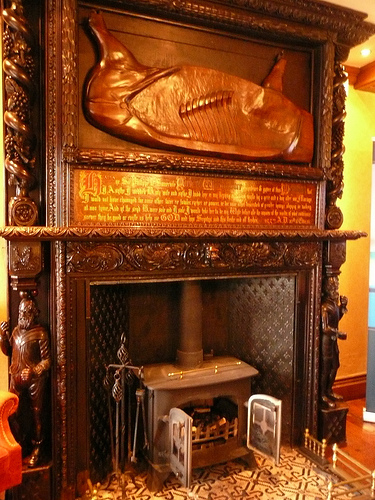
By the second half of the 18th century, the flitch was symbolic – a picture carved into the wood above the fireplace, in the main hall.  Apparently it still hangs there, as can be seen on  this photo, found on ladyJake’s Flickr photostream, which she has kindly given me permission to use here.

A Survey of Staffordshire, containing the antiquities of that county by Sampson Erdeswick
The Spectator 1714
Thomas Pennant’s Journey from Chester to London (from Vision of Britain website)

Liz and Lichfield

I spent Easter Sunday at Kenilworth Castle.  I’ve always loved that castle, with its red stone ruins, associations with Elizabeth I and the centuries old graffiti.  And now I’ve found it has a few connections with Lichfield!
Some centuries old graffiti.

In 1575, after her famous last visit to Kenilworth, where Robert Dudley made his final (and of course unsuccessful) bid for her hand in marriage, Elizabeth’s next stop was Lichfield.  She arrived on 27th July and during her stay attended service at the Cathedral and had a trip to Alrewas.  No one seems sure where the Queen stayed (although it is suggested by the  Middleton Hall Trust, in Tamworth, that Elizabeth stayed there for two nights).   However, there are records of ‘Charges when the Queene’s Matie was at the Cyttye of Lich’ and amongst the payments for trumpeters, horses and paving and mending the market cross and guildhall, there is a payment to ‘Wm Hollcroft, for kepynge Madde Richard when her Matie was here’.  After Lichfield, the Queen carried on to Stafford, which was the furthest north she ventured during her reign!
As well as the Elizabethan links, Kenilworth is also connected to Lichfield via Geoffrey de Clinton, the founder of Kenilworth Castle.  If that names sounds familiar, it’s because his nephew was Bishop Roger de Clinton (appointed 1129), responsible for the fortification of the Close and for laying out the city of Lichfield as we know it.

(There is also a connection with my previous post about Drayton Manor.  Robert Dudley, married Lettice Knollys in 1578 and they are buried together at St Mary’s, Warwick, opposite the tomb of their three year old son).

Sources:

The progresses and public processions of Queen Elizabeth: Volume 1 – John Nichols       

Stand and Deliver!

Perhaps the sun has gone to my head, but I’m going to bring part of this post to you in the form of a poem.  With apologies to Alfred Noyes, whose famous poem I have plundered, here is my story of Lichfield born highwayman Jack Withers, based on information found in Charles Johnson’s “General History of the Lives and Adventures of the most famous Highwaymen, Murderers, Street Robbers etc” and in the Newgate Calendar.  

Young Jack Withers was a Lichfield lad,
Trained to be a butcher, same as his Dad,
And butcher he did, in a terrible way.
This is the villain’s story,
So bloody and so gory,
This is Jack Withers story, I tell to you today.

With no work in Lichfield, the city he departed,
And found himself in London with a band of thieves black hearted.
He found himself in trouble, and away Jack was sent,
Off to be a soldier,
A soldier, a soldier,
Off to be a soldier in the Flanders town of Ghent.

At the local Church in Ghent, coins were collected in a box,
Jack seized his opportunity and picked the holy lock,
His pockets bulged with coins, yet he still took more
And the money of the Virgin,
The Blessed Virgin Mary,
Fell jingling and a jangling upon the marble floor.

Jack was taken to the Cardinal, to receive his punishment
But told him that his heretical life, he did repent
His sinner’s prayers had been answered by a miracle tis true!
The box was opened by the statue,
The Blessed Virgin’s statue
And the coins had been a gift from her to start his life anew.

Jack abandoned then his colours and returned to his homeland
Where he took to the highways, upon which he would demand,
That travellers should, if they valued their life,
Stand and deliver,
Their worldly goods deliver,
Stand and deliver, or else meet his butcher’s knife.  

A mile outside of Uxbridge, an ill-fated Postman came,
Jack stole the man’s eight shillings; then to conceal his blame,
He slit the man’s throat open with his sharp butcher’s knife,
Gut filled with stones,
And thrown into a pond,
Jack the Highwayman and Butcher had taken his first life.

In the Norfolk town of Thetford, in April 1703,
Found guilty of foul murder and highway robbery,
Lichfield’s Jack Withers was condemned to be hung,
And no miracle could save him,
Save him, save him
No miracle could save him, from the gallows, Withers swung.

Whilst Jack Withers was born in Lichfield, he committed most of his crimes elsewhere.  However, there were other dangerous robbers in the area. On 30th January 1703, a gang held up the Shrewsbury coach in Brownhills, robbing the passengers.  A few days later, the same gang robbed two drovers returning from Newcastle Fair, murdering one of them and wounding the other.  Two days after the gang attacked none other than the High Sheriff of Staffordshire, accompanying his lady and servants from Lichfield Fair. The gang took sixty guineas, and cut off one of the servants’ hands. However, this latest attack was to prove the gang’s undoing. After a huge search nine of them were apprehended – three of them were women dressed in men’s clothes!
As you would expect, some of the tales about highwaymen in this area can be dismissed as nothing more than fanciful legend (there is a story about Dick Turpin jumping the tollgate at Brownhills, but as BrownhillsBob points out on his website this would have been chronologically impossible.) Others could be true – several pubs in and around Lichfield make claims that they sheltered the notorious Turpin and his associates.  Whitehall, on Beacon St, was once an inn called the Coach and Horses and according to a book by H Snowden Ward in 1893 it was a favourite rendezvous of Dick Turpin and his highwaymen.  “The inn was kept by Judith Jackson, a famous beauty and a powerful and unscrupulous woman, an efficient ally of Turpin and his men”. People who have visited Abbots Bromley may have noticed that at the Goats Head, a room is named after Turpin, to commemorate the night he spent there after supposedly stealing Black Bess from Rugeley Horse Fair. Also, Turpin’s partner in crime at one point was Matthew ‘Captain Tom’ King, said to have been born either at the Welsh Harp in Stonnall (now Wordsley House) or at the Irish Harp in Aldridge and both these highwaymen and others are said to have frequented these areas!
By coincidence,  a certain song was released 30(!) years ago this month. So, we started with a poem and we’ll end with a song.  All together now! “Stand and deliver! I’m the dandy highway man who you’re too scared to mention….”
Lichfield Cathedral and the Chimney Sweep

Most of the medieval figures on the Western Front of Lichfield Cathedral, damaged during the Civil War, were removed in 1744.  However, a few were removed a later date (possibly 1749) by a young chimney sweep at the request of the Dean who was afraid that one of them might fall on his head on his way into or out off the Cathedral!


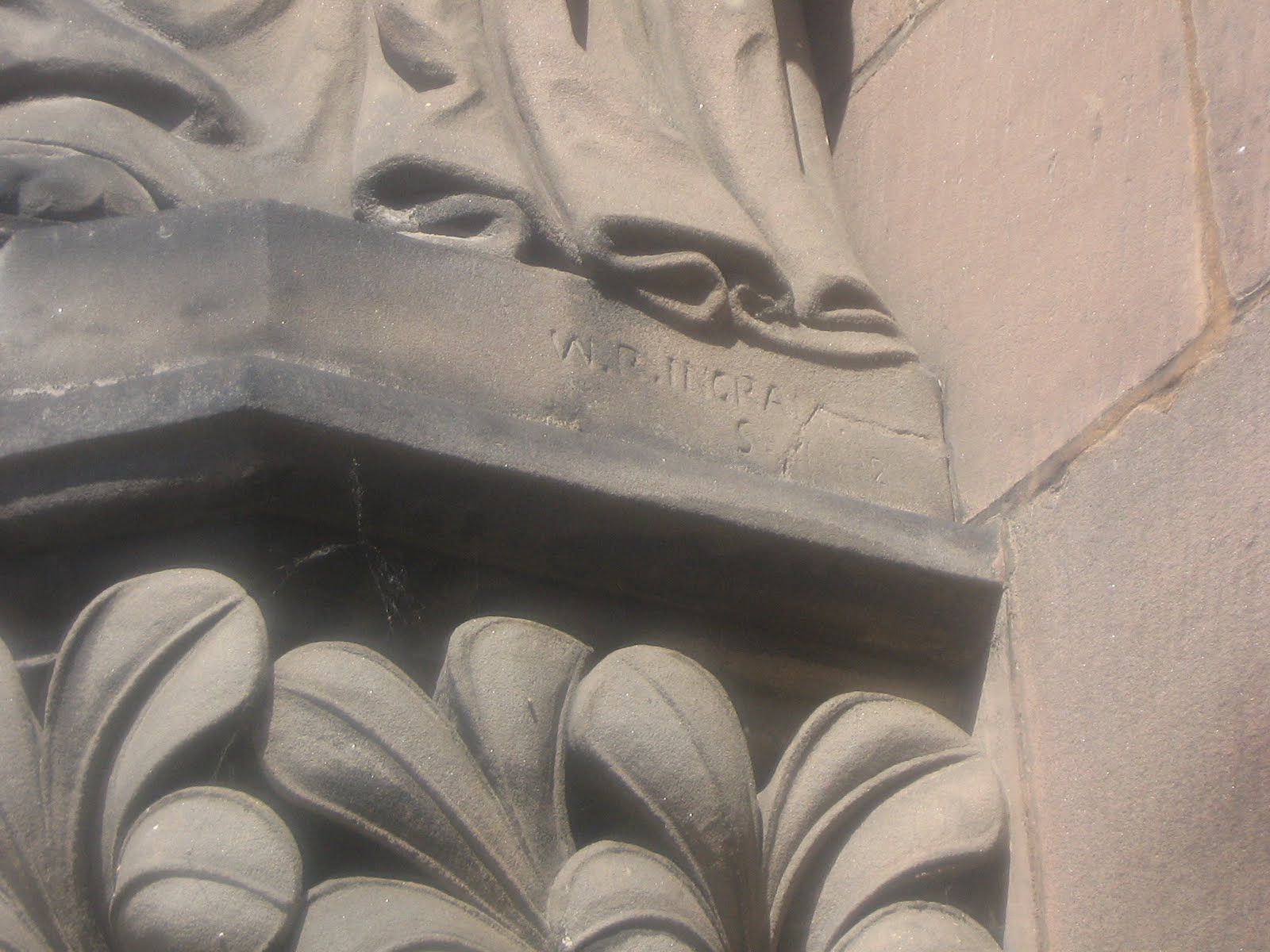
WR Ingram, on sculpture of St Stephen
Most of the figures seen today are Victorian replacements, sculpted by Robert Bridgeman & Sons, GWSeale, WR Ingram . HRH Princess Louise sculpted the statue of her mother, Queen Victoria.  There are five remaining original medieval sculptures on the north west tower.  Originally the medieval statues would have been painted and gilded.
Sources:

Public sculpture of Staffordshire and the Black Country by George Thomas Noszlopy, Fiona Waterhouse
TheCatherals of England MJ Taber

Lore on Tour! Drayton Manor – Police, Phantoms & Pirate Ships

This is a story of a place with two identities. There’s the Drayton Manor that was the home of Lettice Knollys (grand-niece of Ann Boleyn) and rebuilt in 1830 by Sir Robert Peel, founder of the Metropolitan Police Force and future British Prime Minister. Where Peel entertained Queen Victoria and Prince Albert in 1843 and from where his body was taken to be buried at the local parish church of Drayton Bassett following his death in 1850 from injuries sustained falling off his horse on Constitution Hill in London.
The Drayton Manor that passed to the next three Sir Robert Peels, only for them to fritter it away until all that remained was the ivy clad clock tower. Have a look here if you are interested in the story of how the estate came to ruin. 
History of the Peel Family 

 In 1950, the second Drayton Manor, the one most would associate with today was born, opening with one restaurant, a tea room, three hand operated rides, six rowing boats and some dodgems.  Some of my memories from the 1980s are of frisbee, football and picnics on the grassy car park, trying to stretch the day out, because Mum and Dad wouldn’t buy any more ride tickets; the horror of plastic animals jolting up out of the water and the dark tunnel of the Jungle Cruise *shudder*; finding out the hard way that sitting on the end of the Pirate Ship is not the same ride as sitting in the middle of the Pirate Ship, and perhaps most of all The Snake Train, which was toned down in 1986 and finally closed in 1993, saving future generations from bruises, whiplash and worse. For some pictures of Drayton Manor Park from the 1950s to the 1990s visit their website Drayton Manor 60th Anniversary 

Now, I can’t resist a ghost story, and Drayton Manor has a fair few.  Sir Robert Peel, whilst Prime Minister, was taking a walk in the grounds of Drayton Manor, when apparently his father (deceased) appeared to him and had a chat.

Sir Robert himself is believed to have been seen wandering the grounds or riding his horse up the drive to the caravan site (!). People have heard horses running towards them in one of the lanes at the back of Drayton Manor.  Opposite the nearby central stores, the black outline of a gentleman, said to be ‘Sir Bobby’, can be seen standing looking woefully into the distance. Perhaps he’s thinking about his spendthrift descendants and his squandered legacy.However, the naughty Peels still seem to be having a good time  – in the park’s Missanda Suite lights switch on and off on their own accord and even party-like noises have been heard coming from the suite late at night.  Also, beer occasionally dispenses itself at the Park Inn where the clock regularly comes off the wall for no apparent reason. At the clock tower, one of the few features of the original Drayton Manor building, ‘someone’ has been seen loitering around and even climbing the tower itself. 

One final interesting fact about Drayton Manor is that the Tamworth Breed Pig originated at the Estate.  Also, there are some pictures of the house and estate at the StaffsPastTrack website

Lichfield Lunatic Asylum

“The Lunatic Asylum, pleasantly situated at Sandfield, about 1 mile S. of Lichfield, is a well conducted institution, belonging to Dr. Rowley, of Freeford Cottage. It was commenced in 1818. Mr. Samuel Heighway is the superintendent”, was William Wright’s description in his 1834 History, Gazetteer & Directory of Staffordshire.  Figures for 1844 show the asylum housed 4 private and 32 pauper ‘lunatics’.
In 1851 “The Parliamentary gazetteer of England and Wales” was still describing it as a ‘well-conducted and useful institution’.
However, this was far from the true state of affairs – in 1847 the Lord Chancellor had submitted his report “Commissioners In Lunacy” to parliment, as follows:
“No particular mention of Sandfield Asylum in the County of Stafford, occurs in the Report of 1844, except that it is stated …”that a Patient thereto. had escaped from it, and had not since been heard of. The premises, however, are inconvenient, and the rooms and yards appropriated to the Paupers very confined. On visiting the Asylum in February and April, 1846, various defects were observed by the Commissioners, and commented on, with a view to their removal; similar remarks had been made by the Visiting Justices, but apparently without much effect. The outer dormitories, for the Paupers, especially were noted as being cold, damp, and uncomfortable. On again visiting the Asylum on the 17 th of December last, the Commissioners found the place in a very unsatisfactory state. After adverting, in their report, to the want of space in the yards (which are exceedingly small and unfit for the purposes of exercise, and are moreover surrounded by high buildings), they state, amongst other things, that they observed no tables in any of the Paupers’ sitting-rooms (where, however, they dine and take their meals): that the bed clothes were quite insufficient during that inclement season; that in the various beds which they uncovered they found only one rug and a blanket for the upper covering, many of the blankets being old and several consisting of fragments only: that a Patient in bed complained of being starved with cold: that the Patients of both classes, with scarcely an exception, were unemployed; and that they (the Commissioners) saw no book nor any means of amusement provided for them. Upon hearing this report read at the weekly board, we directed a letter to be addressed to the Proprietor of the Asylum, intimating that unless the defects noticed in the last report were forthwith remedied, we should think it our duty to recommend that his licence should not be renewed. This establishment is by no means well adapted to the accommodation of Insane Patients”.
A further horrfiying account was given by Robert Gardiner Hill* in his book ‘Lunacy: its past and present’, who described the asylum as “One of the most disgusting places I visited”.  He goes on to say “The house was in a state of filth, and the buildings generally unfit for occupation. The patients were barely clothed, fastened and manacled as was usual at that time”.
 According to A History of the County of Stafford: Volume 14, the asylum was finally closed in 1856 following recommendations from the comissioners that the licence be revoked.
A County Asylum opened in Burntwood in 1864.

 
*From wikipedia ‘Robert Gardiner Hill MD (1811-1878) was born in Louth, Lincoln, of parents engaged in trade. He is normally credited with being the first superintendent of a small asylum  (approximately 100 patients) to develop a mode of treatment where by the reliance on mechanical restraint and coercion could be made obsolete altogether, a situation he finally achieved in 1838′.