Lichfield Lunatic Asylum

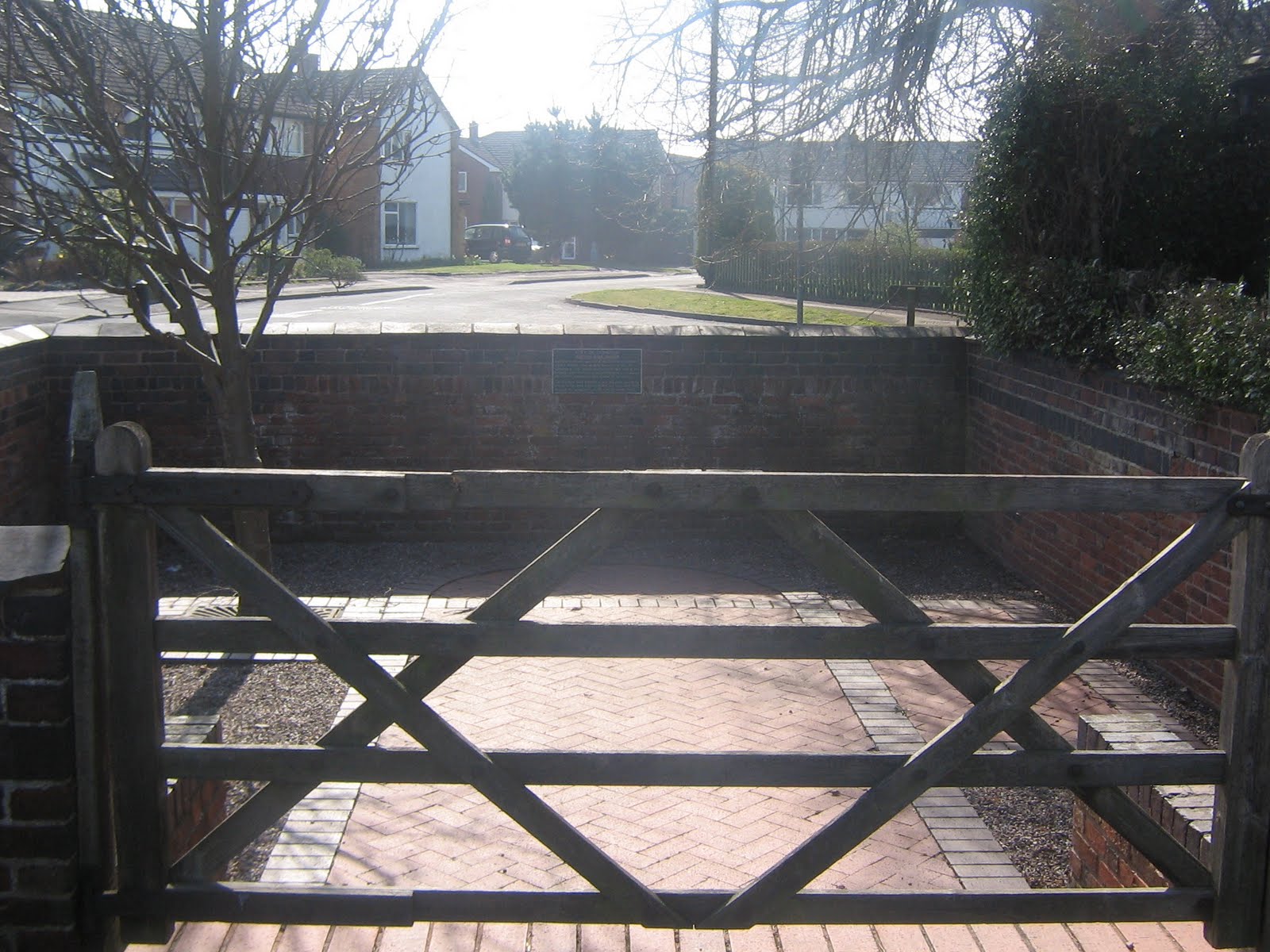
“The Lunatic Asylum, pleasantly situated at Sandfield, about 1 mile S. of Lichfield, is a well conducted institution, belonging to Dr. Rowley, of Freeford Cottage. It was commenced in 1818. Mr. Samuel Heighway is the superintendent”, was William Wright’s description in his 1834 History, Gazetteer & Directory of Staffordshire.  Figures for 1844 show the asylum housed 4 private and 32 pauper ‘lunatics’.
In 1851 “The Parliamentary gazetteer of England and Wales” was still describing it as a ‘well-conducted and useful institution’.
However, this was far from the true state of affairs – in 1847 the Lord Chancellor had submitted his report “Commissioners In Lunacy” to parliment, as follows:
“No particular mention of Sandfield Asylum in the County of Stafford, occurs in the Report of 1844, except that it is stated …”that a Patient thereto. had escaped from it, and had not since been heard of. The premises, however, are inconvenient, and the rooms and yards appropriated to the Paupers very confined. On visiting the Asylum in February and April, 1846, various defects were observed by the Commissioners, and commented on, with a view to their removal; similar remarks had been made by the Visiting Justices, but apparently without much effect. The outer dormitories, for the Paupers, especially were noted as being cold, damp, and uncomfortable. On again visiting the Asylum on the 17 th of December last, the Commissioners found the place in a very unsatisfactory state. After adverting, in their report, to the want of space in the yards (which are exceedingly small and unfit for the purposes of exercise, and are moreover surrounded by high buildings), they state, amongst other things, that they observed no tables in any of the Paupers’ sitting-rooms (where, however, they dine and take their meals): that the bed clothes were quite insufficient during that inclement season; that in the various beds which they uncovered they found only one rug and a blanket for the upper covering, many of the blankets being old and several consisting of fragments only: that a Patient in bed complained of being starved with cold: that the Patients of both classes, with scarcely an exception, were unemployed; and that they (the Commissioners) saw no book nor any means of amusement provided for them. Upon hearing this report read at the weekly board, we directed a letter to be addressed to the Proprietor of the Asylum, intimating that unless the defects noticed in the last report were forthwith remedied, we should think it our duty to recommend that his licence should not be renewed. This establishment is by no means well adapted to the accommodation of Insane Patients”.
A further horrfiying account was given by Robert Gardiner Hill* in his book ‘Lunacy: its past and present’, who described the asylum as “One of the most disgusting places I visited”.  He goes on to say “The house was in a state of filth, and the buildings generally unfit for occupation. The patients were barely clothed, fastened and manacled as was usual at that time”.
 According to A History of the County of Stafford: Volume 14, the asylum was finally closed in 1856 following recommendations from the comissioners that the licence be revoked.
A County Asylum opened in Burntwood in 1864.

 
*From wikipedia ‘Robert Gardiner Hill MD (1811-1878) was born in Louth, Lincoln, of parents engaged in trade. He is normally credited with being the first superintendent of a small asylum  (approximately 100 patients) to develop a mode of treatment where by the reliance on mechanical restraint and coercion could be made obsolete altogether, a situation he finally achieved in 1838′.

Plague and Water

In 1840 Dr Rawson published ‘An Inquiry into the History and Influence of the Lichfield Waters: intended to show the Necessity of an Immediate and Final Drainage of the Pools’. The work was originally anonymous according to medical journal The Lancet.

According to the Lancet, Dr Rawson “contends that the stagnant pools around Lichfield are injurious to the health of the inhabitants, and urges several reasons for draining, and filling them up. This is objected to by certain lovers of the picturesque; and by another very opposite class of persons, who button up their breeches-pockets very closely, that the money may fructify there,when a call is made upon them for any public purpose”.

Part of Dr Rawson’s argument was that during the sixteenth and seventeenth centuries, Lichfield suffered five or six plagues. Although the whole of England had been affected, Dr Rawson argued that the effects in Lichfield were disproportionate for its size.

The doctor used statistics quoted in ‘ Harwood’s History,’ to produce the following table:

Statistics of the Plague in Lichfield, in 1645-6.

NORTH TOWN.

Beacon-street, Gaia-lane, Shaw-lane, Close, value £8.—Chiefly on ridge land, and all well ventilated, except the vicarage. The Close ditch was drained in 1643, and part of Beacon-street burned down, during the plague.

SOUTH TOWN.

Market-street, value £4 18s 4d; deaths 38; per cent. 18.—Defended by domestic comforts.

Dam-street, Butcher-row, Tamworthstreet, Boar-street, the Woman’s Chyping, value £4 14s 8d ; deaths 200; per cent. 16. —Exposed to external ventilation, except one side of Butcher-row; but partly adjoining the most infected districts, and containing a common channel, with stagnant water in it.

Stow-street, Lombard-street, Bird-street, Sandford-street, value £4 2s 7d; deaths 282; per cent. 41.—The extreme parts, small houses close to the pools. Bird-street, in the centre, being so narrow, that it has since been widened by act of Parliament.

Green-hill, George-lane, St. John-street, Frog-lane, Wade-street, value £3 13s 7d; deaths 321; per cent. 47.—Partly intersected by the Common Ditch and Common Muck-hill of the town, parallel to, but under the level of which were Frog-lane and Wade-street, while John-street was hemmed in between these and the Bishop’s Marsh.”

Statistics wise 51 per cent of Lichfield’s population died of plague in 1593-4, and 32 per cent, in 1645-6.

So, yet another miserable subject I’m sorry. I’ll try and find something a little more cheerful for next time……

The Bones of Lepers at Freeford

There may be a deserted medieval village at Freeford, (Fraiforde in the Domesday Book).  Evidence consists of surface finds of pottery ranging from 12th – 16th century together with some documentary references in 1334 and 1377 in the form of taxation records.

By the mid 13th century, there was a lepers hospital at Freeford on the site of the present day Freeford House (on the Tamworth Rd, before the junction with Ryknild St). Some of the exisiting masonry on the site is thought to part of the hospital chapel’s foundations. According to Thomas Harwood,  ‘A corner of the field, north-east of the present house yet bears the name ‘Chapel Yard’ and human bones are frequently cast up in this spot by the plough’.  The hospital was united with St John’s Hospital in Lichfield in 1496   Apparently institutions relating to lepers were often dedicated to either St John or St Leonard. 

English Heritage report that some 80 human skeletons were discovered near to the site during excavations for a road widening scheme in December 1917. These remains were buried around 3ft deep, all without coffins and on the whole, in a Christian orientation. A chalice and paten (small plate) were found in the the hands of one of the skeltons.  I understand that it was the custom to bury these items with a priest. The chalice and paten are thought to be from around the 12th or 13th centuries, if not earlier. More bones were discovered in 1969, during the construction of another road.

I wonder what happened to the skeletons – have they been reburied elsewhere?  Are there anymore under the fields of Freeford? 

Sources:
The Hisotry & Antiquities of the Church & City of Lichfield – Rev Thomas Harwood (1806)

English Heritage Pastscape Record 306532

Deserted Medieval Villages

The wikipedia definition of a deserted medieval village (DMV) is a former settlement which was abandoned during the Middle Ages (around 500AD to 1500AD), typically leaving no trace apart from earthworks or cropmarks.
Several potential DMVs are thought to be in Lichfield and the surrounding area (there are over 100 for Staffordshire as a whole).
Here is selection from the Staffordshire HER. 
Tamhorn Deserted Settlement, Fisherwick
Curborough
Littlebeech, Lichfield (Saxon, mentioned in Domesday)
Farewell
Horton, Fisherwick
Stychbrook
Elford
Swinfen
Freeford
Abbots Bromley
I hope to have a look at these in more detail and to post updates shortly!