Into the woods….

I was lured into the woods by the promise of wood anemones…..then along the path past the old Leomansley mill pools….and finally onto the edge of Pipe Green common.


Tree following: …..bring May flowers

Leomansley Woods are lovely all year round but within the next few weeks they will be at the peak of their beauty. Well, I think so. You’ll have to visit and see if you agree.

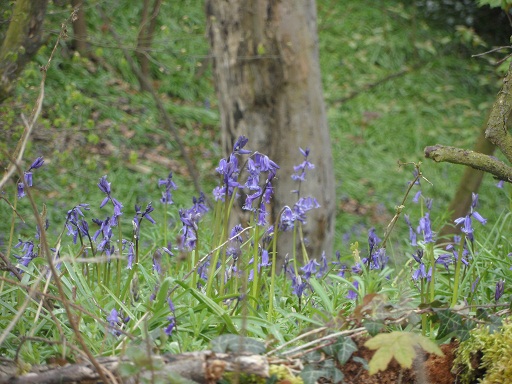
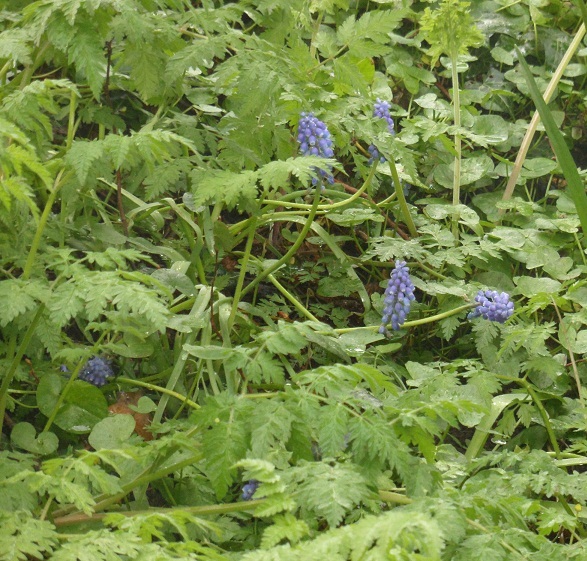
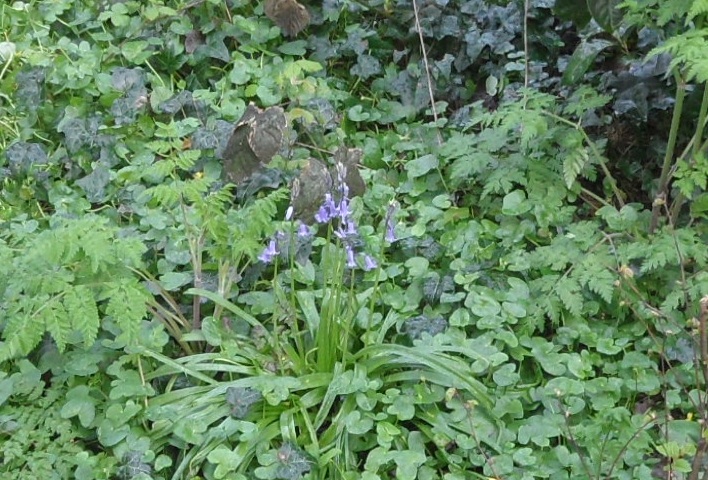
There’s just a smattering at the moment, but soon the bluebells will fill the gaps between the trees and paint the woodland floor with their colour.

Getting bluer by the day

I could put a photo on here from last year but why spoil the anticipation? It’s not long to wait now! In the meantime there’s plenty more going on of interest, although I confess I’m not always sure what exactly. I’m still fumbling my way through with a variety of Woodland Trust swatch books and a junior nature guide but I am learning slowly. I’ve realised that trying to identify the plants from photographs is not the way to do it. Clearly, it’s a bit tricky to see if the leaves smell of anything (for example, according to my book, hemlock has ‘the strong smell of mice’!) and it’s hard to see other subtle details from a photograph too.

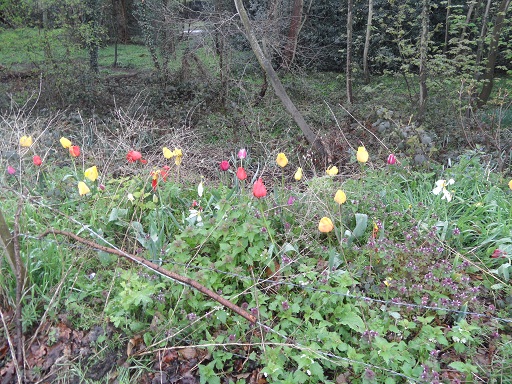
I know these are tulips.....

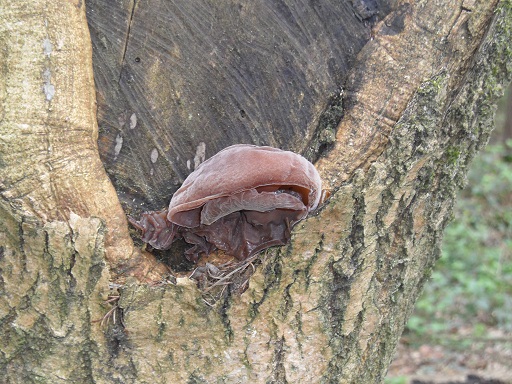
Fungus

This is some kind of fungus......

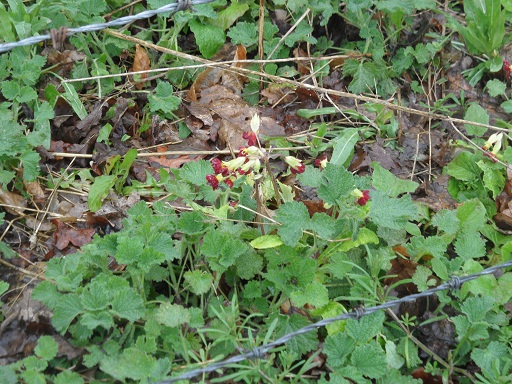
No idea???


No idea part 2????

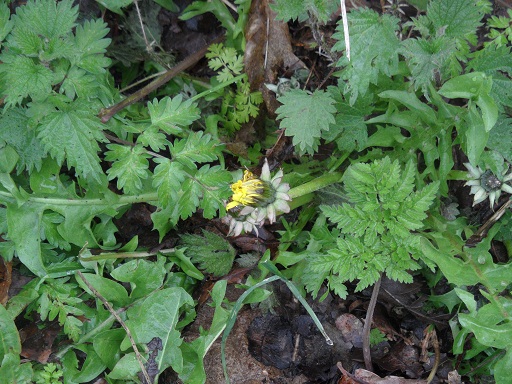
The dandelions had closed up due to the rain (or maybe they’ were hiding, having heard of my plans to turn them into marmalade……).

Not so dandy

Elsewhere along the lane, other plants were still showing evidence of the last downpour.

Raindrops on leaves

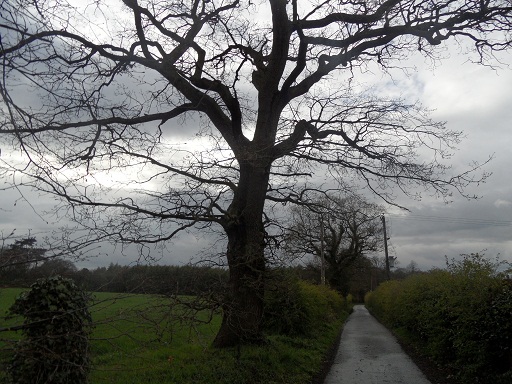
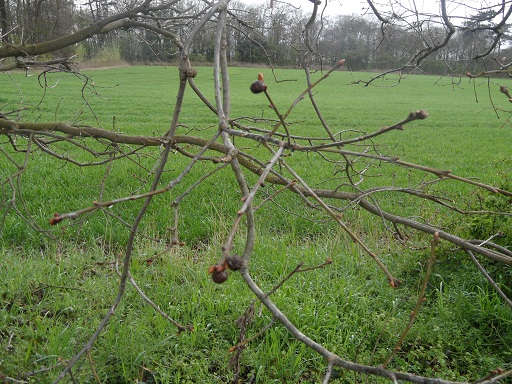
The tree itself now has buds and I’m pretty sure that it is an oak. The path running past the tree goes past Leomansley House/Manor and leads to Pipe Green. Pipe Green is a wonderful area of meadowland managed by a trust and they have an equally wonderful website with details of all the birds, plants and animals you might spot whilst you are there. Have a look at the website here and then go and visit! I’m going to go and see if I can spot the wood anemones.

Oak Aged

Galls & Buds come out to play

Following the sale of the Maple Hayes Estate, to which it belongs, Leomansley Wood now has a new owner. Let’s hope that it will now be cared for and managed as well as it should be.


Tree following: April Showers…..

It was time to revisit my tree on the lane next to Christ Church.  

Now I think it might be a horse chestnut.

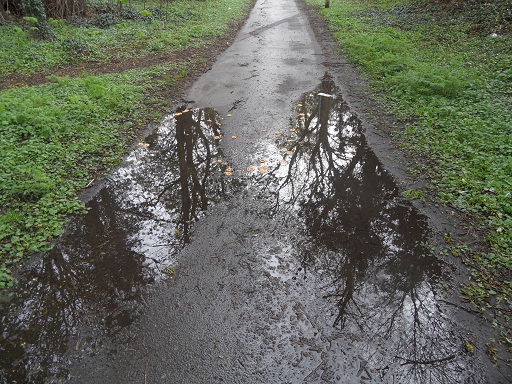
I managed to dodge the heavy showers that had been falling on and off all day, but there was plenty of evidence of them. The air had an earthy smell and looking back towards Christchurch Lane from the A51 end, I noticed the reflection of the trees in the puddles. I’m not sure whether the onion ring crisp spillage adds to or detracts from the scene.

Soggy Crisps

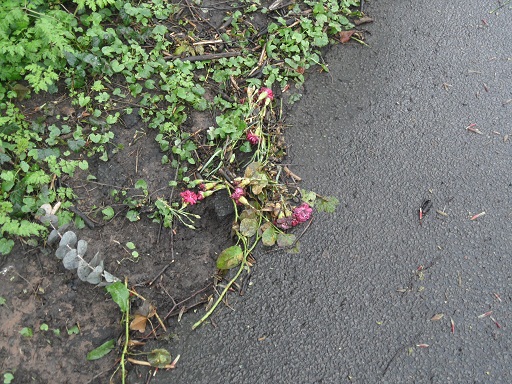
I bet that the crisps were an after school snack, dropped in the haste to get get home before the next shower, but I wonder how these flowers came to be here? From the nearby churchyard perhaps?

Discarded flowers

 It was good to see some new arrivals along the lane.


This reminds me. How are those bluebells in Leomansley Woods coming along?

Tree following: Tree Routes

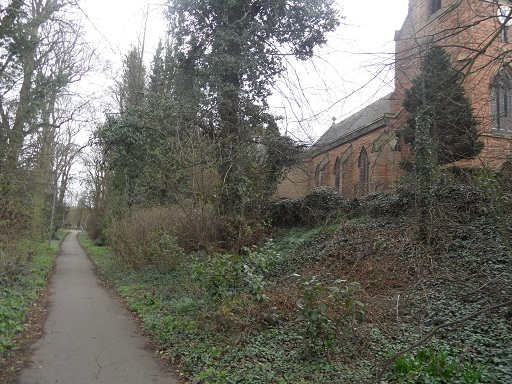
As far I understand it, the path running past Christ Church was at one point the old Walsall Rd, ‘realigned under an Act of 1832 with the new Queen Street and Walsall Road bypassing the route along Lower Sandford Street and what was later called Christchurch Lane. That lane takes its name from the church opened in 1847, and by then it had been continued south-west from the church to the new Walsall road, the old line from Lower Sandford Street having been turned into a drive for Beacon Place’.(1)

The path is surrounded by trees that I believe were planted in the mid-19th century by the Hinckleys of Beacon Place, the estate that occupied most of what is now Beacon Park between 1800-ish and 1964, when the house was demolished.

So that’s a bit of historical scene setting, now what about the tree!

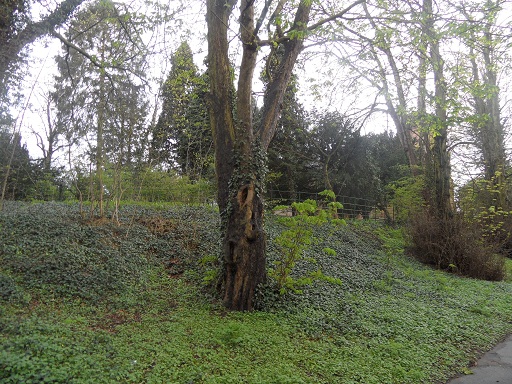
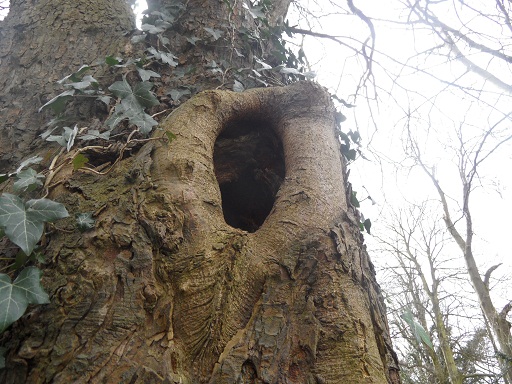
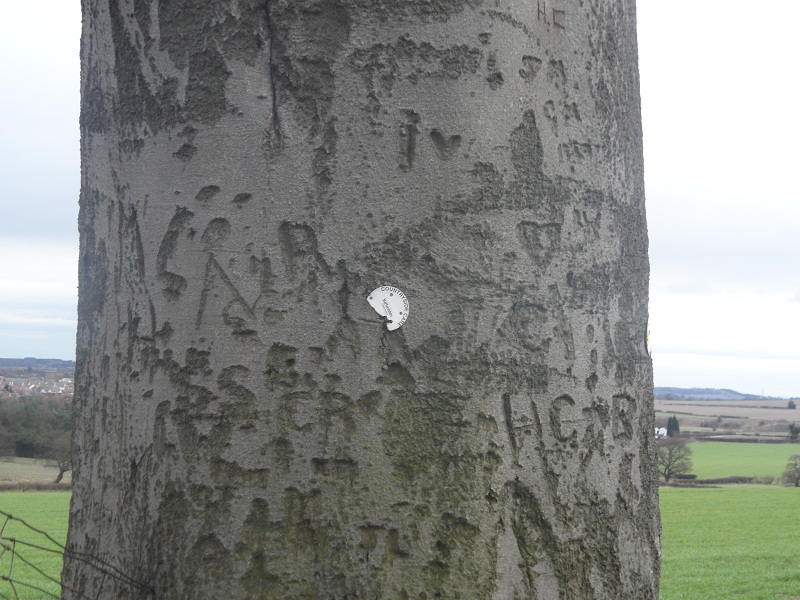
There’s one along this path in particular that seems to attract attention. Several people have commented on it in the past. I even heard a girl refer to it as ‘The Skeleton Tree’! I’m not even sure what kind of tree this is but how could I resist following it?!

How do holes like this form in a tree? As usual, on nature matters I can’t offer any upfront answers (though rest assured I shall be trying to find out, part of the reason I’m doing this is to learn things!) but I can give you a peep into the hole nearest to the ground.


And a close up of the one at the top…….


Nearby, the snowdrops are looking very shabby now.

I love to see these little flowers at the end of the winter, but I have to confess I’m even happier when I see these…

Not quite a host, but enough to signal that spring has arrived in this part of Lichfield! The wild garlic has also made an appearance. The aroma from the leaves is incredible, I’m sorry I can’t share it. No pretty white flowers yet though, let’s see what April brings for the Old Walsall Road!

Talking of Walsall, I’ve just found out that the brilliant & enthusiatic Morgan, a Walsall Countryside Ranger has started a Walsall Wildlife blog. She’s one of the most knowledgable people I know about nature and I’ve learnt loads from her (although clearly this is very much an ongoing education 😉 ). I really recommend that you check out this and the Walsall Wildlife flickrstream.  I bet Morgan even knows how those holes in the trees got there……!

Sources:

(1)’Lichfield: The 19th century’, A History of the County of Stafford: Volume 14: Lichfield (1990), pp. 24-32. URL: http://www.british-history.ac.uk/report.aspx?compid=42338  Date accessed: 25 March 2012.


Tree Following: Sticking it out

To contrast with Leomansley Woods, I’m also following the newly planted cider orchard at The Walled Garden at Woodhouse Community Farm.

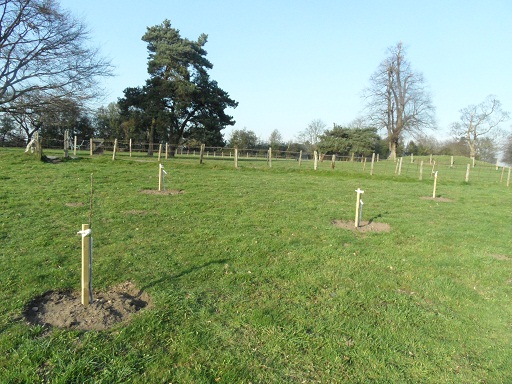
The majority of the orchard was planted on a cold but sunny day in January, but there were 8 more trees to be planted and so I went along last Sunday. Another sunny day, but a bit warmer this time!

There will be apples.....


.....one day.

Some buds are starting to form, but other than that, there’s not much change.  So it looks like it might be some time before we get to make any cider. Until then, sitting & chatting in the sun in the beautiful surroundings of the farm,  a cup of tea and one of Annamarie’s cakes will do just fine 🙂

By the way, The Walled Garden have their own website here where you can find out more about the farm and sign up for their community supported agriculture scheme.

Tree Following: Yellow

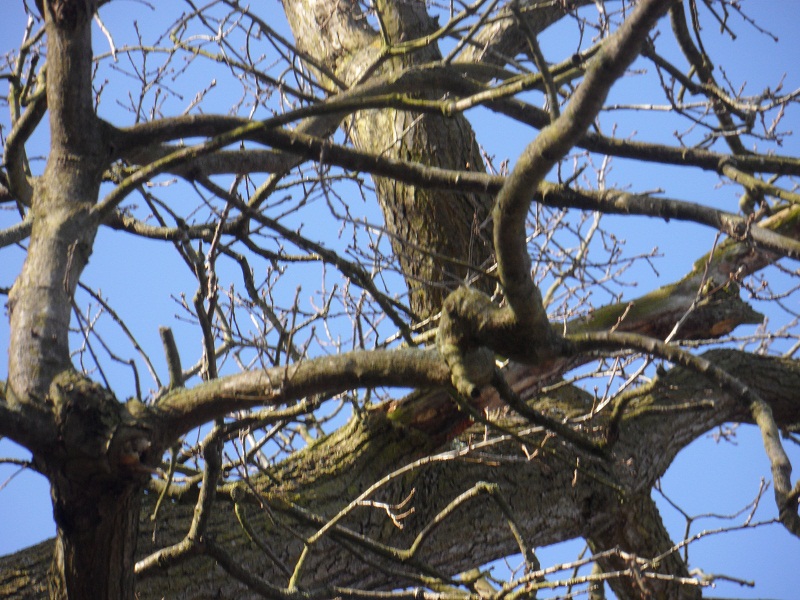
This week I went along to Leomansley Woods to do my first bit of tree following. It probably sounds ridiculous but choosing one tree wasn’t that easy. You can’t see the tree for the woods or something I suppose. In the end I decided on this tree, at the edge of the wood.

The surrounding debris & hazy memories of last year lead me to believe this is an Oak.

Jumbled branches


The trunk. I'll take a tape measure next time to get some clue to the tree's age?


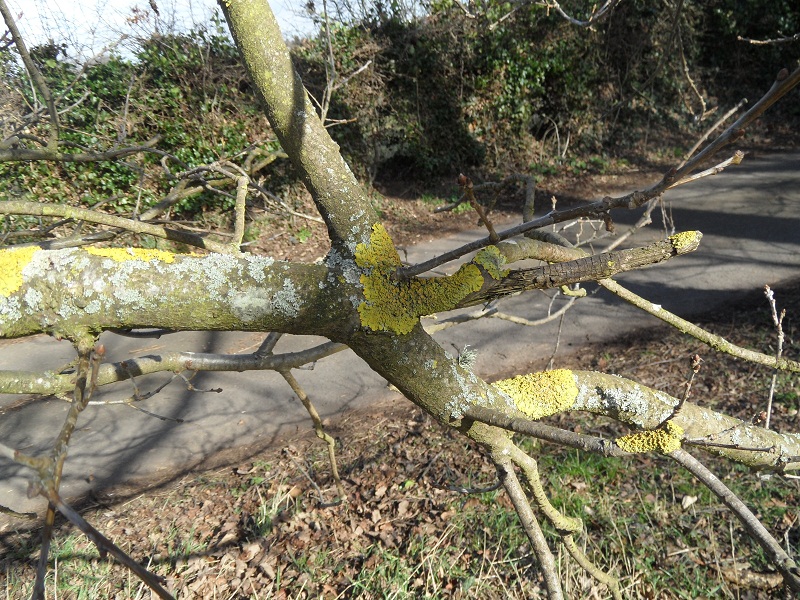
Lichen


Is this a coaltit getting in on the act?

While I was there, I thought following the entrance to the woods, the woodland floor and the hedgerows running alongside the lane might be nice too.

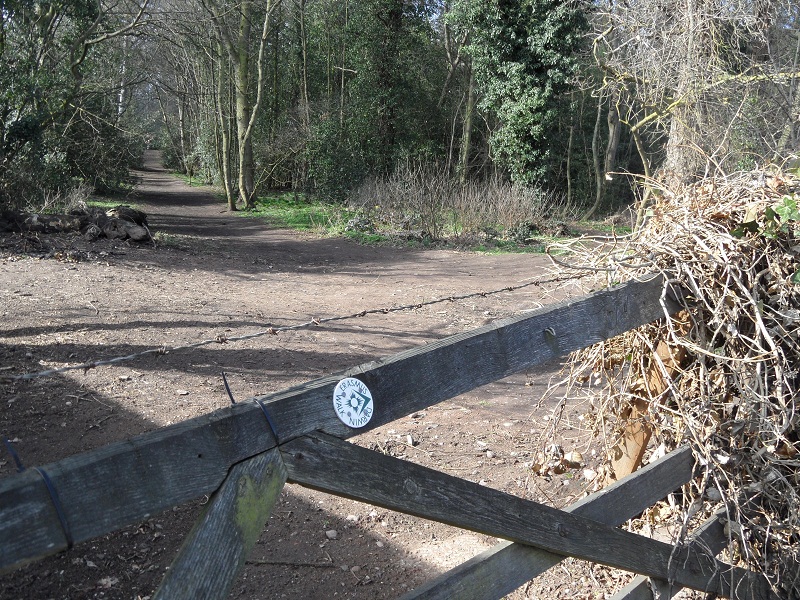
The entrance to the woods. The path running alongside forms part of The Darwin Walk and will take you to Pipe Green

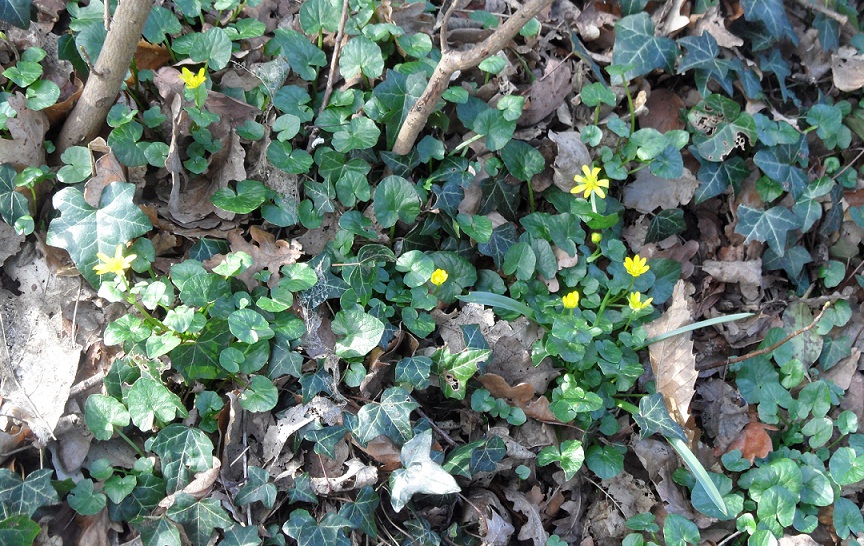
Judging by the green shoots, it won’t be long before the woods are covered in bluebells. I think though, the colour of March is going to be yellow.

Lesser celandine?


Even I know that these are daffodils!


I don't know these though - they were growing in the hedgerow.

As a bit of a disclaimer (though if you read the captions above it hardly needs to be said!), I don’t know that much about trees & plants. I can’t tell my ash from my elder. One of the reasons I want to do this, is because it’ll be a good opportunity to learn more. For example, I now know what Lesser Celandine is, and that as one of the first flowers of the year, it is known as Spring Messenger. Slightly less picturesque is one of its alternative names – Pilewort.

I’ve already had some great input from a couple of people, on where to find interesting trees in our area. There could well be a ‘Tree Hunting’ spin off! So a big thanks to Roger and Pat for this – I shall be keeping my eyes open!

Also, over to the right are some links to people who actually know what they are talking about when it comes to flora and fauna, and they take some fabulous photographs to prove it! I definitely recommend taking a look!

Take a Bough

I’ve heard about a project called Tree Following via Gary Webb on Twitter, who is following a London Plane at Compton Verney. The project is being run by Lucy Corrander on her Loose and Leafy blog and the idea is to follow the life of a tree or a group of trees, returning at various points in the year to note the changes and what’s going on.

I love how trees reflect the changing seasons but also what they can tell us about our changing surroundings. For example, some like those at Beacon Park, are reminders of an old estate, when the buildings themselves are long gone.  I like the idea that each species of tree has a history, with its own uses and customs and also that there have been trees in the past which have been so important they have given their name to an area, such as the Shire Oak at Walsall Wood.

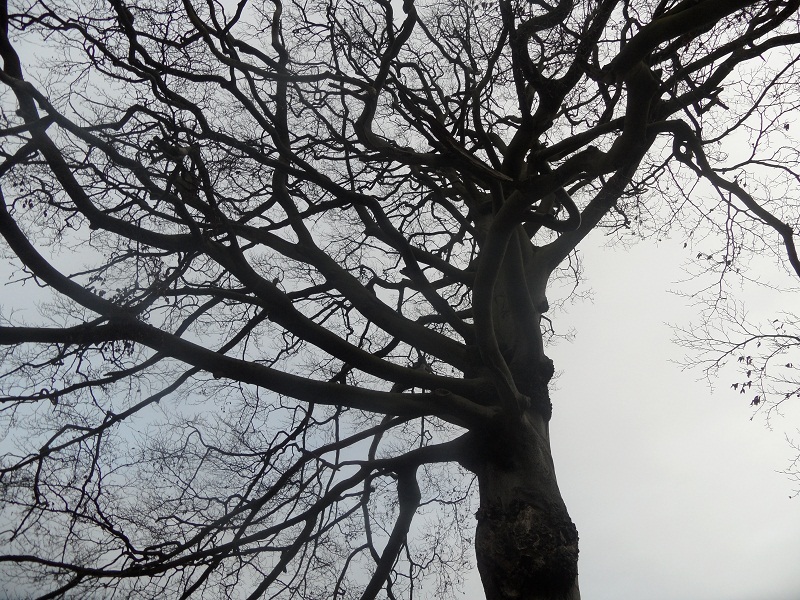
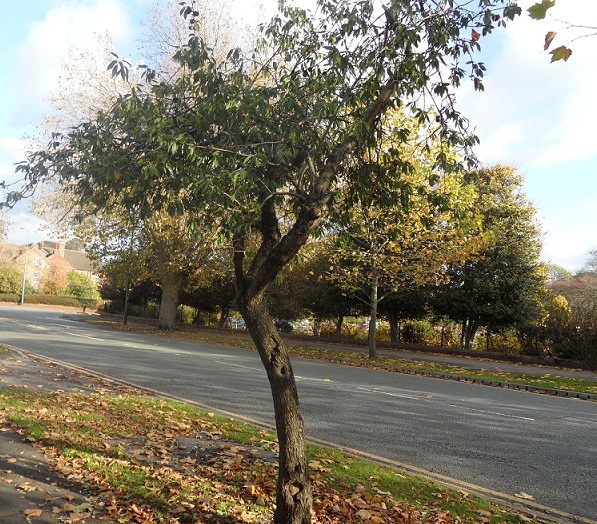
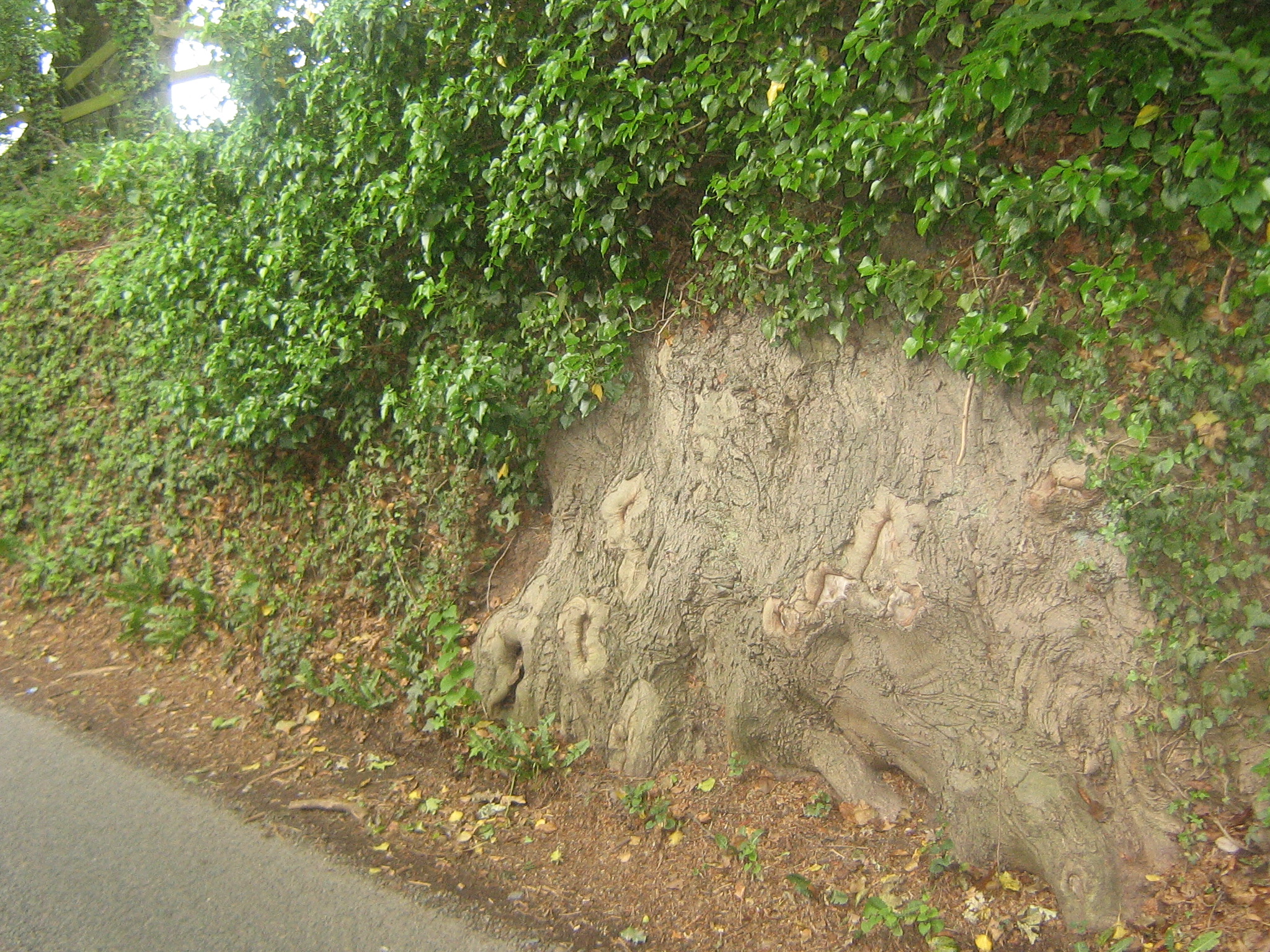
Which tree(s) should I follow though? Here are some contenders, in and around Lichfield.

My current thoughts are that I’ll choose a tree at Leomansley Wood and also our cider orchard at Fisherwick. I hope the comparison between a mature woodland tree and an orchard sapling will be interesting. Although, as you can see from the photo, the cider trees aren’t much more than sticks at the moment, so we’ll see!

Wood Work

This week started with a brand new orchard and ended with an ancient woodland.

Last weekend, I helped to plant cider trees at Woodhouse Community Farm in Fisherwick. It wasn’t just the potential liquid reward that got me out of bed on a cold and frosty Sunday morning, there were a couple of other reasons!

It's got a lot of potential....


Orchards are becoming a rare habitat – according to Natural England, it’s estimated that the overall orchard area in England has declined by 63% since 1950. A traditional orchard can support around 1,800 species of wildlife. Although it will clearly take a while for the new cider orchard to reach this stage, I’m hoping that it will help to redress the balance a little bit! The People’s Trust for Endangered Species recently created an inventory of the traditional orchards in England, and you can read the summary of their findings for Staffordshire here.

Being involved with the orchard will also give me an opportunity to learn something about some disappearing traditional skills and knowhow. Growing fruit trees is a fascinating business, although I clearly have much to learn as I was the only person whose tree had to be dug up and replanted. Hopefully I’ll be better at the cider making bit, but if not, there’s always the cider drinking part which I’m fairly confident about.

In contrast to this budding orchard, on Friday I found myself amongst much older trees. Merrion’s Wood is a lovely nature reserve, just outside Walsall town centre and looked after by Walsall Countryside Services. Bluebells are already starting to shoot up all over there and countryside ranger Morgan told me that these plants were an indicator of ancient woodland, along with several other species.
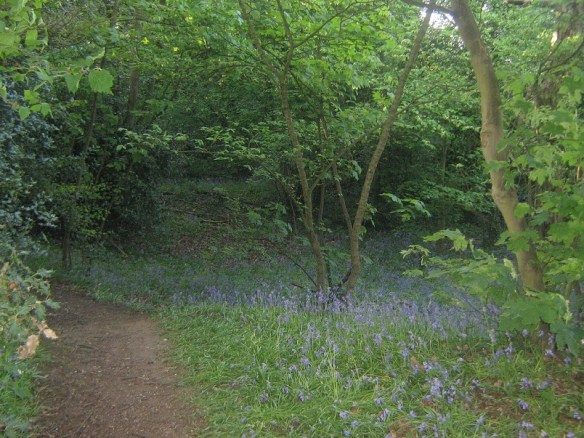
Ancient Woodland in Leomansley

Leomansley Wood is full of bluebells in springtime. An interactive map of habitats from DEFRA confirms it as ‘ancient replanted woodland’. This means that although the site has been continuously wooded since 1600 (at least), the trees are more recent. It’s interesting that the place name is thought to include the celtic element ‘lemo’, meaning an elm (1) or possibly ‘leme’, lime tree.  The ‘-ley’ suffix is thought to come from the Anglo Saxon ‘leah’ meaning ‘clearing’ (2).

I think that to find a nearby semi natural ancient woodland, you need to visit Hopwas Woods near Whittington Barracks.  I should probably do this myself at some point! It’s worth pointing out that only 1.2% of the UK is made up of this kind of habitat and that it is irreplaceable. (3)

The DEFRA map also shows a traditional orchard between Maple Hayes and Jubilee Wood (where the conduits are!) with several others around Burntwood and Chorley. Perhaps even more interestingly, it seems there are two patches of traditional orchard in a built up residential area of Lichfield. I don’t know if I should say where, it might encourage scrumping!

I’ve also noticed several apple trees growing alongside the A51. How did these get here – discarded apple cores from car windows or remnants of something else? Perhaps more importantly, can I use these to make cider? 😉

Footnotes:

Don’t just take my work for how brilliant Woodhouse Community Farm is! There is a snowdrop walk on Sunday 5th February at 10.30am, where you can also see some of the things they have planned for the future.

The Woodland Trust point out that although many ancient woodlands have been recorded on inventories, there may also be unidentified fragments out there. Although bluebells don’t always indicate ancient woodland, if you do spot any growing this spring it might be worth having a closer look to see what else is around! The Woodland Trust have a really interesting guide to ancient woodland that you can read by clicking here.

Sources:

1) ‘Lichfield: The place and street names, population and boundaries ‘, A History of the County of Stafford: Volume 14: Lichfield (1990), pp. 37-42.
 2) http://finds.org.uk/staffshoardsymposium/papers/mattiasjacobsson

(3)http://jncc.defra.gov.uk/page-1437
Fruit & Nut

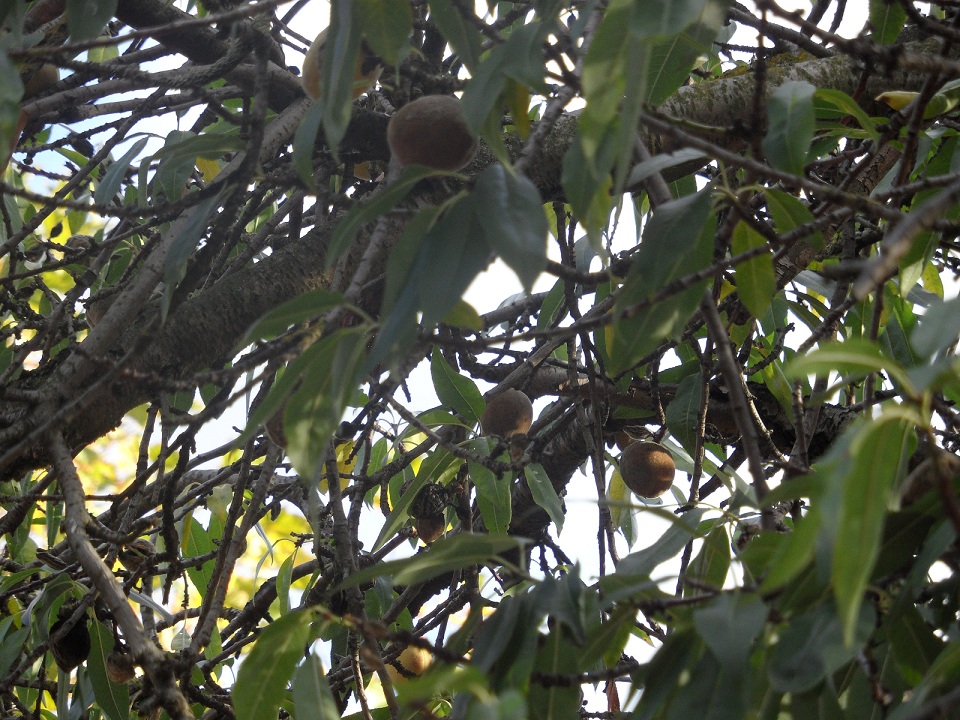
Following on from the apple tree & walnut tree post, Pat (someone who makes a fantastic contribution to this blog via his comments & in other ways), got in touch to say that he knew of an almond tree in Lichfield.

I admit that I don’t know much about thses things, but to me that seems unusual. I associate almonds with warmer climates and so I didn’t expect one to be growing near to the Friary car park. However, there it was, boughs laden. With a lemon tree also growing nearby, perhaps this part of Lichfield has a mediterranean micro-climate?!

Something that I didn’t know until today was that almonds, are not true nuts, but are part of the ‘prunus’ family, together with apricots, cherries & peaches. The edible part of almonds is the seed, but only for the sweet variety. As Pat pointed out these almonds are likely to be wild, bitter almonds and therefore contain cyanide!   So, don’t get picking them to grind up into your Bakewell Tart …

Many thanks to Pat, for sharing this information.

Meripilus Giganteus & Wealhhnutu

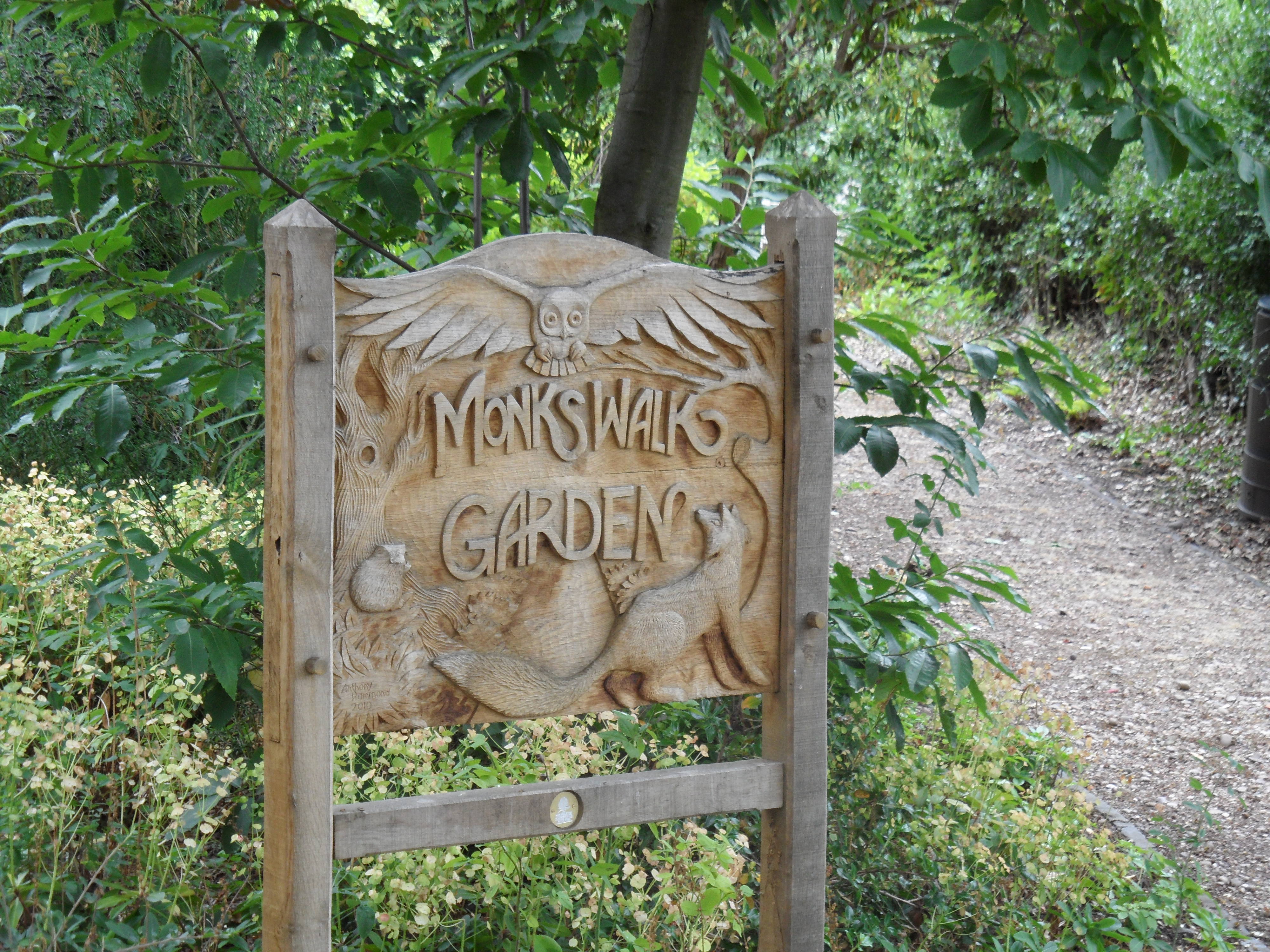
Lorna from the Monks Walk Group has been in touch to say that unfortunately the beech tree in the gardens has been lost due to the Meripilus Giganteus fungus. The good news is that Staffordshire County Council is providing a walnut tree as a replacement.


I don’t know much about fungi or walnuts, so I did a quick bit of research. Apparently, Meripilus Gigantus also known as Giant Polypore is a common cause of death for mature beech trees. It seems we can’t even get our revenge on this fungus by eating it as, although not poisonous, it doesn’t taste particularly good.  However, it is sometimes eaten by mistake as it looks like the Hen of the Woods, which is a tasty, edible fungus (and very good in risotto according to Morgan from Walsall Wildlife!).

In one of my all time favourite books, ‘England in Particular’, the entry for walnuts tells us that the trees were originally brought to Britain by the Romans (the Old English was wealhhnutu which means ‘foreign nut’)and amongst other places were planted in monastery gardens, so it seems that Staffordshire County Council have made an appropriate choice!

A huge walnut wood was planted to the north-east of Ashby de la Zouch around 10 years ago. Jaguar Lount wood is the largest plantation of walnut trees in Britain and as you might guess from the name, the project was sponsored by Jaguar Cars and it includes an area where they are researching the the growth of different varieties for timber and for their nuts. You can see the Forestry Commission leaflet here.

Of course, it probably goes without saying that perhaps most importantly of all, walnuts are a crucial ingredient in Walnut Whips. Much tastier than Meripilus Gigantus.

Sources:
England in Particular – Sue Clifford & Angela King