Rolling in the Shallow

One of my absolute favourite things in a landscape is water – waterfalls, oceans, lakes, canals.  All wonderful.  Here, in Leomansley we’ve got a brook and I love that too.

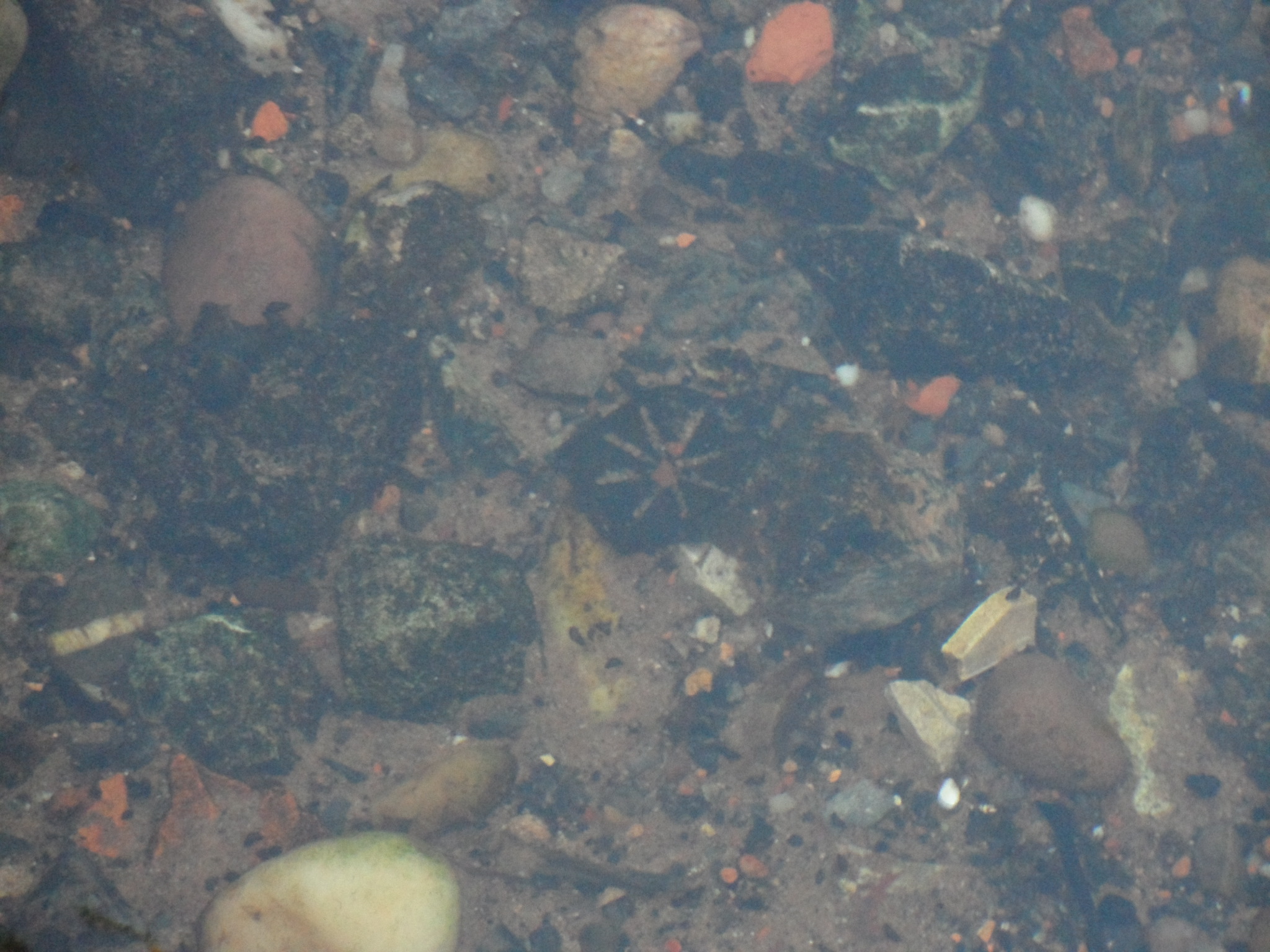
Two days ago I stopped and paused at a small bridge that crosses over Leomansley Brook. It was flowing more than usual, with little fishes darting about in the clear water. I would have gone home happy just having seen the fish but then as I watched them, something else caught my eye.

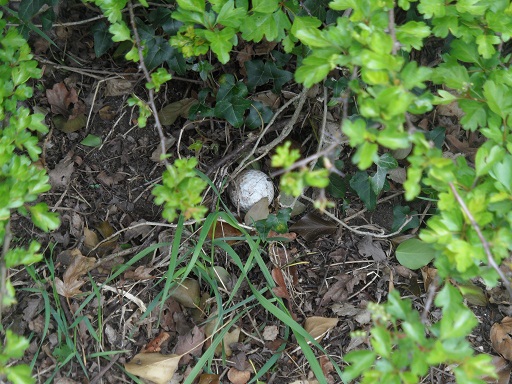
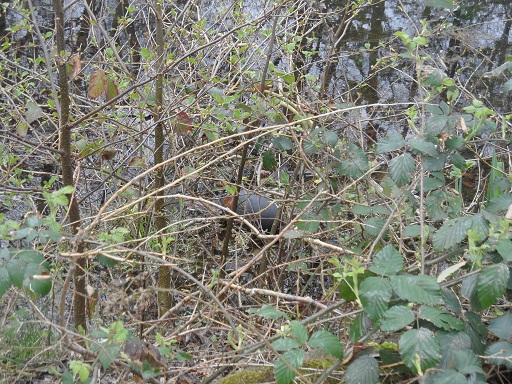
It looks like a stone with a star etched on to it. Unfortunately, as well as raising the water level, the rain has also raised the nettles and so I couldn’t get down for a closer look. I went back the following day with a fishing net and my Mum but the net was far too short and my Mum wasn’t game enough to take on the stingers either! And so there it remains, still in the brook, where it may have been for hundreds or years….or since last week! I took another photo and it looked a bit different. (This time I noticed a big nail a little further upstream too).

What is it and how or why does it have those markings? Is it even a stone? I would love to hear any theories anyone has!

A little later I’m going to write up a post about another little mystery around these parts. This and the stone might not be anything at all, but I actually don’t think that matters. What I think does matter is getting out there and looking, thinking, sharing and most importantly enjoying what’s around you.

Cross City

There’s some evidence that there were several stone crosses in Lichfield, although as far as I know, no physical remains have ever been found.

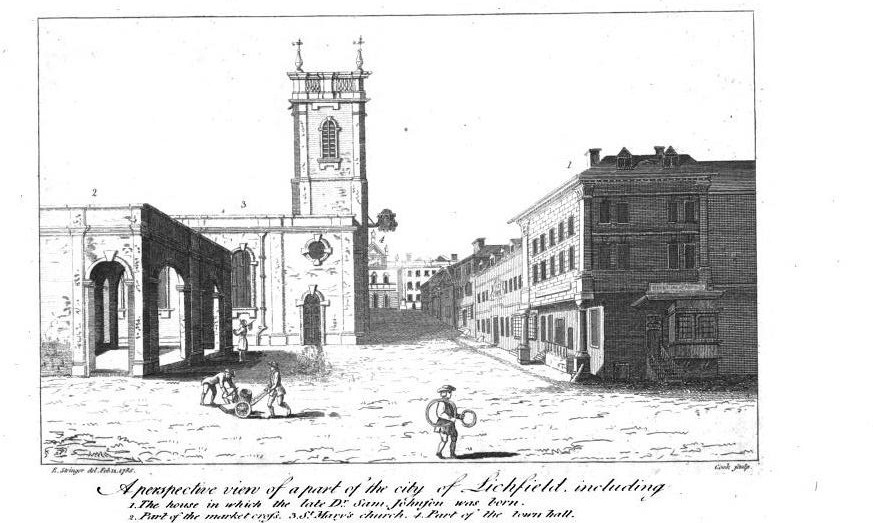
The most well documented of these is the market cross. According to the Lichfield volume of the History of the County of Stafford (1), a market cross stood north of St. Mary’s in the late Middle Ages and then some time around 1530, Dean Denton surrounded it with eight arches and added a roof  to keep the market traders dry. The building was topped with eight statues of apostles, two brass crucifixes on the east and west sides, and a bell, as you can see in this picture on the Staffordshire Past Track site.    The cross was destroyed in the civil war, and replaced with a market house, as shown in the illustration below (although it is referred to as a cross on the notes?) which has also now disappeared.
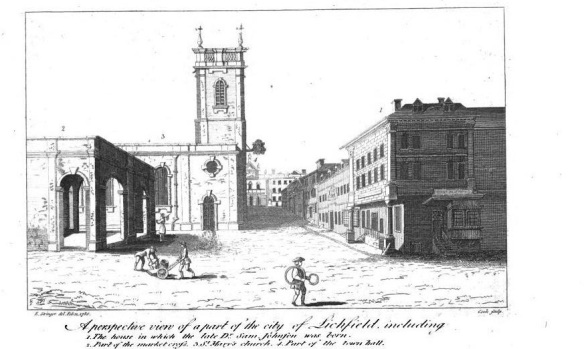
Taken from John Jackson’s book, History of the City and Cathedral of Lichfield, 1805

There is a possibility that there was a preaching cross in the grounds of St John’s Hospital as documentation shows that Dean FitzRalph preached outside in the cemetery. (2) Information on this specific example is really sketchy, but there is a surviving preaching cross in Bloxwich which you can read about in a great article on The Borough Blog.

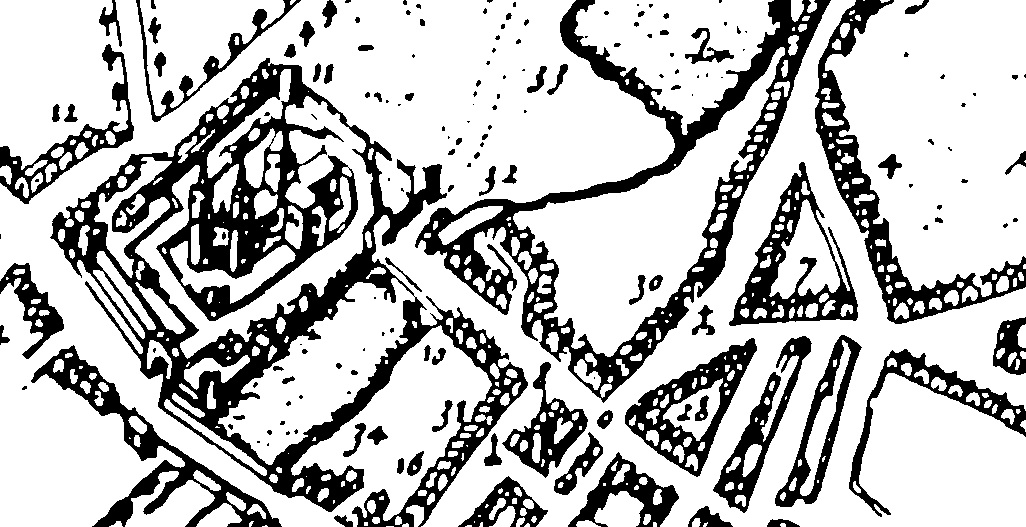
More evidence exists for a cross at the junction of Tamworth St and Lombard St. There is a cross like structure shown there on John Speed’s 1610 map, and in 1805 Thomas Harwood wrote that there was a stone cross in Tamworth St. (3) There are also a couple of references in old property deeds such as one from April 1316 describing a ½ burgage in street between the Stone Cross and Stow Gate.(4)
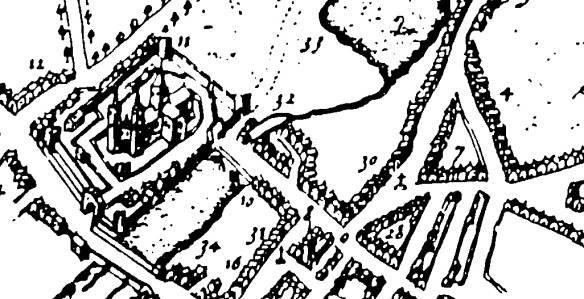
The Market Cross and the Stone Cross at Tamworth St can be seen depicted on John Speed’s 1610 map of Lichfield

A cross apparently stood near Cross in Hand Lane in Lichfield, giving rise to a theory that it this is where the lane got its name from (the other theory is that is was a pilgrimage route, to St Chad’s shrine, where people would walk with ‘cross in hand’. The route has recently been incorporated into a new pilgrimage and heritage route called Two Saints Way). Harwood said,  “(Beacon Street) extends from the causeway over the Minster pool which separates it from Bird Street to houses at the extremity of the city called the Cross in the Hand and where stood an ancient cross ad finem villas.’ The pastscape record for the cross is here.

This week I came across another reference, this time Bacone’s Cross, and which was also thought to be in Beacon St, at the end of the town. Was the ancient cross at Cross in Hand Lane and Bacone’s Cross the same cross?

The Bacone’s Cross/The Cross in Hand and the Tamworth St cross were both situated at the ends of the town. Does this mean that they were boundary markers of some sort?  If so, could there have been more crosses marking other places on the City’s boundary.  There were city gates at both Beacon St and Tamworth St.  However, the probable sites of the gates don’t correspond exactly with the probable sites of the crosses e.g. the above example says ‘between the Stow Gate and the Stone Cross’.
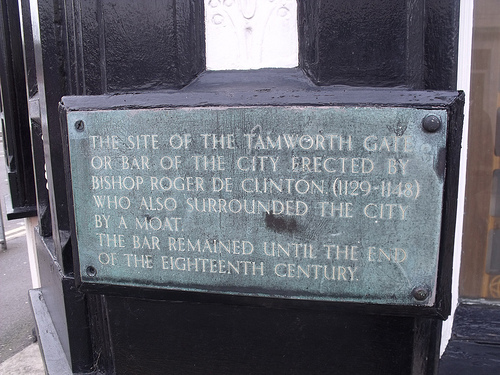
Tamworth Gate plaque on Lee Garden Chinese Restaurant Credit: Ell Brown (taken from flickr photostream).

In the absence of more information about Lichfield specifically, I looked elsewhere to see if crosses would have been used to mark boundaries. St Albans was surrounded by a ditch, like Lichfield (and there’s a link with the story of the  Christian martyrs but that’s a bit too much of a tangent for now!). The History of the County of Hertford, says this about the city’s boundary (5)

Crosses were at an early date erected at important points in the line of boundary, and at each of the entrances to the town, namely, the Stone Cross or North Gate Cross  at the north on the Sandridge Road, the Red Cross in Sopwell Lane, at the entrance by the old road from London, the Cross with the Hand in Eywood Lane, the Black Cross, probably at the angle where Tonmans Dike goes from the boundary of the houses in Fishpool Street towards the Claypits, and St. John’s Cross at an angle of the boundary in what is now known as Harley Street, but lately as Mud Lane.

It’s interesting to see that some of the names are the same – Stone Cross, Cross with the Hand – but I don’t want to start jumping to conclusions until there is much more evidence!

Finally, there is a document relating to property in Freeford (4), which describes ‘three selions of land at Lichfield, near Le Hedeless Cross, on the road towards Freeford’ in the time of Edward III – Henry V. Does this refer to the Tamworth St Stone Cross, or another cross altogether?

What happened to these crosses? Time? Religious differences? Where did they end up? There’s something in one of my all time favourites book that gives me hope (possibly misguided) that there is a chance, no matter how slim, that things that have long been thought to have vanished might turn up again one day in some form or another. In England in Particular (6), in the section on Wayside and Boundary Crosses, it says that,

Some crosses have been found in hedgebanks, with shafts used as gateposts. A number have been found by researching field names:two fields called Cross Park revealed previously undiscovered stones.

Fingers crossed!

Edit:

In view of the above, I thought it’d be worth having a look at field names etc, in Lichfield. There is an entry in an transcribed inventory relating to the real estate of the vicars that says Deanslade: Falseway to cross called Fanecross (4). There’s a Banecross on another transcription and I think one of these could be down to a typo and that they could be the same place, There is also an entry for a place known as Croscroft, which was on the road to Elford, near St Michael’s Churchyard (3)

Another edit:

I was hoping there would be an ancient cross somewhere in Lichfield. Well, I finally found one! Actually that’s a fib. What I found is a photograph in a book of archaeologists finding one. A decorated cross shaft was discovered built into the foundations of the north wall of the nave of Lichfield Cathedral. It’s thought to be Saxon or Saxo-Norman, and could be a surviving remnant of the earlier church on the site. I wish I could share a photograph here, but all I can do is tell you that it’s on plate 1 in the ‘South Staffordshire Archaeological and Historical Society Transactions 1980-1981 Volume XXII’ book, on the local history shelves at the library!.

Sources:

(1) Lichfield: Economic history’, A History of the County of Stafford: Volume 14: Lichfield(1990), pp. 109-131http://www.british-history.ac.uk/report.aspx?compid=42349#s6

(2) Hospitals: Lichfield, St John the Baptist’, A History of the County of Stafford: Volume 3(1970), pp. 279-289

(3) The history and antiquities of the church and city of Lichfield by Thomas Harwood

(4) Collections for a History of Staffordshire Part II- Vol VI (1886), William Salt Archaeological Society

(5)  ‘The city of St Albans: Introduction’, A History of the County of Hertford: volume 2 (1908), pp. 469-477

(6) England in Particular, Sue Clifford & Angela King for Common Ground
Lost in the Woods

Whenever I see an object out of place it intrigues me.  I’m not talking litter here, I mean the things that are dropped by accident, things that are left behind. Lost property. Things that might (or might not!) interest future archaeologists if they were to discover them in a couple of centuries time.  I want to know the story behind them, who they belonged to & how they ended up lost, but I realise that I might be on my own with this one! 

I’ve put together a gallery of things found on the path past Leomansley Wood to Pipe Green and on the Green itself.

Lost by a horse, found by a friend. Brownhills Bob told me that it's not that old. Still lucky though!


Dropped by someone in need of a lucky horseshoe? Or on the way home from the fair?

Lost whilst blackberrying?


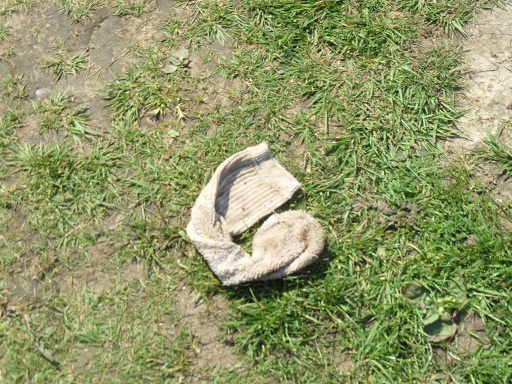
Dropped after an impromptu paddle in the brook?


See above!


In the rough. Not sure Leomansley Wood makes a great fairway.

Or a great rugby pitch either.

I guess the robber escaped from the cop.


The remnants of an overenthusiastic dog's toy?

I would ask people to send me photographs of things they’ve found, but I appreciate that I might be the only person in Lichfield who goes around taking photographs of old socks!


House Old Recycling

With a long awaited cafe & kiosk opening in Beacon Park this week, it reminded me that I wanted to have a look at the reuse of old buildings parts in Lichfield.

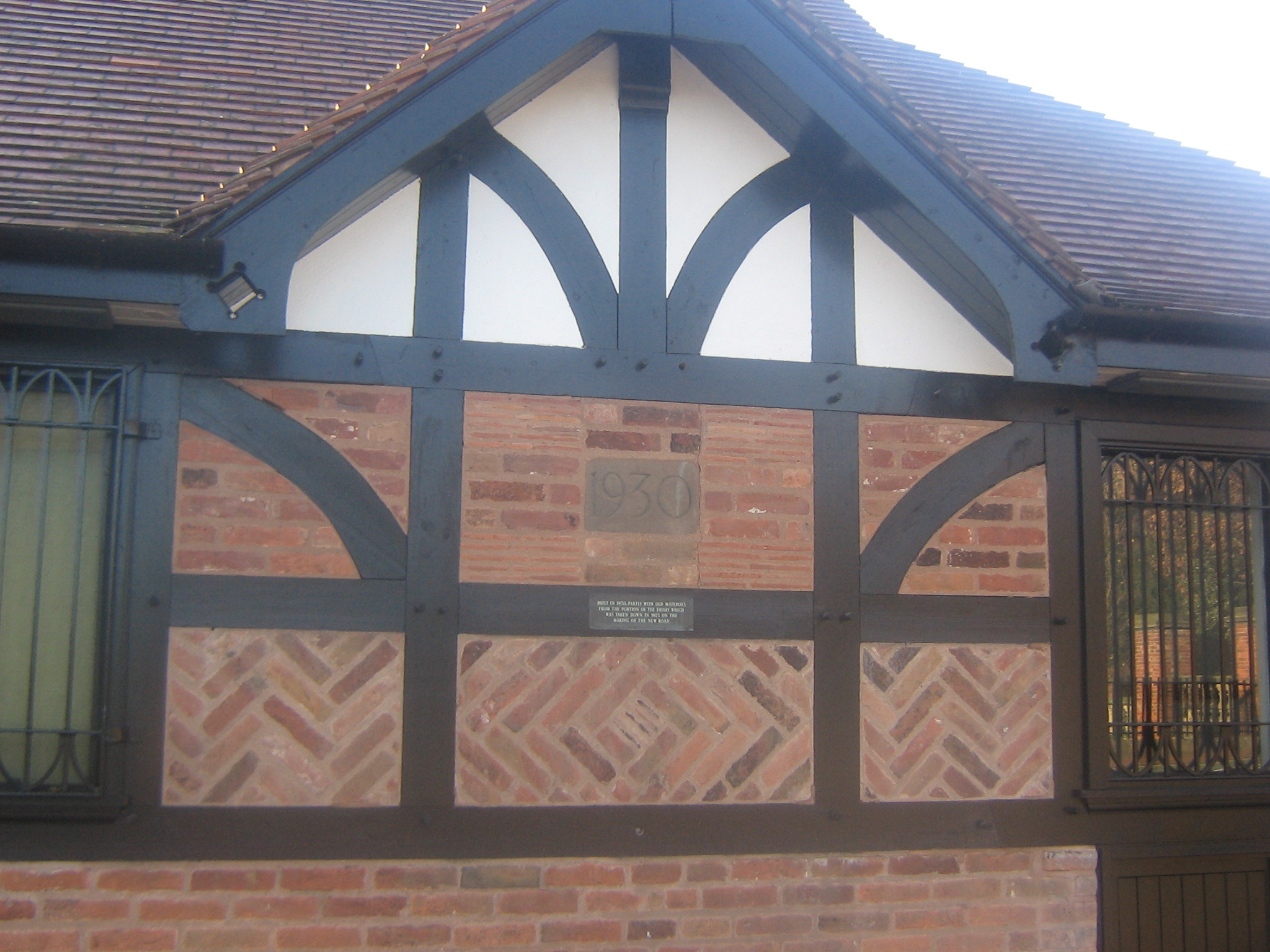
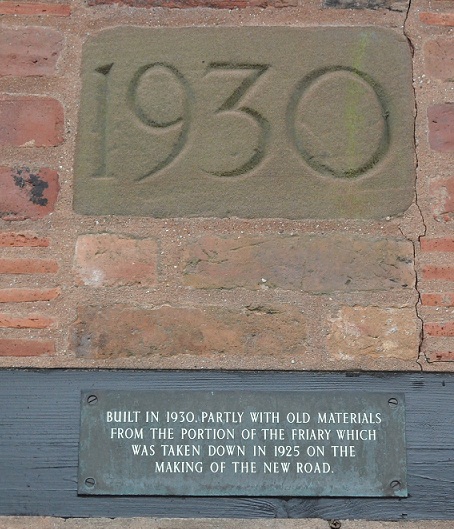
The connection? Well, the new Chandlers Cafe is in the 1930’s mock tudor building on the edge of Beacon Park. According to a plaque, it incorporates materials from the old Friary. I’d love to find some records that confirm whether or not this is true and if so,  how this came to be.

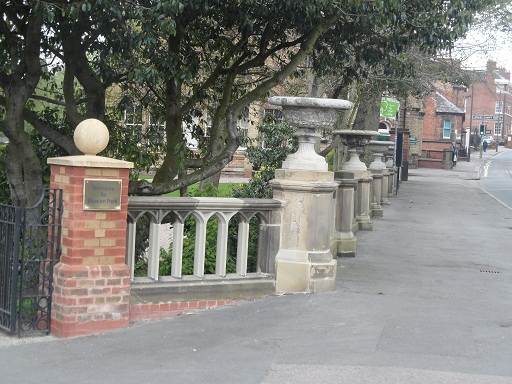
The provenance of the nearby balustrade running around Beacon Park is more of a mystery. Both Annette Rubery and myself have so far drawn a blank when attempting to discover its origins. Did this start life elsewhere?

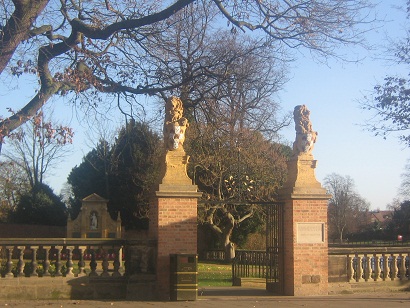
More information is available on the balustrade running around the Garden of Remembrance opposite, albeit a little contradictory. The listed building description suggests that the balustrade came from Moxhull Hall in Wishaw, although Lichfield DC’s website disagrees, saying that it came from Shenstone Court, and that it’s the stone lions on the pillars that come from  Moxhull Hall. Does anyone know any different?

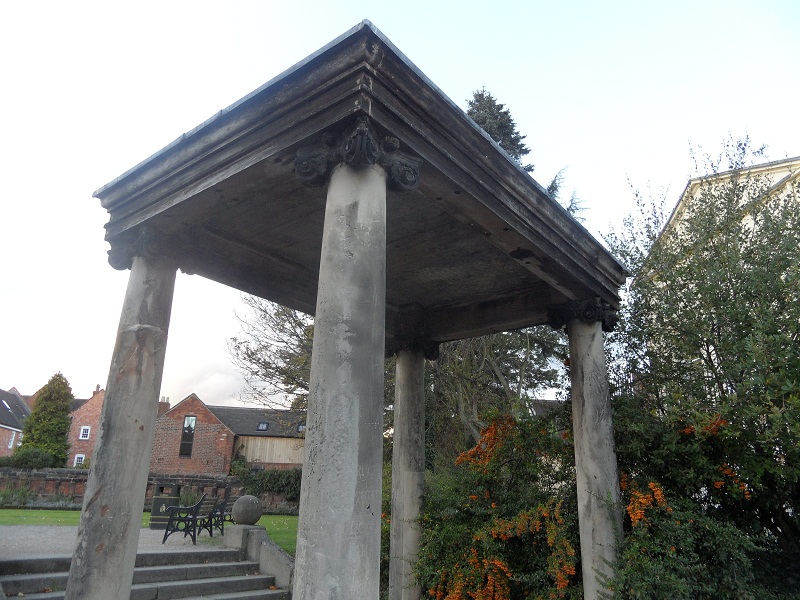
If the balustrade is from Shenstone Court, then its not the only bit of that old house we’re supposed to have made use of here in Lichfield! The portico at the entrance to the site of the Friary is also said to have been salvaged from the demolition of the Cooper Family mansion. However, according to the Lichfield Council Conservation Area Document, this is one of ‘countless unsubstantiated stories about the portico coming from important buildings in the Lichfield area and ‘it is equally possible that it was made in 1937’. I think this might be another one for further investigation!

Finally, for this post at least, there’s the Old Stables in The Close (formerly the Visitors Study Centre). These belonged to Bishop Hacket’s now demolished house which stood on this site until 1799.   Material from the remains of the walls of The Close, from the heavily damaged, original Bishops Palace, and possibly even the Cathedral itself are thought to have been used during construction of these buildings, which are alongside Chapters Restaurant.

I’m sure there must be more in Lichfield –  I’ve even seen garden walls built with what looks like the remnants of old buildings. If anyone knows of any more examples,  I’d love to hear. In the meantime, I’ve heard that there may be more parts of Fisherwick Hall to track down….

Sources: http://www.lichfielddc.gov.uk/downloads/file/375/lichfield_conservation_area_document

http://www.pmsa.org.uk/national-recording-project/

http://en.wikipedia.org/wiki/Bishop’s_Palace,_Lichfield

http://www.british-history.ac.uk/report.aspx?compid=42343#s3


http://www.british-history.ac.uk/report.aspx?compid=42344#s7

What lies beneath Lichfield?

A very quick post to say that there is an archaeological investigation taking place at the Friary Outer car park. You can read a little more here at the project redevelopment website http://www2.lichfielddc.gov.uk/friaryouter/2012/05/02/friary-outer-archaeology-investigations/. It says they will be posting updates should anything be found.

I passed by last night and the dig has revealed what looks like the foundations of at least one building, including steps, a cellar and what could be a tiled floor.* I’m having a look at some old maps to see what used to occupy that site.

Unfortunately & unusally for me I didn’t have my camera or even my phone with me to take a photo. I’ll try and get one later but if you’ve got 10 minutes to spare on this dull bank holiday Monday, go and have a look and see it for yourself before it’s hidden from view once more. It’s intriguing to think how much history must lie beneath us, revealed to us from time to time by either by accident or design, or even nature (moles are particularly good at this apparently!)

* disclaimer – this is what it looked like to my untrained eyes. It could be something completely different!

Edit: Keep an eye on Annette Rubery’s blog as unlike me, Annette had the good sense to take a camera and will be posting some photos later! It’s here –  http://www.annetterubery.co.uk/

Edit part 2: This of course isn’t the first archaeological investigation in the Sandford St area. The Staffordshire Heritage gateway contains information about the previous discoveries near here for example,  a possible section of the ditch thought to have formed part of Lichfield’s medieval defences, remains of a house dating to around the C14th , tanning pits from the C16th to C17th, a possible post-medieval iron working complex and of course discoveries relating to the Friary complex.

Source:

Staffordshire Historic Environment Record, accessed via the Heritage Gateway


Can I borrow £18k please?

Ian, who often makes a great contribution to this blog via the comments section,  has spotted something intriguing on ebay.

For £18,000 you can buy a statue of a prophet, said to originally be from Lichfield Cathedral.

The statue's orginal home?

Get your bid in here! http://www.ebay.co.uk/itm/Stone-Sculpture-Lichfield-Cathedral-statue-/350449588131?pt=UK_Antiques_Architecural_RL&hash=item51986c57a3

So of course, I want to know the story of the statue and my initial thoughts & questions are:

It was discovered 3 miles from Lichfield – I wonder where?

Who took it there and why?

I’m a bit confused by ‘dates to 1650’. Do they mean the statue was sculpted at this time, or comes from the Cathedral of this time?

Are there any other parts of the ‘old’ Cathedral anywhere else? For example, we know that most of the damaged statues on the West Front were taken down in 1744/1749.(1) What happened to them all?

Can anyone lend me £18,000 as I think this would look great in my garden?

Huge thanks to Ian for this great spot and it would be great to hear any theories anyone has about this prophet.


Sources:

(1)  ‘Lichfield: The cathedral’, A History of the County of Stafford: Volume 14: Lichfield (1990), pp. 47-57. URL: http://www.british-history.ac.uk/report.aspx?compid=42342  Date accessed: 03 November 2011.


Elford Revisited

The estate that Mr Paget handed over to Birmingham City Council in July 1936 was made up of over 600 acres, including the Hall & associated gardens, Home Farm inc. the Park, Cottages, Woodland and part of the River Tame. You can see Elford Hall circa 1790 to the left of the Chruch in the above picture and there are more recent photographs of the Hall on Staffordshire Pasttrack

According to the 1936 Estate Agent’s report, the Hall obtained water from various wells, although water was pumped to the ground floor of the house via a petrol engine (South Staffordshire Water Co was in the process of laying pipes in the village at the time and the agent recommends that the Hall be connected). Sewage was collected in cesspits. Lighting in the Hall’s 16 bedrooms and other rooms was still from oil lamps and candles, although a public electricity supply had recently arrived in the village.

One thing I’m interested in is the relationship Elford Hall & its owners had with the rest of the village. What effect did the unexpected decision to hand over the estate to a public body have on the villagers?  Perhaps a small hint of the role played by the Pagets can be seen in the meeting notes of the Elford Hall Committee held at Birmingham Council House on 17th Februrary 1937. It says:

“A communication was submitted from the Chairman of the Elford Village Hall Committee asking for a contribution from the council towards the coronation celebrations in Elford Village. The Chairman undertook to communicate with Mr Paget as to his action on the occasion of the silver jubilee. Decision deferred.”

Another thing I’ve been wondering about is what would have happened had Mr Paget kept Elford Hall? The England’s Lost Country Houses site lists over 50 demolished country houses in Staffordshire alone. Most disappeared after the First World War. Although of course eventually demolished in 1964,  Elford Hall is one of the longest surviving on the list. Would retention by the Paget family have ensured its survival or hastened its demise?

I’m off to one of Staffordshire’s surviving country houses on Tuesday. Shugborough Hall – offered to the National Trust in lieu of death duties on the death of the 4th Earl of Lichfield in 1960 and managed by Staffordshire County Council.

Elford, Fisherwick, Beacon Place, Drayton Manor or Shugborough – I’m finding the world of country houses and the families that dominated our area fascinating. The social and political changes that led if not to their complete demise, to a change in their use. And of course discovering the remaining fragments of those disappeared estates.

Actually, I am now regretting not watching Downton Abbey as research….

The Lost Estate of Fisherwick

I’m really enjoying taking part in Pastorm, a new collaborative history experiment created by Mark of Tamworth Time Hikes. Here’s a link to the site, which explains exactly what Pastorm is and what it hopes to achieve.

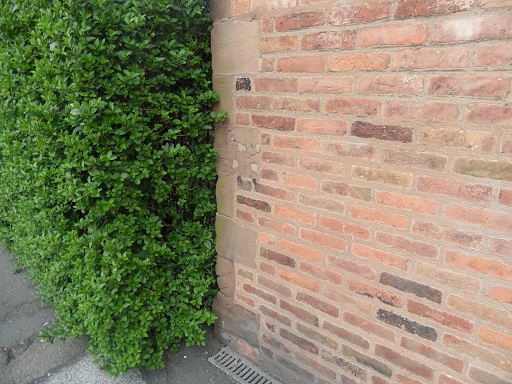
Horseshoe carved into Fisherwick Hall gate pier

My contributions so far have focused on the Fisherwick Estate, which  was purchased by Arthur Chichester, 5th Earl of Donegall (later to become the first Marquess of Donegall), in 1761.  With the involvement of Lancelot ‘Capability’ Brown, he remodelled the grounds and replaced the ‘fine old timbered and gabled’1  hall from the 16th century with an extravagant new mansion which left some visitors ‘at a loss whether most to admire the beauty of its proportion, or the elegance of its embellishments’2.

After the death of the Marquess, the estate passed to his second son, Lord Spencer Chichester.  From what I understand, Chichester could not afford to keep the estate and in 1808 it was put up for sale. Furniture, artwork and even some of the building itself were auctioned off. One of the items sold was a virginal belonging to Queen Elizabeth I3 and the portico of the house itself was eventually found a new home, at The George Hotel in Walsall (now also demolished)4.

The Hall was demolished by its new owner, Richard Howard, in around 1814 and what was left of the estate was split up. Today, the remnants are scattered across Fisherwick and they’re being documented over on Pastorm, where there are photographs and some more information. There’s the Walled Garden & Orangerybridges, a pair of gate piers covered in carvings, and the stables, a ha-ha and part of the estate’s wall boundary.  It’s a bit like doing a treasure hunt! On the subject of treasure, take a look here at the gold ring with a mermaid seal that someone found in one of the fields around Fisherwick.

There is still a whole lot more to discover about Fisherwick, from the Iron Age right up until the present day. If anyone has anything to contribute on this or wants to take part in the Pastorm project in a different way, here’s how to get involved.

 Sources:

  1. The Natural History of the County of Stafford by Robert Garner
  2. A Companion to the Leasowes, Hagley and, Enville with a sketch of Fisherwick
  3. The New Monthly Magazine, Vol 4 1815
  4. History of the Borough & Foreign of Walsall by E L Glew

Townships: Fisherwick with Tamhorn’, A History of the County of Stafford: Volume 14: Lichfield (1990), pp. 237-252.

The Historic Gardens of England: Staffordshire by Timothy Mowl and Dianne Barre