Tree following: Tree Routes

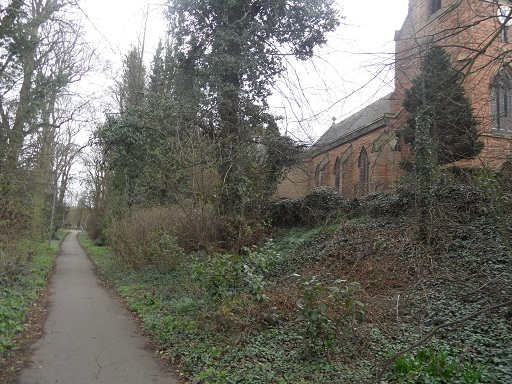
As far I understand it, the path running past Christ Church was at one point the old Walsall Rd, ‘realigned under an Act of 1832 with the new Queen Street and Walsall Road bypassing the route along Lower Sandford Street and what was later called Christchurch Lane. That lane takes its name from the church opened in 1847, and by then it had been continued south-west from the church to the new Walsall road, the old line from Lower Sandford Street having been turned into a drive for Beacon Place’.(1)

The path is surrounded by trees that I believe were planted in the mid-19th century by the Hinckleys of Beacon Place, the estate that occupied most of what is now Beacon Park between 1800-ish and 1964, when the house was demolished.

So that’s a bit of historical scene setting, now what about the tree!

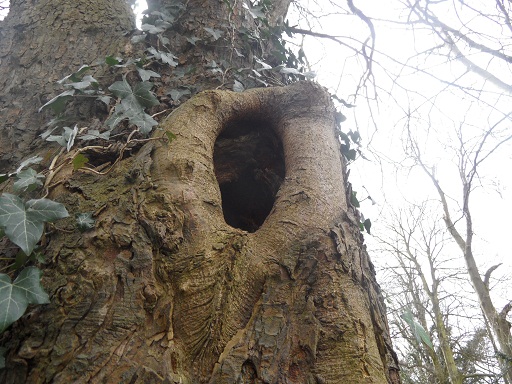
There’s one along this path in particular that seems to attract attention. Several people have commented on it in the past. I even heard a girl refer to it as ‘The Skeleton Tree’! I’m not even sure what kind of tree this is but how could I resist following it?!

How do holes like this form in a tree? As usual, on nature matters I can’t offer any upfront answers (though rest assured I shall be trying to find out, part of the reason I’m doing this is to learn things!) but I can give you a peep into the hole nearest to the ground.


And a close up of the one at the top…….


Nearby, the snowdrops are looking very shabby now.

I love to see these little flowers at the end of the winter, but I have to confess I’m even happier when I see these…

Not quite a host, but enough to signal that spring has arrived in this part of Lichfield! The wild garlic has also made an appearance. The aroma from the leaves is incredible, I’m sorry I can’t share it. No pretty white flowers yet though, let’s see what April brings for the Old Walsall Road!

Talking of Walsall, I’ve just found out that the brilliant & enthusiatic Morgan, a Walsall Countryside Ranger has started a Walsall Wildlife blog. She’s one of the most knowledgable people I know about nature and I’ve learnt loads from her (although clearly this is very much an ongoing education 😉 ). I really recommend that you check out this and the Walsall Wildlife flickrstream.  I bet Morgan even knows how those holes in the trees got there……!

Sources:

(1)’Lichfield: The 19th century’, A History of the County of Stafford: Volume 14: Lichfield (1990), pp. 24-32. URL: http://www.british-history.ac.uk/report.aspx?compid=42338  Date accessed: 25 March 2012.


Lichfield Armour

On Wednesday, Pat sent me a link to a British Pathe film. The short film is from 1938 and shows boys and men dressed in armour for the Lichfield Bower. This on its own is fascinating stuff. However, this week it’s not only an interesting piece of footage but also a topical one!

The lead story in this week’s Mercury tells how the Bower Committee feel they have no choice but to sell off two of the four suits of armour they own (presumably some of those featured in the film?), to ensure the survival of the event.  You can read the full article here.

There’s so much more to be said on the Bower, about its history & its future and also its place in the Lichfield psyche. There is a great site for the Bower which explores some of the history behind this Lichfeldian tradition, as well as giving updates on this year’s festivities.

You can view a copy of the film by clicking here. I think the procession is travelling down Beacon St in the film, what does anyone else think? Huge thanks to Pat for his great contribution, as ever.

I don’t have any photos of the Bower Armour, but I do have a photo of a suit of armour I took somewhere else in Lichfield. Anyone else spotted this chap in ye olde city?


Edit 23/2/2012

Over on twitter, the Beacon Street Blog have spotted a story in the Lichfield Mercury, saying that the armour has been withdrawn from the sale, due to a dispute over ownership with Lichfield District Council.

Changes – New Mental Health Support Service in Lichfield & Burntwood

Ian’s been in touch to ask if I can help to publicise a new organisation doing some great work in our area……

Changes is a mental health organisation offering a range of services including friendly mutual support groups, social activities and opportunities for accredited training via the National Open College Network. These services can be accessed for free, without the need for a GP referral. Local volunteers are helping to run the service in the Lichfield area.

In addition to these services, Changes also run wellness courses for people in mental distress, and the next one starts on Monday 23rd January between 10.30am & 12pm at the Pavilion in Beacon Park. The course is free of charge and public transport costs can also be met.

Changes was formed by people with experience of using mental health sevices, to help both themselves and others in the same situation. They aim to provide personalised support and services,  greater independence and to help people with their social skills, to regain confidence and to become active members of their community.

If you would like to find out more about the course, or to find out more about the service generally, you can visit the website www.changes.org.uk or contact Ann at the Lichfield Wellbeing Centre on 01543 309 770 or Samatha at the Burntwood Wellbeing Centre on 01543 679 000 who would be pleased to answer any questions you may have.

Monumental Task

I’ve used this database created by the Public Monuments & Sculptures Association a lot. It’s a national recording project that aims to collect information on all British public sculpture and monuments, whether historic or contemporary.

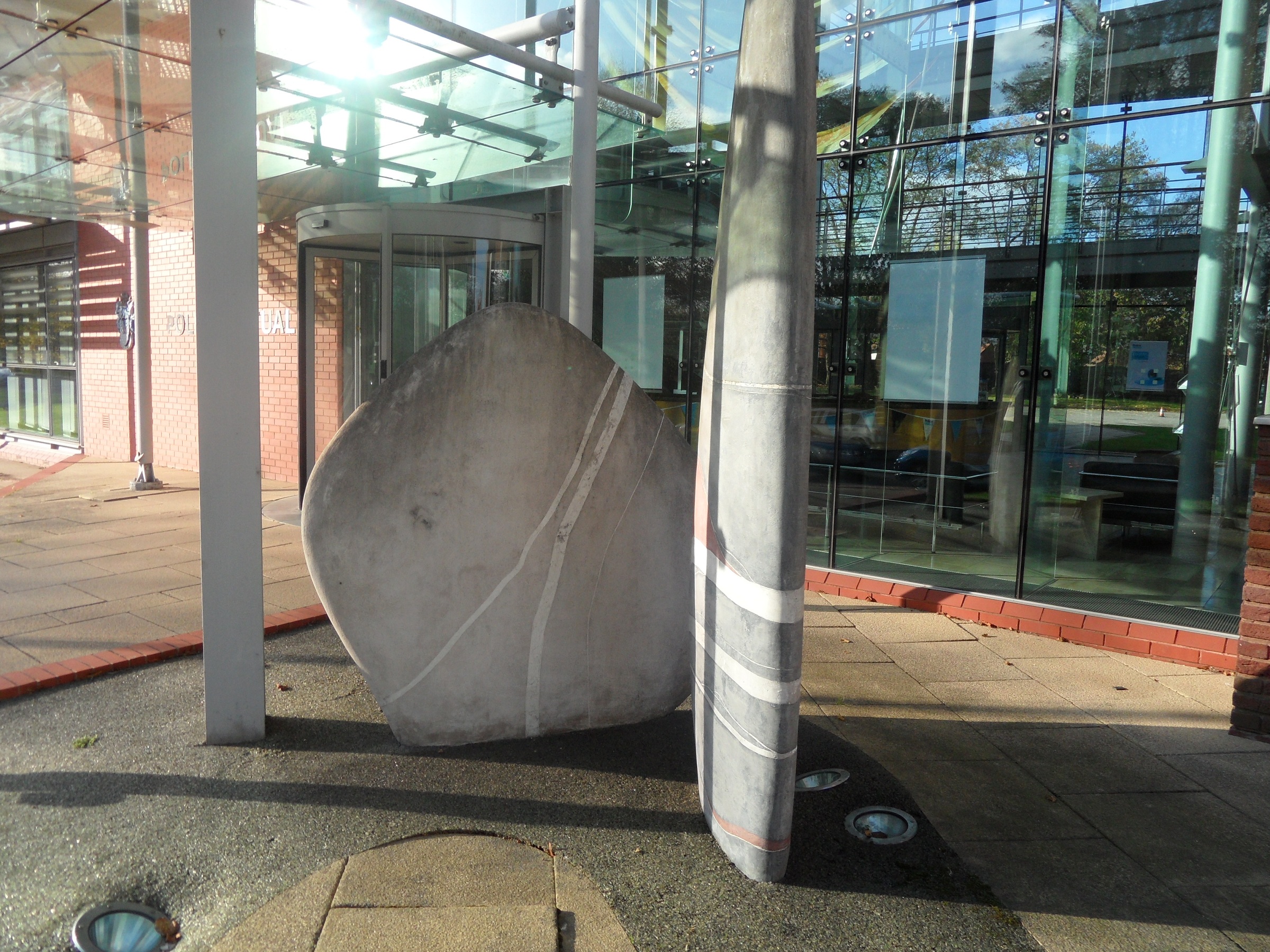
As well as including Lichfield’s usual suspects, the database also features some of our less obvious works such as the Calming Stone in Beacon Park, the etched glass in the Library foyer, the facade of Boots in Tamworth St and the Standing Stones I formed a bit of an attachment to back in November 2011.


Facade of Boots created 1908. Decorations include an owl, a beehive and a piper. There must have been a good reason for this motley crew!

They're outside!


Not everything on the list is still around – there’s an entry for Dean Denton’s Market Cross which was pulled down in 1849. There are also entries on the database that don’t seem to have made it as fully fledged pieces of Lichfield public sculpture.  Since Pat brought it to our attention back in November 2011 an entry has now appeared on the database about the Vision & Youth sculpture.

As the association says,  ‘The database is an excellent resource for students & researchers, conservators, local historians, art buffs, enthusiasts, genealogists and all who want to know more about public sculpture: statues; obelisks; columns; sculptures; installations; fountains; follies; commemorative clocks; wayside markers; and towers – from the Stuart era to the present day.’ I think it’s fantastic and you can read more about future plans & how you can get involved in contributing information here.

One to be added to the database in the future is the proposed statue of Erasmus Darwin at Cathedral Walk (I think there’s another one planned for Beacon Park too). I’ve just been reading a few of the comments about this on the S106 document. One person said that they were in favour of the statue, as Darwin is a local hero we should be proud of. However, the comment goes on to say that Lichfield should also celebrate more contemporary heroes relevant to young people and also more women ‘not just old blokes’.* I think this is potentially a whole new blog post but this is a really interesting point. Who or what should we be commemorating with our future public art & monuments?  

*I remember when I was a young person. A young person who used to go out on a Saturday night instead of sitting in reading the comments on S106 consultations 😉

Elford Revisited

The estate that Mr Paget handed over to Birmingham City Council in July 1936 was made up of over 600 acres, including the Hall & associated gardens, Home Farm inc. the Park, Cottages, Woodland and part of the River Tame. You can see Elford Hall circa 1790 to the left of the Chruch in the above picture and there are more recent photographs of the Hall on Staffordshire Pasttrack

According to the 1936 Estate Agent’s report, the Hall obtained water from various wells, although water was pumped to the ground floor of the house via a petrol engine (South Staffordshire Water Co was in the process of laying pipes in the village at the time and the agent recommends that the Hall be connected). Sewage was collected in cesspits. Lighting in the Hall’s 16 bedrooms and other rooms was still from oil lamps and candles, although a public electricity supply had recently arrived in the village.

One thing I’m interested in is the relationship Elford Hall & its owners had with the rest of the village. What effect did the unexpected decision to hand over the estate to a public body have on the villagers?  Perhaps a small hint of the role played by the Pagets can be seen in the meeting notes of the Elford Hall Committee held at Birmingham Council House on 17th Februrary 1937. It says:

“A communication was submitted from the Chairman of the Elford Village Hall Committee asking for a contribution from the council towards the coronation celebrations in Elford Village. The Chairman undertook to communicate with Mr Paget as to his action on the occasion of the silver jubilee. Decision deferred.”

Another thing I’ve been wondering about is what would have happened had Mr Paget kept Elford Hall? The England’s Lost Country Houses site lists over 50 demolished country houses in Staffordshire alone. Most disappeared after the First World War. Although of course eventually demolished in 1964,  Elford Hall is one of the longest surviving on the list. Would retention by the Paget family have ensured its survival or hastened its demise?

I’m off to one of Staffordshire’s surviving country houses on Tuesday. Shugborough Hall – offered to the National Trust in lieu of death duties on the death of the 4th Earl of Lichfield in 1960 and managed by Staffordshire County Council.

Elford, Fisherwick, Beacon Place, Drayton Manor or Shugborough – I’m finding the world of country houses and the families that dominated our area fascinating. The social and political changes that led if not to their complete demise, to a change in their use. And of course discovering the remaining fragments of those disappeared estates.

Actually, I am now regretting not watching Downton Abbey as research….

The Lichfield Underground

St Mary's House, The Close.

My introduction to Lichfield’s underground world came a couple of years ago, on the thoroughly enjoyable Gruesome & Ghostly City tour.

Then, back in January 2011, there was a series of great posts on TamworthTimeHikes about underground mysteries in Tamworth. As a result, information came to light (sorry!)about tunnels in Lichfield and Mark kindly passed the information on to me. Since then, tunnels have resurfaced several times (sorry again!), most recently in conversations with Vickie Sutton, Brownhills Bob , the folks at the BeaconStBlog, and as you may already have seen, in the comments section of the Monks Walk post. So, I thought I should finally get around to doing something on them! Here’s what I’ve heard/read/speculated about so far…..

1)      Under Sandford St

My first tunnel! Standing on the corner of Sandford St on a chilly October night we were told that tunnels led from that area to the Cathedral. In recent conversations on the Monks Walk post, ‘Born a Lichfeldian’ has contributed more to the story of the tunnel, suggesting that the tunnel also runs to The Friary.  You can read the discussion here.

2)      White Hall on Beacon St

In a book ‘Lichfield & its Cathedral’ by H Snowden Ward (1893) is the following description “From the cellars of the inn, an underground passage ran some distance and was popularly believed to terminate as St Chad’s Church. That is went so far is extremely unlikely, and what was its object or termination will never be known, for a few years ago the late owner of the White Hall caused the portion under that house to be filled up, and without having the passage explored through its whole length”.

Edit 15/11/2011

City librarian & historian J W Jackson (who I’ll introduce you properly to another time) noted in his weekly history column in the Lichfield Mercury of the 1930s that the tunnel under White Hall was dug out by a previous owner during the plague. Presumably he wished to go about his business without soming into contact with carriers of the disease or the bad air that some thought caused the plague at the time. Would be interesting to see if there are stories of any tunnels elsewhere being dug for this purpose?

3)      Under Dam St

Some information from googling,  that I think came may have originally come from the Staffs Books Shop that used to be on Dam St, says that there is speculation that a passage runs along Dam St from the Cathedral to the Guildhall, and was used as an escape route during the Civil War. In an 1819 book, ‘A Short Account of the Ancient & Modern State of the City & Close of Lichfield’, it says ‘A large subterraneous passage of stone, several feet beneath the surface, has been traced from the middle of Quonians Lane, under the houses on the west side of the street, for a considerable distance in the gardens; its use cannot now be ascertained.”

4)      St Mary’s House in The Close

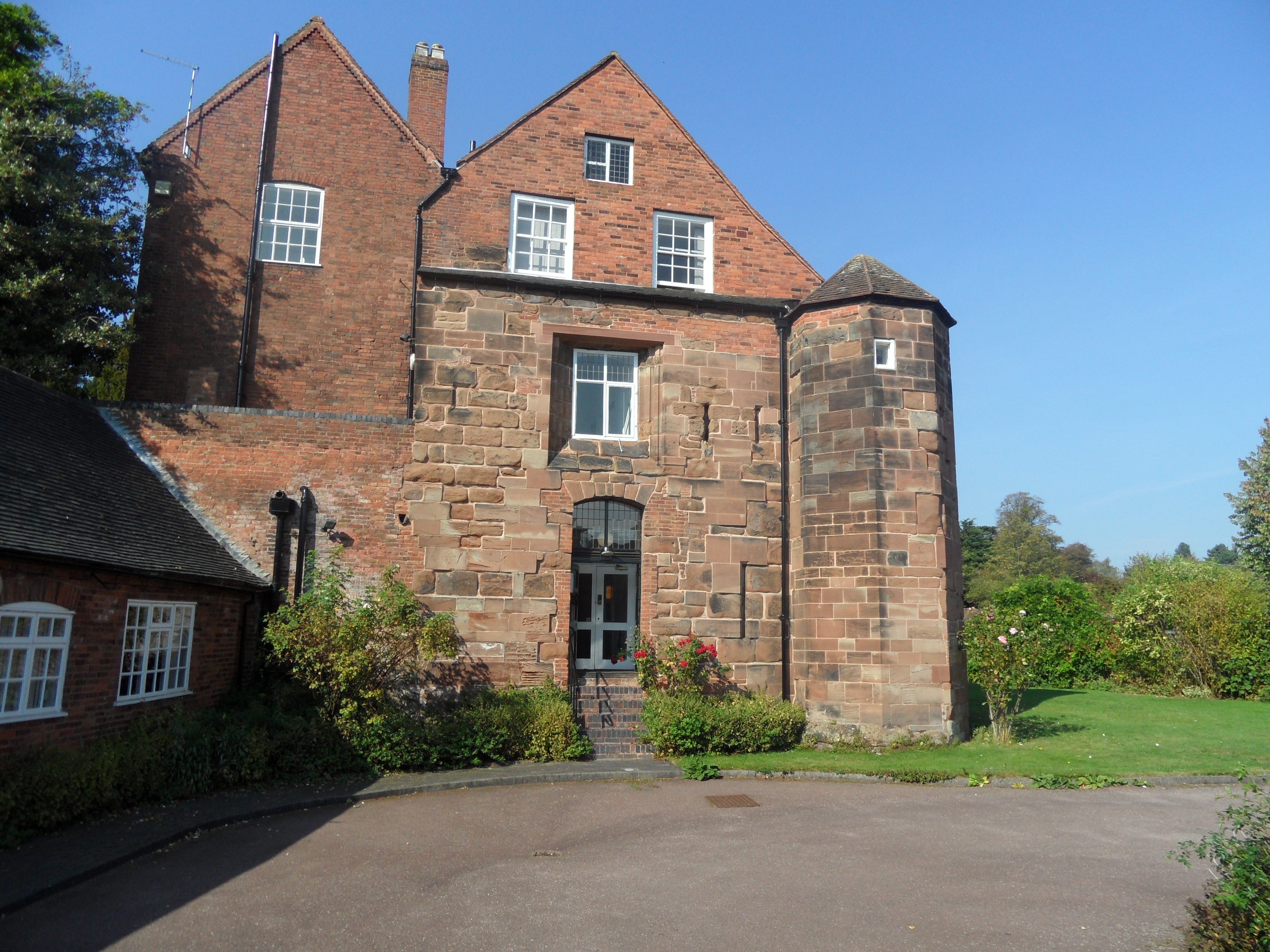
In the Lichfield Records Office there is a copy of Lomax’s Pictoral Book of Lichfield, edited by Alan J Bull. It describes St Mary’s House as the oldest house in Lichfield and says that the East & South walls are part of the original building which dates back to before 1321 and formed part of the Close’s defences – at the base the walls are 6ft thick and you can still see the arrowslits. The book goes on to say that tradition has it that below this building are underground passages leading to St Chad’s, White Hall, the Friary, St John’s Hospital and the Old Brewery on Sandford St.

5)     Beacon Street again!

Vickie’s Aunt remembers seeing a very large tunnel somewhere in the vicinity of Beacon St, which she describes as being whitewashed and large enough for a coach & horses to get through.

6)      Tudor Tea Rooms

On their own website, there is a description of a passage going from their cellars to the Cathedral. They speculate that it may have been dug out  during the Civil War. Apparently, the “passage has been followed for some distance in recent years, but is too dangerous to pursue further”

7)      Greenhill

A rumour of a tunnel behind a building on Greenhill, which used to be a pub called the Spread Eagle. (You can still see the archway for the coaches & the building is called ‘Spread Eagle House’).

As well as discussing tunnels, I’ve also been talking to people recently about the importance of stories & legends, like these. Do we really need to get to the truth or should we leave them be & enjoy them for what they are? I still haven’t made my mind up, so, I’ll leave it for you to decide in this case.

Therefore, this next part is a bit like a Choose your Own Adventure book (remember those? I used to have my fingers bookmarking about 5 different options at a time!). If you would like to investigate the truth behind Lichfield’s mysterious tunnels you could start by clicking here or exploring some old maps of Lichfield here. Just suggestions though, can’t guarantee you’ll find the answers!

If you’re happy to accept the stories as they are, then relax and perhaps go & make yourself a nice cup of tea 🙂

Edit:

I’ve been told about another tunnel by someone on Twitter – one between Gaia Lane and the Cathedral. Apparently it leads to a house that used to be used as a laundry/servants quarters. A relative of my tunnel informant has actually been in the tunnel, and says it is blocked off. We’re thinking laundry tunnel, servants passage – anyone else know anything?

Interestingly there was a daughter and mother,  Ellen Stone and a Mary Skelton, both described as a ‘Laundress’ living at Gaia Lane on the 1851 census. Going off topic somewhat, Ellen’s son Henry lived with them. He was illegitimate and there is some interesting speculation on who his Father may have been. You can read more at the Stone Family History site here.

Edit: 10/3/2012

I’ve come across a scribbled note I made some time ago which says there is a tunnel underneath Farewell Church. Interestingly, there is a work of semi- fiction set at the nunnery that preceded the church. The story is set at the time of the dissolution of the monasteries and is called ‘A Tale of Fairwell’. The last scene of the book is set in ‘the subterranean vaults of Fairwell Priory’.

Also, Hanch Hall has a confirmed underground passage of some description – the listed building description says there are ‘extensive brick vaulted cellars with vaulted passage or drainage channel leading into the park’.
Beacon Place Part Two

Following on from my last post about Beacon Place, here are my initial attempts to discover what’s left of the estate.

Here’s a map of the Beacon Place area from 1921. It shows the the Greenhough Rd lodge, the Beacon St lodge and the Sandford St lodge (although this isn’t indicated, it’s the building near to the PH on Lower Sandford St, in the parcel of land marked 332).  It doesn’t show the Christ Church Lane lodge, but I’ve covered this elsewhere anyway. Apart from the Sandford St Lodge, which I think would have been located near to Bunkers Hill car park, the lodges are still in existence. A lot of the trees are also still there, the line running down from the icehouse to Christ Church is still very much in evidence. The fish ponds also remain of course.

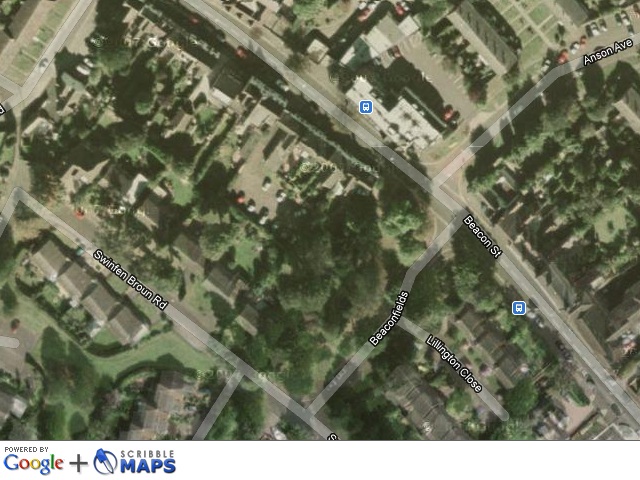
As we know the mansion no longer exists, and houses were built on the area. I think it was located somewhere in the region of Seckham Rd. What’s interesting, although I suppose it makes sense, is that the new roads in this area  seem to follow the line of the old carriage drives shown on the 1921 map. For example, if you compare the google map* below, the route of Swinfen Broun Rd is similar to the that of the carriageway from the Greenhough Rd lodge. Beaconfields seems to follow the line of the carriageway from the Beacon St lodge.

I think that the icehouse shown on the map is located between the Shaw Lane carpark and the pavilion near to the playground, where there is a definite bump in the ground which seems to correspond with the map. It doesn’t come over particularly well in the photograph unfortunately, so the next time you’re in Beacon Park, you’ll have to go and have a look yourself!

The footpath marked next to it on the map is also still in existence.

I think part of the estate’s boundary walls are between Beacon Mews and Beaconfields, on Beacon St.

There are also some walls running alongside Shaw Lane. I wonder what that gap in the wall was for? I should have taken a better picture of it!

So, these are my findings so far. I’m hoping there will be more. The map shows a couple of other buildings (e.g.two fairly near to Christ Church, some near to where the ice house), so I’d be interested to know what these were. 

If anyone has anything to add (or if I’ve made any mistakes – I’m not great with maps!), please let me know. Oh and if any one wants to see any other bits of the 1921 Lichfield map, get in touch.

*just a quick HT to Pastorm as that’s where I heard about scribblemaps from

Beacon Place Part One

Much of what is now Beacon Park in Lichfield once belonged to the Beacon Place (sometimes known as House) estate. The house is long gone, demolished in 1964, but I know that there are some remnants left over! I enjoyed my ‘treasure hunt’ around the old Fisherwick Estate and thought it might be interesting to do something similar a bit closer to home. To avoid this being too long a post, I’m doing it in two parts. Part one is a very brief history of the estate.

George Hand built Beacon Place in the late 18th century. 1 On the death of his widow Ann in 1826, the house was sold in an auction at the George Hotel on Tuesday 28th March 1826. Amongst other things, it was described as having contained a handsome staircase of Hopton Stone, lit by a skylight, a kitchen garden with hothouses and orchards, and good cellars under an excellent kitchen.2

From 1837, Beacon Place was the home of Richard and Ellen Jane Hinckley. As well as extending the house itself, they also gave land for the construction of Christ Church in 1847.  The Hinckley’s had their own pew at the church3, and could see it from the house. As I’ve mentioned before, the lane running alongside the church, over the A51 and into Beacon Park, is an old carriageway that would have led to the house (I think it was also the old Walsall Rd until 1832).4

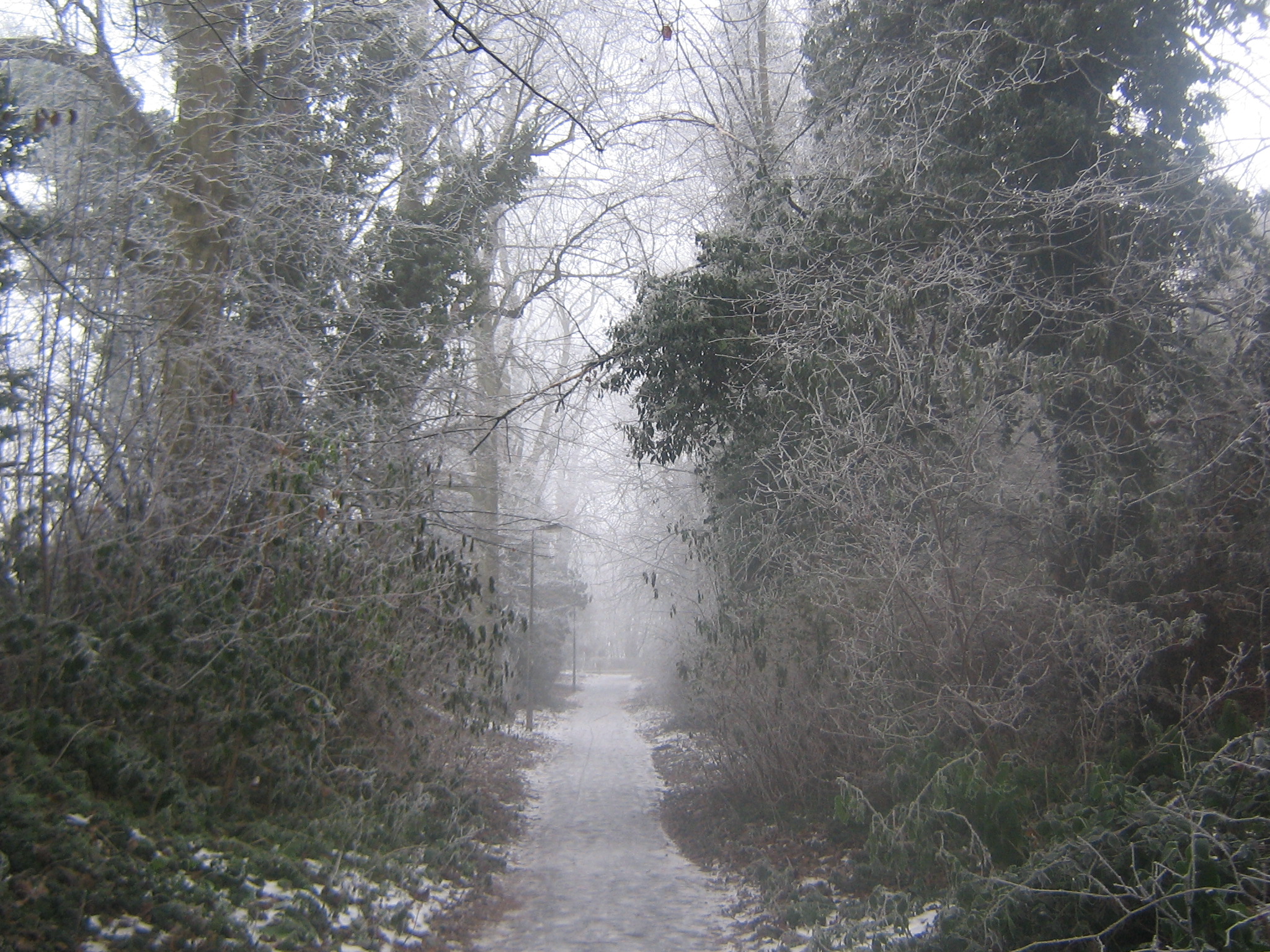
The path between Christ Church and Beacon Park in winter

Richard and Ellen Jane Hinckley are buried in two of the three tombs behind Christ Church. The third tomb is that of Ellen’s son Hugh from her previous marriage to Hugh Acland. Hugh jnr. was one of the first people to be buried in the graveyard.5

Hinckley Tombs, Christ Church

A document at Lichfield Record Office gives an insight into how some of the rooms were furnished. The Inventory and Valuation of Beacon House for Probate on 2nd November 1870, following the death of Mrs Hinckley lists furniture, artwork and decorative items, and even some of the books that she owned.  For example, Mrs Hinckley’s dressing room contained a fire screen, bookshelves, a weather house, an easy chair, a small ivory bust, two cases of insects in glass, a Bible and five pieces of ornamental china. I think there were also portraits of her Father and second husband. The best dinner service used in the house was Ironstone China (from Staffordshire of course!). Some of the Hinckley’s silverware was engraved with family crests or initials. I wonder if there is any still around in someone’s cabinet!6

On Mrs Hinckley’s death the estate passed to her husband’s nephew Arthur Hinckley7  and it was sold at The Swan Hotel on Wednesday 27th October 1880 at 6 o’clock to Samuel Lipscomb Seckham (who I believe was renting Hanch Hall at the time and later also purchased Whittington Old Hall)8. Some of the items listed on the sales particulars are extensive pleasure grounds, flower and kitchen gardens, vineries, peach and hothouses, a coach house, stabling for 6 horses and a labourer’s cottage.  It was described as standing on an elevation which commands beautiful views of the Cathedral and of the open country with ornamental pools and plantations in view of the windows.9

So that’s a brief description of how it was, but what remains of the estate today? Part two to follow shortly!

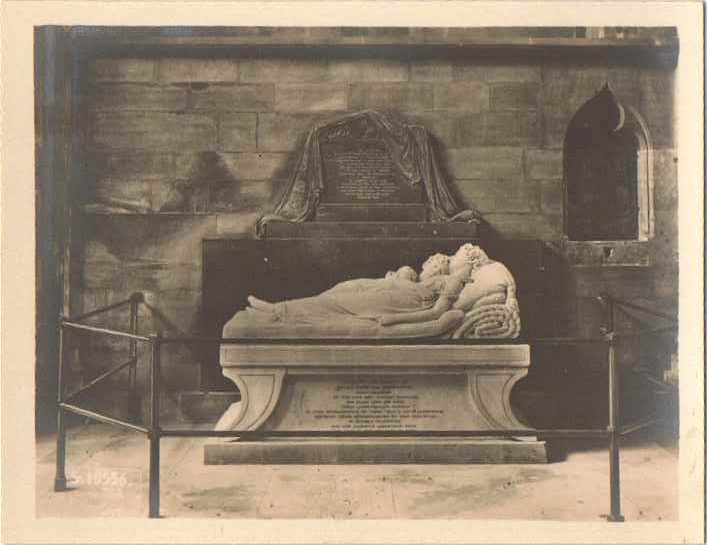
*Ellen Jane Hinckley was the mother of Marianne and Ellen-Jane Robinson, who are the subjects of the ‘Sleeping Children’ monument in Lichfield Cathedral. The plaque behind the monument belongs to her first husband, and father of the children, Rev Robinson. I learned something new about this well known sculpture recently from a friend who had been on a tour of the Cathedral. Sir Francis Chantrey, the sculptor, apparently left an uncarved piece of marble on the foot of one of the children, as he believed that only God was able to create perfection.

Edit 6/9/2011

There’s a program on BBC iPlayer called Romancing The Stone: The Golden Ages of British Sculpture. In part 2, Mavericks of Empire there is a section on Chantrey and the presenter Alistair Sooke visits Lichfield Cathedral and discusses the monument with the Head Verger. This link should take you to this part of the program http://www.bbc.co.uk/i/yml9v/?t=26m04s

An old photograph of The Sleeping Children Monument in Lichfield Cathdral

Sources:

1. ‘Lichfield: Manors and other estates’, A History of the County of Stafford: Volume 14: Lichfield (1990), pp. 67-72.

2. Sales particulars of Beacon House estate 1826, accessed at Lichfield Records Office

3. The Gentlemans Magazine By Sylvanue Urban Vol XXIX

4. ‘Lichfield: The 19th century’, A History of the County of Stafford: Volume 14: Lichfield (1990), pp. 24-32.

5. Cathedral City by Howard Clayton

6. Inventory & Valuation of Beacon House for Probate accessed at Lichfield Records Office

7. ‘Lichfield: Manors and other estates’, A History of the County of Stafford: Volume 14: Lichfield (1990), pp. 67-72.

8. https://lichfieldlore.co.uk/wp-content/uploads/2011/09/howell.pdf

9. Sales particulars of Beacon House estate 1880, accessed at Lichfield Records Office

A Bower Queen in Beacon Park

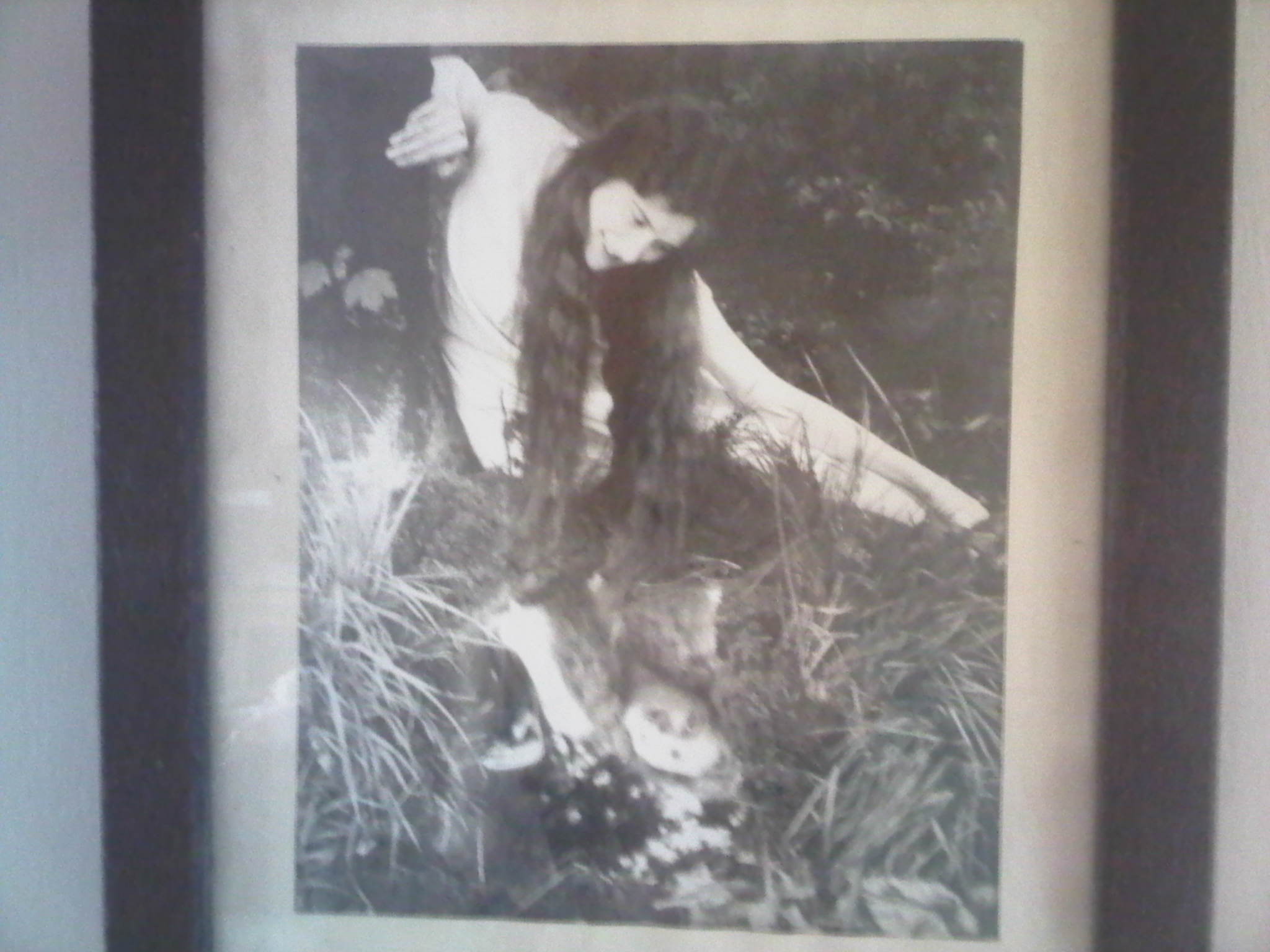
This beautiful photograph is of Clara Talbott, and it was her prize for being chosen as the Lichfield Bower Queen in 1931. Clara was the third Queen to be crowned and although other parts of the Bower date back to much earlier, it seems this tradition only began in 1929. The Lichfield Mercury reported that Clara’s ‘long auburn hair had provided a very favourable comparison with the more modern ‘bobs’ and ‘shingles’. It goes on to tell us that Clara was assisted by her ‘fair maids of honour’ Misses R Orton, M Barker, F Nevill and K Carroll.

A mirror was used to give the impression of a reflection in water.

The photograph belongs to Vickie Sutton, Clara’s granddaughter. She told me that the photograph was taken in woods around Leomansley, where the A51 western bypass now cuts through the woodland. I understand that these trees here were planted by the owners of the now vanished Beacon Place.

Woodland at the edge of Beacon Park and the old carriage driveway from Christ Church to Beacon Place, with the A51 through the middle!

Clara’s family farmed land on Beacon Park and once married, Clara and her husband Frederick Hatchett lived in The Lodge in Greenhough Rd. As the name suggests this was a lodge for Beacon Place and at one point was used as a laundry for the house – it was known as Laundry Lodge in 1891! Vickie has heard from a family member that it may also have been used a some sort of cafe for soldiers in the first world war. I haven’t been able to find any specific references to this yet but records show that Beacon Place was used by officers during WWI and was purchased by the war department in 1922. Cuthbert Brown remembers military figures entering Beacon Place in his wonderful book ‘Lichfield Remembered’.

Once again huge thanks to Vickie for allowing me to share this. The Beacon Place Estate is definitely on my list of things to explore. It may be long gone, but traces of it still linger on….

Sources:

Lichfield Mercury May 1931
A History of the County of Stafford: Volume 14: Lichfield (1990)
1891 Census
Lichfield Remembered by Cuthbert Brown
Chatting to Vickie Sutton, font of Lichfield knowledge!