The Faces of Christ Church

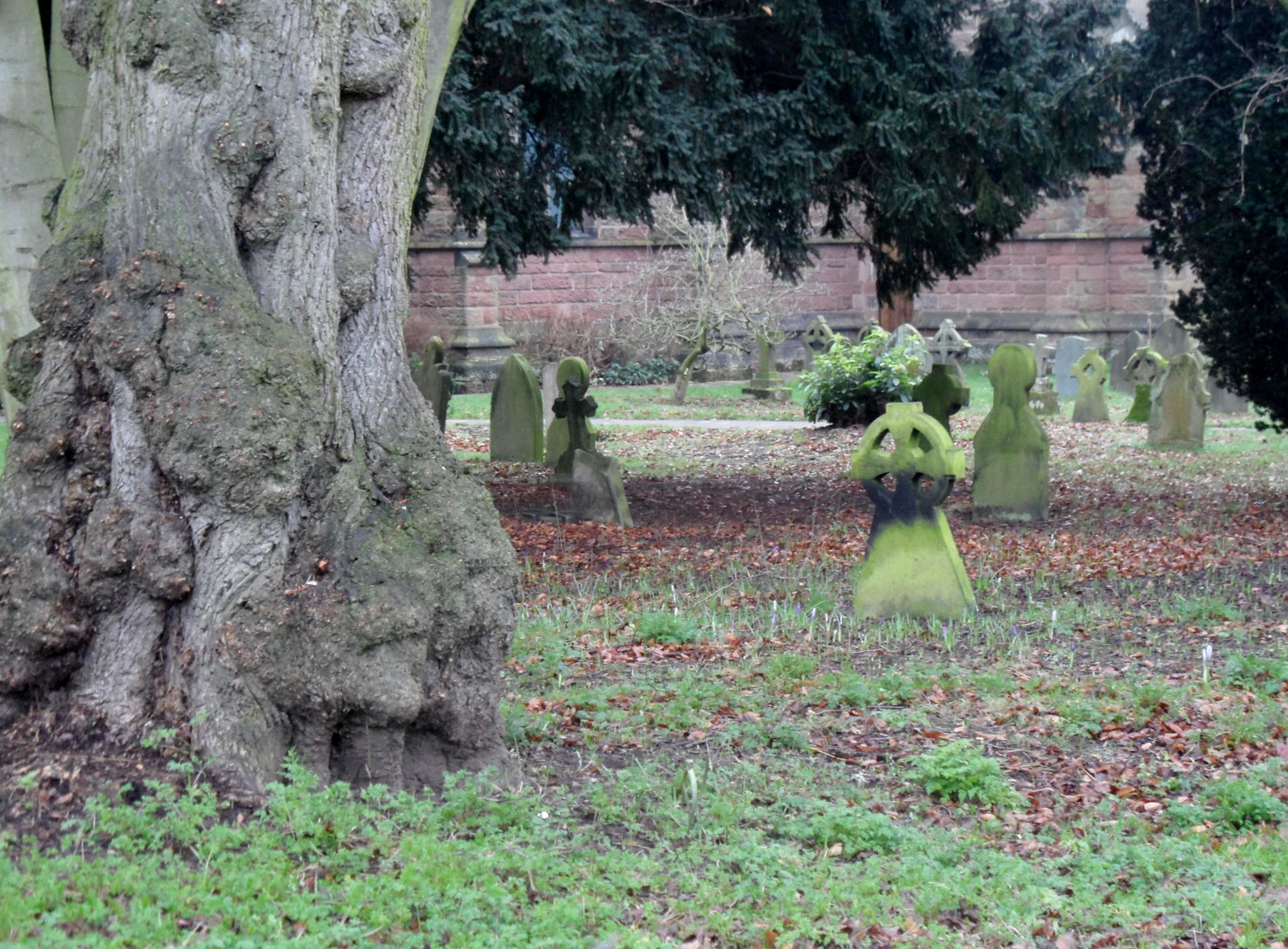
I visited Christ Church on a numbingly cold and drab January afternoon, and I welcomed the sight of the first crocuses and snowdrops beginning to appear amongst the stones erected as memorials to those who once lived here in the parish.
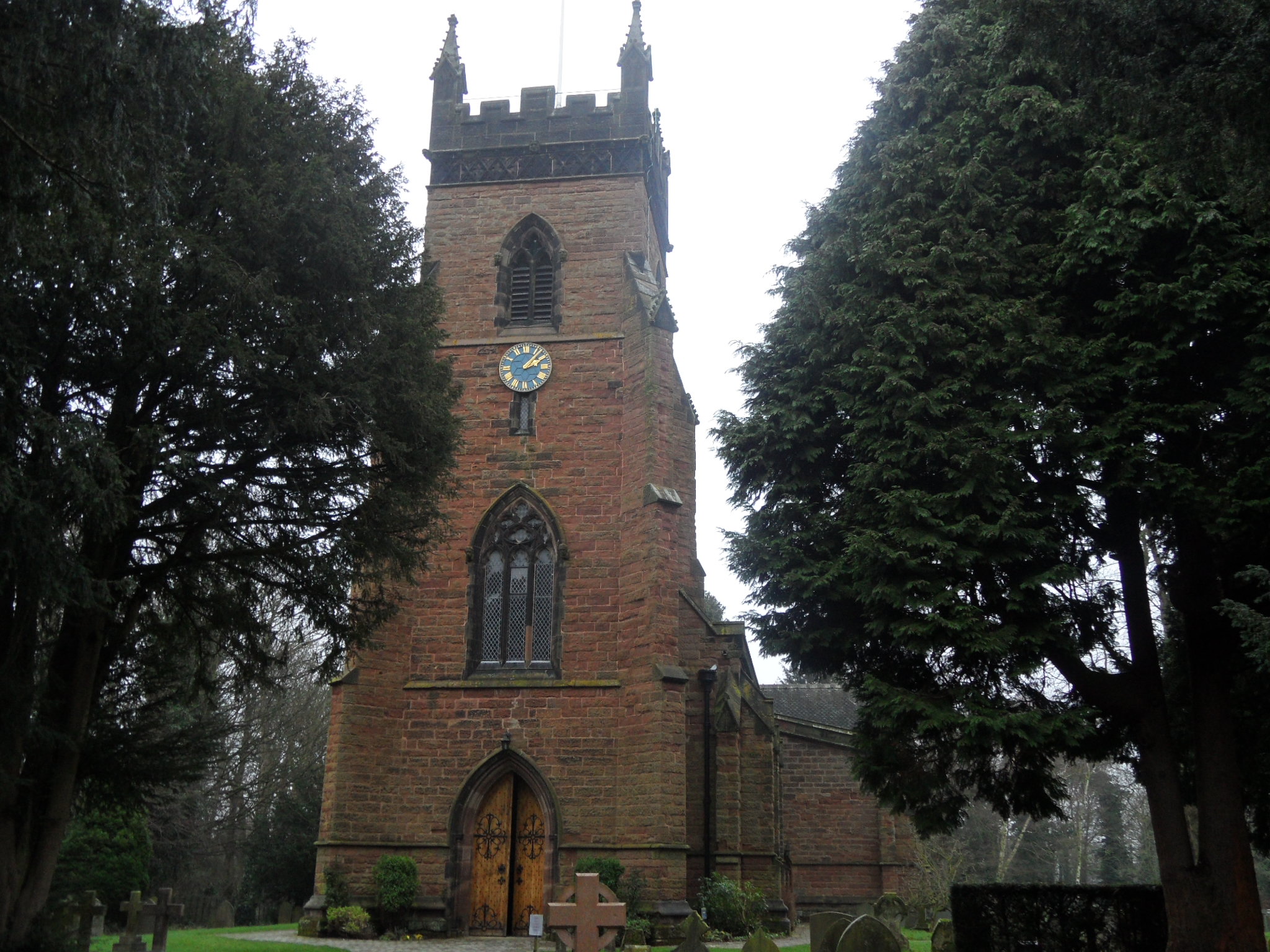
Of course, memorials can take different forms and the blue clock on the tower is dedicated to the memory of Sarah Worthington, of Maple Hayes, presented by her husband Albert Octavius of the Burton brewing company. (1)
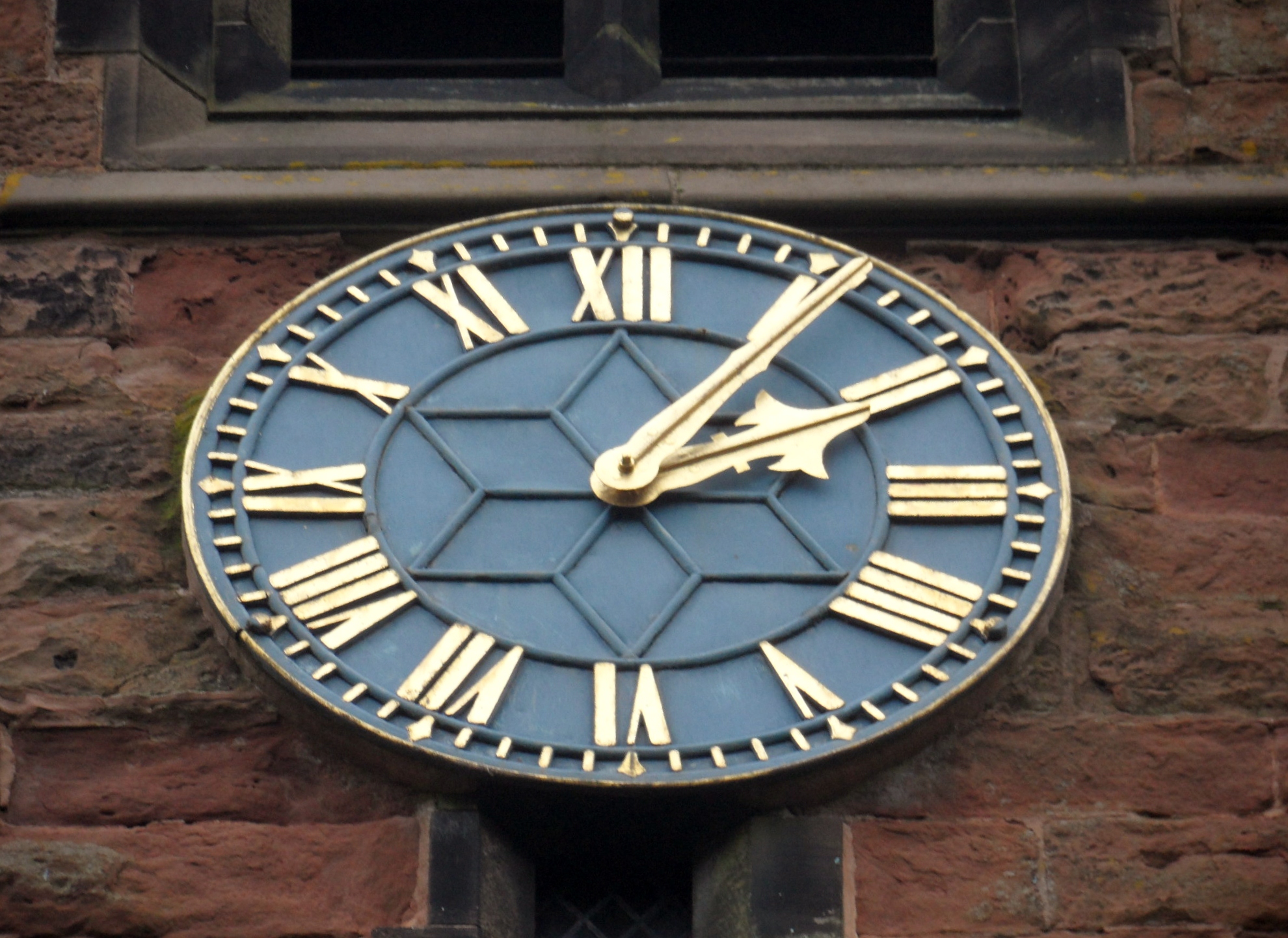
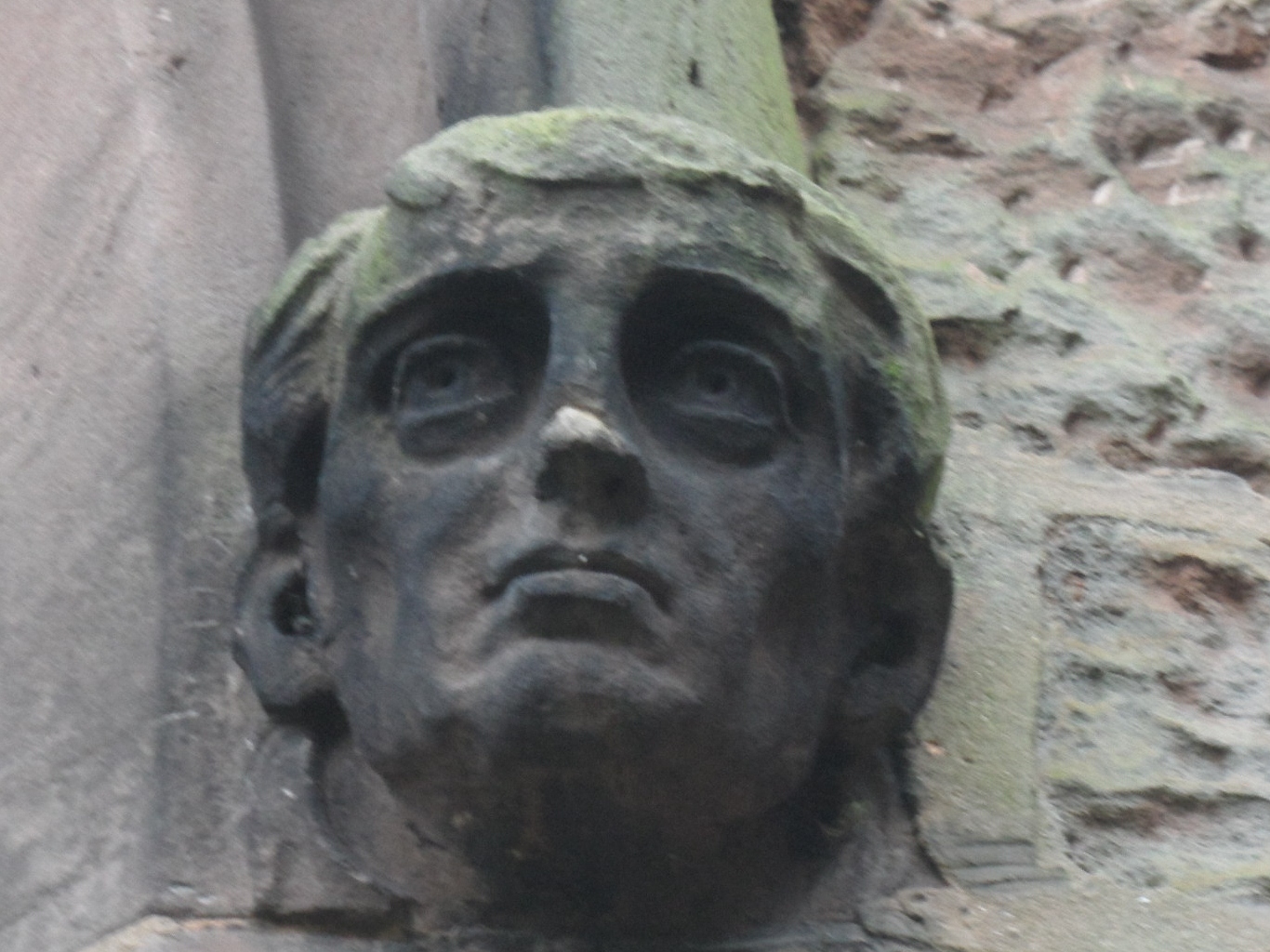
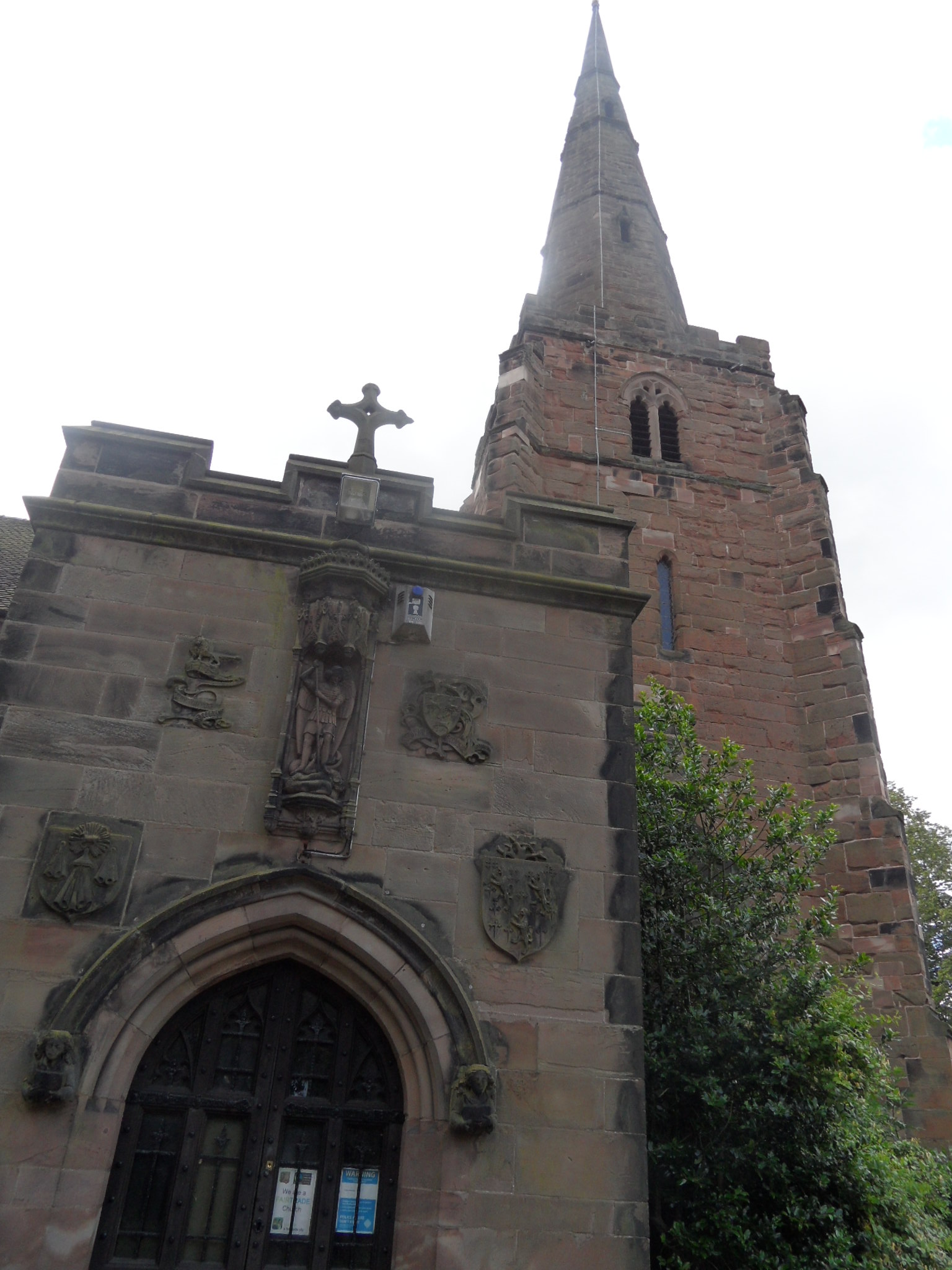
As you look at the clock face, on either side of the window below you notice faces of a different kind. On closer inspection, more of these faces can be found all around the church and I’ve included a few examples below.

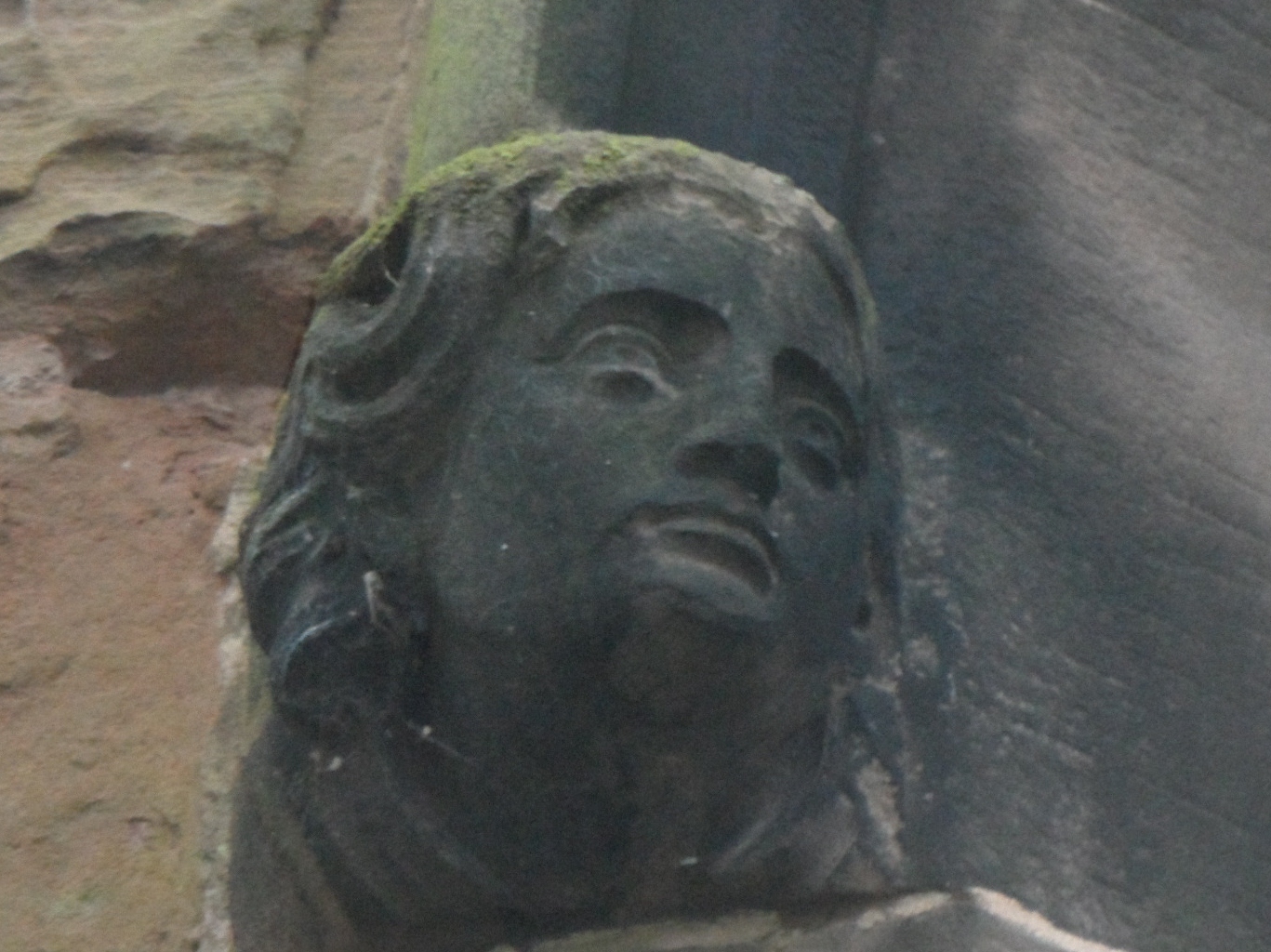
The church was built in 1847, in the Gothic Revival style, and so I imagine the architect Thomas Johnson (of Davidson House, St John St) included them to emulate the corbel heads found in medieval churches (a good example and explanation can be seen on the V&A website here). This might explain what they are, and why they are here, but not necessarily who they are! (3)

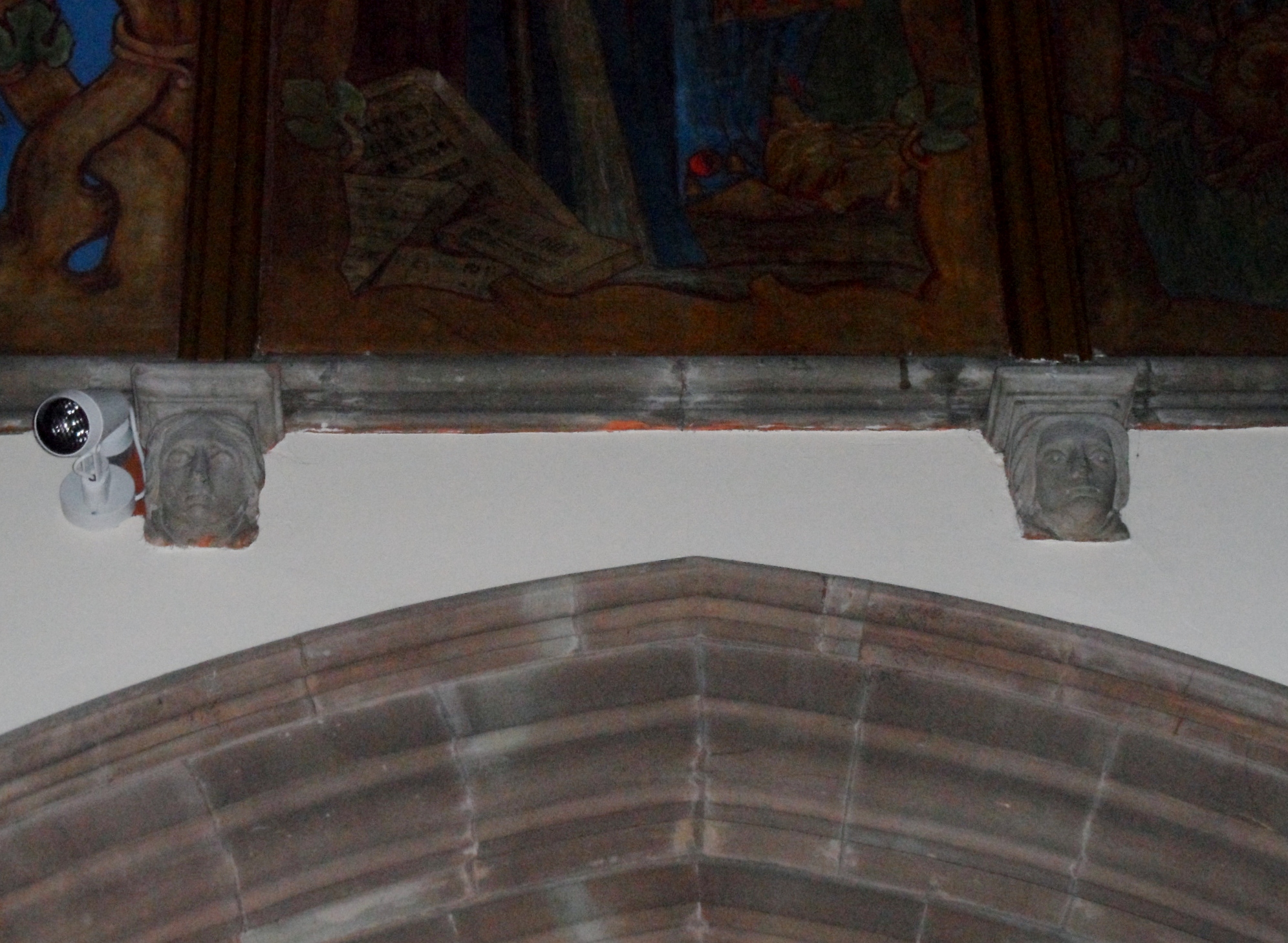
As I stood thinking about the faces, someone arrived to unlock the church door. I explained that I’d been looking at the stone heads and was told that there are more inside and was invited in. Apparently, despite being the subject of much debate, no-one quite knows the story behind them. One suggestion that has been put forward is that they are benefactors of the church. Two of the chest tombs behind the church belong to Ellen Jane Hinckley, the founder of the church and her husband Richard Hinckley, who gave land in the corner of their Beacon Place estate on which to build the church. (2) Are they also here at their church in stone form? Is the portrait of Thomas Johnson the architect or the church’s first curate Thomas Alfred Bangham to be found here? Do they depict people who used to live in the parish or are these heads in fact creations from inside the head of the stonemason?!

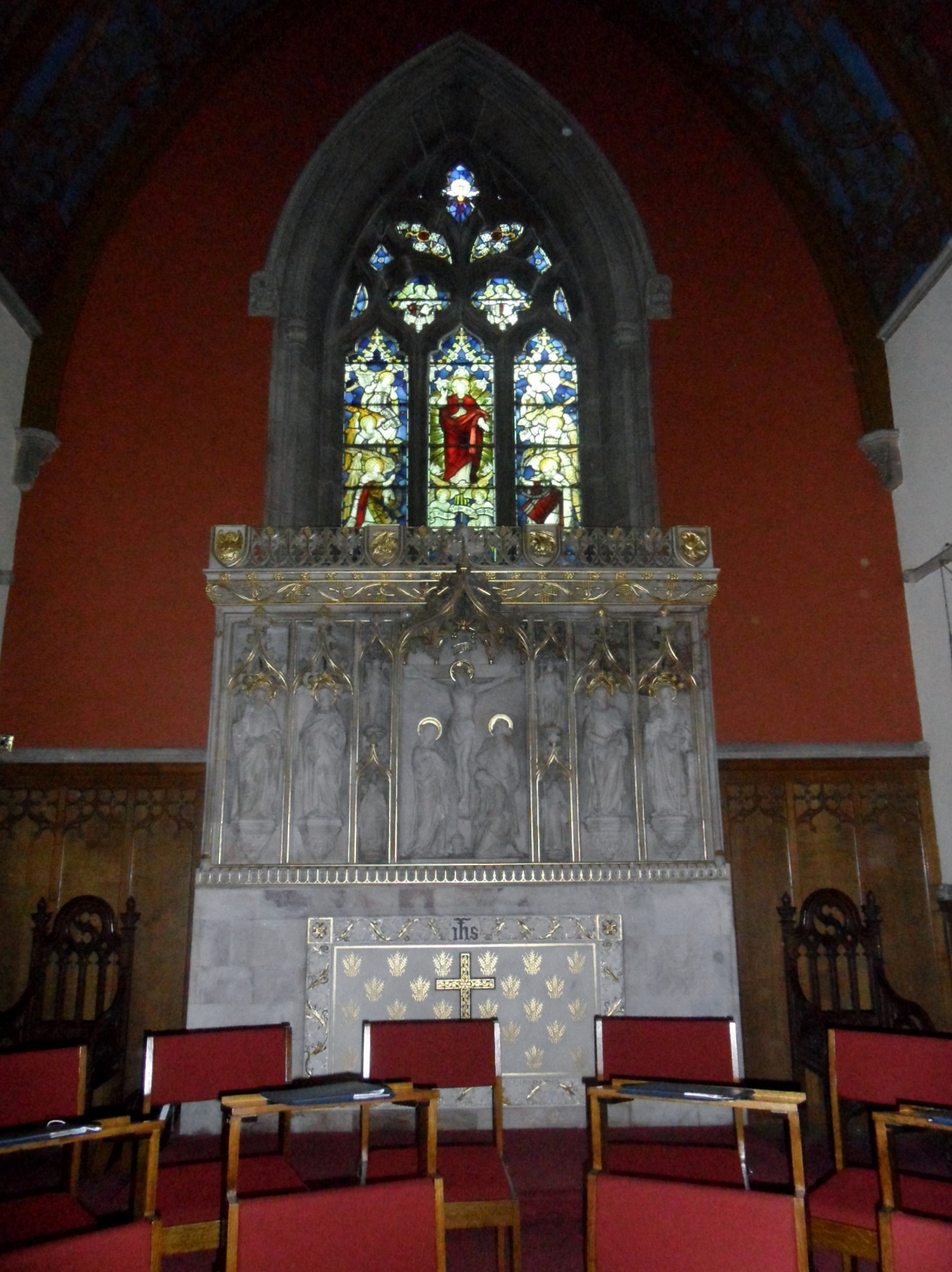
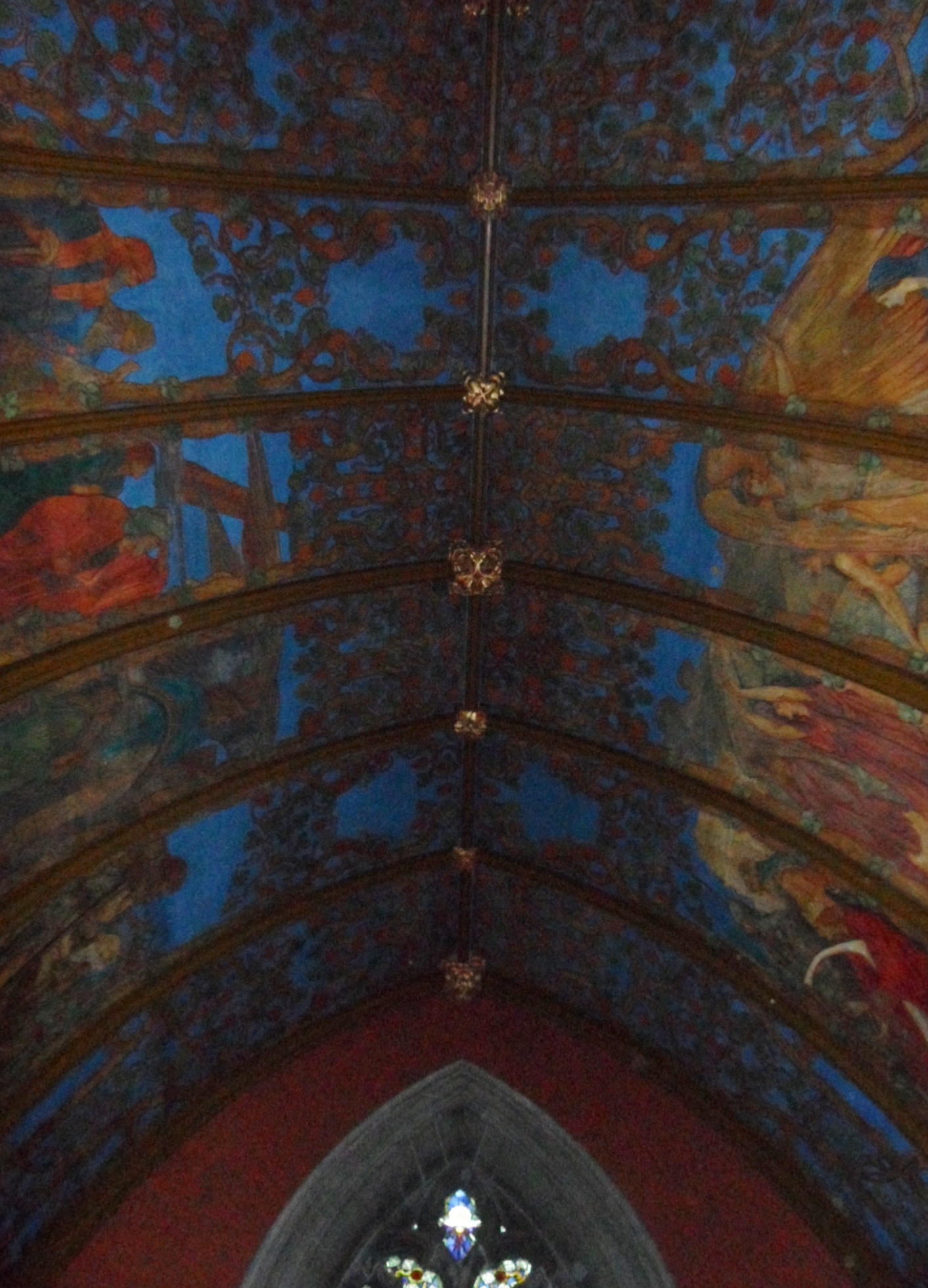
Inside, the majority of corbel heads are in and around the chancel, which has the most stunning ceiling. Although this is not my first time inside the church, it is the first time I’ve been in and concentrated solely on the building, rather than what is going on within it.  It hardly needs pointing out that my photos do it no justice whatsoever, but they do at least give some idea of the beautiful murals painted for the church’s Golden Jubilee by Pre-Raphaelite artist John Dixon Batten in 1897,  and the reredos, designed by GF Bodley and carved by the sculptors Bridgemans of Lichfield (a discovery of both a new word and a new example of Bridgemans’ work for me!). (4)
I made my way back outside down the aisle, laid with original Minton tiles (5).
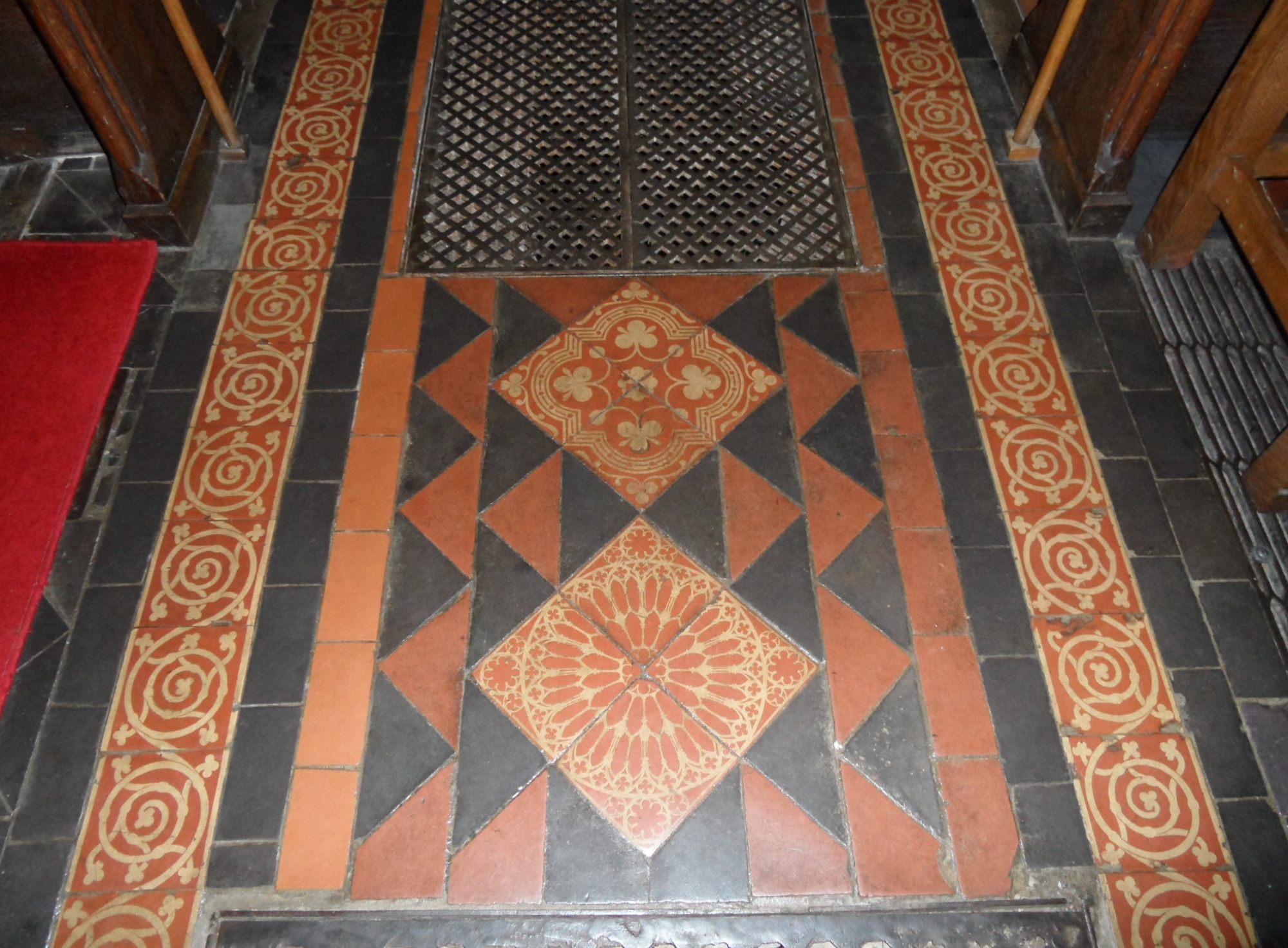
The day should have seemed even greyer after the rich, warm colours of the church but with a copy of the newly purchased and brilliantly researched ‘History of Christ Church’ in my bag and the knowledge that such treasures were to be found on my doorstep, it actually felt considerably brighter.

Edit 10/02/2013 Good news! There’s a sign outside Christ Church saying that there is an open day on 9th March – a great opportunity to go and visit this lovely church for yourself. By then, there may even be some spring flowers and wild garlic in the lane alongside which is a nice thought, when you’re sat typing with snow drifting down outside the window. More details here

Notes

(1) The clock was made by John Smith and Sons of Derby a business founded in 1856. Whilst the firm is still going strong, the original headquarters were at risk as these photos and a news story from February 2011 (read here) show. I’d be interested to know what the current state of the building is? Also, it’s not only the clock we have the county of Derbyshire to thank for! The church’s Millenium Gates were created by David Tucker, a master Blacksmith from Derbyshire, that I wrote about here

(2) The third of the Hinckley Tombs belongs to Mrs Hinckley’s son from her second marriage to Hugh Dyke Acland. Mrs Hinckley’s daughters from her first marriage, are the girls depicted in Francis Chantrey’s sculpture known as ‘The Sleeping Children’ as Lichfield Cathedral
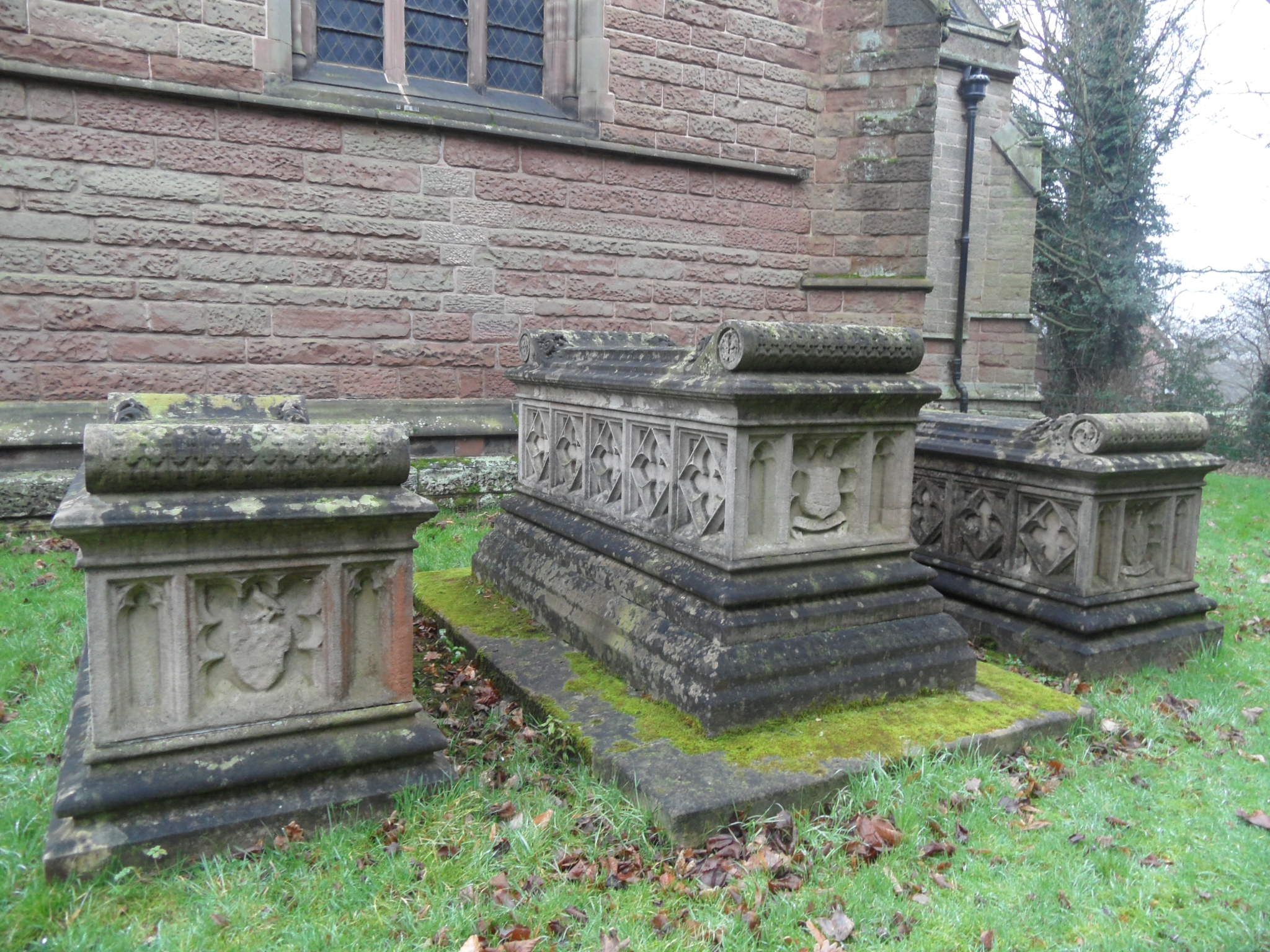
Hinckley Tombs, Christ Church

(3) In a 1950s edition of Life magazine, I came across an interesting article about Southwell Minster in Nottinghamshire. Their old carved heads had eroded badly, and so a stonemason was enlisted to restore them. However, rather than recreate the old images, he carved new images of people associated with the church at that time including a bell ringer, the clock winder, a dog whipper (actually in charge of the grounds) and the youngest member of the church choir (who would now be in his 60s). You can read the article and see the photos here 

(4) I believe that Bodley and Bridgemans also collaborated on the South African war monument in Duncombe Place, York, which is where the sailor on the wall of Lichfield Registry Office was originally destined for but was apparently rejected  for being too warlike.

(5) Between 1844 and 1858, Herbert Minton donated tiles to 46 Staffordshire churches & parsonages. More information can be found in the report ‘Minton Tiles in the Churches of Staffordshire’, carried out by Lynn Pearson for the Tiles and Architectural Ceramics Society. At the time of the report in the year 2000, amongst others, there were also examples at St Mary’s, Aldridge, possibly St James’ Church, Brownhills (though covered) and St Peter’s, Elford. An online version of the report with photographs can be found here 

Sources:

Christ Church Lichfield – A History by Ursula Frances Turner, later revisions Robert Hazel, Julia Baker and Larry Ridout

Public Sculpture of Staffordshire and the Black Country – George Thomas Noszlopy and Fiona Waterhouse

Water Tower

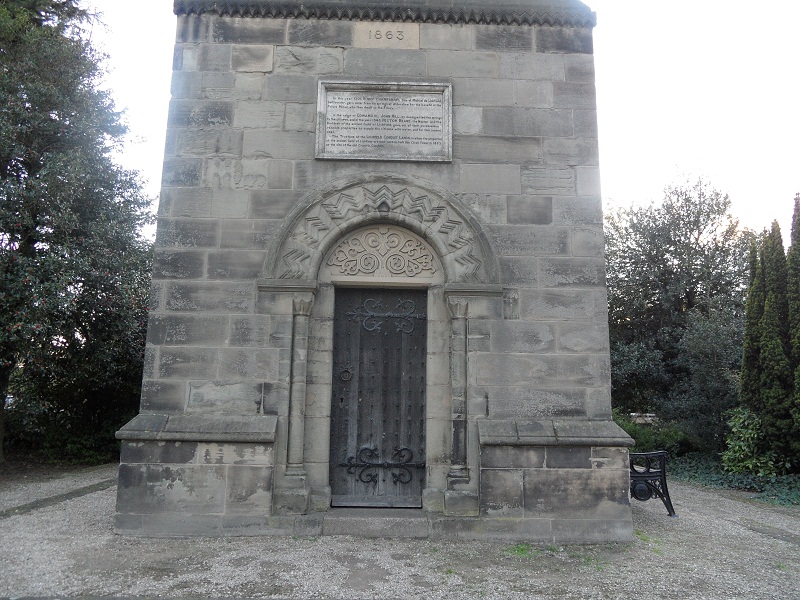
I pass by the Clock Tower at the Friary several times a week and in the stillness of the night, I can hear it chime, slightly out of synch with the Christ Church clock. According to Annette Rubery‘s wonderful new book, Lichfield Now and Then, the tower was built in 1863 to mark the 300th anniversary of the Conduit Lands Trust. When the new Friary Rd was built, the tower was moved to its present location. The Wikipedia entry here has some photos of it in its original site at the junction of Bird St and Bore St. The Staffordshire Past Track has some great photos of the tower being dismantled, including one of the bells being lowered down (is this one of those I can hear?).

The tower was originally built over the site of an ancient water conduit, known as the Crucifix conduit. Some say this name came from a crucifix on top, others say it derived from its location near to The Friary.  Back in 1865*, someone called CW wrote in to ‘Notes and Queries’ (a publication resembling a magazine, but actually sold under the description of ‘A Medium of Inter-Communication for Literary Men, General Readers, etc’!) on the subject:

At Lichfield is a structure The Crucifix Conduit. It has been rebuilt within the last few years and now there is a plain cross on the top. Did the original have a crucifix? Was the crucifix, if any, destroyed in Puritan times?  Is there any drawing of the building in existence And if so where can see it?

A literary man (or possibly a general reader!) replied as follows:

The old conduit at the Friary gate does not appear have been surmounted with a crucifix but was so called from Crucifix being the name of the locality on which stood. Gregorius Stoneing receiver of the rents of possessions of the Fryars Minors of Lichfield after dissolution thereof in his account in the court of Augmentation answered, and so was charged with, and the rent of a certain water course within the compass circuit of the late house of Fryars aforesaid running from Poolefurlonge to Lichfield street, viz to a certain called the Crucifix demised to John Weston at the will of the Lord. (Shaw’s Staffordshire  1820) A engraving of the old crucifix conduit will be found A Short Account of the Ancient and Modern State Lichfield 1819′.
A quick search on the invaluable googlebooks finds that book, and as promised, a drawing of the crucifix as it looked in 1819.

I had thought that the Crucifix conduit was no longer in use by the time the clock tower was built – the listed building description says it was built over the ‘redundant conduit’. However, different accounts suggest that the conduit was still used as a public water supply beyond this date.  The County History says ‘In 1863 it (the Crucifix Conduit) was adapted as the base of a clock tower designed in a Romanesque style by Joseph Potter the younger, but the conduit continued in use’.This probably explains why what look like drinking fountains can be seen built into this section of the tower!

I find this next bit confusing and am happy to be corrected! What I understand is that the water came from a spring at Aldershaw. In 1301, Henry Bellfounder granted the Fransican monks the right to built a conduit head over the spring, and to pipe the water to the Friary. He apparently did this for motives of charity and for the sake of his and his ancestors’ souls’ health.  Although it seems the water was supposed to be for the friars’ use only, a public conduit was built outside the Friary gates.  When the Friary was dissolved in the mid-16th century, I understand that the Conduit Lands Trust took over the responsibility for maintaining the water supply to Lichfield when the spring at Aldershaw was granted to the ‘Burgesses, Citizens and Commonalty’ of the City of Lichfield. A fountain marks the approximate site of the original public conduit (and of course the later clock tower) near to  the library and record office. Although the water is no longer suitable for drinking, it serves as a symbolic reminder of the water supply that was once available here.

A stone conduit head dating back to 1811 can apparently still be found over the spring at Aldershaw. The spring was known as Foulwell which may not sound like the most appealing place to get water from, but as BrownhillsBob explained to me that the name ‘foul’ is most likely to mean ‘obstructed’ in this context. What’s also interesting is that the well seems to have an alternative name – Donniwell, which crops up in some transcriptions of old documents (dating back to the 4th year of the reign of Edward VI which would be 1551. I think.) that Thomas Harwood made in 1806.

Funnily enough, searching to find an interpretation of the name lead me back to another edition of ‘Notes and Queries’, (this earlier issue from 1855 was described as a ‘Medium of Inter-Communication between for Literary Men AND Artists, Antiquaries, Genealogists etc). Someone else had questioned the meaning of Donniwell in relation to the spring near Lichdfield, and received the following answer from WLN of Bath.

The word Donni or Donny in Donniwell is merely the old Keltic (sic) vocable don (otherwise on or an), water,  with the diminutive y, and signifies the little stream or brook The word is still retained in the name of the rivers Don in Yorkshire, the Don which falls into the sea at Aberdeen, another Don in county Antrim Ireland, and in the Don in Russia. Hence, too, the Keltic name for the Danube, Donau, latinised Danubius. There is also Donnyland in Essex and the two rivers Oney in Salop and Herts, Honiton or Onyton in Devon and the Uny in Cornwall are all different forms of the same root.

I might offer many other illustrations but will refer only to the same word in the primitive nomenclature of Palestine the Dan which, with the later Hebrew prefix Jor (river) we now by a double pleonasm, call the river Jordan

So there’s one idea…..anyone have any other ideas of where this name may have derived from?

Coincidentally yet appropriately, today is the 8th December, the Feast of the Conception of St. Mary, the date on which two wardens were appointed each year to keep the conduits and watercourses of Lichfield’s water supply in repair.  I also like the idea that the chiming bells of the Clock Tower provide an appropriate, yet coincidental link to the name and occupation of the man who originally gave the spring at Aldershaw which fed the conduit (at least I think its coincidental….). I also find it interesting that back in the mid 19th century people were asking similar questions to the ones that I’m asking today. It seems it’s not just me that is fascinated by the idea of springs, wells, conduits and water in general!

Now I know a little more about where the water came from, and where it went to, I’d like to know more the inbetween part i.e. the actual route of the water. That also goes for the conduit between Pipe Hill and the Cathedral Close too. As it looks unlikely that I’ll be able to go looking for the conduit head at Aldershaw (it’s on private property) as I did with the one at at Pipe Hill, I shall have to concentrate instead on tracking down the archaeology reports and journals that reveal more about our medieval conduits,  at Lichfield Record Office.

Also, for more about the Friary, Gareth Thomas has added some original deeds and plans to his blog All About Lichfield.

*This date is a little strange as the Clock Tower was built in 1863. Perhaps the letter was written before this time and not published until 1865.

Edit: 10/12/12

I’ve just been reading part of The History of the South Staffordshire Water Works Company. This suggests that a public water conduit of some description, pre-dates the granting of the spring at Aldershaw to the Friars. Apparently, there was a public conduit in the early 13thc, and there are also references in the Cathedral records to a Conduit St, and a conduit in the high street.  Are these are connected to the Crucifix conduit or separate? And where did this water come from?

The document also gives some really interesting information on the pipes themselves. It says that originally wooden pipes were used (bored tree trunks). It refers to a document from 1707, that says the pipes ‘being made of alder had become rotten, leaky and in decay and accordingly taken up and replaced by leaden pipes’. Interesting that the pipes were made of Alder, and the water came from Aldershaw. It also says that in 1801, the Conduit Lands Trust replaced a small gauge lead conduit from Aldershaw with a larger diameter cast iron main, which enabled a greater volume of water to be carried to the City. It also gives this interesting information on what happened when supply started to exceed demand.

By 1821, Aldershaw was proving to be inadequate source and a scheme was devised to supplement the spring’s supply, by collecting the surface water from Tunstalls Pool, the Moggs and other pools and diverting water into the common conduits. When the situation worsened in the mid 1850’s, the trustees acquired the Trunkfield Mill and Reservoir and a pumping engine was installed to increase the supply. In 1868 the supply of Aldershaw yielded 15,000 gallons a day. Trunkfield supplied 160,000 gallons a day, all of which was pumped to Crucifix Conduit. Water was provided to fifty seven public pumps, thirteen standpipes and public taps, thirty fire hydrants and three hundred and forty three houses.

The document isn’t too specific about their sources, so having to take what they say on face value for now. Lots more reading to do I think….Luckily for me, local historian Clive Roberts is going to send me some information he has on the Conduit Lands Trust!

Sources:

Lichfield Then and Now Annette Rubery

A short account of the city and close of Lichfield by Thomas George Lomax, John Chappel Woodhouse, William Newling

The History & Antiquities of the City of Lichfield by Thomas Harwood (1806)

Lichfield: Public services’, A History of the County of Stafford: Volume 14: Lichfield(1990), pp. 95-109

Water Technology in the Middle Ages: Cities, Monasteries, and Waterworks after the Roman Empire by Roberta J Magnusson

Walsall Road, Lichfield, Staffordshire. A Report on an Archaeological Evaluation
Marches Archaeology Lyonshall : Marches Archaeology, 2000, 18pp, figs, tabs
Work undertaken by: Marches Archaeology

History of the city and cathedral of Lichfield by John Jackson

Notes and Queries 12th Volume 1855

Notes and Queries 3rd Series Volume 8, 1865

Features and Reviews

Hopefully, anyone reading the blog recently has found the old graffiti interesting. I know that Gareth and I, and (for a few days at least!) a large broadcasting corporation did. After all of the excitement, I thought it was time for a bit of musing….

The discoveries (or perhaps rediscoveries is more accurate) in the Lichfield District Council offices got me thinking about the potential for other ‘unseen’ history out there. There’s unseen in the sense of being hidden away from view –  in attics, down pub cellars and down the bottom of the garden. However, I also think that something in plain view can be unseen –  people may pass by everyday, but no longer see what’s actually there or the potential of it, due to familiarity. During discussions about the graffiti, someone said to me, “I’ve walked past that graffiti loads of times and never even thought about it”.

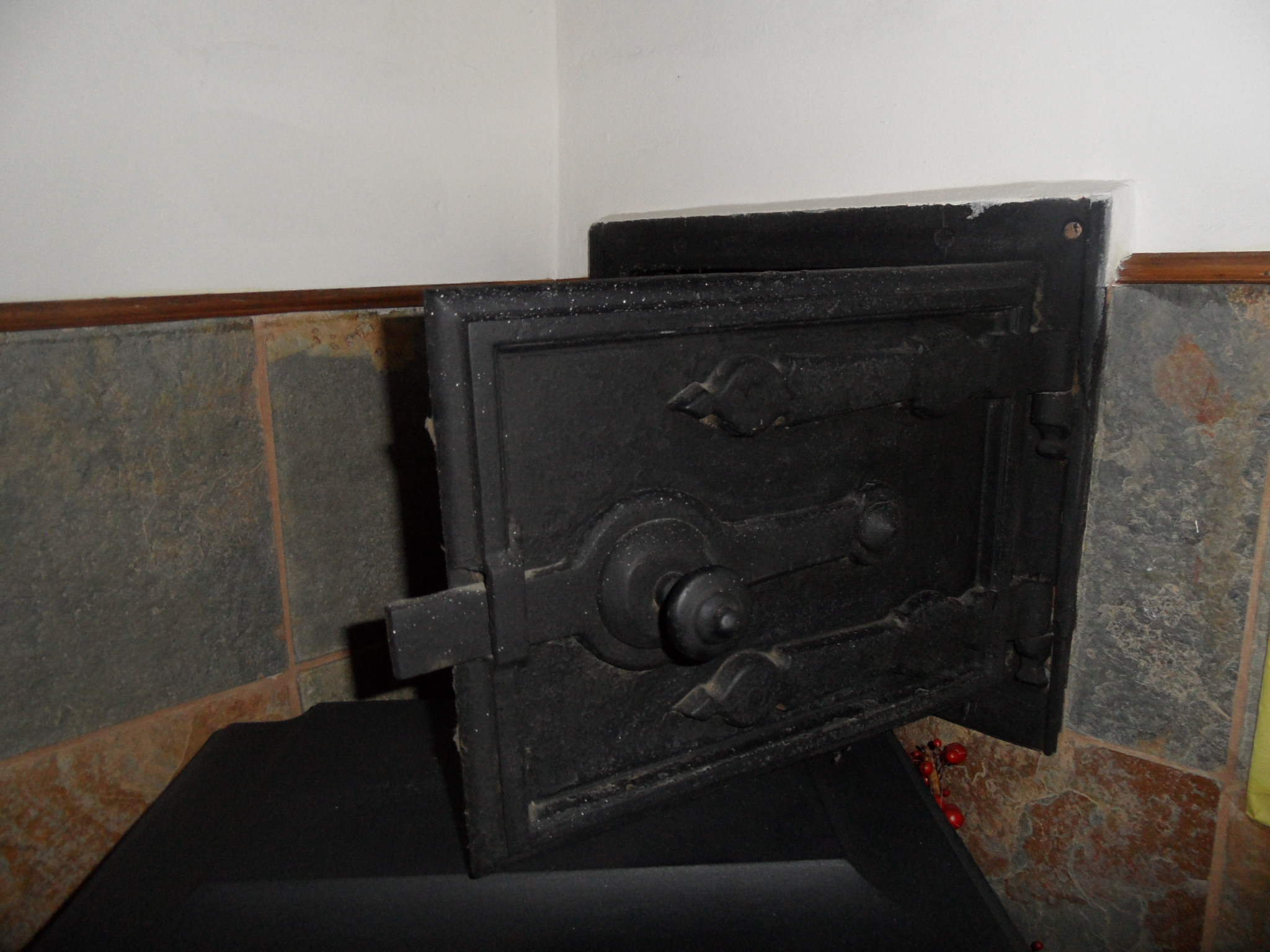
The bread oven above is in the house of someone I know. I remember them buying the property years ago and excitedly telling me after their first viewing with the estate agent, “It has an old bread oven!”. When they moved in we all keen to peer inside but prior to taking the photo, it was last interacted with as part of an Easter Egg hunt.  However, taking the photo to show a friend, sparked a whole new conversation about the oven. Was it original? If so, would this have been the kitchen? Wasn’t it once divided into two houses? How was it laid out back then? Why was the house built in the first place? And so on….My point is, sometimes, we need to look with a fresh pair of eyes to see what’s in front of our nose.

I don’t think that the history in question even has to be a specific feature like the bread oven. I find the traces of people’s everyday lives fascinating. I visited a house in The Close last Christmas. Unfortunately, I hadn’t had nearly enough mulled wine to pluck up the courage to ask if I could take photos, so I’ll have to describe it. There were stone steps down into the cellar, worn away in the centre by centuries worth of footsteps. There were attic beams with layers of fading wallpaper still clinging to them up in the attic. To describe the place as ‘lived in’ would be an understatement.  The next question inevitably is ‘lived in by who’? Actually, photos wouldn’t really have done the place justice anyway because it was more than a visual thing. You wanted to touch, as well as see. ….
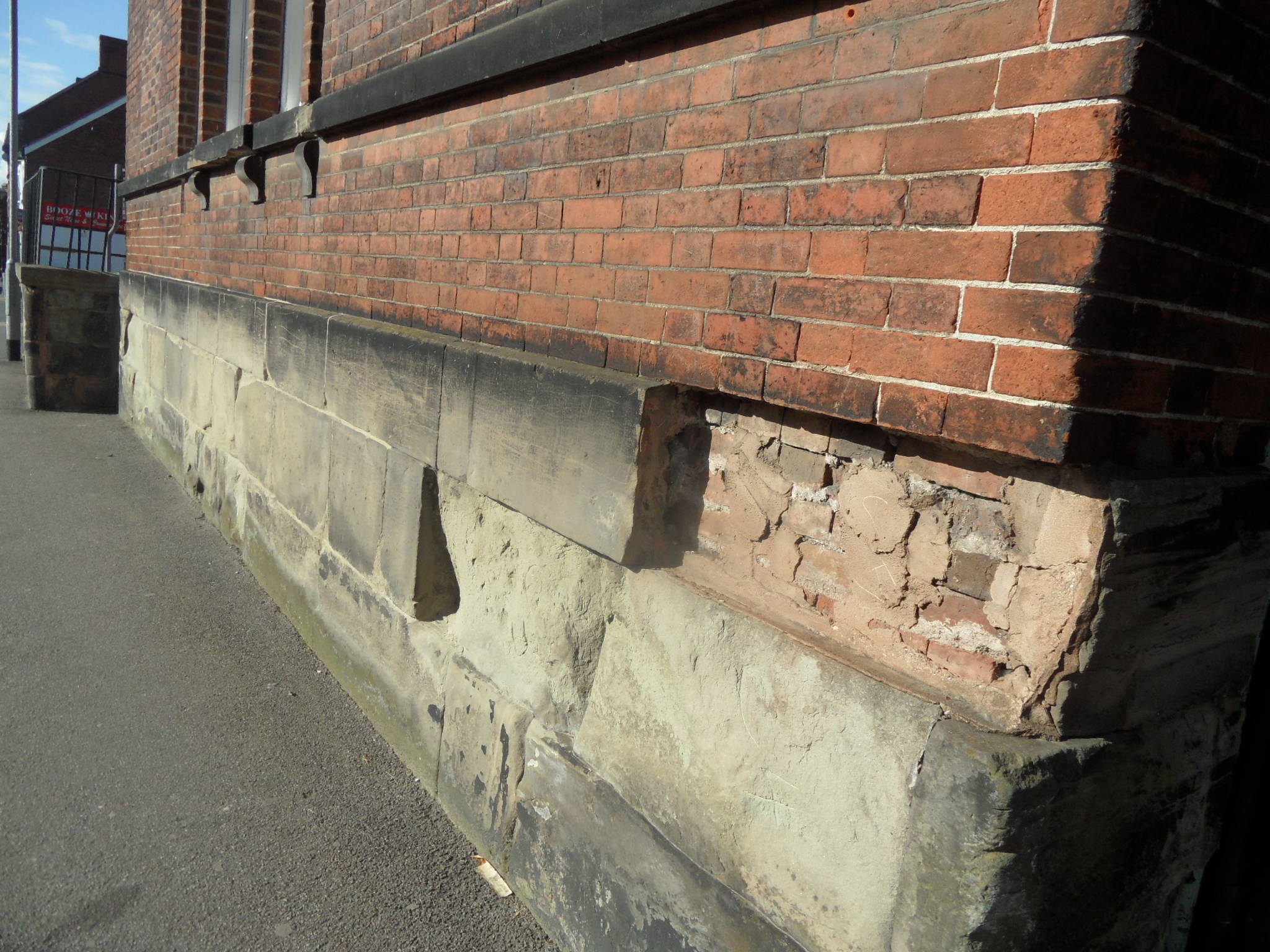
I’m really hoping that Lichfield District Council open their offices up for the next heritage weekend, so that people get to look around what was one the Old Grammar School for themselves. I’m not suggesting people throw the doors of their homes open to the public, but perhaps if we want to explore the history of the city and all its inhabitants, we sometimes need to look at the ‘normal’ buildings and places, where people lived and worked, and still do! I’m by no means detracting from those special, extraordinary buildings like the Cathedral, just saying that sometimes it might be worth looking again a little closer to home.

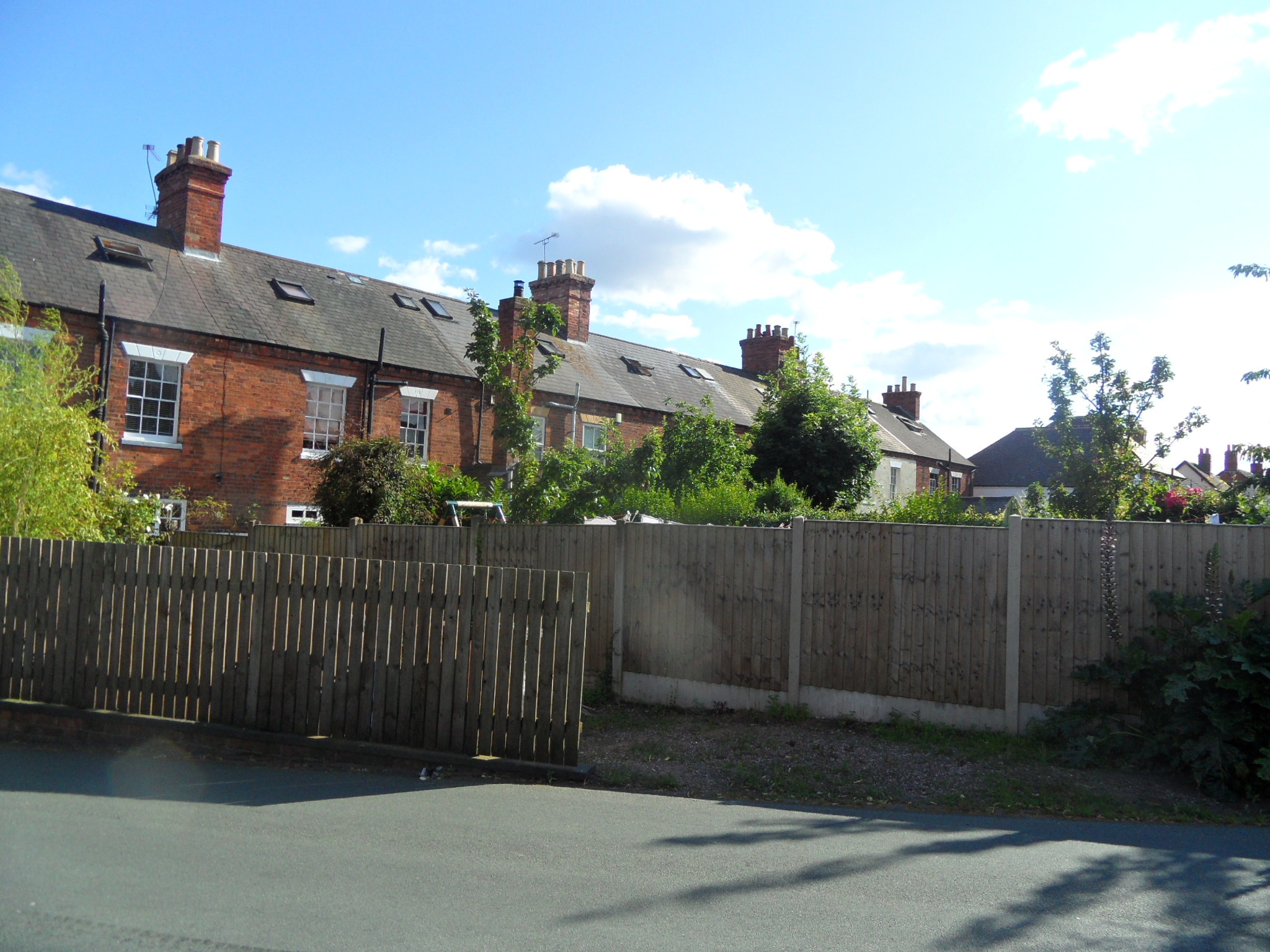
One of these terraced houses in Leomansley still has a tall chimmney at the back. An old washroom?

A wall brace on Greenhill. Does that say R Crosskex? Who was that? See edit below.


A selection of objects found in the garden Of Vicky Sutton’s Nan’s house near to Beacon Park (not including the pink flowery plate!).

The remains of a cherry orchard can still be found near…Cherry Orchard!

Edit:

After I woke up properly, I realised this actually said R Crosskey. I found a book about Henry William Crosskey, a geologist and Unitarian minister from Lewes (1) and found that his younger brother, Rowland Crosskey came to Lichfield as an apprentice ironmonger. He emigrated to Australia for a while and then,  after he returned to England, he started a business in Birmingham. Afterwards, he took over the Lichfield firm where he had served his apprenticeship. In 1868 he became Mayor of Lichfield and donated a civic sword to the City (Is this the one still used in processions today?).  He died in 1890. From census records, it looks like his home and business premises were initially in Market St. In 1888, he was in Bore St, trading as a ‘Military Camp and Store Furnisher’ with premises on the Burton Rd in partnership with Charles John Corrie. Also, just as a point of interest, Rowland was his Mother’s maiden name.


(1)Henry William Crosskey, LL.D., F.C.S. : his life and work by Richard Agland Armstrong; with chapters by E. F. M. MacCarthy and Charles Lapworth. http://www.ebooksread.com/authors-eng/e-f-m-maccarthy-richard-acland-armstrong.shtml

(2) London Gazette 1888


Written into Lichfield history

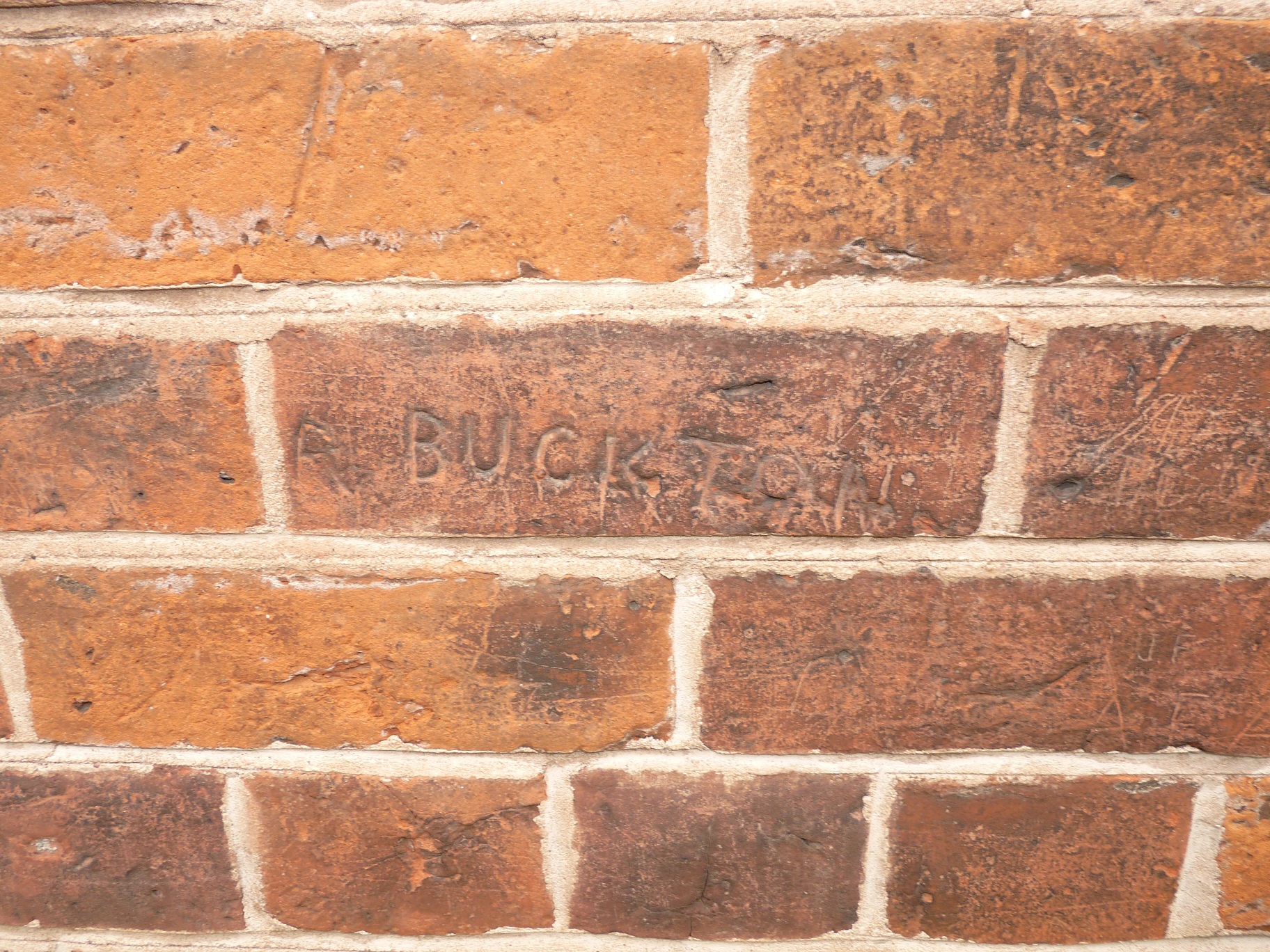
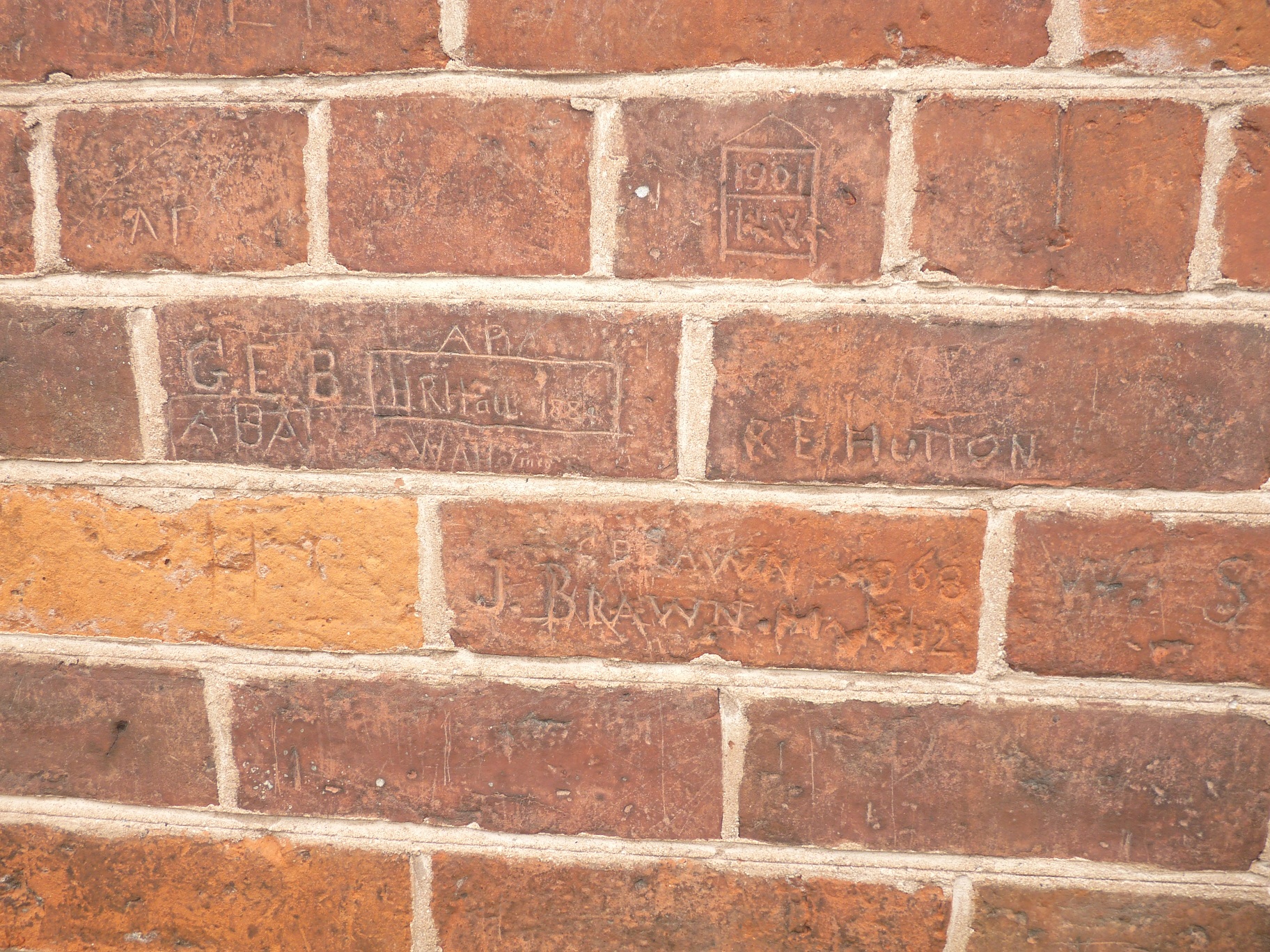
One of my recent posts mentioned layers of history and people leaving their mark on a building.  A literal example of this is graffiti and Gareth Thomas has sent me some great photos of names he found carved into the brickwork of the Lichfield District Council offices, formerly the Lichfield Grammar School.

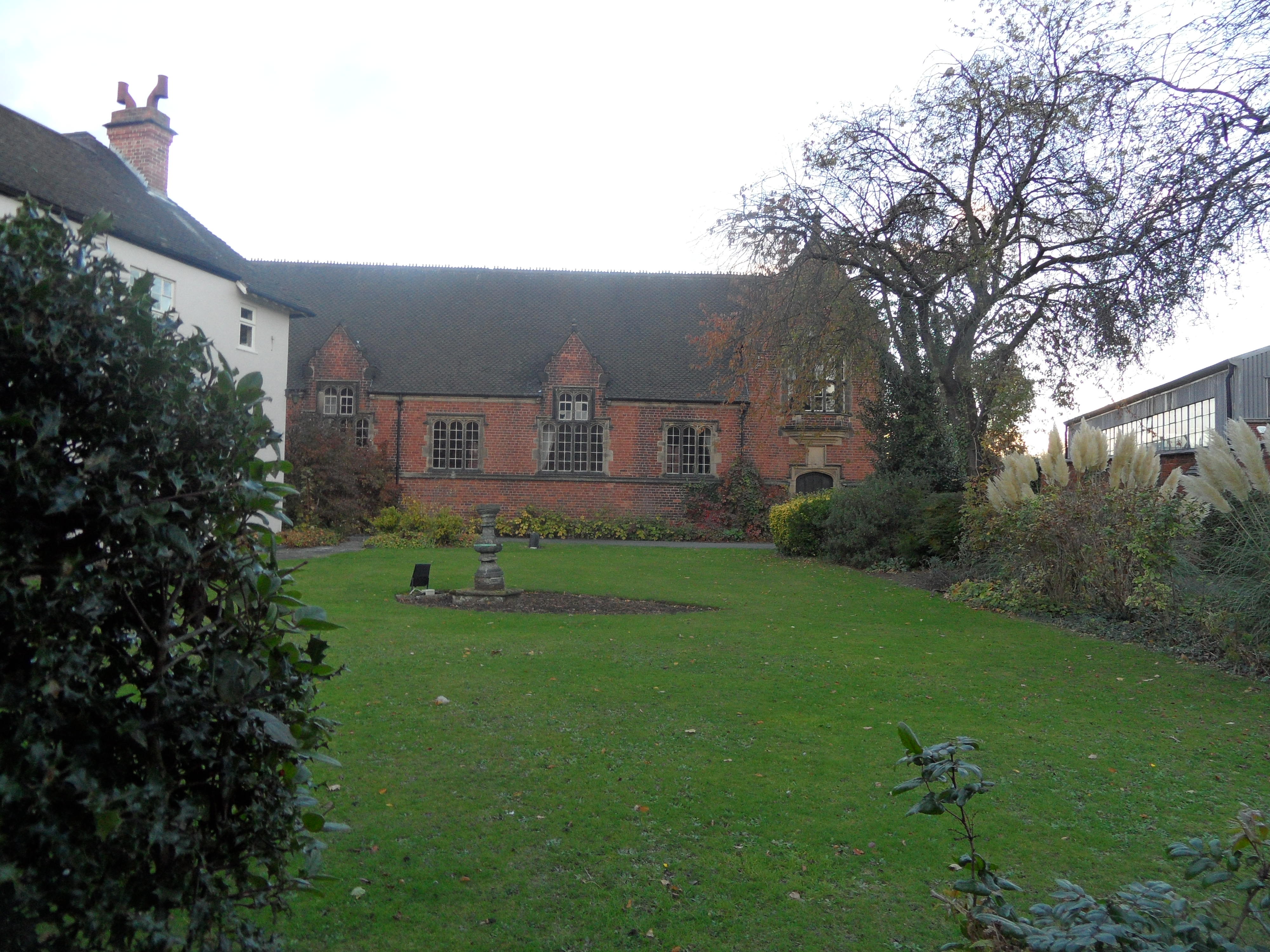
Lichfield District Council Building, formerly Lichfield Grammar School

The graffiti is on the above building, the old school room, rebuilt in the mid 1800s by architect Thomas Johnson, after falling into a ruinous state. Staffordshire Past Track has an engraving from 1833, taken from a similar position. It shows the previous incarnation of the school room (which stood from 1577 to 1849), as seen from the school-yard (now the grassed area).

In 1818, a book on the endowed grammar schools of England and Wales listed the former pupils of the grammar school ‘who in the splendour their names, have reflected honour upon Lichfield’.

The elegant Addison, Elias Ashmole the Philosopher Chemist and Antiquary and Founder of the valuable Musem called after his name at Oxford, Gregory King an heraldic and commercial writer, George Smallridge Bishop of Bristol, Thomas Newton Bishop of Bristol, Lord Chief Justice Willes, Lord Chief Baron Parker, Mr Justice Noel, Lord Chief Justice Wilmot, Sir Richard Lloyd Baron of the Exchequer, Robert James MD well known for his Medical Dictionary and as the inventor of the Fever Powder, Isaac Hawkins Browne an ingenious and elegant Poet, David Garrick the unrivalled actor, Samuel Johnson LL D

The names of Johnson, Ashmole and Garrick and the others are written into the history books, but what about those names on the old school wall? Can we find the stories of Buckton, Brawn, Beckwith and others written in censuses, newspaper reports and other archives? There’s an inspector’s report from 1869 that tells us something about how they’d have spent their time at school (when not carving their name into brickwork, of course!). What became of them when they left?

Brownhills Bob did a wonderful post on a similar theme called the Persistence of Memory, with some equally wonderful comments from people who recognised the names. You don’t have to look to hard to find bridges, walls, trees, and other surfaces marked with names and initials. Why do people seem compelled to add their names to the fabric of a place? I may even have written the odd ‘Kate was here’ myself, on a school desk or two in my time. And does that ‘….was here’ explain why we do it? Knowing that few of us will ever get a statue or our own museum, is this a way of letting people know that once, we were here?

A huge thank you to Gareth for the photographs and drawing my attention to this. Also, Gareth, if you’re reading this, I’ve read that there’s more graffiti to be found, carved into  the wooden attic doors of the schoolmaster’s house next door. It’d be great to see some photos…..hint, hint!

Sources

A Concise Description of the Endowed Grammar Schools of England and Wales, Nicholas Carlise 1818

Lichfield City Conservation Area Document


Appeal of Bells

If you heard the bells of St Michael’s ringing out late yesterday afternoon, you were listening to the launch of a restoration fund for the bells, which are in need of essential maintenance work.

According to the churchwardens accounts, the bells have been rung in the past to mark important national occasions, and in the bell tower there are plaques commemorating some of these and more locally significant events.

The blue plaque commemorates the ringing of bells for the marriage of Charles & Diana; the brown one commemorates a farewell peal for the retirement of Prebendary P Howard in 1947

Bell Tower steps

After negotiating the narrow and windy staircase back down into the church, I had a look around the rest of this lovely building. According to the listed building description, although the church is thought to be 13th century in origin (with a 14thc tower), much of the building dates back to the restoration of 1842/3 by Thomas Johnson. However, the church history booklet (a snip at £1.50!) suggests that whilst the church had undoubtedly needed some restoration work at this time, much of this work was  unnecessary and things of historic interest may have been lost. The booklet goes on to say that some of the restoration work was undone at the end of the 19thc.

Royal coat of arms(1711) above the chancel

The royal arms, as seen above the chancel, are from 1711, and replaced an earlier version. I’ve read that after the reformation, anglican churches were encouraged to display the royal coat of arms somewhere prominent, reminding people that the monarch was also head of the Church of England. The custom of displaying the royal arms continued until Victorian times, but these days can be found in only around 15% of churches. You can read more about the Churches Conservation Trust’s guide to Royal Arms in English churches here.

Having previously read that the Marquis of Donegal had erected a spacious family mausoleum near the chancel, I have to confess I was a little disappointed to find no trace at all of the ostentatious Chichesters of Fisherwick Hall. However, the church booklet explained that the rabbit infested mausoleum had been replaced by a stokehold in the 1842/3 restoration, and the bones buried elsewhere. Seems like none of Donegal’s buildings were destined to last long….

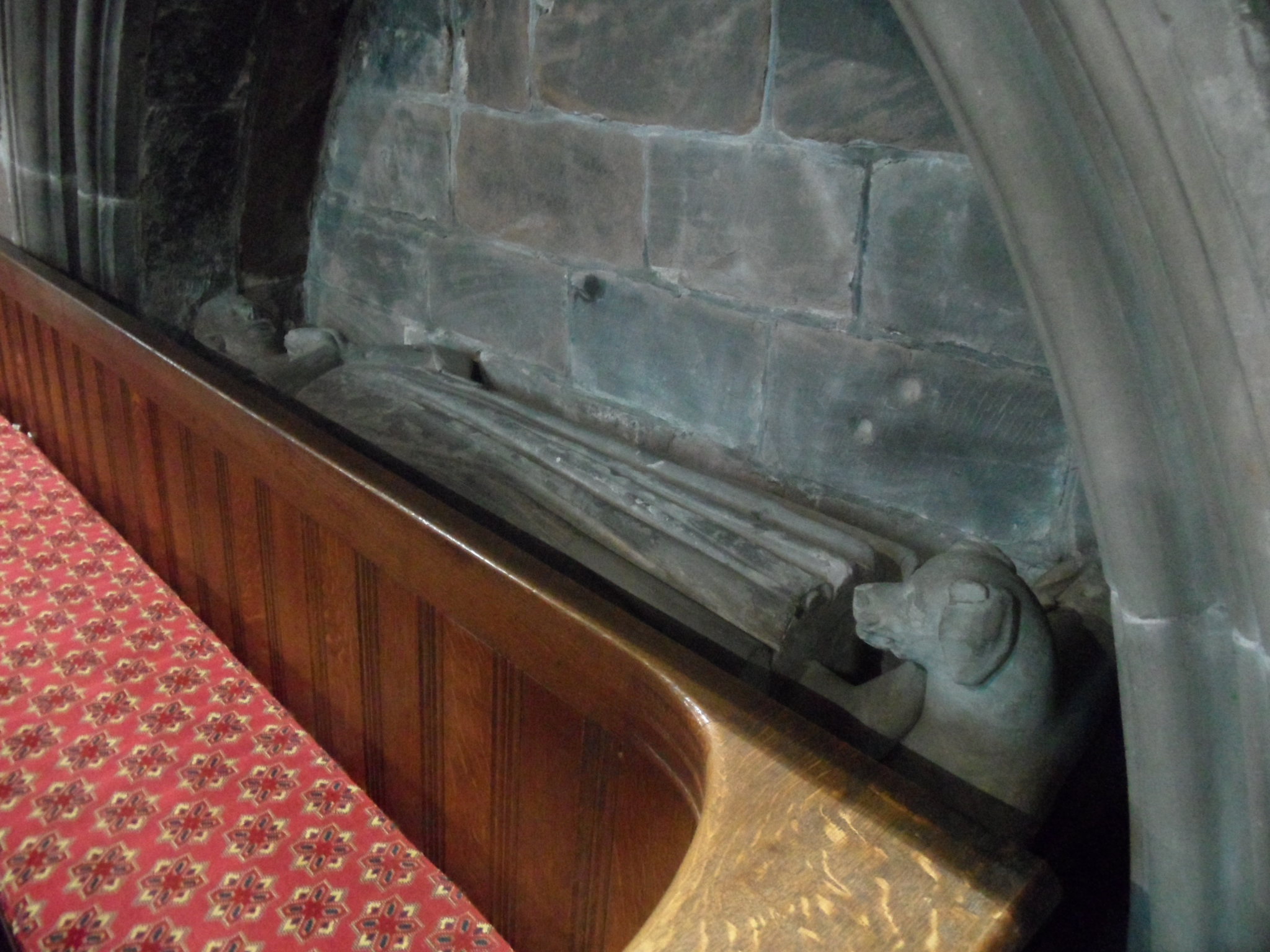
The chap below fared a little better than Donegal. Whilst his bones also ended up elsewhere, his effigy survived the ‘restoration’ and is behind a bench in the chancel. It’s thought to be William de Walton who endowed the church with land and died around 1344. I particularly like the inclusion of the faithful dog watching over his master in death.

One man & his dog – William de Walton’s effigy

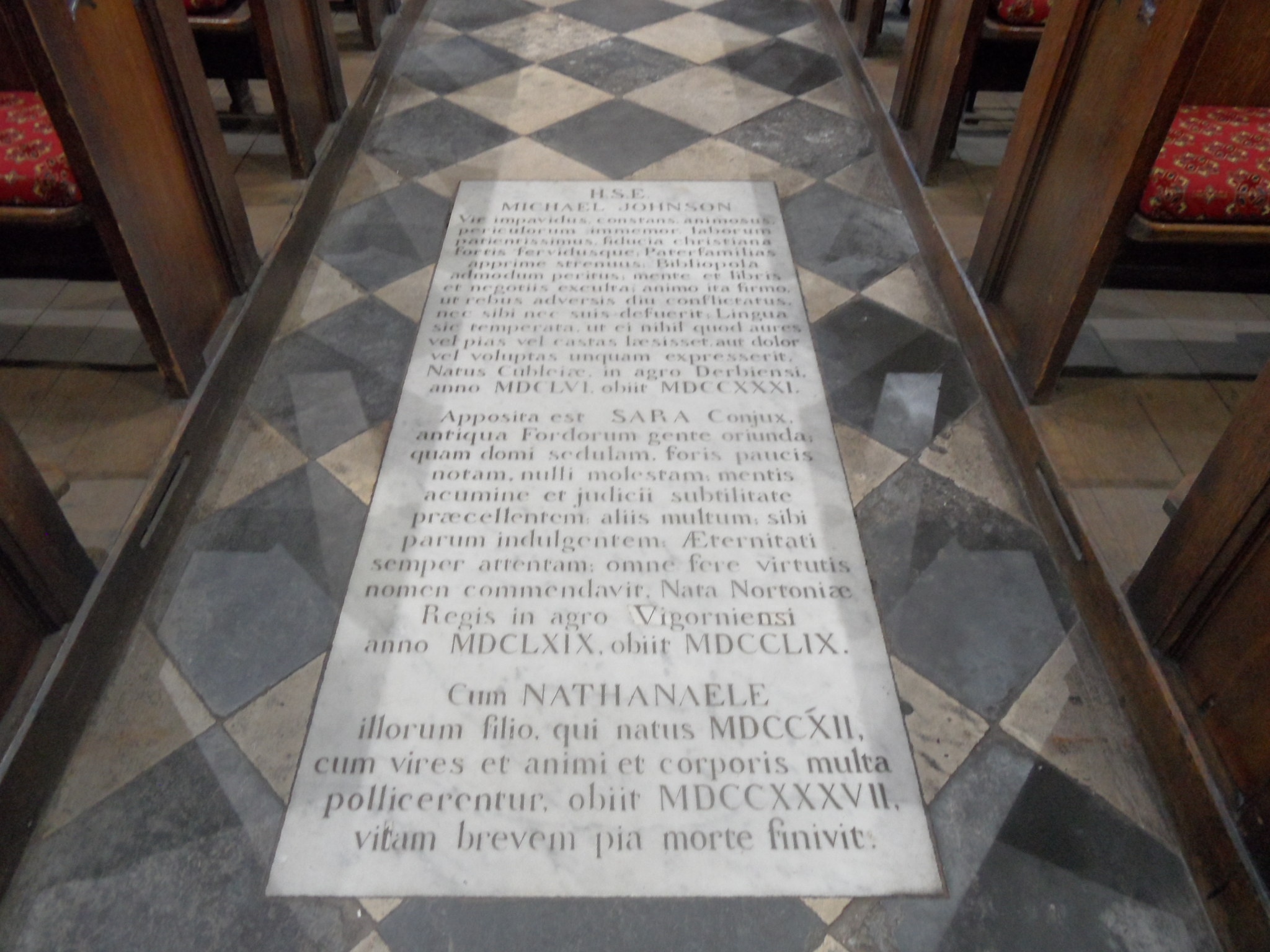
The church has several other monuments, including most famously, that of Samuel Johnson’s mother, father and brother.

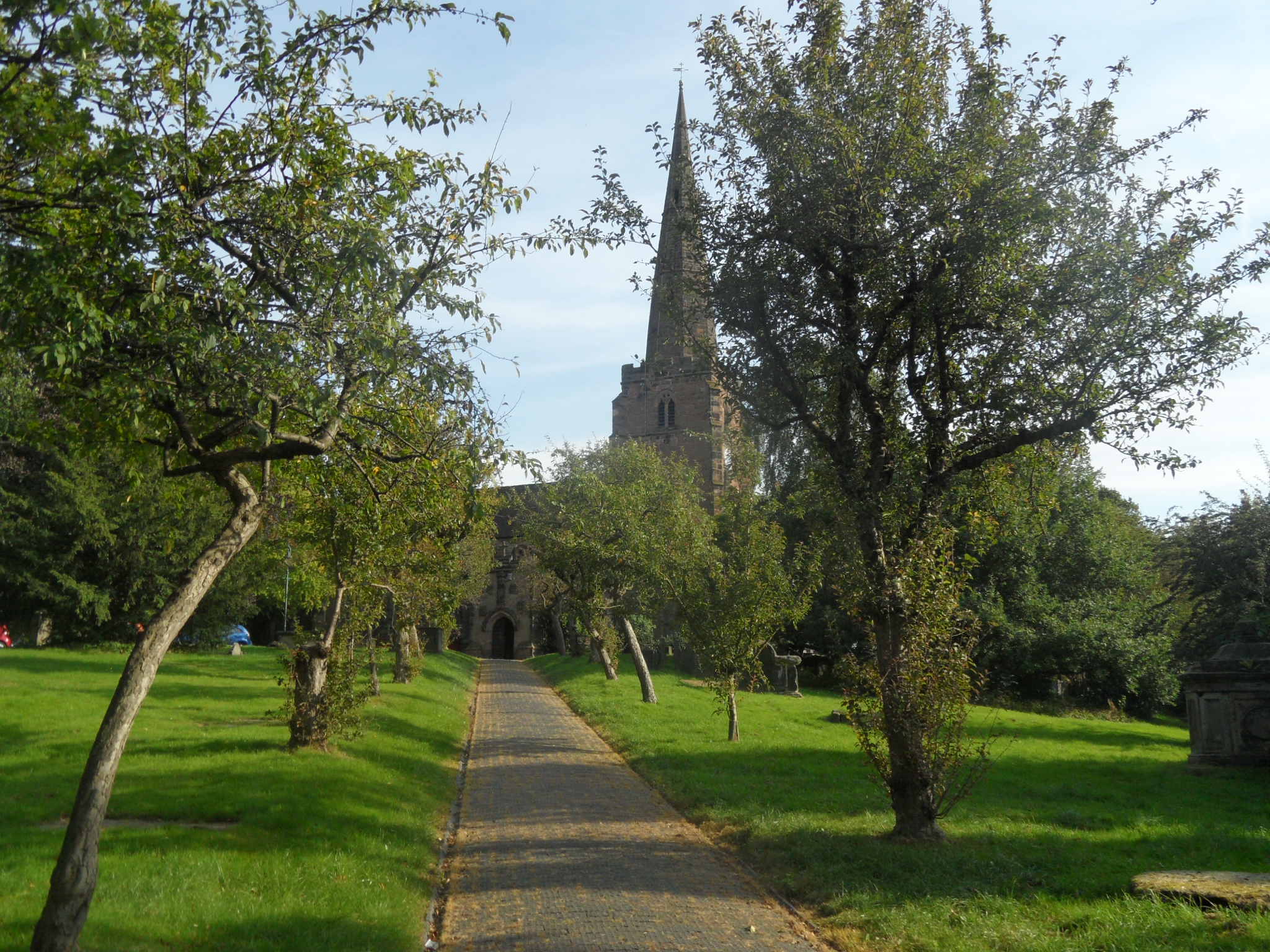
Back outside in the churchyard,  a woman approached me and asked ‘Are you thinking the same as me?’. Actually I wasn’t, because whilst I was thinking about missing bones, the woman was thinking about missing apples. Apparently in previous years, rich windfall pickings were to be had from the trees growing alongside the footpath. This year it was hard to spot a single fruit.

Peals but no peel

One thing I read in the history booklet, which I’d love to hear people’s thoughts on,  is that around the year 2000, a pump was installed to keep the crypt from flooding. I read in an archaeology report that ‘St Michael’s is a low hill with natural springs’. Could this have anything to do with the flooding?  I’ll explore this ancient burial ground in a post of its own. In the meantime, perhaps we could get the University of Leicester involved in a hunt for William de Walton and the Marquis of Donegal. They seem quite good at that sort of thing…..

Part of the 9 acres making up St Michael’s churchyard

Sources:

St Michael’s Church. Lichfield – A Short History by Rev Carpenter 1947

A short account of the city and close of Lichfield – Thomas George Lomax, John Chappel Woodhouse & William Newling

Archaeological Desktop Survey OSA Report No. OSAO6DTO2 (Onsite Archaeology January 2006)

Bell Vista

A while ago, I wrote about the architect Thomas Johnson and how he had been involved in the restoration of the church of St Michael on Greenhill in 1842/3. In the newspaper archive, I found a report of a meeting of parishioners held at the church, prior to these restoration works.

The article is a bit blurry and hard to read but after much squinting it seems that there was concern that the church was at risk of ‘being reduced to ruins’ and that the churchwardens had appointed Mr Johnson to assess the extent of the dilapidations.  His diagnosis was that the roof, ceiling, spire and a portion of the walls were so unsafe that a large sum of money would be needed to keep up the building. The parishioners expressed their surprise at how bad the situation was. To illustrate just how bad things had got, it was revealed that rabbits had managed to get into the mausoleum of the Marquis of Donegal (he of Fisherwick) and were breeding in the coffins. The outcome was that the land owning parishioners agreed to increase their rates to pay for the necessary work which according to the County History included

 “the reroofing of the nave, the repair of the side aisles and the nave clerestory, the reintroduction of Perpendicular windows in the north aisle, the rebuilding of the north porch, and the remodelling of the south aisle with new buttresses and a south door in place of a window. The gallery was removed. The mausoleum and the vestry room were replaced by a stokehold over which a clergy vestry was built with doors into the chancel and the south aisle; an organ loft was built over the vestry”.

St Michael’s above Stowe Pool

I have never been into the church myself. However, I notice via facebook that the church will be open for viewing tomorrow (between 3pm & 5.30pm) during the launch of the Bell Restoration Fund. You can find out more on their facebook page here and you can read the great article Annette Rubery wrote about the fund here.

The church is of course featured on the ward banner for this part of Lichfield (along with what I had assumed was the Greenhill Bower House, although looking at it again now I’m not so sure…)

Although I’ve never been inside the church, I have been to the churchyard. With claims on Wikipedia that it could be a Mercian tribal necropolis, the site of one of the earliest settlements in Lichfield or the burial place of followers of St Amphibalus, it certainly merits a post of its own one day!

Steps leading up to the churchyard

Edit: I’ve just been thinking about the building on the ward flag, below the church. Could it in fact be the gateway to the old Lichfield Union Workhouse (subsequently St Michael’s Hospital).

Sources:

Lichfield Mercury Archive

Lichfield: Churches’, A History of the County of Stafford: Volume 14: Lichfield (1990), pp. 134-155


Cross County

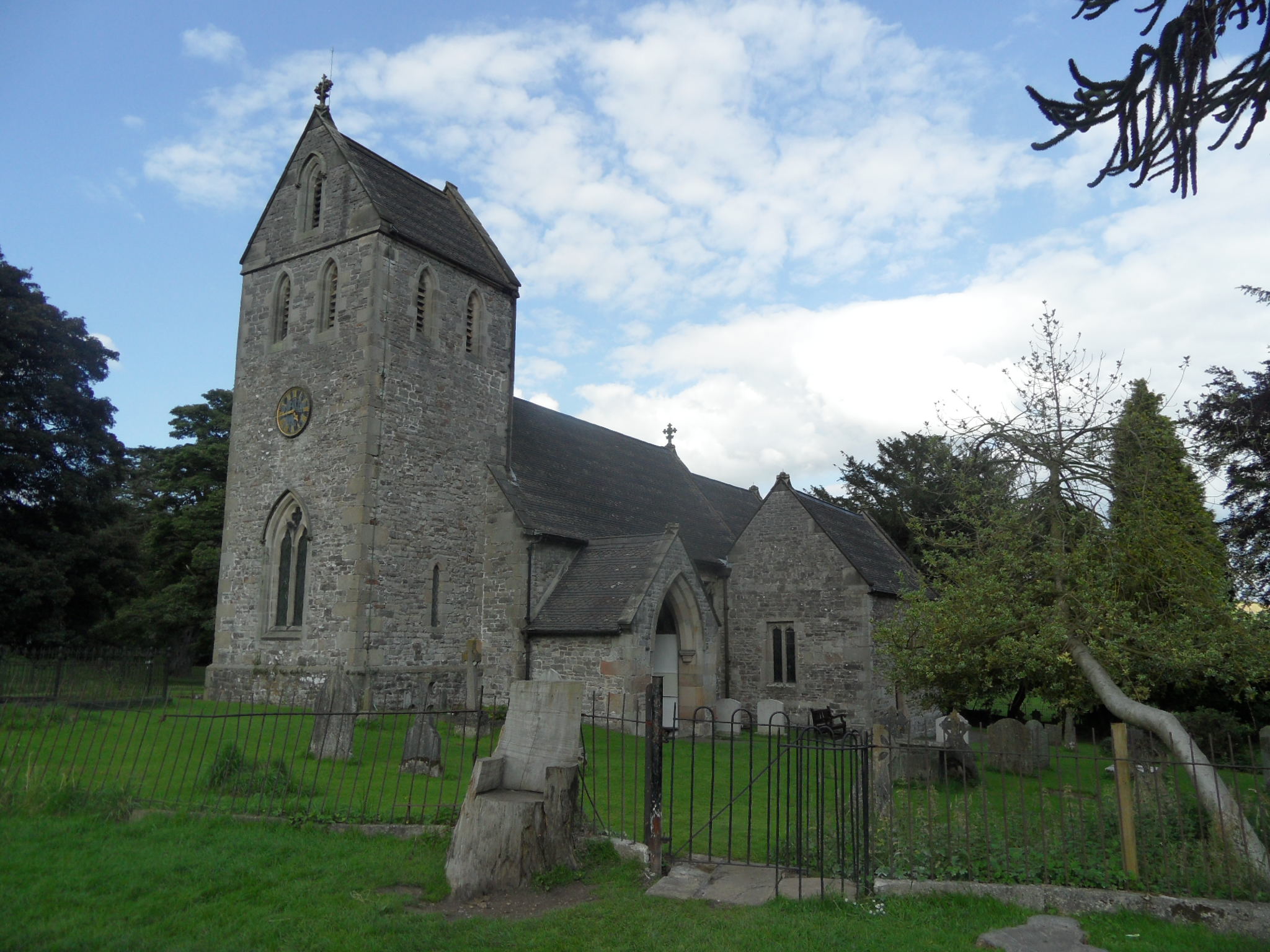
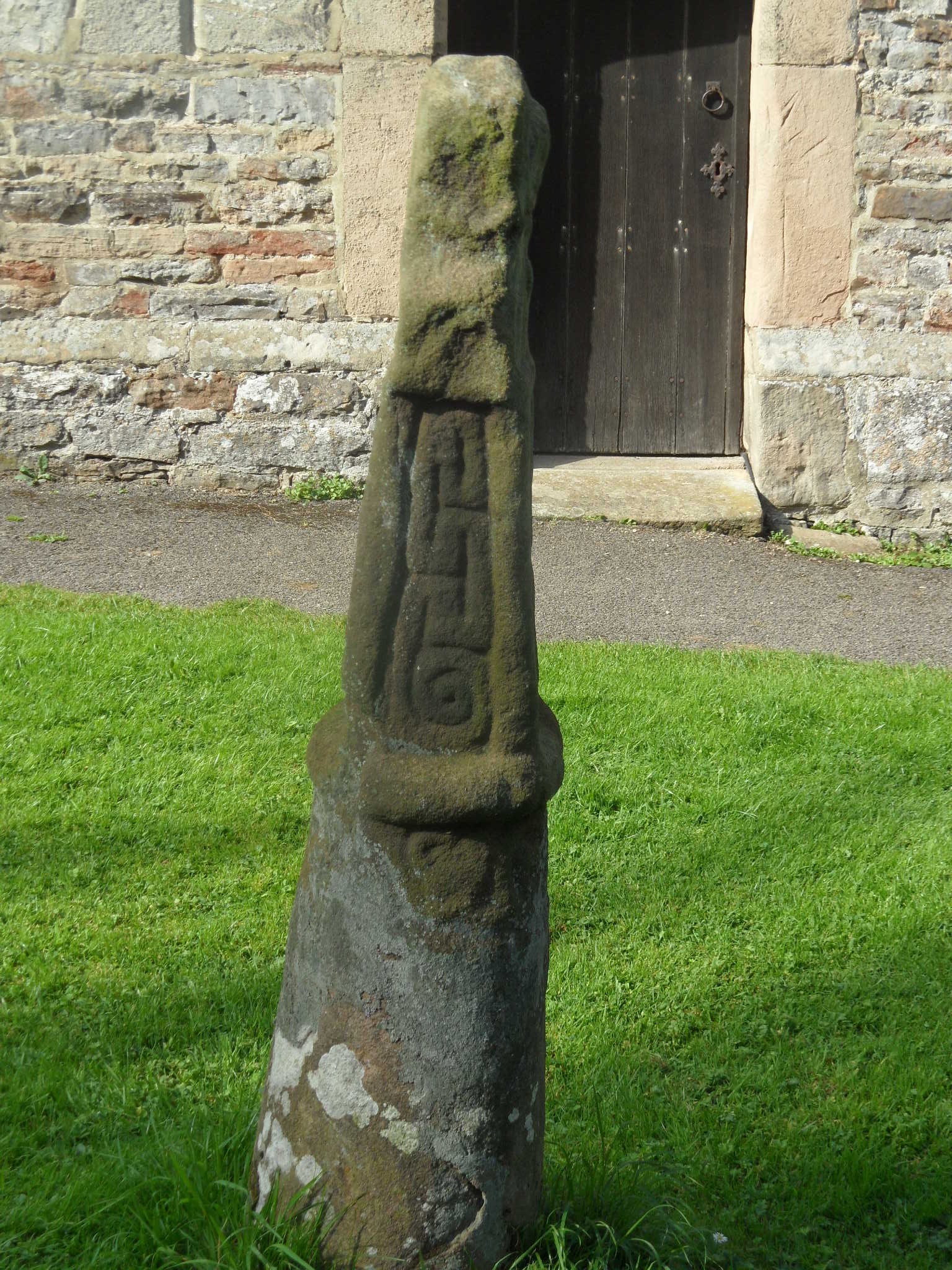
Looking for ancient crosses in Lichfield, has so far lead only to hints of their existence – a one line reference in an old book here, a placename there. Nothing concrete (or should I say stone?).  So imagine how happy I was when I visited Ilam Park yesterday and found that were two thought to date back to the 10thc standing in the churchyard with a third shaft incorporated into the church wall…..

Church of the Holy Cross, Ilam, Staffs


…..and imagine how much I kicked myself when I got home and found out there was yet another stone, known as ‘The Battle Stone’, located in the grounds of Ilam Hall that I had missed!

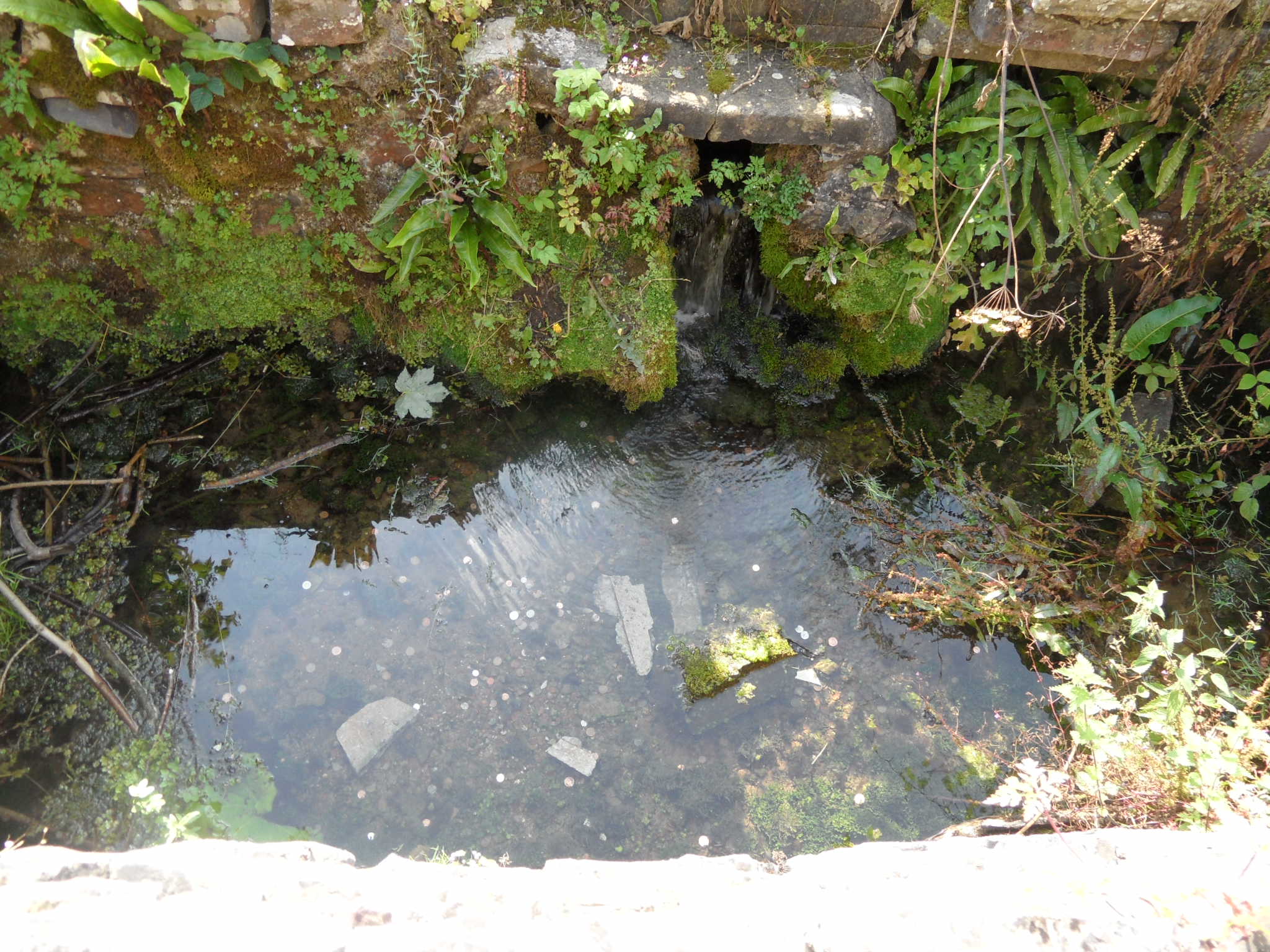
However, as a consolation, I learnt at home that this spring near to the church is thought by some to be St Bertram’s Well (although others place this on a hillside near to the village).

St Bertram’s Well?

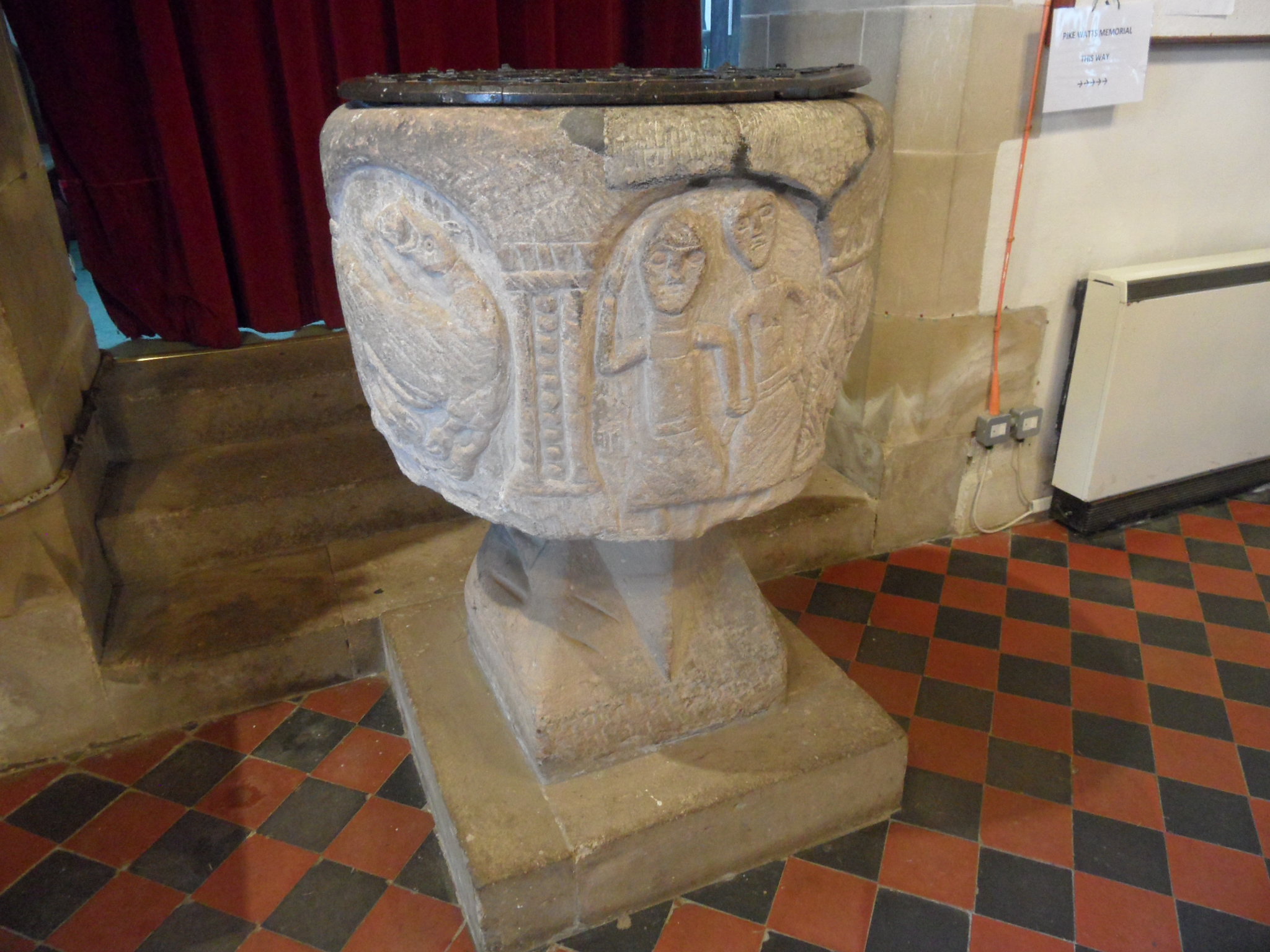
The Shrine of St Bertram (also known as St Bertelin or maybe Beorhthelm of Stafford) is inside the church. As you might expect, there is more than one account of St Bertram’s life. The most well known version seems to be the tragic story that he was a Mercian Prince whose wife gave birth to a child in a forest. The wife and baby were killed by wolves and St Bertram became a hermit near to Ilam, It’s thought this story might be represented on the churches font, which dates back to around the 12thc.

You can decide for yourself, if you look at this website on Romanesque sculpture, which gives a detailed description of the font, together with photos.

However, Stafford Borough Council have this version on their website, which doesn’t feature the tragic part of the legend.

The legend of St Bertelin derives from the 14th century account of him by Capgrave in his ‘Nova Legenda Anglie’, retold by Dr Robert Plot in his ‘Natural History of Staffordshire’ (1686). He is reputed to have been the son of the Mercian prince, the friend and disciple of St Guthlac who, after St Guthlac’s death c 700, continued his holy vocation on the islet of Betheney now Stafford. Here, he remained until forced to retreat from the ill-will of jealous detractors, when he repaired to Ilam, in Dovedale, Derbyshire where ultimately he died. His burial place in Ilam church was once a place of pilgrimage.

His burial place still seems to be a place where people come, not just seeking out history like me, but for spiritual reasons. As you can see from the photo of the shrine, prayers (I didn’t read them) and candles are still left there.

I have found a copy of the ‘Nova Legenda Anglie’, but as my Latin only stretched to ‘Caecilius est pater’, I need a bit of time alone with google translate.  So, I’ll leave the legend of St Bertram/Bertelin there for now other than to say that it’s believed that the remains of St Bertelin’s chapel in Stafford were excavated in the 1950s and they discovered part of a 1,000 year old cross. And this one is made of wood!

Ilam, Stafford and I’ve seen references to existing crosses in Wolverhampton, Leek, Chebsey (between Eccleshall & Stafford), amongst other places. With the discovery of the ‘Battlestone’ in Ilam (the one that I missed!) in the foundations of a cottage, during a restoration in 1840, I’m still clinging to the hope that at least a fragment of one survives somewhere in Lichfield!

Sources:

http://www.heritagegateway.org.uk/gateway/

http://list.english-heritage.org.uk/ (Entry numbers 1038113, 1012654, 1012653,

Corpus of Romanesque Sculpture in Britain & Island http://www.crsbi.ac.uk/index.html

http://www.geograph.org.uk/photo/705619

http://www.megalithic.co.uk/ (St Bertram’s Well http://www.megalithic.co.uk/article.php?sid=14731)

http://www.staffordbc.gov.uk/in-touch-with-the-past

Another Johnson

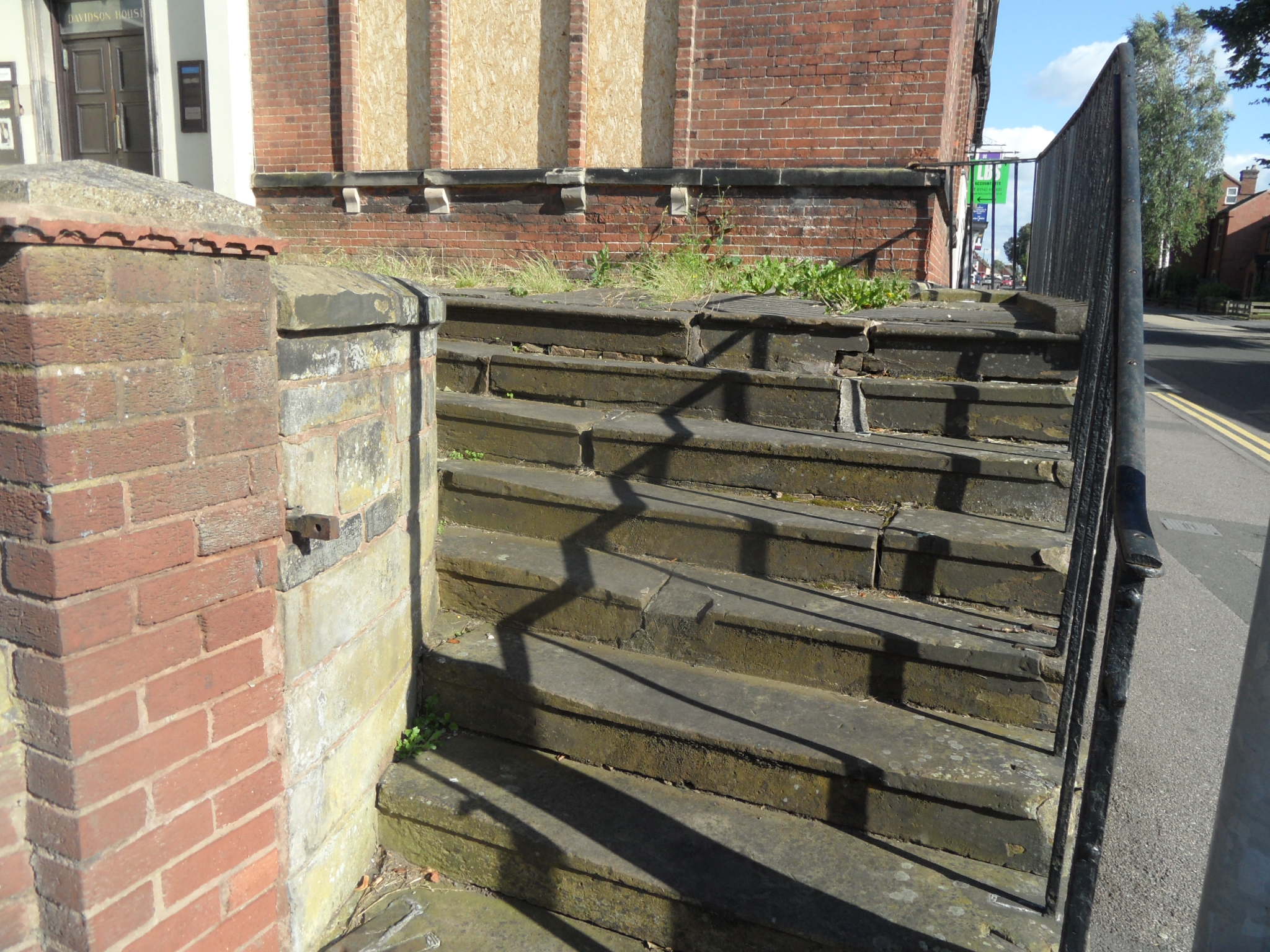
Davidson House on Upper St John St was once home to another Johnson from Lichfield. Thomas Johnson, an architect lived here from 1834 and ran his business, Johnson & Son from here until his death in 1853. I understand that Thomas Johnson jnr went on to work with James Trubshaw, and married his eldest daughter.


Although people might not have heard of Johnson and Son they will probably know some of the buildings they were involved with. Below are some examples of their Lichfield work, and it seems that they also worked on buildings further afield.

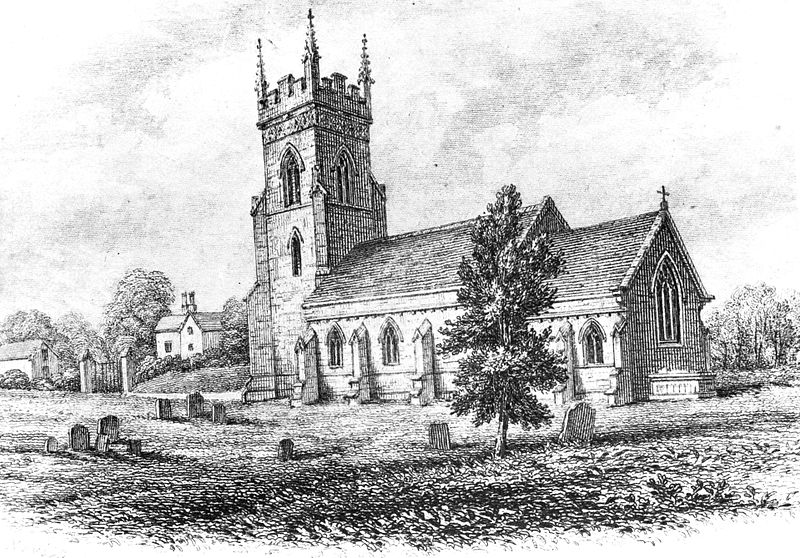
Christ Church, circa 1850 (from wikipedia)

Corn Exchange Lichfield (from LDC flickr stream)

The Old Grammar School, C18 rear
wing, school room and front wall of c1849, by Thomas Johnson
and Son of Lichfield

Back to Davidson House and I’ve read that it was the home of the South Staffordshire Regiment Old Comrades Association and the South Staffordshire Regiment Museum collection from 1938 until 1963, when it was moved to its current site at Whittington. The name ‘Davidson House’ apparently relates to  Brigadier-General Charles Steer Davidson who donated the property to the regiment.

As ever, plenty of questions. Did the Johnsons employ local people? What about the rest of the family? Where did their materials come from? Who was it built for originally.  Who owned the house between the Johnsons and the Brigadier-General? Who was Charles Steer Davidson? What happened when the museum left and what is the future for it? It looks like it needs a bit of TLC right now, with its boarded up windows and crumbling stonework. There’s a book ‘Staffordshire and the Gothic Revival’ by Michael J Fisher that I’d like to have a look at to find out more about the Johnsons and their contemporaries.

There’s still plenty more to find out about Davidson House and its inhabitants but I like how by finding out a little about one Lichfield building,  I’ve found out more about some of the others too. And they just happen to be some of my favourites!

Sources:

http://www.britishlistedbuildings.co.uk

http://staffordshireregimentmuseum.com/