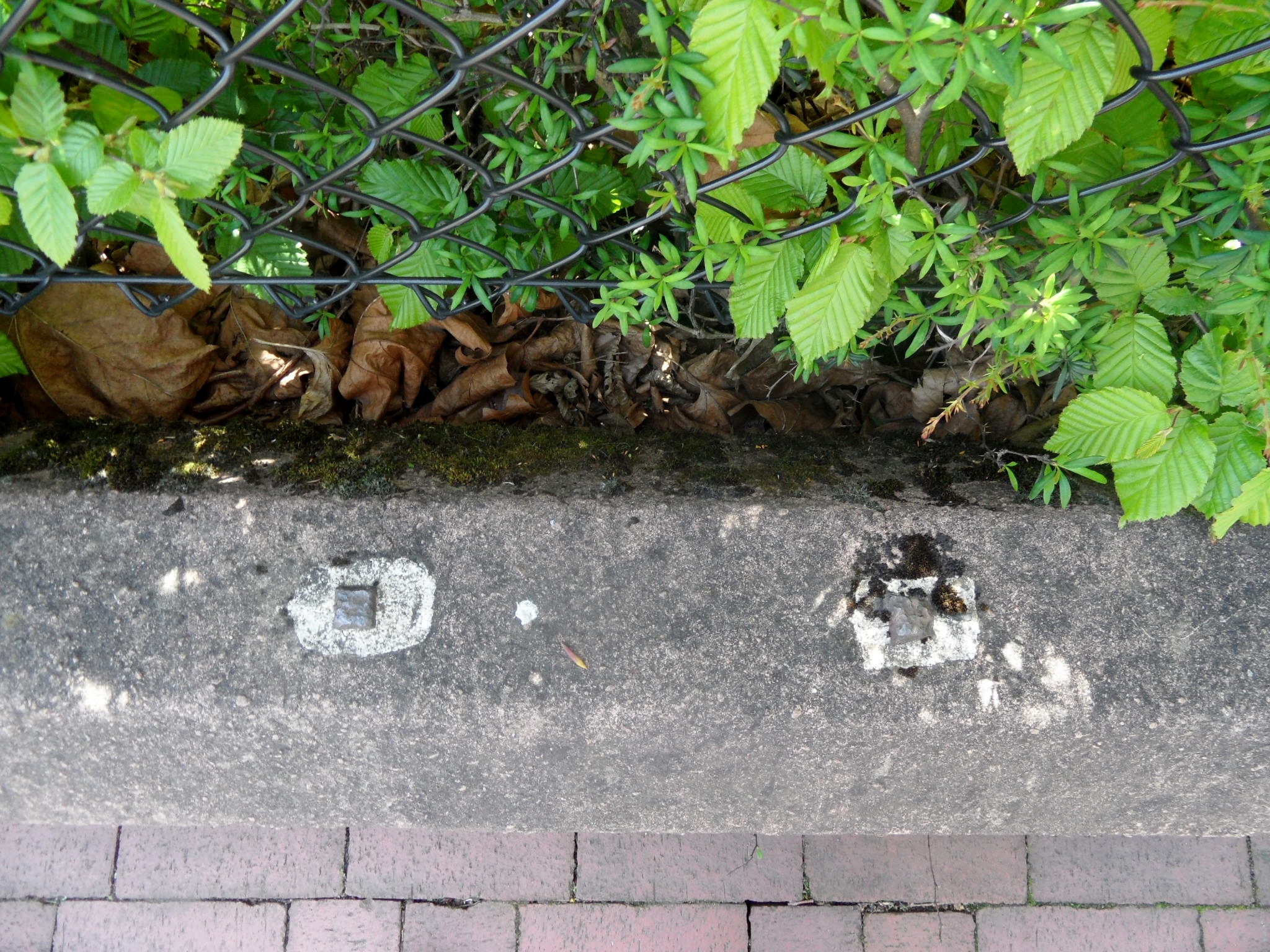
When I was a little girl, my great (in all senses of the word!) granddad told me that the railings at the local cemetery in Birmingham had been taken for the war effort. Ever since then it’s been my understanding that iron and other metals collected from homes, gardens and public places during the Second World War, were transformed into munitions. However, earlier this year a comment on Facebook, suggesting that the recycling of metal for the war effort was a myth, made me question this long held belief.
What is not in doubt is that places up and down the country handed over their railings, including Lichfield. I understand that to begin with they were offered up on a voluntary basis but in 1941, the Ministry of Supply made the requisition of all ‘unnecessary iron or steel railings’ compulsory, for use in the foundries. The Lichfield Mercury carried an announcement that the Council had been instructed to make a survey and draw up a list of those to be surrendered. Compensation was available but the Ministry hoped that the majority of owners would give their railings freely! I have seen several suggestions that any reluctance was seen as unpatriotic (and perhaps there are hints of this in the discussions that follow below). Guidelines were issued on which type of railings were necessary and therefore exempt including:
1- Railings which should be maintained for safety reasons
2- Railings necessary to prevent cattle from straying
3- Railings of special artistic merit or historic value.

The remains of metal railings at Lichfield Library (the Friary Girls School at the time of WW2).
This perhaps explains why the library (then the Friary Girls School) lost its railings, but the decorative eighteenth century wrought iron gates outside the Angel Croft remained. It’s a little ironic that these listed railings were saved from the scrapheap back in the 1940s only to be left to rust away in-situ in more recent times.

Listed wrought iron gates outside the listed Angel Croft hotel – all appear on the English Heritage ‘At Risk’ register
For an insight into some of the discussions that took place at the time, I’ve summarised part of a Council meeting that took place in June 1941, concerning the requisition of the railings that once stood around the gardens at Greenhill. Cllr Tayler argued that their removal should be deferred as they were necessary to prevent trespassing in the garden and to protect the water tank underneath, and asked why such a small amount of railings doing such necessary work should be removed when there was a large amount of ornamental fencing in the city still in place. Cllr.Taylor mentioned the railings around the Friary School in particular, explaining that there were more tonnes of railings there than hundredweights at Greenhill. He acknowledged that they were nice to look through, and that one could almost imagine they were looking at the Garden of Eden at times, but argued that if they wanted to get the serpent Hitler out, the Friary’s railings should be taken as a valuable contribution for the Minister’s appeal.
Whilst Cllr Taylor got his way at the Friary, his point about Greenhill was rejected. The Mayor felt that the council could not expect people to remove their railings if the council was unwilling to surrender their own. He also felt the removal of the Greenhill railings would enhance the beauty of that little park, creating a place where the old people of Lichfield could go for an enjoyable smoke. Cllr. Tayler remained unconvinced by this vision – he thought it was more likely to become a car park for Winterton’s auction. Alderman Deacon agreed – he thought opening up the space would lead to trespassing left, right and centre. He also voiced his frustration regarding the government’s campaign saying, “If the necessity for railings is so urgent as the Ministry of Supply said, why don’t they make a requisition for the whole of it…the Government should adopt a proper attitude and make a requisition for the whole of it”. Cllr. Moseley’s attempts to appease both sides by suggesting the decision be deferred to allow the members to visit the site were met with strong words from Cllr. Wiliams. “It seems pitiful to me. We are at war, and the Prime Minister’s speech not many hours ago gave the excuse of getting out of Crete because we did not have sufficient of this and the other. I take it we should never have attempted to recommend the removal of this scrap metal unless it was wanted, and yet these old historical people get up and say, ‘Don’t take it away as it will spoil the beauty of the city’. We have not in Lichfield felt the war, and it would be a damned good thing if we had a shot at it, and then we should realise what our army, navy and air force have to put up with. I can’t understand this spirit of Cromwell today. If we can help a little bit in Lichfield by scrapping our railings, let us do it with a good heart. Cllr Collins echoed these thoughts by adding, “We called it the ancient and loyal city and I think we can add one word – patriotic. I would certainly support the giving up of these railings on patriotic grounds and also that all other railings in Lichfield should be given up”. With these words, Cllr Tayler’s attempt to save Greenhill’s railings was defeated.
At the same meeting, Cllr. Halfpenny suggested that the railings in the Museum Grounds be salvaged and replaced by wire and fencing. The previous summer, the Council had decided to sell the old guns from the Crimean and First World Wars which were on display in the grounds. Again, this decision was reached following a fascinating and, at times, seemingly heated discussion. Cllr. Collins opposed the sale of these old war relics believing that they had been given to Lichfield as a token of the courage, bravery and endurance of the men of the 2nd Battalion of the South Staffordshire Regiment (the First World War gun had apparently been captured by them on 3 August 1918). It did not cost anything to keep them, not even a rag or a drop of oil, and he believed that there may be many South Staffordshire soldiers who passed by that gun and had a chat about days gone by. The Russian gun from the Crimea put Cllr. Collins in mind of his school days and some of the battles that had been fought. In his opinion, the guns should stay where they were and wait for the next one to come and keep them company. Alderman Bridgeman agreed, as did Cllr. Williams, Alderman Hall and Cllr. Moseley, who thought that they made the grounds more interesting. However, Cllr. Tayler was firmly in favour of the sale. He believed that the ‘morbid sentimentality’ that they had heard that evening had led the nation into the deplorable condition it now found itself in. Too much consideration had been given to German relics and Germans since 1918. The nation needed iron and what better to have than that sort of scrap iron. He acknowledged that the guns were of interest but felt that they could not afford simply to allow them to lie about for people to look at when they were the very thing the nation and the army wanted. Cllr. Nevill added that the old first world war gun had been lying around for the last twenty years, used only as a plaything for the children. Cllr. Bather reminded the meeting that the country was having to import iron from the States at exorbitant prices and believed, ‘If that gun was turned into a new one to use against the Germans, it would be the finest thing that could happen to it’. The decision was taken to sell the guns to a local metal merchant who had been granted a license by the Ministry of Supply to purchase scrap of all descriptions. However, what became of the guns after that?

The old war guns are taken away after being sold to a local scrap metal firm. Photograph taken from Lichfield Mercury Archive
There are numerous blogs and discussion boards on the subject of Britain’s war effort. On some you’ll find tales of railings being dumped in the Thames and the North Sea and of piles of metal rusting away in fields and depots. Perhaps somewhere amongst the propaganda and the myth, is the real story of what happened to the ‘scrap’ metal collected here in Lichfield and elsewhere.
Notes: There’s a great Pathe film clip called ‘Park Railings for Munitions’, which you can watch here.
Source: Lichfield Mercury Archives



 Lichfield Lore