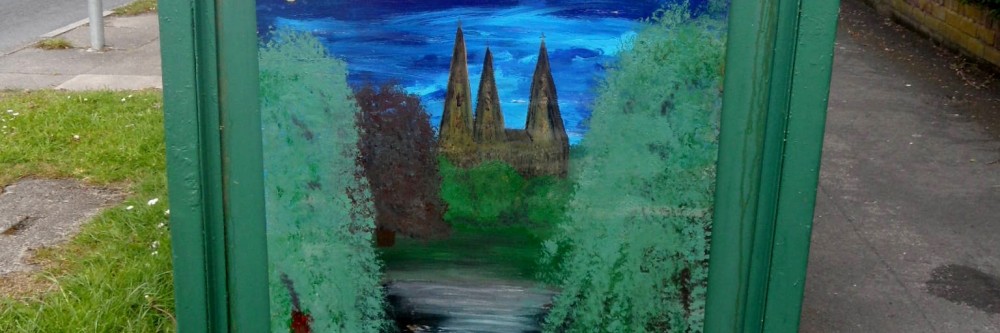
Guardian Angel

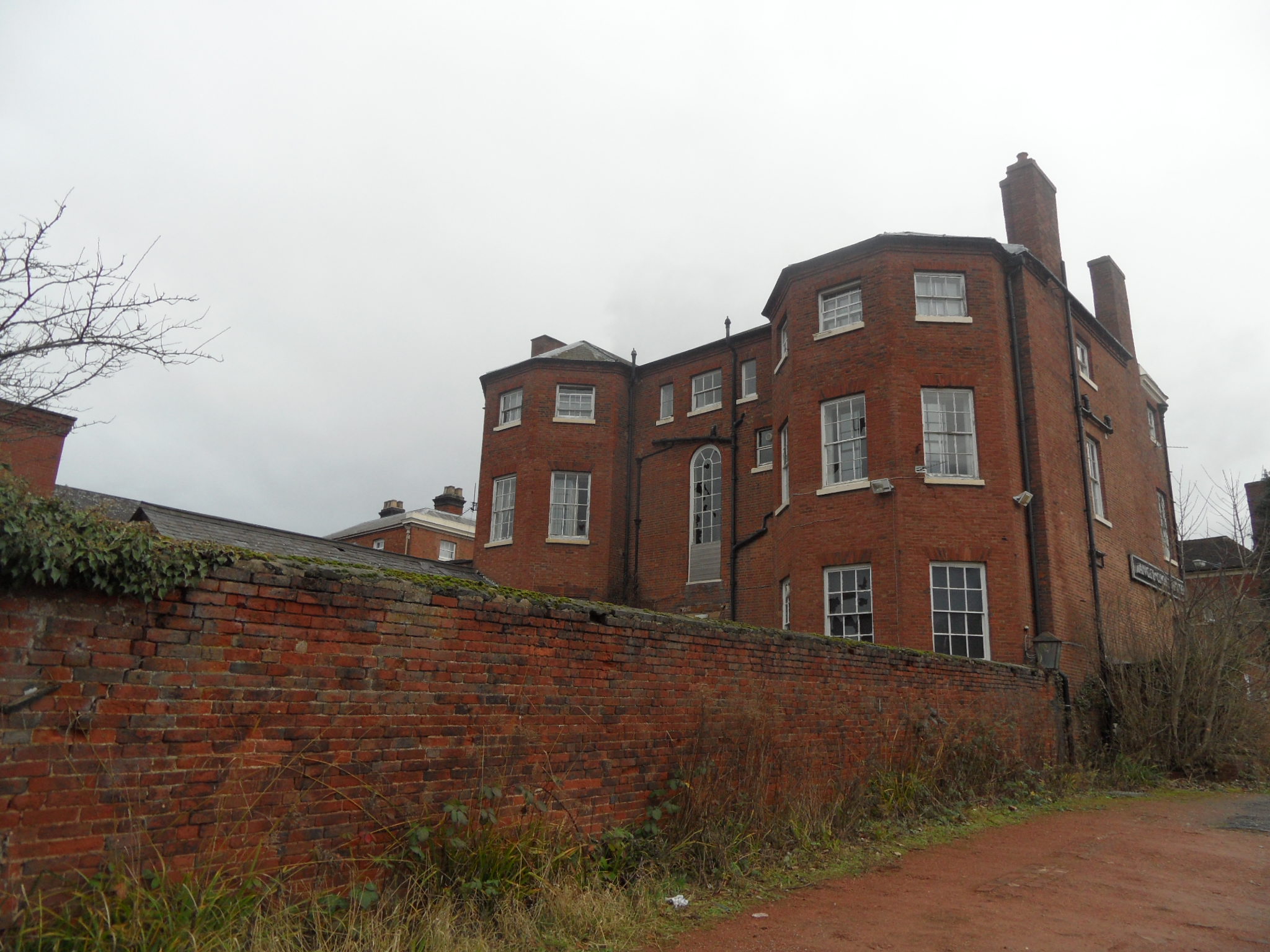
The whispers on the (Beacon) street were true. A new planning application is in the offing to convert the former Angel Croft Hotel into apartments.

The eighteenth century Angel Croft has been one of the most discussed buildings in Lichfield in recent times. Since 2008 it has been empty and vulnerable and its annual appearance on the English Heritage At Risk register has given people real concern about what its future might hold.

As it stands at present, the Angel Croft is at risk from further vandalism and, worse still, arson, which can prove devastating to so many heritage buildings.  My view is ‘use it or lose it’. Sometimes, in order to survive, buildings must adapt and play many roles over the course of their lives. In fact, the Angel Croft was a residential property until its conversion to a hotel in the 1930s. If something positive doesn’t happen soon then there is a possibility that we may lose it altogether and be left with nothing more than a vacant building plot.  I hope that this proposal, which will secure the future of the building and its features, will be supported and that the Angel Croft will not be put at further risk by short sightedness and nostalgia about an unsustainable past.

You can see the documents supporting the planning application here (the planning, design and access statement) and here (the heritage statement), which I’m grateful to the Beacon Street Area Residents Association for forwarding to me.

N.B For anyone interested in the history of this building, the Heritage Statement contains historical information about the Angel Croft, including descriptions, old plans, maps and photographs.


Albert and Percy

Ron Myatt of the Great Wyrley Local History Society has been back in touch with the names of the other two members of the Staffordshire Yeomanry pictured here with a young Frank Halfpenny at some time during the First World War.

Frank Halfpenny, later Sheriff and Mayor of Lichfield (left), Albert Handley (centre) and Percy Johnson (right)

In the centre of the photograph is Albert Handley, and Ron has very kindly passed on to me the following information given to him by Albert’s son.

Albert Handley was born in Bridgtown in 1893. He was the second son of Jairus and Elizabeth Handley (formerly from Willenhall) and brother of Charles, Ellen, Ethel and Maud.  The family moved to moved to Landywood (part of Great Wyrley) and Jairus Handley worked in several pits. Albert was educated at Great Wyrley Council School and left aged 14. Afterwards he went to the Evening Institute where he learnt mathematical skills and secretarial techniques. Albert worked in brickyard in Bridgtown before taking a clerical post with Siemens Electrical, Stafford. Although Albert was employed in a ‘reserved occupation’, in 1915 he managed to enlist in the Staffordshire Yeomanry, where he served until 1919.

After mustering at Burton on Trent, the 3rd / 1st Staffs Yeomanry were affiliated to the 12th Reserve Cavalry Regiment at Aldershot where Albert learned to ride horses and was promoted to NCO rank. In 1916, they served in Egypt, Palestine and Syria. During his service, Albert contracted a near-fatal dose of malaria.

Back home, Albert met Winifred Sambrook ,an infant school teacher, and they were married in 1924. Between 1919 and 1949, he was employed as a clerk at a large mine but also took on additional roles including church officer, society steward and Trustee of Wyrley Wesley Methodist Church. Albert also helped to set-up the fund for first Doctor’s Practice, was the founding Treasurer of the Wyrley Branch of the Nursing Association, and set-up a branch of the Ideal Benefit Society collecting subs and making pay-outs.

In 1937, Albert was appointed clerk of the Parish Council which brought with it a large range of duties including opening libraries, supervising burials, responsibility for recreation grounds and tennis courts as well as administrative tasks. In 1949, he became a Magistrate for Cannock and Penkridge Bench in 1939, eventually being elected chair.

During the Second World War, Albert was a founding member of Civil Defence Corps in 1939, who were responsible for recruiting wardens, issuing gas masks, organising training and dealing with the arrival and billeting of evacuees from Margate. In 1949, Albert became a local Government Officer in the Rating Department of Cannock RDC. Albert died in 1975.

The third man in the photo is Percy Johnson, who Ron believes was Lichfield farmer. However, we know nothing more about Percy, and would be grateful to hear from anyone who is able to help.  I’d also be interested to know the story behind this photograph. Why were Frank, Albert and Percy photographed together, and when was the photograph taken?

If you do have any further information on any of the above, please send me an email or leave a comment below, or alternatively you can leave a message for Ron on the Great Wyrley Local History Society guestbook here.

Ooh La La

When old buildings at the back of the Bolton Warehouse Company’s shop on Bird St (1) were being demolished in December 1960, a large circular room containing murals created with shells and pebbles, was found above a ceiling. One mural depicted the Cathedral, another a tree and the third was some kind of summerhouse on top of a hill (2).

The murals are thought to have been created by French prisoners of war, on parole in the city.  According to the County History, Lichfield had long been used as a place to quarter French prisoners, due to its position on a main road (and I have also read that it had something to do with us being about as far from the sea as you can get!).  On 7th January 1747, the Staffordshire Advertiser reported that a party of seventy four passed through Stafford on their way to Lichfield, where they were to be put on parole. It also mentioned a house on Bore St, where there was a cooper’s shop at the back used by prisoners (3). Eighty arrived in Lichfield in 1797 during the Napolenic Wars and in 1809, forty officers were quartered here. It seems that Dr Johnson’s birthplace was also occupied by a prisoner –  in The European Magazine for 1810, a contributor called ‘TSW’ wrote, “The house in the market place in which our great lexicographer born still remains nearly in its original state. It is now inhabited by Mr Evans a brazier and a part of it, believed to be the very room in which he first drew his breath is now let to a French prisoner of war”. According to their website, Pipe Hill House on the Walsall Rd also hosted some of the prisoners.

As well as spending their time creating enigmatic artworks, some of the prisoners gave French lessons to the city’s residents.  If the fragment of a page of French exercises, found in the same room as the Bird St mural was discovered, is anything to go by, the teachers had their work cut out. The sentences on the fragment of paper had been heavily corrected, with the comment ‘very bad’ at the end! Perhaps the Darwin and Wedgewood children who were taught French by one of the prisoners at Darwin’s house on Beacon St were better students?

The old clinic on Sandford St? Is it me or can anyone else see numbers in the brick work on the second storey?

In September 1951, the author of the ‘Round and About with Clock Tower” section of the Lichfield Mercury visited the site of the mural accompanied by the caretaker, Mrs Disney, and reported that the ‘pictures’ were still in existence in the dome-like roof of a derelict outbuilding behind the Sandford St Clinic (4). One side featured ‘a perfect replica of Lichfield Cathedral, made entirely from small stones, bits of glass and sea shells’  and other pictures included a ‘mosque-like building’, (which the reporter failed to recognise (5)), several ‘beautifully executed trees’ and a map of Lichfield. The outbuilding was in a poor condition, described as being encased in a mass of creepers, with two gaping holes in the roof. There was also a large hole in the floor, and as if things weren’t exciting enough already, Mrs Disney told the reporter that there were two passages running beneath the hole – one leading to the rear of the property and one believed to connect with the old ‘monk’s passages’ beneath the Friary.

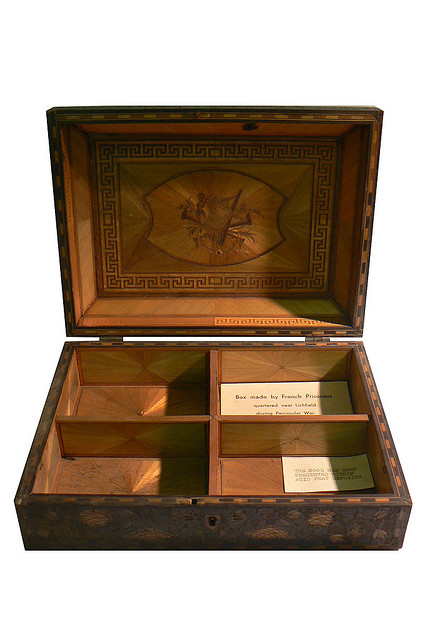
Box made by French Prisoners of War (c) Lichfield District Council

Sadly, I think that this ‘Disney’ story doesn’t have a happy ending as the outbuilding was been demolished and the treasures inside lost (although there is the possibility that as the murals were still in existence in the 1950s/1960s someone may have been foresighted enough to photograph them?). However, there is a small consolation at Lichfield Heritage Centre in the form of a wooden box carved by French prisoners quartered in the area.

Edit 18/6/2015
A display at Lichfield Museum at St Mary’s features a photograph and a chunk of the mural together with the wooden box and some information about the soldiers themselves. St Mary’s is also staging a costume drama called ‘Lichfield’s Waterloo’ by the Lichfield Players on Friday 26th June and Saturday 27th June. More information here

Notes

(1) Does anyone have anymore information on the Bolton Warehouse Company’s shop, particularly where it was on Bird St?

(2) Could this have been a representation of Borrowcop Gazebo? The PMSA record (here) says ‘In 1694 a building called ‘the Temple’, probably stood on Borrow Cop Hill, in the 1720s an arbour was recorded, by 1750 this replaced by a summerhouse which may have been the cruciform building there in 1776. In 1756 the corporation ordered a line of trees along the path to the summit, with extra trees in 1783, possibly in connection with a fete champetre held in that year. By 1805 the building was replaced with one of brick with two arches each side and seats around to admire the view, the funds were raised by public subscription’. On the subject of Borrowcop, I just found at that an information board was installed up there in September (more about that here).

(3) Again, where would this have been?

(4) I understand that the clinic occupied the former premises of the Victoria Nursing Home which was on Sandford St until it moved to the Friary and became the Victoria Hospital.

(5) Any ideas as to what building this could be depicting?

Sources

Lichfield and Archaeological & Historical Society Transactions vol 2 1961

Lichfield: Education’, A History of the County of Stafford: Volume 14: Lichfield (1990), pp. 170-184

Lichfield: From the Reformation to c.1800′, A History of the County of Stafford: Volume 14: Lichfield (1990), pp. 14-24

The European Magazine for 1810

Lichfield Mercury 21st September 1951

A Frank Discussion

I’m a big fan of place names that actually mean something, rather than the pretty but ultimately empty kind that are sometimes embraced by developers. The authors of one of my all time favourite books ‘England in Particular’ have this to say on the subject,

“Names carry resonances and secrets. Respect local names and add new ones with care. It is not good enough to call a new estate Badger’s Mead when the badgers have been destroyed.”

Recently there was a notice in the Lichfield Mercury that the name ‘Halfpenny Lane’ had been assigned to a new development off the Walsall Road (1).  If streets, buildings, etc, are to be name after local people, then I think its important to know who those people were and what contribution they’ve made to that place. The following information was very kindly provided by Colin Halfpenny, son of Frank and Mary Halfpenny.

Frank Halfpenny was born on 11th September 1897 in Goldenhill, Stoke on Trent. At the age of fourteen he was apprenticed to Marsdon and Sons, a tailor and outfitting firm in Newcastle under Lyme. Between 1916 and 1919 Frank served in the Staffordshire Yeomanry as a signaller, spending time in Egypt and Palestine.

This photograph was sent to me by Ron Myatt of the Great Wyrley Local History Society. Ron and I had a chat about it – we understand that it shows Frank Halfpenny whilst serving in WW1, but the identities of the other men are unknown. If anyone can help, Ron and I would be very grateful!

On his return, Frank was appointed manager of John Key and Sons Tailors and Outfitters  in Market Street , Lichfield and lodged with the Misses Arnold of the Coffee Shop on Church Street (opposite to the vehicle entrance to Wintertons Saleyard). He was a keen sportsman, playing football and cricket for Lichfield teams. In 1923, Frank was appointed theMidland Area Representative for D Gurteen and Sons, clothing manufacturers of Haverhill, Suffolk. On New Year’s Eve 1924 Frank married Mary Emma Tayler.  Both were lifelong Methodists holding active posts both in the Lichfield Church and on the Lichfield and Tamworth Circuit. Eleven years later, Frank purchased Mr B T Sadler`s drapery and ladies outfitting shop opposite the Johnson Statue in Market Square

At the 1935 AGM of the cricket club Sam Brown (the father of Cuthbert Brown who published several books on growing up on Beacon St) the Treasurer told the members that the club finances were very low and that a method of raising them had to be found.  Frank offered the club a cup to be played for with an annual competition, this was agreed to and the competition was started amongst local village clubs in 1936. This has been played for every year since then and is thought to be the oldest 20×20 competition in the country. He was also a member of several bowls clubs, the allotments association and the City Institute where he enjoyed a game of billiards or snooker.

In 1936 he was elected to the City Council and became Sheriff in 1938. At the same time his father in law, Councillor F M Tayler, (later to become Alderman and a Freeman of the city) started his second year as Mayor. Many people will know the photograph of Frank maintaining the tradition of the Sheriff’s Ride in 1939, accompanied by Sam Ashley who at 70 years of age had followed the ride each year from when he was 7 years old.  Sam had walked to Four Oaks and collected the horses then rode to Lichfield , round the city boundary, back to Four Oaks and walked home again. The following year, Frank presented Sam with a copy of this photo. Sam replied that the day had always been a pleasure all his life and he had always enjoyed it, noting that ‘there were not above three people alive who went round when he was a boy and he hoped to go on as long as he could’. During the War Frank was also a prominent member of the ARP and spoke all over the Midlands for the Ministry of Information on national security, instructing Home Guard units on signalling.

Frank was a member of many committees and was Chairman of the Lichfield, Tamworth and Sutton Coldfield Hospital Committee for a long time and was also elected onto Staffordshire County Council. He was a magistrate on the County Justices Bench and Mary his wife was on the City Justices Bench. In 1965/6 Frank was elected Mayor of Lichfield, and after his death on May 12th 1966 , his wife Mary took his place as Deputy Mayor for 1966/7. Mary Halfpenny he was then appointed Sheriff in 1968 (when Ena Millard was Mayor) and became Mayor in 1971.

Mrs Halfpenny is on the front row of the above photograph, fourth from left. Until writing this I have to confess that I had assumed that the lane had been named after Mr Halfpenny, but clearly Mrs Halfpenny was also an active member of the community, and so perhaps the name should commemorate both of them? The photo was very kindly sent to me by David Shaw whose father John Shaw is sitting on the second row (second from left). In a nice bit of synchronicity, John wrote wonderful local history books, one of which is about the street names in Lichfield!

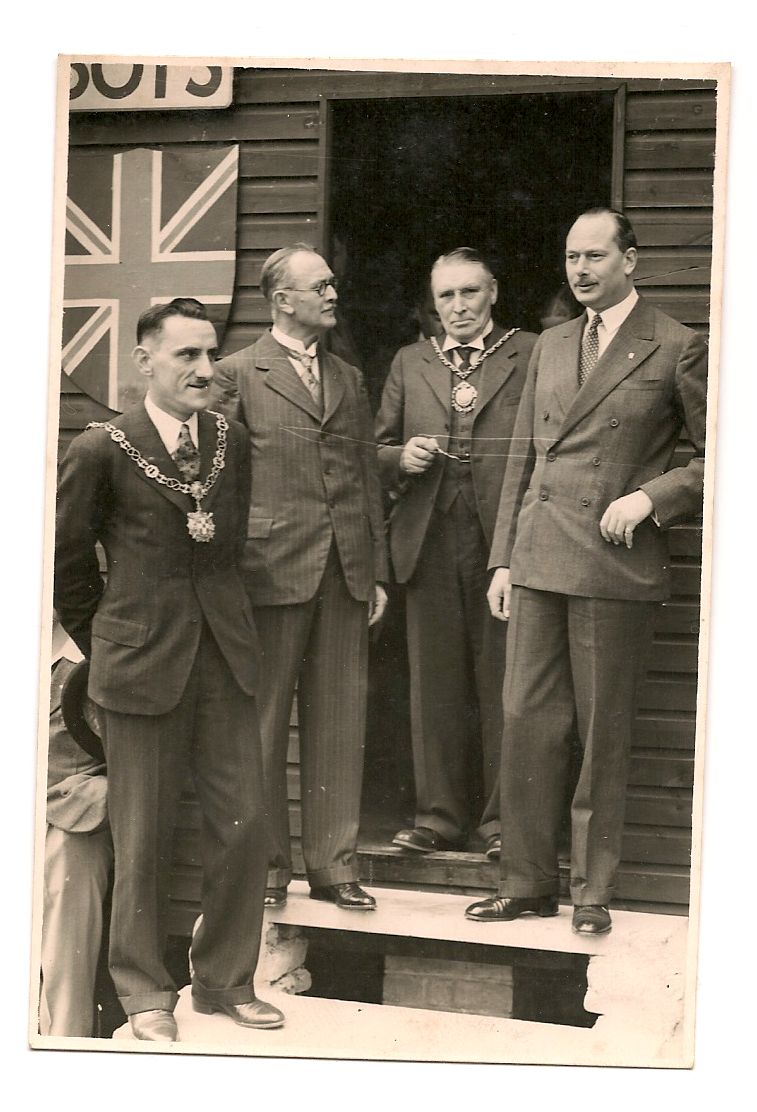
Colin Halfpenny also provided this photograph taken outside Christ Church Boys Club in 1939, when the Duke of Gloucester visited. It shows Cllr Halfpenny (the Sheriff), his father-in-law Cllr Tayler (the Mayor), and the chairman of the Youth club committee (name unknown, possibly a local bank manager?) with the Duke.

Notes:
(1) I can’t think whereabouts this is and am a little reluctant to go and look as with my poor sense of direction and the labyrinthine nature of the estate I always struggle to find my way back out again! Does anyone else know?
(2) Thanks so much to Colin, David and Ron for providing the above information and photographs.
(3) Information on presentation of photo to Sam Ashley taken from Lichfield Mercury archive

A New Penny

New Lichfield pub ‘The Saxon Penny‘ is due to open on the 18th November (the day before my birthday in fact!). Its name, as you may have guessed, has been inspired by the Staffordshire Hoard discovered a couple of miles up the road.

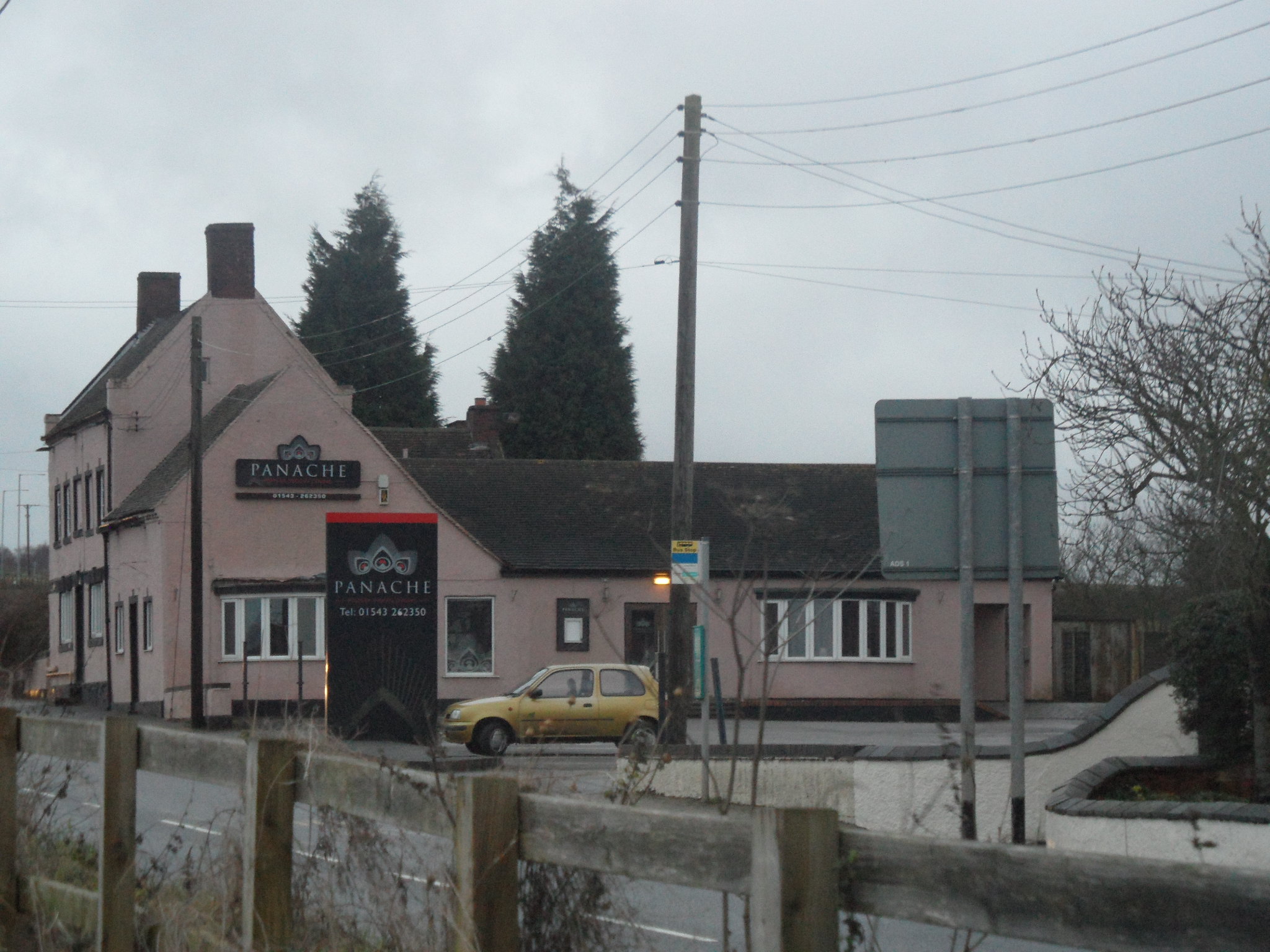
The building of the Saxon Penny reverses the trend which has seen this side of Lichfield lose many of its pubs.The Carpenter’s Arms on Christchurch Lane was demolished and replaced by an apartment block. The Three Tuns on the Walsall Road still exists but in the form of a restaurant rather than an inn. The Royal Oak’s original premises at Sandyway, later a farmhouse, is today nothing more than a pile of bricks and a broken down barn awaiting development of some kind. The pub relocated in the 1860s, to a position a little further up the road at Pipehill, but that too has vanished. The Royal Oak is discussed in much more detail on Brownhills Bob’s Brownhills Blog here.

Three Tuns, December 2012

Remains of Sandyway Farm, December 2012

Wall at site of Royal Oak, Pipe Hill

Last week on my day off I had stacks to do but the sun was shining and so I went for a walk with my Mum up Pipe Hill, on the basis that with Autumn in the air you have to take your opportunities whilst you can (a good call as it happens. I don’t think I’ve seen the sun since!). We stopped to look at the site of the Royal Oak at Pipe Hill. I’ve heard that rubble from the building still remains on site. A chap we met later on the walk told us that there were also three cottages here, cut into the rock and that you could still see the chimneys. Well, of course we looked but we couldn’t see them, and so will need to return once winter has taken its toll on the plant life.

In the meantime, I decided to look at the newspaper archive to see what information there was on these pubs and buildings. I found that one of the licensees of the Three Tuns, Frederick Henry Shilcock, wrote poetry as well as pulling pints. Originally Mr Shilcock was in the hosiery trade, before serving in France during the First World War. He arrived in Lichfield in 1938, was at the Three Tuns for fifteen years. An anthology of his work, ‘Poems by a Lichfield Innkeeper’ was published in 1950. It would be interesting to know if anyone has a copy?

In October 1907, a young chap called Herbert Smith, a labourer living at the Three Tuns, was charged with being drunk and disorderly in Sandford Street, along with John Fryer, a blacksmith from Leomansley (interesting!). Apparently, arm in arm they walked through Lichfield making a nuisance of themselves by shouting, swearing and jostling people off the footpath. (Old newspapers are full of reports like this – who says binge drinking is a modern phenomenon?!).

The Royal Oak landlord George Hodges was fined £1 in April 1940 for allowing a light to show through the front door glass panel of the pub. Although the window had been covered with brown paper there was still one and a half inches showing meaning that the light ‘could be seen distinctly two miles away’.

At the end of the Second World War, a VJ party was held at Charles Hollinshead’s Sandyway Farm (which had previously been the Royal Oak) in September 1945, which was attended by 120 parents and children from the Walsall Road and Pipe Hill. The farmyard and barns were decorated with flags and bunting, and each child received an envelope containing a shilling. There was a varied programme of entertainment including a ventriloquist, comedians and ‘Billy’ Atkins and his band. The celebrations ended at midnight with a rendition of ‘God Save the King’.

The saddest story is that of an inquest held in September 1884 at the Three Tuns Inn. A young lad, just eight years old, had drowned whilst swimming in the canal near Sandfields Pumping Station. What particularly interests me is that the fact that the inquest was held in an inn. This was not a one off – in the absence of public mortuaries, inquests into unexpected or unexplained deaths were held in several of Lichfield’s public houses, and the same thing happened in villages, towns and cities across the country. I’m reading more about this and hopefully will be following up with a further post about this aspect of our social history shortly, but of course in the meantime, any comments are welcome!

Discovering Leomansley

It’s been a little quiet here on the blog recently, but with good reason! I’ve been busy with the new group I’m involved in – Lichfield Discovered. As well as putting on a series of talks and workshops, we’re also really keen to get out and about exploring this fine city of ours together.

We’re using this badge belonging to one of the group members as our Lichfield Discovered logo!

So, on Sunday, around twenty people (plus dogs!) met at Martin Heath hall to explore some of the lanes and greens of Leomansley. Over the years I’ve lived here, I’ve tried to piece together some of the history of this lovely, but I think relatively unknown, part of Lichfield. As well as sharing this information, I was also hoping that others on the walk would contribute their own memories and information.  I wasn’t disappointed! I’ve added the notes that I prepared for the walk here –  Leomansley Discovered Walk Notes (disclaimer: they are a bit rough but hopefully of interest!) – but along the way we also heard:

  • how in the final years before demolition, Beacon Place was owned by the council and used to store items for the Lichfield Bower!
  • that children in the area would sometimes bypass the swimming baths on the Walsall Rd altogether, choosing instead to swim in the pools at Leomansley House and in Leomansley Brook, once they’d dammed it to make it deep enough!
  • that a mysterious stone with a perfectly carved letter ‘L’ had been dug up in a Leomansley backgarden
  • that one of the terraced houses on the Walsall Rd facing the old Conduit Lands Pumping station and the public baths may once have been a shop
  • there were actual baths at the swimming baths
  • how someone’s aunt lived in a house that was once part of the original Christ Church school building (after the school had been condemned and moved to its current position over the road)
  • that there was an air raid shelter behind Christ Church school
  • that the foundry on Beacon St (where Morrisons is now) once had an agreement that they could deposit some of their industrial waste on Pipe Green (some of which is still evident!)
  • that my Mum lives in the house where the jockey Greville Starkey once lived!

Unfortunately, despite accosting the owner of the old Vicarage on Christchurch Lane we still didn’t manage to get a definitive answer on the subject of the mystery bell outside one of the windows, but we did enjoy coming up with our own theories! We were also tantalising close to seeing what the Carpenter’s Arms looked like, as someone who had lived next door was kind enough to bring along an old photograph of their house, but sadly the now demolished pub was just out of shot!

As well as members of the Lichfield Discovered Group, it was great to have people from the Beacon Street Area Residents’ Association, the Pipe Green Trust, Friends of Lichfield Parks, friends and Leomansley residents, past and present, come along and I’d like to say a big thank you to all who joined in. I think sharing and working together is vital to understanding our local history – we can all learn something from each other (I think the posh word is synergy).

The start of the walk outside Martin Heath hall. Taken by Jane Arnold, Pipe Green Trust

I may do the walk again in Spring when the bluebells are out (and hopefully my Mum is in to make us all a nice cup of tea on the way round). There is also talk of a ‘Beacon Place’ walk, to discover the story of this lost estate, and the traces that remain in Beacon Park. In the meantime however, the next meeting of Lichfield Discovered is on Tuesday 12th November 2013, starting 7pm at the Lichfield Garrick studio, where we will be discussing and sharing memories of WW1 and WW2. For more information, please take a look at the Lichfield Discovered website here. You can also follow us on twitter @lichdiscovered and we’re on Facebook too https://www.facebook.com/pages/Lichfield-Discovered/488746161217038

Battle Ground

One Lichfield place name I’ve always been curious about is Bunker’s Hill. Most people will probably know the name from the car parkin between Lower Sandford Street and the football pitches at Beacon Park, but how did it come about?

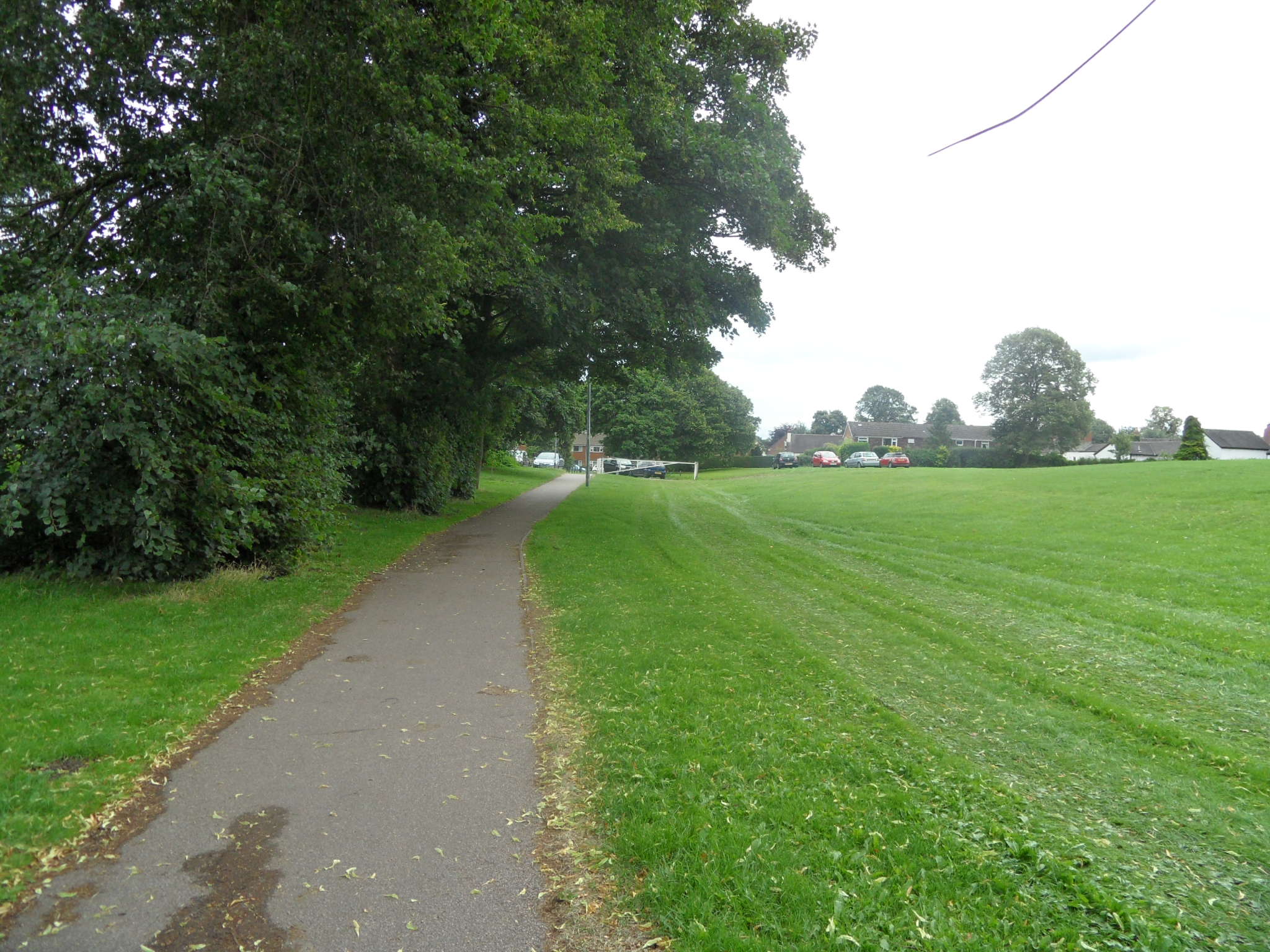
Looking towards Bunker’s Hill car park, Beacon Park

According to Howard Clayton’s ‘Loyal and Ancient City’, it’s recorded that during the Civil War, parliamentarian leader Sir William Brereton erected a mount, described by the VCH as a raised defensive position, in the Sandford Street area.  Mr Clayton suggests that the mound known as Bunkers Hill could be the location and in John Shaw’s ‘The Street Names of Lichfield’, the author suggests that the name derives from these earthworks. I’d be really interested to know if there are any relevant archaeology finds from this area of the park. I wanted to see if I could find any more information about the site. I knew that in the 1800s there had been a farm around here and also one of the old lodges to Beacon Place, the mansion which once stood on what is now Seckham Rd (demolished in the 1960s). The original Walsall Rd must have passed nearby too, before the route was altered in 1837. Records show that there were six cottages here by 1883.  In 1901, Mr George Watts, a bricklayer and his family lived in one of those cottages – 5, Bunker’s Hill. By 1916, youngest son Albert was serving in the Motor Transport Section of the ASC and had an account of his experiences in France published by the Lichfield Mercury. He described his first experience of being under fire as ‘terrifying’, but said that one got used to it. After being taken ill, he acted as a clerk in a convalescent home where one of his jobs was writing out ‘Blighty” tickets. How hard it must have been for him that he wasn’t able to write one out for himself. I wonder if he did make it home to Lichfield?  Nowadays, the area has changed considerably. The lodge and farm are long gone, although there is a water tap which seems to correspond with the site of a pump on OS maps. I wonder if this was originally a community pump for those living in the cottages? I haven’t found much else on Lichfield’s Bunker’s Hill specifically, other than in September 1905, Lichfield City Council’s Streets and Highways Committee discussed a proposal to have it enclosed. In the end, it seems that they decided to have Bunker’s Hill levelled and sown with grass seed. However, whilst searching I have found references to other ‘Bunkers Hills’. In his book on Worcestershire place names, local historian and etymologist William Henry Duignan of Walsall wrote that ‘There are numerous ‘Bunkers Hills’ throughout the kingdom, but having met with no early forms, I conclude that it is a mere fancy name conferred after the victory at Bunkers Hill, US in 1775.’. A good example are the cottages at Bottesford in Leicestershire, which were named ‘Bunkers Hill’ after this battle. It’s also interesting that the 38th Regiment of Foot, raised by Col. Luke Lillingston at the Kings Head in Lichfield in 1705, fought at this battle. So, Bunkers Hill may have got its name from the English Civil War, but could there be an outside chance that it may instead relate to the American War of Independence? Perhaps it refers to something else altogether! Any thoughts? Notes 1 – I’ve seen the name spelt with an apostrophe and without Sources Lichfield: From the Reformation to c.1800, A History of the County of Stafford: Volume 14: Lichfield (1990), pp. 14-24. Loyal and Ancient City by Howard Clayton The Street Names of Lichfield by John Shaw

Four Legs, Two Wheels, One City

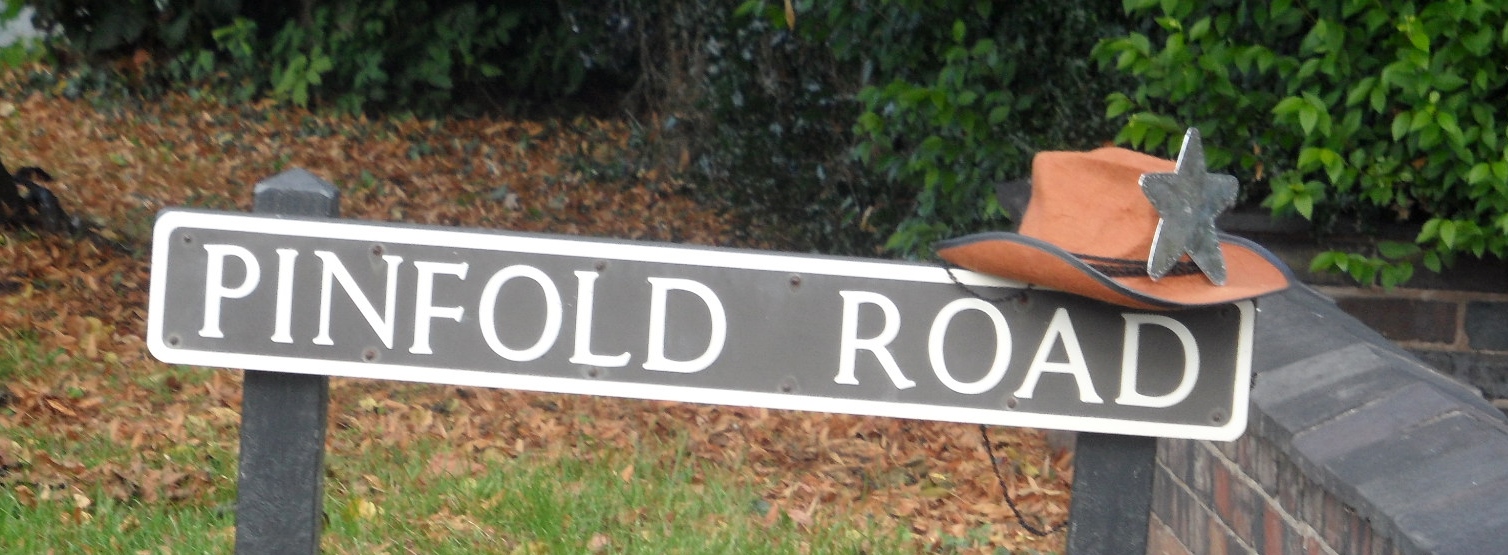
As the participants in the annual Sheriff’s ride gathered on horseback outside the Guildhall to take part in this centuries-old tradition, another group met at the Stafford Rd pinfold to begin their inaugural two wheeled alternative.

As the cyclists left, a police car arrived, heralding the arrival of the horses and their riders travelling in the opposite direction.

You can find out how they got on with the alternative ride (straight from the horse’s mouth!) by reading all about it here on the Lichwheeld blog. I prefer two feet to two wheels, but I really wished I’d have joined in as it’s such a great idea and seemed like such a lot of fun (as all the best traditions are!). There’s always next year…

Cheers to all those who keep our traditions going and to those who start new ones – this city is definitely big enough for the both of them!

A Burny Inn

The King’s Head is one of the oldest pubs in Lichfield (1) and somewhere I’ve spent many a happy evening.(2) The sign across the entrance and John Shaw’s legendary ‘The Old Pubs of Lichfield’ date it to 1408, when it was known as ‘The Antelope’. By 1650, it had been renamed as The King’s Head.  I’ve been reading the old papers again, and it seems that in the 1930s, we nearly lost this fine old drinking establishment to fire…twice!

Which window did Mrs Shellcross climb out of I wonder?

On the night of June 27th 1932, landlady Mrs Shellcross went to bed in the King’s Head for the last time, leaving a small fire burning in the dining room grate.  The following day new tenants were arriving, and she would be leaving the King’s Head. Yet as she climbed the wooden staircase to her room, she would never have imagined that she would not be leaving the pub via the door but through a first floor window!

In the early hours of the morning, one of the hotel’s residents, Mr Corbett, was awoken by the sound of falling crockery. After discovering that the building was on fire, he raised the alarm. However, the five occupants of the pub found the staircase ablaze and their escape route blocked. They were left with no choice but to escape from upstairs windows. Mr Corbett jumped from the first storey and flagged down a passing motor van and trailer. The van driver positioned his vehicle close to the wall of the hotel, beneath a third storey (4) window, enabling Mr Dunmow, a commercial traveller to break his fall by jumping on top of the van.  Landlady Mrs Shellcross managed to climb through a first floor window onto a wall bracket but this gave way and she fell fifteen feet down onto the pavement. Another resident, a Mr King of Broxbourne in Hertfordshire, escaped using his bedclothes as a makeshift rope.

Although Mr Dunmow was admitted to the Victoria Hospital with shock, the others luckily suffered nothing more than cuts and bruises. However, the building itself had not been so fortunate. The dining room was destroyed, and the upstairs function room severely damaged. Several valuable paintings and ornaments were also lost. The ‘buff regalia’ was damaged by water (does anyone know what this refers to?).  It was said that the prompt turnout from the Lichfield Fire Brigade had saved the building from being burnt to the ground.

New tenants, the Evans family, arrived at the King’s Head to find ‘a charred mass of ashes, a ruined dining room, scorched and blackened walls, and everything soaked with water’.  There can barely have been time to make good this damage when just eighteen months later, an old oak beam in the chimney in the dining room and clubroom caused another major blaze at the pub. In the early hours of a December morning in 1933, Major Evans was awoken by the smell of smoke. This time, there was just time for the Evans family and the five hotel guests to escape down the staircase, which according to the Mercury was ‘a mass of flames’ immediately afterwards. The Major led his family and other guests to safety before returning to the burning pub to telephone for the fire brigade. There was no response as one of the hotel guests had already alerted the brigade who were now on the scene. It took two hours to put out the fire, and although the front of the building was saved, the dining room and clubroom were ‘burnt beyond recognition’. Apparently, the properties on either side of the pub were also at risk for a while.

Perhaps a little opportunistically, there is an advertisement for the Prudential Assurance Co. beneath the story asking readers ‘If this had been your property would it have been adequately insured? Don’t wait until you have to call the Fire Brigade before answering this question.’

On the Lichfield Ghost Walk, we were told a young woman working as a maid had died in a fire here and that sometimes her candle could be seen flickering in one of the upstairs windows. Perhaps this story harks back to an earlier blaze. It would be interesting to do some research and see if there is any truth in this. After all when it comes to ghost stories, there’s usually no smoke without fire….

Notes

(1) The Kings Head is said to be the oldest pub, the Duke of York over the other side of the city at Greenhill is said to be the oldest inn. I’m just glad they are both still open and serving beer!

(2) A particular highlight was the folky carol service I attended here in 2010. I hope they do it again this Christmas.

(3) As many will know, Col. Luke Lillingston formed a regiment here in 1705, and you can read more about this aspect of the pub’s history at The Staffordshire Regiment Museum website here. Or even better go and visit the museum to find out more!

(4) Third storey window? I’m guessing this means what I would call the second floor?

Sources:

Lichfield Mercury Archive

Lichfield: From the Reformation to c.1800′, A History of the County of Stafford: Volume 14: Lichfield (1990), pp. 14-24. URL

The Old Pubs of Lichfield, John Shaw

Any Old Iron?

When I was a little girl, my great (in all senses of the word!) granddad told me that the railings at the local cemetery in Birmingham had been taken for the war effort.  Ever since then it’s been my understanding that iron and other metals collected from homes, gardens and public places during the Second World War, were transformed into munitions. However, earlier this year a comment on Facebook, suggesting that the recycling of metal for the war effort was a myth, made me question this long held belief.

What is not in doubt is that places up and down the country handed over their railings, including Lichfield.  I understand that to begin with they were offered up on a voluntary basis but in 1941, the Ministry of Supply made the requisition of all ‘unnecessary iron or steel railings’ compulsory, for use in the foundries. The Lichfield Mercury carried an announcement that the Council had been instructed to make a survey and draw up a list of those to be surrendered. Compensation was available but the Ministry hoped that the majority of owners would give their railings freely! I have seen several suggestions that any reluctance was seen as unpatriotic (and perhaps there are hints of this in the discussions that follow below). Guidelines were issued on which type of railings were necessary and therefore exempt including:

1- Railings which should be maintained for safety reasons
2- Railings necessary to prevent cattle from straying
3- Railings of special artistic merit or historic value.

The remains of metal railings at Lichfield Library (the Friary Girls School at the time of WW2).

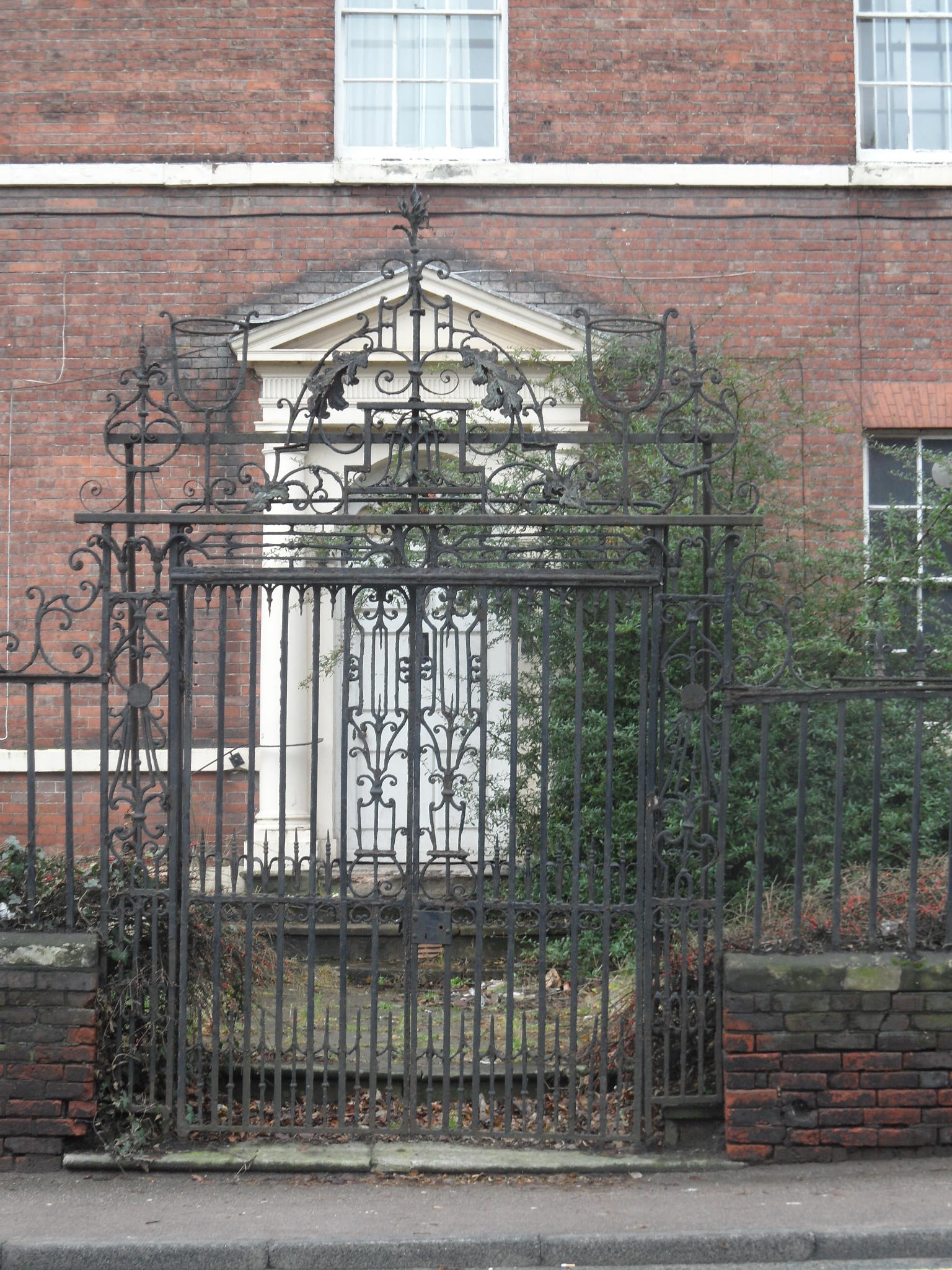
This perhaps explains why the library (then the Friary Girls School) lost its railings, but the decorative eighteenth century wrought iron gates outside the Angel Croft remained. It’s a little ironic that these listed railings were saved from the scrapheap back in the 1940s only to be left to rust away in-situ in more recent times.

Listed wrought iron gates outside the listed Angel Croft hotel – all appear on the English Heritage ‘At Risk’ register

For an insight into some of the discussions that took place at the time,  I’ve summarised part of a Council meeting that took place in June 1941, concerning the requisition of the railings that once stood around the gardens at Greenhill. Cllr Tayler argued that their removal should be deferred as they were necessary to prevent trespassing in the garden and to protect the water tank underneath, and asked why such a small amount of railings doing such necessary work should be removed when there was a large amount of ornamental fencing in the city still in place. Cllr.Taylor mentioned the railings around the Friary School in particular, explaining that there were more tonnes of railings there than hundredweights at Greenhill. He acknowledged that they were nice to look through, and that one could almost imagine they were looking at the Garden of Eden at times, but argued that if they wanted to get the serpent Hitler out, the Friary’s railings should be taken as a valuable contribution for the Minister’s appeal.

Whilst Cllr Taylor got his way at the Friary, his point about Greenhill was rejected. The Mayor felt that the council could not expect people to remove their railings if the council was unwilling to surrender their own. He also felt the removal of the Greenhill railings would enhance the beauty of that little park, creating a place where the old people of Lichfield could go for an enjoyable smoke. Cllr. Tayler remained unconvinced by this vision – he thought it was more likely to become a car park for Winterton’s auction. Alderman Deacon agreed – he thought opening up the space would lead to trespassing left, right and centre. He also voiced his frustration regarding the government’s campaign saying, “If the necessity for railings is so urgent as the Ministry of Supply said, why don’t they make a requisition for the whole of it…the Government should adopt a proper attitude and make a requisition for the whole of it”. Cllr. Moseley’s attempts to appease both sides by suggesting the decision be deferred to allow the members to visit the site were met with strong words from Cllr. Wiliams. “It seems pitiful to me. We are at war, and the Prime Minister’s speech not many hours ago gave the excuse of getting out of Crete because we did not have sufficient of this and the other. I take it we should never have attempted to recommend the removal of this scrap metal unless it was wanted, and yet these old historical people get up and say, ‘Don’t take it away as it will spoil the beauty of the city’. We have not in Lichfield felt the war, and it would be a damned good thing if we had a shot at it, and then we should realise what our army, navy and air force have to put up with. I can’t understand this spirit of Cromwell today. If we can help a little bit in Lichfield by scrapping our railings, let us do it with a good heart. Cllr Collins echoed these thoughts by adding, “We called it the ancient and loyal city and I think we can add one word – patriotic. I would certainly support the giving up of these railings on patriotic grounds and also that all other railings in Lichfield should be given up”. With these words, Cllr Tayler’s attempt to save Greenhill’s railings was defeated.

At the same meeting, Cllr. Halfpenny suggested that the railings in the Museum Grounds be salvaged and replaced by wire and fencing. The previous summer, the Council had decided to sell the old guns from the Crimean and First World Wars which were on display in the grounds. Again, this decision was reached following a fascinating and, at times, seemingly heated discussion. Cllr. Collins opposed the sale of these old war relics believing that they had been given to Lichfield as a token of the courage, bravery and endurance of the men of the 2nd Battalion of the South Staffordshire Regiment (the First World War gun had apparently been captured by them on 3 August 1918). It did not cost anything to keep them, not even a rag or a drop of oil, and he believed that there may be many South Staffordshire soldiers who passed by that gun and had a chat about days gone by. The Russian gun from the Crimea put Cllr. Collins in mind of his school days and some of the battles that had been fought. In his opinion, the guns should stay where they were and wait for the next one to come and keep them company. Alderman Bridgeman agreed, as did Cllr. Williams, Alderman Hall and Cllr. Moseley, who thought that they made the grounds more interesting.  However, Cllr. Tayler was firmly in favour of the sale. He believed that the ‘morbid sentimentality’ that they had heard that evening had led the nation into the deplorable condition it now found itself in. Too much consideration had been given to German relics and Germans since 1918. The nation needed iron and what better to have than that sort of scrap iron. He acknowledged that the guns were of interest but felt that they could not afford simply to allow them to lie about for people to look at when they were the very thing the nation and the army wanted. Cllr. Nevill added that the old first world war gun had been lying around for the last twenty years, used only as a plaything for the children. Cllr. Bather reminded the meeting that the country was having to import iron from the States at exorbitant prices and believed, ‘If that gun was turned into a new one to use against the Germans, it would be the finest thing that could happen to it’. The decision was taken to sell the guns to a local metal merchant who had been granted a license by the Ministry of Supply to purchase scrap of all descriptions. However, what became of the guns after that?

The old war guns are taken away after being sold to a local scrap metal firm. Photograph taken from Lichfield Mercury Archive

There are numerous blogs and discussion boards on the subject of Britain’s war effort. On some you’ll find tales of railings being dumped in the Thames and the North Sea and of piles of metal rusting away in fields and depots. Perhaps somewhere amongst the propaganda and the myth, is the real story of what happened to the ‘scrap’ metal collected here in Lichfield and elsewhere.

Notes: There’s a great Pathe film clip called ‘Park Railings for Munitions’, which you can watch here.

Source: Lichfield Mercury Archives