Orange Peel

In the mid 1930s, the Lichfield Mercury ran a series of articles called ‘The Beauty that is England’, featuring local country houses – ‘what they are and have been’ – around Lichfield. Each article blends the author’s description of the house (if still standing) and grounds with a heady mix of folklore, hearsay, historic records and poor quality photographs. Taken with a pinch off salt, they make for fascinating reading. As well as describing the past, they are now the past, providing us with a snapshot of almost eighty years ago – a ‘Now and Then and Then’, if you like.
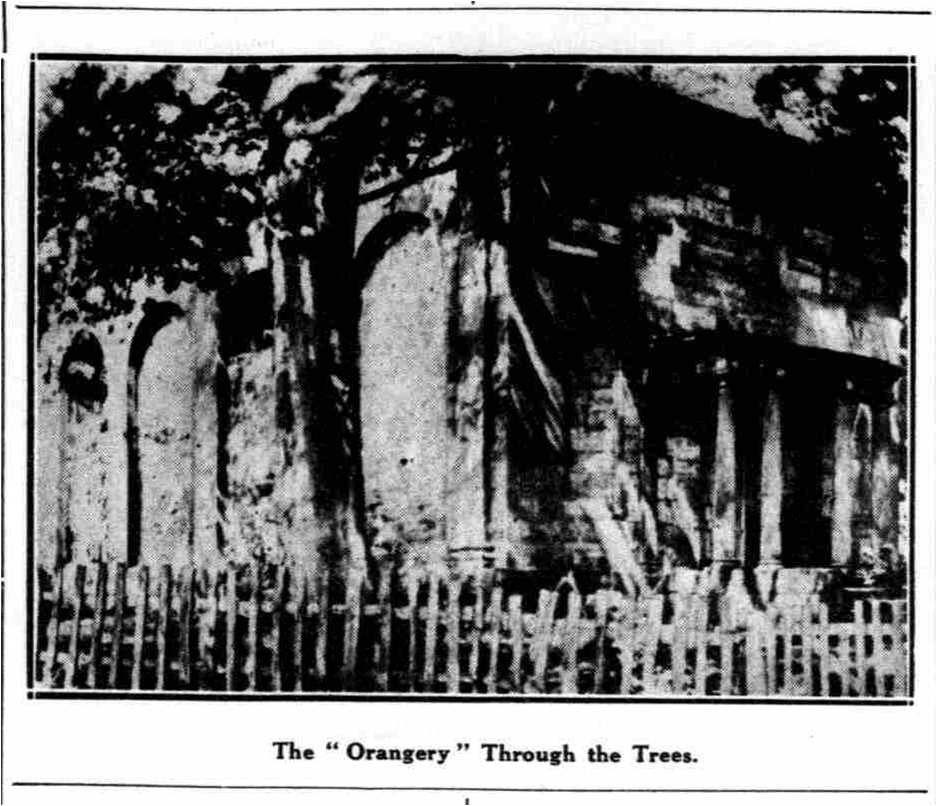
The Orangery at the old Fisherwick Estate. Just about.

The Orangery at the old Fisherwick Estate. Photo from the Lichfield Mercury July 19th, 1935.

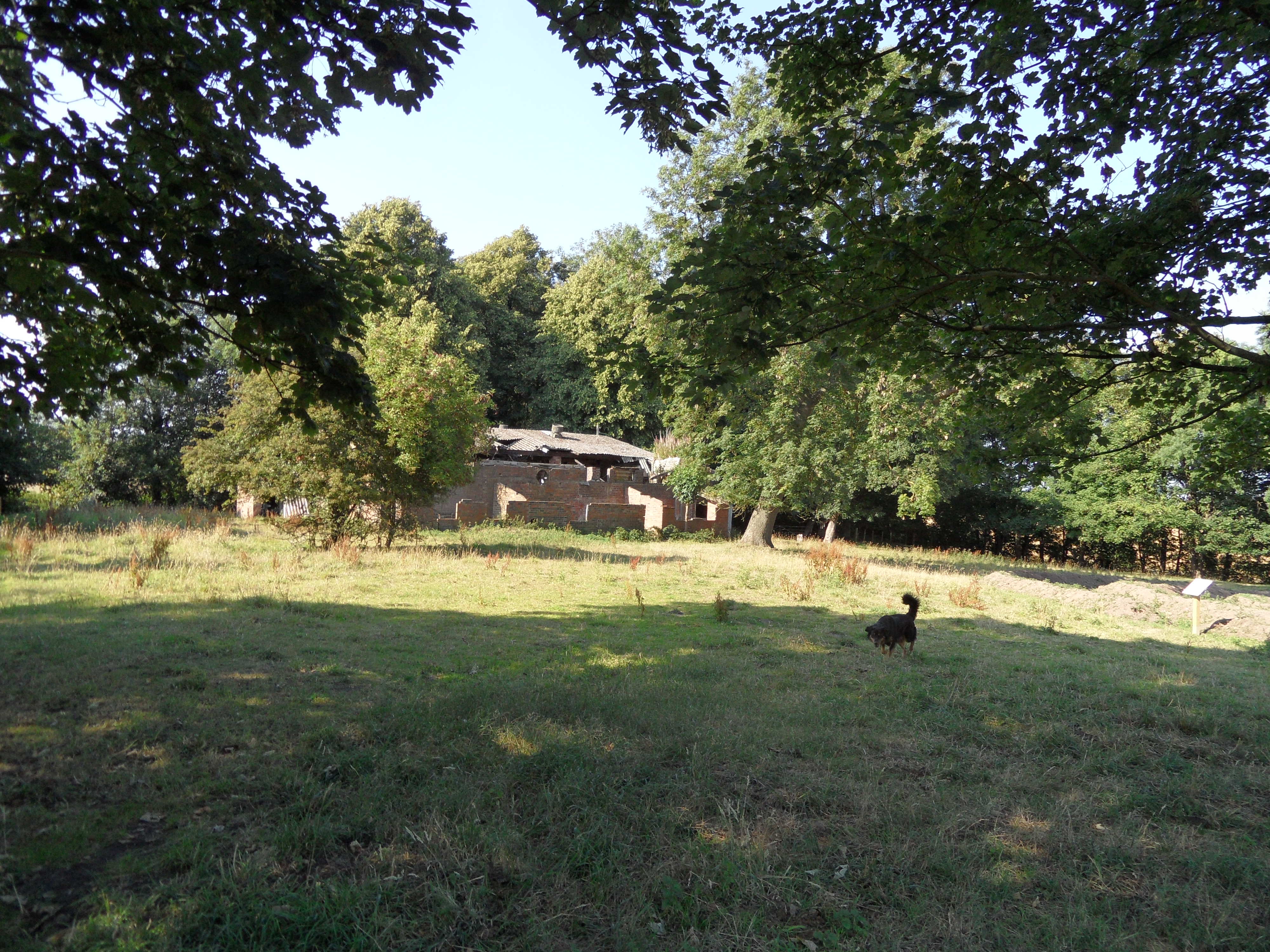
I was delighted that number eight in the series was Fisherwick, the site of a once grand mansion built for the Marquess of Donegal in the 1760s, but torn down and sold off to pay family debts after barely half a century. It’s a place I know well and I recognise much of it from the description from the 1930s – the beauty of its woods, the old arched bridges, the River Tame meandering through rich and colourful meadows. Yet of course in eighty years there have been changes. The red brick of the now demolished Elford Hall can no longer be seen in the distance, Fisherwick Hall’s ice house, ‘a brick enclosed fissure, built into the side of the hill’, near Home Farm has since disappeared, as has the pub in nearby Whittington which took its name from Robert Peel who purchased some of the dismembered Fisherwick estate.

Still hanging on in there just is the Orangery, although its portico (just visible in the above image), supported by four pillars with carved ionic capitals and reached by four worn steps has vanished since the 1930s, as has the frieze around the walls, said to have been carved in white stone with goats’ or sheep skulls linked by flowers. It’s a miracle anything survives at all. Even eighty years ago the author described its ‘crumbling sandstone, rotting bricks and decaying beams’, noting how ‘the ravages of time and nature are playing havoc with the beauty it barely possesses’. Then, in the 1970s, Nature upped her game and the Orangery was struck by lightening and scheduled for demolition. Why this never took place, I don’t know but I’m pleased it didn’t. It gives us an idea of what the rest of the estate may have looked like, and has the added interest of carved graffiti – the author thought everyone in Lichfield had added their signatures, based on the number and variety of names scribbled all over it.
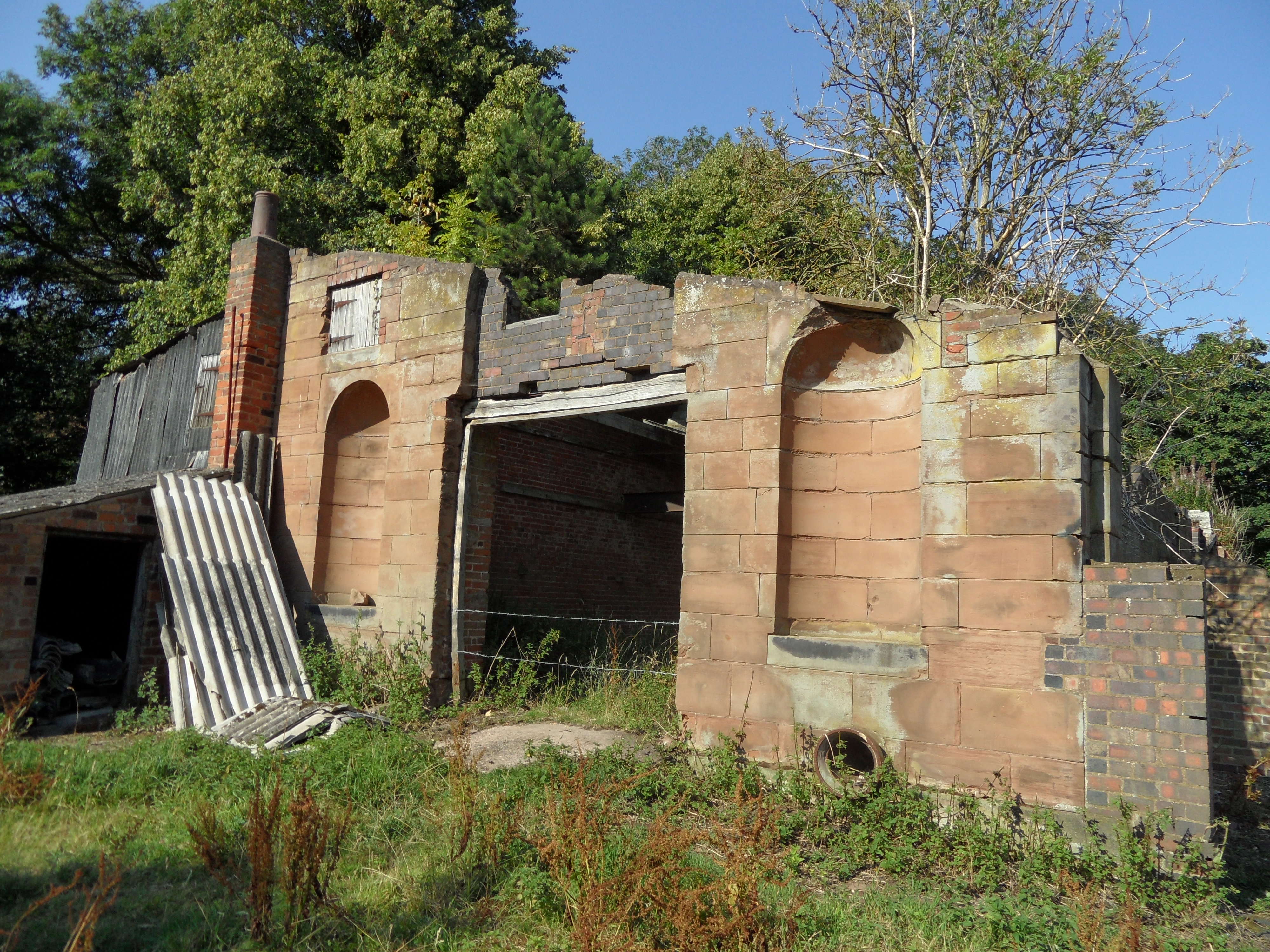
Orangery

SAM_5150

Fisherwick 016

The Lichfield Mercury article ends with a tantalising yet unsubstantiated snippet of a story, saying that, ‘in 1800, a fatal duel was fought at Fisherwick, where a suitable enclosure near the hall had been lent for the combat’. I don’t know who the two gentlemen were, or what their quarrel was over, but this is just one of the many tales which have weaved their way around this intriguing place.  If you’d like to hear more Fisherwick Stories and explore the Orangery and whatever else remains of the estate today, including the community farm which has grown up in and around the former walled garden, then you are more than welcome to join us on our Lichfield Discovered walk –  2pm on Saturday 5th April at Woodhouse Farm and Garden.


Objects of My Affection Pt 1

Our next Lichfield Discovered meeting is fast approaching (7pm on 10th March at Lichfield Heritage Centre) and this time round we’re having a bit of a show and tell. We’ll be having a go at telling one hundred years of Lichfield History in twelve objects and we want people to get involved by bringing along their Lichfield related objects to show us all.

There are loads of objects that I’d love to be able to bring along with me, but can’t, either because they’re lost, immovable or I’d be arrested. So instead, over the next week or so, I’ll share some of them here instead.

First up, the earthenware jars found in the south wall of Farewell Church during its partial demolition.

Farewell Church

St Bartholomew’s in Farewell was once the site of a Benedictine Nunnery. The place name refers to the ‘pure or clear’ spring which still flows here. The original church incorporated material from the nunnery, but much of it was demolished and rebuilt in brick in the 1740s.

Trust me, there is a spring beneath here.

Trust me, there is a spring beneath here.

In my opinion, it takes something pretty special to top an ancient spring, but here at Farewell, the most interesting thing for me is the discovery of three rows of different sized earthenware vessels in the south wall of the church at the time of the renovations. The jars were lying on their sides, their openings facing inside the church, covered with a thin coat of plaster. Sadly most were broken during the work but one of the jars found its way to Mr Greene’s Museum of Curiosities on Market St, Lichfield. Its whereabouts is now unknown but luckily, someone did make a woodcut engraving of it, as seen here on Staffordshire Past Track. The purpose of the jars remains a bit of a mystery. The accepted explanation is that they were ‘acoustic jars’, used, as the name suggests, to improve the acoustics in the church, based on a theory from a Roman architect called Vitruvius. However, others have suggested that they may be related to the idea of votive offerings (interesting article here).

It’s a good example of how important is it to not to separate objects from their stories . Without knowing the context in which it was found, the jar becomes just another piece of pottery and without being able to examine the jar itself, the real reason why (and when) it was placed in a church wall in Farewell centuries ago may never be known.

When Spring finally does arrive, do try and visit Farewell via Cross in Hand Lane, the old pilgrims route & former road to Stafford. It’s a lovely walk to a lovely place with the banks of the ancient holloways covered in flowers and the Ashmore Brook running alongside if you fancy a paddle.

farewell

Discovering Leomansley

It’s been a little quiet here on the blog recently, but with good reason! I’ve been busy with the new group I’m involved in – Lichfield Discovered. As well as putting on a series of talks and workshops, we’re also really keen to get out and about exploring this fine city of ours together.

We’re using this badge belonging to one of the group members as our Lichfield Discovered logo!

So, on Sunday, around twenty people (plus dogs!) met at Martin Heath hall to explore some of the lanes and greens of Leomansley. Over the years I’ve lived here, I’ve tried to piece together some of the history of this lovely, but I think relatively unknown, part of Lichfield. As well as sharing this information, I was also hoping that others on the walk would contribute their own memories and information.  I wasn’t disappointed! I’ve added the notes that I prepared for the walk here –  Leomansley Discovered Walk Notes (disclaimer: they are a bit rough but hopefully of interest!) – but along the way we also heard:

  • how in the final years before demolition, Beacon Place was owned by the council and used to store items for the Lichfield Bower!
  • that children in the area would sometimes bypass the swimming baths on the Walsall Rd altogether, choosing instead to swim in the pools at Leomansley House and in Leomansley Brook, once they’d dammed it to make it deep enough!
  • that a mysterious stone with a perfectly carved letter ‘L’ had been dug up in a Leomansley backgarden
  • that one of the terraced houses on the Walsall Rd facing the old Conduit Lands Pumping station and the public baths may once have been a shop
  • there were actual baths at the swimming baths
  • how someone’s aunt lived in a house that was once part of the original Christ Church school building (after the school had been condemned and moved to its current position over the road)
  • that there was an air raid shelter behind Christ Church school
  • that the foundry on Beacon St (where Morrisons is now) once had an agreement that they could deposit some of their industrial waste on Pipe Green (some of which is still evident!)
  • that my Mum lives in the house where the jockey Greville Starkey once lived!

Unfortunately, despite accosting the owner of the old Vicarage on Christchurch Lane we still didn’t manage to get a definitive answer on the subject of the mystery bell outside one of the windows, but we did enjoy coming up with our own theories! We were also tantalising close to seeing what the Carpenter’s Arms looked like, as someone who had lived next door was kind enough to bring along an old photograph of their house, but sadly the now demolished pub was just out of shot!

As well as members of the Lichfield Discovered Group, it was great to have people from the Beacon Street Area Residents’ Association, the Pipe Green Trust, Friends of Lichfield Parks, friends and Leomansley residents, past and present, come along and I’d like to say a big thank you to all who joined in. I think sharing and working together is vital to understanding our local history – we can all learn something from each other (I think the posh word is synergy).

The start of the walk outside Martin Heath hall. Taken by Jane Arnold, Pipe Green Trust

I may do the walk again in Spring when the bluebells are out (and hopefully my Mum is in to make us all a nice cup of tea on the way round). There is also talk of a ‘Beacon Place’ walk, to discover the story of this lost estate, and the traces that remain in Beacon Park. In the meantime however, the next meeting of Lichfield Discovered is on Tuesday 12th November 2013, starting 7pm at the Lichfield Garrick studio, where we will be discussing and sharing memories of WW1 and WW2. For more information, please take a look at the Lichfield Discovered website here. You can also follow us on twitter @lichdiscovered and we’re on Facebook too https://www.facebook.com/pages/Lichfield-Discovered/488746161217038