Through Doors and Windows

Anyone who has read the Written into Lichfield History and Making your Mark posts, will know that Gareth Thomas has been exploring the Lichfield District Council Offices, and very kindly sharing the photos here on the blog.  Gareth’s doing this because the buildings were once the Lichfield Grammar School, and generations of pupils, dating back to the 17th century have left their mark on the building.
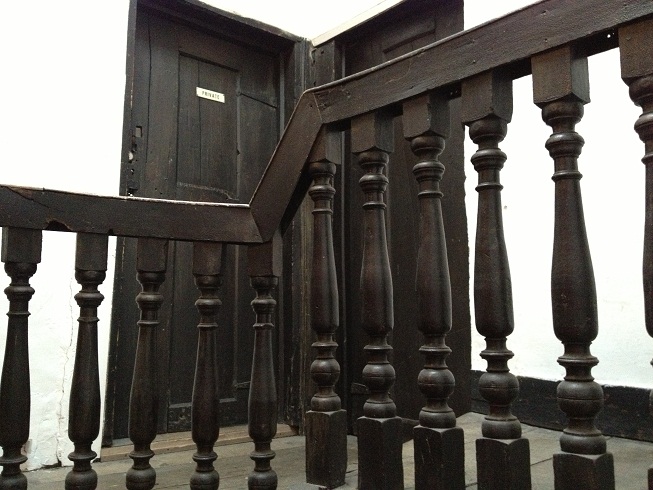
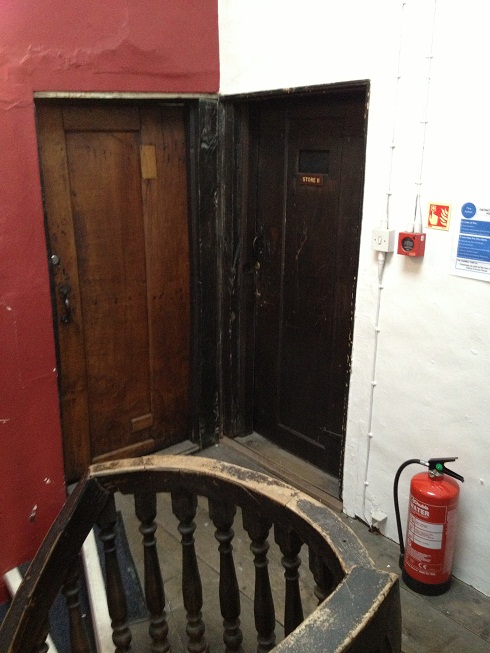
I like the idea that even those who didn’t go as far as leaving their name still left a trace on the worn bannisters and floorboards

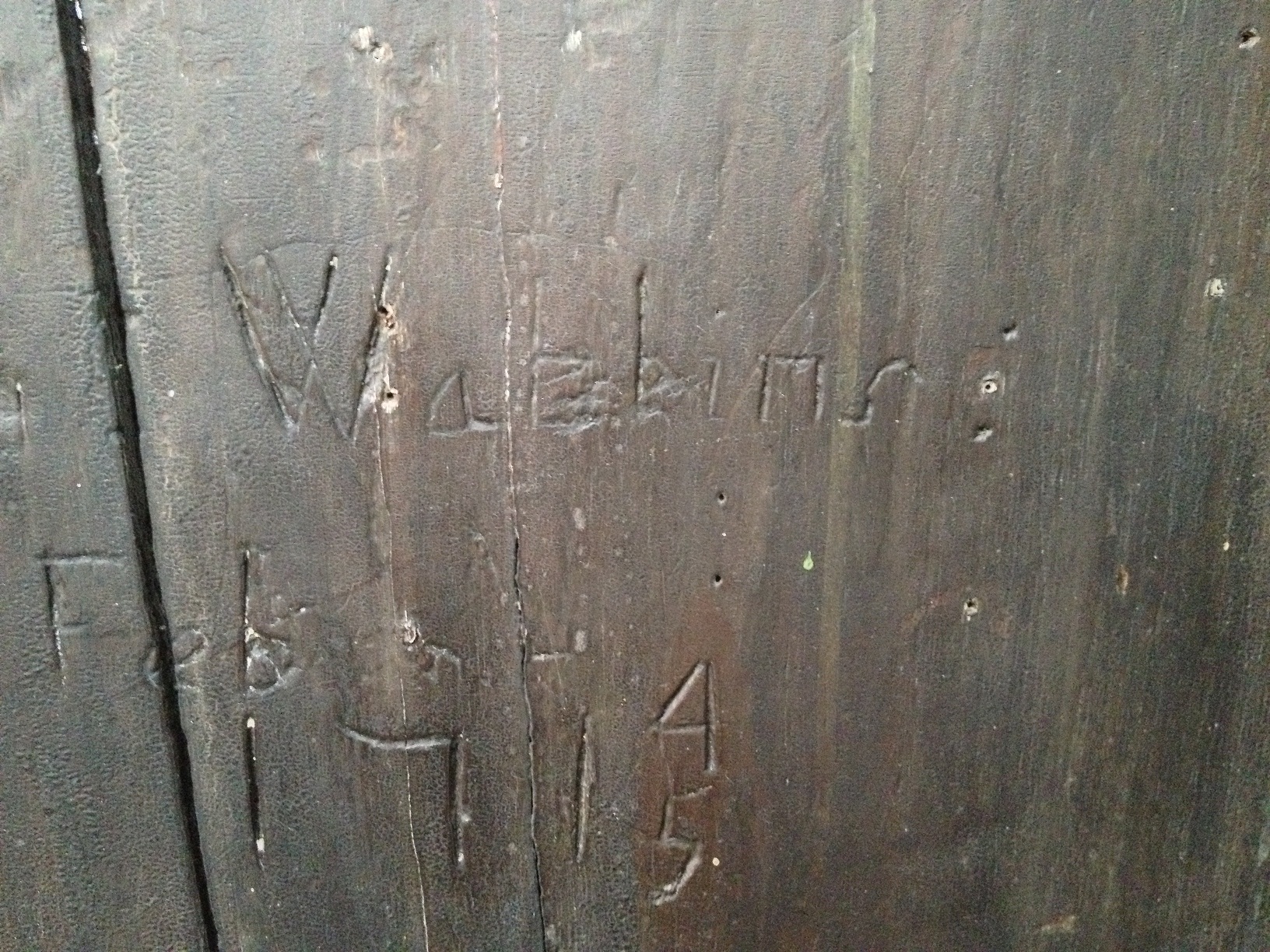
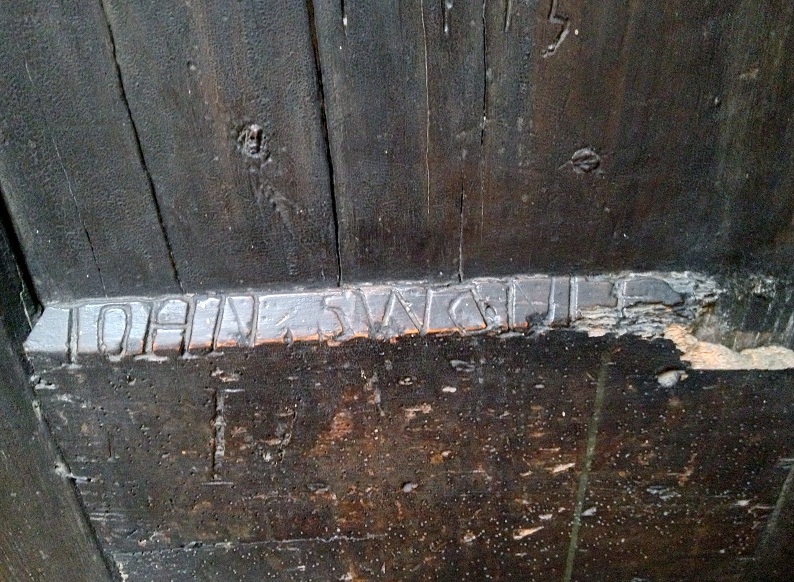
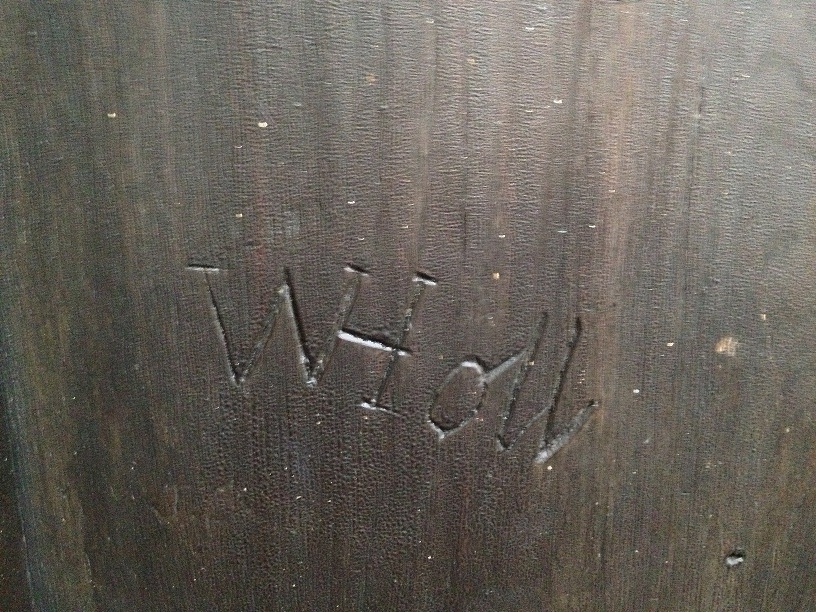
Last time, we got as far as the attic doors, where someone called ‘Watkins’, carved his name in February 1714/5. Amongst the other graffiti is the name WHoll, and Roger Jones (Ziksby) put forward the idea that this could be William Holl the engraver, which certainly warrants further investigation.  Back then the doors would have lead to the dormitories for the boarders at the school. Now thanks to Gareth, we get to have a look at what lies behind those potentially three hundred year old doors……
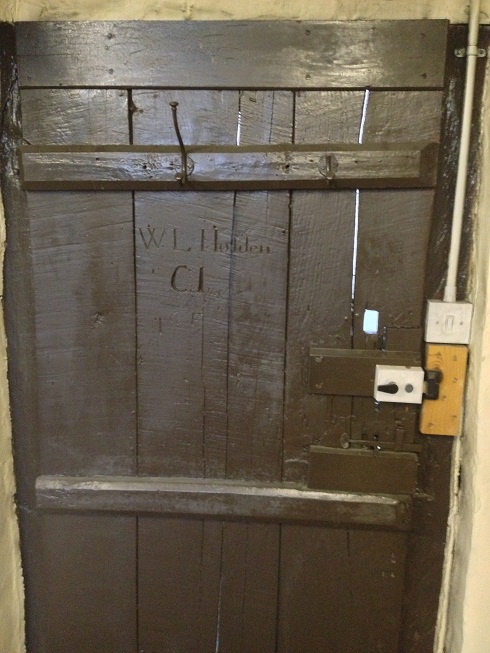
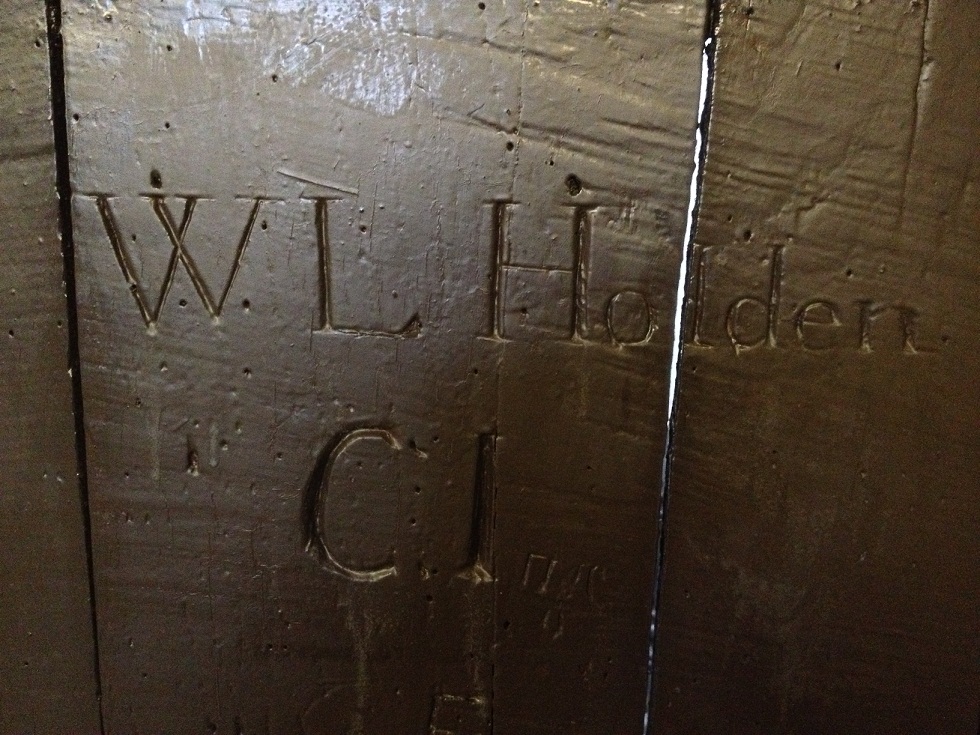
Who was WL Holden? Does C1 refer to his form or something else?

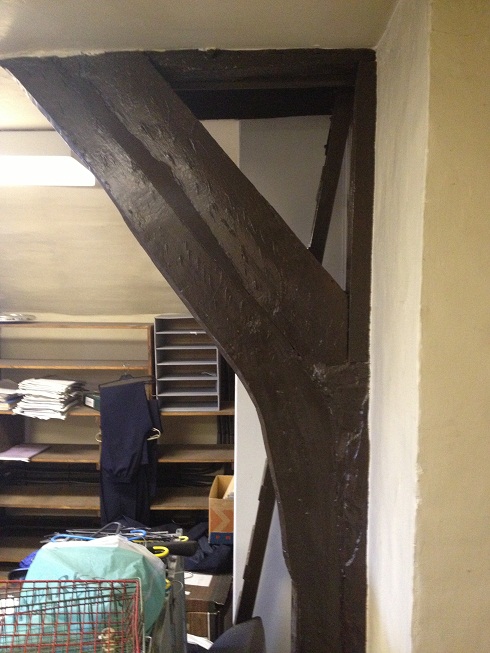
To us these are old timber beams, yet once they were brand new, and according to the Lichfield Conduit Lands archives, mostly donated in the form of individual trees!
 

Gareth has taken some photographs from the windows. Not only does this give an interesting perspective of the city, it also invites you to imagine what the boys would have seen looking out of this window, what’s changed and what’s the same.

In around 1813, Cowperthwaite Smith was appointed headmaster of the school with a salary of £170 per annum, plus rent free accomodation. At the time, board, lodging & tuition was being charged at between 40 and 50 guineas a year for each scholar. In 1828, according to the ‘Account of Public Charities in England and Wales’, there were 18 boarders, and around 30-40 students in total. It goes on to say that the only scholars receiving their education free at the school were the ‘six children of poor men born within the City’ (who were also given money for books, and slightly more curiously brooms, when the school was first endowed).  The people of Lichfield were apparently not happy that their grammar school was no longer a free school.

By then end of Cowperthwaite Smith’s time as headmaster in the 1840s, no boys at all were coming to the school. Allegations were made in the Wolverhampton Chronicle that Lichfield Grammar School had been closed for six years due to the the misconduct of the master. It claimed he was violent towards the children in his care, and that ‘his treatment of two boys on two separate subjected his modes of punishment to investigation before the magistrates one boy having subsequently confined to his bed under surgical advice for a fortnight’.

The newpaper was sued for its attempt to injure Cowperthwaite’s ‘good name fame and credit’ as a schoolmaster and clergyman, and ‘to bring him into public scandal infamy and disgrace’ and ‘to hold him up to public contumely scorn and ridicule and to vex harass oppress impoverish and wholly ruin (him)’. I’m trying to piece together exactly what happened as best I can from the court cases that followed these allegations and I’m hoping that the original newspaper reports might be available. There’s also a vast amount of information at Lichfield Record Office that I’d like to look through, and I think it’s best not to speculate or comment further until I have read more on this.

I am also working on another post as Gareth’s investigations took him to another part of the building, where he made another fantastic discovery, including our oldest dated graffiti yet.  In the meantime, Gareth, do you fancy going up that ladder in the attic?

(1) A Concise Description of the Endowed Grammar Schools of England and Wales, Nicholas Carlise 1818

http://hansard.millbanksystems.com/commons/1846/apr/01/the-lichfield-grammar-school

http://www.lichfielddc.gov.uk/info/100004/council_and_democracy/588/history_of_district_council_house/2

http://eagle.cch.kcl.ac.uk:8080/cce/persons/DisplayPerson.jsp?PersonID=19831

Paths that Cross

On my way to pick up some tickets from the Garrick the other day, I passed Lichfield Library. I couldn’t resist popping in to have a quick peek at the local history section to see if they had any more information on the history on the grammar school,  following on from Gareth’s graffiti photographs.  (They did. A whole book in fact and I’ve updated the post accordingly!). So inevitably, my quick peek turned into two hours.

There was an added bonus to the visit too. Anyone who read my Cross City and Cross County posts will know that I was hoping there would be an ancient cross somewhere in Lichfield. Well, I finally found one! Actually that’s a fib. What I found is a photograph in a book of archaeologists finding one. A decorated cross shaft was discovered built into the foundations of the north wall of the nave of Lichfield Cathedral. It’s thought to be Saxon or Saxo-Norman, and could be a surviving remnant of the earlier church on the site. I wish I could share a photograph here, but all I can do is tell you that it’s on plate 1 in the ‘South Staffordshire Archaeological and Historical Society Transactions 1980-1981 Volume XXII’ book, on the local history shelves at the library!.

I have a confession to make. Generally, I’ve thought that places like the Cathedral are so well known, there’s nothing much left to say. Yet, now I recognise that this was wrong. Whether it’s the magnificent discovery of the Lichfield Angel in 2003, the downright curious tale of a live frog embedded in one of the stones used to repair the Cathedral during the restoration*, or rolls of parchment, beer and tobacco found in the gilded balls on the top of the central spire – the Cathedral, as everywhere, is made of stories, as much as it is made of stone. There are those we know well, those we don’t, and those that haven’t even been told yet.  We need to make sure we  are listening, just as Gareth was when he discovered and questioned that graffiti on the walls of the old Grammar school.

*I’m not making this up…..but someone else may well have been!

Making a Mark

I’m pleased to say that Gareth took my hint and very kindly sent me some great photographs of the names carved into old attic doors in the Lichfield District Council office building on St John St.  This part of the offices was the old school master’s house, dating back to 1682 and it’s thought the attic was used as a dormitory for boarders at the old grammar school.

One of the carvings seems to be dated 1715. If authentic, it means this door could be around 300 years old, possibly even original? Also there’s a rogue 4 nearby, is this a red herring or something to do with the change in calendar from Julian to Gregorian? This is about as clear as a pint of guinness to me, so any possible explanation would be welcomed!


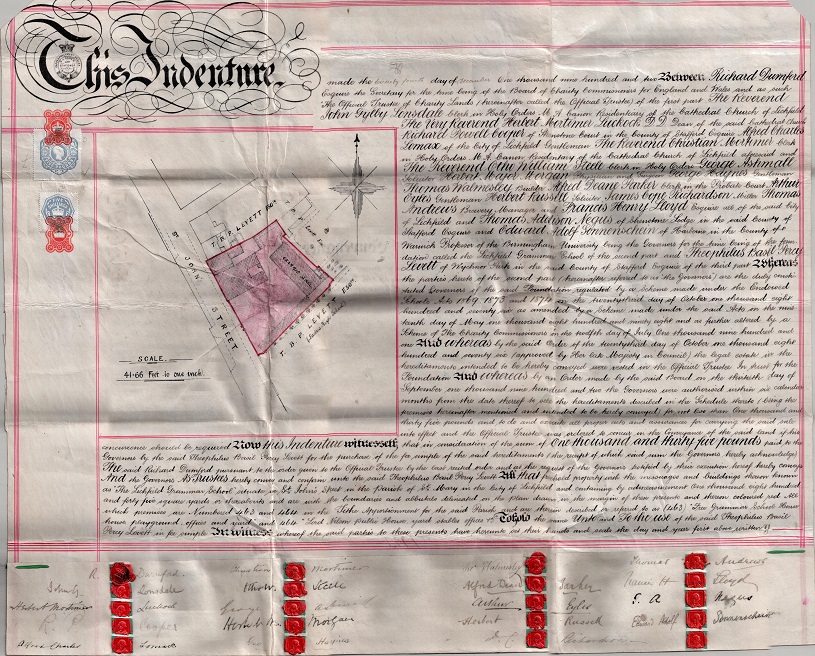
Gareth also sent me a scan of a document – an indenture outlining the sale of the school buildings to Theophilus Basil Percy Levett, dated Christmas Eve 1902, and signed by the the school’s governors. It’s a fascinating document, there’s  information about the buildings,  the stamp of the Birmingham Paper and Parchment dealer, the seals and the names and professions of the governors (some are more familiar than others -Lonsdale, Cooper, Lomax, Ashmall and Andrews stand out for me).   In 1903 the school moved from St John St to Upper St John’s St, merging with Kingshill Secondary Modern in 1971, to form the present King Edward VI school.

Gareth’s photographs and images from the last few days are fascinating, but what I also think is interesting is the contrast.  The inky signatures of men who have already made their way in the world, compared with names carved into wood and brick by children starting out in life.  And what about the contrast of these grammar school boys with their peers?  Whilst they may or may not have gone on to fulfil their potential (see the comments on my previous post)  what of those other children that never even had the opportunity?

A couple of weeks ago, I was listening to the headteachers of our state secondary schools here in Lichfield talk about what their school offered to students. Each of them spoke convincingly about their commitment to giving each and every pupil in their care, regardless of ability or background, the opportunity to reach their potential in life.   I found myself moved by their words. This is how it should be.

Edit 2/11/2012

Yesterday at Lichfield Library, I found the book ‘A Short History of Lichfield Grammar School’ written by Percy Laithwaite in 1925. Mr Laithwaite refers to the graffiti, and I suspect this may be the original source (I found out about the existence of the graffiti on a Lichfield District Council document. I also saw it referenced in Howard Clayton’s Coaching City, whilst I was at the library yesterday). As well as providing small biographies of some of the masters and pupils of the school,  Mr Laithwaite also mentions that wooden panelling from the old school room is now used in the council offices, and that an oak desk from the school room was used as a locker at Bridgeman’s on Quonians Lane. If we could track that down, that’d be something!

Footnote:


I’m really pleased to say that Gareth Thomas who provided me with the graffiti photos and the indenture document, as well as other information over the last weeks has started his own blog http://lichfield.keepsblogging.com/ Gareth’s going to be sharing the things he discovers and judging by the gems he’s come up with so far, it’s going to a great read for those of us who enjoy exploring the history of this old city.

Sources:

http://www.lichfielddc.gov.uk/info/100004/council_and_democracy/588/history_of_district_council_house/2

http://www.kingedwardvi-lichfield.staffs.sch.uk/history.html

https://wiki.leeds.ac.uk/index.php/HIST2530_Building_the_literate_nation:_the_historical_debate#Literacy_Rates

Written into Lichfield history

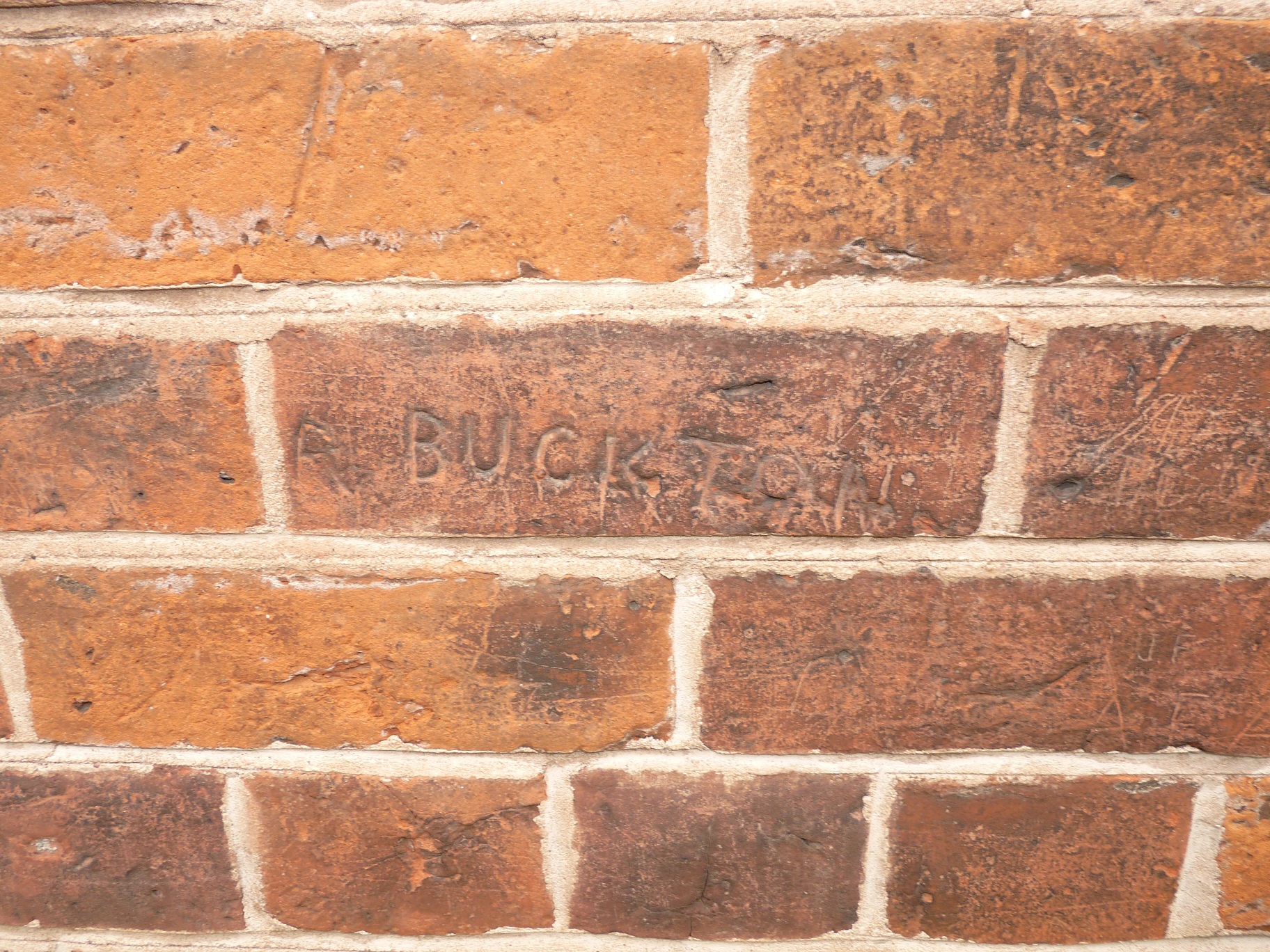
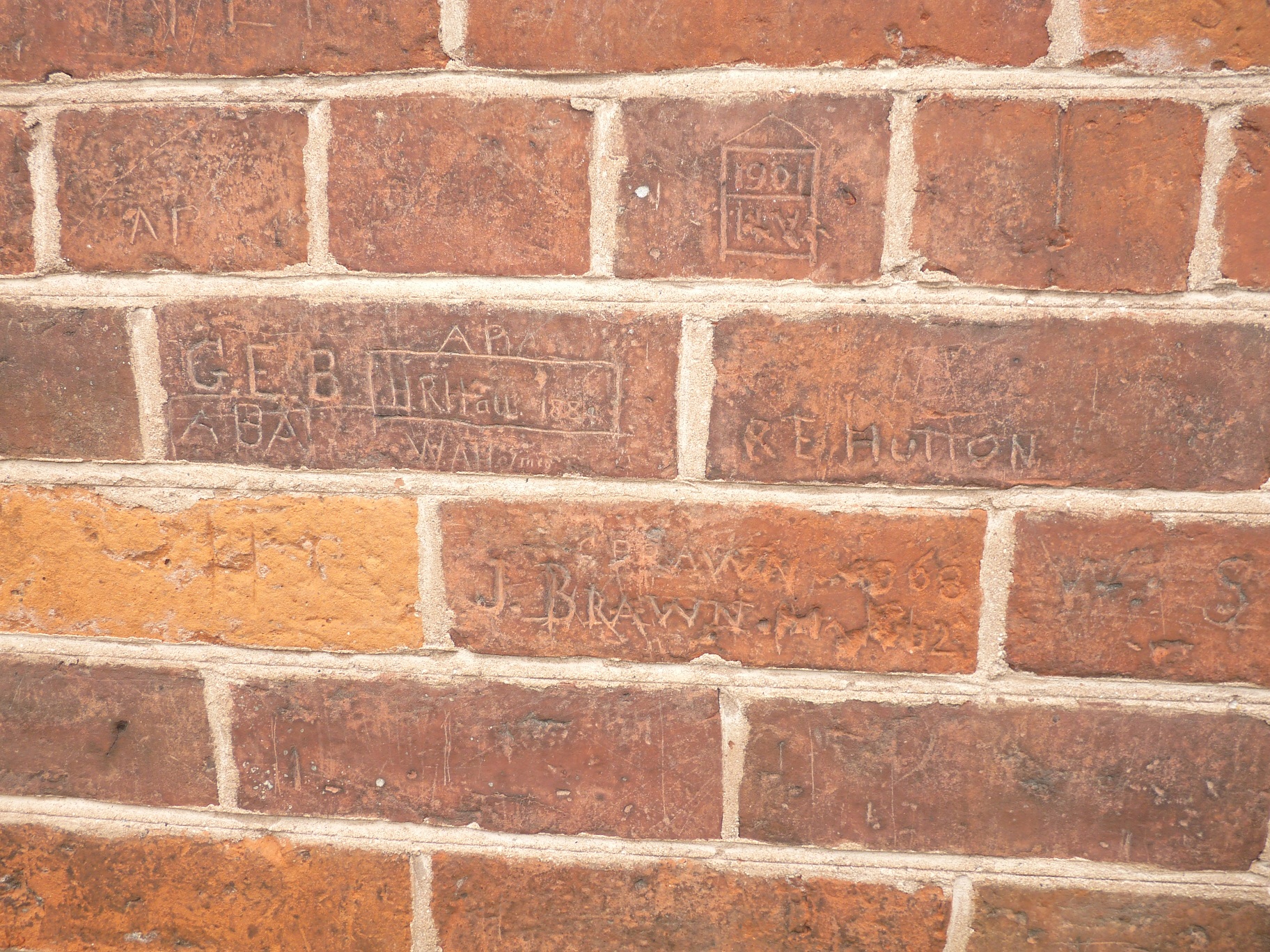
One of my recent posts mentioned layers of history and people leaving their mark on a building.  A literal example of this is graffiti and Gareth Thomas has sent me some great photos of names he found carved into the brickwork of the Lichfield District Council offices, formerly the Lichfield Grammar School.

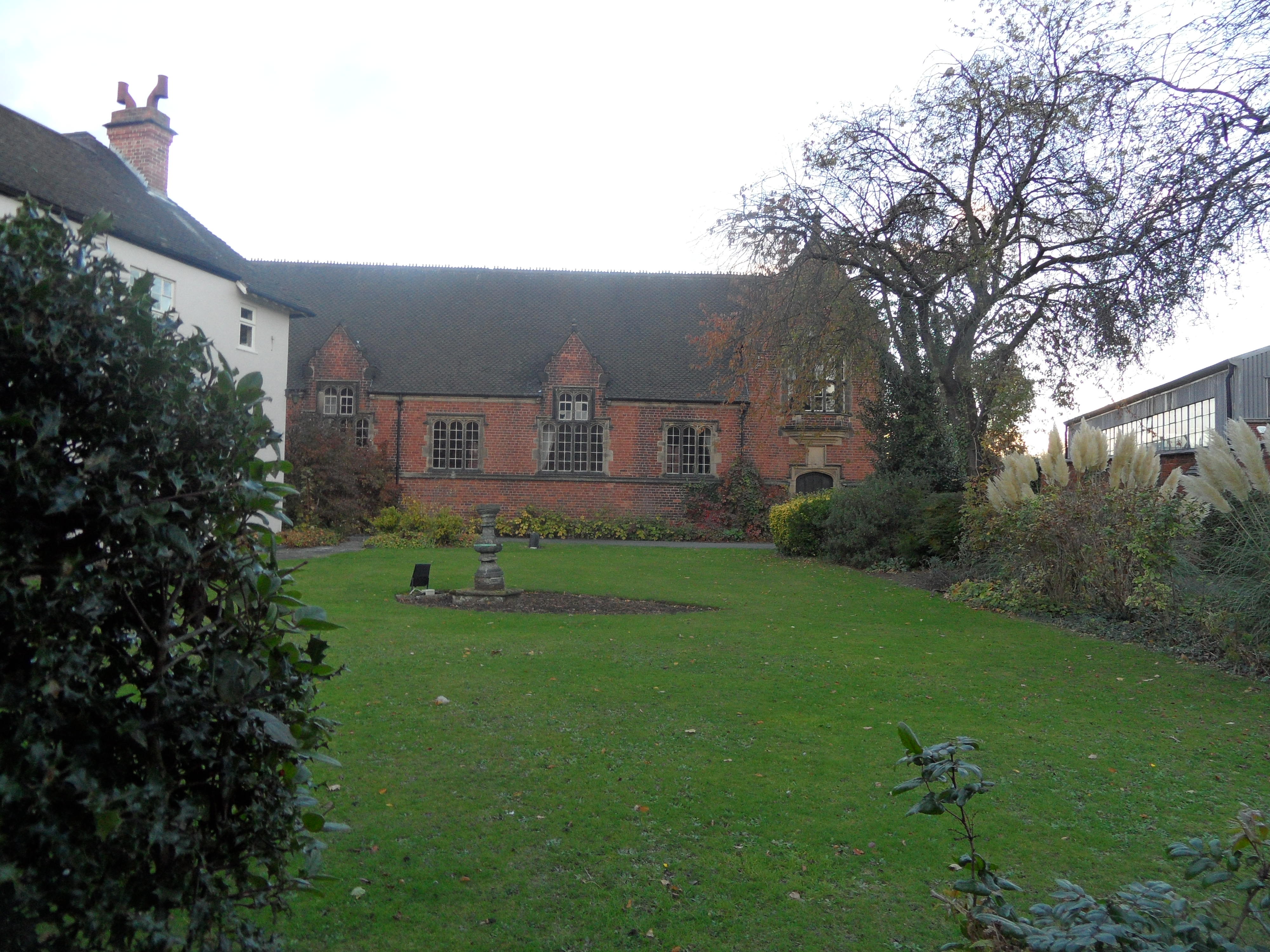
Lichfield District Council Building, formerly Lichfield Grammar School

The graffiti is on the above building, the old school room, rebuilt in the mid 1800s by architect Thomas Johnson, after falling into a ruinous state. Staffordshire Past Track has an engraving from 1833, taken from a similar position. It shows the previous incarnation of the school room (which stood from 1577 to 1849), as seen from the school-yard (now the grassed area).

In 1818, a book on the endowed grammar schools of England and Wales listed the former pupils of the grammar school ‘who in the splendour their names, have reflected honour upon Lichfield’.

The elegant Addison, Elias Ashmole the Philosopher Chemist and Antiquary and Founder of the valuable Musem called after his name at Oxford, Gregory King an heraldic and commercial writer, George Smallridge Bishop of Bristol, Thomas Newton Bishop of Bristol, Lord Chief Justice Willes, Lord Chief Baron Parker, Mr Justice Noel, Lord Chief Justice Wilmot, Sir Richard Lloyd Baron of the Exchequer, Robert James MD well known for his Medical Dictionary and as the inventor of the Fever Powder, Isaac Hawkins Browne an ingenious and elegant Poet, David Garrick the unrivalled actor, Samuel Johnson LL D

The names of Johnson, Ashmole and Garrick and the others are written into the history books, but what about those names on the old school wall? Can we find the stories of Buckton, Brawn, Beckwith and others written in censuses, newspaper reports and other archives? There’s an inspector’s report from 1869 that tells us something about how they’d have spent their time at school (when not carving their name into brickwork, of course!). What became of them when they left?

Brownhills Bob did a wonderful post on a similar theme called the Persistence of Memory, with some equally wonderful comments from people who recognised the names. You don’t have to look to hard to find bridges, walls, trees, and other surfaces marked with names and initials. Why do people seem compelled to add their names to the fabric of a place? I may even have written the odd ‘Kate was here’ myself, on a school desk or two in my time. And does that ‘….was here’ explain why we do it? Knowing that few of us will ever get a statue or our own museum, is this a way of letting people know that once, we were here?

A huge thank you to Gareth for the photographs and drawing my attention to this. Also, Gareth, if you’re reading this, I’ve read that there’s more graffiti to be found, carved into  the wooden attic doors of the schoolmaster’s house next door. It’d be great to see some photos…..hint, hint!

Sources

A Concise Description of the Endowed Grammar Schools of England and Wales, Nicholas Carlise 1818

Lichfield City Conservation Area Document


Written in Stone

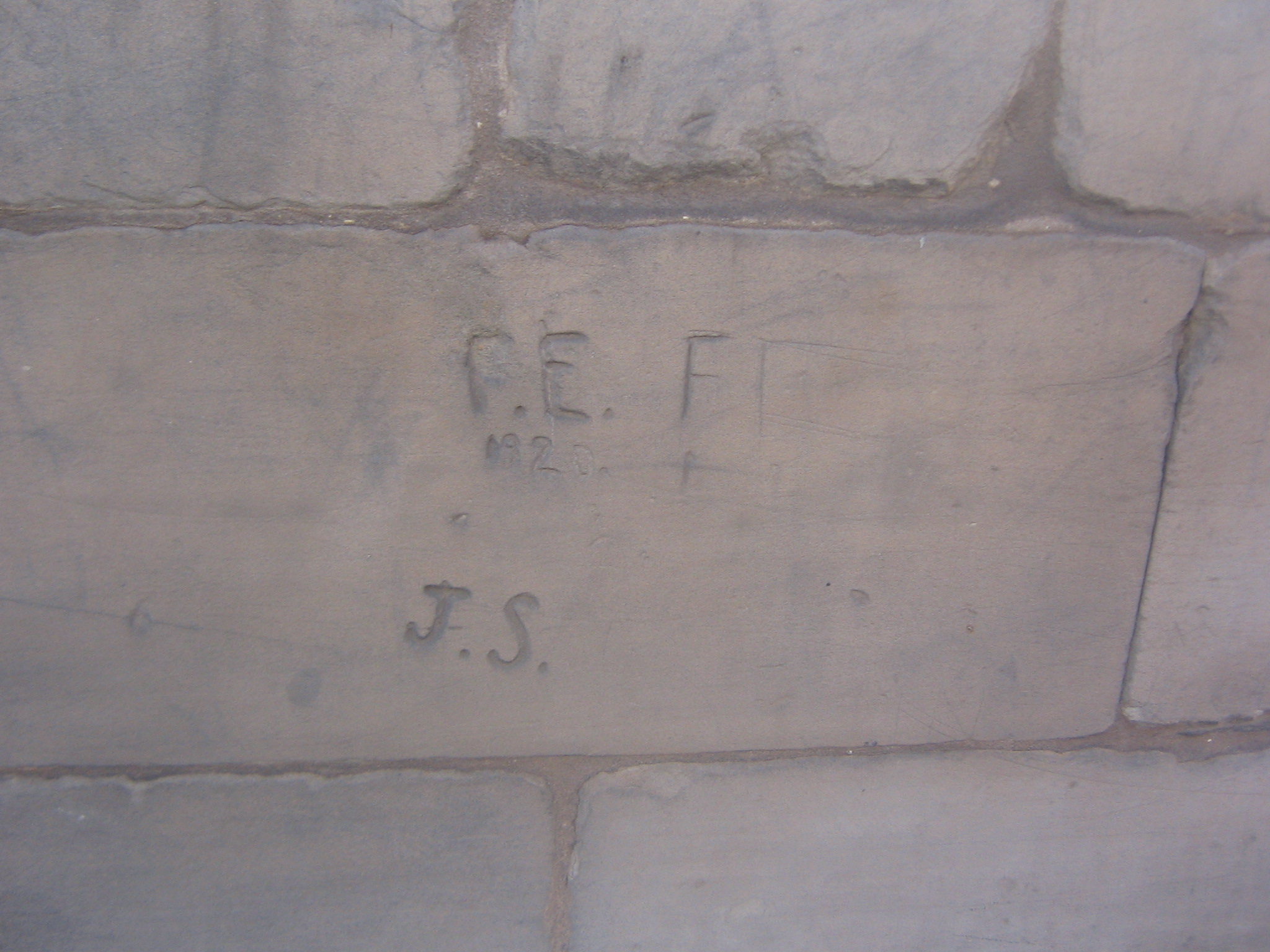
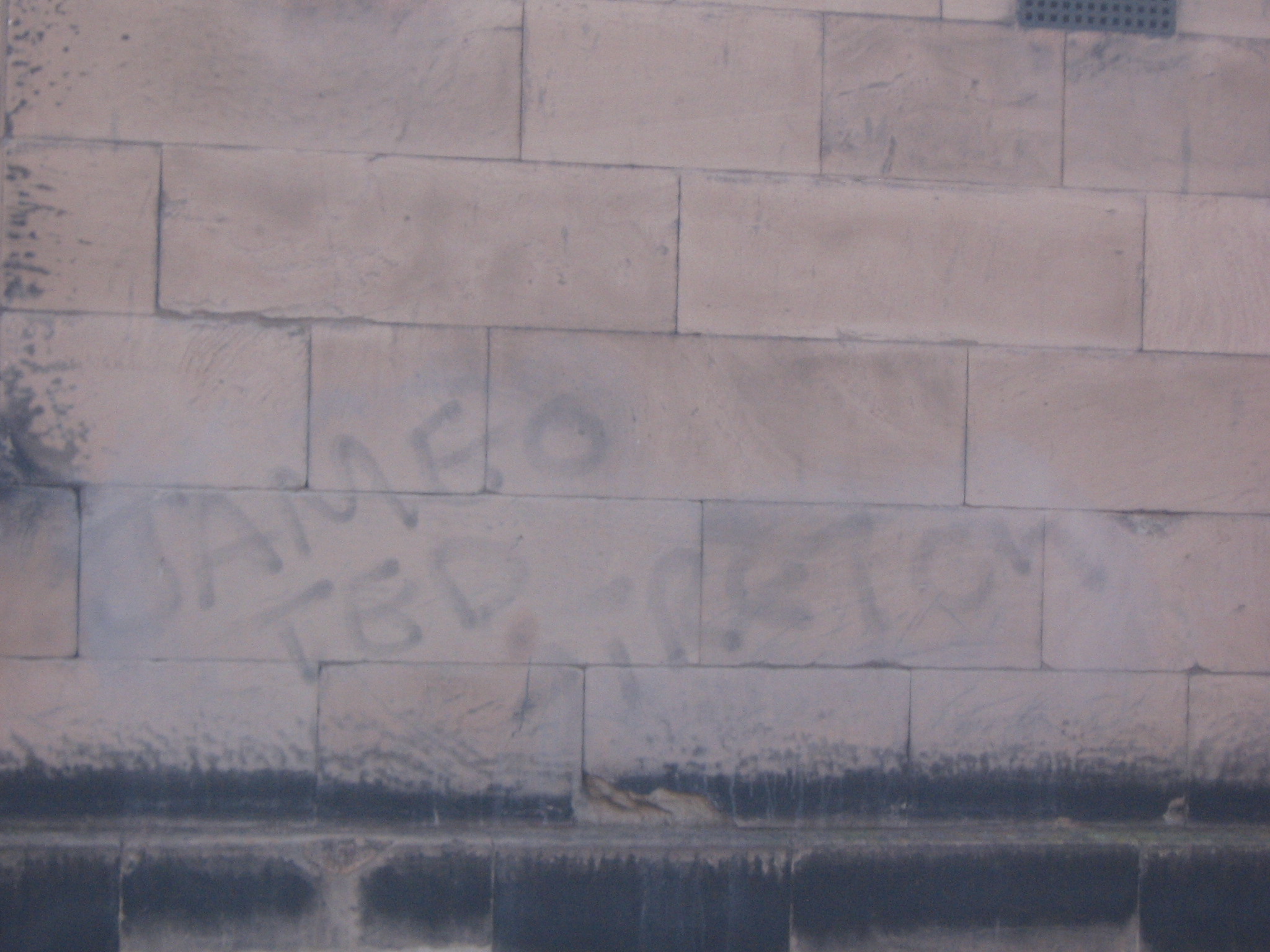
Walking past Newtons College in The Close, I noticed two lots of graffiti on the same building. One lot is spraypainted (I think) and looks like a name (it’s not the best penmanship ;)), the other consists of initials and a date of 1920. You can see these both below in the gallery.

I have no problem with the second one, in fact I enjoy finding a name or something else carved into stone. I do however have a problem with the first one. Why I am ok with PE leaving his or her mark in 1920 but not the graffiti artist in 2011?

Slightly different, but still maybe relevant, there was a recent story about Sex Pistols graffiti being historically and archaeologically important.

I’m still trying to work through my thoughts on this whole area. In the meantime, if anyone has any thoughts, or opinions of their own, please get in touch 🙂

 Edit 6/12/2011

Off on a bit of a tangent, a couple of stories about graffiti with a story! Thanks to Mark from Tamworth Time Hikes for letting me know about this one in Sheffield, which in turn reminded me of this one in Hagley, Worcestershire. Not at all to do with Lichfield, but of interest on the theme of graffiti I hope you’ll agree. Anyone know of any more?

 A bit later on 6/12/2011….some of my photos of graffiti…..

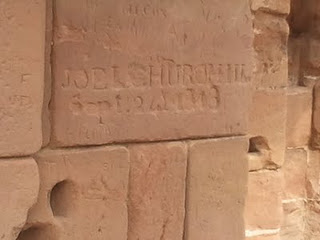
The Kenilworth photo reminds of going there as a little girl and noticing this kind of graffiti for the first time.  I temporarily abandoned my quest for portcullises, drawbridges and moats (which always disappointed by not being filled with water anyway) and played ‘Who can find the oldest graffiti?’. I remember seeing a date in the 1700s and realising that I was just one of the latest in a long, long line of people who had been there. I suppose, in a way those people, rightly or wrongly, became a part of the history of that building themselves. There are loads of photographs of this kind of graffiti around, there’s a whole flickr group here. I wonder if this kind of immortality was their aim or if it was more a case that they got fed up of looking for portcullises, and it gave them something to do?It seems some of our old vandals seemed happy to be easily identified, like Mr Joel Churchill at Kenilworth.  Perhaps it was an acceptable thing to do at the time?

Edit 9/12/2011

Another bit of Lichfield graffiti from the excellent Beacon Street Blog here.