House Old Recycling

With a long awaited cafe & kiosk opening in Beacon Park this week, it reminded me that I wanted to have a look at the reuse of old buildings parts in Lichfield.

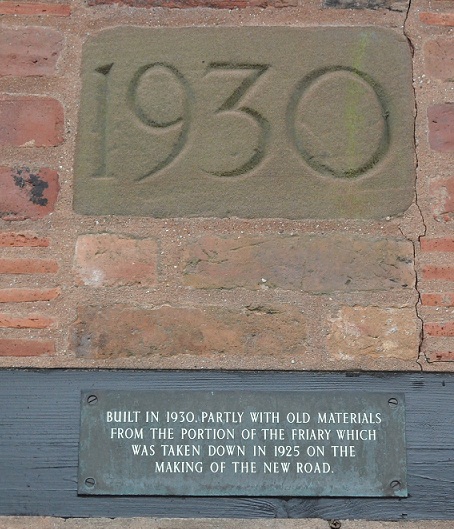
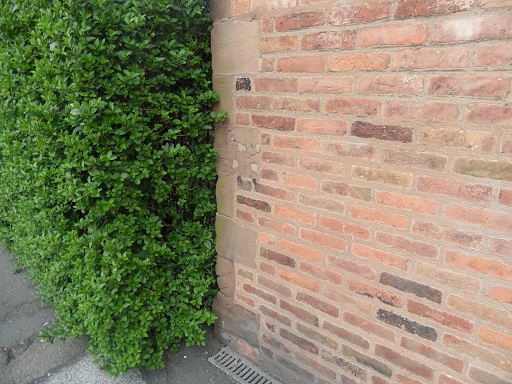
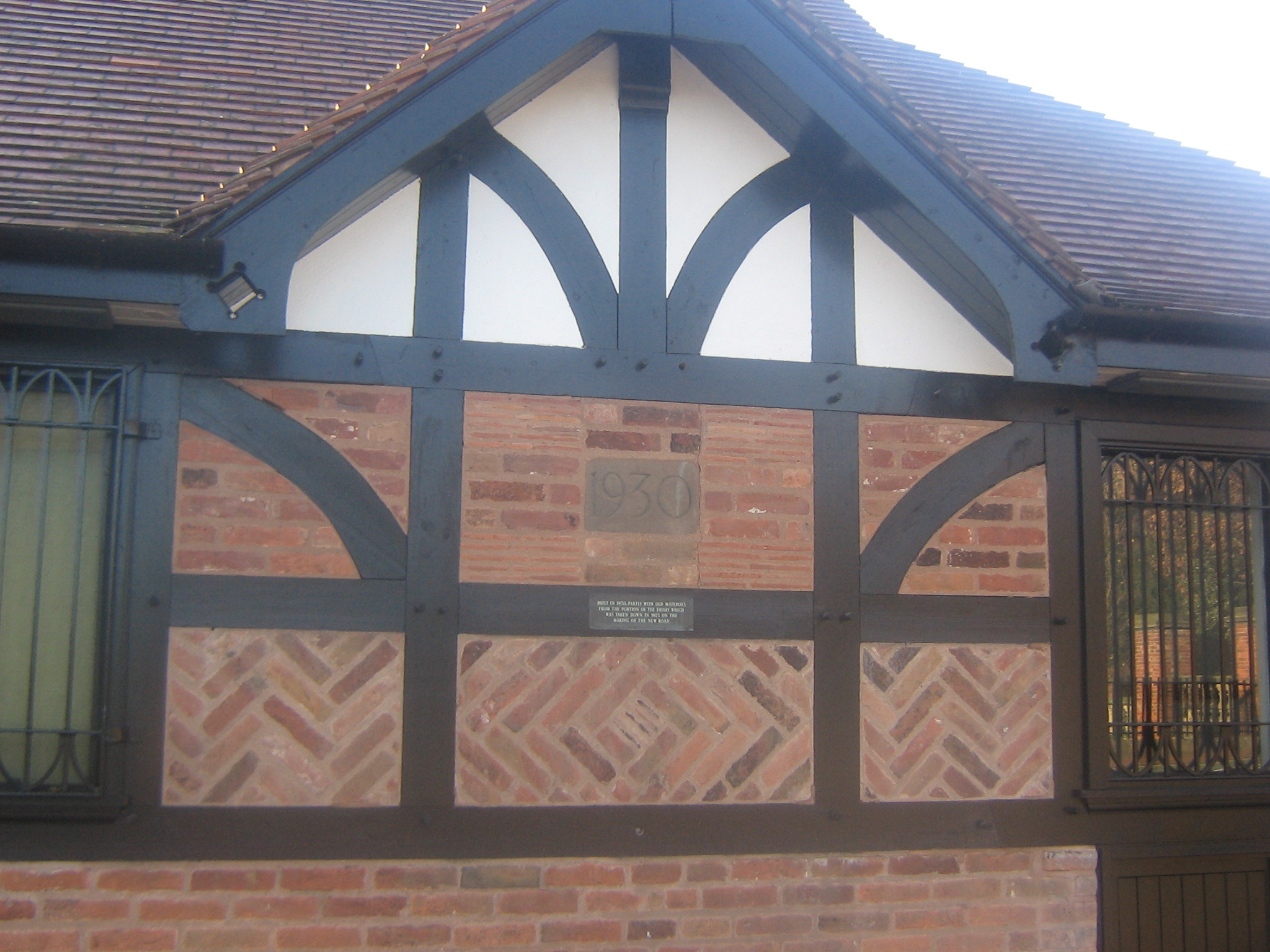
The connection? Well, the new Chandlers Cafe is in the 1930’s mock tudor building on the edge of Beacon Park. According to a plaque, it incorporates materials from the old Friary. I’d love to find some records that confirm whether or not this is true and if so,  how this came to be.
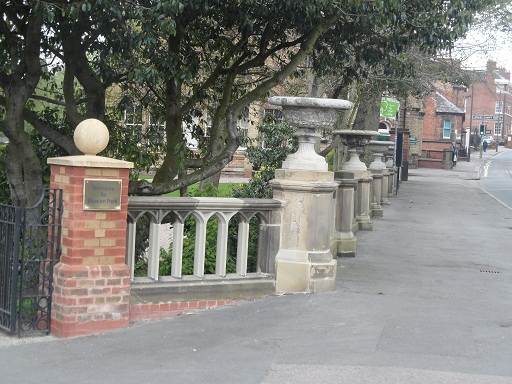
The provenance of the nearby balustrade running around Beacon Park is more of a mystery. Both Annette Rubery and myself have so far drawn a blank when attempting to discover its origins. Did this start life elsewhere?
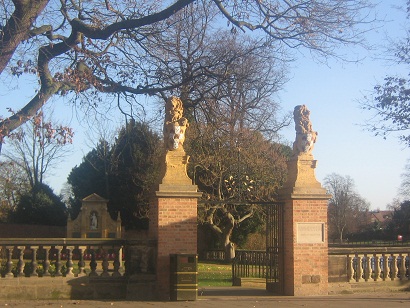
More information is available on the balustrade running around the Garden of Remembrance opposite, albeit a little contradictory. The listed building description suggests that the balustrade came from Moxhull Hall in Wishaw, although Lichfield DC’s website disagrees, saying that it came from Shenstone Court, and that it’s the stone lions on the pillars that come from  Moxhull Hall. Does anyone know any different?
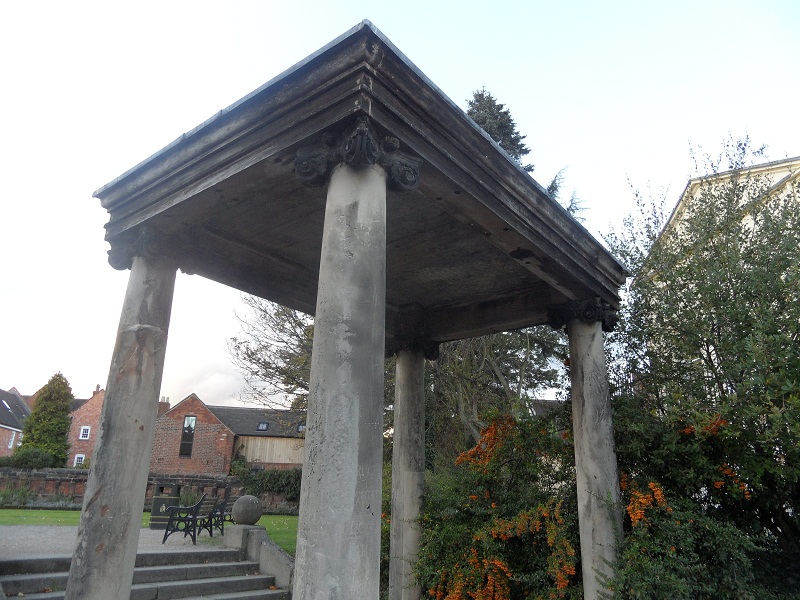
If the balustrade is from Shenstone Court, then its not the only bit of that old house we’re supposed to have made use of here in Lichfield! The portico at the entrance to the site of the Friary is also said to have been salvaged from the demolition of the Cooper Family mansion. However, according to the Lichfield Council Conservation Area Document, this is one of ‘countless unsubstantiated stories about the portico coming from important buildings in the Lichfield area and ‘it is equally possible that it was made in 1937’. I think this might be another one for further investigation!
Finally, for this post at least, there’s the Old Stables in The Close (formerly the Visitors Study Centre). These belonged to Bishop Hacket’s now demolished house which stood on this site until 1799.   Material from the remains of the walls of The Close, from the heavily damaged, original Bishops Palace, and possibly even the Cathedral itself are thought to have been used during construction of these buildings, which are alongside Chapters Restaurant.

I’m sure there must be more in Lichfield –  I’ve even seen garden walls built with what looks like the remnants of old buildings. If anyone knows of any more examples,  I’d love to hear. In the meantime, I’ve heard that there may be more parts of Fisherwick Hall to track down….

Sources: http://www.lichfielddc.gov.uk/downloads/file/375/lichfield_conservation_area_document

http://www.pmsa.org.uk/national-recording-project/

http://en.wikipedia.org/wiki/Bishop’s_Palace,_Lichfield

http://www.british-history.ac.uk/report.aspx?compid=42343#s3


http://www.british-history.ac.uk/report.aspx?compid=42344#s7
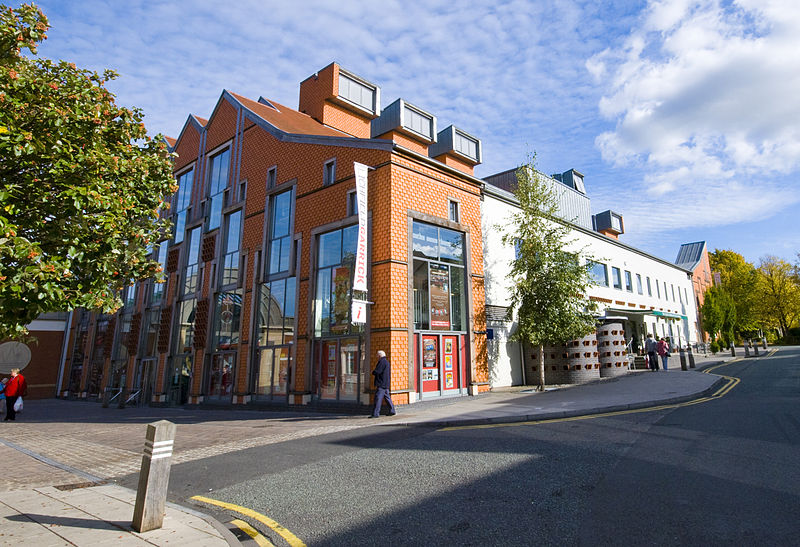
Back to the Future

In the March 15th 1907 edition of the Lichfield Mercury, there’s an article written by Clifford Mackay entitled ‘Lichfield in 2007 – A Dream of the Future’. Old Ben Wallace, a Lichfield cobbler, takes a trip through the city streets and discovers how things have changed over one hundred years.

Here’s a heavily abridged version, so that you can see for yourself where Mr Mackay got it right (a new theatre called ‘The Garrick’, new houses, mixed schools), got it wrong (a tube station at the Friary, a model Venetian village hiring out gondolas) and sometimes got it very wrong indeed (meeting visitors from Mars on the way to Minster pool).

New houses, a large new theatre of varieties, and an entire renovation of the Market, now Dr Johnson’s Square, are amongst other things which come before his astonished eyes, besides a tremendous building called the ‘Royal Garrick’ Theatre, many shops bearing familiar names but entirely rebuilt, and all the streets reconstructed on an absolutely novel, yet excellent plan.

Garrick Theatre by Bs0u10e01 (image taken from Wikipedia)

….the old man noticed the date of the year – 2007- for the first time he also sees one of the airships from London come in. A tube station now stands at the Friary corner, and a large new hotel – the Savoy- has been erected. Sandford St is now a magnificent thoroughfare, and the ‘George’ and ‘Swan’ hotels have also been rebuilt. They encounter some of the visitors from Mars, and arrive at Minster pool, which has undergone great changes. The two pools, Minster and Stowe have been purchased by the council and now form magnificent pleasure lakes. The former is now illuminated every night, while a band plays from the wonderful new stand erected in the middle

They visit Elysia – the large new pleasure gardens formed out of the late Museum Gardens and Recreation Grounds, and take a trip round in a gondola hired from the model Venetian village

Museum Gardens early 20thc

Inevitably, old Ben finds himself at the Cathedral and it’s here where you begin to wonder if there is more of a point to this article than just a bit of fun. I don’t know enough about the protestant religion to comment but amongst other things, Ben the cobbler is told that,

 The church had grown very worldly – it was neither one thing nor the other – so it had to be purged. It was disestablished and set to rule itself, with the result that many parsons came to believe that after all they were not the demi-gods and worldly magnates that some of them imagined themselves to be. These people here took the lead and set the example to the rest of England – and it was quickly followed everywhere. They gave up their large houses and went to live in smallest ones(the bishop giving his up to be a hospital for the poor and needy)

…..the people are religious as anything – it is a reality to us and not a sham. The Cathedral is packed every Sunday, at all services too, it’s hard to get a seat.

Soon though whatever point is being made, has been made and Ben finds himself

…close to the new marvel, which stood in the field before the Stowe Pool….raised in five lofty square iron towers, nearly sixty feet in height, one being at each corner, and one in the middle was a gigantic platform…..Inside each of ther four corner towers the old man could distinguish lifts ascending from, and descending to the ground floor. Tethered to one of the sides her engines still throbbing, and having an indication with the word Aberdeen printed on it, affixed to its side, lay a huge aeroplane.

Away from the Cathedral Ben is surprised to learn  about the changes in another religion –  Lichfield City FC are doing well having won the English Cup seven times, fielding four international players and getting an an average gate of gate of 12 to 14,000 per match. Of course,the Lichfield manager does it for the love of the game and the reputation of the City rather than as a money making concern.

Ben also learns that the grammar school has been moved from its position near Borrowcop Hill due to drainage issues and that,

…all the schools are mixed in England now. Girls and boys all work together…its a splendid system

At the end of the walk it all goes a bit ‘Life on Mars‘ as old Ben is knocked down by a car on Wade St. But of course, as with all the best stories, it turns out to be just a dream, and he wakes back in his workshop back in 1907.

I know that a prediction of the year 2007, made a hundred years previous is a bit of an  easy target.  I’m sure if I were to make predictions here and now about the year 2112, it would be mostly ridiculous. Could we predict the next 50 or even the next 10 years? In looking to the future of Lichfield, would it reveal anything about our present? Maybe we should give it go. It’d give future generations a good laugh if nothing else. Any volunteers?


Statuesque

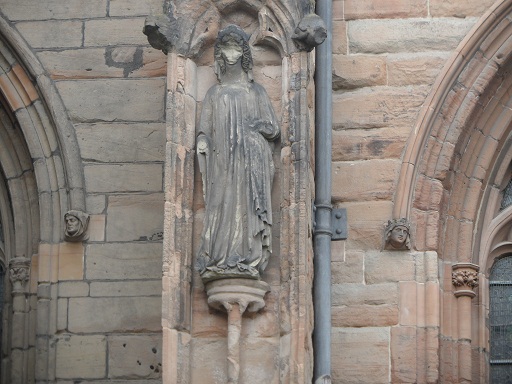
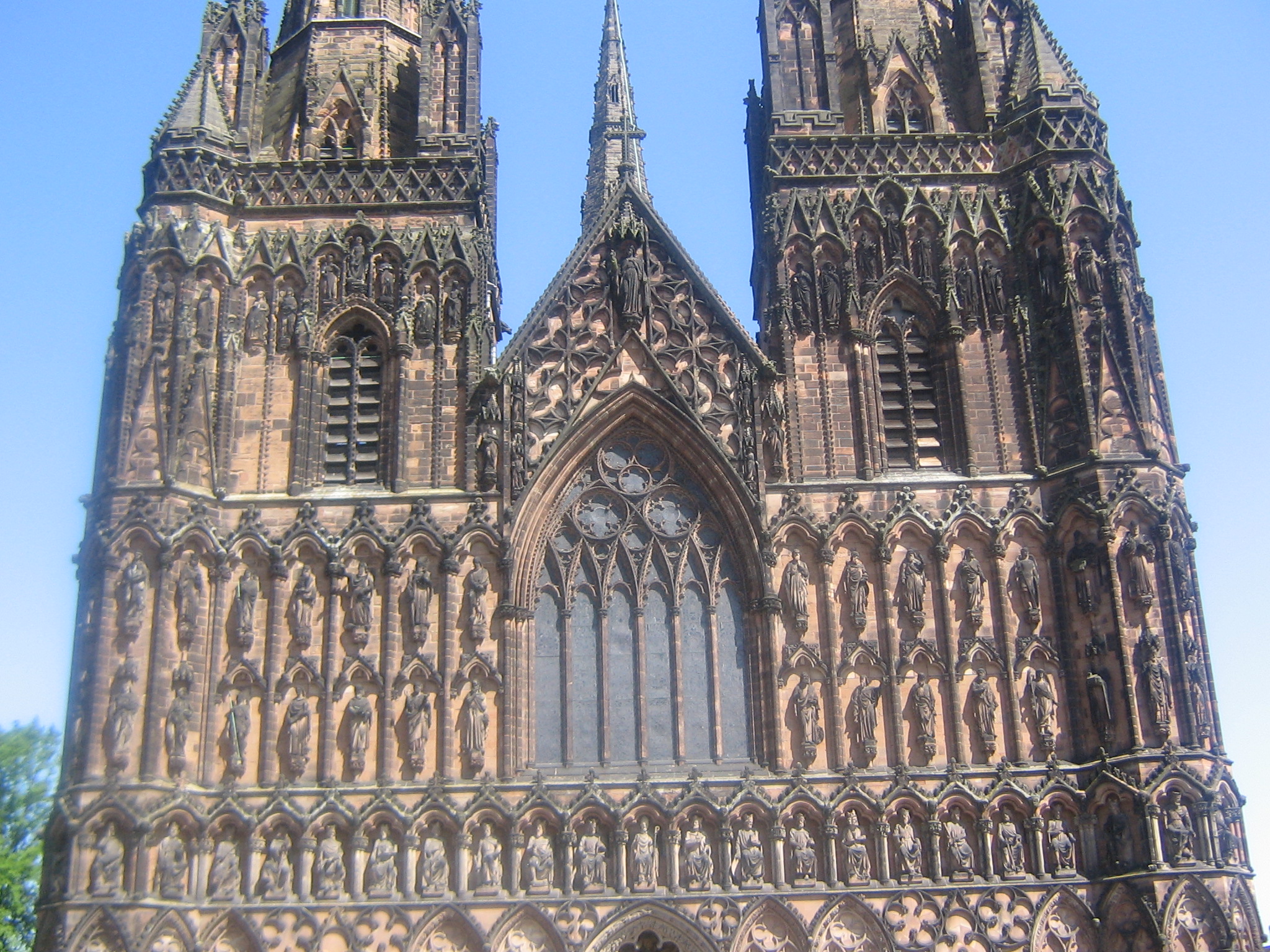
Walking home last Monday I took a detour past the Cathedral to have another look for the remaining five original, medieval statues.  I was pretty sure that I’d found two on the northwest tower –  one nameless woman next to Eve and another to the left of Deborah. The Victorian statues tend to have names on their pedestals. There’s an old photograph of the western front of the Cathedral pre-restoration on the English Heritage Viewfinder website, which you can see here. It shows the front looking strangely bare – above the row of kings only the niches containing the few remaining original statues are filled.

Medieval statue?, Deborah, Rachel, Rebekah, Sarah, Medieval statue?, Eve

According to a comment someone left on here, there are other statues on the other side of the north west tower. Unfortunately, my timing wasn’t great as someone was cutting the grass alongside the tower and a Midlands Today van had not long pulled up nearby and were making preparations to film (I later found out they were there to cover the Olympic Torch route story). As I didn’t fancy making a cameo appearance, dodging the mower in the background of a news report, I took a hasty few photos of the tower and carried on around the back of the Cathedral.  Stupidly, I didn’t check them before I got home and it’s not easy to make out much.  Another trip is in order….

Affix quality control sticker here

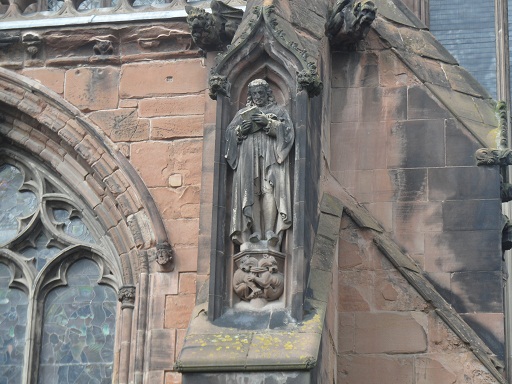
The medieval statue hunt continued as I walked around, in case one had sneaked in somewhere other than the northwest tower. I found Christopher Wren, Elias Ashmole and Dr Johnson amongst others along the way.

“The world is not yet exhausted; let me see something tomorrow which I never saw before” said Dr Johnson.

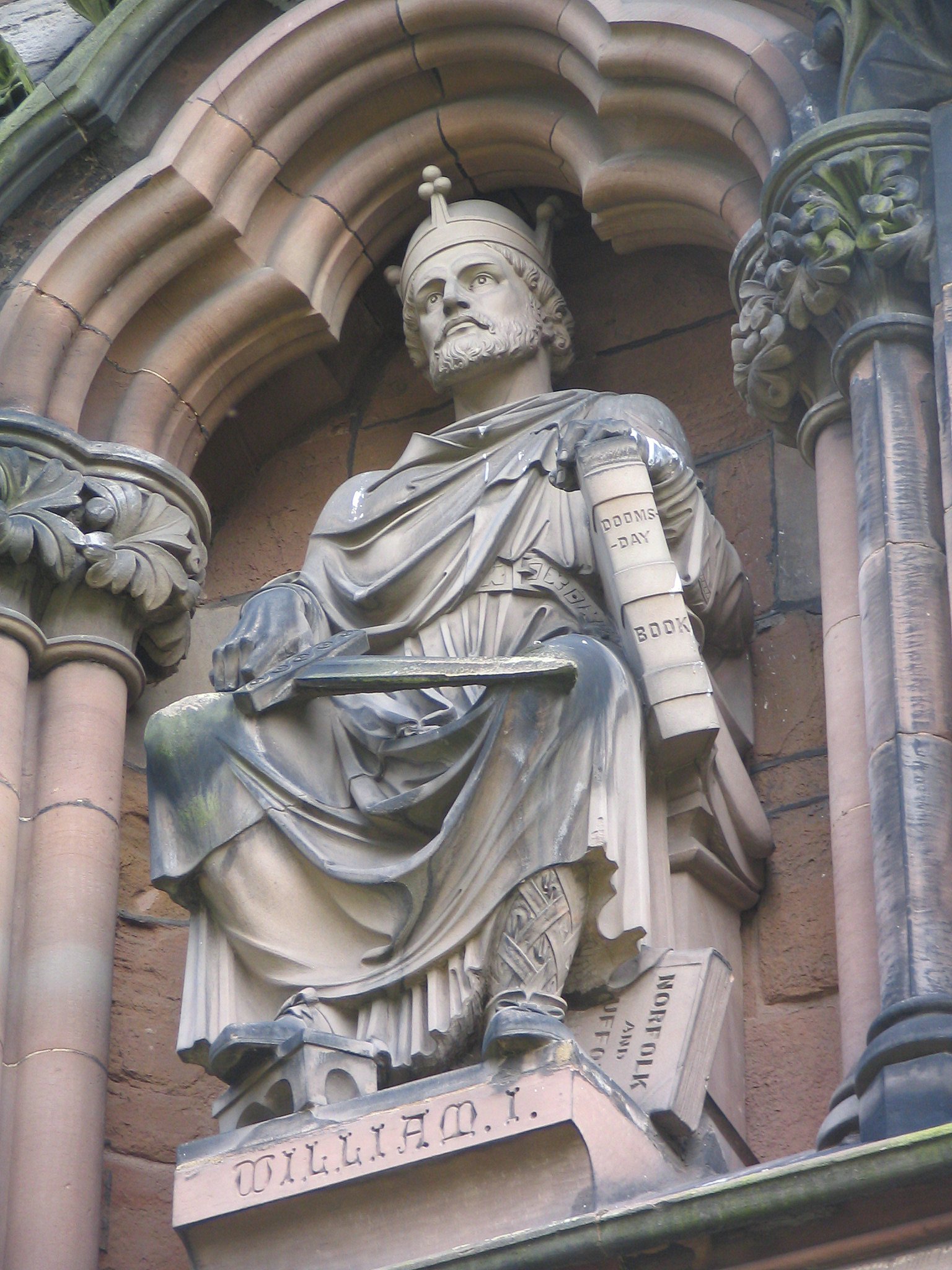
Most of the statues are accompanied by something symbolic – Johnson of course has his dictionary.  It’s the same for the kings (e.g. William the Conqueror holds the Domesday Book) and the biblical characters (I knew nothing about Deborah, but according to wikipedia she was a prophet and a judge and delivered her verdicts near a palm tree which explains why there’s one behind her statue).  I was wondering about Eve? Surely that’s an apple near her foot but what is she holding in her hand?  Imagine if you someone was to create a statue of you and they had to sum up your life with an object or two!

Image taken from Wikipedia

Just past Dr Johnson and his big, papery thing is another statue.  She has no name and as far as I can see there is no clue to her identity. I’m speculating, but is this one of the many statues destroyed or defaced by the parliamentary troops during the Civil War?   Most of the other damaged statues were removed – where did they end up I wonder? I came across some great photos of a figure of Christ on Aidan McRae Thomson’s flickrstream at a church in Swynnerton, Staffordshire together with an interesting theory that the statue originated from Lichfield Cathedral. If anyone else has any theories or even evidence of where the statues ended up, I’d love to hear them!

I have to confess that for me, sometimes the Cathedral is just there, part of the scenery as I go about the city. However, there are other times when, either by chance (catching the light a certain way) or by design (medieval statue hunting), the Cathedral commands my full attention and once again, I am reminded of what an incredible building this is, and the skill and talent of the craftspeople who made it so.

Shopping Daze

Dam St is one of the most wonderful places in Lichfield, offering a winning combination of varied architecture, independent shops, duck feeding and ice-cream on route to the Cathedral. 

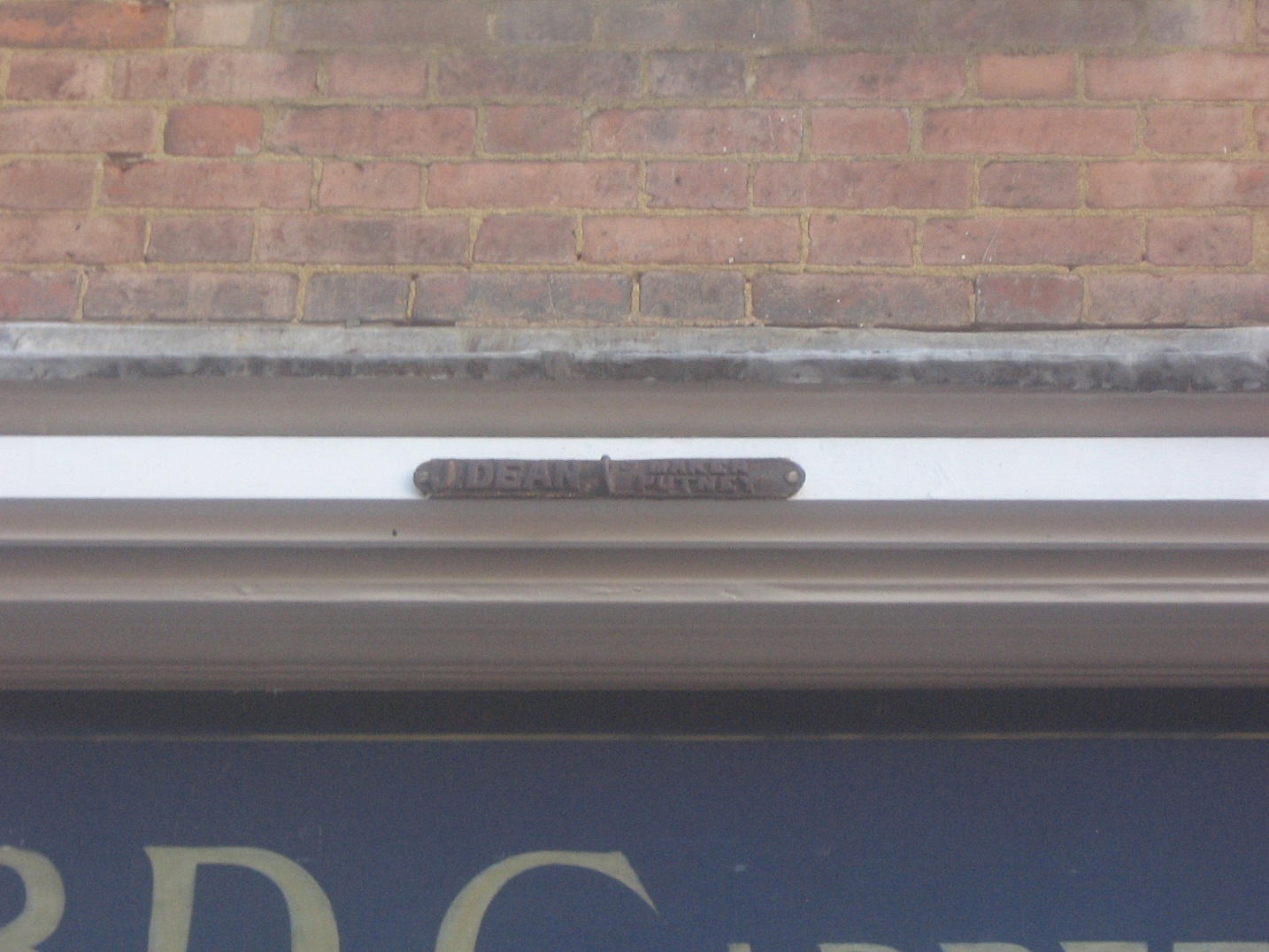
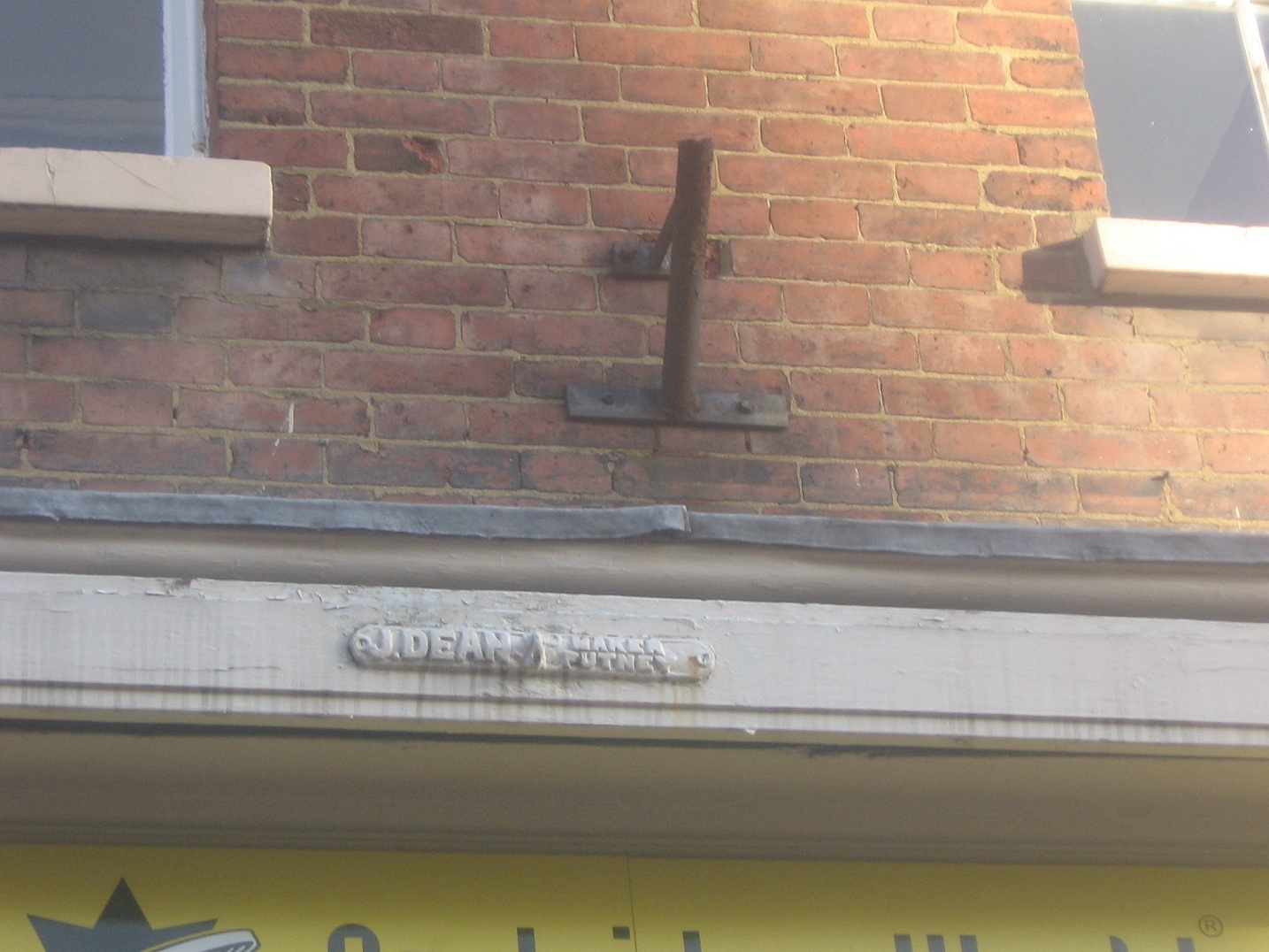
Three small signs above the shops at the Market Square end may well go unnoticed. They say ‘J Dean Putney Maker’ and have little hooks on them. A quick google search leads to the website of ‘Deans Blinds & Awnings’ established 1894 and tells how the company was started by a policeman’s son called Tom Dean, and was taken over by his brother John. It seems John Dean and subsequent generations of his family were involved in the ownership of Fulham FC as well as manufacturing blinds and awnings.


J Dean Putney


The listed buildings describes them as ‘late C19 shop fronts with bracketed cornice and canvas canopies’. Another look at these buildings and you can also see the chains attached to these awnings, which presumably must still be there, tucked away from sight. I wonder when they were rolled shut for the last time? What kind of shop was this when these canopies were added? There was a drapers & silk merchants in this area of Dam St in 1914, could this have been it?

J Dean 2 with Metal erm thing

On the second photo, there is also a metal….thing. I first came across these in Tamworth, where nearly every shop seems to have one albeit slightly newer looking.

Tamworth version of 'the metal thing'. They have lots of interesting things on buildings in Tamworth including mermaids.

Someone got in touch on flickr and suggested they were holders for flags or Christmas trees. I was in Bakewell in Derbyshire last week where they seem to be using them for the latter, as you can see here in the Matlock Mercury. Looks pretty, doesn’t it! I’m guessing the Dam St one was a flag holder but am more than happy to be proved wrong by memory or photographic evidence or just a convincing argument as to what else it might be 😉

You can also have a look at the Street View here, perhaps whilst eating a mincepie by a roaring fire (although it is out of date, as The Staffs Bookshop is now Realwoods).

Last weekend someone spotted something else interesting high up on another building in the city centre. I’m not saying anymore, as I’m hoping that they might consider doing something on this themselves. No matter how well you think you know your surroundings, there are always still things to discover. So whilst out and about shopping in the 8 (is that all!) shopping days left until Christmas try looking at Lichfield from a different angle. Who knows what you might notice…..

Edit 23/12/2011

Pat’s been on googlemaps and has spotted not only a whole load of these brackets on Tamworth St but also one actually in use outside the Scales! So I think that definitely answers this little Lichfield mystery!

Heads Up

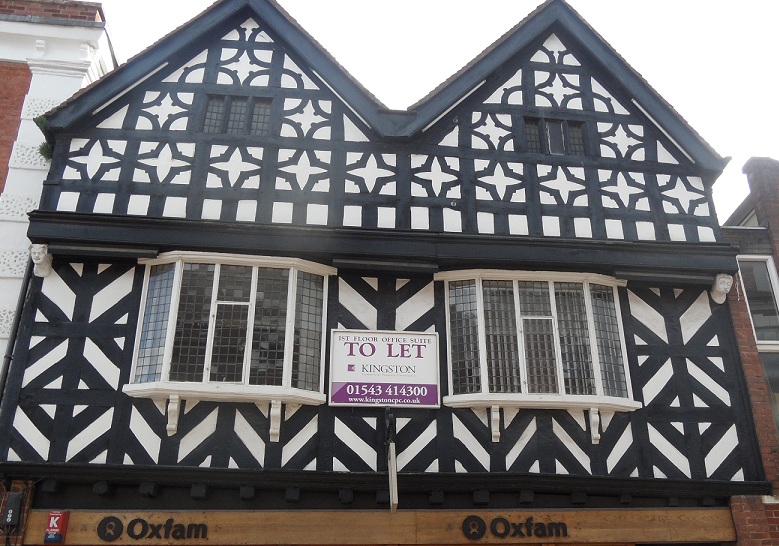
First it was the Burton’s foundation stones, then the cockerels and now two heads above Oxfam on Market St. Have I been walking around Lichfield with my eyes closed for the last 7 years?

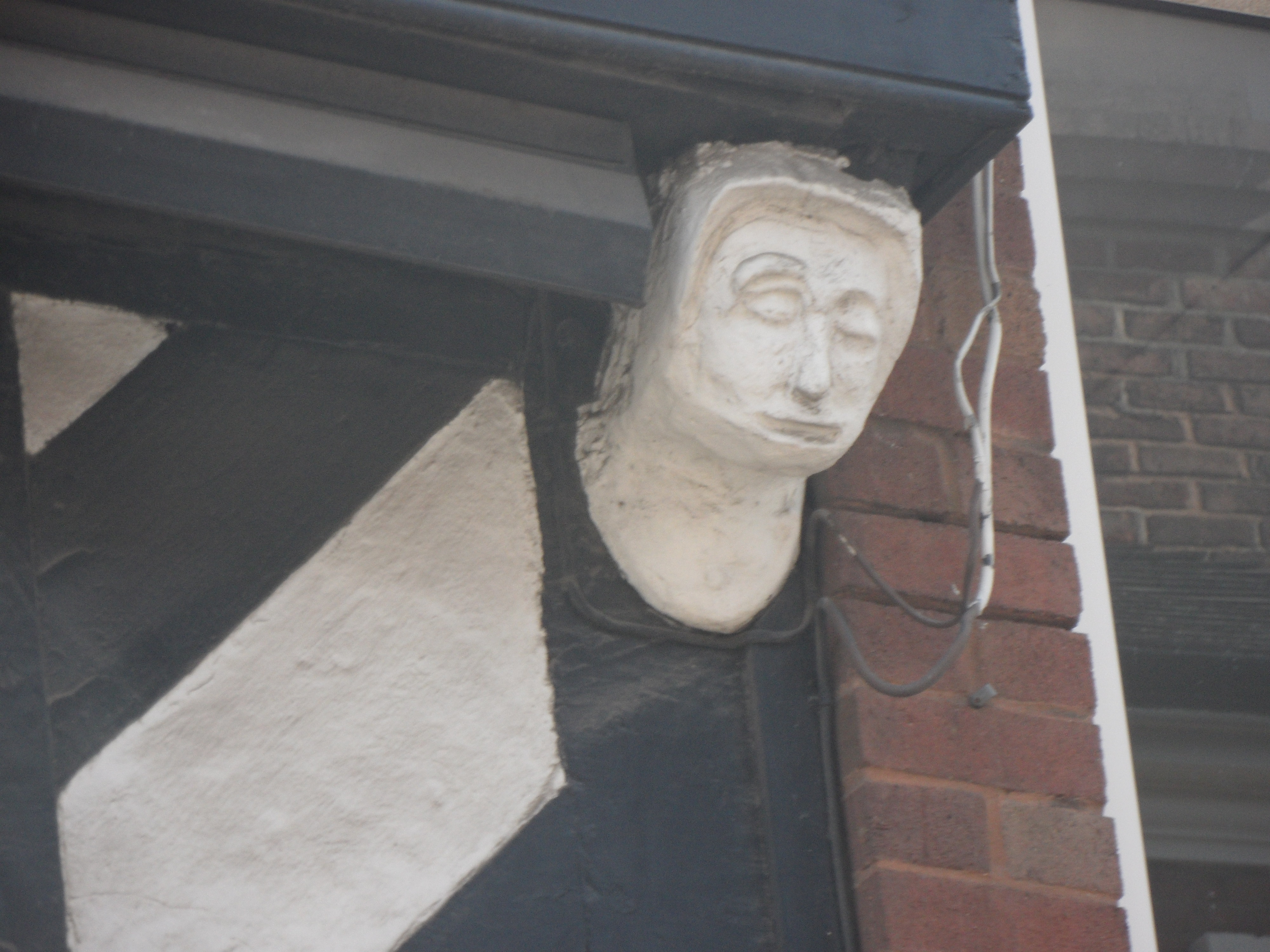
I have discovered from the listed building description that the correct term is corbel heads. I’ve taken a close up of each of them.

Corbel head on left, looking at building


Corbel Head , on right looking at building

Information on these heads is pretty thin on the ground. The listed building description tells us that the building is late C16th, does this mean that the heads date back to this period too? I’m not quite sure whether the one on the right is supposed to be sad or asleep (or as someone on twitter suggested ‘three sheets to the wind’).  Do they represent some sort of  old joke or story or moral? The building was a pub from at least 1793 (first record) until it closed in 1962.

There is a photo of The Castle on the Staffs Pastrack website, taken in the early part of the C20th. One peculiar thing, although this might just be me, is that the head on the right doesn’t look the same.  I think on the old photo it looks like he has a beard but he looks like he’s had a shave since! On the subject of the old photo, what is that circular object between the pub windows, beneath the lamp? The thing that looks a bit like an anachronistic satellite dish.

It’s just occured to me as I’m typing this that I could pop in & ask in the Oxfam shop if anyone knows anything. Of course, if there are any corbel head experts out there,  please let me know your thoughts!

Sources:
Information on The Castle, taken from ‘The Old Pubs of Lichfield’ by John Shaw

Sir Gilbert Scott and Lichfield

Following on from yesterday’s google doodle of the Midland Grand Hotel at St Pancras, to to commemorate the 200th birthday of Sir George Gilbert Scott, I had a quick look at Scott’s connections to Lichfield.

Scott was the Lichfield cathedral architect from 1855 to 1878, first restoring the interior of the Cathedral and then working on the exterior, including the West Front which had been vandalised during the civil war and covered in roman cement in  an earlier restoration.You can read more about the restoration at the Lichfield Cathedral website

It seems Lichfield Cathedral isn’t the only city building that Sir Gilbert Scott was involved with.  In the early days of his career he had formed a partnership with his former assistant William Bonython Moffatt. The Scott & Moffat practice made workhouses their speciality. Apparently, they would monitor the newspapers for adverts by Poor Law Unions looking for architects to build their new workhouses. Scott & Moffat answered an advert placed by the Lichfield Workhouse Board of Guardians, looking for  “Plans and Specifications for a Workhouse to hold two hundred Paupers, in accordance with Mr Kempthorne’s Model.”  Scott & Moffat were eventually selected after much deliberation by the workhouse guardians and work began on the tudor style building on 24th May 1838 and it was officially opened on 8th May 1840. Their work can still be seen at the old St Michael’s hospital on Trent Valley Rd.

Scott and Moffat parted company in 1845, after designing around 40 workhouses together. Scott’s wife Caroline Oldrid was said to have put an end to the partnership, as she believed that Moffat had become unreliable. In 1860, Moffat was was imprisoned as a debtor. After their partnership ended, Scott carried on with his two sons as his assistants. His younger son, John Oldrid Scott took over his father’s practice in 1878 and was the architect overseeing the restoration of the cathedral spire in my previous post! I was reading his notes and letters to the Dean and Chapter just a few days ago (his handwriting is terrible!). Scott’s eldest son George died at the age of 58, strangely enough at the Midland Grand Hotel at St Pancras Station.

Scott was knighted in 1872 but faced some critiscism during his career.  William Morris and others founded the Society for the Protection of Ancient Buildings in 1877, in response to what they felt was the unsympathetic restoration of medieval buildings by Victorian Architects, Scott amongst them. Apparently on Scott’s death, Morris described him as ‘the happily dead dog’.

The Midland Hotel was threatened with demolition in the 1960s, but The Victorian Society campaigned and the hotel became grade I listed.  The hotel was reopened earlier this year as the St. Pancras Renaissance Hotel. 

You can see a list of the buildings Scott worked on here.  I’m pleased to see that they’ve included a picture of Lichfield Cathedral!

Sources
www.scottisharchitects.org.uk

www.workhouses.org.uk

Cathedral City by Howard Clayton

This Won’t Hurt – A History of the Hospitals of Lichfield by Mary Hutchinson, Ingrid Croot and Anna Sadowski

www.guardian.co.uk Article ‘Sir George Gilbert Scott, the unsung hero of British architecture’

The Cathedral Spire – A Hatchett Job!

A couple of weeks ago, I was contacted by Vickie Sutton. Vickie is from a family with some amazing connections to Lichfield. She believes it’s vital that the wonderful memories and stories that have been passed down to her are recorded, and shared with other people, so that they don’t get lost and forgotten.

A caricature of Henry Hatchett by one of his colleagues. (1)

One of the first stories Vickie shared with me is about her great grandfather Henry Hatchett. Henry began working for Bridgemans of Lichfield in the 1890s. Employed as a as a labourer, he mastered the arts of casting, cleaning stone and marble.  Henry was periodically sent to Edinburgh to maintain the Last Supper sculpture (based on the painting by Da Vinci) in St Cuthbert’s Church, and as a result, his colleagues gave him the nickname ‘MacHatchett’! (1)Vickie knew that Henry had been involved in restoring the central spire at Lichfield Cathedral and together, we set out to discover the full story…..


 Lichfield is of course famous for having three spires but it seems that the central spire has had all sorts of problems! It was destroyed in 1646 during the civil war and was restored in 1666. Between 1788 and 1795 it was restored again with further work being carried out in 1892/3.

In 1949 there was trouble with the spire again. The Dean reported that in high wind, the ball and cross were moving. An architect, Mr George Pace, was consulted and gave a verdict that came as a shock to the Dean. Due to corrosion of the iron anchors and cramps, and weathering of the mortar, the spire was in such bad condition that the last 11 feet could be shook by hand. It would need to be repaired immediately. Mr Pace later described how in his view, a delay in the work could have resulted in the spire crashing through the cathedral roof. More than 20ft of the spire had to be pulled down and rebuilt. The Dean was unwilling to finance the work with a bank loan believing that it would have been ‘lazy, and stupid, and unsound finance’ and turned instead to the public, launching the ‘Lichfield Spire Repair Fund’. As Christmas 1949 drew near, the Dean urged people donate suggesting it would be a ‘glorious Christmas present’ for the Cathedral. Eventually, the cost of the work amounted to more than £9,000 and the amount was raised by people, not just from Lichfield but from all over the country.(2)

Twenty-two stone courses were removed from the spire to Bridgeman’s premises on Quonians Lane, where they were either replaced or redressed.

A new cross was designed by the architect George Pace, and incorporated the Jerusalem motif, found on the Cathedral Arms. The ball (2 foot in diameter) was taken down and was found to contain several rolls of parchment and a ½ oz of twist (tobacco) and the remains of half a pint of beer! One of the parchments told how the ball and cross had been taken down for repair and re-gilded on 12th September 1893 and was signed by the Rt Rev The Honourable Augustus Legge. The second parchment had a list of those holding civic office at the time and also the signatures of the men engaged in the work. It was on this list that the name Henry Hatchett, labourer appeared. (3)

The scrolls from 1893 were placed in the archives and replaced with a new scroll inscribed with the names of those holding civic office in 1949/50 and once again, the names of those carrying out the work. The ball was re-gilded with two layers of the finest double English gold leaf. This was carried out in situ by Mr George Kingsland from Birmingham. On 19th June 1950, a celebratory meal was held in the Swan Hotel by the Dean & Chapter, to which everyone involved in the work on the spire was invited. Vickie’s family remember there being some sort of grand unveiling of the new cross and ball, but I haven’t been able to locate any details regarding this yet. (4)

I love this story as it shows that even the most well-known of our buildings can still have secrets! I wonder if the addition of the beer and tobacco was an authorised one? Also, does anyone know where the old parchements are stored?

I really want to thank Vickie for sharing this. We are working on some more of her brilliant family stories at the moment, but in the meantime check out this link and enjoy some of the views from that troublesome central spire.

Sources

1 & 4 The Annals of a Century: Bridgemans of Lichfield 1878 – 1978 by O Keyte

2 & 3Lichfield Mercury Archives accessed at Lichfield Record Office