The Accidental Villa at Acton

The plan was to spend the day foraging for folklore in the villages to the west of Stafford but we accidentally ended up at Acton Trussell and then found out that archaeologists had accidentally found a Roman villa underneath the local church.

In the 1970s, a local archaeology group started to wonder why the church of St James was built someway outside the village. Clearly the two women we asked for directions to the church who after asking, ‘What church?’ then sent us in entirely the wrong direction, thought it should have been nearer to the village too. The obvious assumption was that the centre of Acton Trussell has shifted over the years but when fieldwalking between the church and village produced just a scattering of late medieval pottery, this seemed unlikely. What did start showing up however was evidence that there had been Roman activity at the site. Several sherds of pottery and two coins from the 3rd century posed a new question. What were the Romans doing here?
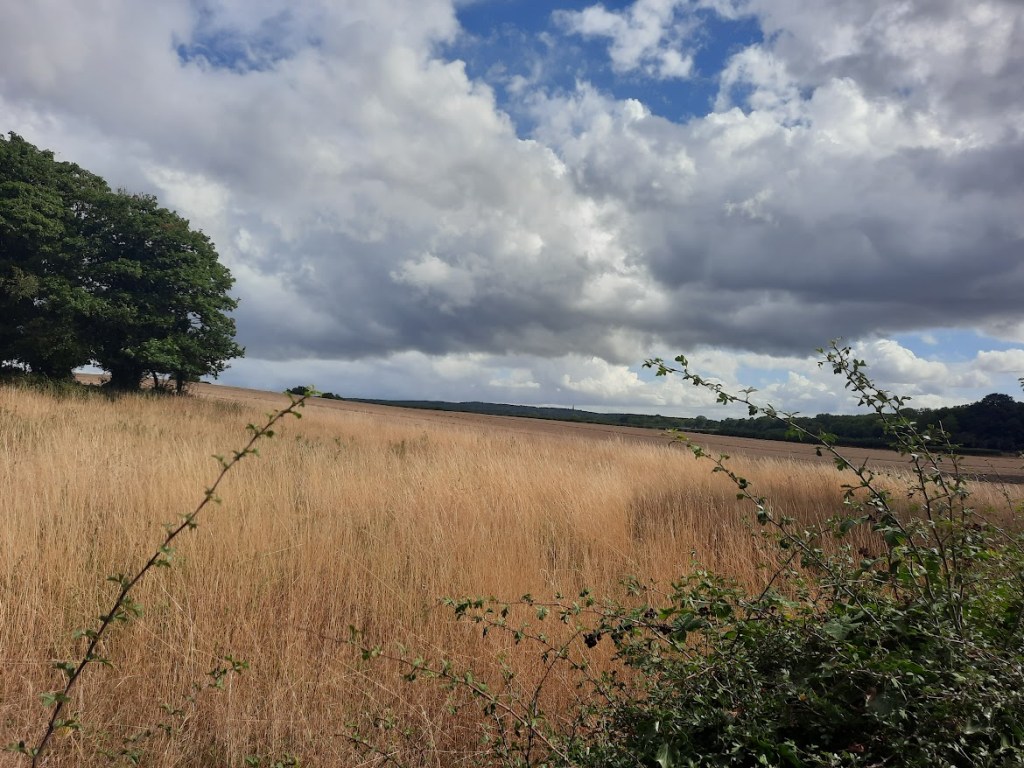
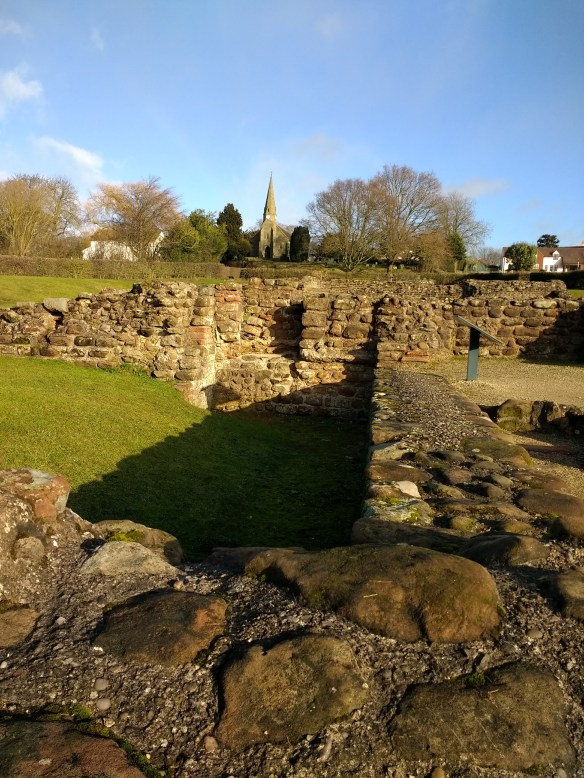
To the south of the St James, the field-walkers found fragments of roof tiles, suggesting the source of the Roman remains was somewhere near the churchyard. and then an excavation which began in May 1984 revealed that the church of St James and its graveyard actually stood upon the site of a Romano-British villa. Was this just a coincidence or could there be some sort of deliberate continuity here?
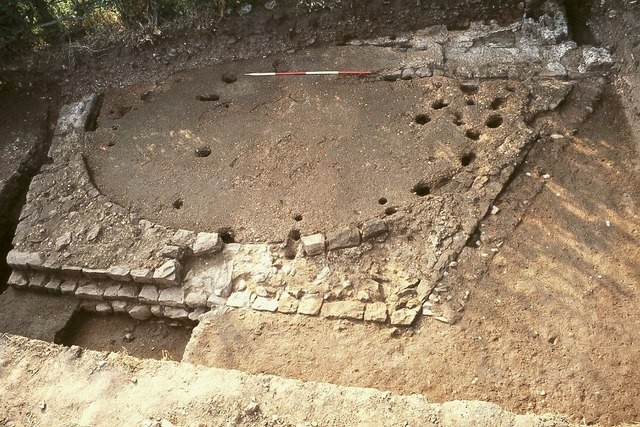
© Tony Habberley (cc-by-sa/2.0geograph.org.uk/p/3242311
Late 2nd C. Apsidal wing of Roman Villa, taken Friday, 5 July, 1985

It’s not unknown for Roman sites to have been converted to Christianity. I was at Wroxeter in the summer and read that part of the Roman complex at Viriconium may have been adapted for use as an early church. It’s not watertight but the availability of a cold plunge pool in the frigadarium and bodies found nearby hint that the baths may have been used for those two Christian bookends of baptism and burial.
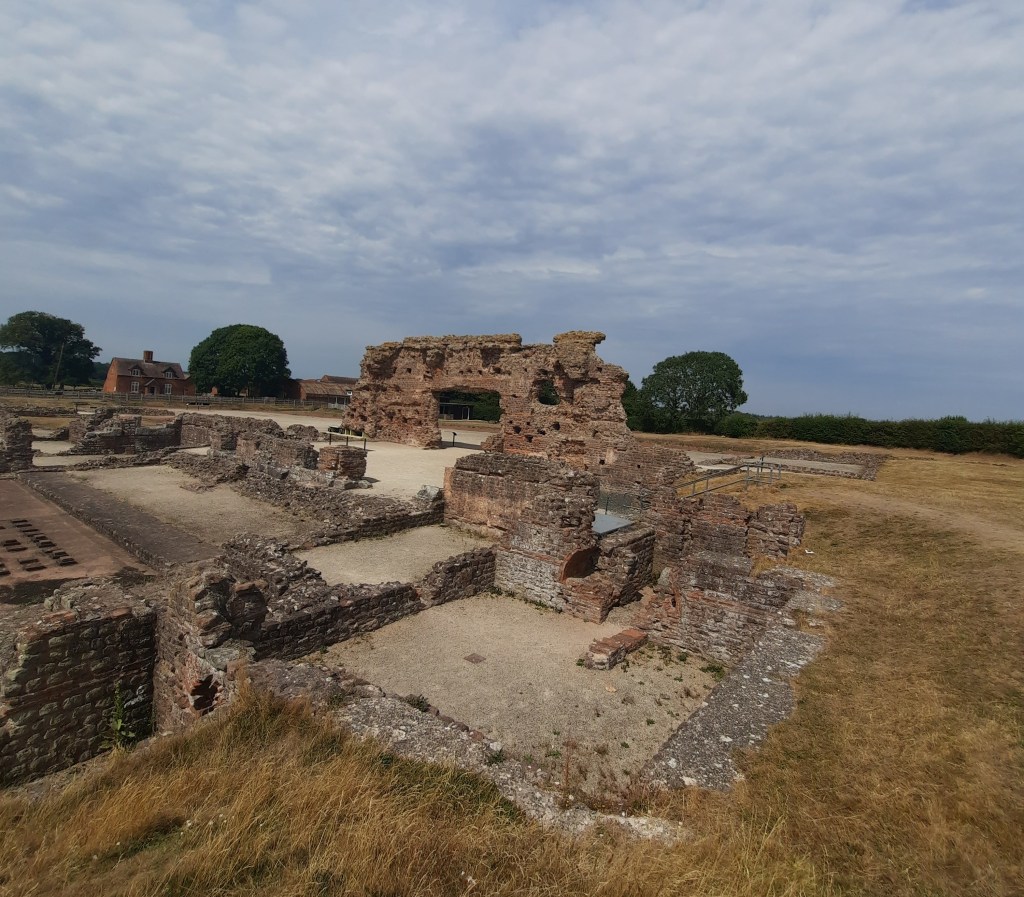
Wroxeter Roman City

This brings me back down the A5, and makes me wonder about Wall, where there are clues that Letocetum may have been home to an early Christian community. Again, evidence is mostly circumstantial but the most convincing argument comes in the form of a long lost bronze bowl with a Chi-Ro symbol on it. It was discovered in a grave in 1922 along with 30 coins dating to the 4th century and one of the 1st century and exhibited by Mr F Jackson at Wroxeter at a meeting of the Birmingham Archaeological Society. Afterwards it disappeared. and is now probably in a private collection but it belongs in a museum (yes, I have been watching Indiana Jones over the Christmas holiday). Thankfully, the other physical evidence that Christians once worshipped at Wall is in a museum. Well, in the Birmingham Museum Collection Centre anyway. Amidst stones carved with heads and horns, believed to have come from a Romano-British shrine local to Letocetum and rebuilt into the walls at Wall, was a stone carved with a cross.

Archaeologist Jim Gould suggests stylistically the cross most likely belongs to the period of the 6th to 9th century, which would tie it into the time-frame of the tantalising verse that is, ‘The Death Song of Cynddylan’ which recalls three battles fought by Prince Cynddylan of Powys. One of these was at a place called ‘Caer Luitcoed’, which translates to ‘the fortified grey wood’ or, as everyone now calls, Lichfield. Here’s a translation of the relevant part of the poem:

Before Lichfield they caused gore beneath the ravens and fierce attack
Lime-white shields were shattered before the sons of Cynddylan.
I shall lament until I would be in the land of my resting place for the slaying of Cynddylan, famed among chieftains.
Grandeur in battle, extensive spoils
Moriel bore off before Lichfield
1500 cattle from the front of battle,
80 stallions and equal harness.
The chief bishop wretched in his four-cornered house
The book clutching monks did not protect
those who fell in the battle before the splendid warrior.
The relevance to a possible early Christian community in the area are those book-grasping monks and the bishop in his four cornered house. According to Jim Gould, written evidence can also be found in Eddius Stephanus’ Life of Bishop Wilfrid which suggests that there was some sort of church and monastery in the area before St Chad set up alongside the spring at Stowe. Wulfhere, King of Mercia between 657 and 674, gave lands to Bishop Wilfred to found monasteries at existing holy places deserted by British Christians.

It wouldn’t be a complete leap of faith to imagine this could have included Lichfield, would it?

https://historicengland.org.uk/images-books/photos/item/AO56/208/8

https://actontrussellromanvilla.weebly.com/

https://www.wallromansitefriendsofletocetum.co.uk/index.asp?pageid=709225

https://romaninscriptionsofbritain.org/inscriptions/2415.64

The Archaeology of Roman Letocetum (Wall, Staffordshire), Implications of the proposed West Midlands Northern Relief Road, Draft for Consultation, County Planning and Development Department Staffordshire County Council

Gould, J 1993. ‘Lichfield before St Chad’, in Medieval Archaeology and Architecture at
Lichfield (ed J Maddison), Brit Archaeol Assoc Conference Trans 13, 1–10, Leeds: Maney Publishing
A Beautiful Wilderness

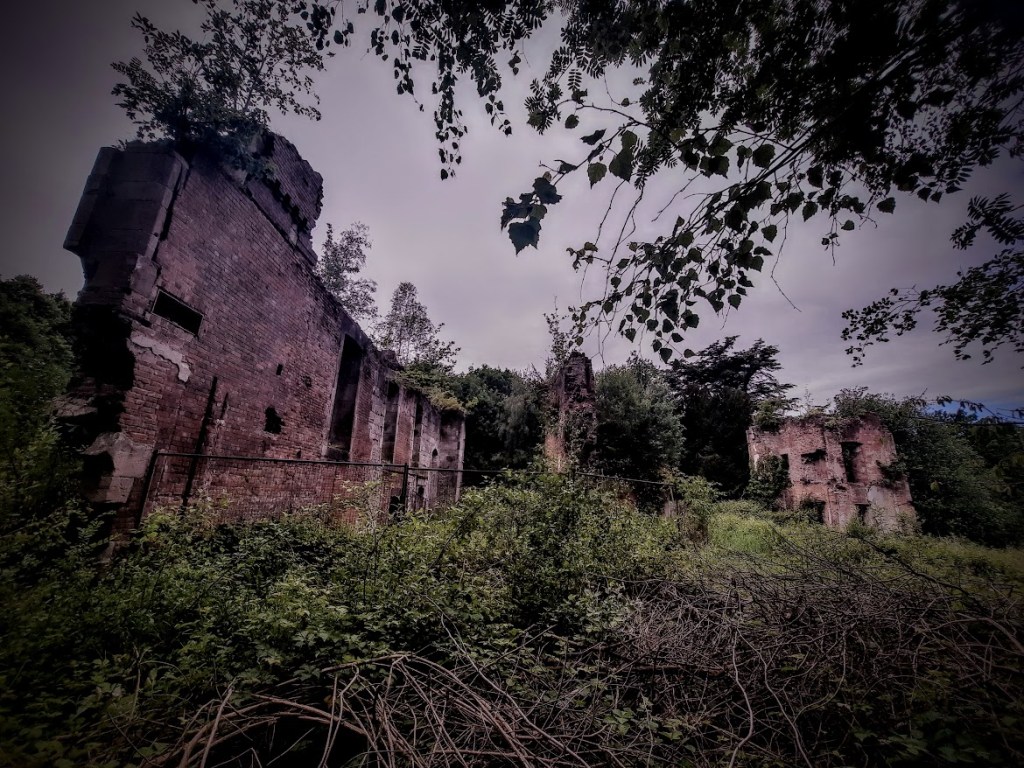
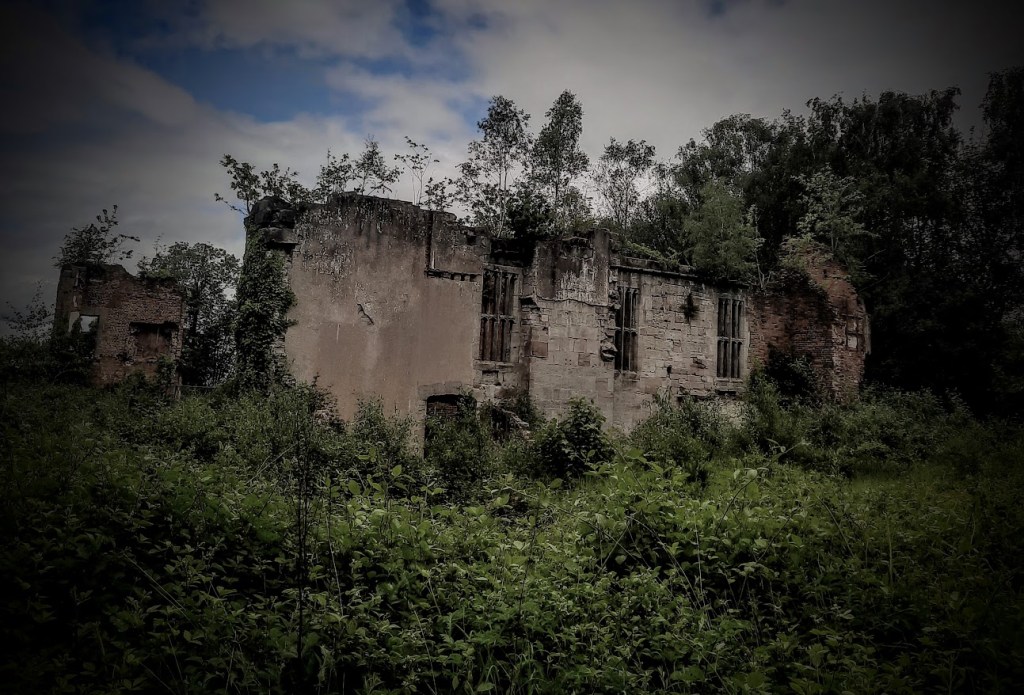
The story of Beaudesert Hall features an incredible cast of characters. There’s Lady Florence Paget, the ‘Pocket Venus’ who eloped with her lover Henry Hastings, and married him on the very same day she was supposed to wed his best friend, Henry Chaplin. More famously, there’s Toppy aka The Dancing Marquess, and a film about the decadent 5th Marquess of Anglesey, ‘Madfabulous‘, has just been shown at Cannes. And of course, there is the first Marquess of Anglesey, who rests in peace in a crypt below Lichfield Cathedral (and no, I’m not going to make any missing leg jokes). For me though, it’s the beginning of Beaudesert and its (sort of) end that has captured my imagination most thanks to a fabulous guided walk and talk there last weekend with my friend JP.

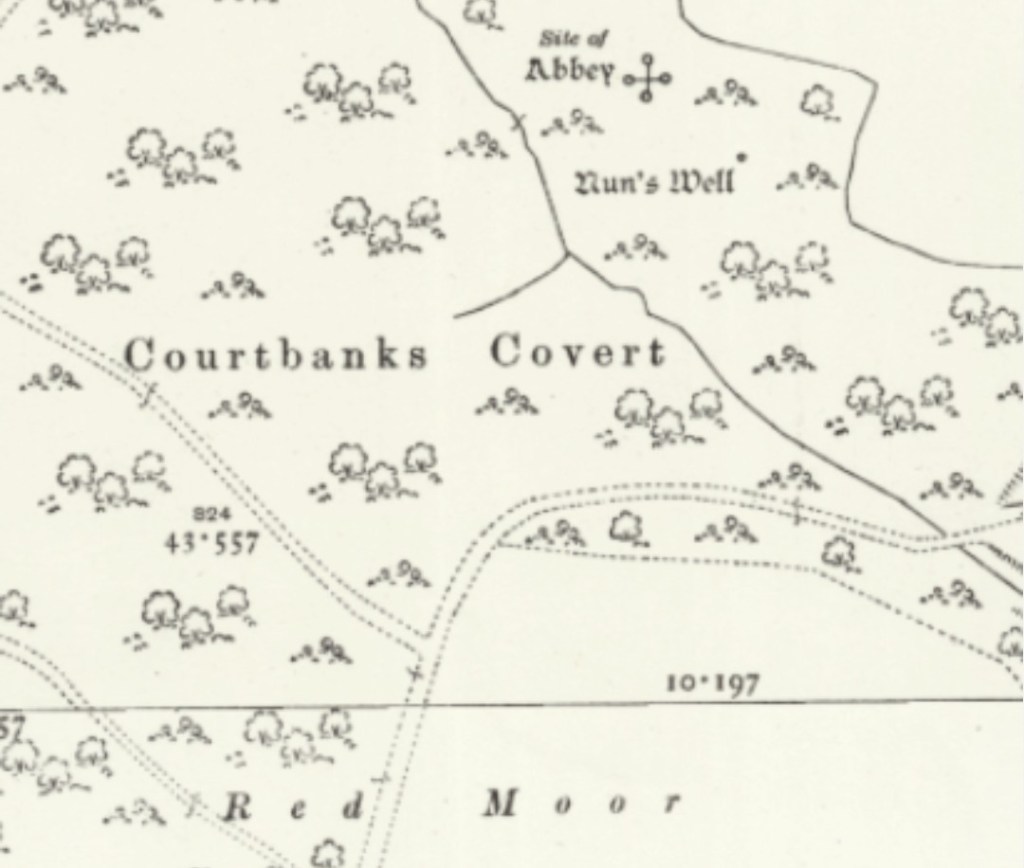
Some of the most substantial remains still standing date back to the 15th century, when the place belonged to the Bishops of Lichfield. They christened it the ‘Beautiful Wilderness’, inspired by the surrounding countryside of Cannock Chase. The story of how it came into their possession is still unfolding and the idea that Beaudesert, first mentioned in the 13th century, may also be connected to two other nearby sites is an intriguing possibility. And how does the mysterious Nun’s Well fit into all of this?


At Cannock Wood, a hermitage was established by King Stephen c.1130, which later became a short lived Cistercian Abbey dedicated to St Mary. Tired of being taken advantage of by the local foresters, the monks begged their benefactor, Henry II, to find their somewhere they could pray in peace. He agreed and swapped the site with what then became Stoneleigh Abbey. King Henry was happy with the exchange and turned Radmore, or Red Moor, into a royal hunting lodge. Despite the site of the Abbey being marked on maps, and evidence of a moated site, WH Duignan, the Walsall solicitor and antiquarian, cast doubt on the location suggesting heaps of furnace slag had been mistaken for ancient ruins. He believed the Abbey had instead stood within the ramparts of Castle Ring, where the foundations of a small building are still visible, although this has more recently been interpretated as another medieval hunting lodge.

Beaudesert belonged to the Bishop until the Reformation when Sir William Paget was given the house by Henry VIII. Paget had risen from humble beginnings to become a key member of the king’s court, thanks to his ability rather than ancestory. Many sources speculate he was the son of a nail maker in Wednesbury but what is certain is that this self-made man managed to keep his head, both physically and politically, throughout the turbulent times of the Tudor monarchs. The property stayed in the ownership of the Pagets until the 6th Marquess of Anglesey made the difficult decision to dispose of his Staffordshire seat in. In the end, he couldn’t even give it away and so the place was sold off piecemeal.

If you’ve read this blog before, you’ll know I have a fascination with what becomes of the fixtures and fittings of a lost country house and there are some tantalising trails to follow from Beaudesert. Pitman, writing for The Friends of Cannock Chase, described seeing, ‘Oak floors, decorative plaster ceilings, Jacobean overmantels, fire grates and irons of ancient dates, (and) marble bathroom equipment’, being dismantled by, ‘the bargain-maker’s men’. Many of these items were bought up by Sir Edward and Ursula Hayward and shipped down under to Carrick Hill House in Adelaide, including the Waterloo staircase, so named for the portrait of the 1st Marquess which hung above it. Oak from the Long Gallery went to Birmingham, where the City Council intended, ‘to keep it ready for use when occasion arises’. Did the Beaudesert panelling ever make it into a Brummie building? With the help of a local councillor, I’ve found a house in Armitage which was once a game larder on the estate and there are stories that more of the stonework found its way to Hanch Hall and to the collection of a man who kept curiosities in a disused rail station in Sutton Coldfield. (Yes, the temptation to go off track and delve further into this has been immense!).

According to the Staffordshire Advertiser, reporting on the sale in July 1935, buyers had 28 days to remove their new property. The demolition firm then had two years to, ‘clear the site, it being understood that he demolishes the building to the ground level and leave the site in a reasonably level and neat condition’. As we know, they never quite succeeded and thanks to the firm becoming bankrupt, some of Beaudesert Hall still survives, ready for another chapter in its long and eventful history. To uncover the full story so far, I can’t recommend enough that you book yourself onto a tour and let the experts guide you around this beautiful wilderness.

Sources:

The Friendship of Cannock Chase, Pitman

Staffordshire Advertiser, 27th July 1935

Staffordshire Advertiser, 16th November 1935

Birmingham Daily Post, 4th July 1977

The Skeletons of the Spital Chapel

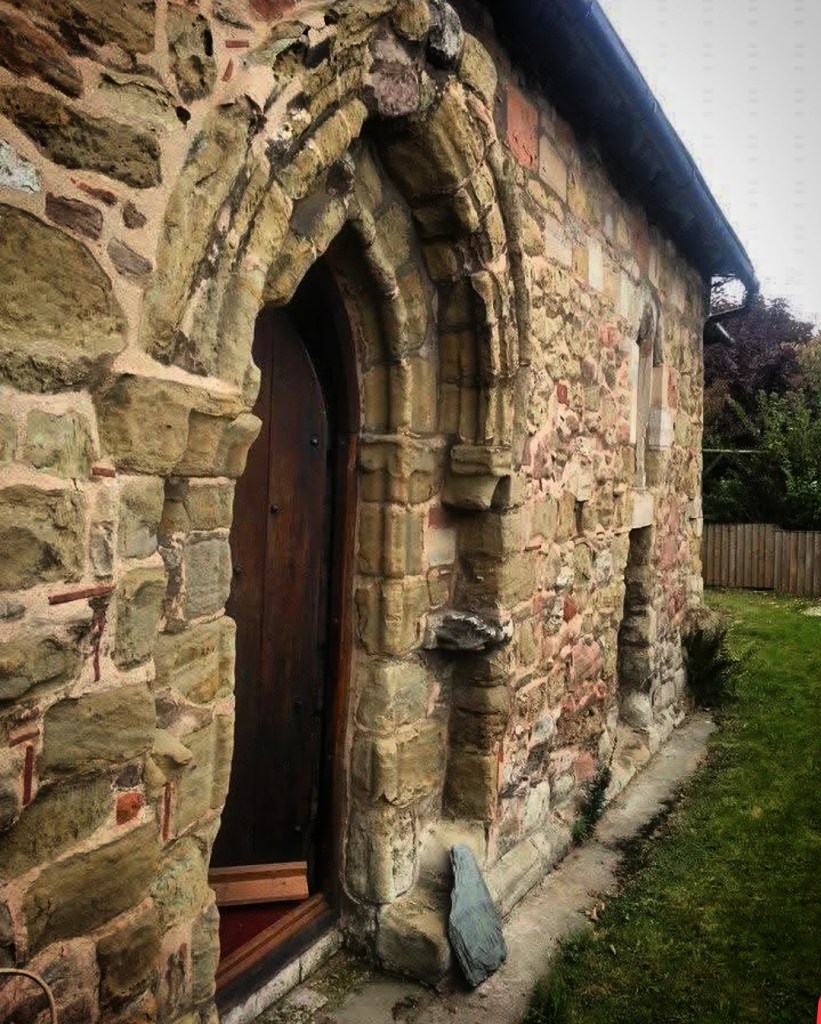
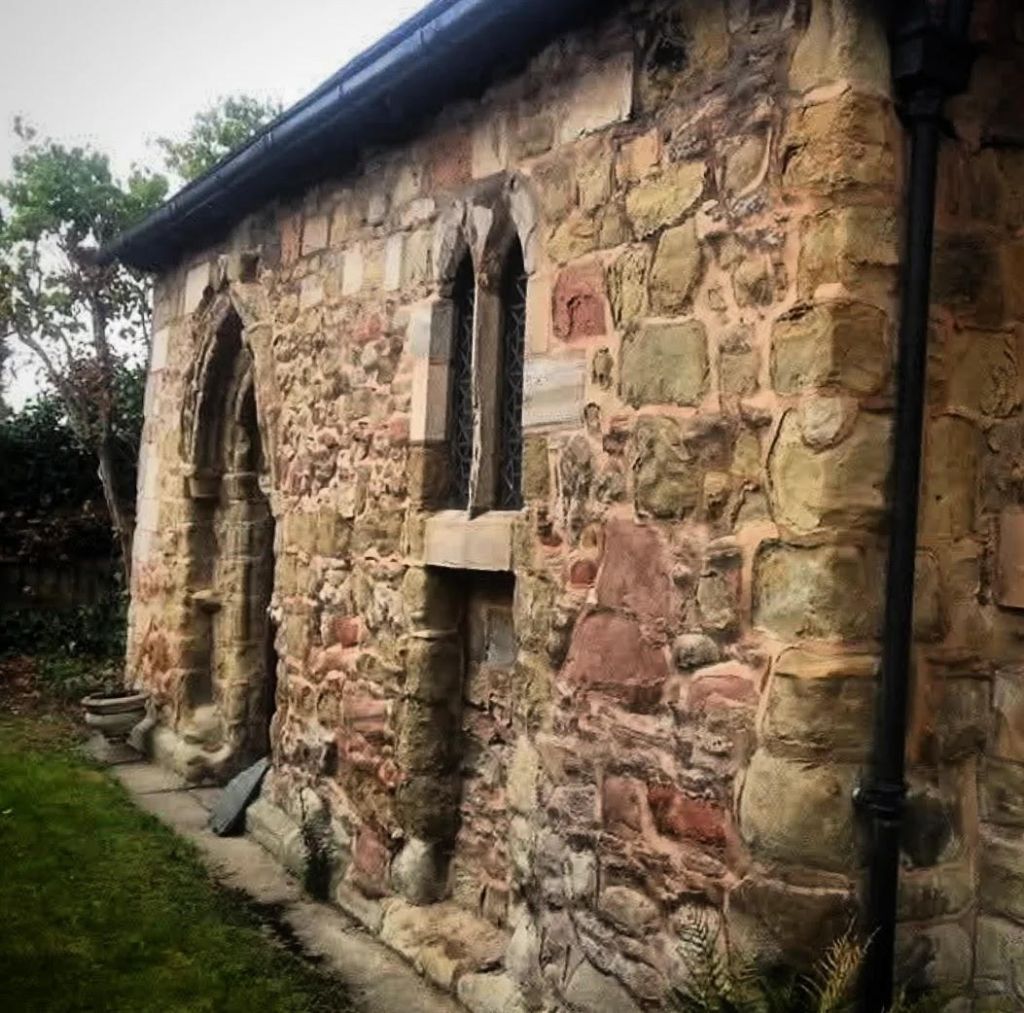
There’s a tiny chapel in Tamworth, hidden behind streets of houses. Much of its history is a mystery but there are records showing that the Spital Chapel of St James was erected by Robert Marmion of Tamworth Castle c. 1274. There was a suggestion the chapel had been built the site of an earlier structure and in July 1968 a group of girls from Perrycroft School carried out an excavation there, under the expert eye of archaeologist Jim Gould, in the hope of finding evidence of Saxon origins. What they actually found was something of a surprise.

In a shallow grave, on the north side of the chapel, the skeleton of a middle-aged woman, aged between 40 and 50 was unearthed. Perhaps even more surprising was that the remains of two children were found laying across the woman’s pelvis. There was no trace of a shroud and the burial was on the north side of the chapel. Given that the land surrounding the chapel was not known to have been consecrated, or ever used as a burial ground, it was suggested that this may be an illicit internment of impoverished individuals.

I have different tools at my disposal to that team of teenage girls and they’ve enabled me to find several more skeletons at the Spital Chapel. In October 1914, the Tamworth Herald reported two lots of human remains were found to the south of the chapel when gas pipes were being laid. One was near the door, the other near the chancel wall and again, both were found not far from the surface. The report says they were reinterred on the spot and, unless anyone knows differently, there is nothing to suggest they aren’t still there.

Delving even further back into the newspaper archive, I found that in May 1870, an inquest was held on two skeletons found at The Spittals, a now demolished Victorian house, which once stood near the chapel. Adding to the intrigue is a letter from Edith Heath, published by the Coleshill Chronicle in 1968, recalling how she had often visited a woman called Dorothy Clarson who lived on Wiggington Rd in a house called Belbroughton, built by her father. Miss Clarson had claimed that when workmen were digging foundations for a wall of the house, the body of a man wearing chainmail had been uncovered. Apparently, the then Vicar of Tamworth was sent for to say a prayer and lay the body reverently to rest. Reading between the lines, it seems this skeletal soldier may also still lie somewhere near to the chapel.

The letter goes on to say that Belbroughton was haunted by a Grey Lady, who also walked a path which once led to a lost orchard. Whether this adds or subtracts to the reliability of Miss Clarson’s account, is something you can make your own mind up about but for me, the story that a spectre haunts the Spital Chapel site is the cherry on the cake.

The history books suggest the Spital was originally a chantry chapel, built so that prayers could be said here to save the soul of Robert Marmion of Tamworth Castle. However, there is a belief amongst Tamworth folk that the chapel was used as some sort of Pest House, or isolation hospital during times of plague which may account for the presence of burials. The dedication to St James also suggests at some point it may have been a stop-off on a pilgrimage route. Could it be that those buried here are pilgrims who never completed their journey? I’m obviously no expert but now we know that the burials unearthed in 1968 were not isolated, the theory that they were an illicit burial seems a little less convincing. Perhaps analysis of some of the skeletons, if they do still lie beneath, might be be able to tell us more about who they were, when they died and why they were laid to rest here.

Sources
G C Baugh, W L Cowie, J C Dickinson, Duggan A P, A K B Evans, R H Evans, Una C Hannam, P Heath, D A Johnson, Hilda Johnstone, Ann J Kettle, J L Kirby, R Mansfield, A Saltman, ‘Hospitals: Tamworth, St James’, in A History of the County of Stafford: Volume 3, ed. M W Greenslade, R B Pugh (London, 1970), British History Online https://www.british-history.ac.uk/vch/staffs/vol3/pp294-296 [accessed 4 May 2025]

https://britishlistedbuildings.co.uk/101197039-spital-chapel-of-st-james-tamworth-spital-ward

Tamworth Herald 31st October 1914

Tamworth Herald 21st May 1870

SAHS Transactions Volume X

Abra-cadaver

It’s Sunday and it’s Spooky Season (or October as we used to call it) and so hey presto, I’ve written a post about unorthodox burials in this old city where magic may have been involved. I think you’ll like this. Not a lot, but you’ll like it (kids, ask your parents).

As a point of reference and, just to show I don’t just completely conjure things up, there’s a great paper by Roberta Gilchrist, which deals with the archaeology of magic in medieval burials. It outlines the norm for Christian interments at that time as being a body wrapped in a shroud and lacking a coffin, personal items and grave goods and also explains that around two percent of excavated burials are exceptional to this. Excitingly but perhaps unsurprisingly, it turns out that some of these intriguing inhumations have turned up in the Field of the Dead (or Lichfield as the authorities insist on calling it).

Amongst the fourteen burials found beneath what’s now the beer garden of the Brewhouse and Kitchen on Bird Street were the remains of three females, including a woman who lived in the mid-fourteenth century, described by archaeologist Mark Neal as being quite elderly and in poor health. The discovery of so many skeletons here suggests it was the location of the cemetery for Lichfield’s Fransican Friary and the presence of women raises some interesting questions about who was allowed to be buried here and what their role may have been. Most puzzling of all however was the discovery of a body found with a 2mm thick layer of charcoal beneath it. Research shows that such burials are mostly associated with people of note in the early medieval period and predate the founding of the Friary in 1230. Was this the site of a high status Saxon buried before the Franscicans arrived? It is of course possible that this funerary ritual was continued beyond the Saxon period here in Lichfield but could we be looking at a site with a history stretching back further than we thought? The history of the Grey Friars site suddenly seems very grey indeed…

The other burning question is of course, what was the significance of the charcoal? There are some intriguing possibilities ranging from the practical, where the charcoal layer was a way of absorbing bodily fluids during putrefaction, to some sort of post-humous purification ritual designed to save the soul after a life of sin and to stop the dead from returning to haunt the living. I don’t think I’ll ever look at a barbecue in quite the same way again.

Lichfield Cathedral. Pure magic.

Five further charcoal burials were found during excavations at Lichfield Cathedral, one of them inside a stone structure believed to have been part of the original Saxon church. One of those burials was that of a priest buried with something variously described as a hazel wand, rod or staff, as well as a cross of twigs, a chalice and patten and a eucharistic wafer. Yes the symbolism is strong with this one. Several theories exist regarding the presence of the wooden wand, including it being provided for protection as the priest made his final journey through the valley of the shadow of death. Perhaps the most peculiar burial here is that of a priest in an 11th century stone coffin which had an opening directly over where the mouth would be positioned. It’s been interpreted as a libation tube, where the living could make offerings of food and drink to their dead relative. It’s a pagan practice mostly associated with the Romans, and as yet, no-one has come up with a satisfying explanation for it being present in a place of Christian worship.

There are also an incredible 49 burials recorded at the Cathedral where white quartz stones have been found inside graves, and even clutched in the hands of the occupants. Again, the exact symbolism of these is unknown, but archaeologist Warwick Rodwell suggested the answer may lie in Revelation 2:17. This is a passage of the New Testament where a white stone with a new name written on it is given by Christ to his followers as symbol of forgiveness and an invitation to the afterlife. I think. It seems to make sense until you realise that people were incorporating these white pebbles into their funerary rituals long before Christianity existed. As we are on the subject of magic, can we also take a moment to appreciate that John who presents the video I’ve linked to looks like he might be an actual wizard.

St Michael’s on Greenhill is a place of many mysteries

A seemingly more recent, but no less bemusing burial was unearthed at St Michaels on Greenhill in 1852. Two gravediggers dug up the rotten fragments of an elm coffin and found that buried with the bones inside it was a bottle filled with a liquid believed to be urine. It has the feel of folk magic to me, particularly as in 2021, a similar discovery was made at the Trinity Burial Ground in Hull. We know that witch bottles were used to protect people from harm and that examples have been found buried in the foundations of buildings. Was this something similar, designed to protect the grave from robbers perhaps, or other less earthly threats? Or was it just a final drink for the coffin’s inhabitant to enjoy on their way to wherever they were headed to next?

I make no apologies for asking so many questions and being unable to answer any of them in this post. Time and time again, through writing this blog and being part of the Lichfield Discovered team, I realise that there is still so much to be uncovered and understood about the incredible history of this city. And for me? Well, that’s magic.

Sources:
Lichfield Mercury 5th January 1990

1 Bird Street, Lichfield Report on a watching brief, Marches Archaeology Series 103, November 103

Stone, R. (1999). 1 Bird Street, Lichfield: archaeological watching brief. Cirencester: Cotswold Archaeology.

Charcoal Burial in Early Medieval England, James Holloway (2009)

Gilchrist, R. ORCID: https://orcid.org/0000-0002-1967-2558
(2008) Magic for the dead? The archaeology of magic in later
medieval burials. Medieval Archaeology, 52. pp. 119-159

Jonsson, Kristina. “Burial Rods and Charcoal Graves: New Light on Old Burial Practices.” Viking and Medieval Scandinavia 3 (2007): 43–73. Web.

Community and Belief: the Development of Anglo-Saxon Christian Burial Practice,
AD 700-1066, Alexandra Aversa Sheldon (2018)

Battle Plans

Armed with a bag of Werther’s Originals and a vague plan about finding the site of Boudica’s final battle against the Romans, my friend (and countrywoman) and I headed down the A5 towards Atherstone.

By Boadicea by Colin Smith, CC BY-SA 2.0, https://commons.wikimedia.org/w/index.php?curid=107819273

Boudica’s burial place is one of Britain’s great mysteries. I thought for years that the warrior queen rested beneath a platform of Kings Cross Station but clearly I was on the wrong track. There is no trace of her there, or anywhere else for that matter, although plenty of places have been mooted as a possibility. Ever since Richard III was found under that car park, perhaps people are more comfortable putting forward their own research into such things. Even somewhere they flog burgers in Birmingham is apparently a contender for the final resting place of the scourge of the Roman Empire. If she genuinely is here, they really ought to consider changing the name to ‘Queen’s Norton’. Let’s be honest, it wouldn’t be the first time a significant piece of history has been linked to the foundations of a local fast food restaurant in the West Midlands. There are two Mummies beneath what was once another MaccyDs in Tamworth.

Despite several sites laying claim to being the scene of Boudica’s last battle, no archaeological evidence has turned up at any of them either. Claims have instead been based on descriptions of the battle ground from two Roman historians, Tacitus and Cassius Dio. It’s described as somewhere within a defile (a steep sided narrow gorge) with a wood behind it and open countryside in front of it, chosen to prevent ambushes from Boudica’s warriors. In 2004, archaeologist Jim Gould wrote an article in which he says the description of the site given by Tacitus is much too vague for positive identification. He believed it would never be identified on the ground, in the absence of an archaeological discovery.

One of the chief contenders is Mancetter, on the outskirts of Atherstone, or Manduessedum as it was known in Boudica’s time. If it is ever proved, then they ought to consider changing the name to ‘Womancetter’ but I think we are going to have to defile that thought away for now.

What we do have archaeological evidence of at Mancetter is a Roman fort, now occupied by the site of the church and manor house. As we stood nosing in at the gate of the latter, the gardener appeared and told us it dated back to the fourteenth century and had a priest hide and a secret tunnel leading to the church. Despite my enthusiasm for stories of this kind, experience tells me these architectural features often turn out to be a cupboard or a cellar. In this case however, it seems he may not have been leading us up the garden path. Well not entirely. According to the Atherstone News and Herald in June 1956, in what’s now known as the ‘Martyr’s Bedroom’, an escape route led to the roof via a sliding panel in, ahem, a cupboard

The manor was the home of the Protestant Glover brothers John, William and Robert. In 1555, the Bishop of Lichfield issued a warrant for their arrest but by the time the Mayor of Coventry arrived with men to carry out the orders two of the trio had escaped. Robert had been unable to flee as he was ill and was taken from his sick bed to Coventry and then to Lichfield where he dined at the Swan before being removed to a cell alongside a dungeon. I suspect this would have been the ‘church prison’, as described by Thomas Harwood which seems to have been underneath what’s now Number One, The Close, rather than the gaol at the Guildhall.

Robert Glover was burned at the stake in Coventry on 19th September 1555. His brother John eluded capture but died of an ague after living in the woods for some months. The Biishop’s Chancellor, Anthony Draycot was not about to let the whole business of him being a protestant lie though, informing the vicar that his body should be dug up and thrown over the churchyard wall. When the vicar pointed out that after six weeks the body stank and finding men willing to undertake the task would be tricky, Draycot instead ordered him to wait for 12 months and then throw the skeleton over the wall into the public highway. The third brother William also suffered post-death disgrace being refused a Christian burial in the town of Wem in Shropshire, his corpse instead being dragged by horses to a nearby field and buried there in unhallowed ground. Just in case a priest hole and secret tunnel haven’t given you your fill of folklore, you should know that Robert Glover’s ghost haunts the room from which he was taken.

Next door to the Glovers lived another Mancetter martyr, Joyce Lewis, who was burned at the stake in Lichfield on 18th December 1557. Despite a plaque in the Market Square recording this dark chapter of the city’s history I knew very little of her story until now. It seems Joyce fought to the death to defend her beliefs, asking the friends who visited her in prison how she might behave so, ‘her death might be more glorious to the name of God, comfortable to his people, and also most discomfortable unto the enemies of God’. The night before her execution she refused the offer of two priests to hear her confession and after fainting on route to the Market Square and being given a cup of water, she used it to drink to ‘the abolishment of papistry’. According to Foxe’s Book of Martyrs, ‘a great number, specially the women of that town, did drink with her; which afterward were put to open penance in the church by the cruel papists, for drinking with her’. I believe open penance would have been some sort of public punishment.

I may not have found the site of Boudica’s battleground on my journey up the A5 but it did lead me to the story of Joyce Lewis’s last stand much closer to home and how her final moments were spent surrounded by the solidarity of the women of Lichfield.

Sources:

https://ancientmonuments.uk/103961-roman-camp-mancetter

http://atherstonecivicsociety.co.uk/projectrm

https://www.archaeology.org/issues/95-1307/features/1090-boudicca-celtic-roman-empire-kings-cross

https://www.english-heritage.org.uk/visit/places/wall-roman-site/history/

https://www.patrickcomerford.com/2020_05_16_archive.html

Martyrologia, John Sundins Stamp

London Archaeologist Spring 2004, Boudica – yet again, Jim Gould

Queen of the Stone Age

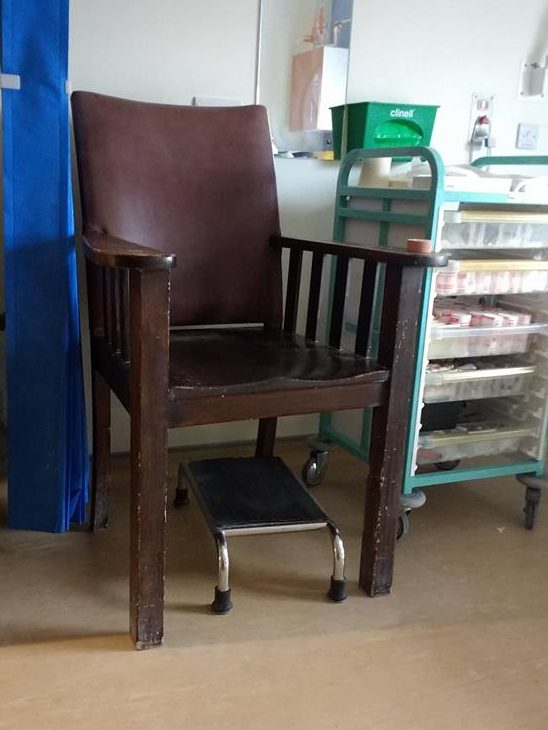
One of the highlights of this weekend’s coronation, appearances from Floella Benjamin and the Grim Reaper through the arched door aside, was The Coronation Chair. It is possibly the most famous piece of furniture in existence, rivalled only by Lichfield’s Victoria Hospital Chair now in the Samuel Johnson Minor Injuries Unit. Royalist or not, there is something rather thrilling about a graffiti and bomb scarred throne on which the behinds of thirty eight kings and queens, and the rump of Oliver Cromwell, have sat.

A big chair for the NHS. Hip hip hooray!

Even more ancient than the chair is is the ‘Stone of Destiny’ it was built to incorporate. The sandstone block, used for centuries as the crowning seat of Scottish kings, was stolen by Edward I in 1296 and only officially returned to the people of Scotland seven hundred years later. Many myths, legends and rumours surround the stone’s origin and its authenticity but today there’s another mysterious coronation seat somewhere in Staffordshire that I want to investigate.

Are you sitting comfortably? Then we’ll begin.

In September 1959, the Western Mail carried a story about a seat-shaped stone, located in the grounds of Blithfield Hall, Staffordshire. Visitors to the hall were told it was the ‘Welsh Coronation Stone’, which caused a great deal of confusion in Cardiff as nobody knew whether a Welsh Coronation Stone was actually a thing or not. An official at the Welsh Folk Museum was also non-committal given, ‘It is one thing to have a Stone and another thing to have a stone around which a story or tradition may have arisen’. It seems there was also reticence to discuss such monumental matters here in Staffordshire for fear of the stone being returned to its rightful home. All that could be established was that the family heirloom/national treasure had arrived at Blithfield in the 1920s.

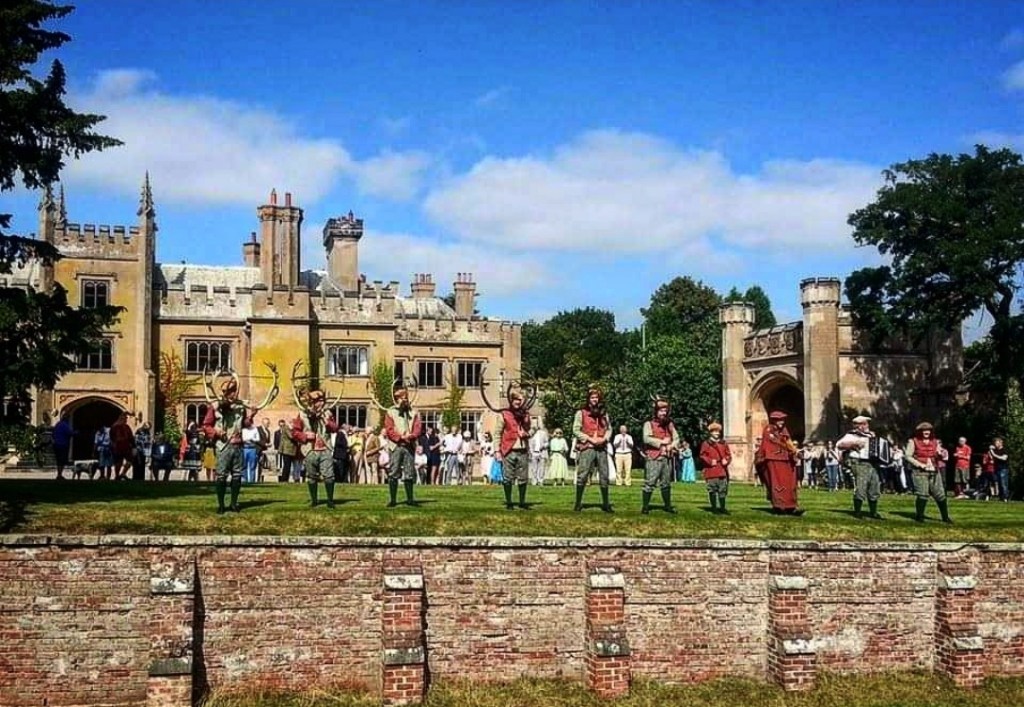
Dancing kings aka the Abbots Bromley Horn Dancers on the lawn on Blithfield Hall

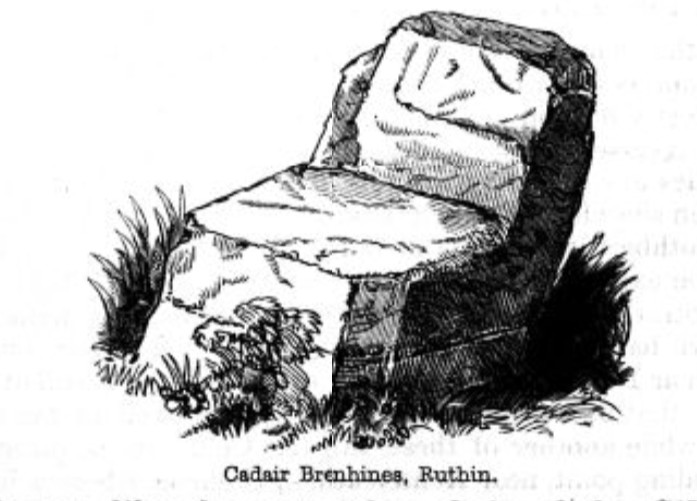
Ten years on, around the time of Charles’ investiture as Prince of Wales in the Summer of 69, another reference to the stone appeared in the Rugeley Times. The then headmaster of Hill Ridware School is pictured in the hall’s inner courtyard looking at what the newspaper describes as ‘the Welsh equivalent of the Scottish Stone of Scone’ and ‘the seat on which early Welsh kings were crowned’. It says it came from the Bagot’s estate near Ruthin called ‘Pool Park’ and a virtual visit there via the Ruthin Local History Society reveals that a ceremonial ‘coronation stone’ dating to the 5th or 6th century is mentioned in the estate’s 1928 sales catalogue, which fits in with the date of the Blithfield stone’s arrival in Staffordshire. The society give the Welsh name of the stone as ‘Cadair y Frenhines’ (The Queen’s Throne) and says it was brought down from ‘Llys y Frenhines’ (The Queen’s Court) in the early 19th century, along with another ancient monument with Ogham and Latin inscriptions (1). The latter was moved to the museum in Cardiff in 1936 and replaced by a replica at its unoriginal location at Pool Park but according to the history society, the whereabouts of the Queen’s Throne is now ‘unknown’.

Claim of thrones

I’m certain that this missing stone is the one described as being at Blithfield but so many questions remain. Fifty plus years later, is the monument even still at the hall? Was it ever really used to crown queens, or indeed kings, or did it gain this reputation through Georgian whimsy and the fact it looks a bit like a chair? Hopefully if the royal chair is still to be found in the courtyard at Blithfield, the true backside story of The Queen’s Throne might finally be revealed.

Sources
https://www.scone-palace.co.uk/stone-of-scone

https://www.historicenvironment.scot/archives-and-research/archives-and-collections/properties-in-care-collections/object/the-stone-of-destiny-13th-century-medieval-edinburgh-castle-6132

https://www.megalithic.co.uk/article.php?sid=49523

https://www.ruthinhistoryhanesrhuthun.org/pool-park

An Inventory of the Ancient Monuments in Wales and Monmouthshire Volume 4

https://www.mythslegendsodditiesnorth-east-wales.co.uk/pool-park-ogham-stone

(1) In defence of Bagot, the chair was rescued from one of his tenants who had been using it as a horse block. Sadly, its said that the tenant simply went and fetched another ‘old stone’ in its place.

Bath Time

Although the waters at the Roman Baths in Bath were once known for their healing powers (the mythological Prince Bladud and his pigs are said to have been cured of leprosy after wallowing here in 863 BC), the water is now considered unsafe and is strictly off limits. This didn’t bother me in the slightest as I’d much rather be issued with an audio guide with commentary from Dr Alice Roberts than a fluffy white bathrobe.

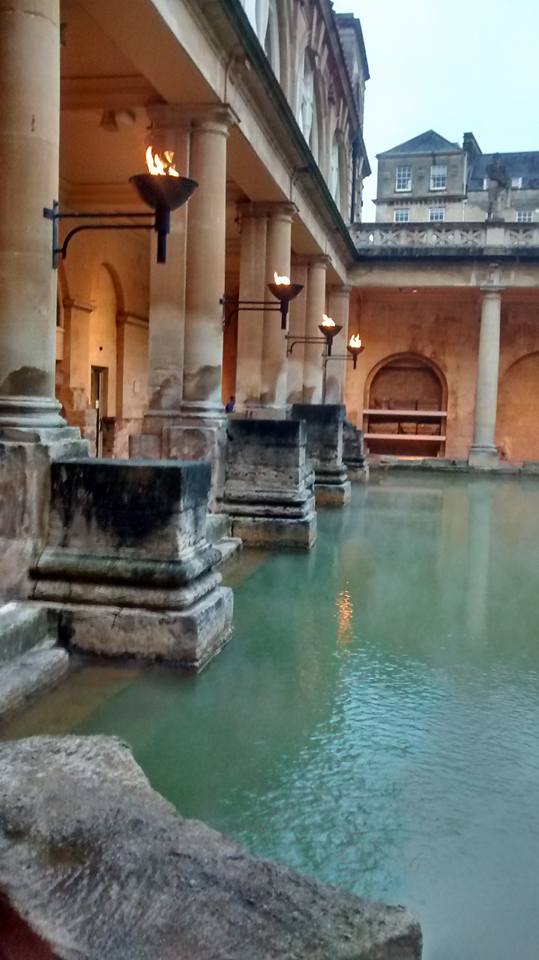
The Great Bath at Bath

The Great Bath at Bath

The great bath is fed by a hot spring rising here at the rate of 1,170,000 litres a day and a temperature of 46 degrees Celsius. For our ancestors, the warm water gushing from the ground was the work of the gods. Even though I know the cause to be natural rather than supernatural, there was still something magical about watching vapour swirling up out of the bubbling, green-hued water into a torchlit, grey November afternoon. And it seems I’m not the only one the place has that kind of effect on. When the Romans arrived, the local goddess Sulis was already being worshipped here so they named the place after her, and built a new temple honouring both her and her Roman counterpart Minerva alongside the sacred spring.

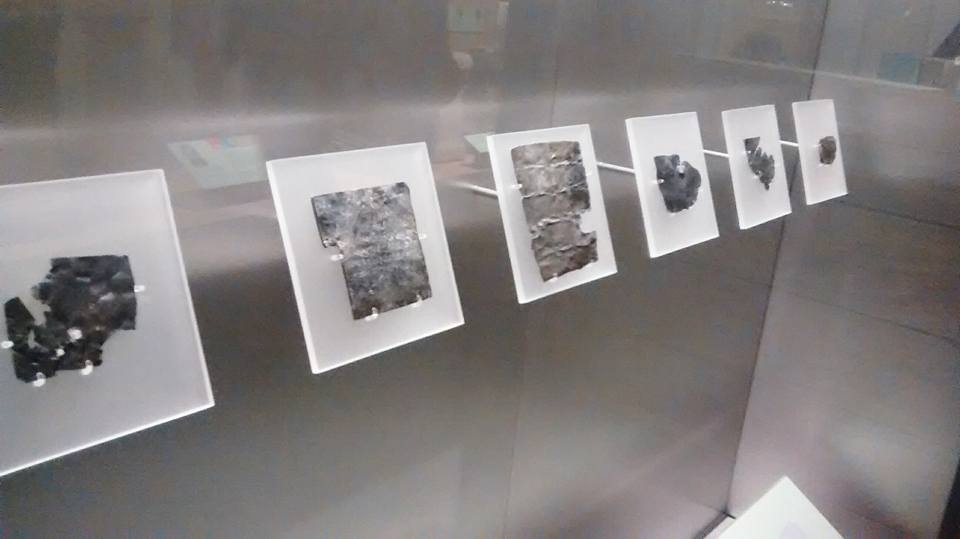
Alongside the curing, a fair bit of cursing went on. One hundred and thirty prayers inscribed on sheets of lead or pewter were thrown into the spring between 200 and 400 AD. Many invoke the help of Sulis Minerva in seeking justice and revenge for heinous crimes such as the theft of a bathing tunic or gloves. The majority are in vernacular Latin, but one as yet untranslatable text is thought to be the only surviving example of an ancient British language. I quite like the thought that the only physical trace of something spoken thousands of years ago was not left by kings or queens but by one of the plebs like us, most likely complaining that their swimming costume had been nicked.

Curse tablets found in the Sacred Spring at Bath

Curse tablets found in the Sacred Spring at Bath

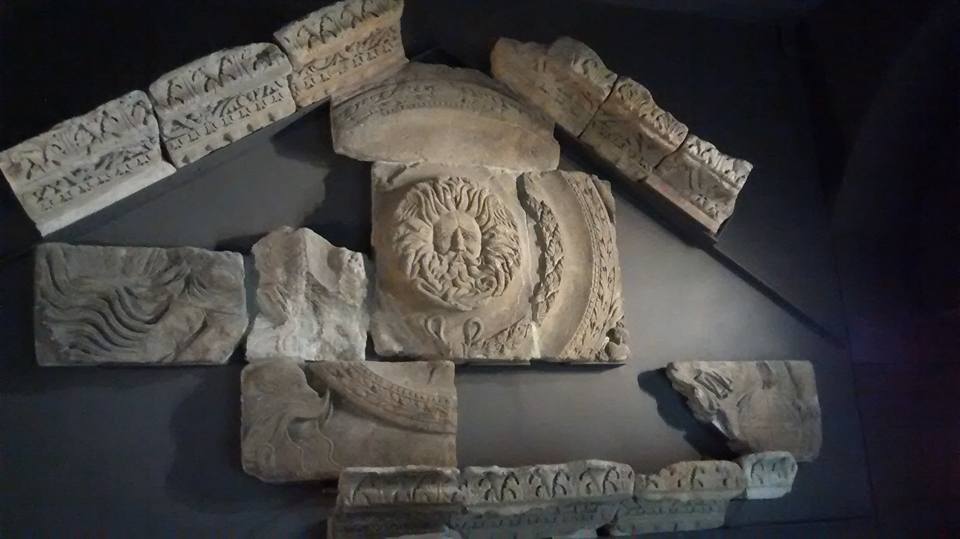
In 1727, the gilt bronze head of a statue of Sulis Minerva was discovered yet it’s not the face of the goddess which has become the symbol of Roman Bath but the face of the ‘gorgon’ found on the pediment outside her temple. And I have the fridge magnet to prove it. Re-discovered in 1790, and debated ever since, the ‘gorgon’s head’ is surrounded by a sea of symbolism including Tritons, a dolphin head shaped helmet, a star, an owl and two Victories. The ‘gorgon’ interpretation derives from the association of Minerva with Medusa and the supposed presence of a couple of snakes in the beard. Yes this ‘gorgon’ has a beard, which highlights the main problem with this explanation – gorgons are female whereas this is obviously the face of a man. It might be another example of the Romans combining a local god with of their own e.g. a classical gorgon and a British water god or could perhaps even be Neptune or Oceanus.

The so-called gorgon at Bath. I'm not convinced. But then I dropped Latin in the third year, so what do I know?

The so-called gorgon at Bath. I’m not convinced. But then I dropped Latin in the third year, so what do I know?

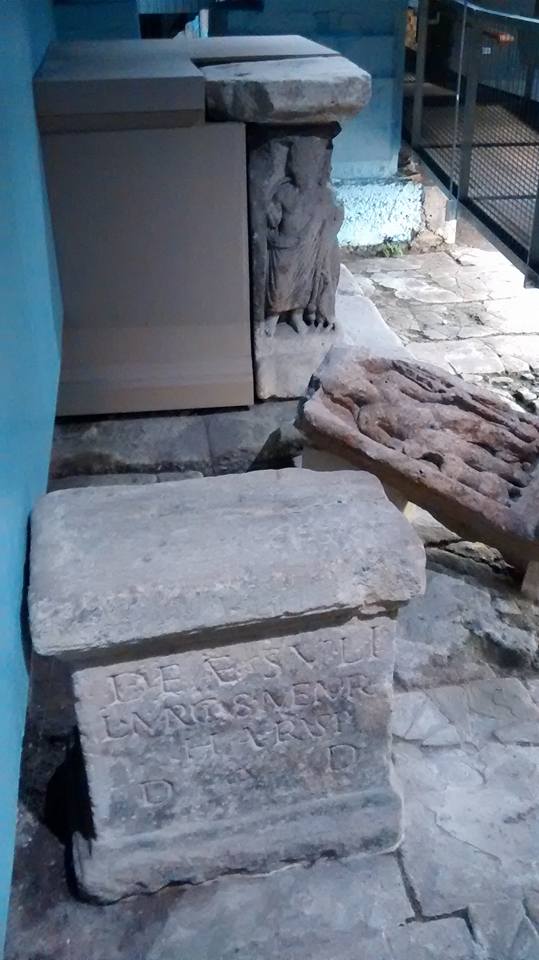
Other more easily identifiable gods found here include Jupiter and Bacchus whose images once formed part of the great altar where sacrifices were made. Post-sacrifice, the entrails of the animal were consulted by a haruspex (literal translation: gut-gazer) and we know there was one here in Aquae Sulis because the inscription on this stone reads ‘To the goddess Sul, Lucius Marcus, a grateful Haruspex, donated out of his devotion’. This is the only evidence we have of a priest in Britain who practised divination in this way, so it’s something of a rarity.  It has been suggested that whoever carved the stone wasn’t all that competent, originally missing out the ‘O’ from ‘Memor’ and also having to squeeze the letters ‘VSP’ after ‘the abbreviation HAR’. You’d think Lucius might have forseen these problems in the intestines.

The Haruspex Stone at Bath with the sacrificial altar behind

The Haruspex Stone at Bath with the sacrificial altar behind

Hopefully, all this talk of Romans at Bath will have whetted your appetite for something a little closer to home but just as exciting. Not only does our Roman site at Wall have carvings every bit as mysterious as those at Bath, evidence of Christianity in the area prior to St Chad’s arrival (in the form of  bronze bowl with a Chi-Rho symbol which you can see and read about here) and even rumours of our own statue of Minerva said to have been as big as a man, but not a man as it had a bust but also not a woman because it was wearing a soldier’s helmet. Unfortunately, it was used to fix a drain. If it ever existed in the first place that is.

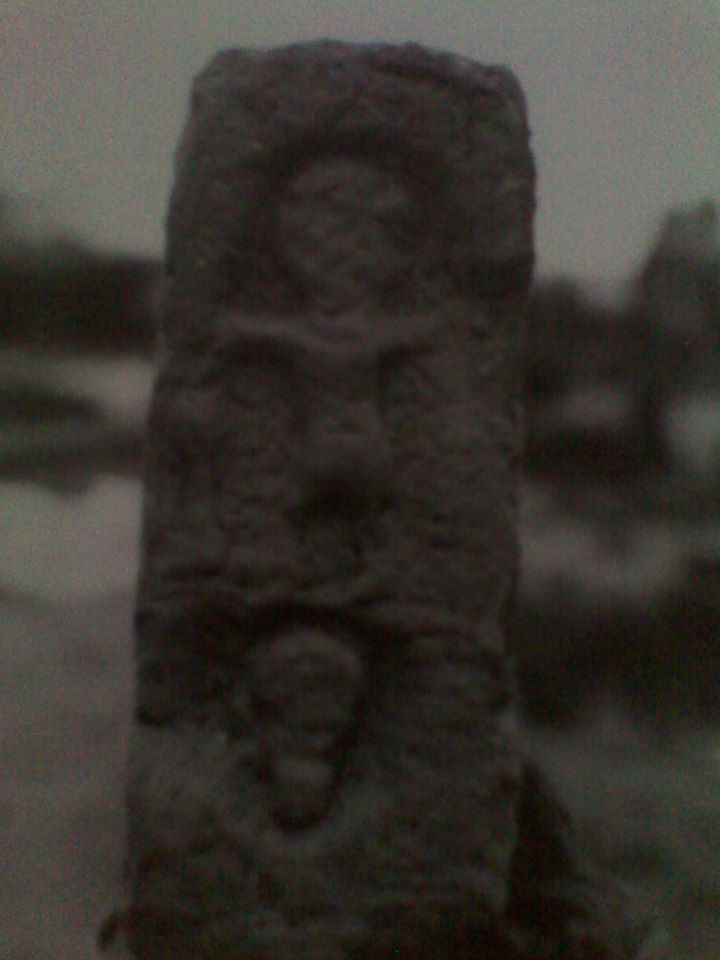
Possibly one of the local gods at Letocetum. Found built into the walls of the Mansio at Wall.

Possibly one of the local gods at Letocetum. Found built into the walls of the Mansio at Wall.

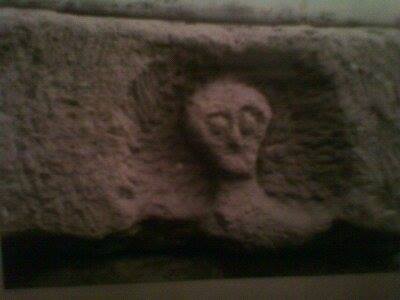
This may represent a skull in a niche a la Roquepertuse or it may be another local god. We just don't know but it is fun speculating.

This may represent a skull in a niche a la Roquepertuse or it may be another local god. We just don’t know but it is fun speculating.

You can access the site of Letocetum all year round during daylight hours and the museum is open 11am to 4pm the last weekend of every month plus Bank Holidays between March and October. This Winter, the Friends of Letocetum have arranged a series of talks at Wall Village Hall starting on Wednesday 9th December with Dr Mike Hodder who will be talking about his own personal experiences as an archaeologist at Wall.

Further details of this and all other upcoming talks and events plus lots of other information about Letocetum can be found here on the website or there is a Facebook page here and you can follow @FndsofLetocetum on Twitter.

For anyone who would like to see the Gorgon’s Head but isn’t able to get to Bath, it will be coming to a lampost in Leomansley shortly along with a wobbly lobster. Details on request. And should anyone pinch it, I’ve got a curse ready.

Up Letocetum

Wall, located just two miles to the south of Lichfield, is an incredible place to visit at anytime of the year. This Sunday (19th July) however, the Friends of Letocetum will be bringing the remains of the Roman settlement here to life with their annual open day, held in conjunction with English Heritage and the National Trust.  Entrance is free and the event runs from 11am to 4pm, during which time you’ll be able to experience life as a Roman soldier, get creative with a Roman artist and explore what everyday life would have been like at Letocetum.  A group of Saxons are also setting up an encampment at the site and for literature fans there will be a Saxon book binder and storyteller.  Children can take part in a range of games and activities* and there will also be a stall selling Roman games, perfumes and beads.

Wall-Open-Day-

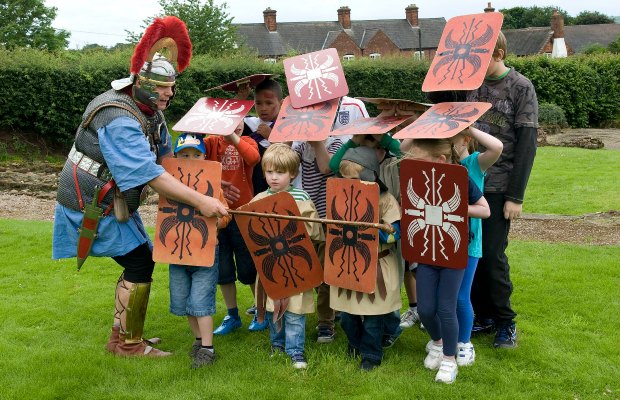
Roman style bootcamp at last year’s open day

John Crowe, chair of the Friends group and Wall Parish Council said, “Last year we welcomed over twelve hundred visitors. The whole village comes together each year for our annual open day, and we want people to come along and have fun, whilst learning more about the significance of this major Roman settlement, situated at the crossroads of two of the most important roads at the centre of Roman Britain. The Staffordshire Hoard was discovered just one mile to the west of the village, and other finds from the local area suggest that Christianity may have been established at Letocetum prior to St Chad’s arrival in Lichfield”.

Stone on display at Wall museum, featuring two carved heads and what's thought to be a shield.

This stone, one of several found built into one of the walls at Wall, is just one of the many fascinating artefacts on display at the museum. It is thought to be Romano-British and features two carved heads with horns and what has been interpreted as a shield.

“The church of St John, built in 1837 and designed by William Moffatt and George Gilbert Scott, will be open to visitors, and refreshments will be available in the village hall. There will also be volunteers on hand in the museum to talk visitors through the fascinating collection of artefacts discovered at the site, so please do come and join us for what will be an enjoyable and informative day”.

Life at Letocetum...se if you can spot the two thousand year old (ish!) paw print somewhere on the site...

Life at Letocetum…see if you can spot the two thousand year old (ish!) paw print somewhere on the site…

*there is a small charge for these activities to cover costs

Lily's Medieval Jigsaw Puzzle

Recently, twelve year old Lily made a very interesting discovery in Lichfield. Here’s her account of how the contents of a cardboard box found in an old gaol cell turned out to be far more exciting than than anyone could have imagined….

“In November 2014, I went to the Lichfield Gaol Cells in the Guildhall. It was a Lichfield Discovered event, and we were going to look and see if we could find any graffiti, names, or dates on the gaol cell doors. About 7 or 8 of us came to the event all in all, I came with my Dad. Everyone else managed to find lots of writing and names on the doors, I didn’t find much. Near the end of the session, we were looking inside the third jail cell, the one that is not normally open to the public. My Dad pointed out 2 boxes of old looking tiles on the floor, we took a quick look, but we didn’t pay much attention to them.

Tiles 1

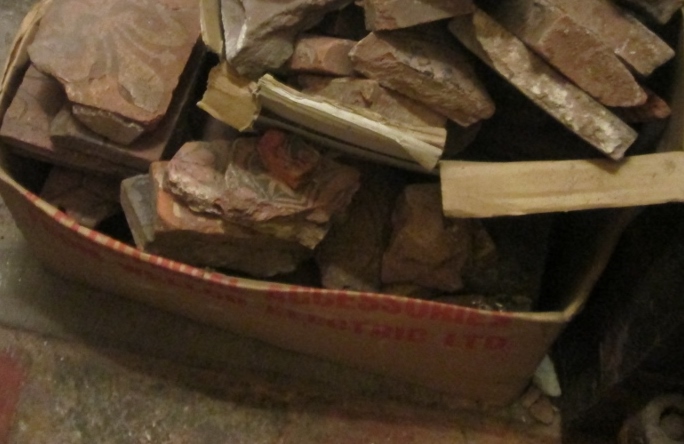
Tiles in cardboard boxes in gaol cell now used for storage

The next time we came to the gaol cells was on 21st February, we had come back to see if there was any more graffiti that we had missed, also to take a second look at the boxes of tiles (Jo at the museum said it was ok). This time I had come with my Mom and there was around 8 people that turned up this time. Me and my Mom started looking through the tiles, we had picked about 5 up and we laid them on a chair to photograph them, but they werereally dusty so we couldn’t see if there were any other patterns on them.

There were so many tiles that we couldn’t fit any more on, we decided to move all of the tiles into the 4th cell, onto a wooden bed that the prisoners used to sleep in, (personally I would NEVER think of sleeping on one of them). We started taking some more tiles out of the box and moving them onto the bed. We moved them a few at a time, because the box was too heavy to lift. I had realised that there were a few tiles with the same pattern on. I really wanted to get a better look at what the patterns looked like, so my mom went to Wilko (just up the road) to buy 2 paintbrushes. When she got back we started brushing off the dust and dirt from the tiles we had got out, we could see the patterns a lot clearer. We had nearly finished emptying out the first box of tiles, and at the bottom my Mom found a bit of tile with ‘Lichfield Friary’ written on the back. She showed it to Kate and she said “Maybe it came from the old Friary!” and then we all got really excited!

tiles 2

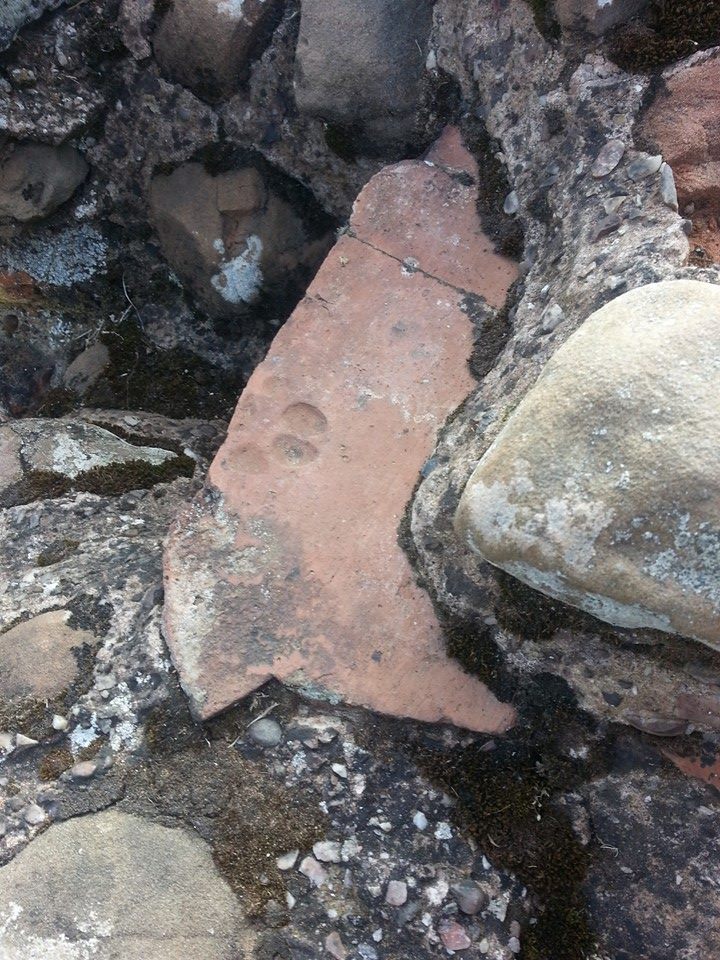
Tile with Lichfield Friary writing on the back

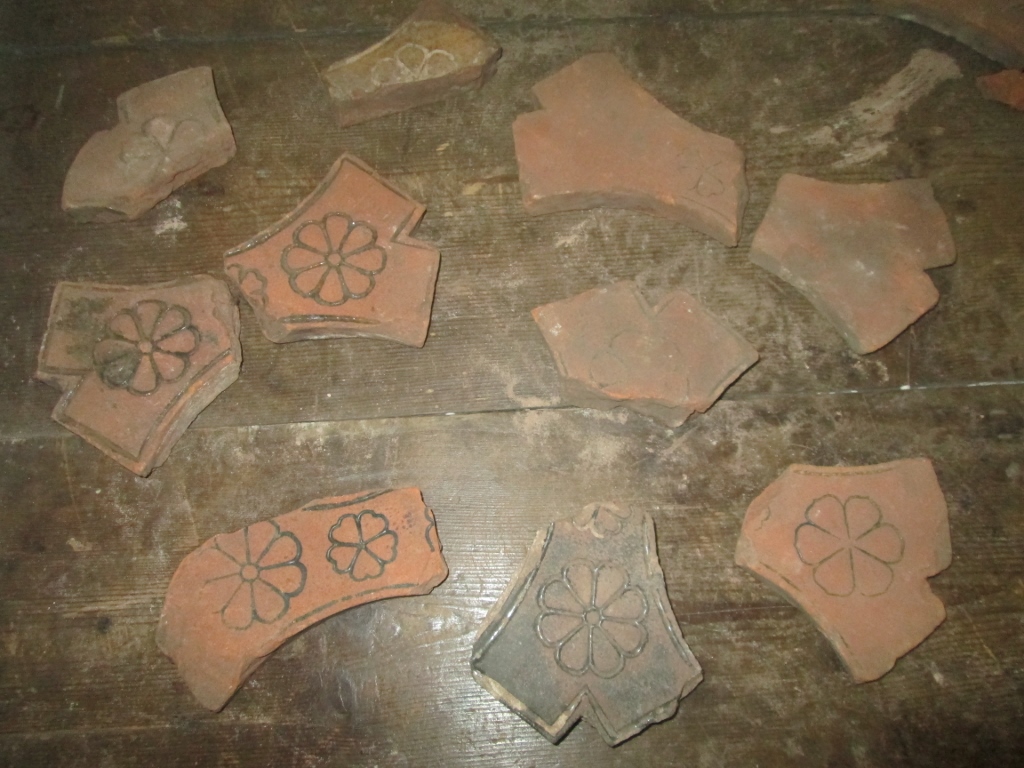
We had found lots of bone shaped tiles that were exactly like the one that said ‘Lichfield Friary’ on it.

Tiles 3

“Bone” shaped tiles

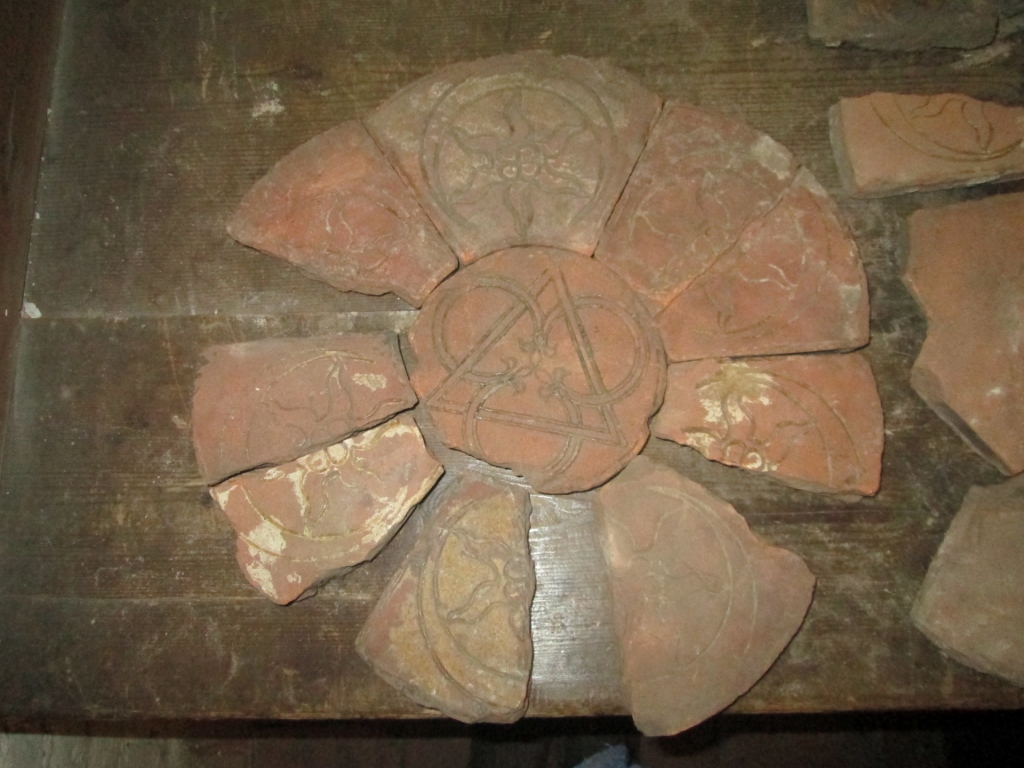
Whatever the floor was, it was really big. We had found LOADS of tiles that looked the same, and maybe they belonged to the same floor. I started trying to see if any of the tiles might fit together, there were loads of circular tiles, some with patterns on, and some without. There was one round tile, with a triangle and circles intertwined in a pattern. There were also pizza shaped tiles, without a tip, like someone had taken a pizza and cut the middle out with a cookie cutter, if you get what I mean. Those tiles had a kind of moon, with a starfish shape in the middle.

Tiles 4

Circular “pizza” tiles with moon and star pattern

tiles 5

Plain “pizza” tiles

We had found one of these tiles that was complete and one that was broken, but fitted back together again. All the rest were broken, but I managed to get a full circle out of the fragments we had found. It was like a massive jigsaw-puzzle, but I did it in the end, and what was even more exciting, was that the circular tile fit perfectly inside the ring of pizza shaped tiles! Same with the tiles with no pattern on, but we didn’t find another circular tile.

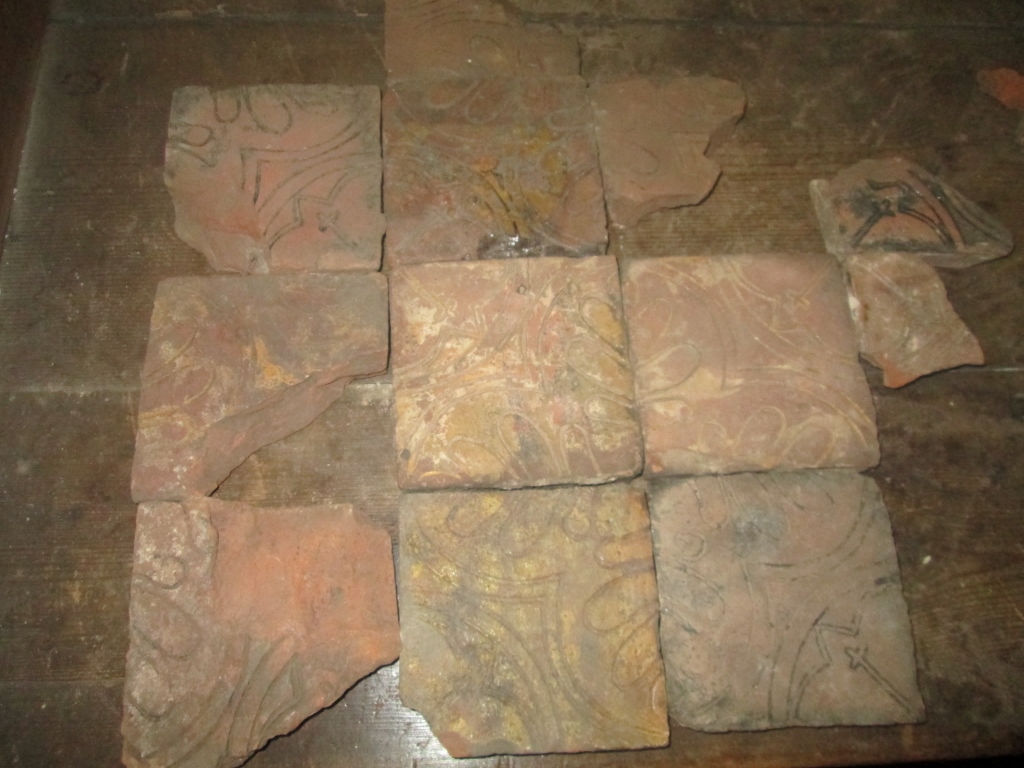
There was also another set of tiles. We had found about 8-10 of the same type, they were square, and they all had the same pattern on, the kind that can make 2 different types of patterns, depending on which way you put them.

Tiles 6

Square tiles with pattern – my faves 🙂

Most of them were complete, apart from 3-4 of them which we only had corners of. I put them together, and they nearly made a 9 square pattern. These were my favourite tiles, and I hoped we found some more of them, we only had half a box or so left to get out. We did find a couple more of these tiles eventually. We finished emptying out the box, and then we started taking pictures of all the tiles. There wasn’t much time left, so we took all of the photos really quickly. As a result, not many of the pictures were very good. And the light was quite dim in the cells, so the light wasn’t the best either.

It was nearing the end of the session, so we had to put all of the tiles back in the boxes. I couldn’t help thinking that the tiles were from the old medieval Friary. At least some of them.

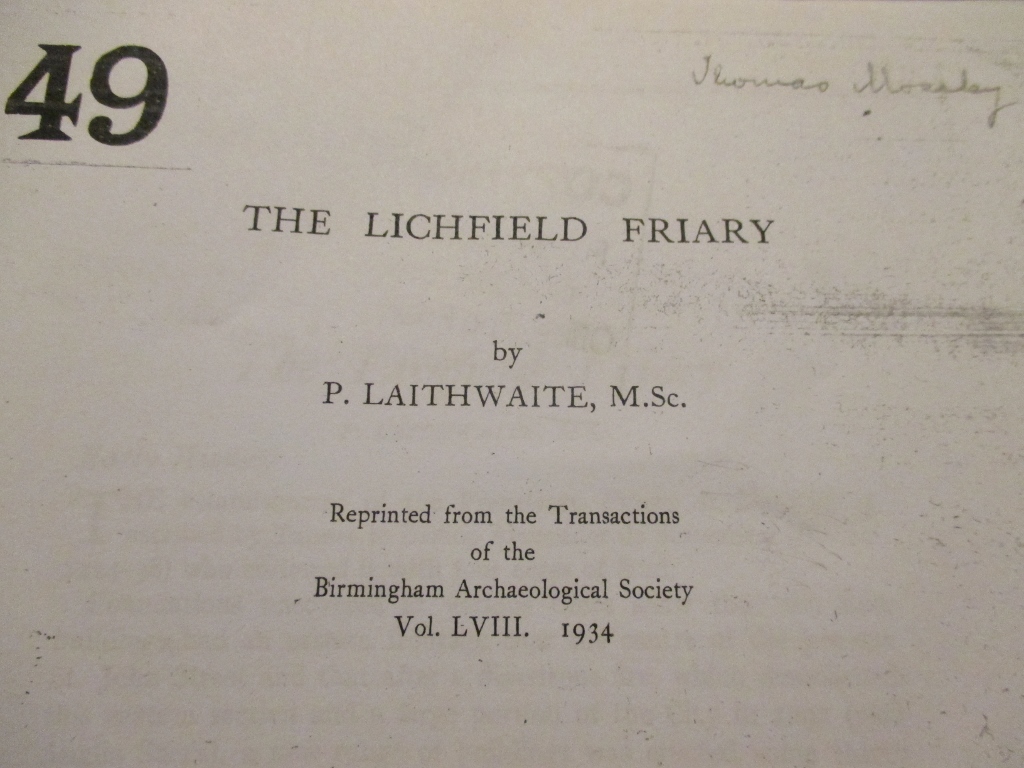
Kate asked me if I could do some research to see if the tiles were from the Friary, Me and my Mom went to the Lichfield Records Office, to go and look at ‘The Lichfield Friary’ by P. Laithwaite, which was reprinted from the Transactions of the Birmingham Archaeological Society where a report of Councillor T. Moseley’s findings from his exploration of the site in 1933 was given.

Laithwaite BAS 1934

D77/23/67 Copyright Lichfield Record Office

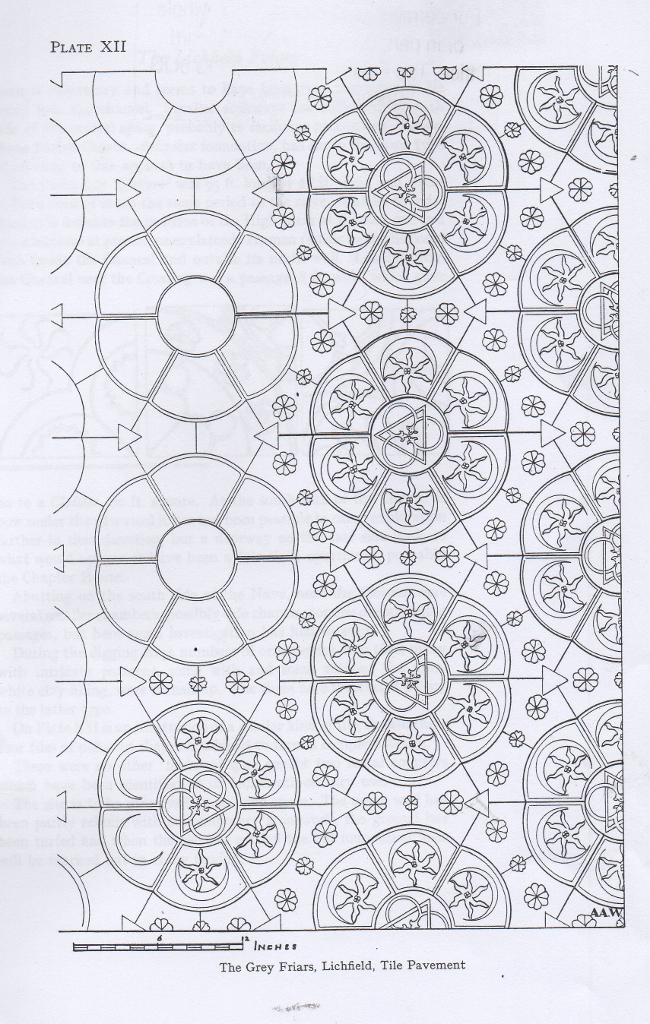
There were only 6 pages in the book. Page 5 had a drawing of some if the exact tiles we had found (the ones that looked like pizzas with the middle cut out) some with patterns, and some without.

EPSON scanner image

D77/23/67 The Lichfield Friary by P.Laithwaite Copyright Lichfield Records Office

Me and my mom were like O-O (AMAZED!). On the next page (page 6) there was a drawing on 3 tiles with different patterns on, all of which we had found in the box of tiles! 😀 (and my favourite one, the one that we had got like a 9 block square of the floor.)

EPSON scanner image

D77/23/67 Drawing of square tiles from The Lichfield Friary by P.Laithwaite Copyright Lichfield Records Office

We had found what we had come looking for, proof that the tiles in the boxes were Medieval from The Grey Friars’ Church at The Friary!”

Note – this is not where the story ends! Lily is having an afternoon on the tiles with Jo Wilson, Lichfield City Council Museum and Heritage Officer and medieval tiles expert, Karen Slade this week, so look out for an update soon. Lily’s doing such a great job – the initial discovery, the ongoing research, and writing it all up afterwards – that I’m thinking of joining the Right Revd Jonathan Gledhill in retirement and leaving Lichfield Lore in her more than capable young hands.


My Bloody Valentine

For those of you who aren’t feeling the love for Valentines Day, here’s some black magic. And I’m not talking chocolates. In his Lichfield Mercury column ‘Historical Gleanings – Lichfield Over a Century Ago’, JW Jackson recalled the following article in a local paper from 1836,

“On Saturday, the sexton of a certain church observing an elegantly dressed female walking mysteriously up and down the churchyard, watched her secretly, when he saw her rake up the earth with her foot and, after depositing something in the ground, cover it up. Induced by curiosity he opened up the place and found a hare’s heart in which 365 pins were stuck buried there. It was an old superstition in this county that if a person who had been foresaken by one professing love for her shall bury a hare’s heart full of pins near a newly made grave in the churchyard, as the heart decays, so the health of the faithless swain will decline, and that he will die when it has mouldered to dust. The fair deceived one had been instigated by revenge to this act of folly and credulity.”


Getting revenge on a faithless swain. Sweeter than a whole box of Thorntons. Frederick William Hackwood also mentions a similar practice in his Mercury column on “Staffordshire Superstitions’ (1923), ‘Among the lingering superstitions are present-day memories of an old woman given to witchcraft sticking a bullock’s heart full of pins with the vicious intent of piercing the heart of some deadly enemy with whom she had quarrelled beyond all hopes of forgiveness or reconciliation”.

Luckily, a defence against these dark arts did exist.  In a book published by the Folklore Society in 1890, Alexander M McAldowie tells of two witch brooches which his brother Robert found in Staffordshire.   One was discussed in a section of the 1896 Journal of the British Archaeological Society called ‘Notes on North Staffordshire’ and is described as being heart-shaped with unequal sides, little more than an inch in height and made of silver with eighteen crystals. Apparently, these talismans were often bought alongside wedding rings and would keep the wearer safe from harm. In a post on witch brooches, the Spyders of Burslem blog includes the notes given to the North Staffordshire Field Club in 1891 by Robert McAldowie. What’s extra interesting for us here is that he mentions a witch brooch he got in Lichfield from a jeweller who had bought two of them from an old servant of a family once living near the city but had melted one down for silver.

I’ve not managed to track down the whereabouts of any the Staffordshire brooches yet, assuming they even still exist. There is a Victorian one for sale on a vintage site here if you want a belated present that looks pretty and has the added bonus of protecting your beloved from witches and evil in general.

Antique Victorian Witch Brooch. Image from rubylane.com

Antique Victorian Witch Brooch. Image from rubylane.com

However, if it’s a hare’s or bullock’s heart you’re after, I’m afraid I can’t help you. Try Waitrose.