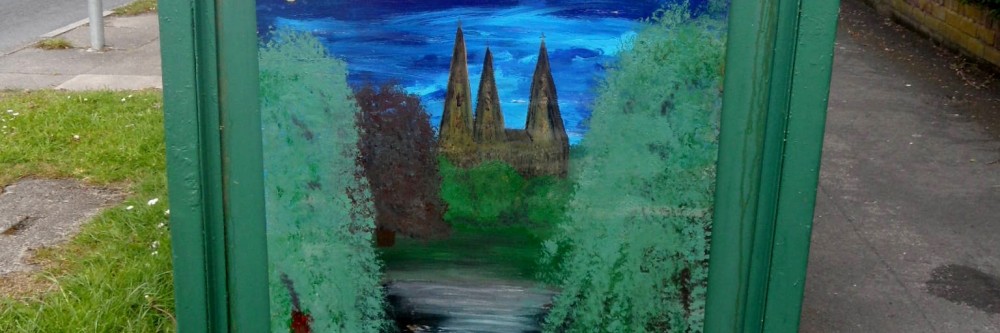
In 1840 Dr Rawson published ‘An Inquiry into the History and Influence of the Lichfield Waters: intended to show the Necessity of an Immediate and Final Drainage of the Pools’. The work was originally anonymous according to medical journal The Lancet.
According to the Lancet, Dr Rawson “contends that the stagnant pools around Lichfield are injurious to the health of the inhabitants, and urges several reasons for draining, and filling them up. This is objected to by certain lovers of the picturesque; and by another very opposite class of persons, who button up their breeches-pockets very closely, that the money may fructify there,when a call is made upon them for any public purpose”.
Part of Dr Rawson’s argument was that during the sixteenth and seventeenth centuries, Lichfield suffered five or six plagues. Although the whole of England had been affected, Dr Rawson argued that the effects in Lichfield were disproportionate for its size.
The doctor used statistics quoted in ‘ Harwood’s History,’ to produce the following table:
Statistics of the Plague in Lichfield, in 1645-6.
NORTH TOWN.
Beacon-street, Gaia-lane, Shaw-lane, Close, value £8.—Chiefly on ridge land, and all well ventilated, except the vicarage. The Close ditch was drained in 1643, and part of Beacon-street burned down, during the plague.
SOUTH TOWN.
Market-street, value £4 18s 4d; deaths 38; per cent. 18.—Defended by domestic comforts.
Dam-street, Butcher-row, Tamworthstreet, Boar-street, the Woman’s Chyping, value £4 14s 8d ; deaths 200; per cent. 16. —Exposed to external ventilation, except one side of Butcher-row; but partly adjoining the most infected districts, and containing a common channel, with stagnant water in it.
Stow-street, Lombard-street, Bird-street, Sandford-street, value £4 2s 7d; deaths 282; per cent. 41.—The extreme parts, small houses close to the pools. Bird-street, in the centre, being so narrow, that it has since been widened by act of Parliament.
Green-hill, George-lane, St. John-street, Frog-lane, Wade-street, value £3 13s 7d; deaths 321; per cent. 47.—Partly intersected by the Common Ditch and Common Muck-hill of the town, parallel to, but under the level of which were Frog-lane and Wade-street, while John-street was hemmed in between these and the Bishop’s Marsh.”
Statistics wise 51 per cent of Lichfield’s population died of plague in 1593-4, and 32 per cent, in 1645-6.
So, yet another miserable subject I’m sorry. I’ll try and find something a little more cheerful for next time……
 Lichfield Lore