Back to the Future

In the March 15th 1907 edition of the Lichfield Mercury, there’s an article written by Clifford Mackay entitled ‘Lichfield in 2007 – A Dream of the Future’. Old Ben Wallace, a Lichfield cobbler, takes a trip through the city streets and discovers how things have changed over one hundred years.

Here’s a heavily abridged version, so that you can see for yourself where Mr Mackay got it right (a new theatre called ‘The Garrick’, new houses, mixed schools), got it wrong (a tube station at the Friary, a model Venetian village hiring out gondolas) and sometimes got it very wrong indeed (meeting visitors from Mars on the way to Minster pool).

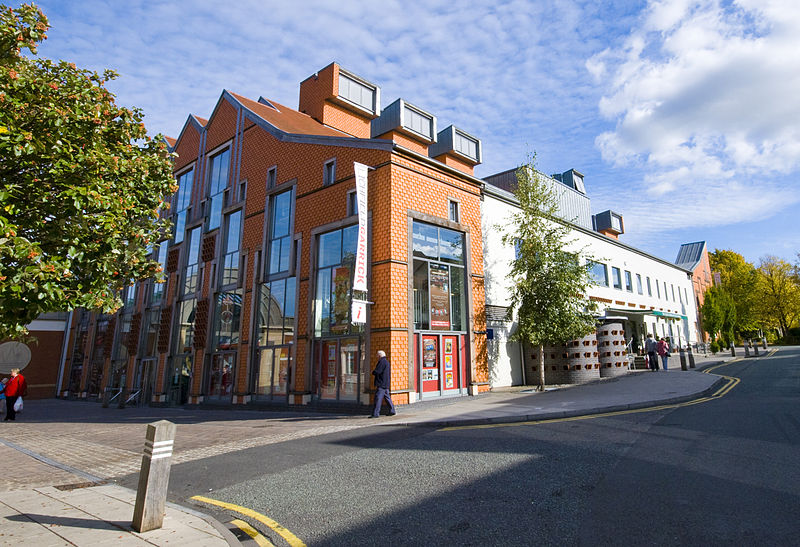
New houses, a large new theatre of varieties, and an entire renovation of the Market, now Dr Johnson’s Square, are amongst other things which come before his astonished eyes, besides a tremendous building called the ‘Royal Garrick’ Theatre, many shops bearing familiar names but entirely rebuilt, and all the streets reconstructed on an absolutely novel, yet excellent plan.

Garrick Theatre by Bs0u10e01 (image taken from Wikipedia)

….the old man noticed the date of the year – 2007- for the first time he also sees one of the airships from London come in. A tube station now stands at the Friary corner, and a large new hotel – the Savoy- has been erected. Sandford St is now a magnificent thoroughfare, and the ‘George’ and ‘Swan’ hotels have also been rebuilt. They encounter some of the visitors from Mars, and arrive at Minster pool, which has undergone great changes. The two pools, Minster and Stowe have been purchased by the council and now form magnificent pleasure lakes. The former is now illuminated every night, while a band plays from the wonderful new stand erected in the middle

They visit Elysia – the large new pleasure gardens formed out of the late Museum Gardens and Recreation Grounds, and take a trip round in a gondola hired from the model Venetian village

Museum Gardens early 20thc
Inevitably, old Ben finds himself at the Cathedral and it’s here where you begin to wonder if there is more of a point to this article than just a bit of fun. I don’t know enough about the protestant religion to comment but amongst other things, Ben the cobbler is told that,

 The church had grown very worldly – it was neither one thing nor the other – so it had to be purged. It was disestablished and set to rule itself, with the result that many parsons came to believe that after all they were not the demi-gods and worldly magnates that some of them imagined themselves to be. These people here took the lead and set the example to the rest of England – and it was quickly followed everywhere. They gave up their large houses and went to live in smallest ones(the bishop giving his up to be a hospital for the poor and needy)

…..the people are religious as anything – it is a reality to us and not a sham. The Cathedral is packed every Sunday, at all services too, it’s hard to get a seat.

Soon though whatever point is being made, has been made and Ben finds himself

…close to the new marvel, which stood in the field before the Stowe Pool….raised in five lofty square iron towers, nearly sixty feet in height, one being at each corner, and one in the middle was a gigantic platform…..Inside each of ther four corner towers the old man could distinguish lifts ascending from, and descending to the ground floor. Tethered to one of the sides her engines still throbbing, and having an indication with the word Aberdeen printed on it, affixed to its side, lay a huge aeroplane.

Away from the Cathedral Ben is surprised to learn  about the changes in another religion –  Lichfield City FC are doing well having won the English Cup seven times, fielding four international players and getting an an average gate of gate of 12 to 14,000 per match. Of course,the Lichfield manager does it for the love of the game and the reputation of the City rather than as a money making concern.

Ben also learns that the grammar school has been moved from its position near Borrowcop Hill due to drainage issues and that,

…all the schools are mixed in England now. Girls and boys all work together…its a splendid system

At the end of the walk it all goes a bit ‘Life on Mars‘ as old Ben is knocked down by a car on Wade St. But of course, as with all the best stories, it turns out to be just a dream, and he wakes back in his workshop back in 1907.

I know that a prediction of the year 2007, made a hundred years previous is a bit of an  easy target.  I’m sure if I were to make predictions here and now about the year 2112, it would be mostly ridiculous. Could we predict the next 50 or even the next 10 years? In looking to the future of Lichfield, would it reveal anything about our present? Maybe we should give it go. It’d give future generations a good laugh if nothing else. Any volunteers?


What lies beneath Lichfield?

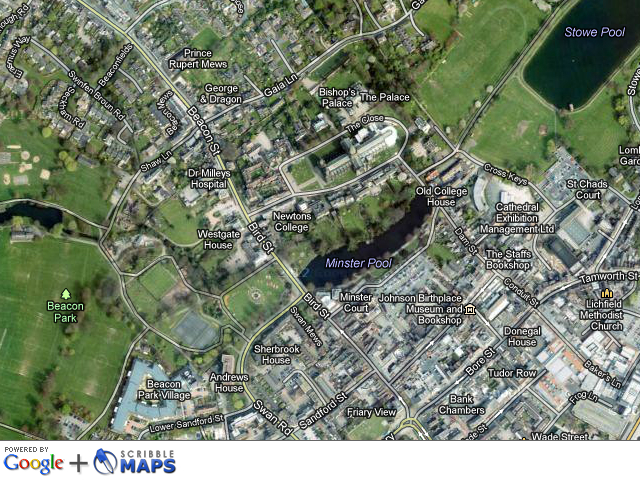
A very quick post to say that there is an archaeological investigation taking place at the Friary Outer car park. You can read a little more here at the project redevelopment website http://www2.lichfielddc.gov.uk/friaryouter/2012/05/02/friary-outer-archaeology-investigations/. It says they will be posting updates should anything be found.

I passed by last night and the dig has revealed what looks like the foundations of at least one building, including steps, a cellar and what could be a tiled floor.* I’m having a look at some old maps to see what used to occupy that site.

Unfortunately & unusally for me I didn’t have my camera or even my phone with me to take a photo. I’ll try and get one later but if you’ve got 10 minutes to spare on this dull bank holiday Monday, go and have a look and see it for yourself before it’s hidden from view once more. It’s intriguing to think how much history must lie beneath us, revealed to us from time to time by either by accident or design, or even nature (moles are particularly good at this apparently!)

* disclaimer – this is what it looked like to my untrained eyes. It could be something completely different!

Edit: Keep an eye on Annette Rubery’s blog as unlike me, Annette had the good sense to take a camera and will be posting some photos later! It’s here –  http://www.annetterubery.co.uk/

Edit part 2: This of course isn’t the first archaeological investigation in the Sandford St area. The Staffordshire Heritage gateway contains information about the previous discoveries near here for example,  a possible section of the ditch thought to have formed part of Lichfield’s medieval defences, remains of a house dating to around the C14th , tanning pits from the C16th to C17th, a possible post-medieval iron working complex and of course discoveries relating to the Friary complex.

Source:

Staffordshire Historic Environment Record, accessed via the Heritage Gateway


The Streets of Lichfield

It’s quite well known that Bishop Roger de Clinton laid out the main streets of Lichfield in a grid pattern, still in evidence over 800 years later.

Lichfield 2011-ish

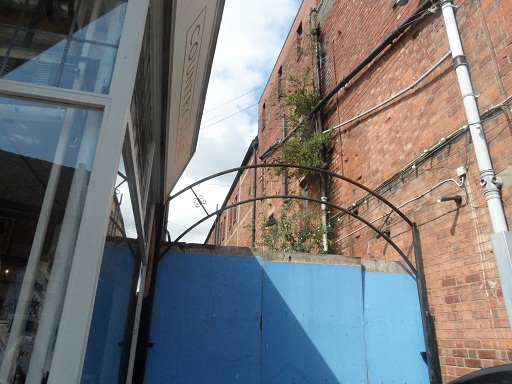
What about those in between though? An email from Pat and a chance conversation about a book ‘A Walk Around the Snickelways of York’ by Mark W Jones (1) got me thinking about the alleys, the passageways, the shortcuts and the entries, winding themselves around buildings and connecting one Lichfield street with another.

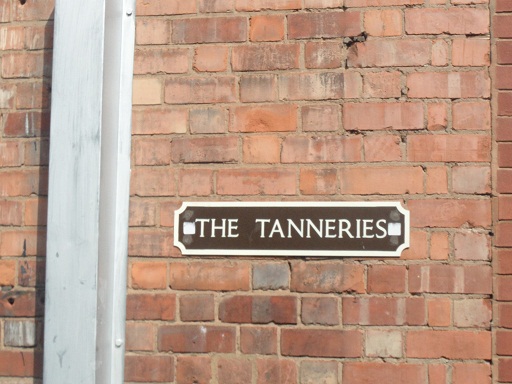
Pat’s email asked if I knew anything about The Tanneries, running from Tamworth St, along the left handside of what was the old Kwiksave building, (and the Regal Cinema before that) to Cross Keys carpark.

The Tanneries

The Tanneries is blocked off at present

I don’t, but I’m interested how long this pathway and the others around the city have been around for.

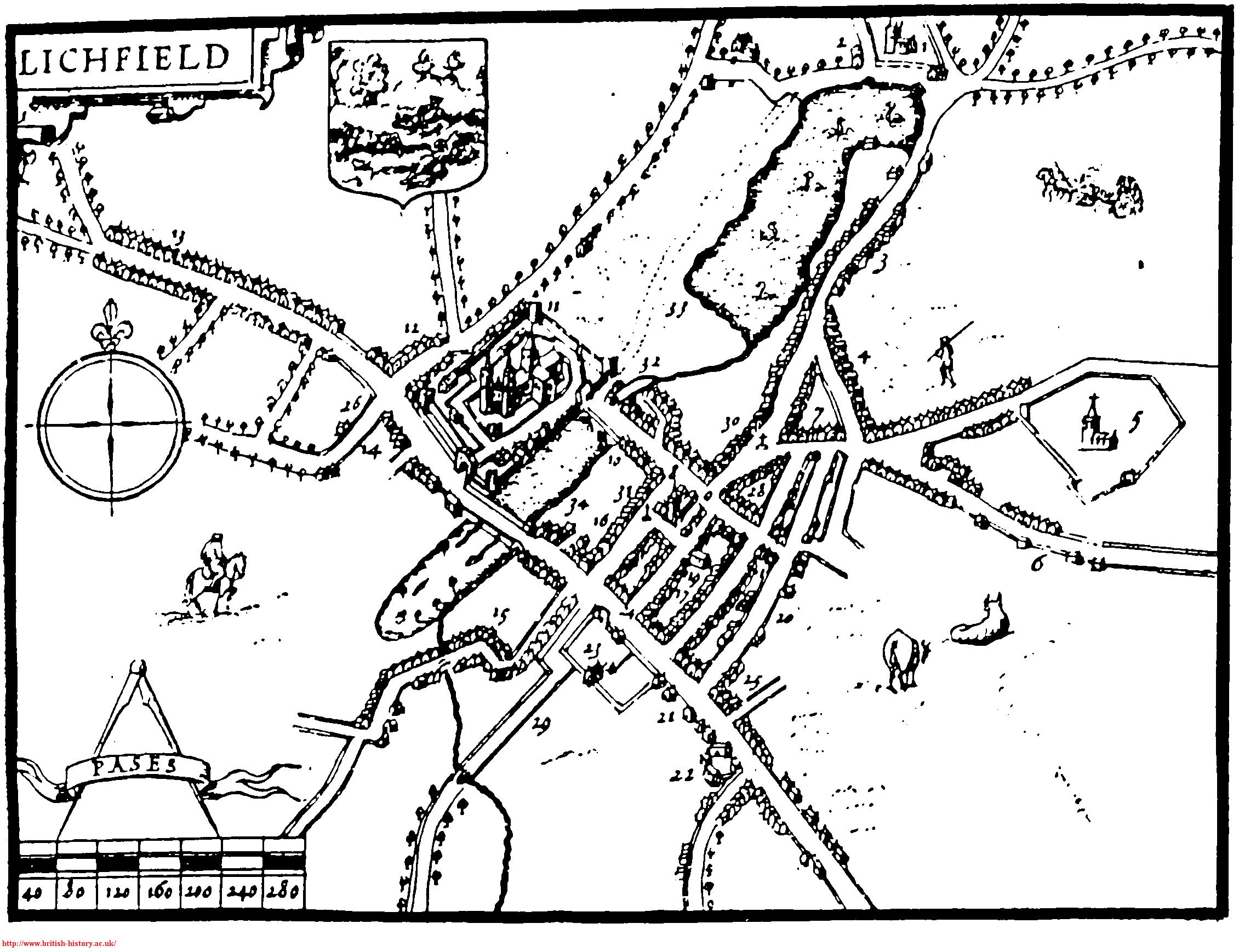
Some are documented better than others. Friar’s Alley running alongside the edge of the site of the old Friary and onto Bird St appears as Friers Lane on John Speed’s 1610 map (no 29).

1610 map of Lichfield

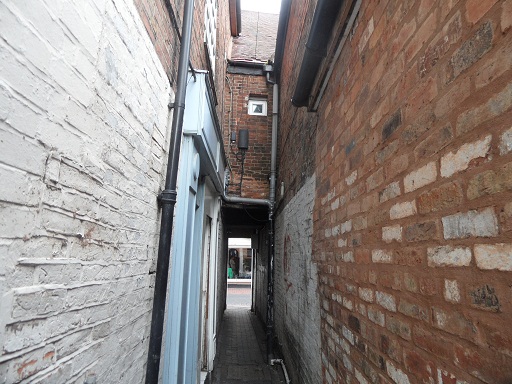
Later it shows up on John Snape’s map as Friers Alley in 1781. On later maps, the narrow part leading to (or from depending which way you are going!) Bird St was known as Moss’s Entry.

Moss's Entry/Friars Alley onto Bird St

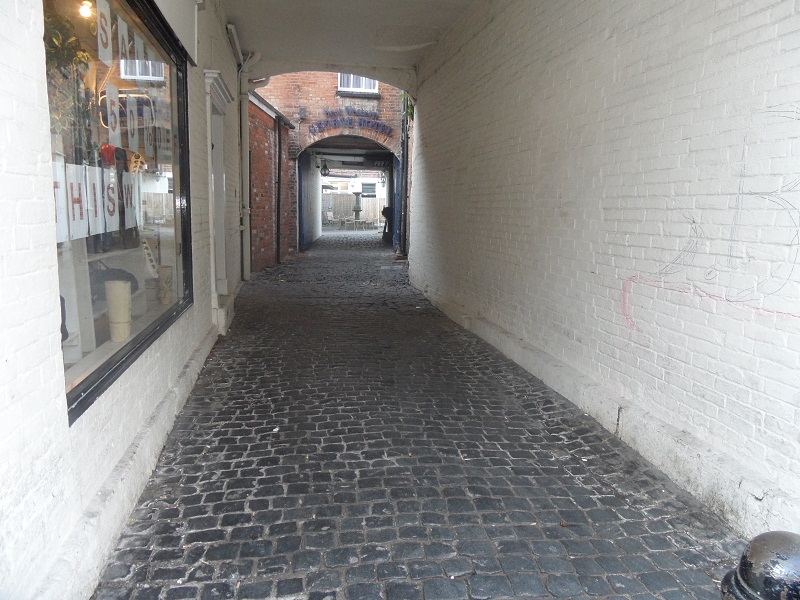
One of my favourites is the old carriageway leading to the courtyard of the George Hotel. It takes you past doors and bricked up windows, but it’s the floor with its Rowley Ragstone Setts (2) that I really like, as this small side passage gives an idea how Lichfield’s main streets would have been paved in the late 18th century.

George Hotel from Market St
 

I’ve taken some photos of others I came across. Most are found in the city centre though I’m sure there are loads more to be found throughout Lichfield. Of course, if anyone wants to share one they know of, or has any more information about any of the above or below, that’d be fantastic!


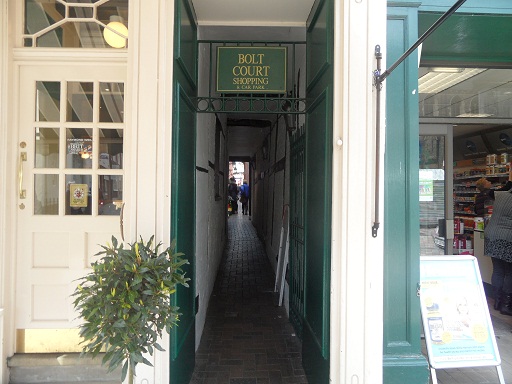
Bolt Court - a really busy little street


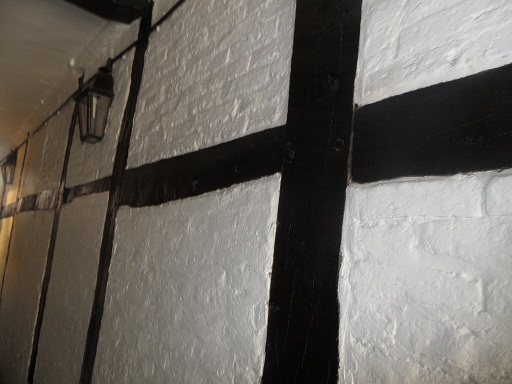
Inside Bolt Court


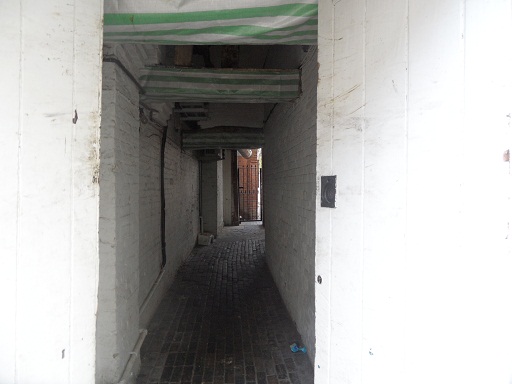
Alongside butcher shop on Market St


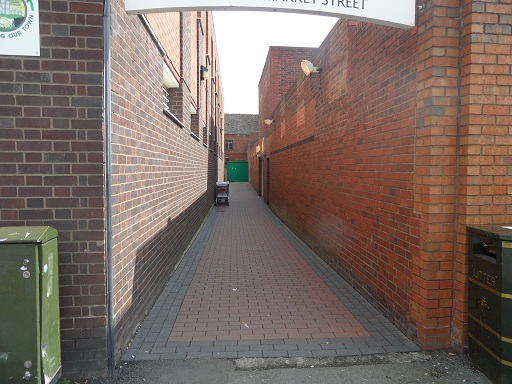
From Market St...


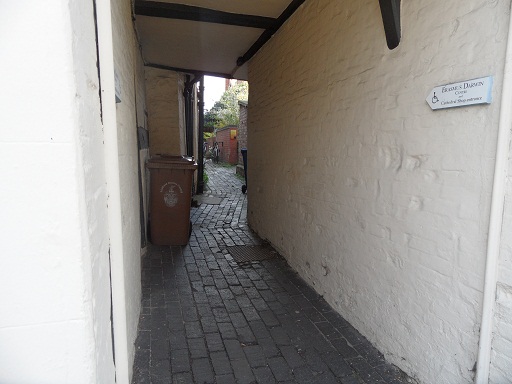
The Close to Erasmus Darwin House

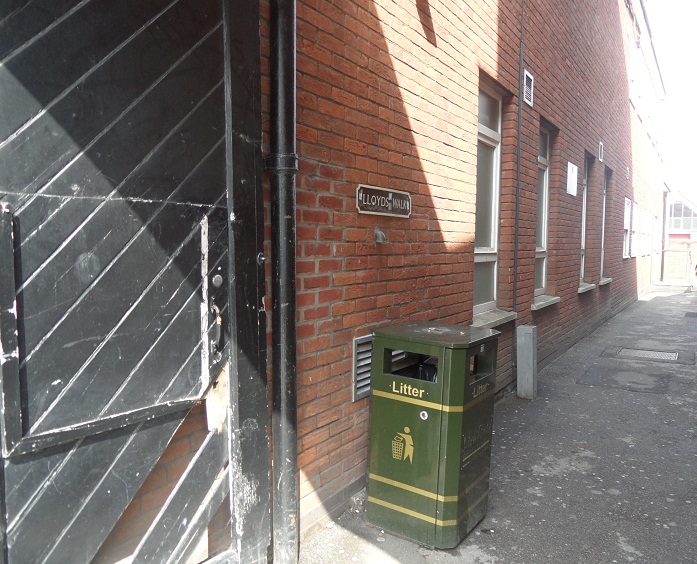
Lloyds Walk


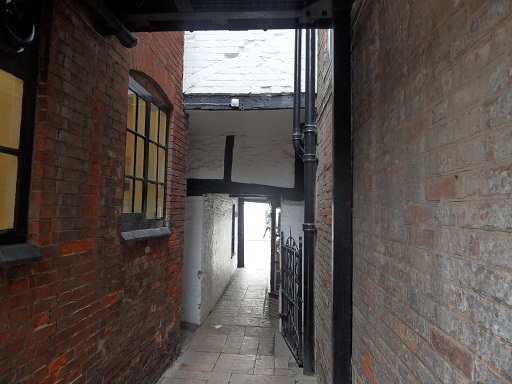
Tudor Row out onto Bore St

You see buildings differently walking these paths, maybe I’ll explore the backside of Lichfield a little more……

Footnotes:

(1)Snickelway is a great word created by Mark W Jones. It’s a portmanteau (which is in itself a great word!) of Snicket, Ginnel and Alleyway and Mr Jones explains, ‘A Snickelway is a narrow place to walk along, leading from somewhere to somewhere else, usually in a town or city, especially in the city of York’.

(2) Information taken from Staffordshire Pastrack website.

Map information from: ‘Lichfield: The place and street names, population and boundaries ‘, A History of the County of Stafford: Volume 14: Lichfield (1990), pp. 37-42. URL: http://www.british-history.ac.uk/report.aspx?compid=42340