Verdun Acorns


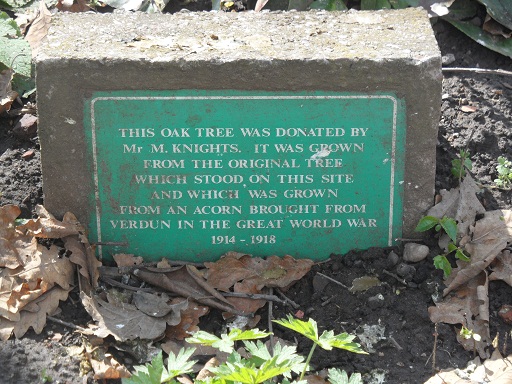
This plaque is in Lichfield’s Garden of Remembrance.  It seems that the planting of acorns from Verdun was not unique to Lichfield and that there are oaks grown from Verdun acorns at many other places in the country, including Kew Gardens, Coventry, and Reading.

In a forum (1), I found a possible explanation for this. It suggests that a box of chestnuts and acorns were sent from Verdun to the London and North-West Railway Company, so that they could be sold to raise funds  for the benefit of the War Seal Foundation (L & N-W Section). It also says that sample boxes were sent to towns and cities along the route of the railway (of which Lichfield would be one?).

I’m going to have a look throught the newspaper archive to see if there is any information on this. In the meantime, it would be great to know if anyone has ever heard of this before or has any further information. I wonder who Mr Knights was?

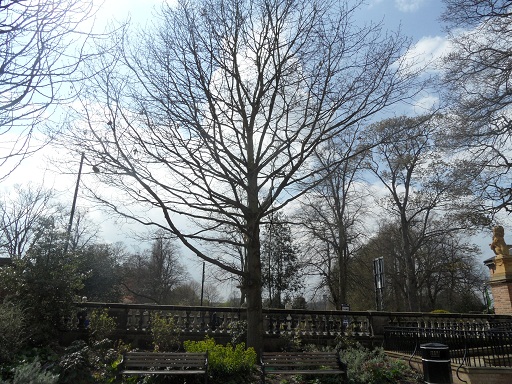
Oak tree thought to be grown from an acorn, from an oak tree grown from a 'Verdun Acorn'.


Edit 16/4/2012

I had a quick look through the British Newspapers archive and there is this snippet from the Western Times, Tuesday 24th July 1917.

“A resident of Ealing has presented the town with two chestnut trees and an oak tree grown from chestnuts and an acorn gathered by the Mayor of Verdun from the devasted forests of Vaux and Douaumount. They are to be planted in the Walpole Park as a memorial to the defence of Verdun’.

 Sources:

Statuesque

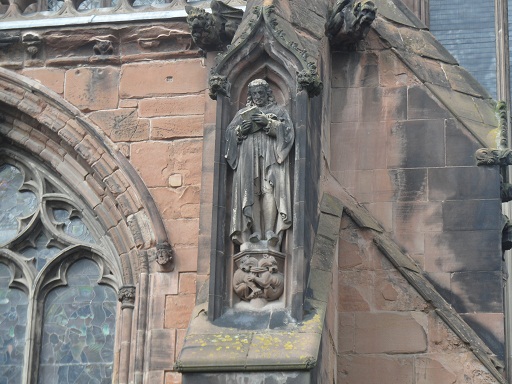
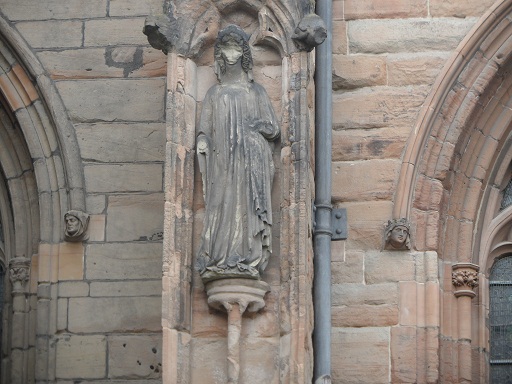
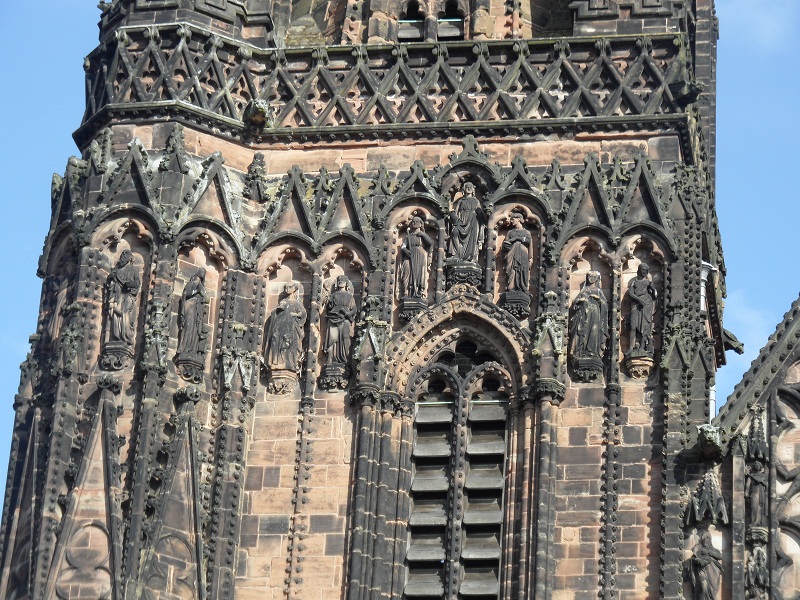
Walking home last Monday I took a detour past the Cathedral to have another look for the remaining five original, medieval statues.  I was pretty sure that I’d found two on the northwest tower –  one nameless woman next to Eve and another to the left of Deborah. The Victorian statues tend to have names on their pedestals. There’s an old photograph of the western front of the Cathedral pre-restoration on the English Heritage Viewfinder website, which you can see here. It shows the front looking strangely bare – above the row of kings only the niches containing the few remaining original statues are filled.

Medieval statue?, Deborah, Rachel, Rebekah, Sarah, Medieval statue?, Eve

According to a comment someone left on here, there are other statues on the other side of the north west tower. Unfortunately, my timing wasn’t great as someone was cutting the grass alongside the tower and a Midlands Today van had not long pulled up nearby and were making preparations to film (I later found out they were there to cover the Olympic Torch route story). As I didn’t fancy making a cameo appearance, dodging the mower in the background of a news report, I took a hasty few photos of the tower and carried on around the back of the Cathedral.  Stupidly, I didn’t check them before I got home and it’s not easy to make out much.  Another trip is in order….

Affix quality control sticker here

The medieval statue hunt continued as I walked around, in case one had sneaked in somewhere other than the northwest tower. I found Christopher Wren, Elias Ashmole and Dr Johnson amongst others along the way.

“The world is not yet exhausted; let me see something tomorrow which I never saw before” said Dr Johnson.

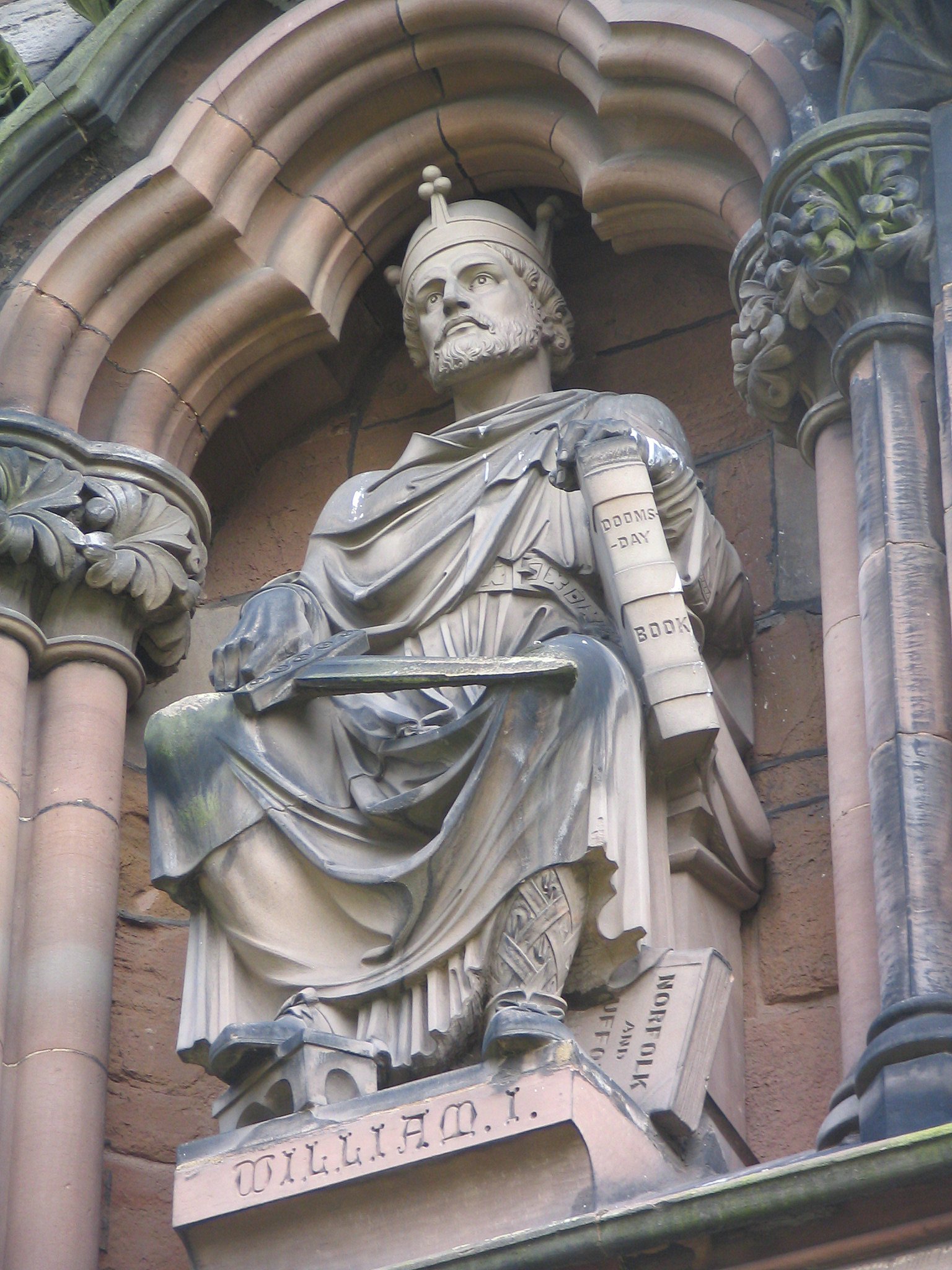
Most of the statues are accompanied by something symbolic – Johnson of course has his dictionary.  It’s the same for the kings (e.g. William the Conqueror holds the Domesday Book) and the biblical characters (I knew nothing about Deborah, but according to wikipedia she was a prophet and a judge and delivered her verdicts near a palm tree which explains why there’s one behind her statue).  I was wondering about Eve? Surely that’s an apple near her foot but what is she holding in her hand?  Imagine if you someone was to create a statue of you and they had to sum up your life with an object or two!

Image taken from Wikipedia

Just past Dr Johnson and his big, papery thing is another statue.  She has no name and as far as I can see there is no clue to her identity. I’m speculating, but is this one of the many statues destroyed or defaced by the parliamentary troops during the Civil War?   Most of the other damaged statues were removed – where did they end up I wonder? I came across some great photos of a figure of Christ on Aidan McRae Thomson’s flickrstream at a church in Swynnerton, Staffordshire together with an interesting theory that the statue originated from Lichfield Cathedral. If anyone else has any theories or even evidence of where the statues ended up, I’d love to hear them!

I have to confess that for me, sometimes the Cathedral is just there, part of the scenery as I go about the city. However, there are other times when, either by chance (catching the light a certain way) or by design (medieval statue hunting), the Cathedral commands my full attention and once again, I am reminded of what an incredible building this is, and the skill and talent of the craftspeople who made it so.

Tree following: Tree Routes

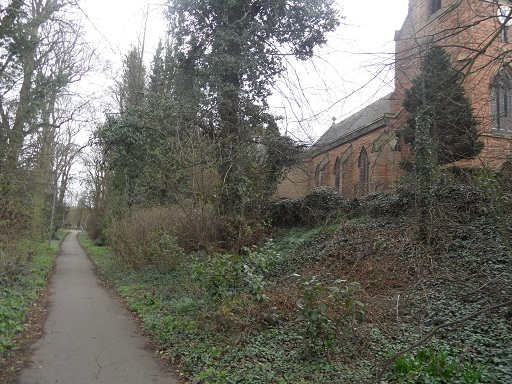
As far I understand it, the path running past Christ Church was at one point the old Walsall Rd, ‘realigned under an Act of 1832 with the new Queen Street and Walsall Road bypassing the route along Lower Sandford Street and what was later called Christchurch Lane. That lane takes its name from the church opened in 1847, and by then it had been continued south-west from the church to the new Walsall road, the old line from Lower Sandford Street having been turned into a drive for Beacon Place’.(1)

The path is surrounded by trees that I believe were planted in the mid-19th century by the Hinckleys of Beacon Place, the estate that occupied most of what is now Beacon Park between 1800-ish and 1964, when the house was demolished.

So that’s a bit of historical scene setting, now what about the tree!

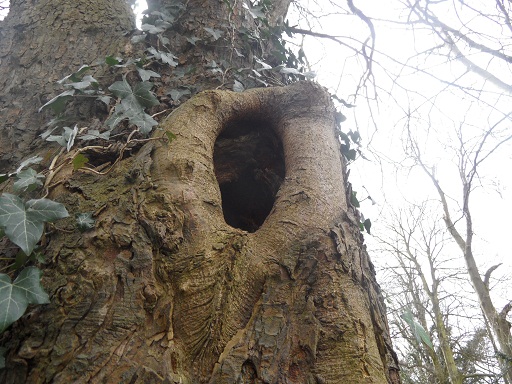
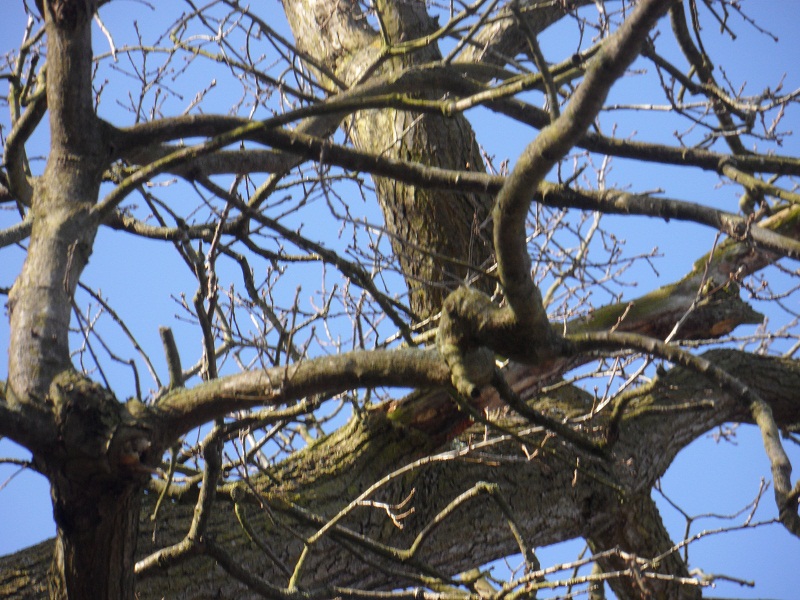
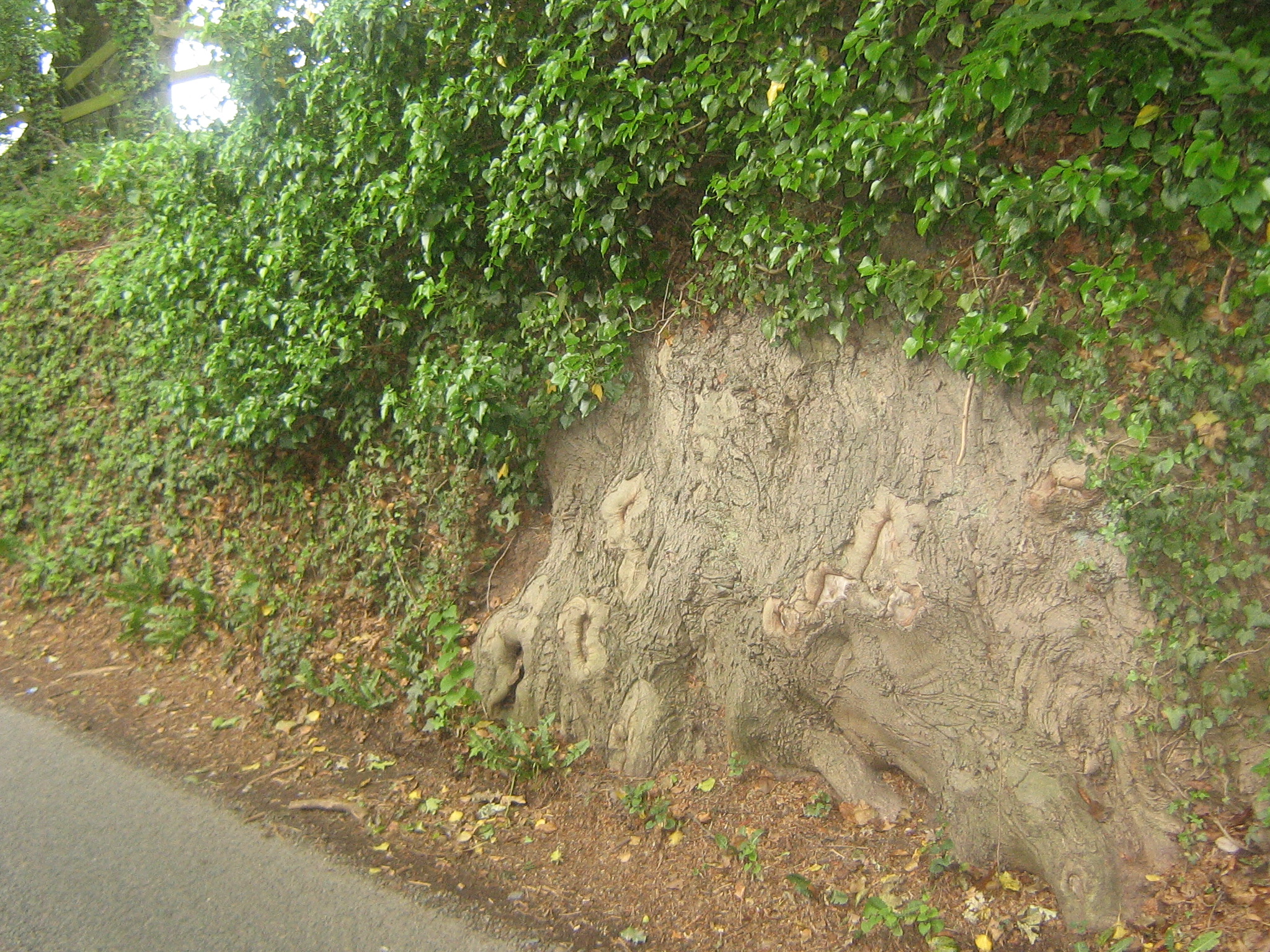
There’s one along this path in particular that seems to attract attention. Several people have commented on it in the past. I even heard a girl refer to it as ‘The Skeleton Tree’! I’m not even sure what kind of tree this is but how could I resist following it?!

How do holes like this form in a tree? As usual, on nature matters I can’t offer any upfront answers (though rest assured I shall be trying to find out, part of the reason I’m doing this is to learn things!) but I can give you a peep into the hole nearest to the ground.


And a close up of the one at the top…….


Nearby, the snowdrops are looking very shabby now.

I love to see these little flowers at the end of the winter, but I have to confess I’m even happier when I see these…

Not quite a host, but enough to signal that spring has arrived in this part of Lichfield! The wild garlic has also made an appearance. The aroma from the leaves is incredible, I’m sorry I can’t share it. No pretty white flowers yet though, let’s see what April brings for the Old Walsall Road!

Talking of Walsall, I’ve just found out that the brilliant & enthusiatic Morgan, a Walsall Countryside Ranger has started a Walsall Wildlife blog. She’s one of the most knowledgable people I know about nature and I’ve learnt loads from her (although clearly this is very much an ongoing education 😉 ). I really recommend that you check out this and the Walsall Wildlife flickrstream.  I bet Morgan even knows how those holes in the trees got there……!

Sources:

(1)’Lichfield: The 19th century’, A History of the County of Stafford: Volume 14: Lichfield (1990), pp. 24-32. URL: http://www.british-history.ac.uk/report.aspx?compid=42338  Date accessed: 25 March 2012.


I Spy….

David Evans, who does some great work over on BrownhillsBob’s Brownhills Blog, has set a challenge! There are two photos below, and David wonders whether anyone knows where in Lichfield each of them were taken.

Where is this?


We have a clue for this one! 'A cut(let) above the rest, perhaps?'

As Pat recently sent me an email about the remaining medieval statues on the Cathedral, this seems like a good subject for a third question! I’ve read that there are five original statues on the north west tower. Has anyone ever identified which they are? I think I’d hazard a guess that there are two of them on the following photo, but I’d be interested to know what others think.


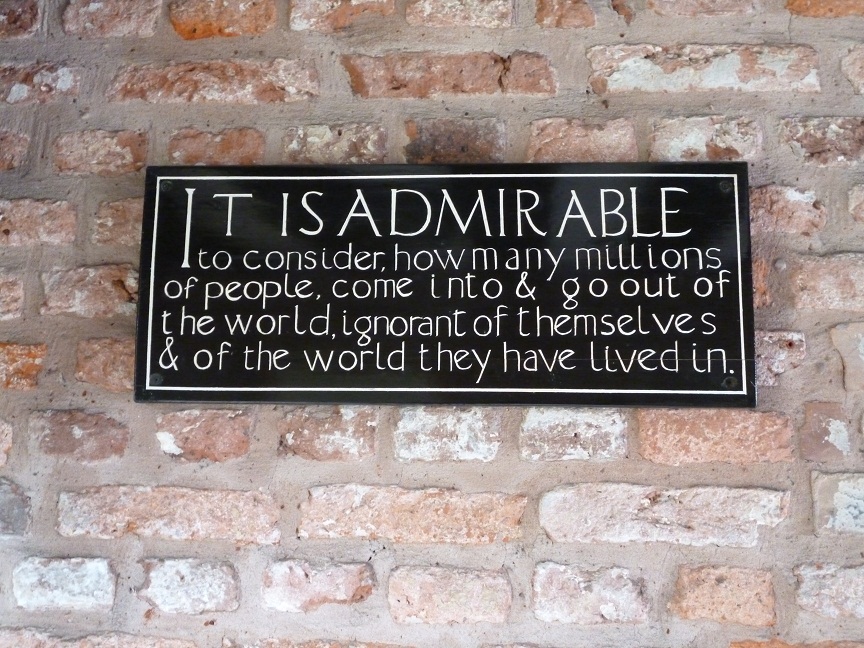
Thanks to David for contributing these photos, and encouraging us to keep our eyes open and not being one of the millions, as referred to on that sign!

Source:

Public sculpture of Staffordshire and the Black Country by George Thomas Noszlopy, Fiona Waterhouse

Tree Following: Yellow

This week I went along to Leomansley Woods to do my first bit of tree following. It probably sounds ridiculous but choosing one tree wasn’t that easy. You can’t see the tree for the woods or something I suppose. In the end I decided on this tree, at the edge of the wood.

The surrounding debris & hazy memories of last year lead me to believe this is an Oak.

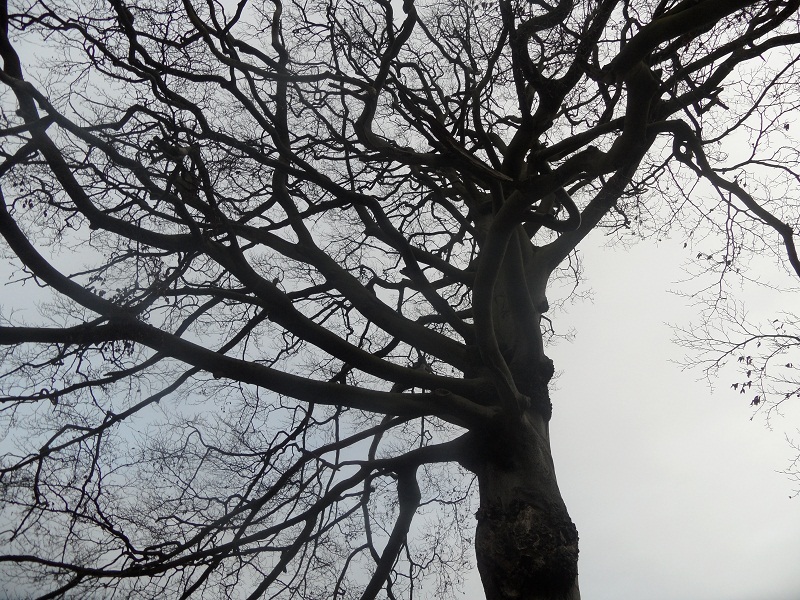
Jumbled branches


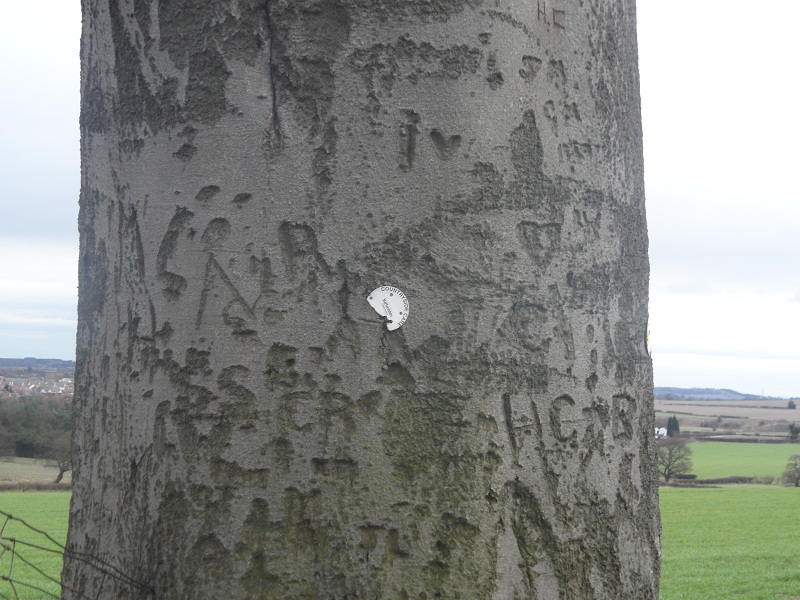
The trunk. I'll take a tape measure next time to get some clue to the tree's age?


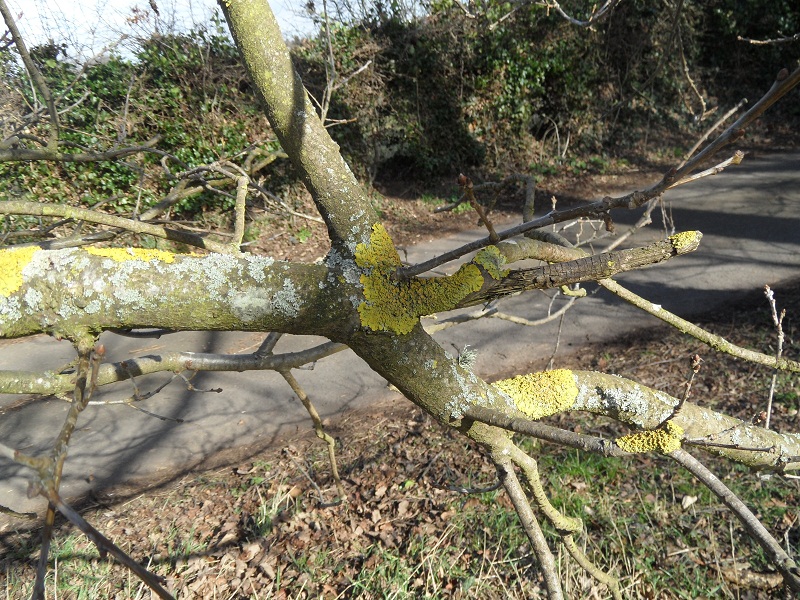
Lichen


Is this a coaltit getting in on the act?

While I was there, I thought following the entrance to the woods, the woodland floor and the hedgerows running alongside the lane might be nice too.

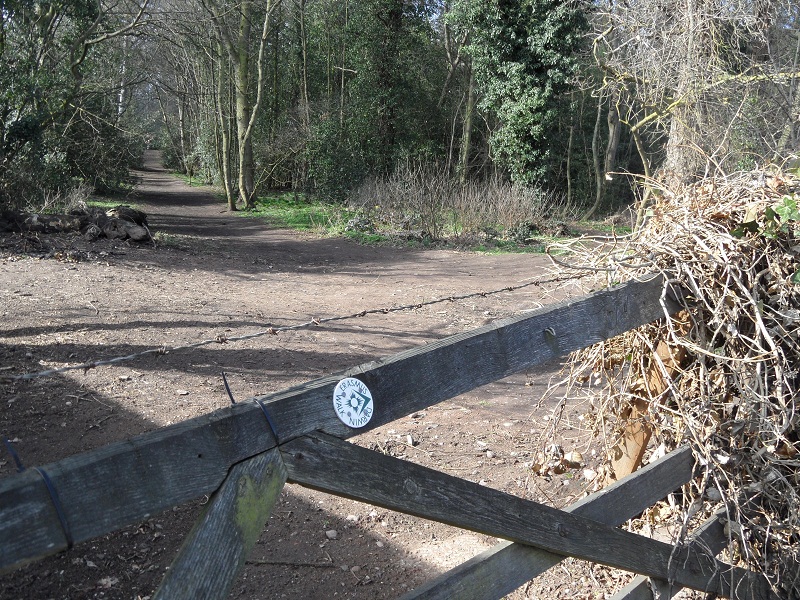
The entrance to the woods. The path running alongside forms part of The Darwin Walk and will take you to Pipe Green

Judging by the green shoots, it won’t be long before the woods are covered in bluebells. I think though, the colour of March is going to be yellow.

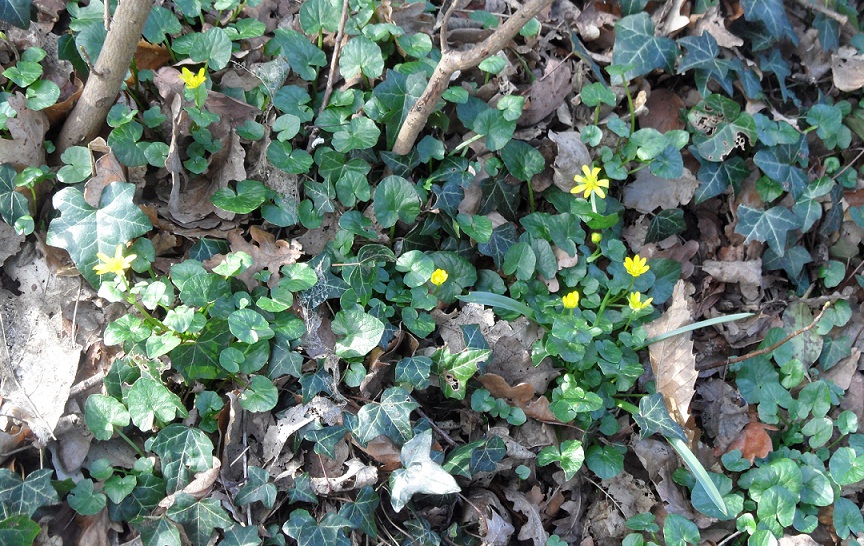
Lesser celandine?


Even I know that these are daffodils!


I don't know these though - they were growing in the hedgerow.

As a bit of a disclaimer (though if you read the captions above it hardly needs to be said!), I don’t know that much about trees & plants. I can’t tell my ash from my elder. One of the reasons I want to do this, is because it’ll be a good opportunity to learn more. For example, I now know what Lesser Celandine is, and that as one of the first flowers of the year, it is known as Spring Messenger. Slightly less picturesque is one of its alternative names – Pilewort.

I’ve already had some great input from a couple of people, on where to find interesting trees in our area. There could well be a ‘Tree Hunting’ spin off! So a big thanks to Roger and Pat for this – I shall be keeping my eyes open!

Also, over to the right are some links to people who actually know what they are talking about when it comes to flora and fauna, and they take some fabulous photographs to prove it! I definitely recommend taking a look!

Take a Bough

I’ve heard about a project called Tree Following via Gary Webb on Twitter, who is following a London Plane at Compton Verney. The project is being run by Lucy Corrander on her Loose and Leafy blog and the idea is to follow the life of a tree or a group of trees, returning at various points in the year to note the changes and what’s going on.

I love how trees reflect the changing seasons but also what they can tell us about our changing surroundings. For example, some like those at Beacon Park, are reminders of an old estate, when the buildings themselves are long gone.  I like the idea that each species of tree has a history, with its own uses and customs and also that there have been trees in the past which have been so important they have given their name to an area, such as the Shire Oak at Walsall Wood.

Which tree(s) should I follow though? Here are some contenders, in and around Lichfield.

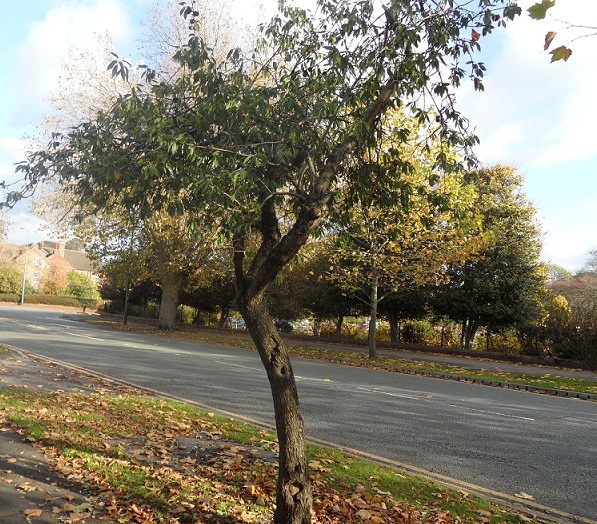
My current thoughts are that I’ll choose a tree at Leomansley Wood and also our cider orchard at Fisherwick. I hope the comparison between a mature woodland tree and an orchard sapling will be interesting. Although, as you can see from the photo, the cider trees aren’t much more than sticks at the moment, so we’ll see!

Bricks & Water

With traces of snow on the ground, but the sun shining, I headed back to Farewell last weekend.  Following my previous visit, I’d had a look at some old maps and another extremely helpful conversation with BrownhillsBob on the subject of wells. I was hopeful that this time I’d be able to find the site of the well, that gave the place its name.

This description of the well is from ‘A Tale of Fairwell’, set at the priory in 1527 and published in the early 1800s  – ‘Exactly in the centre, the sparkling tide of a large well or rather fountain leapt from a carved stone basin and hurrying hither and thither amidst rich grass floated under an arch in the wall into the pool that supplied the mill.’ Whether there is any element of truth in this description or whether it’s completely imagined, I don’t know!

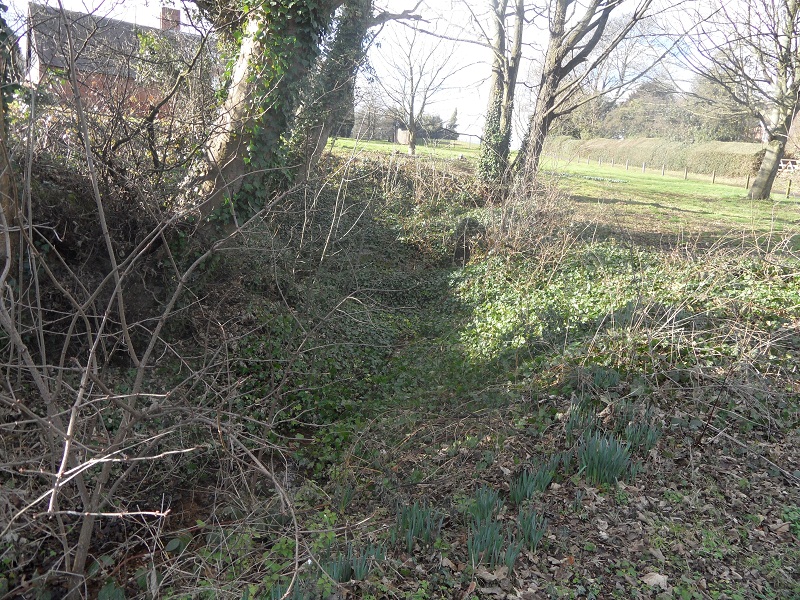
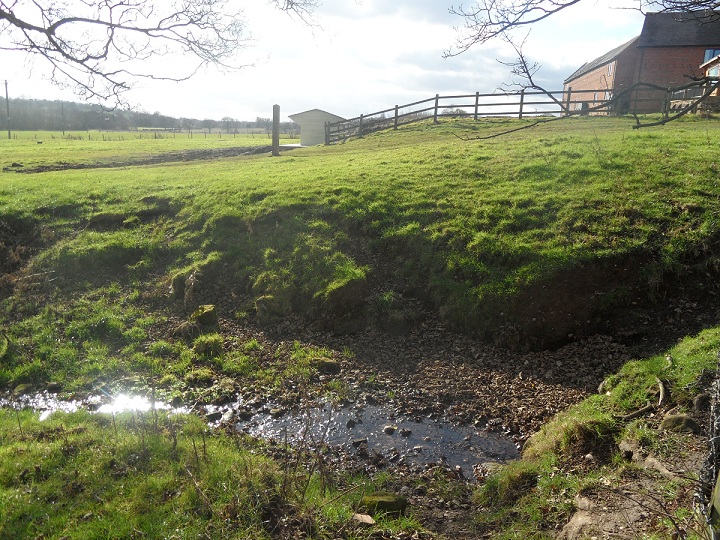
All I could find is this hollow, which is marked on maps ranging from 1884 to the late 1960s, as a pond. The maps also show a well or spring to the north east marked as ‘Well’ or ‘Fare Well’.

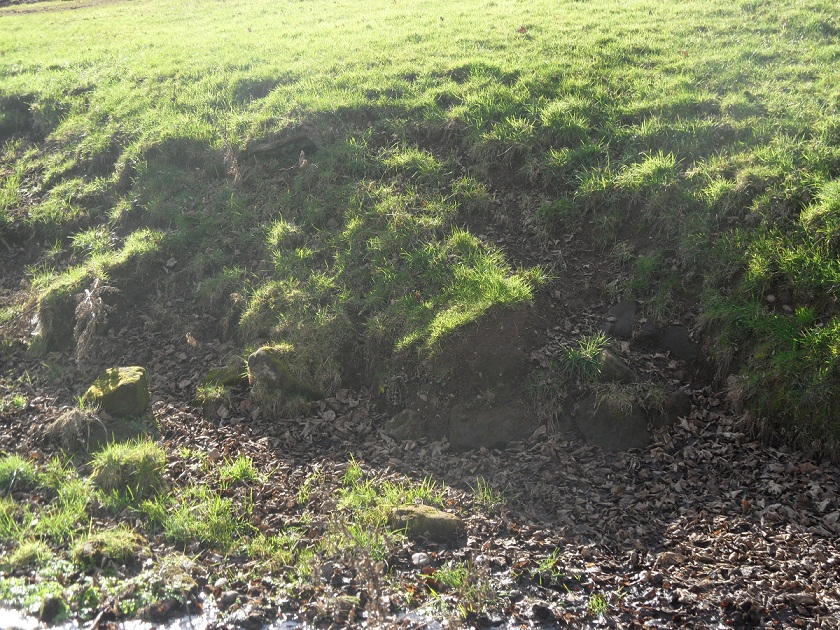
 Just down from this old pond, is a small brook in which there are some big chunks of stone. This brings me onto the next question! What remains of the priory of St Mary, initially founded as a hermitage but shortly afterwards converted into a nunnery?

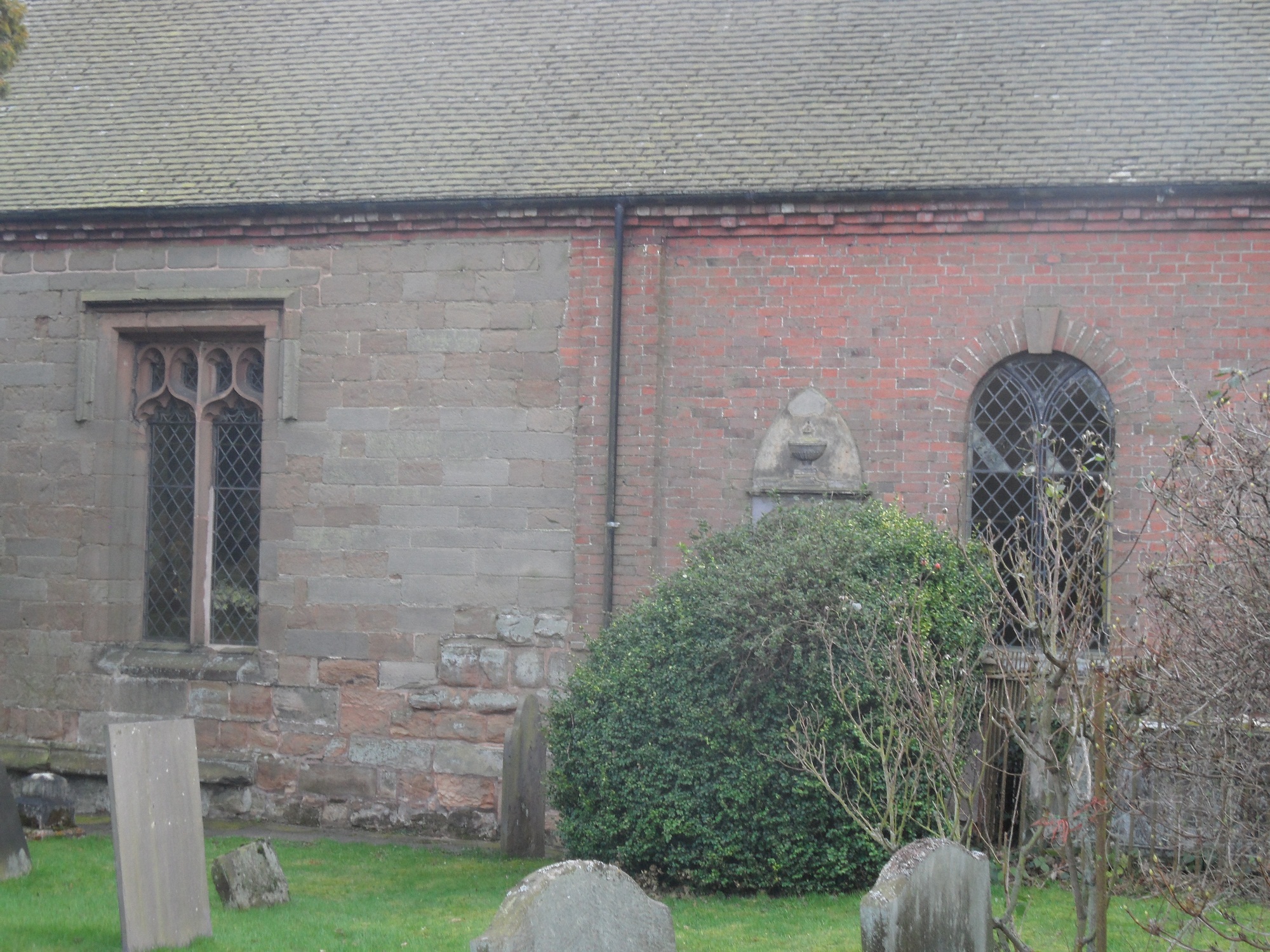
The priory was dissolved in 1527. It seems that the old nunnery chapel was retained as a church but most of it was rebuilt in 1747 in brick,  leaving only the stone chancel.

The two different parts of the church.

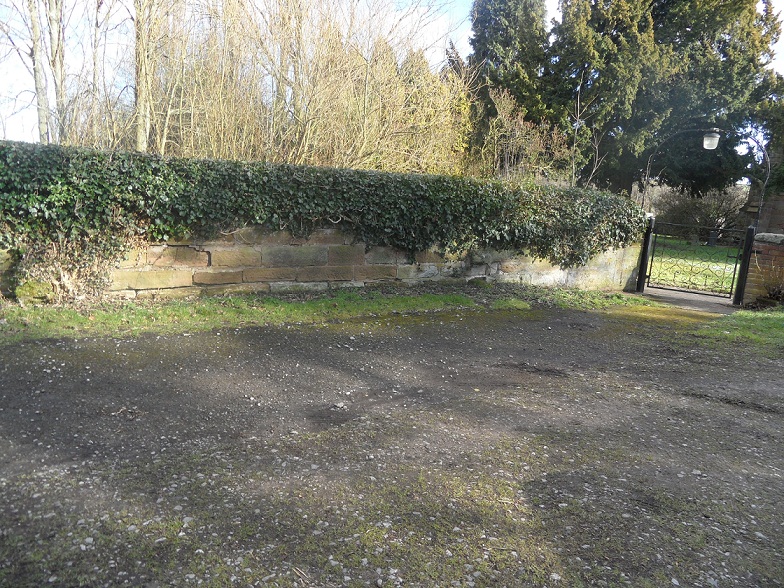
Pat suggested that a nearby wall might contain some of the stone from the earlier building(s).

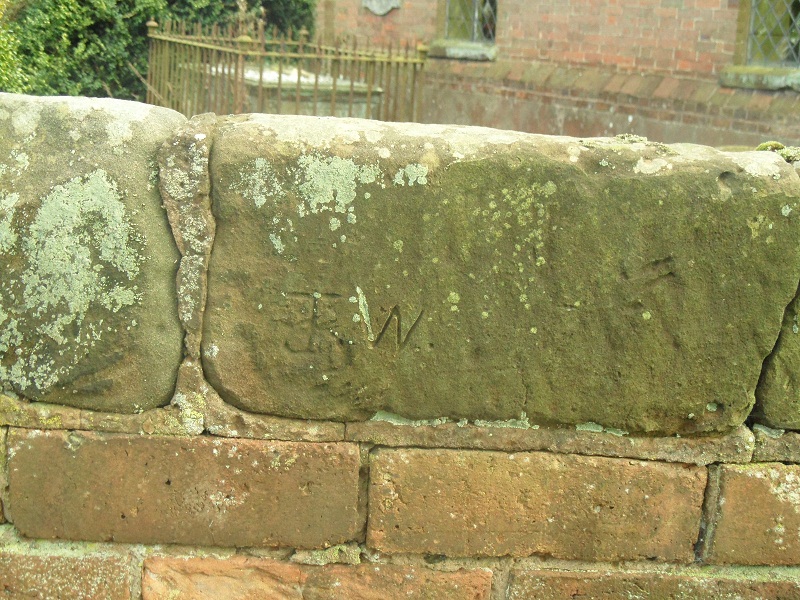
A brick wall has been built around the church yard, and this too seems to incorporate some older stone?

A archaeological resistivity survey carried out in 1992 located areas of higher resistivity thought to relate to demolition debris from structures associated with the church. Staffordshire Record Office hold the results of the survey which ‘revealed significant archaeological remains relating to the priory, including walls of buildings and the remains of the precinct wall’. I wonder whereabouts?

Until I can get my grubby mitts on a copy of this or any other real evidence, I’ll just have to be content that Farewell is a lovely place to speculate about!

Back to Black

After finding out about the Millenium Gates at Christ Church, created by contemporary Master Blacksmith, David Tucker, at his Derbyshire forge, I was interested to see if there was any trace of the many smithys and forges Lichfield once had. Using a town plan of Lichfield from 1884 & trade directories from the late 19th and early 20th century, I came up with a list of those whose location I thought I could roughly identify.

A weathervane I spotted on my travels

The locations are: Upper St John St;  Lombard St; Bakers Lane (3 in this area according to the map!) and Beacon St.

I headed to Lombard St first but it occured to me on the way over, I wasn’t sure exactly what I was looking for anyway? There might be some sort of clue I suppose, but surely there wouldn’t be a sign saying this used to be a forge…..
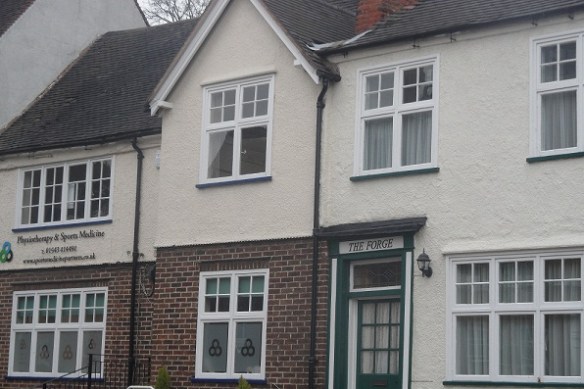
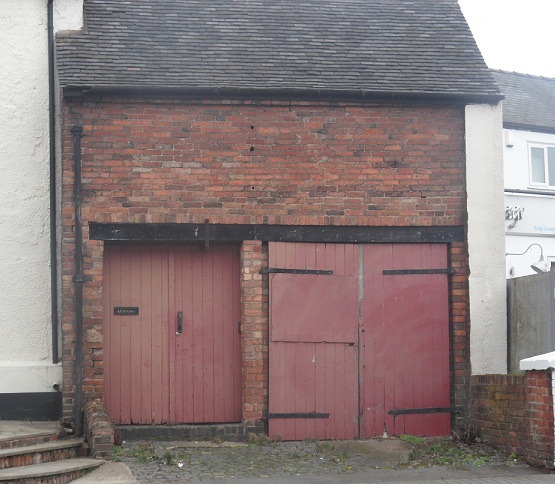
Well almost! Apparently, behind this facade is a building dating back to the late 17th century. To the right of the house is the workshop in the photo below – the listed building description describes it as ‘an interesting building where further investigation might reveal other early features’.

Workshop on Lombard St.

Before getting too carried away though, on the 1884 map of Lichfield, the smithy is shown on the other side of Lombard St. So this contradiction is a bit of a puzzle…. At home I tried to find out more – on the 1881 census for Lombard St is a Mr Joseph Baxter, blacksmith and his wife Catherine. On the 1896 directory, there is a Mrs J Baxter, blacksmith, Lombard St and the 1901 census seems to confirm that Catherine Baxter, now a fifty year old widow, took over her husband’s trade and was working as a shoeing smith, at 3 Lombard St.
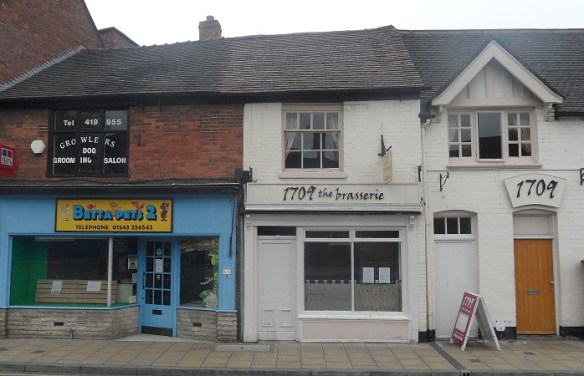
1884 map indicated the Lombard St smithy may have been around here?

Next stop was Bakers Lane. I wasn’t holding out any hope for anything here but in the interests of a comprehensive search I had a look. Plus I needed some milk. As suspected, on face value there doesn’t appear to be much left of anything here.

So I headed for Upper St John St, where it looks as though a smithy (possibly listed to Fred Meacham in 1900) existed either alongside or within the Lichfield Brewery. I couldn’t find anything obvious here on the street, but later at home I did find a newspaper story telling how in July 1903, Mr Meacham, a blacksmith at the City Brewery had a terrible accident being run over by a horse float, after helping in a hayfield. Although Mr Meacham sustained a serious injury, the 1911 census shows that he did return to work as a blacksmith.

Whilst looking at the newspaper archive I found this notice taken out by William Goodwin in the Friday July 11 1902 edition of the Mercury. In it, he advised ‘Nobility, Gentry, Farmers & Others’, that he had taken over the blacksmith’s shop on Beacon St, lately occupied by George Goodwin.

Is there any physical trace of the forge on Beacon St though? Well yes and no. While nothing seems to remain of the building (as far as I could see), the road next to The Feathers pub is ‘Forge Lane’ and the road off this one is ‘Smithy Lane’.

 Footnotes!

In exploring this subject and related matters, I’ve had some great discussions with and help from BrownhillsBob so a big thank you to him.

Although I couldn’t see anything at some of the locations, that’s not to say there is nothing there…..

A few doors up from Catherine Baxter on Tamworth St, in 1881, another widow, Louisa Wood is listed as a ‘Plumber & Decorator’. Ann Tricklebank on Sandford St seems to take over her husband’s trade as a tin worker. I’d not ever thought about the role of women in these traditionally male trades before, so this is something I’d like to find out more about.

Even in 2007, the idea of a female blacksmith seemed to create much excitement in a national ‘newspaper’ with talk of ‘hot stuff’ and ‘unladylike professions’ and ‘an ancient art more traditionally associated with barrel-chested macho men’.

Almost 200 years ago, there are seven blacksmiths listed in the 1818 Lichfield Directory and by 1834 there were 10 – in Market St, Birmingham Rd, Sandford St & Tamworth St, as well as some of those mentioned above.

In surrounding areas there are of course also traces of blacksmiths. For example, in Burntwood there’s a Forge Lane, an Old Forge at Fisherwick, and an old smithy in Fradley. Even further afield, you can see some photos of Staffordshire smiths on the Staffs Past Track website.  

Using the town plan for Lichfield prompted me to see if there was one for Cirencester, where in the late 19th century, my g-g-g-grandfather ran a pub. I had read a while back that it’s no longer a pub so I had a quick look at it on the town plan to see where it would have been. Funnily enough, at the rear of the pub is a smithy and in the 1901 census my g-g-g-grandfather is listed as a Blacksmith & Innkeeper. Maybe that explains why I’m interested in blacksmiths and erm, pubs 😉

Update 19.2.202

Bob has very kindly put a post on his blog about the forge, with four great old maps of Lichfield. There are some great comments and based on these it looks as though the workshop was the smithy & the 1884 town plan may have it wrong. Also, you’ll see that Roger (@ziksby on twitter) has found 34 blacksmiths on the 1881 census. 34!

Sources:

Lichfield Mercury Archives

1884 Town Plan Lichfield

Staffordshire General & Commercial Directory 1818

Whites History, Gazeteer & Directory of Staffordshire `1834

Kellys Directory of Staffordshire 1896, 1900 & 1912
Farewell Tour

From doing a bit of research on Cross in Hand Lane, I knew Farewell had been the site of Benedictine nunnery and also that the placename (sometimes spelt as ‘Fairwell’) refers to a nearby ‘fair or clear spring’. I had no idea what was left of either, the nunnery or the spring, so on the way home from Castle Ring, we stopped off for a look around.

St Bartholomew, Farewell

The most striking thing about the church is the mixture of  the two different building styles and materials. It seems the original church (which you can see here on the Staffordshire Past Track website) is thought to have contained parts of the nunnery which was dissoved in 1527.  Most of the old building was demolished & rebuilt in brick in 1745. However, the stone chancel remains. Below are a couple of photos  showing the contrast between the chancel and the rebuilt part of the church . I’m not sure but the bottom right corner of the older, stone built part of the building looks different again?

The two different parts of the church.

Have a look from a slightly different angle.

Whilst these renovations were being carried out, workman made a discovery. According to Richard Greene, in the south wall, six feet off the ground were three rows of earthen vessels. Each row contained vessels  of a different size (the smallest was 6 1/4 inches high) lying on their side, openings covered by a thin coat of plaster, facing towards to interior of the church.  All but three were broken in the process and one of them was kept at Richard Greene’s museum. You can see the picture here on the Staffs Pastrack website plus the letter written by Richard Greene to The Gentleman’s Magazine outlining the finds.

Initially, I found a couple of reference to the discovery of the Farewell Jars but no explanations or suggestions to why they were there.  Eventually, after a bit of searching, I came across a book on Church Lore (1), with a whole chapter devoted to ‘Acoustic Jars and Horses’ Skulls’ which specifically mentions the jars found at ‘Fairwell, Staffordshire’, describing how jars were used for enhancing the acoustics of a building. The idea is thought to date back to a Roman architect called Vitruvius. There are other examples of this idea throughout the country, and Europe, including St Andrews, Lyddington as below.

Acoustic jar in chancel wall, parish church of St. Andrews, Lyddington, Rutland 05/04/2009. Credit: Walwyn (taken from their Flickr photstream)

If you’re anything like me, you’ll be wondering what the ‘Horses’ Skulls’ element of the Church Lore chapter title was about. Apparently, animal skulls were also used to improve acoustics in a building and examples have been found in various places. Although this is fascinating, I’m not going to go into too much detail here as it isn’t directly related to Farewell. However, it is worth noting that there is some debate as to whether these skulls and to a lesser extent, the jars relate to something altogether different. Something along the lines of foundation sacrifices…

I’d love to know what others think about this and want to look more into this acoustic jar business. I’m also wondering where the rest of the nunnery, dedicated to St Mary, is ? I’m not saying farewell to Farewell, just yet….

Sources:
(1) Thomas Firminger Dyer Church Lore Gleanings, Chapter VII,

(2) Ralph Merryfield Folk-lore in London Archaeology Part 2, The Post Roman Period

Staffordshire Places website http://www.places.staffspasttrack.org.uk/

William Dugdale Monasticon Angelicanum

Lichfield Armour

On Wednesday, Pat sent me a link to a British Pathe film. The short film is from 1938 and shows boys and men dressed in armour for the Lichfield Bower. This on its own is fascinating stuff. However, this week it’s not only an interesting piece of footage but also a topical one!

The lead story in this week’s Mercury tells how the Bower Committee feel they have no choice but to sell off two of the four suits of armour they own (presumably some of those featured in the film?), to ensure the survival of the event.  You can read the full article here.

There’s so much more to be said on the Bower, about its history & its future and also its place in the Lichfield psyche. There is a great site for the Bower which explores some of the history behind this Lichfeldian tradition, as well as giving updates on this year’s festivities.

You can view a copy of the film by clicking here. I think the procession is travelling down Beacon St in the film, what does anyone else think? Huge thanks to Pat for his great contribution, as ever.

I don’t have any photos of the Bower Armour, but I do have a photo of a suit of armour I took somewhere else in Lichfield. Anyone else spotted this chap in ye olde city?


Edit 23/2/2012

Over on twitter, the Beacon Street Blog have spotted a story in the Lichfield Mercury, saying that the armour has been withdrawn from the sale, due to a dispute over ownership with Lichfield District Council.