Through Doors and Windows

Anyone who has read the Written into Lichfield History and Making your Mark posts, will know that Gareth Thomas has been exploring the Lichfield District Council Offices, and very kindly sharing the photos here on the blog.  Gareth’s doing this because the buildings were once the Lichfield Grammar School, and generations of pupils, dating back to the 17th century have left their mark on the building.
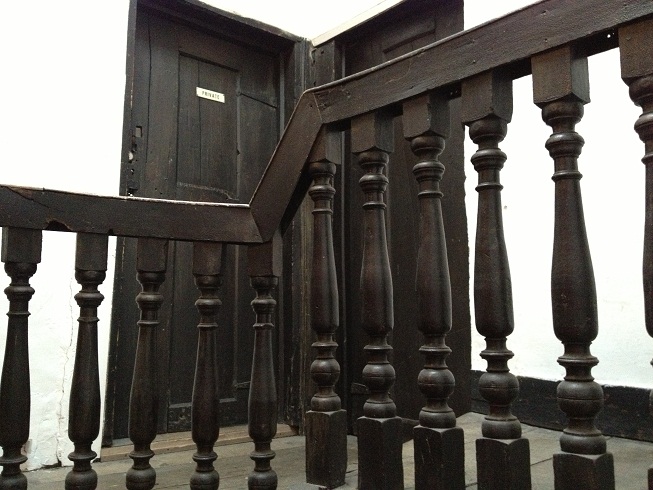
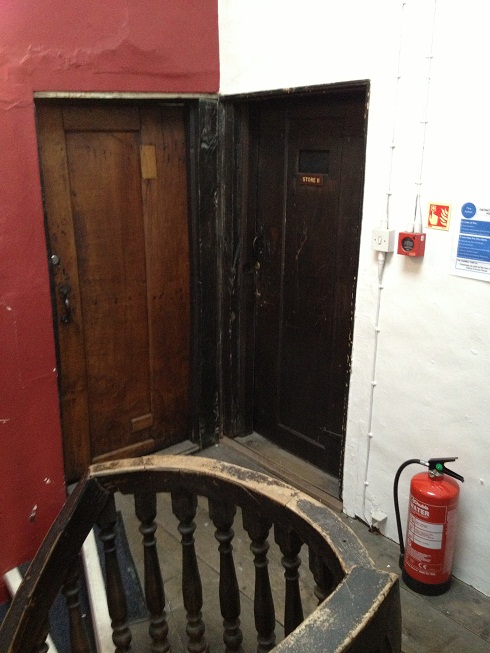
I like the idea that even those who didn’t go as far as leaving their name still left a trace on the worn bannisters and floorboards

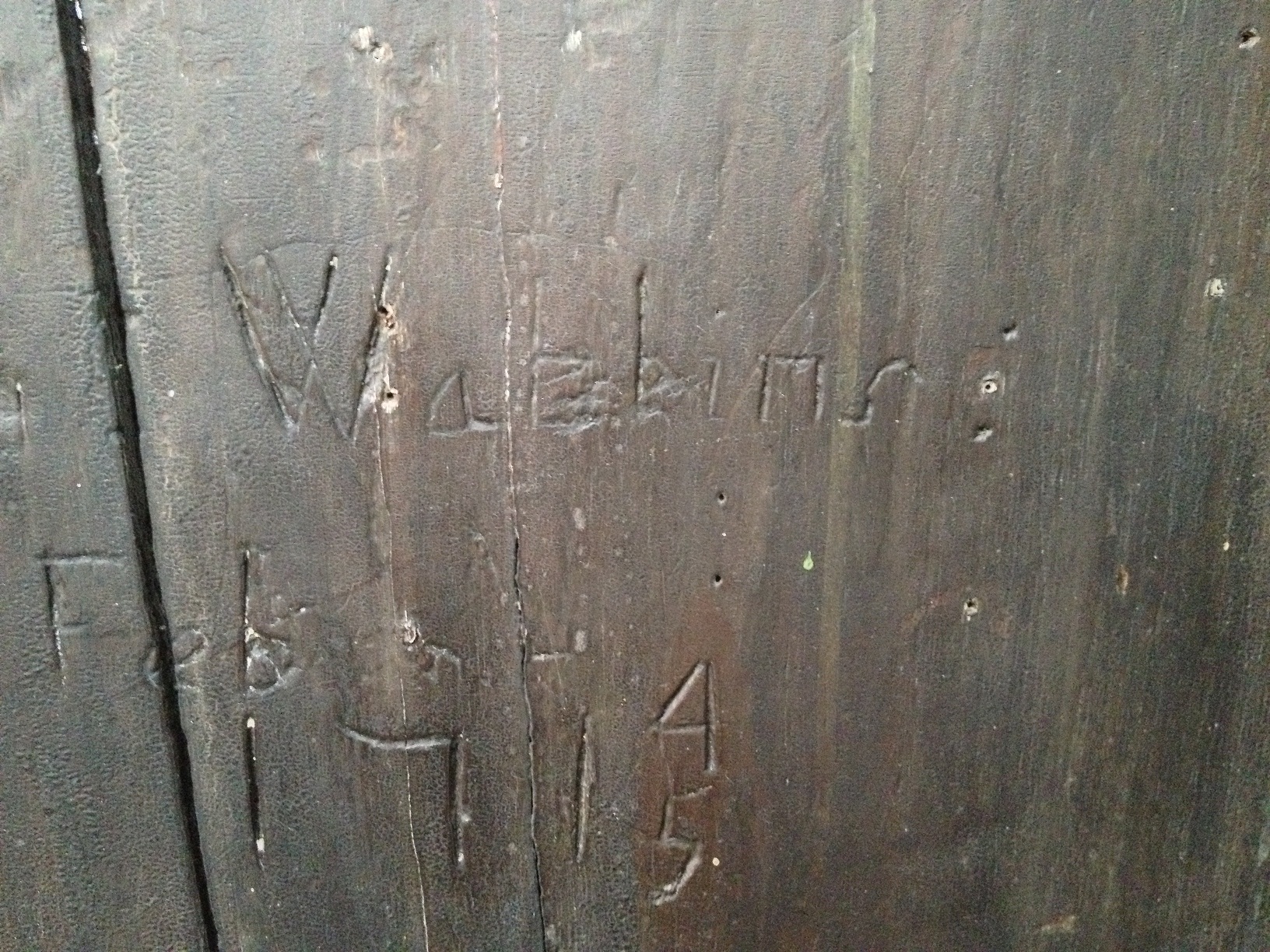
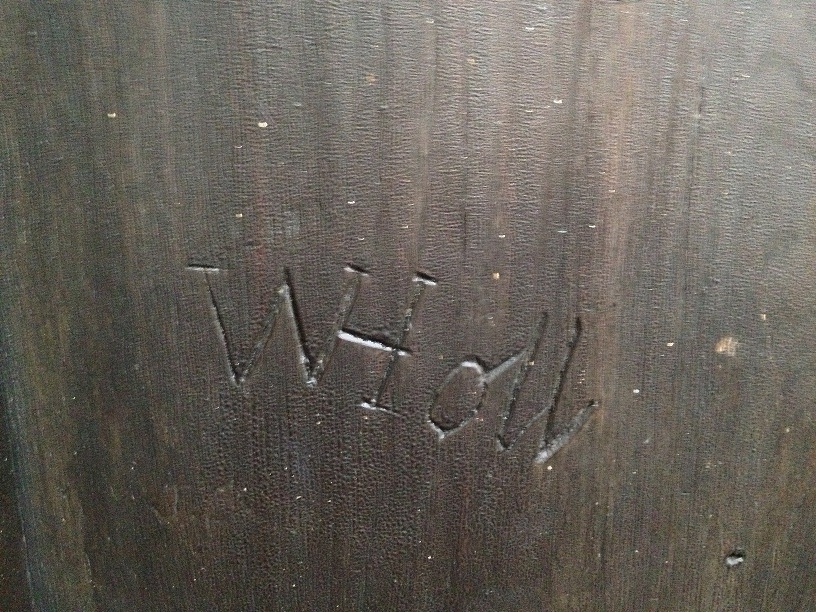
Last time, we got as far as the attic doors, where someone called ‘Watkins’, carved his name in February 1714/5. Amongst the other graffiti is the name WHoll, and Roger Jones (Ziksby) put forward the idea that this could be William Holl the engraver, which certainly warrants further investigation.  Back then the doors would have lead to the dormitories for the boarders at the school. Now thanks to Gareth, we get to have a look at what lies behind those potentially three hundred year old doors……
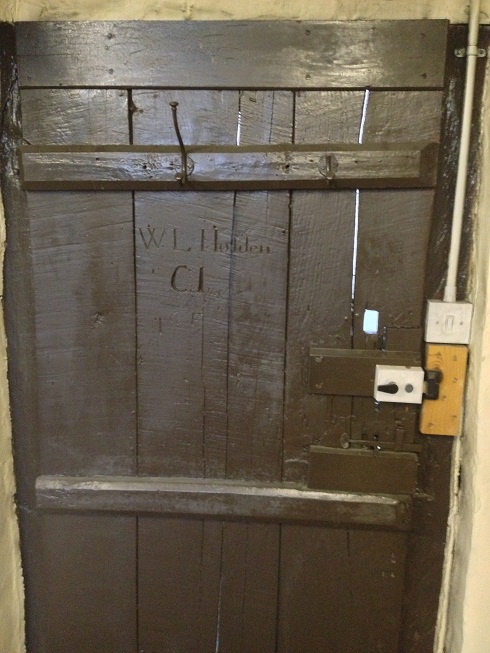
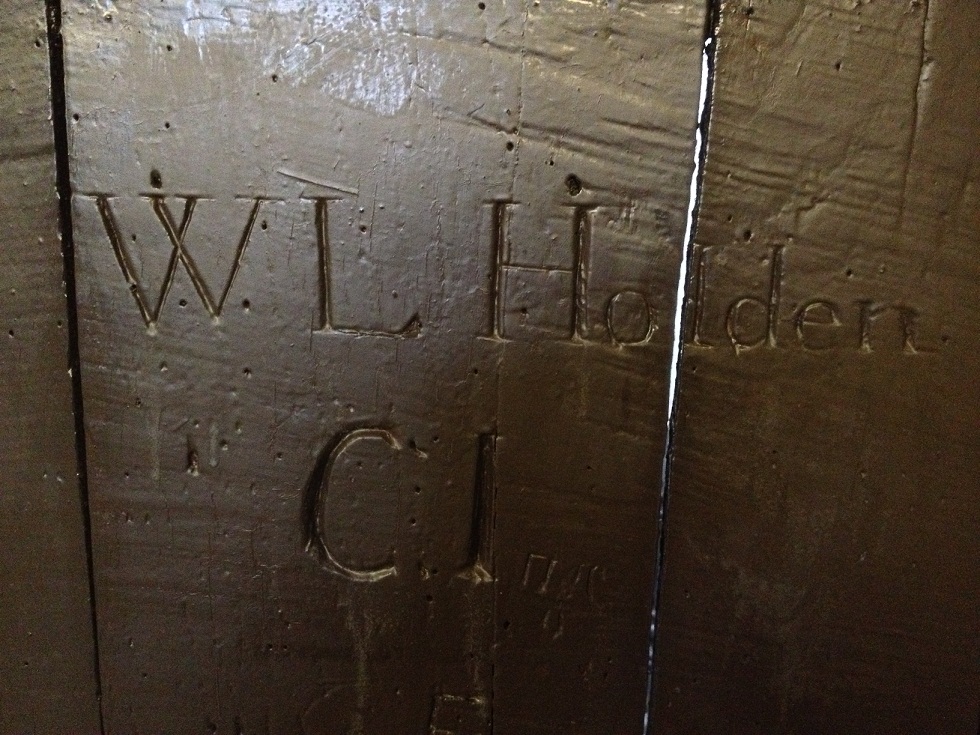
Who was WL Holden? Does C1 refer to his form or something else?

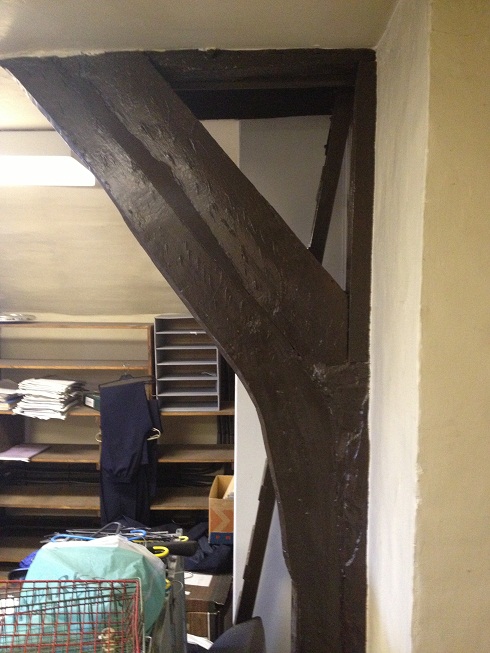
To us these are old timber beams, yet once they were brand new, and according to the Lichfield Conduit Lands archives, mostly donated in the form of individual trees!
 

Gareth has taken some photographs from the windows. Not only does this give an interesting perspective of the city, it also invites you to imagine what the boys would have seen looking out of this window, what’s changed and what’s the same.

In around 1813, Cowperthwaite Smith was appointed headmaster of the school with a salary of £170 per annum, plus rent free accomodation. At the time, board, lodging & tuition was being charged at between 40 and 50 guineas a year for each scholar. In 1828, according to the ‘Account of Public Charities in England and Wales’, there were 18 boarders, and around 30-40 students in total. It goes on to say that the only scholars receiving their education free at the school were the ‘six children of poor men born within the City’ (who were also given money for books, and slightly more curiously brooms, when the school was first endowed).  The people of Lichfield were apparently not happy that their grammar school was no longer a free school.

By then end of Cowperthwaite Smith’s time as headmaster in the 1840s, no boys at all were coming to the school. Allegations were made in the Wolverhampton Chronicle that Lichfield Grammar School had been closed for six years due to the the misconduct of the master. It claimed he was violent towards the children in his care, and that ‘his treatment of two boys on two separate subjected his modes of punishment to investigation before the magistrates one boy having subsequently confined to his bed under surgical advice for a fortnight’.

The newpaper was sued for its attempt to injure Cowperthwaite’s ‘good name fame and credit’ as a schoolmaster and clergyman, and ‘to bring him into public scandal infamy and disgrace’ and ‘to hold him up to public contumely scorn and ridicule and to vex harass oppress impoverish and wholly ruin (him)’. I’m trying to piece together exactly what happened as best I can from the court cases that followed these allegations and I’m hoping that the original newspaper reports might be available. There’s also a vast amount of information at Lichfield Record Office that I’d like to look through, and I think it’s best not to speculate or comment further until I have read more on this.

I am also working on another post as Gareth’s investigations took him to another part of the building, where he made another fantastic discovery, including our oldest dated graffiti yet.  In the meantime, Gareth, do you fancy going up that ladder in the attic?

(1) A Concise Description of the Endowed Grammar Schools of England and Wales, Nicholas Carlise 1818

http://hansard.millbanksystems.com/commons/1846/apr/01/the-lichfield-grammar-school

http://www.lichfielddc.gov.uk/info/100004/council_and_democracy/588/history_of_district_council_house/2

http://eagle.cch.kcl.ac.uk:8080/cce/persons/DisplayPerson.jsp?PersonID=19831

Making a Mark

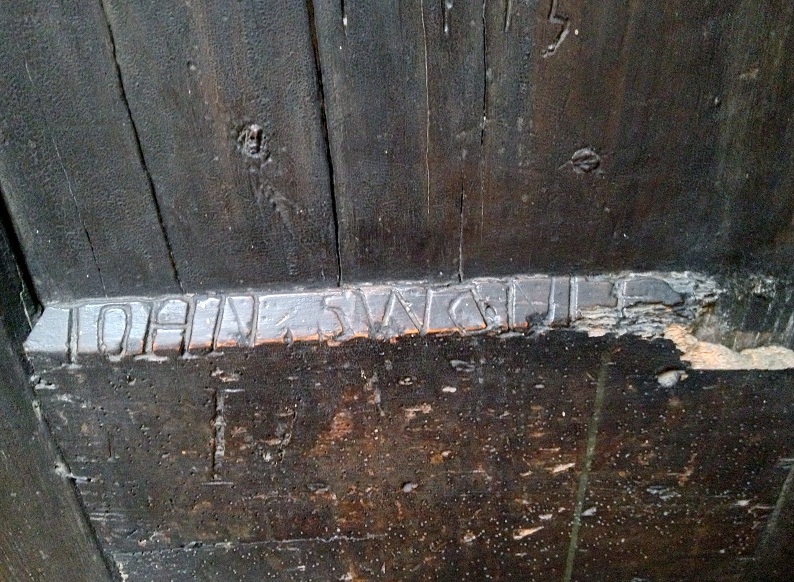
I’m pleased to say that Gareth took my hint and very kindly sent me some great photographs of the names carved into old attic doors in the Lichfield District Council office building on St John St.  This part of the offices was the old school master’s house, dating back to 1682 and it’s thought the attic was used as a dormitory for boarders at the old grammar school.

One of the carvings seems to be dated 1715. If authentic, it means this door could be around 300 years old, possibly even original? Also there’s a rogue 4 nearby, is this a red herring or something to do with the change in calendar from Julian to Gregorian? This is about as clear as a pint of guinness to me, so any possible explanation would be welcomed!


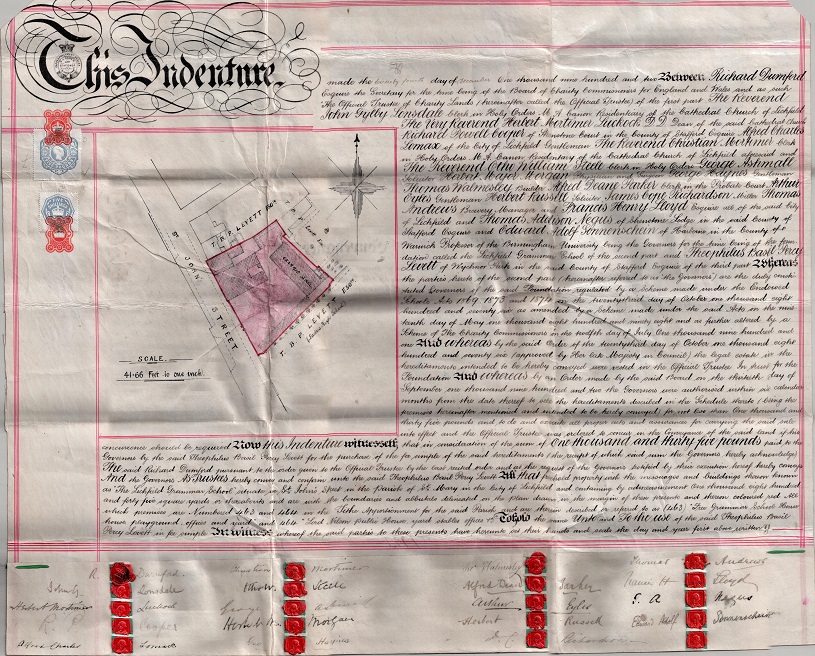
Gareth also sent me a scan of a document – an indenture outlining the sale of the school buildings to Theophilus Basil Percy Levett, dated Christmas Eve 1902, and signed by the the school’s governors. It’s a fascinating document, there’s  information about the buildings,  the stamp of the Birmingham Paper and Parchment dealer, the seals and the names and professions of the governors (some are more familiar than others -Lonsdale, Cooper, Lomax, Ashmall and Andrews stand out for me).   In 1903 the school moved from St John St to Upper St John’s St, merging with Kingshill Secondary Modern in 1971, to form the present King Edward VI school.

Gareth’s photographs and images from the last few days are fascinating, but what I also think is interesting is the contrast.  The inky signatures of men who have already made their way in the world, compared with names carved into wood and brick by children starting out in life.  And what about the contrast of these grammar school boys with their peers?  Whilst they may or may not have gone on to fulfil their potential (see the comments on my previous post)  what of those other children that never even had the opportunity?

A couple of weeks ago, I was listening to the headteachers of our state secondary schools here in Lichfield talk about what their school offered to students. Each of them spoke convincingly about their commitment to giving each and every pupil in their care, regardless of ability or background, the opportunity to reach their potential in life.   I found myself moved by their words. This is how it should be.

Edit 2/11/2012

Yesterday at Lichfield Library, I found the book ‘A Short History of Lichfield Grammar School’ written by Percy Laithwaite in 1925. Mr Laithwaite refers to the graffiti, and I suspect this may be the original source (I found out about the existence of the graffiti on a Lichfield District Council document. I also saw it referenced in Howard Clayton’s Coaching City, whilst I was at the library yesterday). As well as providing small biographies of some of the masters and pupils of the school,  Mr Laithwaite also mentions that wooden panelling from the old school room is now used in the council offices, and that an oak desk from the school room was used as a locker at Bridgeman’s on Quonians Lane. If we could track that down, that’d be something!

Footnote:


I’m really pleased to say that Gareth Thomas who provided me with the graffiti photos and the indenture document, as well as other information over the last weeks has started his own blog http://lichfield.keepsblogging.com/ Gareth’s going to be sharing the things he discovers and judging by the gems he’s come up with so far, it’s going to a great read for those of us who enjoy exploring the history of this old city.

Sources:

http://www.lichfielddc.gov.uk/info/100004/council_and_democracy/588/history_of_district_council_house/2

http://www.kingedwardvi-lichfield.staffs.sch.uk/history.html

https://wiki.leeds.ac.uk/index.php/HIST2530_Building_the_literate_nation:_the_historical_debate#Literacy_Rates

Bell-ow the Water

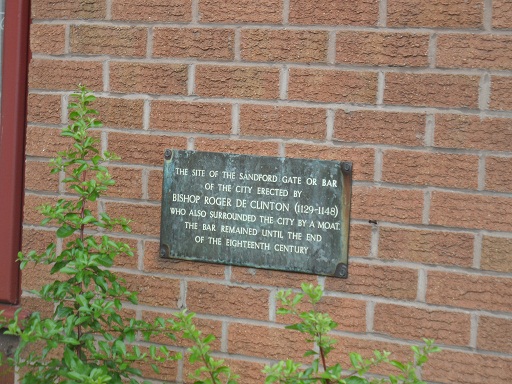
Water is in abundance at the moment, so Sandford Street seems quite an appropriate topic.   The street was once split into two parts -Sandford St and Sandford St, below the water. I believe that the latter is now known as Lower Sandford St, lay outside the city gate, and was once the main road to Walsall.

This plaque is near to the traffic lights on Swan Rd (confusing!) & the corner of Lower Sandford St


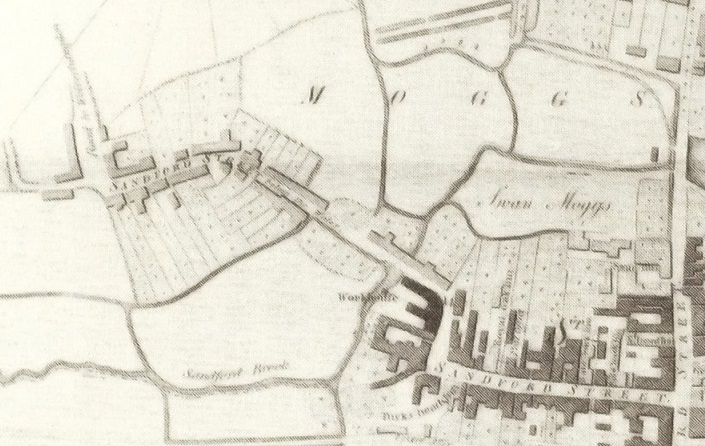
Hopefully, this will make more sense in conjunction with John Snape’s 1781 map.

John Snape 1781 map, taken from wikipedia

I’ve only just found out that around the same time as this map was made, an artist called John Glover painted a view of  Lichfield Cathedral from Sandford St. It’s in the Samuel Johnson Birthplace Museum and can be seen here.

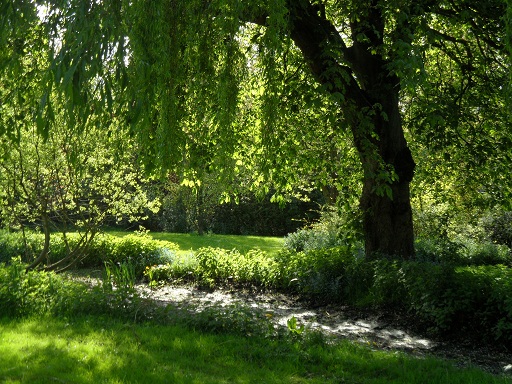
The water in question seems to be Trunkfield Brook (formerly Sandford Brook) which still flows, with varying success, through the Festival Gardens. It’s thought that the name Sandford (earlier Sondeforde) might relate to a crossing over the brook, near to the gate. Apparently, a bridge was built there around 1520. I wonder if the brook was bigger in the past, as I’m pretty sure even I could jump over it. Almost.

Trunkfield Brook, often more mud than water.


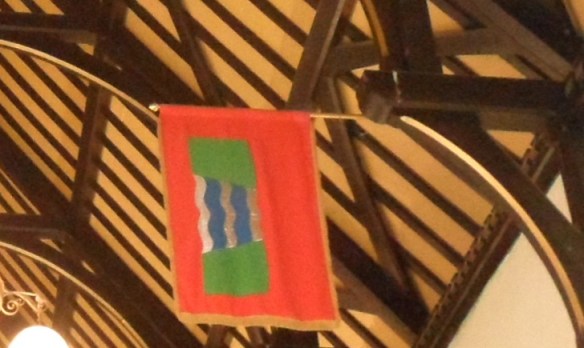
In view of the above, I think that the symbol on the Sandford St below the water ward banner, as shown below, is pretty self explanatory.

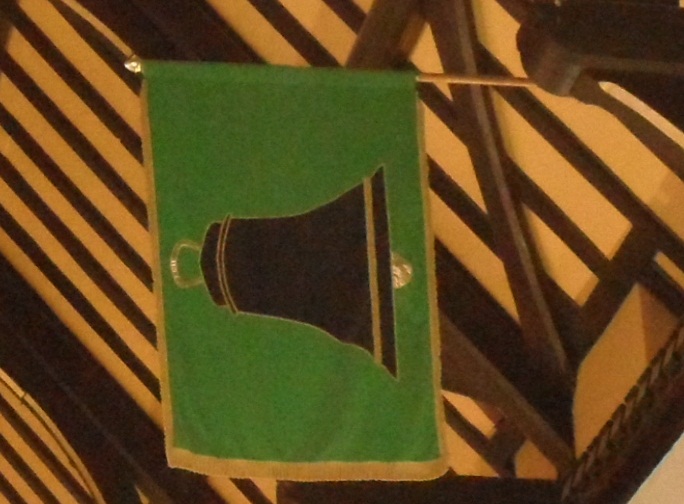
More of a challenge to decipher is the banner for the other part of Sandford St (i.e the bit within the city). Why did they choose to represent this with a bell?

In the absence of anything I can find that links this part of Lichfield specifically to bells, so far all that I can think of is that it might relate to the iron & brass foundry set up in Sandford St in 1879. On an 1884 town plan, it’s shown behind the Queen’s Head. Although it was set up by a Yoxall based firm called Perkins & Sons, Tuke & Bell, who already had a foundry on Beacon St bought it in 1923 and renamed it the Lichfield Foundry Ltd. The Sandford Street works lasted right up until 1983, so there must be plenty who remember it, or even worked there.

On a street somewhere in Lichfield. I’ll be honest, I forgot to note down which one!

So, does this explain the bell? If so, it’s interesting that the foundry wasn’t in existence until 1879, and so the design on the ward banner is unlikely to date to before then. If not…..???

Sources:

‘Lichfield: Economic history’, A History of the County of Stafford: Volume 14: Lichfield (1990), pp. 109-131. URL: http://www.british-history.ac.uk/report.aspx?compid=42349&strquery=sand  Date accessed: 07 July 2012.

A short account of the city and close of Lichfield by Thomas George Lomax, John Chappel Woodhouse, William Newling

Pay Days

“Nothing really seems to happen in this sleepy old town, except plenty of work….”, begins the Summer 1935 entry for Lichfield in The Royal Army Pay Corps Journal.

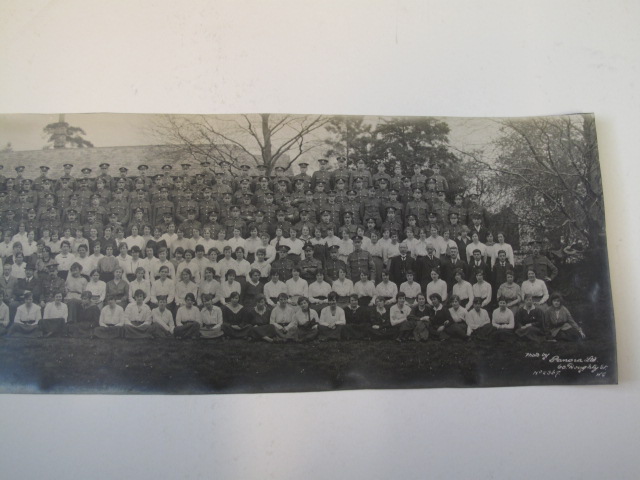
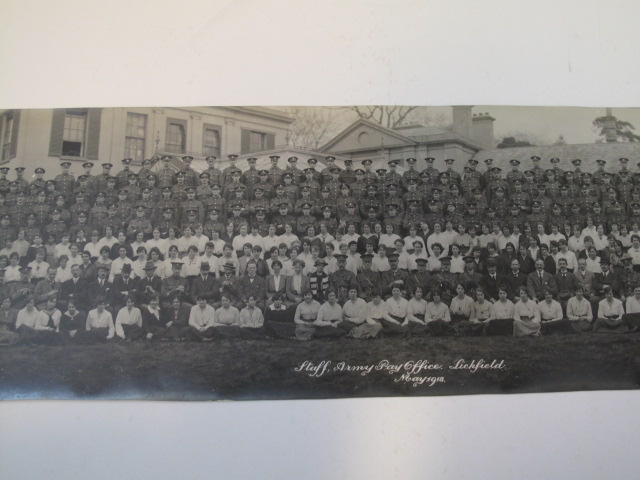
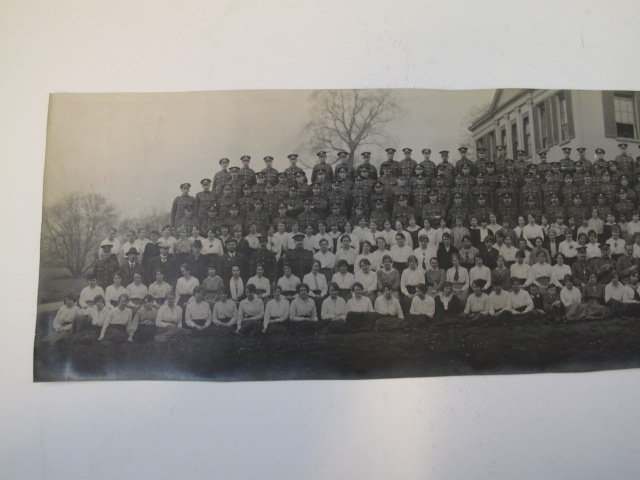
For at least 20 years, possibly longer, Lichfield was home to one of the army’s regimental pay offices.  The Army Pay Corps (known as Royal Army Pay Corps from 1920) if my understanding is correct, was the payroll department for the army. The office at Lichfield seems to have been based at Beacon Place, the house whose grounds formed much of what is now Beacon Park. This staff photo was taken outside there in May 1918. The photo is huge and so is in three parts.

The quarterly journal entries that I have copies of begin in Spring 1931 and focus mainly on sports, but inbetween the reports of cricket, tennis, football, bridge and table tennis there are other snippets of life at Beacon Place, and in Lichfield as a whole, during the period.

Here are some extracts from Spring 1937:

Spring must be on the way: the surest sign here is that the white lines on the tennis courts have been painted….Flannels are being sent to the cleaners, rackets are being plonked banjo fashion and sent to be restrung, and the good players are looking up the season’s catalogues and deciding on something really posh for this season….

Lichfield, in common with other great cities, is according to the press, going to do itself well for the Coronation. Flood lighting of the Cathedral and other important buildings, sports in the recreation grounds, glee-singing on Minster Pool (of course, this may be a stunt to make spome of these three-feet pike give themselves up), presentation of mugs to the children in the Market Place, after they have watched and cheered the Lord Mayor and all the City’s dignitaries. It will be a fine rehearsal for the Lichfield Bower which happens the following Monday and all who know Lichfield know what a fine day that is.

SQMS H Horan and Sgt R Mackreth have left us for Woolwich and Egypt respectively and Sgt R Tolley and L/Sgt J Duckworth, to whom we also extend the welcome mitt, have joined us from Palestine and Egypt respectively.

The decision to close the Lichfield office, due to a reorganisation of the system, was reported in The Tamworth Herald on April 24th 1937. Documents were transferred to York and Shrewsbury and it was said that,

The closing of Beacon Place, with the resultant removal of the entire staff would be a great loss to Lichfield

The last entry for the Lichfield office in the Royal Army Pay Corps journal that I have is Autumn 1937. I understand that Beacon Place was taken over by The Royal Army Service Corps during the Second World War, something I haven’t even begun to look at yet!

The photo and the journal entries were sent to me by Mr Bailey, curator of the AGC Museum in Winchester, after I made some enquiries for a walk I was doing in Beacon Park.  Mr Bailey has been incredibly helpful in helping me to discover more about the use of Beacon Place by the Army Pay Office and in telling me more about the RAPC generally. I have several other pieces of information that Mr Bailey has sent me, including lists of some of the employees at various times . One thing he mentioned that I find particularly interesting is that research by Dr John Black has indicated that following the campaign on the Somme in 1916, Army Pay Corps staff were sent to the Western Front and women were recruited locally to replace these men. Are these the women in the 1918 staff photo? Unfortunately, Mr Bailey hasn’t been able to find any records of names for the soldiers who departed or of the women who replaced them.

I’m especially interested in finding out more about the local people who worked at the Beacon Place office. If anyone has any further information regarding any of the above, it’s be great to hear from you.

Back to Black

After finding out about the Millenium Gates at Christ Church, created by contemporary Master Blacksmith, David Tucker, at his Derbyshire forge, I was interested to see if there was any trace of the many smithys and forges Lichfield once had. Using a town plan of Lichfield from 1884 & trade directories from the late 19th and early 20th century, I came up with a list of those whose location I thought I could roughly identify.

A weathervane I spotted on my travels

The locations are: Upper St John St;  Lombard St; Bakers Lane (3 in this area according to the map!) and Beacon St.

I headed to Lombard St first but it occured to me on the way over, I wasn’t sure exactly what I was looking for anyway? There might be some sort of clue I suppose, but surely there wouldn’t be a sign saying this used to be a forge…..

Well almost! Apparently, behind this facade is a building dating back to the late 17th century. To the right of the house is the workshop in the photo below – the listed building description describes it as ‘an interesting building where further investigation might reveal other early features’.

Workshop on Lombard St.

Before getting too carried away though, on the 1884 map of Lichfield, the smithy is shown on the other side of Lombard St. So this contradiction is a bit of a puzzle…. At home I tried to find out more – on the 1881 census for Lombard St is a Mr Joseph Baxter, blacksmith and his wife Catherine. On the 1896 directory, there is a Mrs J Baxter, blacksmith, Lombard St and the 1901 census seems to confirm that Catherine Baxter, now a fifty year old widow, took over her husband’s trade and was working as a shoeing smith, at 3 Lombard St.

1884 map indicated the Lombard St smithy may have been around here?

Next stop was Bakers Lane. I wasn’t holding out any hope for anything here but in the interests of a comprehensive search I had a look. Plus I needed some milk. As suspected, on face value there doesn’t appear to be much left of anything here.

So I headed for Upper St John St, where it looks as though a smithy (possibly listed to Fred Meacham in 1900) existed either alongside or within the Lichfield Brewery. I couldn’t find anything obvious here on the street, but later at home I did find a newspaper story telling how in July 1903, Mr Meacham, a blacksmith at the City Brewery had a terrible accident being run over by a horse float, after helping in a hayfield. Although Mr Meacham sustained a serious injury, the 1911 census shows that he did return to work as a blacksmith.

Whilst looking at the newspaper archive I found this notice taken out by William Goodwin in the Friday July 11 1902 edition of the Mercury. In it, he advised ‘Nobility, Gentry, Farmers & Others’, that he had taken over the blacksmith’s shop on Beacon St, lately occupied by George Goodwin.

Is there any physical trace of the forge on Beacon St though? Well yes and no. While nothing seems to remain of the building (as far as I could see), the road next to The Feathers pub is ‘Forge Lane’ and the road off this one is ‘Smithy Lane’.

 Footnotes!

In exploring this subject and related matters, I’ve had some great discussions with and help from BrownhillsBob so a big thank you to him.

Although I couldn’t see anything at some of the locations, that’s not to say there is nothing there…..

A few doors up from Catherine Baxter on Tamworth St, in 1881, another widow, Louisa Wood is listed as a ‘Plumber & Decorator’. Ann Tricklebank on Sandford St seems to take over her husband’s trade as a tin worker. I’d not ever thought about the role of women in these traditionally male trades before, so this is something I’d like to find out more about.

Even in 2007, the idea of a female blacksmith seemed to create much excitement in a national ‘newspaper’ with talk of ‘hot stuff’ and ‘unladylike professions’ and ‘an ancient art more traditionally associated with barrel-chested macho men’.

Almost 200 years ago, there are seven blacksmiths listed in the 1818 Lichfield Directory and by 1834 there were 10 – in Market St, Birmingham Rd, Sandford St & Tamworth St, as well as some of those mentioned above.

In surrounding areas there are of course also traces of blacksmiths. For example, in Burntwood there’s a Forge Lane, an Old Forge at Fisherwick, and an old smithy in Fradley. Even further afield, you can see some photos of Staffordshire smiths on the Staffs Past Track website.  

Using the town plan for Lichfield prompted me to see if there was one for Cirencester, where in the late 19th century, my g-g-g-grandfather ran a pub. I had read a while back that it’s no longer a pub so I had a quick look at it on the town plan to see where it would have been. Funnily enough, at the rear of the pub is a smithy and in the 1901 census my g-g-g-grandfather is listed as a Blacksmith & Innkeeper. Maybe that explains why I’m interested in blacksmiths and erm, pubs 😉

Update 19.2.202

Bob has very kindly put a post on his blog about the forge, with four great old maps of Lichfield. There are some great comments and based on these it looks as though the workshop was the smithy & the 1884 town plan may have it wrong. Also, you’ll see that Roger (@ziksby on twitter) has found 34 blacksmiths on the 1881 census. 34!

Sources:

Lichfield Mercury Archives

1884 Town Plan Lichfield

Staffordshire General & Commercial Directory 1818

Whites History, Gazeteer & Directory of Staffordshire `1834

Kellys Directory of Staffordshire 1896, 1900 & 1912

Shopping Daze

Dam St is one of the most wonderful places in Lichfield, offering a winning combination of varied architecture, independent shops, duck feeding and ice-cream on route to the Cathedral. 

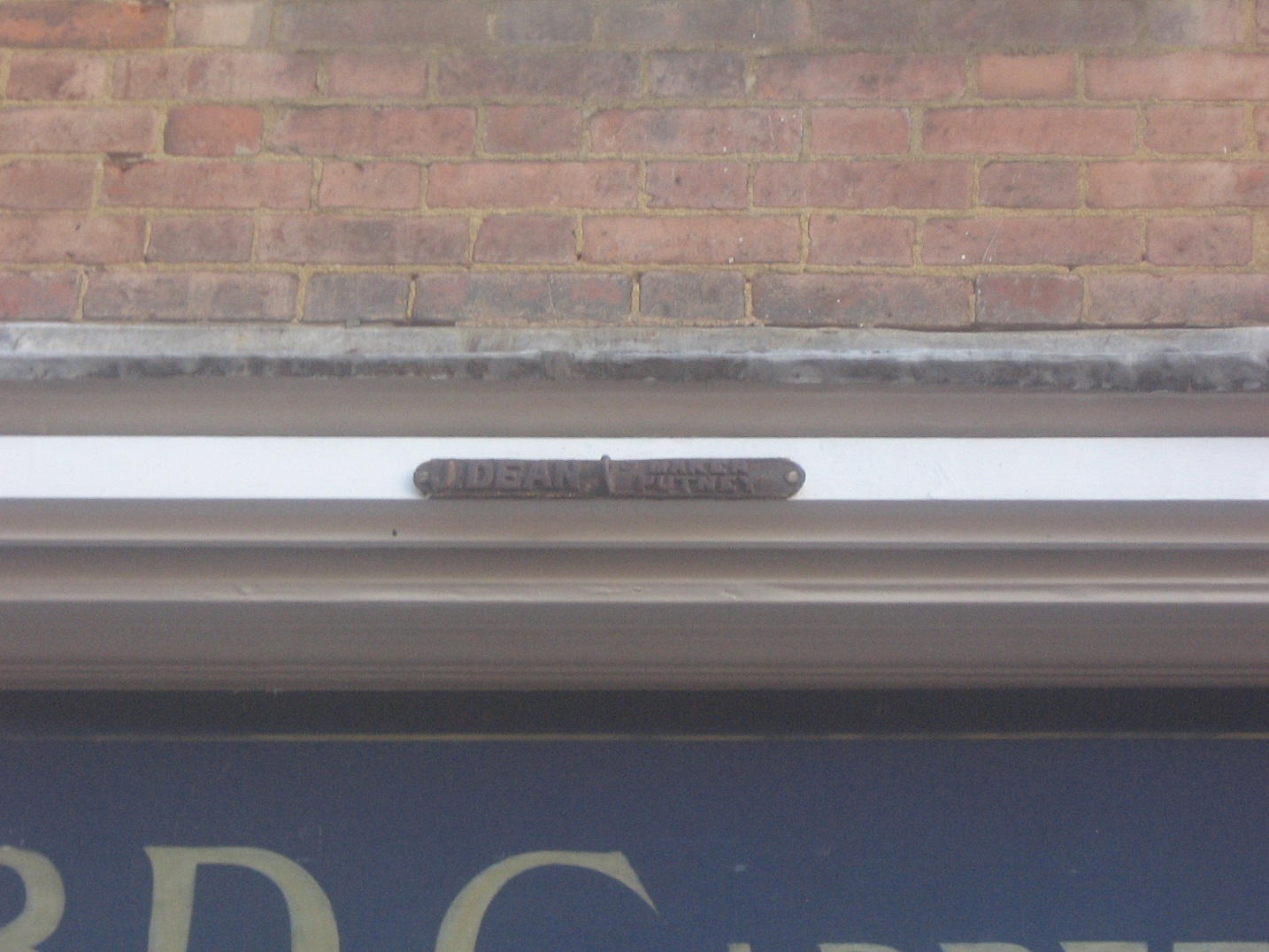
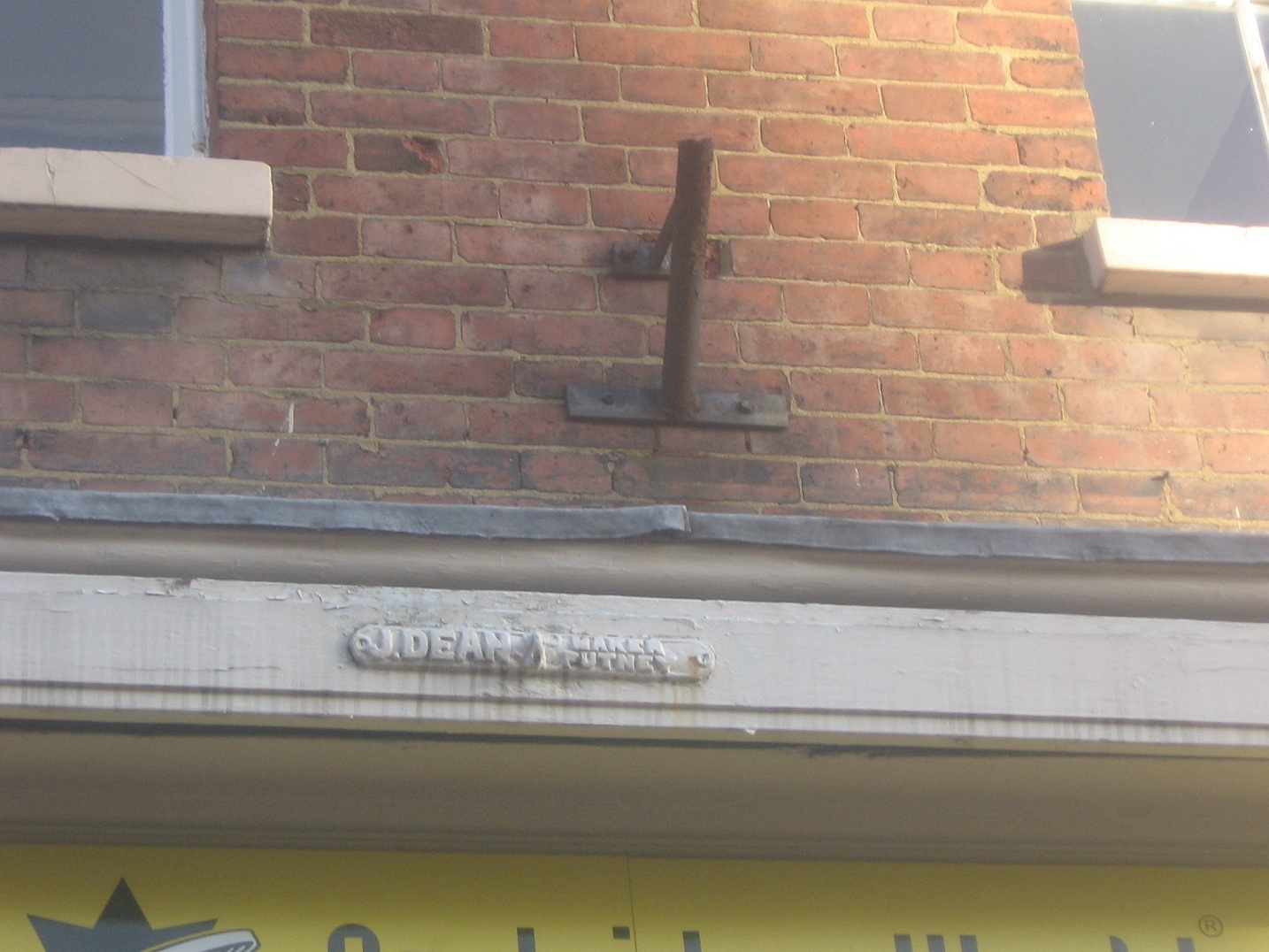
Three small signs above the shops at the Market Square end may well go unnoticed. They say ‘J Dean Putney Maker’ and have little hooks on them. A quick google search leads to the website of ‘Deans Blinds & Awnings’ established 1894 and tells how the company was started by a policeman’s son called Tom Dean, and was taken over by his brother John. It seems John Dean and subsequent generations of his family were involved in the ownership of Fulham FC as well as manufacturing blinds and awnings.


J Dean Putney


The listed buildings describes them as ‘late C19 shop fronts with bracketed cornice and canvas canopies’. Another look at these buildings and you can also see the chains attached to these awnings, which presumably must still be there, tucked away from sight. I wonder when they were rolled shut for the last time? What kind of shop was this when these canopies were added? There was a drapers & silk merchants in this area of Dam St in 1914, could this have been it?

J Dean 2 with Metal erm thing

On the second photo, there is also a metal….thing. I first came across these in Tamworth, where nearly every shop seems to have one albeit slightly newer looking.

Tamworth version of 'the metal thing'. They have lots of interesting things on buildings in Tamworth including mermaids.

Someone got in touch on flickr and suggested they were holders for flags or Christmas trees. I was in Bakewell in Derbyshire last week where they seem to be using them for the latter, as you can see here in the Matlock Mercury. Looks pretty, doesn’t it! I’m guessing the Dam St one was a flag holder but am more than happy to be proved wrong by memory or photographic evidence or just a convincing argument as to what else it might be 😉

You can also have a look at the Street View here, perhaps whilst eating a mincepie by a roaring fire (although it is out of date, as The Staffs Bookshop is now Realwoods).

Last weekend someone spotted something else interesting high up on another building in the city centre. I’m not saying anymore, as I’m hoping that they might consider doing something on this themselves. No matter how well you think you know your surroundings, there are always still things to discover. So whilst out and about shopping in the 8 (is that all!) shopping days left until Christmas try looking at Lichfield from a different angle. Who knows what you might notice…..

Edit 23/12/2011

Pat’s been on googlemaps and has spotted not only a whole load of these brackets on Tamworth St but also one actually in use outside the Scales! So I think that definitely answers this little Lichfield mystery!

Standing Stones

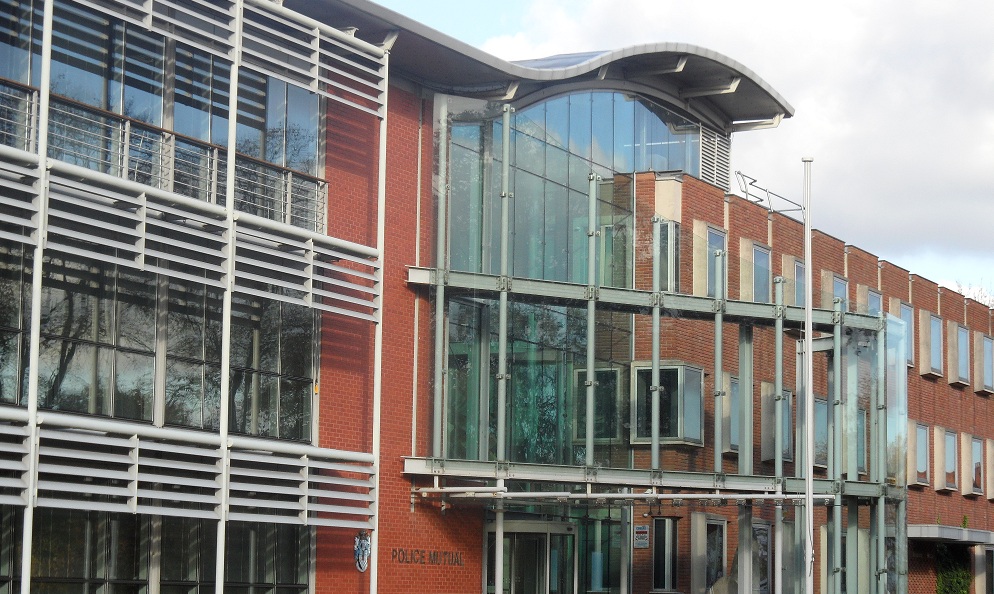
Police Mutual is on my route into central Lichfield. It’s also our spec for watching the Bower procession (from where my parents always tut about the Festival Gardens being used as a car park, but I digress…..).

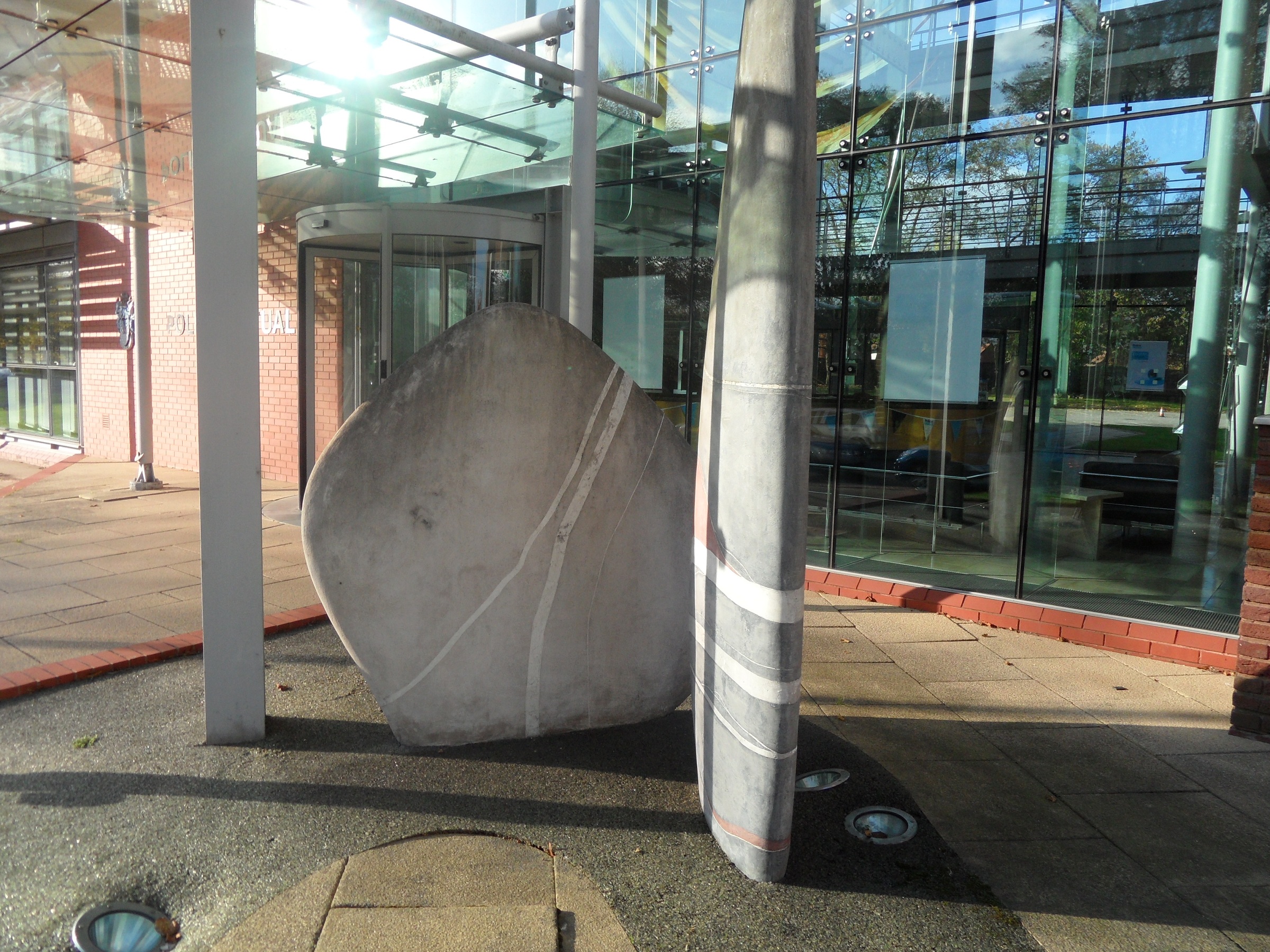
I always think of the sea when I look at the sculpture in the entrance. However, I’ve never gone up to the front door for a closer look. So whilst out for a walk on a Sunday, with the office closed, I decided to have a peep through the glass doors.

Standing Stones – Please DO NOT attempt to skim these across Minster Pool

On reflection it was probably a you had to be there moment, but at the time I was delighted to discover the stones weren’t actually behind glass. “They’re are outside! Look!”, I yelled to an unenthusiatic Mr G. I walked around the stones a couple of times, because I could! It’s fast becoming something of a cliche, but once again I found myself thinking, “All the times I’ve walked past here & I didn’t know!”. On my third or fourth lap, a man walking past gave me a bemused look (possibly thinking I’d come straight from the Queens Head) and Mr G was trying to shuffle off in the direction of Greggs. As there was no further clue to what the stones represented or their purpose,  I took a photo and followed.

Back home, I discovered that the sculpture is called ‘Standing Stones’, and is an abstract in glass fibre reinforced concrete, designed by Marcus Hole in 2000.  And the sea connection? Well,  they are supposed to be larger versions of the water-smoothed pebbles that, if you’re anything like me, you pick up on the beach for closer examination. Go and have a look at the giant Lichfield ones & see what you think….they’re outside you know!

As always, one thing leads to another, and it got me thinking more about public sculpture & art. I believe the most recent in Lichfield,  is said to be the “Formation of Poetry”, by Peter Walker (who coincidentally shares the name with the author of the PMAS book!). It was commissioned to celebrate Dr Johnson’s Tercentenary and can be found in the Tesco carpark.

The Formation of Poetry

Intriguingly though, Pat has told me about an artwork commissioned to celebrate the millenium in Lichfield, that seems to have disappeared. It looks like an angel and answers to the name ‘Vision & Youth’. Perhaps a bit of detective work is needed, which is quite appropriate as it was the Police Mutual book which started all this off 😉

Sources:

Public Sculpture of Staffordshire & the Black Country – George T Noszlopy & Fiona Waterhouse

http://www.malvern-net.co.uk/mal-net/m_biznes/carlytinkler/news/2000_12.htm

http://52weeksofart.com/main.php/2010/11/21/the-formation-of-poetry-model

Mutual Interest

Pat (who knows so much about Lichfield, that I think he should start his own blog!) was on holiday in Wales when he spotted a book about Lichfield’s very own Police Mutual Assurance Society (PMAS). The history of the friendly society was written by Peter N Walker, whose ‘Constable’ books published under the pen name Nicholas Rhea were made into the Heartbeat series. Pat very generously bought the book in the hope that it would be of interest, which it certainly has been.

PMAS, founded in 1866 is one of Lichfield’s biggest employers. The HQ, was built on former gasworks on Queen St by the Linford group, which up until its collapse in October this year was also one of Lichfield’s largest employers. Work started on the site in 1969, after the society outgrew its premises in Greenfield Crescent, Edgbaston, Birmingham where it had been since 1954.

The original part of the building was opened in 1970.

The orginal part of the building was opened in March 1970 by Princess Alexandra.  According to the Mercury, not many people knew that the building was to be called ‘Alexandra House’ until the princess arrived. Possibly today, not many people know why it’s called ‘Alexandra House’. However, on that cold spring day in Lichfield, there was much excitement about the Royal Visit from Princess Happiness as the Lichfield Mercury  christened her (which to be fair is catchier than her full title Her Royal Highness Princess Alexandra Helen Elizabeth Olga Christabel, The Honourable Lady Ogilvy, Royal Lady of the Most Noble Order of the Garter, Dame Grand Cross of the Royal Victorian Order). There was a band from the Junior Soldiers Company of Whittington Barracks, a marquee erected behind the new building and 2,000 cheering school children (who would be round about 50 now? Wonder if anyone remembers it?).

The building won praise from Lichfield Civic Society who crowned it ‘Best New Building’ 1972 saying the bold design had produced a building which invited entry and which looks as if something is happening inside. I think that’s interesting because I think that this kind of architecture is the kind most people would turn their noses up at today….

PMAS HQ was extended in 1990 & 2000

The PMAS HQ was extended in 1990 and again in 2000.  In 1990, originals from the Ladybird book ‘The Policeman’ were acquired and hung in the boardroom.

Mr Fabricant, MP for Lichfield,  once said in an interview with the Mercury, “I believe one of the most interesting modern buildings in the region is the Police Mutual building in Queen Street in Lichfield. Its modern extension is elegant and blends in well with its surroundings”.   I have to agree.  What will people think of it in years to come though?

So following on from this I’ve had a few rambling thoughts for another day….
I’m not ready to explore this just yet but at some point, I really would like to consider this idea of ‘future heritage’ and how opinions will shift on what is and what isn’t valuable & attractive.  Also, even if it isn’t ancient, pretty, haunted or associated with a famous inhabitant, I do think the history of anywhere people come together, like a workplace, is really important. Another interesting idea to explore is the impact of a workplace on a community? For example, when PMAS moved to Lichfield in 1954, many people apparently sold up in Brum & moved nearer to the new HQ. Also, how has the closure of Linford affected the city? I saw on twitter the other day that Wolverhampton Archives currently have an interesting project about local businesses in that area called ‘Taking Account of our Past’, which is definitely worth a look.

As ever, if any one has any thoughts, questions or comments on any of the above, I’d love to hear them 🙂 I do have a little bit more to add on PMAS HQ in relation to the stones at the entrance, which always remind me of the sea…..

Sources:

The Story of the Police Mutual Assurance Society by Peter N Walker


A Cock & Bull Story


Somehow I’d not spotted these cockerels on Tamworth St before! The cockerels (or chickens as I originally thought they were!) reminded me of some carved cow heads that BrownhillsBob spotted on an old Lichfield butchers shop a few months previous (the old Savers shop) and posted on his great #365daysofbiking blog .

The keystone says that the building was built in 1865.  16 years later the 1881 census for Tamworth St shows the following household:

Name  Relation Marital Status Gender Age Birthplace Occupation Disability

 Henry WELCH Head M Male 54 Rugeley, Stafford, England Poulterer  

 Elizabeth WELCH Wife M Female 56 Harefield, Middlesex, England    

 Louisa WELCH Dau U Female 25 Lichfield School Mistress  

 Arthur WELCH Son U Male 20 Lichfield Poulterers Assistant  

 Alice Mary WELCH Dau U Female 19 Lichfield Dressmaker  

 Elizabeth WELCH Dau U Female 17 Lichfield Pupil Teacher  

 Mary Ann WELCH Dau U Female 15 Lichfield Pupil Teacher  

A poultry dealer on Tamworth St! I think there’s a good chance Mr Henry Welch and his family may have been the occupants of this building? By the way, the rear of the building is also interesting as there is a cart entrance.

Roger Jones (@ziksby on Twitter) very kindly did a bit of investigating on the great historical directories website but could only find general butchers on Tamworth St. However, Henry Welch does turn up as a ‘grocer & poulterer’ in an 1870 directory on Market St, Lichfield. So, it seems at some point between then and 1881 he moved the business to Tamworth St. Did he add the cockerels at this time?

By coincidence, earlier that day I had a look at the mosaic on the landing at Lichfield Library.

Information alongside says:

“This mosaic was rescued by the Lichfield Civic Society in 1985 from the stallriser of 13 Tamworth St. It was restored by Adam Cecconi of Cecconi & Son, Small Heath Birmingham with monies granted by the Swinfen Broun Charitable Trust and is on loan to the college.”

I also found a couple of old adverts for butchers on Tamworth St in a January 1891 edition of the Lichfield Mercury.

HP Craddock Family Butcher, Tamworth St, Lichfield
Fresh Meat daily. Pickled tongue always on hand.

Quantrills Est. 1872
2 Tamworth St, Lichfield
Pork pie & sausage establishment. A great display of hams, porkpies & sausages which surpass any in the city for quality & cheapness. Pure leaf lard, pickled pork etc.
All orders promptly attended to.

Richard Bratby (@RichardBratby) also got in touch via twitter to say that he had seen a photograph of Quantrills and it was on the corner of Bakers Lane, but demolished when the Three Spires shopping centre was built. Richard also said that the photograph is in Heritage Centre collection, so I’ll have to pay them a visit.

I think it would be really interesting to see if any of the other shopfronts & buildings in Lichfield City centre still have clues to the trades that were carried on in them (I think I already found an old branch of Burtons!). If anyone does find any, please get in touch.


The Cathedral Spire – A Hatchett Job!

A couple of weeks ago, I was contacted by Vickie Sutton. Vickie is from a family with some amazing connections to Lichfield. She believes it’s vital that the wonderful memories and stories that have been passed down to her are recorded, and shared with other people, so that they don’t get lost and forgotten.

A caricature of Henry Hatchett by one of his colleagues. (1)

One of the first stories Vickie shared with me is about her great grandfather Henry Hatchett. Henry began working for Bridgemans of Lichfield in the 1890s. Employed as a as a labourer, he mastered the arts of casting, cleaning stone and marble.  Henry was periodically sent to Edinburgh to maintain the Last Supper sculpture (based on the painting by Da Vinci) in St Cuthbert’s Church, and as a result, his colleagues gave him the nickname ‘MacHatchett’! (1)Vickie knew that Henry had been involved in restoring the central spire at Lichfield Cathedral and together, we set out to discover the full story…..


 Lichfield is of course famous for having three spires but it seems that the central spire has had all sorts of problems! It was destroyed in 1646 during the civil war and was restored in 1666. Between 1788 and 1795 it was restored again with further work being carried out in 1892/3.

In 1949 there was trouble with the spire again. The Dean reported that in high wind, the ball and cross were moving. An architect, Mr George Pace, was consulted and gave a verdict that came as a shock to the Dean. Due to corrosion of the iron anchors and cramps, and weathering of the mortar, the spire was in such bad condition that the last 11 feet could be shook by hand. It would need to be repaired immediately. Mr Pace later described how in his view, a delay in the work could have resulted in the spire crashing through the cathedral roof. More than 20ft of the spire had to be pulled down and rebuilt. The Dean was unwilling to finance the work with a bank loan believing that it would have been ‘lazy, and stupid, and unsound finance’ and turned instead to the public, launching the ‘Lichfield Spire Repair Fund’. As Christmas 1949 drew near, the Dean urged people donate suggesting it would be a ‘glorious Christmas present’ for the Cathedral. Eventually, the cost of the work amounted to more than £9,000 and the amount was raised by people, not just from Lichfield but from all over the country.(2)

Twenty-two stone courses were removed from the spire to Bridgeman’s premises on Quonians Lane, where they were either replaced or redressed.

A new cross was designed by the architect George Pace, and incorporated the Jerusalem motif, found on the Cathedral Arms. The ball (2 foot in diameter) was taken down and was found to contain several rolls of parchment and a ½ oz of twist (tobacco) and the remains of half a pint of beer! One of the parchments told how the ball and cross had been taken down for repair and re-gilded on 12th September 1893 and was signed by the Rt Rev The Honourable Augustus Legge. The second parchment had a list of those holding civic office at the time and also the signatures of the men engaged in the work. It was on this list that the name Henry Hatchett, labourer appeared. (3)

The scrolls from 1893 were placed in the archives and replaced with a new scroll inscribed with the names of those holding civic office in 1949/50 and once again, the names of those carrying out the work. The ball was re-gilded with two layers of the finest double English gold leaf. This was carried out in situ by Mr George Kingsland from Birmingham. On 19th June 1950, a celebratory meal was held in the Swan Hotel by the Dean & Chapter, to which everyone involved in the work on the spire was invited. Vickie’s family remember there being some sort of grand unveiling of the new cross and ball, but I haven’t been able to locate any details regarding this yet. (4)

I love this story as it shows that even the most well-known of our buildings can still have secrets! I wonder if the addition of the beer and tobacco was an authorised one? Also, does anyone know where the old parchements are stored?

I really want to thank Vickie for sharing this. We are working on some more of her brilliant family stories at the moment, but in the meantime check out this link and enjoy some of the views from that troublesome central spire.

Sources

1 & 4 The Annals of a Century: Bridgemans of Lichfield 1878 – 1978 by O Keyte

2 & 3Lichfield Mercury Archives accessed at Lichfield Record Office