Paths that Cross

On my way to pick up some tickets from the Garrick the other day, I passed Lichfield Library. I couldn’t resist popping in to have a quick peek at the local history section to see if they had any more information on the history on the grammar school,  following on from Gareth’s graffiti photographs.  (They did. A whole book in fact and I’ve updated the post accordingly!). So inevitably, my quick peek turned into two hours.

There was an added bonus to the visit too. Anyone who read my Cross City and Cross County posts will know that I was hoping there would be an ancient cross somewhere in Lichfield. Well, I finally found one! Actually that’s a fib. What I found is a photograph in a book of archaeologists finding one. A decorated cross shaft was discovered built into the foundations of the north wall of the nave of Lichfield Cathedral. It’s thought to be Saxon or Saxo-Norman, and could be a surviving remnant of the earlier church on the site. I wish I could share a photograph here, but all I can do is tell you that it’s on plate 1 in the ‘South Staffordshire Archaeological and Historical Society Transactions 1980-1981 Volume XXII’ book, on the local history shelves at the library!.

I have a confession to make. Generally, I’ve thought that places like the Cathedral are so well known, there’s nothing much left to say. Yet, now I recognise that this was wrong. Whether it’s the magnificent discovery of the Lichfield Angel in 2003, the downright curious tale of a live frog embedded in one of the stones used to repair the Cathedral during the restoration*, or rolls of parchment, beer and tobacco found in the gilded balls on the top of the central spire – the Cathedral, as everywhere, is made of stories, as much as it is made of stone. There are those we know well, those we don’t, and those that haven’t even been told yet.  We need to make sure we  are listening, just as Gareth was when he discovered and questioned that graffiti on the walls of the old Grammar school.

*I’m not making this up…..but someone else may well have been!

Making a Mark

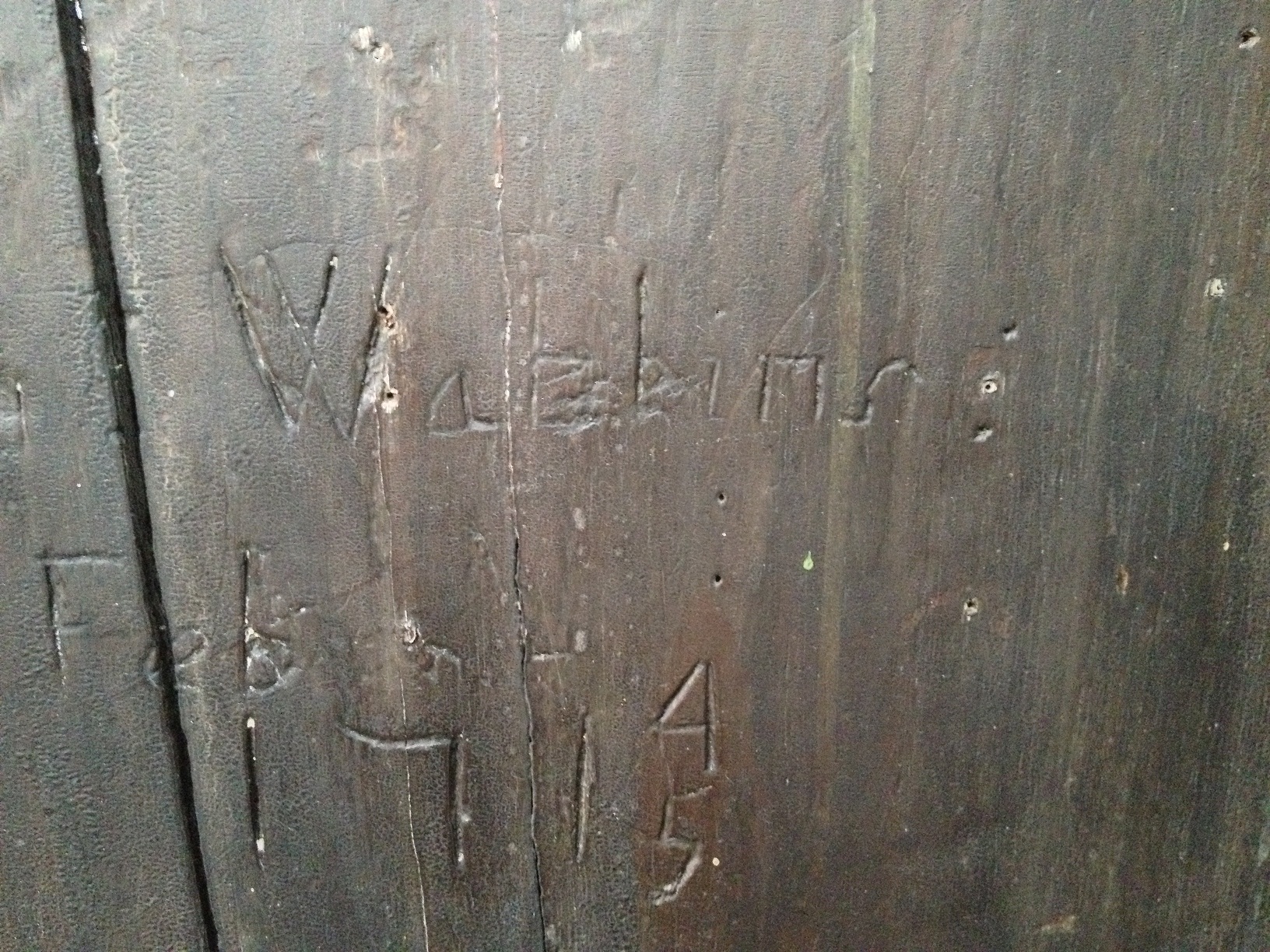
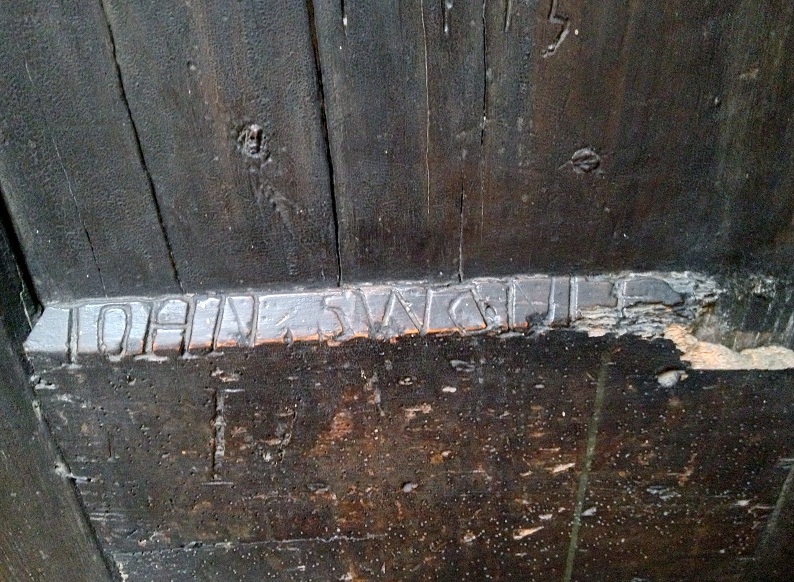
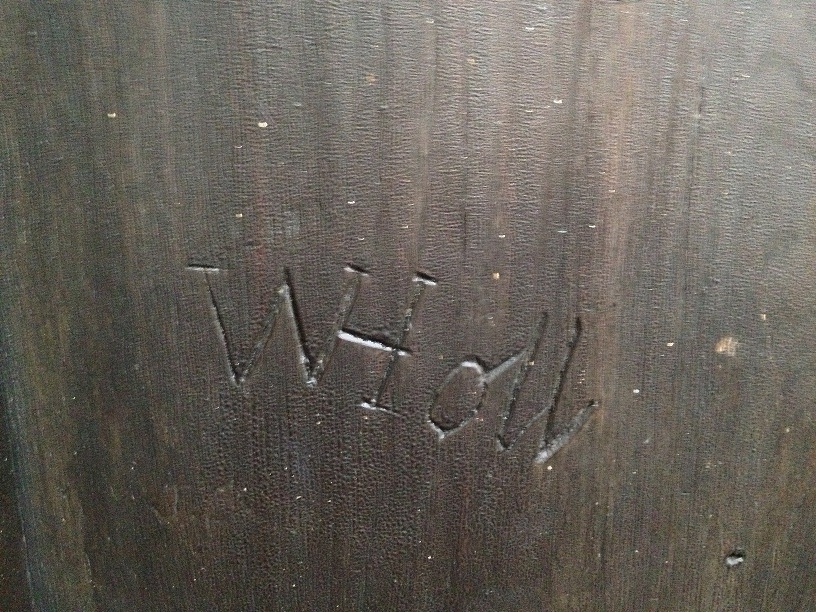
I’m pleased to say that Gareth took my hint and very kindly sent me some great photographs of the names carved into old attic doors in the Lichfield District Council office building on St John St.  This part of the offices was the old school master’s house, dating back to 1682 and it’s thought the attic was used as a dormitory for boarders at the old grammar school.

One of the carvings seems to be dated 1715. If authentic, it means this door could be around 300 years old, possibly even original? Also there’s a rogue 4 nearby, is this a red herring or something to do with the change in calendar from Julian to Gregorian? This is about as clear as a pint of guinness to me, so any possible explanation would be welcomed!


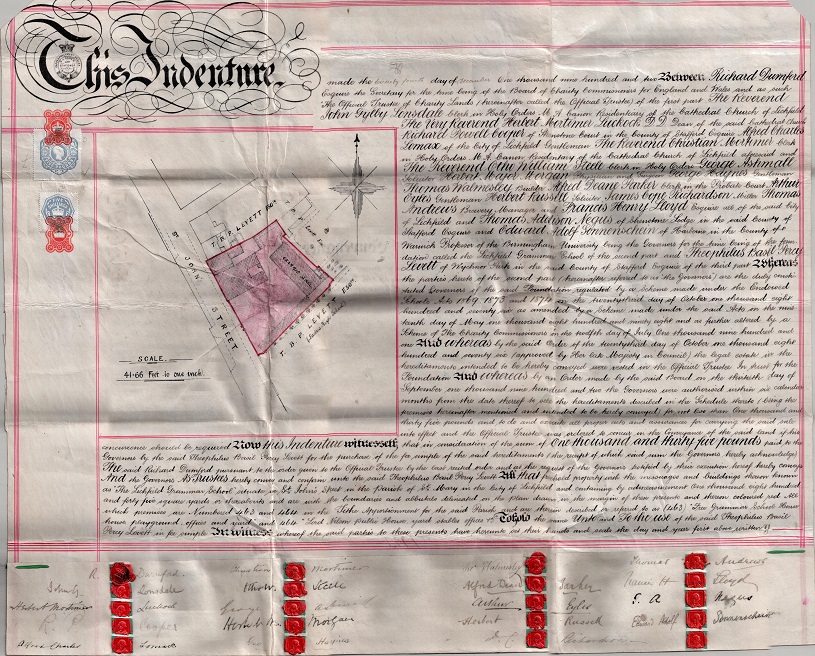
Gareth also sent me a scan of a document – an indenture outlining the sale of the school buildings to Theophilus Basil Percy Levett, dated Christmas Eve 1902, and signed by the the school’s governors. It’s a fascinating document, there’s  information about the buildings,  the stamp of the Birmingham Paper and Parchment dealer, the seals and the names and professions of the governors (some are more familiar than others -Lonsdale, Cooper, Lomax, Ashmall and Andrews stand out for me).   In 1903 the school moved from St John St to Upper St John’s St, merging with Kingshill Secondary Modern in 1971, to form the present King Edward VI school.

Gareth’s photographs and images from the last few days are fascinating, but what I also think is interesting is the contrast.  The inky signatures of men who have already made their way in the world, compared with names carved into wood and brick by children starting out in life.  And what about the contrast of these grammar school boys with their peers?  Whilst they may or may not have gone on to fulfil their potential (see the comments on my previous post)  what of those other children that never even had the opportunity?

A couple of weeks ago, I was listening to the headteachers of our state secondary schools here in Lichfield talk about what their school offered to students. Each of them spoke convincingly about their commitment to giving each and every pupil in their care, regardless of ability or background, the opportunity to reach their potential in life.   I found myself moved by their words. This is how it should be.

Edit 2/11/2012

Yesterday at Lichfield Library, I found the book ‘A Short History of Lichfield Grammar School’ written by Percy Laithwaite in 1925. Mr Laithwaite refers to the graffiti, and I suspect this may be the original source (I found out about the existence of the graffiti on a Lichfield District Council document. I also saw it referenced in Howard Clayton’s Coaching City, whilst I was at the library yesterday). As well as providing small biographies of some of the masters and pupils of the school,  Mr Laithwaite also mentions that wooden panelling from the old school room is now used in the council offices, and that an oak desk from the school room was used as a locker at Bridgeman’s on Quonians Lane. If we could track that down, that’d be something!

Footnote:


I’m really pleased to say that Gareth Thomas who provided me with the graffiti photos and the indenture document, as well as other information over the last weeks has started his own blog http://lichfield.keepsblogging.com/ Gareth’s going to be sharing the things he discovers and judging by the gems he’s come up with so far, it’s going to a great read for those of us who enjoy exploring the history of this old city.

Sources:

http://www.lichfielddc.gov.uk/info/100004/council_and_democracy/588/history_of_district_council_house/2

http://www.kingedwardvi-lichfield.staffs.sch.uk/history.html

https://wiki.leeds.ac.uk/index.php/HIST2530_Building_the_literate_nation:_the_historical_debate#Literacy_Rates

Cross County

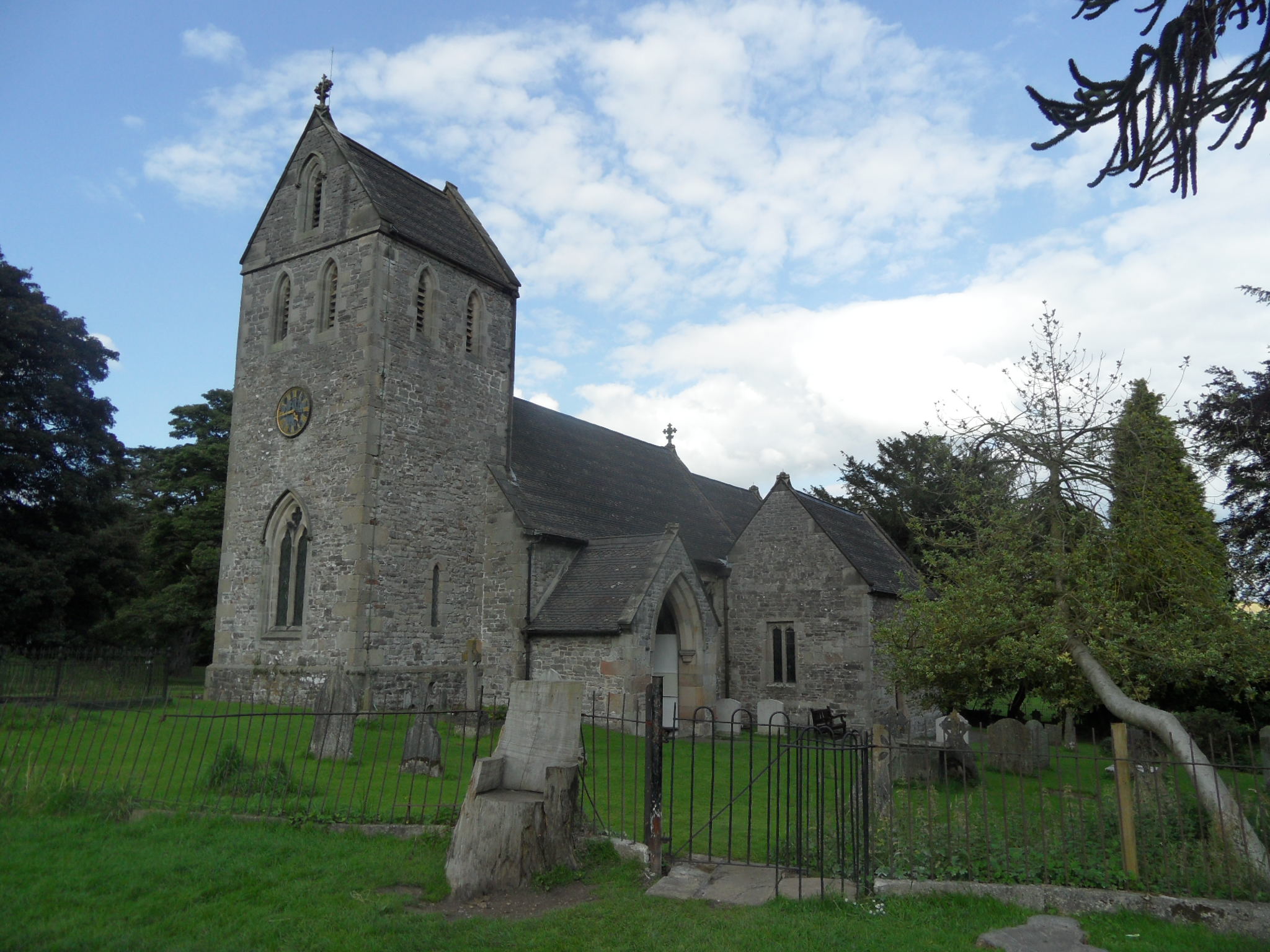
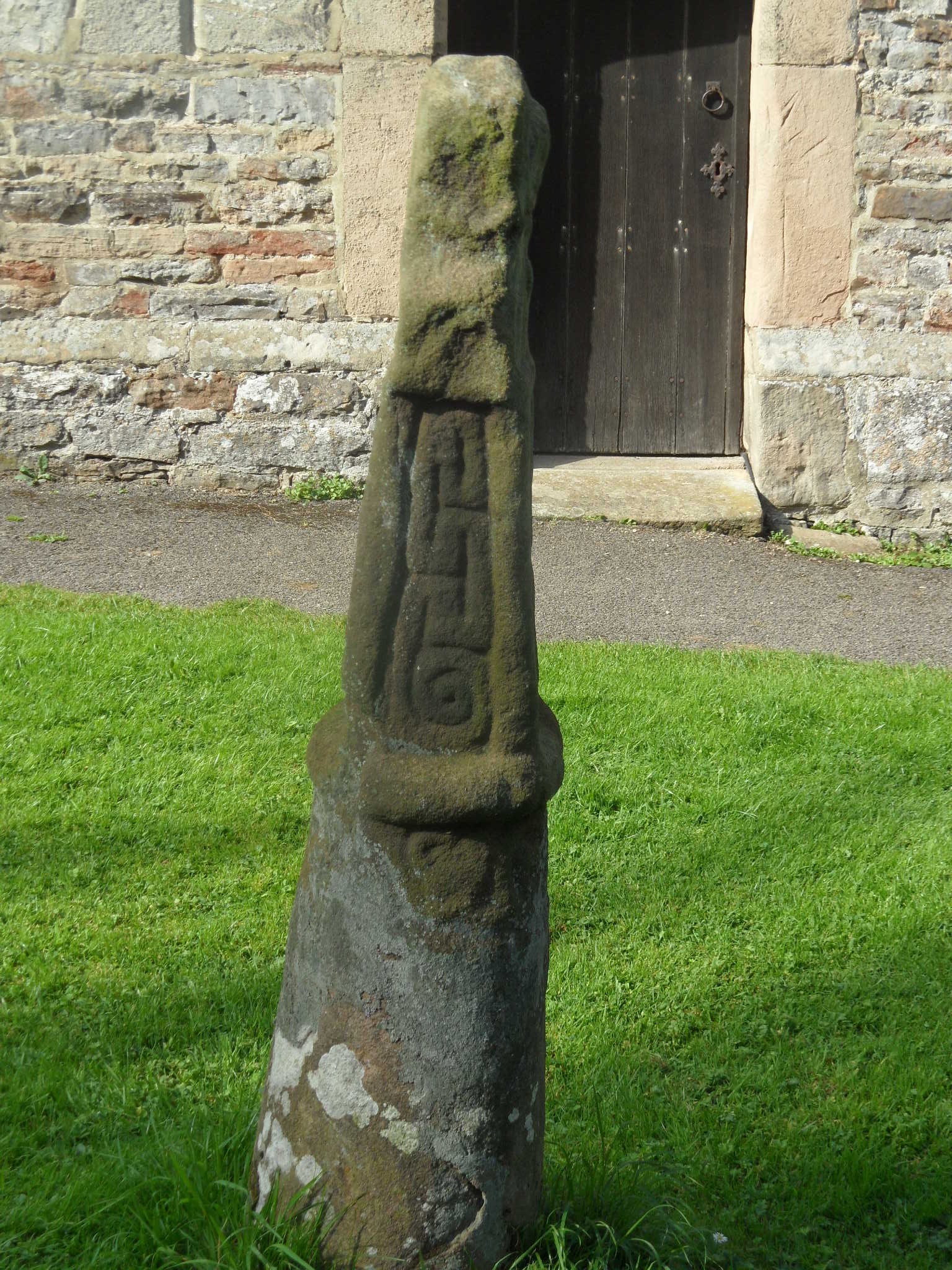
Looking for ancient crosses in Lichfield, has so far lead only to hints of their existence – a one line reference in an old book here, a placename there. Nothing concrete (or should I say stone?).  So imagine how happy I was when I visited Ilam Park yesterday and found that were two thought to date back to the 10thc standing in the churchyard with a third shaft incorporated into the church wall…..

Church of the Holy Cross, Ilam, Staffs


…..and imagine how much I kicked myself when I got home and found out there was yet another stone, known as ‘The Battle Stone’, located in the grounds of Ilam Hall that I had missed!

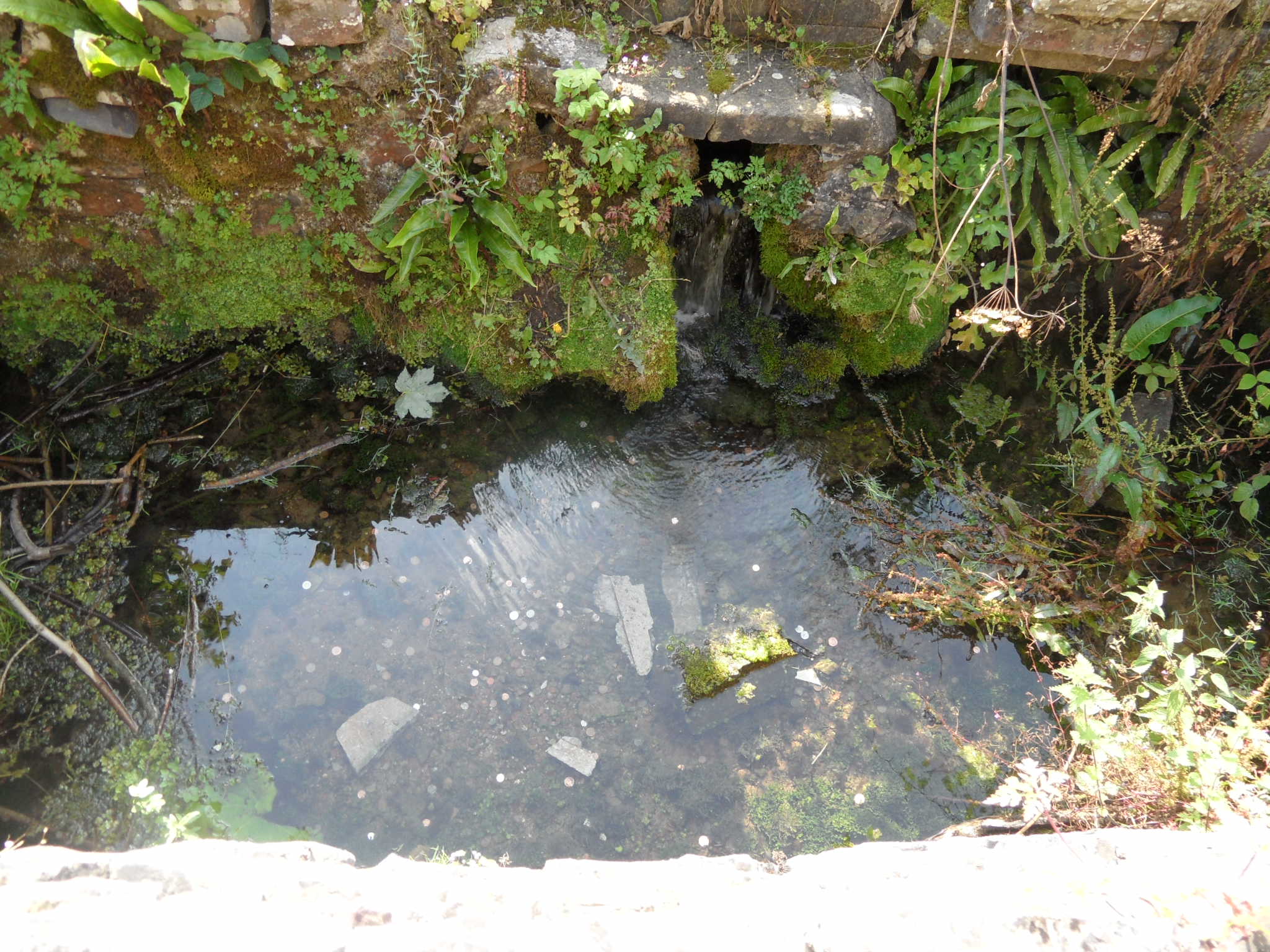
However, as a consolation, I learnt at home that this spring near to the church is thought by some to be St Bertram’s Well (although others place this on a hillside near to the village).

St Bertram’s Well?

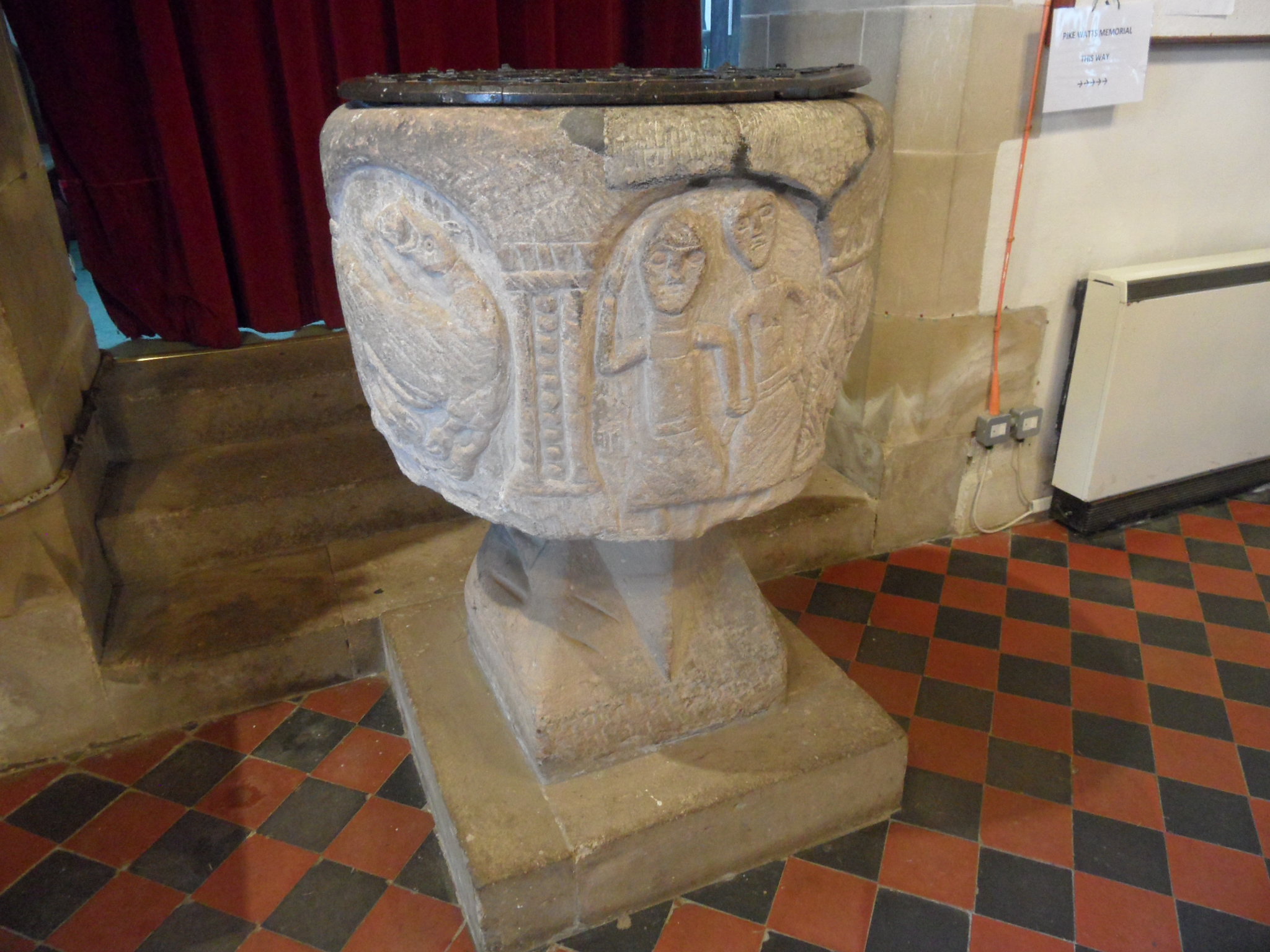
The Shrine of St Bertram (also known as St Bertelin or maybe Beorhthelm of Stafford) is inside the church. As you might expect, there is more than one account of St Bertram’s life. The most well known version seems to be the tragic story that he was a Mercian Prince whose wife gave birth to a child in a forest. The wife and baby were killed by wolves and St Bertram became a hermit near to Ilam, It’s thought this story might be represented on the churches font, which dates back to around the 12thc.

You can decide for yourself, if you look at this website on Romanesque sculpture, which gives a detailed description of the font, together with photos.

However, Stafford Borough Council have this version on their website, which doesn’t feature the tragic part of the legend.

The legend of St Bertelin derives from the 14th century account of him by Capgrave in his ‘Nova Legenda Anglie’, retold by Dr Robert Plot in his ‘Natural History of Staffordshire’ (1686). He is reputed to have been the son of the Mercian prince, the friend and disciple of St Guthlac who, after St Guthlac’s death c 700, continued his holy vocation on the islet of Betheney now Stafford. Here, he remained until forced to retreat from the ill-will of jealous detractors, when he repaired to Ilam, in Dovedale, Derbyshire where ultimately he died. His burial place in Ilam church was once a place of pilgrimage.

His burial place still seems to be a place where people come, not just seeking out history like me, but for spiritual reasons. As you can see from the photo of the shrine, prayers (I didn’t read them) and candles are still left there.

I have found a copy of the ‘Nova Legenda Anglie’, but as my Latin only stretched to ‘Caecilius est pater’, I need a bit of time alone with google translate.  So, I’ll leave the legend of St Bertram/Bertelin there for now other than to say that it’s believed that the remains of St Bertelin’s chapel in Stafford were excavated in the 1950s and they discovered part of a 1,000 year old cross. And this one is made of wood!

Ilam, Stafford and I’ve seen references to existing crosses in Wolverhampton, Leek, Chebsey (between Eccleshall & Stafford), amongst other places. With the discovery of the ‘Battlestone’ in Ilam (the one that I missed!) in the foundations of a cottage, during a restoration in 1840, I’m still clinging to the hope that at least a fragment of one survives somewhere in Lichfield!

Sources:

http://www.heritagegateway.org.uk/gateway/

http://list.english-heritage.org.uk/ (Entry numbers 1038113, 1012654, 1012653,

Corpus of Romanesque Sculpture in Britain & Island http://www.crsbi.ac.uk/index.html

http://www.geograph.org.uk/photo/705619

http://www.megalithic.co.uk/ (St Bertram’s Well http://www.megalithic.co.uk/article.php?sid=14731)

http://www.staffordbc.gov.uk/in-touch-with-the-past

Rolling in the Shallow

One of my absolute favourite things in a landscape is water – waterfalls, oceans, lakes, canals.  All wonderful.  Here, in Leomansley we’ve got a brook and I love that too.

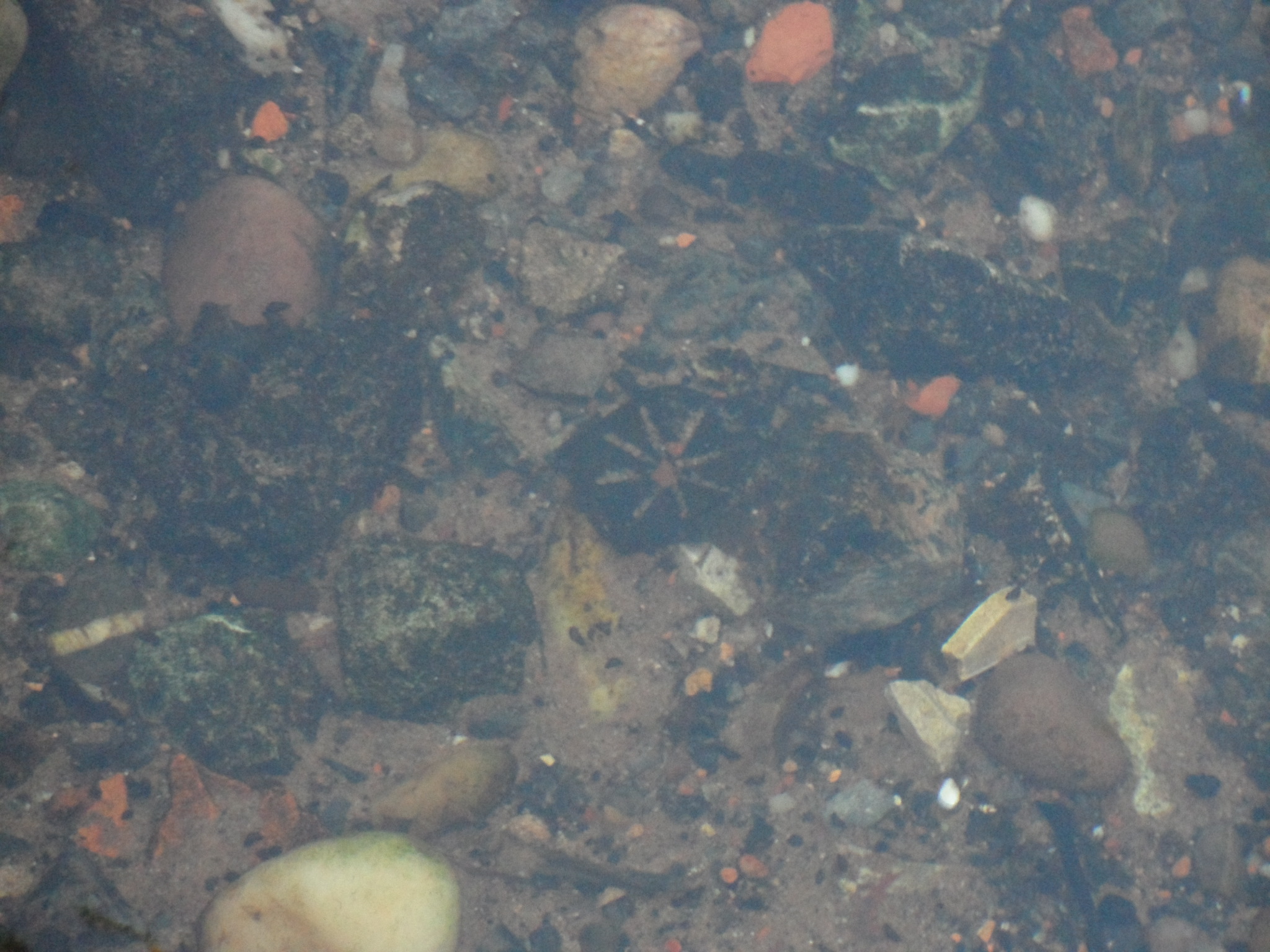
Two days ago I stopped and paused at a small bridge that crosses over Leomansley Brook. It was flowing more than usual, with little fishes darting about in the clear water. I would have gone home happy just having seen the fish but then as I watched them, something else caught my eye.

It looks like a stone with a star etched on to it. Unfortunately, as well as raising the water level, the rain has also raised the nettles and so I couldn’t get down for a closer look. I went back the following day with a fishing net and my Mum but the net was far too short and my Mum wasn’t game enough to take on the stingers either! And so there it remains, still in the brook, where it may have been for hundreds or years….or since last week! I took another photo and it looked a bit different. (This time I noticed a big nail a little further upstream too).

What is it and how or why does it have those markings? Is it even a stone? I would love to hear any theories anyone has!

A little later I’m going to write up a post about another little mystery around these parts. This and the stone might not be anything at all, but I actually don’t think that matters. What I think does matter is getting out there and looking, thinking, sharing and most importantly enjoying what’s around you.

Statuesque

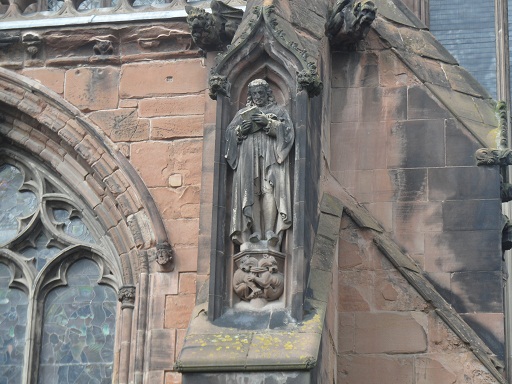
Walking home last Monday I took a detour past the Cathedral to have another look for the remaining five original, medieval statues.  I was pretty sure that I’d found two on the northwest tower –  one nameless woman next to Eve and another to the left of Deborah. The Victorian statues tend to have names on their pedestals. There’s an old photograph of the western front of the Cathedral pre-restoration on the English Heritage Viewfinder website, which you can see here. It shows the front looking strangely bare – above the row of kings only the niches containing the few remaining original statues are filled.

Medieval statue?, Deborah, Rachel, Rebekah, Sarah, Medieval statue?, Eve

According to a comment someone left on here, there are other statues on the other side of the north west tower. Unfortunately, my timing wasn’t great as someone was cutting the grass alongside the tower and a Midlands Today van had not long pulled up nearby and were making preparations to film (I later found out they were there to cover the Olympic Torch route story). As I didn’t fancy making a cameo appearance, dodging the mower in the background of a news report, I took a hasty few photos of the tower and carried on around the back of the Cathedral.  Stupidly, I didn’t check them before I got home and it’s not easy to make out much.  Another trip is in order….

Affix quality control sticker here

The medieval statue hunt continued as I walked around, in case one had sneaked in somewhere other than the northwest tower. I found Christopher Wren, Elias Ashmole and Dr Johnson amongst others along the way.

“The world is not yet exhausted; let me see something tomorrow which I never saw before” said Dr Johnson.

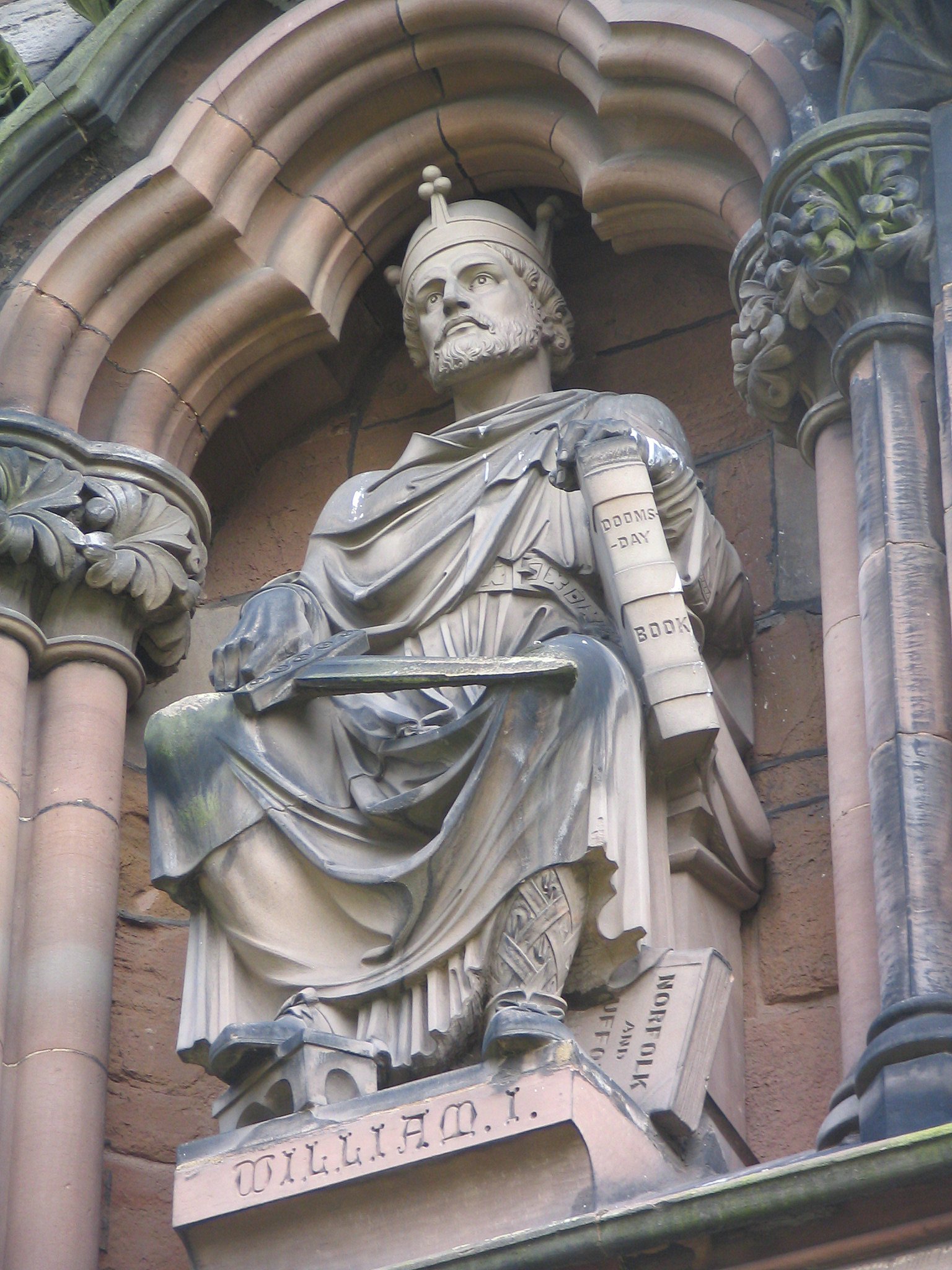
Most of the statues are accompanied by something symbolic – Johnson of course has his dictionary.  It’s the same for the kings (e.g. William the Conqueror holds the Domesday Book) and the biblical characters (I knew nothing about Deborah, but according to wikipedia she was a prophet and a judge and delivered her verdicts near a palm tree which explains why there’s one behind her statue).  I was wondering about Eve? Surely that’s an apple near her foot but what is she holding in her hand?  Imagine if you someone was to create a statue of you and they had to sum up your life with an object or two!

Image taken from Wikipedia

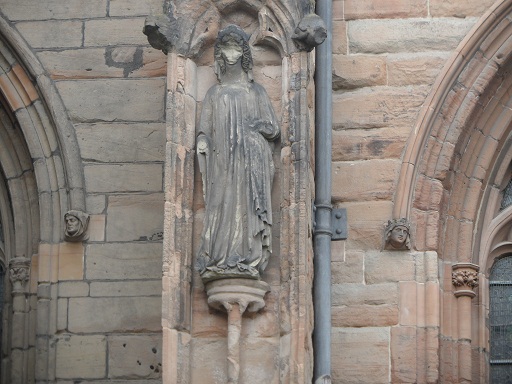
Just past Dr Johnson and his big, papery thing is another statue.  She has no name and as far as I can see there is no clue to her identity. I’m speculating, but is this one of the many statues destroyed or defaced by the parliamentary troops during the Civil War?   Most of the other damaged statues were removed – where did they end up I wonder? I came across some great photos of a figure of Christ on Aidan McRae Thomson’s flickrstream at a church in Swynnerton, Staffordshire together with an interesting theory that the statue originated from Lichfield Cathedral. If anyone else has any theories or even evidence of where the statues ended up, I’d love to hear them!

I have to confess that for me, sometimes the Cathedral is just there, part of the scenery as I go about the city. However, there are other times when, either by chance (catching the light a certain way) or by design (medieval statue hunting), the Cathedral commands my full attention and once again, I am reminded of what an incredible building this is, and the skill and talent of the craftspeople who made it so.

Monumental Task

I’ve used this database created by the Public Monuments & Sculptures Association a lot. It’s a national recording project that aims to collect information on all British public sculpture and monuments, whether historic or contemporary.

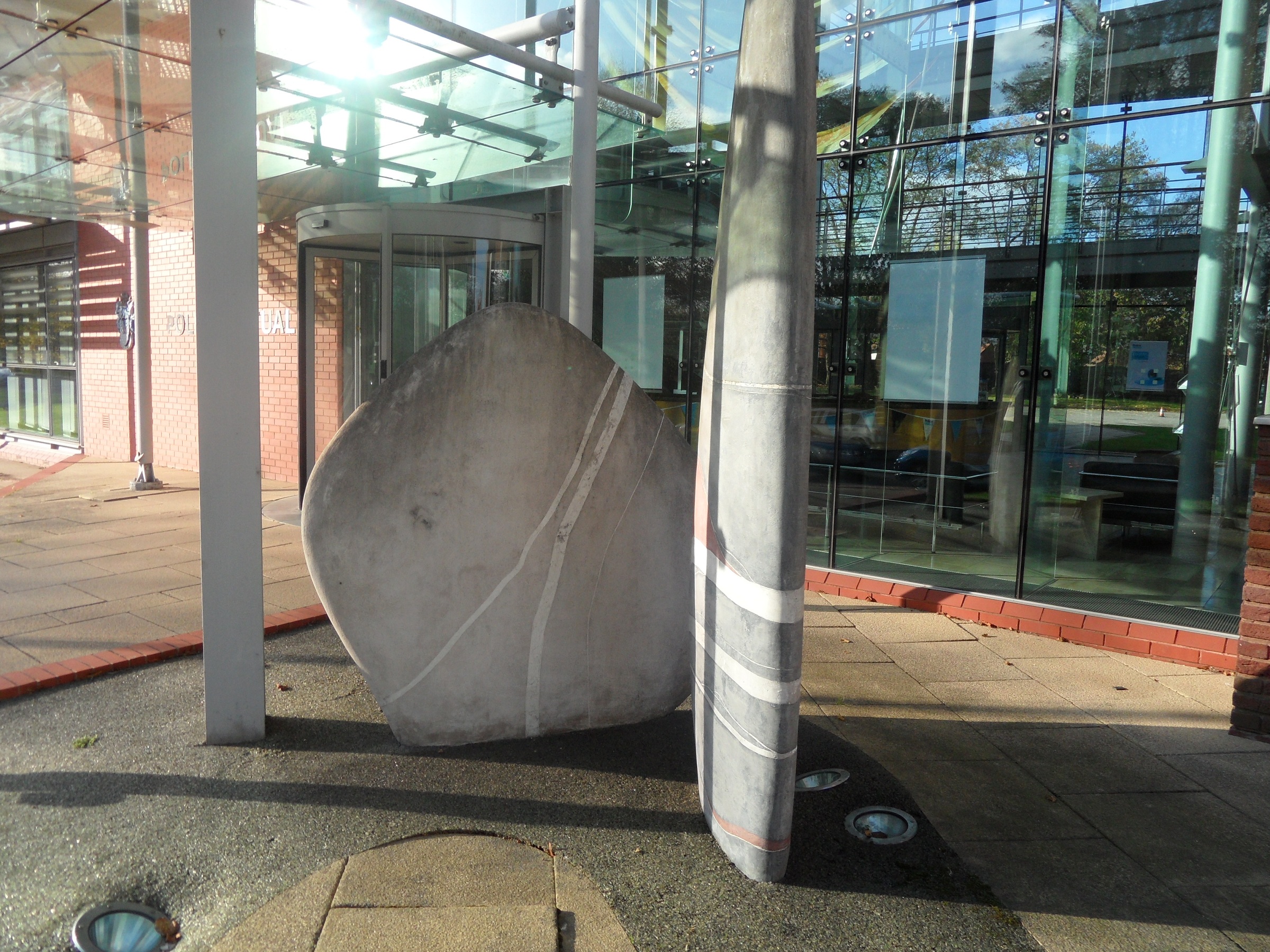
As well as including Lichfield’s usual suspects, the database also features some of our less obvious works such as the Calming Stone in Beacon Park, the etched glass in the Library foyer, the facade of Boots in Tamworth St and the Standing Stones I formed a bit of an attachment to back in November 2011.


Facade of Boots created 1908. Decorations include an owl, a beehive and a piper. There must have been a good reason for this motley crew!

They're outside!


Not everything on the list is still around – there’s an entry for Dean Denton’s Market Cross which was pulled down in 1849. There are also entries on the database that don’t seem to have made it as fully fledged pieces of Lichfield public sculpture.  Since Pat brought it to our attention back in November 2011 an entry has now appeared on the database about the Vision & Youth sculpture.

As the association says,  ‘The database is an excellent resource for students & researchers, conservators, local historians, art buffs, enthusiasts, genealogists and all who want to know more about public sculpture: statues; obelisks; columns; sculptures; installations; fountains; follies; commemorative clocks; wayside markers; and towers – from the Stuart era to the present day.’ I think it’s fantastic and you can read more about future plans & how you can get involved in contributing information here.

One to be added to the database in the future is the proposed statue of Erasmus Darwin at Cathedral Walk (I think there’s another one planned for Beacon Park too). I’ve just been reading a few of the comments about this on the S106 document. One person said that they were in favour of the statue, as Darwin is a local hero we should be proud of. However, the comment goes on to say that Lichfield should also celebrate more contemporary heroes relevant to young people and also more women ‘not just old blokes’.* I think this is potentially a whole new blog post but this is a really interesting point. Who or what should we be commemorating with our future public art & monuments?  

*I remember when I was a young person. A young person who used to go out on a Saturday night instead of sitting in reading the comments on S106 consultations 😉

Written in Stone

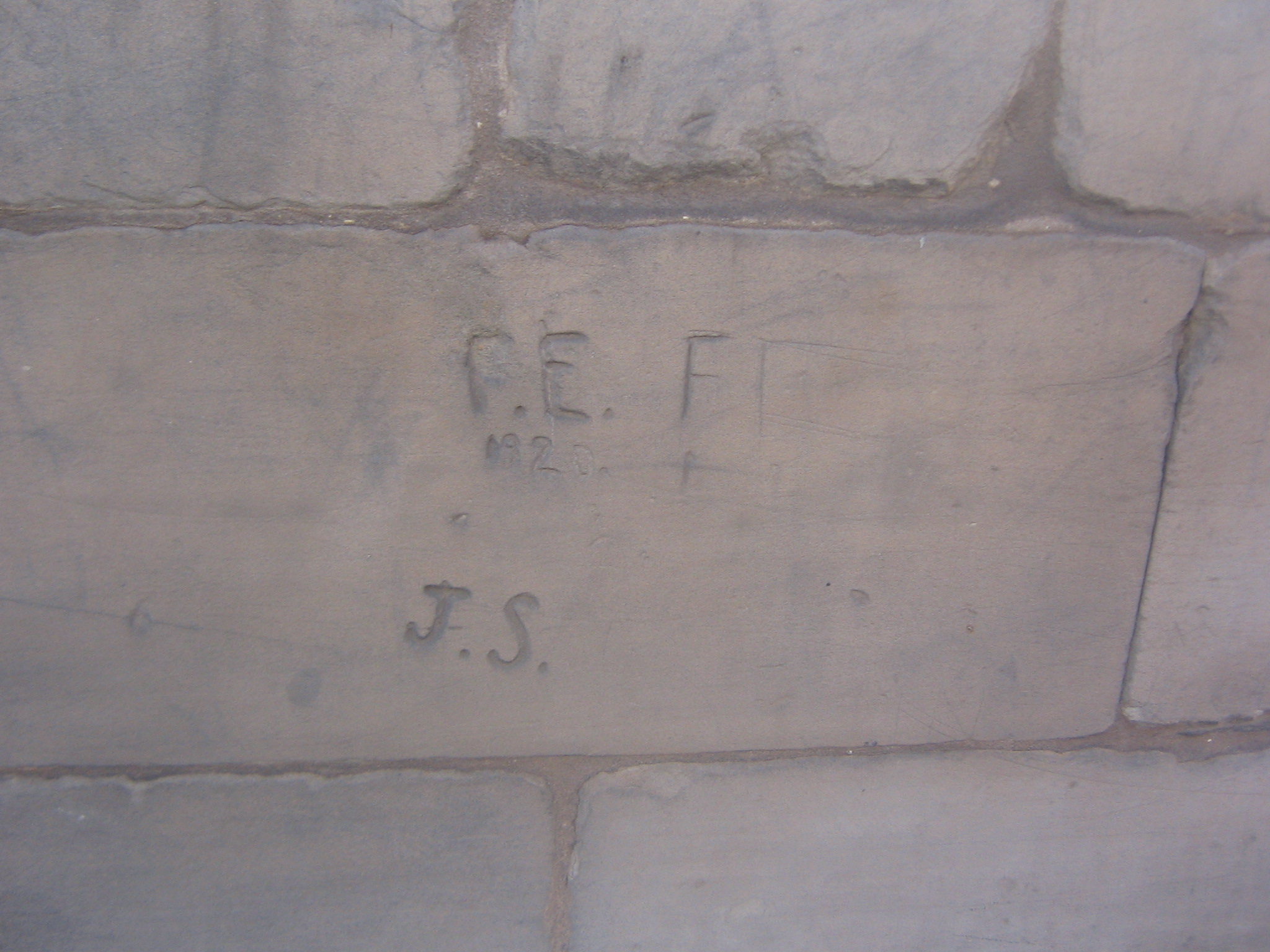
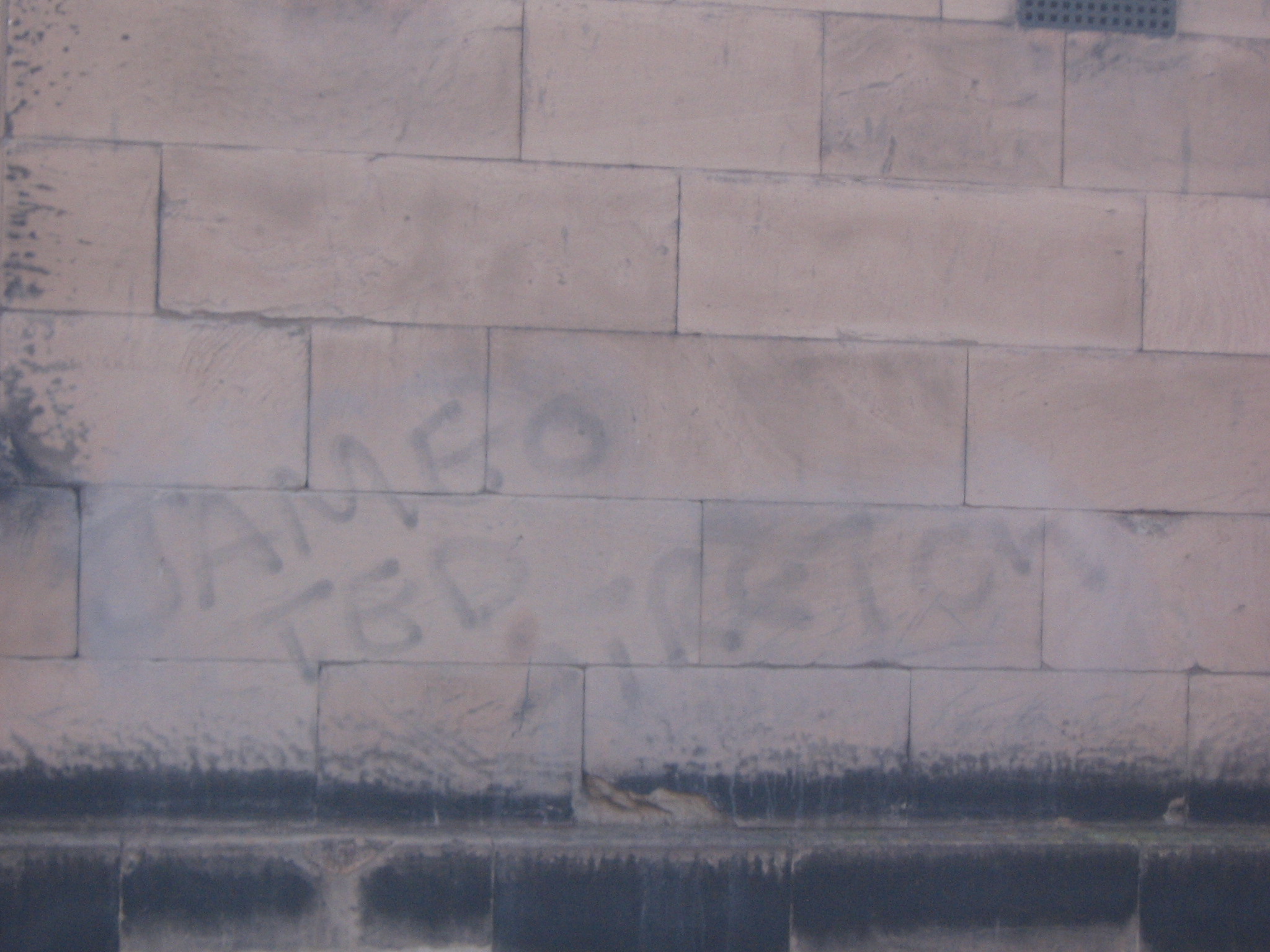
Walking past Newtons College in The Close, I noticed two lots of graffiti on the same building. One lot is spraypainted (I think) and looks like a name (it’s not the best penmanship ;)), the other consists of initials and a date of 1920. You can see these both below in the gallery.

I have no problem with the second one, in fact I enjoy finding a name or something else carved into stone. I do however have a problem with the first one. Why I am ok with PE leaving his or her mark in 1920 but not the graffiti artist in 2011?

Slightly different, but still maybe relevant, there was a recent story about Sex Pistols graffiti being historically and archaeologically important.

I’m still trying to work through my thoughts on this whole area. In the meantime, if anyone has any thoughts, or opinions of their own, please get in touch 🙂

 Edit 6/12/2011

Off on a bit of a tangent, a couple of stories about graffiti with a story! Thanks to Mark from Tamworth Time Hikes for letting me know about this one in Sheffield, which in turn reminded me of this one in Hagley, Worcestershire. Not at all to do with Lichfield, but of interest on the theme of graffiti I hope you’ll agree. Anyone know of any more?

 A bit later on 6/12/2011….some of my photos of graffiti…..

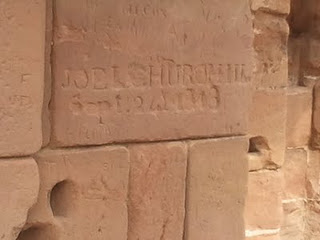
The Kenilworth photo reminds of going there as a little girl and noticing this kind of graffiti for the first time.  I temporarily abandoned my quest for portcullises, drawbridges and moats (which always disappointed by not being filled with water anyway) and played ‘Who can find the oldest graffiti?’. I remember seeing a date in the 1700s and realising that I was just one of the latest in a long, long line of people who had been there. I suppose, in a way those people, rightly or wrongly, became a part of the history of that building themselves. There are loads of photographs of this kind of graffiti around, there’s a whole flickr group here. I wonder if this kind of immortality was their aim or if it was more a case that they got fed up of looking for portcullises, and it gave them something to do?It seems some of our old vandals seemed happy to be easily identified, like Mr Joel Churchill at Kenilworth.  Perhaps it was an acceptable thing to do at the time?

Edit 9/12/2011

Another bit of Lichfield graffiti from the excellent Beacon Street Blog here.