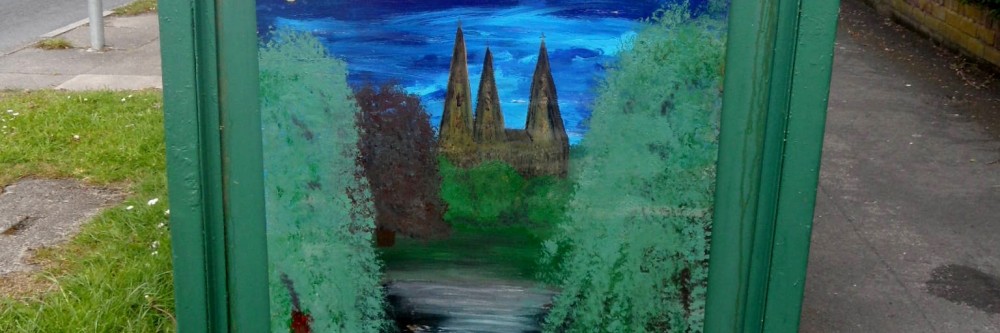
Three men, three deaths all seemingly linked. Somewhere in the story there must be a clue to tell us whether it was coincidence or if something creepier was at play here.
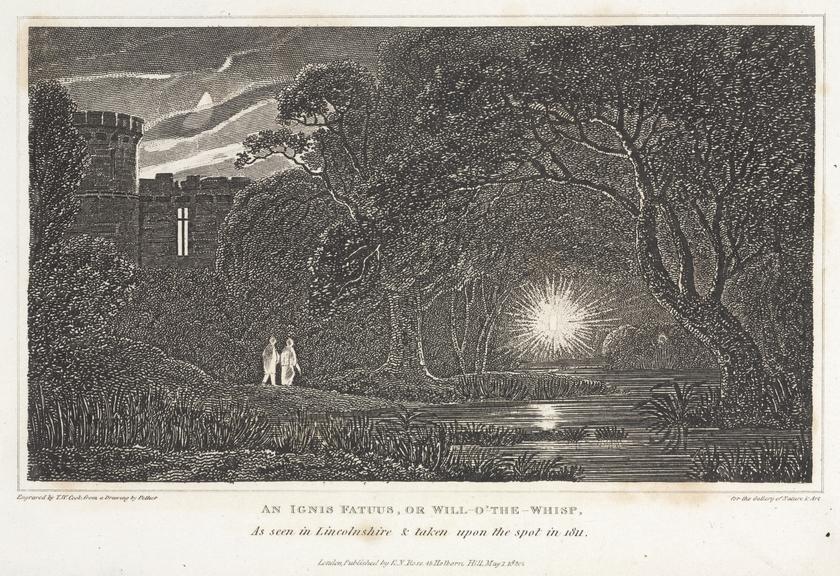
Science Museum, London
As the harvest of 1853 was gathered from the fields at Rownall in Staffordshire, Colonel Thomas Powys sat beneath the shade of a small oak tree, overseeing the work of the new labourers he had hired. Hours passed and day turned to dusk, but still Powys remained sat under the tree until Jack Shaw, one of the seasoned workers wandered over and found him in a state of insensibility, muttering the same phrases over and over. ‘And then another’, ‘Yet another’ and then, ‘The grass’.
Shaw shouted to the other men to stop their work in the meadow and together they carried the near comatose Captain back to his home Westwood Hall. The doctor was called for and when he arrived Powys was still saying those strange words. ‘And then another…then another…the grass’, although his voice was now not much more than a whisper. Soon afterwards, he was dead.
When Jack Shaw returned to the tree where the Captain had sat he noticed the grass where the man’s feet had rested had withered. Shaw’s son, telling the story to the Newcastle Under Lyme Times in October 1940, said he had witnessed it himself and that no grass would grow on the spots for some years after. Another odd detail about the death of Captain Powys is that when Mr Leese the coffin-maker was called to measure him for his coffin, he noticed that the corpse hadn’t stiffened and still hadn’t done so by the time it was placed in it.
The story would be strange enough as it stands but several years later another man died in the very same spot beneath the oak tree. Mr Yates, the tenant of the farm had felt faint and gone to sit in the shade. Just like the Captain before him, he had to be helped home and never recovered from what ever malady struck him that day. And just like the Captain, his corpse never stiffened.
A man named Heath became a tenant of the farm and, one day whilst cutting rushes in the same meadow where the other men had been stricken, he too was taken ill and died shortly afterwards. Shaw Jnr could not confirm whether or not he had sat in the same spot as Powys and Yates prior to his demise but he does recall that Heath’s body remained flexible even as he was placed in his coffin. He adds that after each of the three men died, so one of the tree’s branches. Of course, there were theories from the locals. One was that all three had entered into some sort of trance and that they were still under it when they died. If true, it would make a strange story truly sinister as it suggests they may have been buried alive. Shaw Jnr’s own explanation was that all three contracted some sort of illness from the marshy ground at the end of the field. He had seen the will o’ th’ wisp there on several occasions and as the explanation for these eerie lights is that they are caused by the spontaneous combustion of gases, perhaps he was on to something?
I am a storyteller, not a scientist, and so I am asking any readers of this post to share their theories regarding the mystery of these three strange deaths in the Staffordshire Moorlands.
Sources
Newcastle-under-Lyme Times – Friday 04 October 1940
 Lichfield Lore