Three men, three deaths all seemingly linked. Somewhere in the story there must be a clue to tell us whether it was coincidence or if something creepier was at play here.
As the harvest of 1853 was gathered from the fields at Rownall in Staffordshire, Colonel Thomas Powys sat beneath the shade of a small oak tree, overseeing the work of the new labourers he had hired. Hours passed and day turned to dusk, but still Powys remained sat under the tree until Jack Shaw, one of the seasoned workers wandered over and found him in a state of insensibility, muttering the same phrases over and over. ‘And then another’, ‘Yet another’ and then, ‘The grass’.
Shaw shouted to the other men to stop their work in the meadow and together they carried the near comatose Captain back to his home Westwood Hall. The doctor was called for and when he arrived Powys was still saying those strange words. ‘And then another…then another…the grass’, although his voice was now not much more than a whisper. Soon afterwards, he was dead.
When Jack Shaw returned to the tree where the Captain had sat he noticed the grass where the man’s feet had rested had withered. Shaw’s son, telling the story to the Newcastle Under Lyme Times in October 1940, said he had witnessed it himself and that no grass would grow on the spots for some years after. Another odd detail about the death of Captain Powys is that when Mr Leese the coffin-maker was called to measure him for his coffin, he noticed that the corpse hadn’t stiffened and still hadn’t done so by the time it was placed in it.
The story would be strange enough as it stands but several years later another man died in the very same spot beneath the oak tree. Mr Yates, the tenant of the farm had felt faint and gone to sit in the shade. Just like the Captain before him, he had to be helped home and never recovered from what ever malady struck him that day. And just like the Captain, his corpse never stiffened.
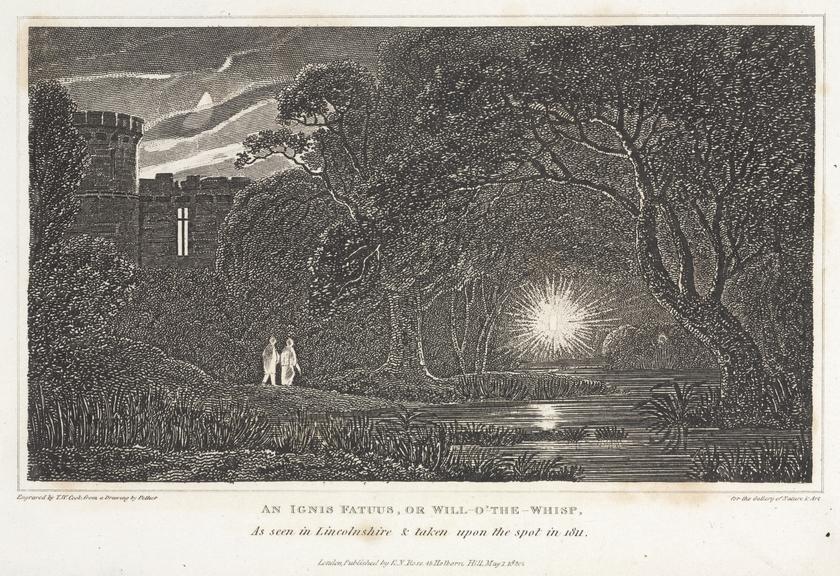
A man named Heath became a tenant of the farm and, one day whilst cutting rushes in the same meadow where the other men had been stricken, he too was taken ill and died shortly afterwards. Shaw Jnr could not confirm whether or not he had sat in the same spot as Powys and Yates prior to his demise but he does recall that Heath’s body remained flexible even as he was placed in his coffin. He adds that after each of the three men died, so one of the tree’s branches. Of course, there were theories from the locals. One was that all three had entered into some sort of trance and that they were still under it when they died. If true, it would make a strange story truly sinister as it suggests they may have been buried alive. Shaw Jnr’s own explanation was that all three contracted some sort of illness from the marshy ground at the end of the field. He had seen the will o’ th’ wisp there on several occasions and as the explanation for these eerie lights is that they are caused by the spontaneous combustion of gases, perhaps he was on to something?
I am a storyteller, not a scientist, and so I am asking any readers of this post to share their theories regarding the mystery of these three strange deaths in the Staffordshire Moorlands.
There’s folklore and there’s legendary
Sources
Newcastle-under-Lyme Times – Friday 04 October 1940
Whilst researching something in the Staffordshire Sentinel, another story caught my attention and it’s so strange that I just had to share it, despite it having no links to Lichfield or the local area. In fact, the tale takes us away from England altogether and to France where a series of true yet unbelievable events took place in the early twentieth century.
It was September 1929 when the first of what would be a series of peculiar letters was posted to the offices of ‘Le Matin’ newspaper in Paris. It said, ‘We have the honour of informing you that we are a powerful secret society composed of persons of the highest authority. Our purpose is to rid France of the unscrupulous crooks and swindlers who prey on their fellow men”. Well, it said that but in French obviously.
The note also stated that the notorious Marquis de Champaubert was to be the society’s first victim. Now, this is where we need a bit of backstory because the Marquis was no nobleman but a master criminal whose real name was Clément Passal. His crooked career included a fraudulent motor-car company in Nantes and a bogus perfume factory, but he was eventually caught out by a jeweller who smelled a rat when he received an invitation to meet de Champaubert at the Chateau du Prieure. In a sparkling bit of detective work, the diamond dealer noticed the Marquis had signed his name De Champaubert and deduced that someone from the upper class would never use an uppercase D to spell that part of their name. Further investigations revealed no-one had ever heard of the Marquis de Champaubert and so the jeweller gave the police a ring.
Le Petit Parisien 27th September 1924 reporting the arrest of Clément Passal
When they found out that four other jewellers had received the same invitation to take a selection of valuables to the Chateau du Prieure, they knew some sort of game was afoot. On raiding the castle, they found a crime scene in the making that would be too loopy even for an Arsène Lupin story. Five rooms had been set aside for each of the jewellers and each one had been made airtight. In the billiard room was a tank of choloroform with pipes leading from there to each of the five rooms. The plan was that the fumes would overcome the jewellers and as they lay in a state of stupor, Passal would pocket their precious stones and disappear. Thanks to the efforts of the police, Passal did not get to do it in the billiard room with the lead pipe but instead spent two years in irons at Loos Gaol.
It seemed that the secret society calling themselves the Knights of Themis did not feel that justice had been done. The next letter to be received at Le Matin revealed that following his release from prison, the ‘Marquis’ had been lured to their headquarters by Madame D’Orgeval, the only lady member of the Knights. She’d entrapped him by claiming she wanted to publish his autobiography but what awaited him was a series of twisted tortures, each one more terrifying than the last. The first horror he had faced was to be tied to a cot in his cell with an iron funnel placed in his mouth and one and a half gallons of water poured into it but the letter reported that, ‘He has the vitality of twenty men; he did not even complain. Tomorrow he has an appointment with Sam our giant orangutan. He cannot survive’.
Turns out that he could. In the next letter to arrive at the newspaper office it reported that, ‘Today, the Marquis met Sam, our orangutan. We keep this gigantic beast in a pit 14 feet deep, its sides so slippery that neither he, nor anyone else, can climb out. Sam had been starved for twenty-four hours and given a heavy club which he knew from experience how to use. The Marquis was lowered into the pit by a rope. Another man would have grovelled in fear. But not the Marquis. He bent over so that his hands touched the bottom of the pit. Then he managed to scoop up some of the dirt, stand up and hurl it into Sam’s bulging eyes’.
This apparently made the animal hysterical with agony and it dropped the club. The Marquis seized it and smashed it on the orangutan’s head, knocking it unconscious (possibly a more successful strategy than piping chloroform into a room). His next trial was to be bound into a parachute that would only open 200ft above ground and pushed out of a plane. However, he survived this deadly descent and so his captors decided to bury him 6ft underground. The letter ended with ‘Tell the whole world of our plans. Let all scoundrels know of Champaubert’s fate’.
On 2nd October a note arrived at Le Matin to inform them that it would be their last communication regarding the Marquis de Champaubert as their mission had been accomplished. Inspector Adam of the Sureté was informed and went to visit Passal’s mother. He found her in bed crying, and she passed him a letter from beneath her pillow in which he told his mother of the tortures he had endured, informed her that he had asked his captors to bury him with a photograph of her over his heart. That same morning George Durot, a friend of Passal’s, received another letter, signed by the mysterious Madame D’Orgeval who seemed to be having some misgivings about her role in the murder. ‘You can save him’, she wrote, ‘There is still time. The ventilating pipe will have brought him sufficient air. But hurry’. The letter contained details of the ditch in Verneuil Wood where Passal had been buried. Durot and another friend sped to the woods on a motorcycle to find the soon to be a murder site. They found the pipe protruding three inches from the ground and began to dig. Using pocket knives they tried to force open the lid of the coffin but without success and so headed to the nearest village. They returned to the coffin accompanied by two local gendarmes armed with axes and eventually prised open the premature tomb. It was too late though. Clement Passal had already passed away.
However, the story still doesn’t end even here! Georges Durot remembered that Passal and a man named Henri Boulogne, who had been imprisoned at Loos with him, had rented a nearby cottage. When the police searched the premises, they found Henri hiding. On a rubbish heap outside the cottage they also found a scrap of paper and a piece of wood.The wood was the same as that used to create the crude coffin and the paper matched the letters sent to Le Matin. As Boulogne confessed to the police, the whole thing had been a hoax gone horribly wrong.
The Knights of Themis were fictional and the letters had been penned by Passal. At the cottage, he’d built himself a coffin which Boulogne had then buried him in at Verneuil Wood. The pipe projecting out of the earth was intended to keep Clement alive but their not so cunning plan was flawed and Passal slowly suffocated.
Why did Passal partake in such a complex and dangerous ruse though? The answer may lie in a manuscript of memoirs found near where he was buried. There was also a packet of press articles, copies of letters sent by the non-existent Knights of Themis and a diary containing details of the crimes Passal had committed, others which he took credit for including the theft of the Mona Lisa in 1911 and some which I strongly suspect exist only in his imagination e.g. plans to fell the Eiffel Tower, a duel with American police and the discovery of invisible death rays. The theory is that the stunt had been contrived by the now penniless Passal to promote the memoirs of his alter ego the Marquis de Champaubert.
It seems that sometimes there is such a thing as bad publicity.
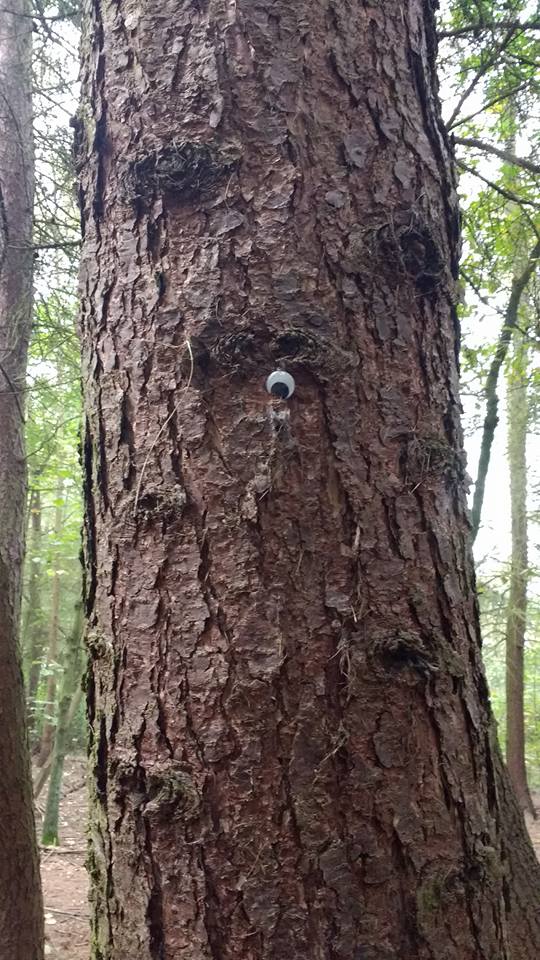
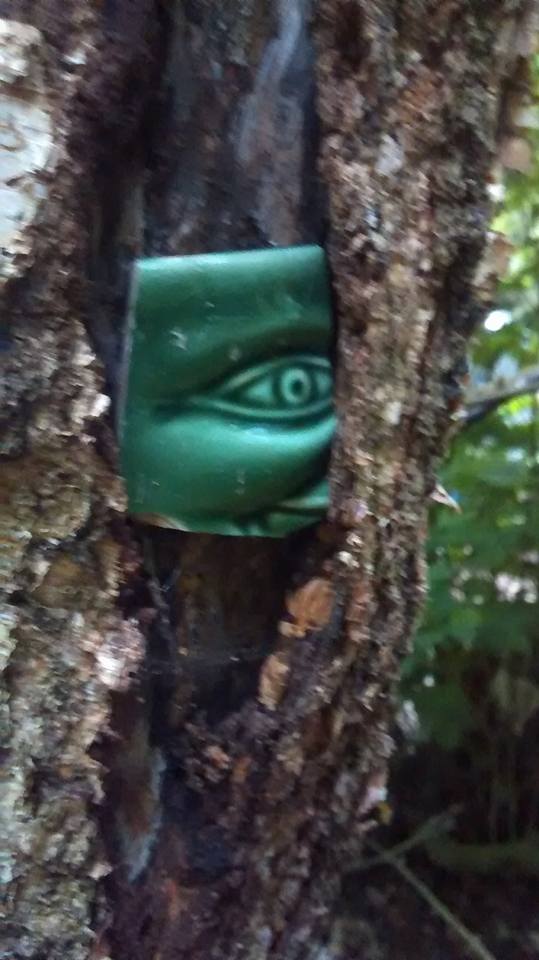
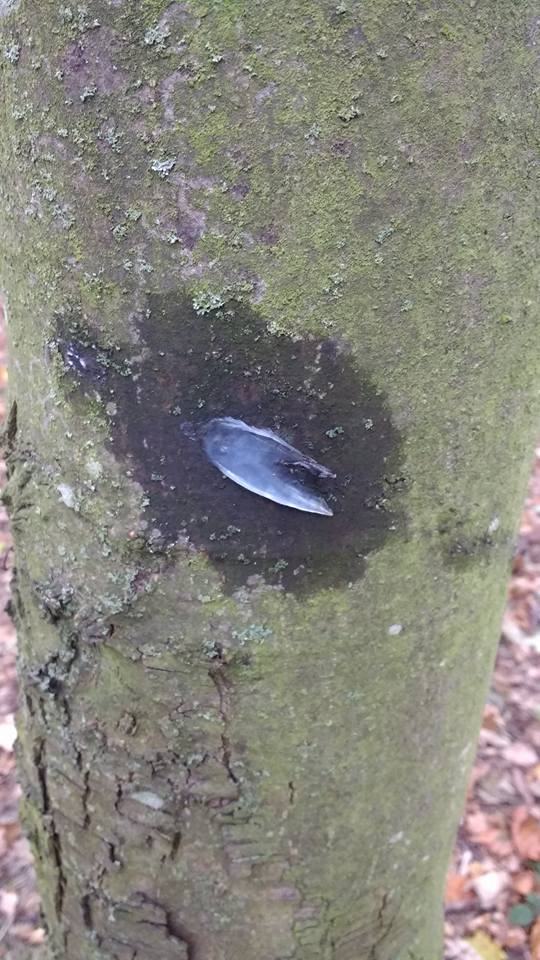
Imagine you’re watching a horror film. A woman heads into ancient woods which are shrouded in mist. And before long, she comes across a tree. With an eye stuck to it.
Chances are at this point in the film, you’d be shouting, ‘Don’t go in there. Run away!, whilst feeling smugly confident behind your cushion that you’d never be as stupid as to stay hanging around in mist shrouded woods where there are eyes stuck to trees. Well, I was in Leomansley Woods earlier this week. It was shrouded in mist and there was an eye on a tree. But did I leg it? No. And not just because I don’t do running under any circumstances.
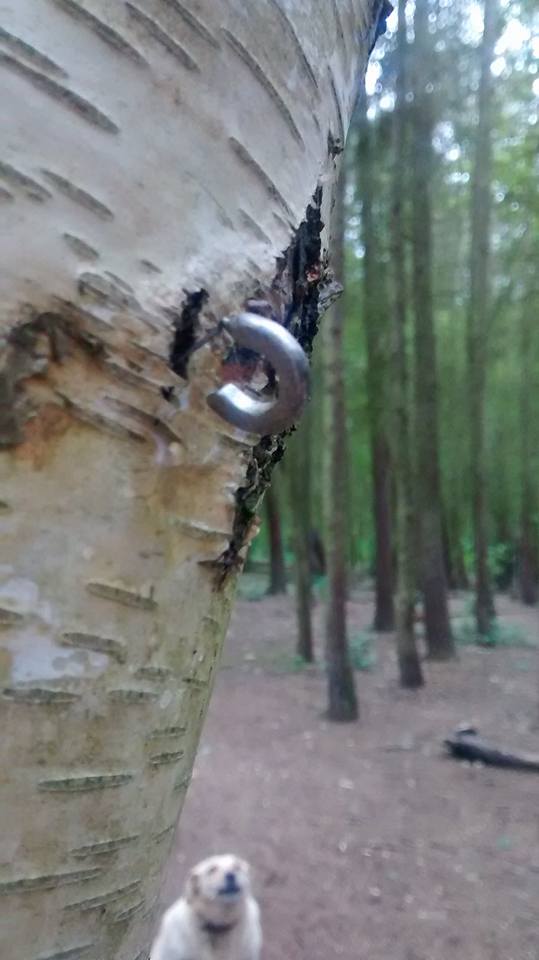
If something wicked that way had come, I had Finn the swamp dog to protect me and my experience of fighting off a clown in Beacon Park earlier in the month to draw upon. Crucially though, I know and love these woods and consider the tokens and trinkets that have been appearing there since the summer more curious than creepy, possibly symbols of someone else’s affection for them.
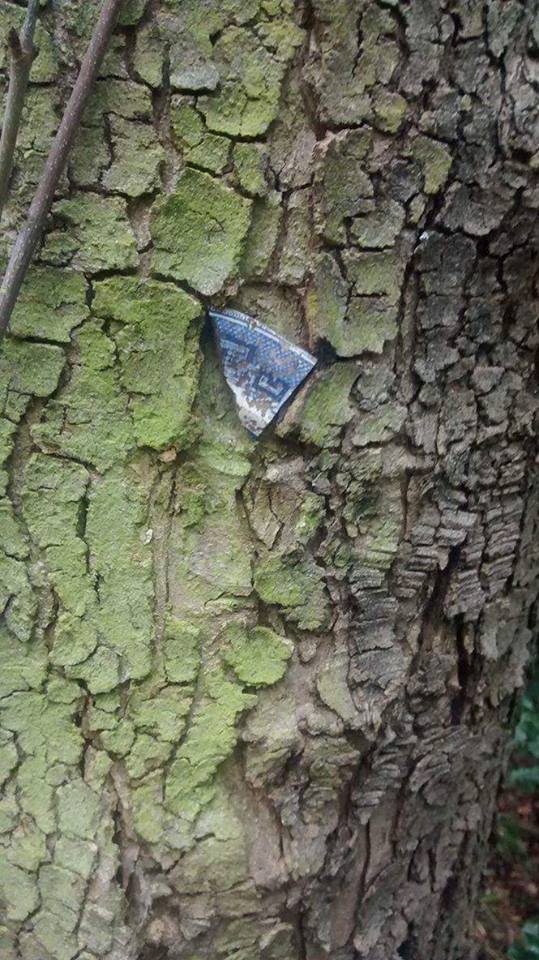
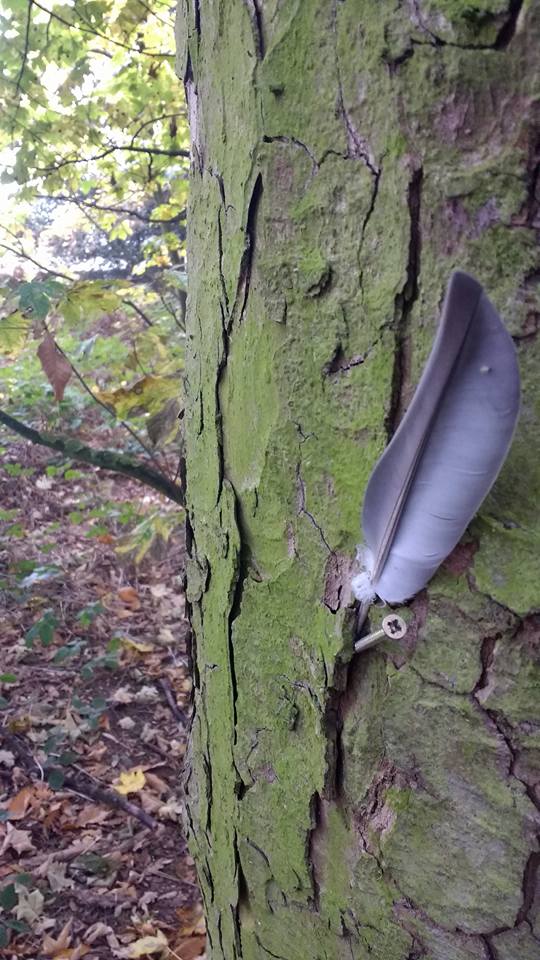
Back in 2004, when I was a newcomer to these parts, I remember getting a call from my sister telling me to go and take a look in the woods as somebody, or more likely somebodies, had created works of art in amongst the trees. There were mosaics created from leaves and petals, clay faces sculpted onto the trunks of trees and brightly coloured papers hanging from their branches. For reasons I can’t remember, I didn’t take any photographs but I can clearly recall the sense of mystery and magic someone had created in the woods that day. We never discovered who or why and there was no encore. The seasons turned and the years went by and then, early this summer, we began to notice things. At first it was subtle. A pebble placed here, a strip of silver birch bark there. It was the first piece of pottery appearing lodged in the knot of a tree that convinced us this was more than the handy work of squirrels and our overactive imaginations. Dog walks took on a new dimension as every day seemed to bring something new. I’m sure at its peak, others were joining in and making their own contributions. And this time I did bring my camera.
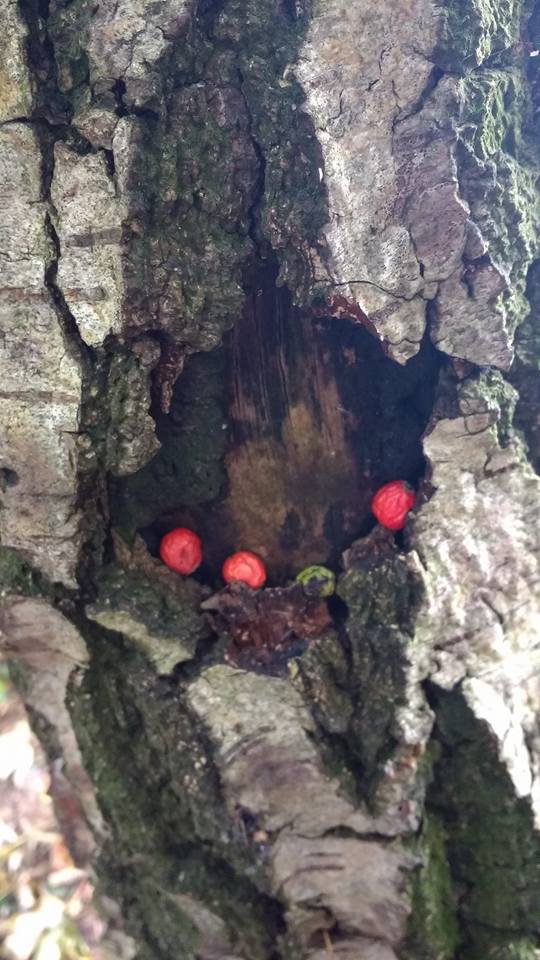
As the summer faded, the activity seemed to wane, and I’d assumed there would be no more. The other half took over the dog walks for a while but recently, for reasons involving a prolapsed disc, I took up the lead once again. Many of the original tree decorations had vanished but a handful of hawthorn berries, melted candle wax and a tickle of feathers (that’s genuinely and rather pleasingly the collective noun for them) had taken their place. Interestingly, others seem to be joining in once again, including the Leomansley contingent of the One Direction fan club.
Once again, the who and why is a mystery, and perhaps that is how it should remain. Whether activity continues beyond the season of the witch or not, for me, Leomansley Woods will always remain a magical place.






 Lichfield Lore