Fools & Hobby Horses

The Abbots Bromley Horn Dance takes place each year on Wakes Monday (the first Monday following the first Sunday after 4th September), which means that this year it will be on 10th September.

As far as I can gather, the horn dance is one of those traditions where no-one is quite sure what it’s all about. There are six dancers carrying reindeer antlers, a fool, a hobby horse, Maid Marian, a boy with a bow and arrow, an accordion player & a triangle player. The horns are collected from the church of St Nicholas at 8am and are returned 12 hours later after the participants have danced around the village and out to Blithfield Hall. According to the horn dance of Abbots Bromley website, when one of the horns was damaged in 1976, a piece was sent to be carbon dated. It was found to date back to 1065 (plus or minus 80 years) although the general consensus is that this doesn’t really help to date the dance itself.

I’m ashamed to say that every year I’ve planned to go and watch the dance, but haven’t made it for one reason or another. I have been to the village on several non-horn dance occasions though and it is a lovely place.  However, Mr J Carver, in his 1779 book ‘The Universal Traveller’ wasn’t impressed , saying,

It stands at the distance of a hundred and twenty eight miles from London but contains nothing worthy of note

(Lichfield fares a little better. In Mr Carver’s opinion, ‘It is a long, straggling place but has some handsome houses’).

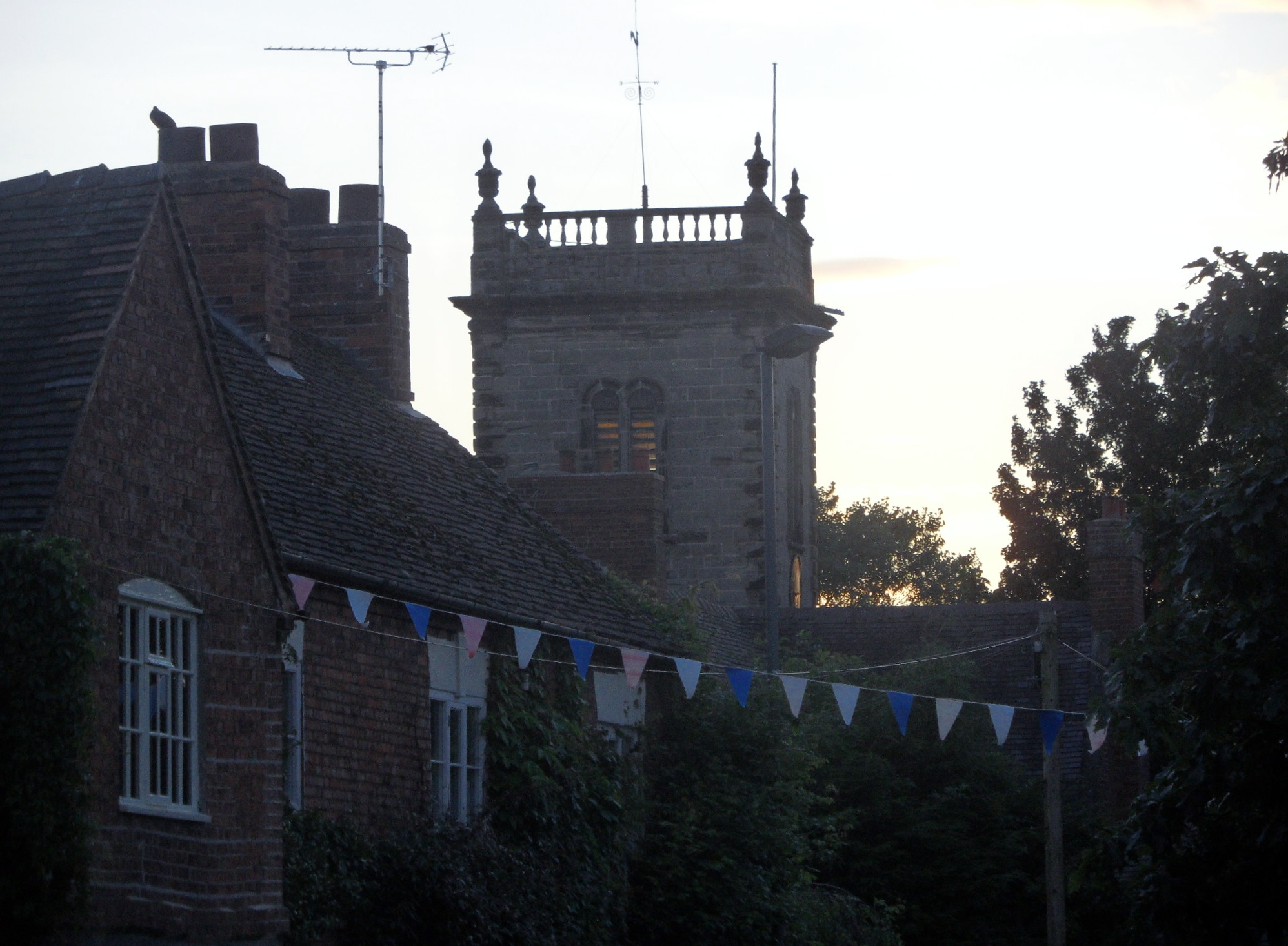
Walking through the village, to my 21st century eyes, practically every building looks worthy of note. Amongst many others, there’s the Butter Cross (or Burger Cross as a practical joker would have it in 2002), the Goat’s Head Inn (which is thought to date back to the early 1600s, with possibly even older cellars and of course, a secret passage story!) and Almshouses (above the doors are the Bagot family arms and the inscription Deo et Igenis DDD Lamberius Bagot Arm Anno 1705).
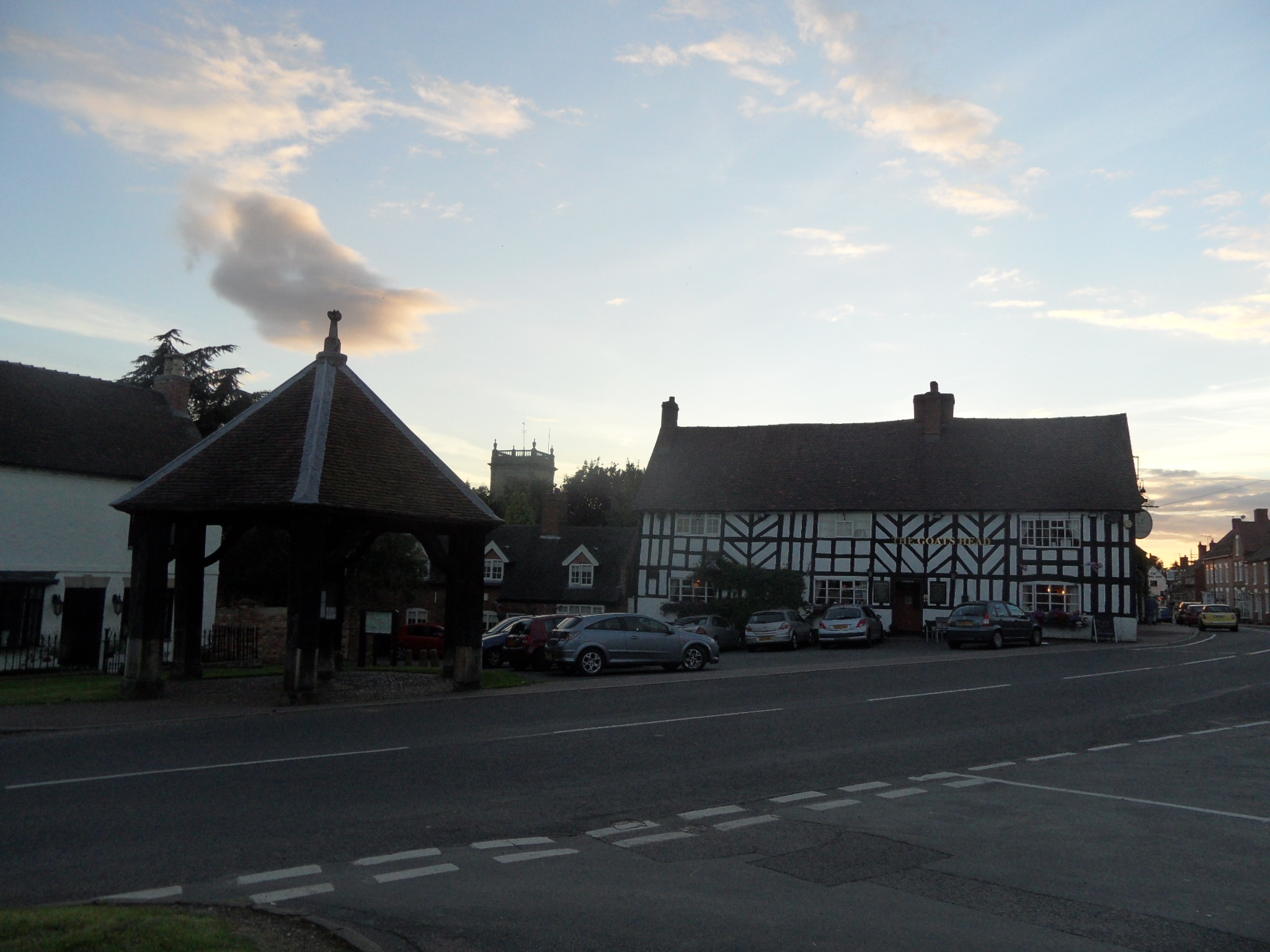
The Butter Cross, The Goats Head Inn & St Nicholas Church

View of St Nicholas, where the horns are displayed throughout the year.
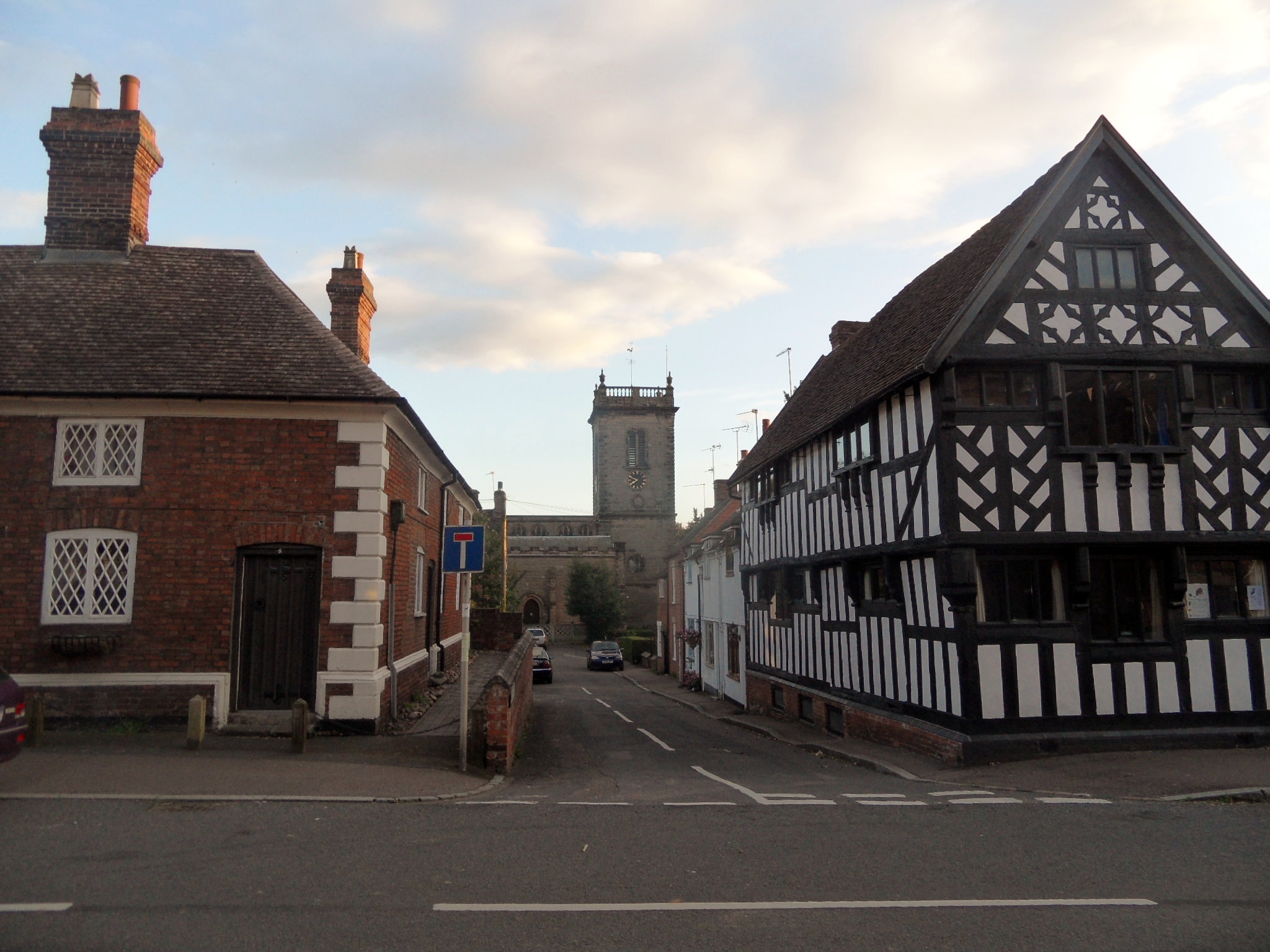
Church of St Nicholas, from the High St
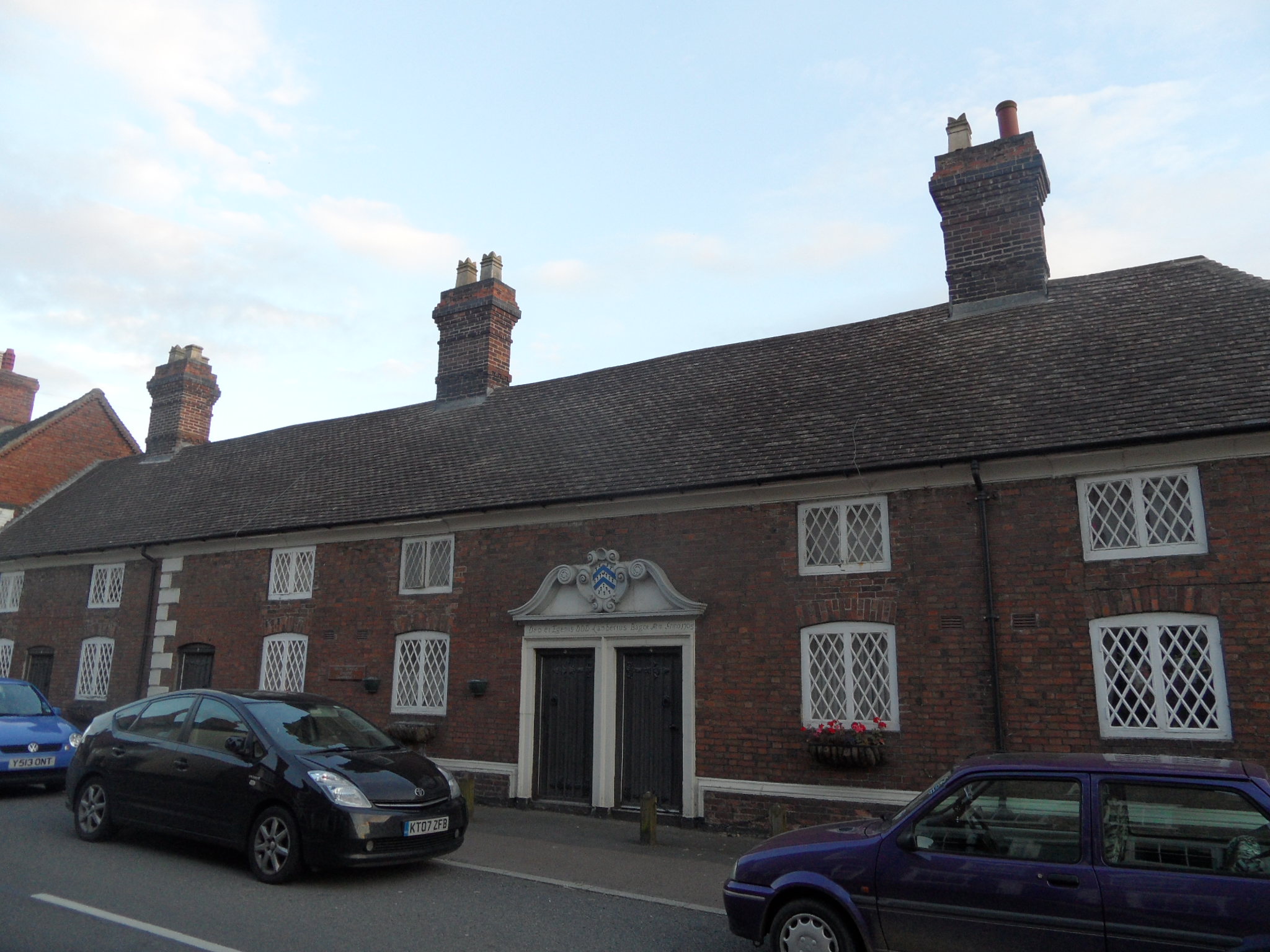
Almshouses

A couple of years ago the BBC made a programme about folk dancing in England and you can see the clip about the horn dance here. There are also some photographs of the tradition taking place in the 1930s here on the Staffordshire Past Track website.

I believe that the horns never leave the parish boundary (when not in use they are stored in the church of St Nicholas) although the dance can be performed elsewhere (another set of antlers is used on these occasions). I’ve also just discovered that this year the third annual Abbots Bromliad will take place in California, where they are hoping to beat their own record for most people dancing the horn dance at once (144 in 2010). You can even order your own set of acrylic antlers for $20 to help you feel the part! Hmmm, I wonder what the postage & packaging would be to get a pair sent to Lichfield….and would they get here in time to wear on the 10th September?

Seriously, we’re lucky to live so near to a place where one of the country’s best known (and possibly one of the oldest) traditions takes place and I really must make an effort to go this year to see it for myself.

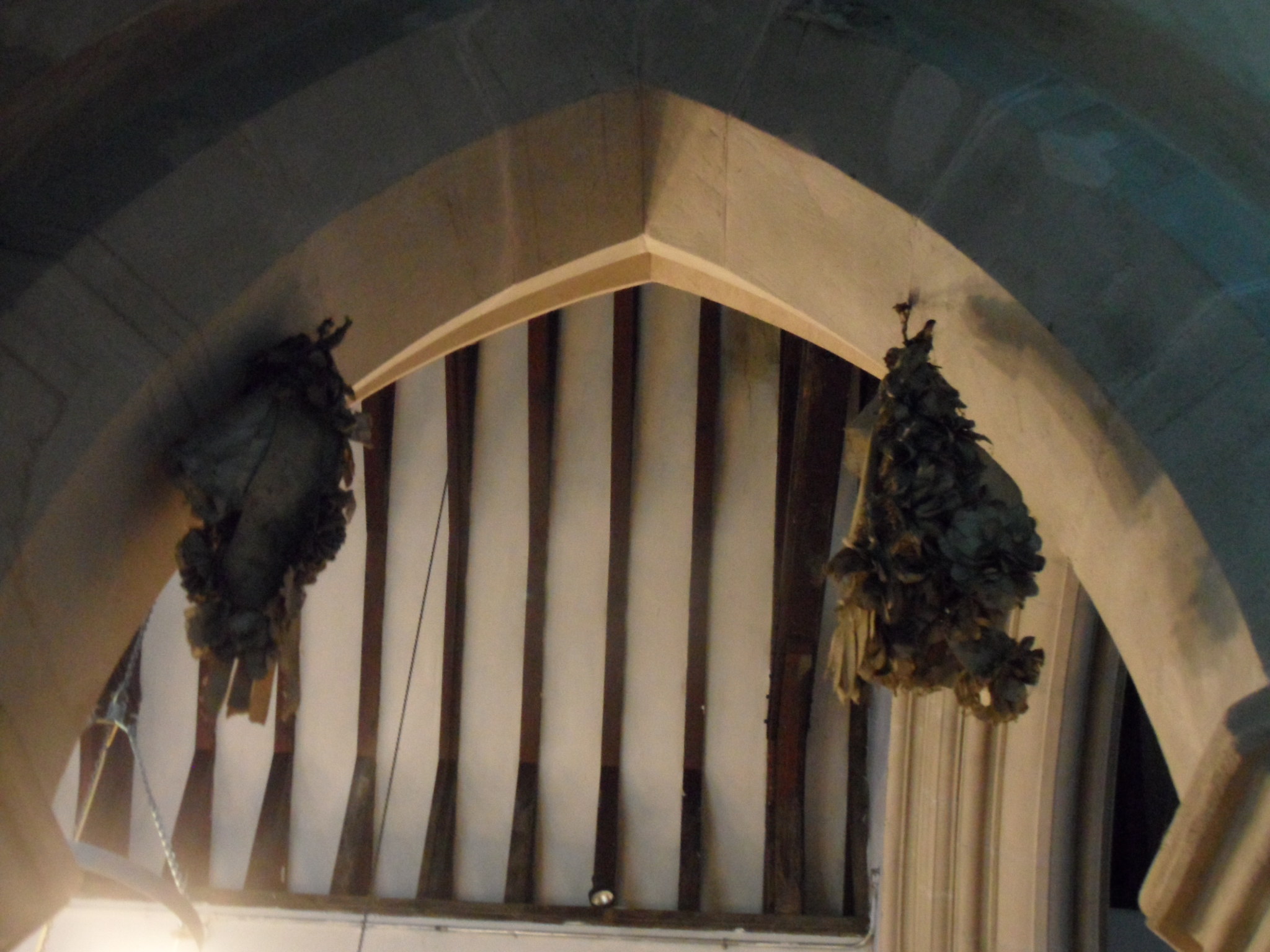
 

Paper Flowers

As you walk through the archway into the chapel of St Betram, in the Church of the Holy Cross, IIam in Staffordshire, you notice these.


They are Maidens’ Garlands and relatively few churches in England are thought to have surviving examples. It’s thought they may have been used during the funeral service of an unmarried woman, but there is evidence in other parts of the country that they may have been made for young men too.  Further information can be found in this article in the Birmingham Post a few years ago, but most importantly there is the work undertaken by Rosie Morris who as a child saw garlands hanging from hooks in her church in Shropshire and wondered what they were. Years later having been unable to find much information on them, decided to make them the subject of her dissertation and later Phd. Rosie’s website on Maidens’ Garlands is here.

Not only do I think the garlands and the stories attached to them are of interest, I also really like the idea that Rosie’s curiosity for an object she saw as a child led to her doing such great work to research and share this tradition.

Cross County

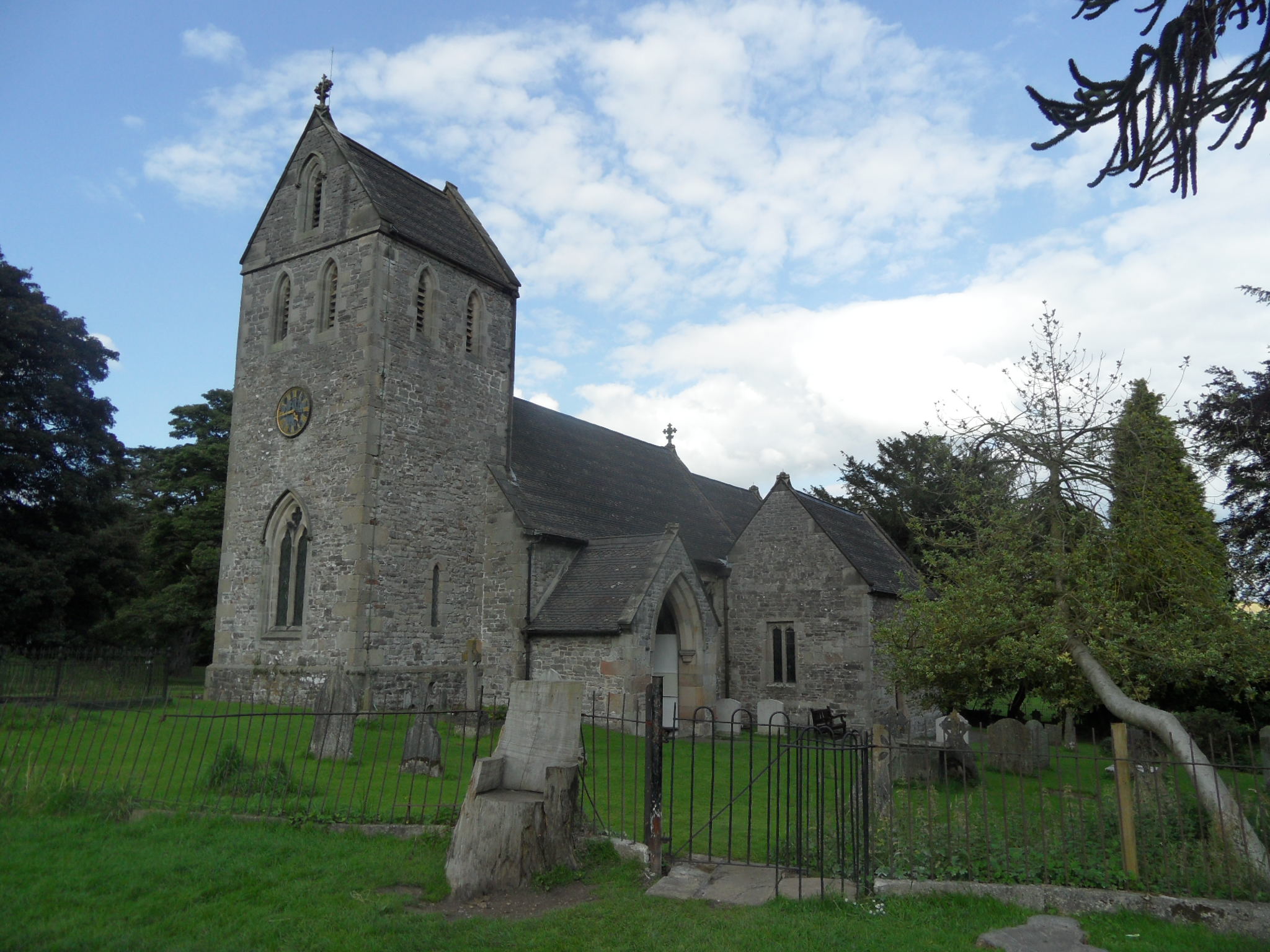
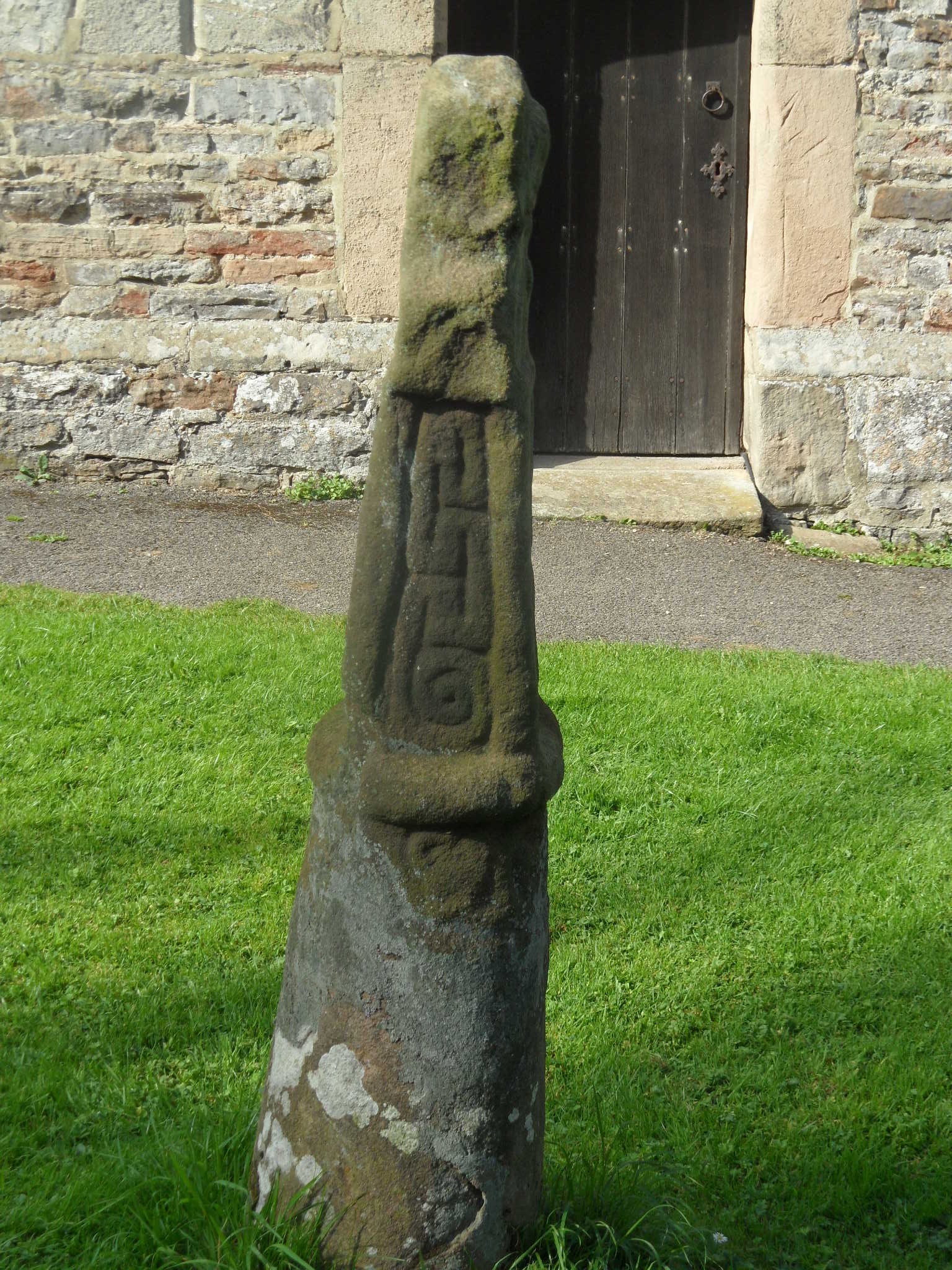
Looking for ancient crosses in Lichfield, has so far lead only to hints of their existence – a one line reference in an old book here, a placename there. Nothing concrete (or should I say stone?).  So imagine how happy I was when I visited Ilam Park yesterday and found that were two thought to date back to the 10thc standing in the churchyard with a third shaft incorporated into the church wall…..

Church of the Holy Cross, Ilam, Staffs


…..and imagine how much I kicked myself when I got home and found out there was yet another stone, known as ‘The Battle Stone’, located in the grounds of Ilam Hall that I had missed!

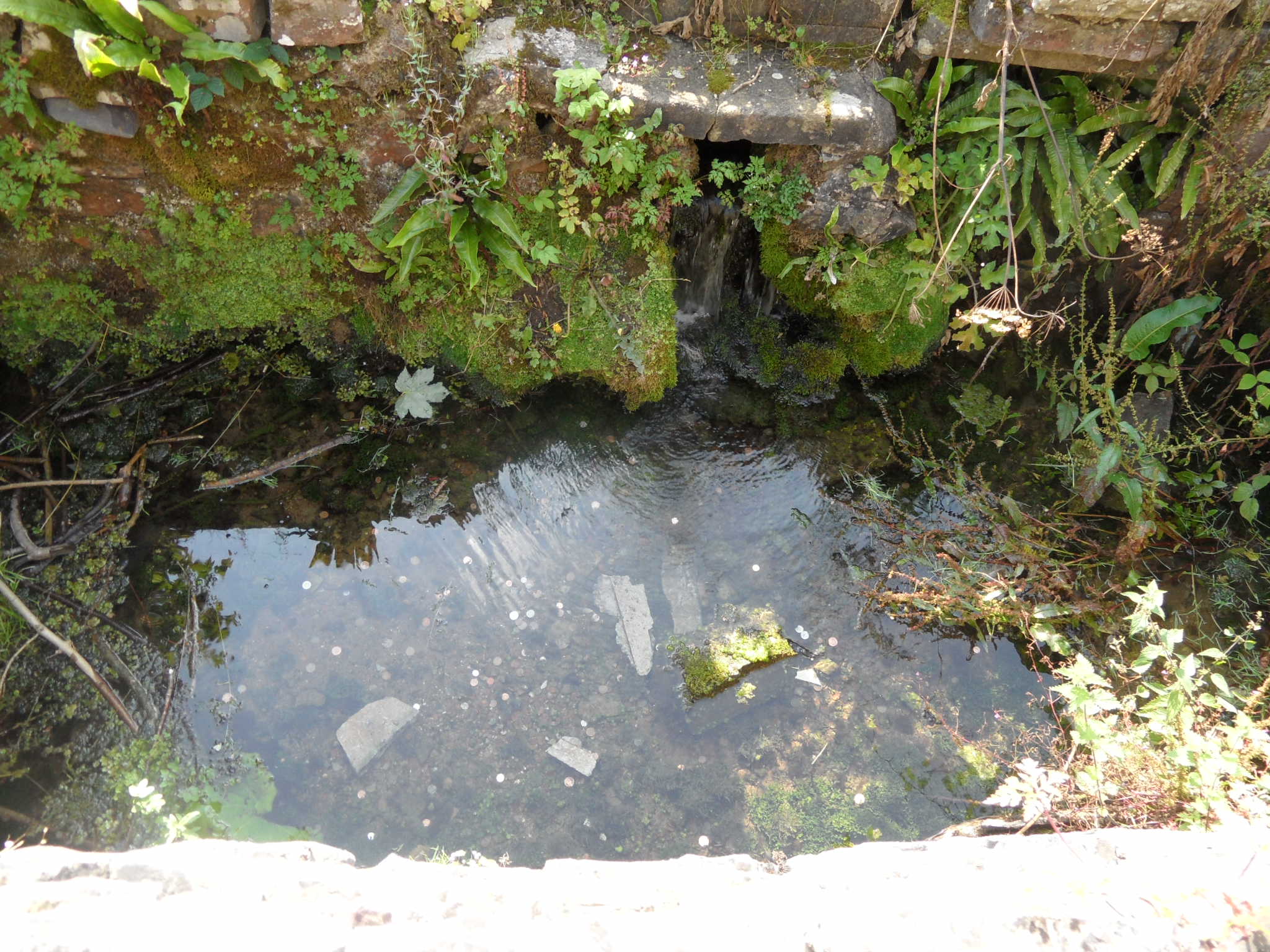
However, as a consolation, I learnt at home that this spring near to the church is thought by some to be St Bertram’s Well (although others place this on a hillside near to the village).

St Bertram’s Well?

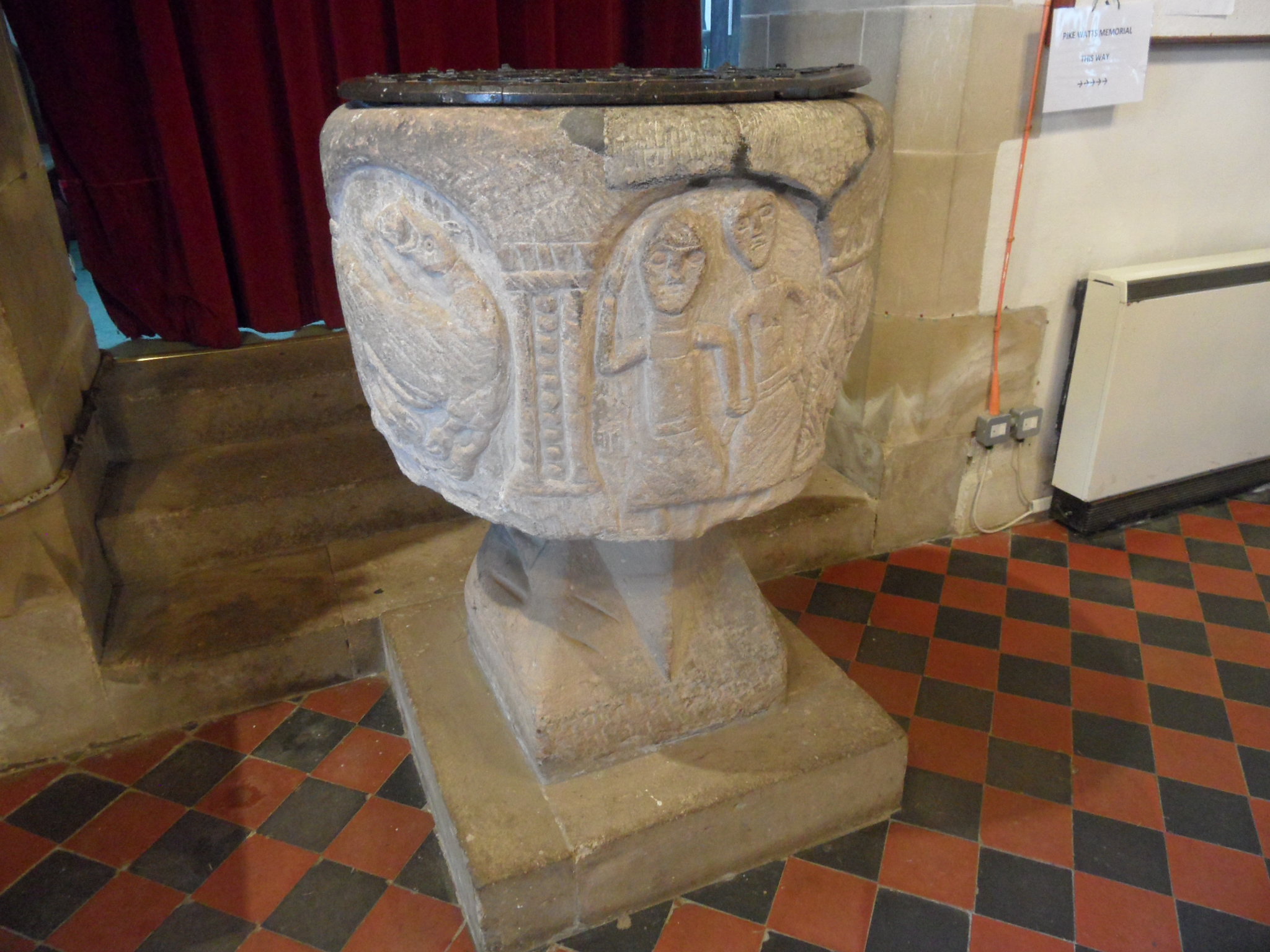
The Shrine of St Bertram (also known as St Bertelin or maybe Beorhthelm of Stafford) is inside the church. As you might expect, there is more than one account of St Bertram’s life. The most well known version seems to be the tragic story that he was a Mercian Prince whose wife gave birth to a child in a forest. The wife and baby were killed by wolves and St Bertram became a hermit near to Ilam, It’s thought this story might be represented on the churches font, which dates back to around the 12thc.

You can decide for yourself, if you look at this website on Romanesque sculpture, which gives a detailed description of the font, together with photos.

However, Stafford Borough Council have this version on their website, which doesn’t feature the tragic part of the legend.

The legend of St Bertelin derives from the 14th century account of him by Capgrave in his ‘Nova Legenda Anglie’, retold by Dr Robert Plot in his ‘Natural History of Staffordshire’ (1686). He is reputed to have been the son of the Mercian prince, the friend and disciple of St Guthlac who, after St Guthlac’s death c 700, continued his holy vocation on the islet of Betheney now Stafford. Here, he remained until forced to retreat from the ill-will of jealous detractors, when he repaired to Ilam, in Dovedale, Derbyshire where ultimately he died. His burial place in Ilam church was once a place of pilgrimage.

His burial place still seems to be a place where people come, not just seeking out history like me, but for spiritual reasons. As you can see from the photo of the shrine, prayers (I didn’t read them) and candles are still left there.

I have found a copy of the ‘Nova Legenda Anglie’, but as my Latin only stretched to ‘Caecilius est pater’, I need a bit of time alone with google translate.  So, I’ll leave the legend of St Bertram/Bertelin there for now other than to say that it’s believed that the remains of St Bertelin’s chapel in Stafford were excavated in the 1950s and they discovered part of a 1,000 year old cross. And this one is made of wood!

Ilam, Stafford and I’ve seen references to existing crosses in Wolverhampton, Leek, Chebsey (between Eccleshall & Stafford), amongst other places. With the discovery of the ‘Battlestone’ in Ilam (the one that I missed!) in the foundations of a cottage, during a restoration in 1840, I’m still clinging to the hope that at least a fragment of one survives somewhere in Lichfield!

Sources:

http://www.heritagegateway.org.uk/gateway/

http://list.english-heritage.org.uk/ (Entry numbers 1038113, 1012654, 1012653,

Corpus of Romanesque Sculpture in Britain & Island http://www.crsbi.ac.uk/index.html

http://www.geograph.org.uk/photo/705619

http://www.megalithic.co.uk/ (St Bertram’s Well http://www.megalithic.co.uk/article.php?sid=14731)

http://www.staffordbc.gov.uk/in-touch-with-the-past

Back to Black

After finding out about the Millenium Gates at Christ Church, created by contemporary Master Blacksmith, David Tucker, at his Derbyshire forge, I was interested to see if there was any trace of the many smithys and forges Lichfield once had. Using a town plan of Lichfield from 1884 & trade directories from the late 19th and early 20th century, I came up with a list of those whose location I thought I could roughly identify.

A weathervane I spotted on my travels

The locations are: Upper St John St;  Lombard St; Bakers Lane (3 in this area according to the map!) and Beacon St.

I headed to Lombard St first but it occured to me on the way over, I wasn’t sure exactly what I was looking for anyway? There might be some sort of clue I suppose, but surely there wouldn’t be a sign saying this used to be a forge…..

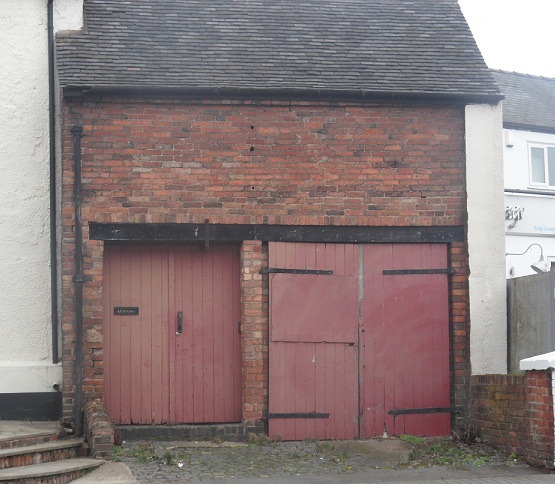
Well almost! Apparently, behind this facade is a building dating back to the late 17th century. To the right of the house is the workshop in the photo below – the listed building description describes it as ‘an interesting building where further investigation might reveal other early features’.

Workshop on Lombard St.

Before getting too carried away though, on the 1884 map of Lichfield, the smithy is shown on the other side of Lombard St. So this contradiction is a bit of a puzzle…. At home I tried to find out more – on the 1881 census for Lombard St is a Mr Joseph Baxter, blacksmith and his wife Catherine. On the 1896 directory, there is a Mrs J Baxter, blacksmith, Lombard St and the 1901 census seems to confirm that Catherine Baxter, now a fifty year old widow, took over her husband’s trade and was working as a shoeing smith, at 3 Lombard St.

1884 map indicated the Lombard St smithy may have been around here?

Next stop was Bakers Lane. I wasn’t holding out any hope for anything here but in the interests of a comprehensive search I had a look. Plus I needed some milk. As suspected, on face value there doesn’t appear to be much left of anything here.

So I headed for Upper St John St, where it looks as though a smithy (possibly listed to Fred Meacham in 1900) existed either alongside or within the Lichfield Brewery. I couldn’t find anything obvious here on the street, but later at home I did find a newspaper story telling how in July 1903, Mr Meacham, a blacksmith at the City Brewery had a terrible accident being run over by a horse float, after helping in a hayfield. Although Mr Meacham sustained a serious injury, the 1911 census shows that he did return to work as a blacksmith.

Whilst looking at the newspaper archive I found this notice taken out by William Goodwin in the Friday July 11 1902 edition of the Mercury. In it, he advised ‘Nobility, Gentry, Farmers & Others’, that he had taken over the blacksmith’s shop on Beacon St, lately occupied by George Goodwin.

Is there any physical trace of the forge on Beacon St though? Well yes and no. While nothing seems to remain of the building (as far as I could see), the road next to The Feathers pub is ‘Forge Lane’ and the road off this one is ‘Smithy Lane’.

 Footnotes!

In exploring this subject and related matters, I’ve had some great discussions with and help from BrownhillsBob so a big thank you to him.

Although I couldn’t see anything at some of the locations, that’s not to say there is nothing there…..

A few doors up from Catherine Baxter on Tamworth St, in 1881, another widow, Louisa Wood is listed as a ‘Plumber & Decorator’. Ann Tricklebank on Sandford St seems to take over her husband’s trade as a tin worker. I’d not ever thought about the role of women in these traditionally male trades before, so this is something I’d like to find out more about.

Even in 2007, the idea of a female blacksmith seemed to create much excitement in a national ‘newspaper’ with talk of ‘hot stuff’ and ‘unladylike professions’ and ‘an ancient art more traditionally associated with barrel-chested macho men’.

Almost 200 years ago, there are seven blacksmiths listed in the 1818 Lichfield Directory and by 1834 there were 10 – in Market St, Birmingham Rd, Sandford St & Tamworth St, as well as some of those mentioned above.

In surrounding areas there are of course also traces of blacksmiths. For example, in Burntwood there’s a Forge Lane, an Old Forge at Fisherwick, and an old smithy in Fradley. Even further afield, you can see some photos of Staffordshire smiths on the Staffs Past Track website.  

Using the town plan for Lichfield prompted me to see if there was one for Cirencester, where in the late 19th century, my g-g-g-grandfather ran a pub. I had read a while back that it’s no longer a pub so I had a quick look at it on the town plan to see where it would have been. Funnily enough, at the rear of the pub is a smithy and in the 1901 census my g-g-g-grandfather is listed as a Blacksmith & Innkeeper. Maybe that explains why I’m interested in blacksmiths and erm, pubs 😉

Update 19.2.202

Bob has very kindly put a post on his blog about the forge, with four great old maps of Lichfield. There are some great comments and based on these it looks as though the workshop was the smithy & the 1884 town plan may have it wrong. Also, you’ll see that Roger (@ziksby on twitter) has found 34 blacksmiths on the 1881 census. 34!

Sources:

Lichfield Mercury Archives

1884 Town Plan Lichfield

Staffordshire General & Commercial Directory 1818

Whites History, Gazeteer & Directory of Staffordshire `1834

Kellys Directory of Staffordshire 1896, 1900 & 1912

Scheduled Visit

Sitting in the car park of a closed museum*, we pondered our next move. I remembered there was a sign for ‘Castle Ring’ a little way down the road, an Iron Age Hill Fort I’d always meant to visit, but hadn’t. Perfect. A short while later we pulled up in a much fuller car park that the one we had left.

Plan B

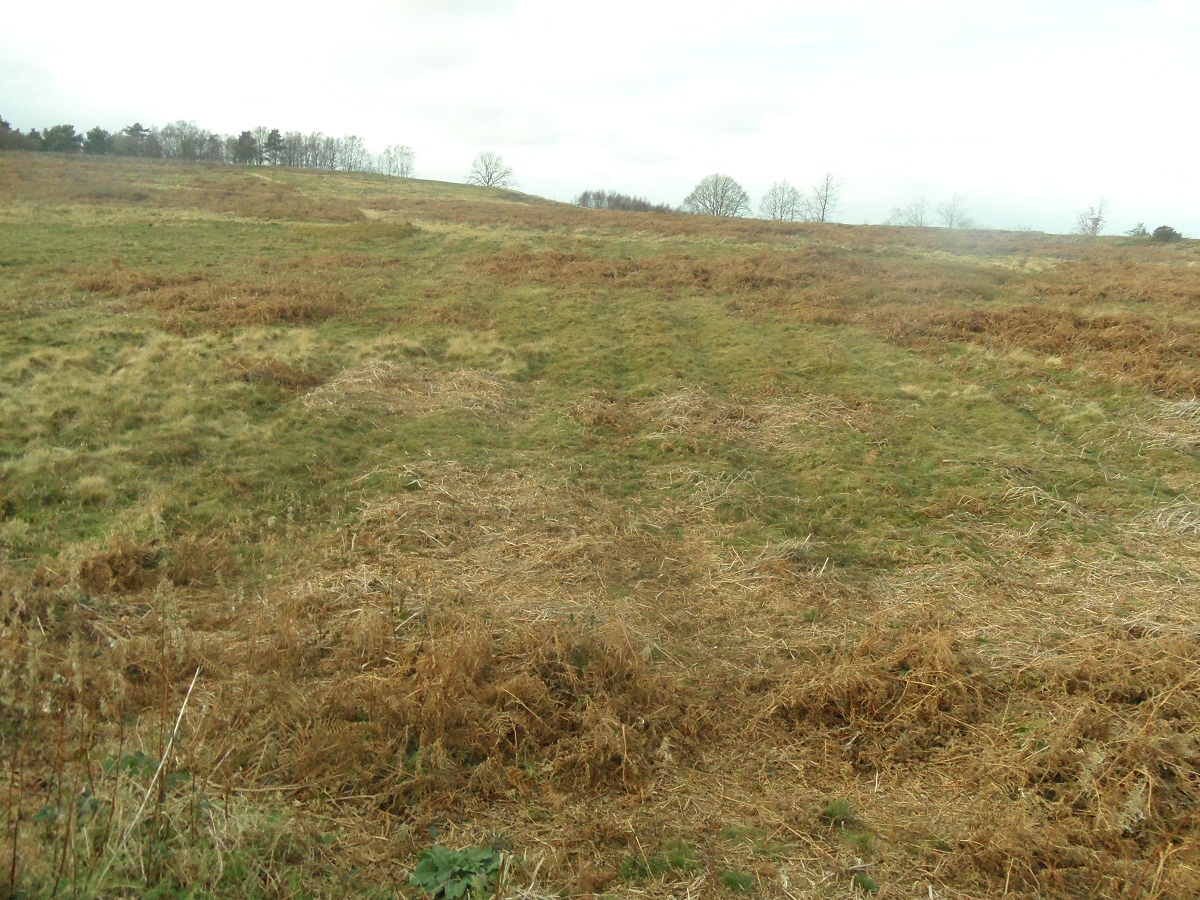
Ridge & Furrow I think. See edit below.

As Castle Ring is only about 6 miles away from Lichfield, this post is a nudge to get you to go and have a look for yourself if you possibly can, as descriptions and photos (especially the kind I take!) are no substitute for visiting the highest point of Cannock Chase (235m in fact), which also happens to be a site thought to have been occupied 2,500 years ago. For more information & directions, you can download the leaflet from here and read a much more detailed description on the Pastscape record.

On the subject of photos though, it is worth having a look at a photo of the site from above.

Now that I’ve been once, I shall definitely have to go back. There are the remains of a 12th century medieval hunting lodge I missed and as well as being a Scheduled Ancient Monument, it’s also been classified as a Site of Biological Importance. Adders and common lizards, damselflies and dragonflies are found in the grass and bogland habitats there.

Obviously, I am no expert, but it’s interesting to read the Management Plan  produced by Cannock Chase District Council (according to the plan, they purchased the site for £200 in 1933 at a sale at the Swan Hotel in Lichfield. It had previously belonged to the 6th Marquis of Anglesey). It must be a hard task to maintain a balance between public access to somewhere like this and protecting the site’s ecology and archaeology. 

I’ve mentioned the Scheduled Ancient Monument we have here in Lichfield before. Other than this listing, is there anything in place to protect, manage or inform about this site, as there is at Castle Ring? Should there be?

*My fault entirely. Considering I spend so much time on the internet, you’d think I’d use it for useful things like checking opening times!

Edit 25/1/2012. Doubt has crept in about when that ridge & furrow dates to. I originally said it dated back to early 20th century, based on something I’d read but ‘Born a Lichfeldian’s’ comment has made me rethink this. So if any knows any better (and I’m sure there are plenty that do!) please don’t hesitate to put me straight!

Elford Revisited

The estate that Mr Paget handed over to Birmingham City Council in July 1936 was made up of over 600 acres, including the Hall & associated gardens, Home Farm inc. the Park, Cottages, Woodland and part of the River Tame. You can see Elford Hall circa 1790 to the left of the Chruch in the above picture and there are more recent photographs of the Hall on Staffordshire Pasttrack

According to the 1936 Estate Agent’s report, the Hall obtained water from various wells, although water was pumped to the ground floor of the house via a petrol engine (South Staffordshire Water Co was in the process of laying pipes in the village at the time and the agent recommends that the Hall be connected). Sewage was collected in cesspits. Lighting in the Hall’s 16 bedrooms and other rooms was still from oil lamps and candles, although a public electricity supply had recently arrived in the village.

One thing I’m interested in is the relationship Elford Hall & its owners had with the rest of the village. What effect did the unexpected decision to hand over the estate to a public body have on the villagers?  Perhaps a small hint of the role played by the Pagets can be seen in the meeting notes of the Elford Hall Committee held at Birmingham Council House on 17th Februrary 1937. It says:

“A communication was submitted from the Chairman of the Elford Village Hall Committee asking for a contribution from the council towards the coronation celebrations in Elford Village. The Chairman undertook to communicate with Mr Paget as to his action on the occasion of the silver jubilee. Decision deferred.”

Another thing I’ve been wondering about is what would have happened had Mr Paget kept Elford Hall? The England’s Lost Country Houses site lists over 50 demolished country houses in Staffordshire alone. Most disappeared after the First World War. Although of course eventually demolished in 1964,  Elford Hall is one of the longest surviving on the list. Would retention by the Paget family have ensured its survival or hastened its demise?

I’m off to one of Staffordshire’s surviving country houses on Tuesday. Shugborough Hall – offered to the National Trust in lieu of death duties on the death of the 4th Earl of Lichfield in 1960 and managed by Staffordshire County Council.

Elford, Fisherwick, Beacon Place, Drayton Manor or Shugborough – I’m finding the world of country houses and the families that dominated our area fascinating. The social and political changes that led if not to their complete demise, to a change in their use. And of course discovering the remaining fragments of those disappeared estates.

Actually, I am now regretting not watching Downton Abbey as research….

War & Elford Hall – Updated

 I went to Birmingham archives today, to hopefully see some records that would reveal more about the now demolished Elford Hall, on the Tamworth/Lichfield border.

Why did I have to go into Birmingham to see the records of somewhere in Staffordshire? Well, the Elford Estate has been under the ownership of Birmingham City Council since 29th September 1936. It was given by Mr Francis Howard Paget for the ‘healthy recreation of the inhabitants of the City of Birmingham’. Mr Paget took the decision to donate his Staffordshire estate to a public body, after he witnessed his friend being blinded by a grenade in the trenches of WWI.

Council House, Birmingham.

The records I looked at today were the minutes of the Elford Hall committee meetings held at the Council House between July 1936 and June 1945. I may be wrong, but I get the impression that the committee which included the Lord Mayor of Birmingham, weren’t quite sure how to make best use of this generous gift, especially the Hall. There is talk of  the Municipal Officers Guild taking over house & gardens as a rest home for members of staff, or if not them the NUT. Whilst such decisions were being made, the Estate Agent’s report of December 1937 tells how the Hall was ‘being kept aired as far as possible. Some bedding & soft furnishinings stored.’ He also suggests that pensioners from the estate should be recruited as park keepers to look after the grounds, with the assistance of a woman from Fisherwick.

Elford Hall’s history had already been changed by one war and then a second, different conflict also left its mark. On 21st May 1937, almost 4,000 Basque children seeking refuge from the Spanish Civil war arrived in Britain. Some were eventually sent to Elford.  There are only a few mentions of this in the minutes – in the meeting notes dated 12th June 1939, the committee was reminded that since their last meeting, arrangements had been made, after consultation with Mr Paget to accommodate number of Spanish children at Elford Hall. Also, in December 1938, when an application for the hall to be used to house young German male refugees (who after agricultural training would be sent to Palestine) was rejected on the grounds it was fully occupied by Spanish children. However, it seems that by the time the committee went to visit in June 1939, the Hall was once again vacant. It was recorded that the Hall had sustained a considerable amount of damage.

Other subsequent applications for use (German/Czechoslovakian refugees and as a children’s hostel) were deemed unsuitable. On 17th July 1939, another suggestion – a convalescent home – was put forward. I imagine such discussions were interrupted by the declaration of war less than two months later. The only other reference I could find to the Estate during the period the records covered (June 1936 to June 1945) was in July 1940, when an allegation of trespass and damage to trees & fences by soldiers manning a searchlight at Elford was made. The Hall was demolished in 1964 but as I mentioned in my The Garden of Elford post, the walled garden and some of the associated buildings are in the process of being restored.

There wasn’t as much information on the Basque refugees as I had hoped. There is however some uncatalogued material held at the library which may add to the story and which I will seek out in the not too distant future.

Edit:

Whilst having a look at Mr Paget’s family tree, I found out that his daughter, Elizabeth Beatrice Rochfort-Boyd had been a prisoner of war at Camp Holmes in the Philipines. In September 1943 she wrote to her father, as can be seen here. Elizabeth was born in January 1913, making her around 30 years old at the time of her imprisonement. The Camp was liberated in February 1945.

Mr Francis Howard Paget died on 9 April 1945 aged 58 at his home in Kent.

Edit 2:

For context, I found a news report dated 28th April 1937 from The Guardian archive regarding the bombing of Guernica, which can be read here.

Also a 10 minute report from the Witness program on the BBC World Service, in which Snr. Hermino Martinez talks about his evacuation can be listened to here. This doesn’t directly relate to Elford but gives some idea of the experience of the Basque evacuees.

Also of interest is an article in The Black Country Bugle about the Basque children who stayed at Aldridge Lodge in Walsall. You can read it here.

Edit 3: A report in the Lichfield Mercury edition of August 13th 1937 describes a meeting of Elford Parish Council. The refugees were due to arrive at Elford in mid-August and the meeting records the concerns of the Council about the effect that housing the refugees in the Hall may have on the village.

Sources:

Elford Hall Sub-Committee Minutes 1936 to 1945

www.elfordhallgarden.org.uk/history

http://www.basquechildren.org

Staffordshire Family History Resources

Just a quick side step from the usual stuff.  Anyone researching their family history in Staffordshire should check out the Staffordshire Names Index from the Archives Service – http://www.staffsnameindexes.org.uk/
I’m working on the Wills project and it is an absolutely fascinating resource.  I thought that only well to do people would have left wills, but the archivist said this isn’t the case at all.  In fact, in the few weeks I’ve been doing it, I’ve seen people leave anything from the money in their pocket to diamond earring and gold rings! I’ve come across wills for weavers, labourers, innkeepers and nailers. If you can find one for your ancestors you may hit the family history jackpot, as it can provide you with details of other family members, occupations, place of residence, property and goods owned. 
Happy hunting!