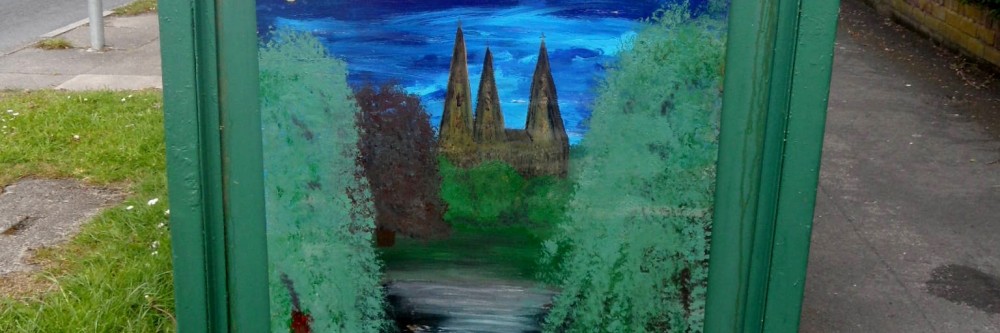
Much of what is now Beacon Park in Lichfield once belonged to the Beacon Place (sometimes known as House) estate. The house is long gone, demolished in 1964, but I know that there are some remnants left over! I enjoyed my ‘treasure hunt’ around the old Fisherwick Estate and thought it might be interesting to do something similar a bit closer to home. To avoid this being too long a post, I’m doing it in two parts. Part one is a very brief history of the estate.
George Hand built Beacon Place in the late 18th century. 1 On the death of his widow Ann in 1826, the house was sold in an auction at the George Hotel on Tuesday 28th March 1826. Amongst other things, it was described as having contained a handsome staircase of Hopton Stone, lit by a skylight, a kitchen garden with hothouses and orchards, and good cellars under an excellent kitchen.2
From 1837, Beacon Place was the home of Richard and Ellen Jane Hinckley. As well as extending the house itself, they also gave land for the construction of Christ Church in 1847. The Hinckley’s had their own pew at the church3, and could see it from the house. As I’ve mentioned before, the lane running alongside the church, over the A51 and into Beacon Park, is an old carriageway that would have led to the house (I think it was also the old Walsall Rd until 1832).4
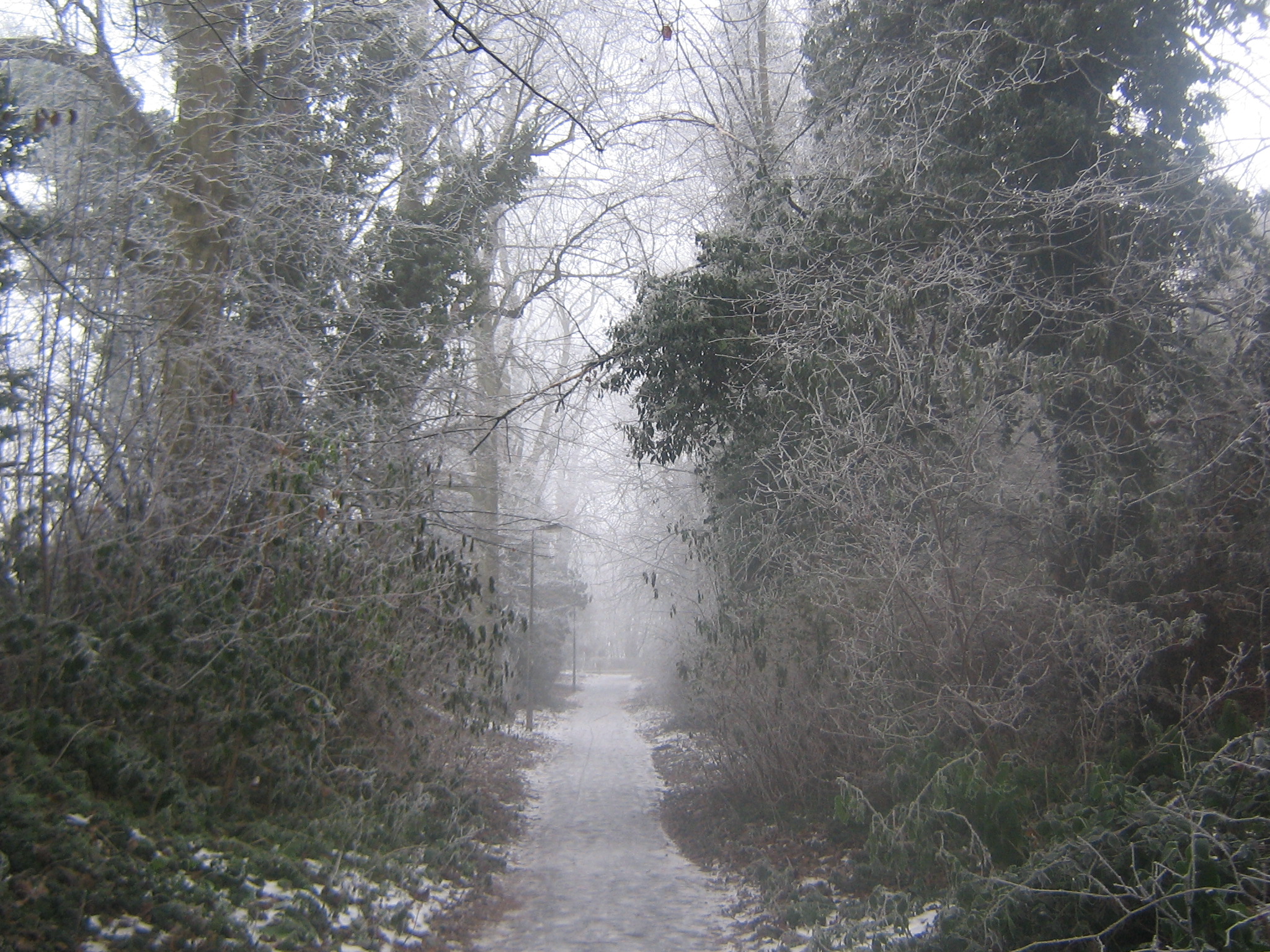
The path between Christ Church and Beacon Park in winter
Richard and Ellen Jane Hinckley are buried in two of the three tombs behind Christ Church. The third tomb is that of Ellen’s son Hugh from her previous marriage to Hugh Acland. Hugh jnr. was one of the first people to be buried in the graveyard.5

Hinckley Tombs, Christ Church
A document at Lichfield Record Office gives an insight into how some of the rooms were furnished. The Inventory and Valuation of Beacon House for Probate on 2nd November 1870, following the death of Mrs Hinckley lists furniture, artwork and decorative items, and even some of the books that she owned. For example, Mrs Hinckley’s dressing room contained a fire screen, bookshelves, a weather house, an easy chair, a small ivory bust, two cases of insects in glass, a Bible and five pieces of ornamental china. I think there were also portraits of her Father and second husband. The best dinner service used in the house was Ironstone China (from Staffordshire of course!). Some of the Hinckley’s silverware was engraved with family crests or initials. I wonder if there is any still around in someone’s cabinet!6
On Mrs Hinckley’s death the estate passed to her husband’s nephew Arthur Hinckley7 and it was sold at The Swan Hotel on Wednesday 27th October 1880 at 6 o’clock to Samuel Lipscomb Seckham (who I believe was renting Hanch Hall at the time and later also purchased Whittington Old Hall)8. Some of the items listed on the sales particulars are extensive pleasure grounds, flower and kitchen gardens, vineries, peach and hothouses, a coach house, stabling for 6 horses and a labourer’s cottage. It was described as standing on an elevation which commands beautiful views of the Cathedral and of the open country with ornamental pools and plantations in view of the windows.9
So that’s a brief description of how it was, but what remains of the estate today? Part two to follow shortly!
*Ellen Jane Hinckley was the mother of Marianne and Ellen-Jane Robinson, who are the subjects of the ‘Sleeping Children’ monument in Lichfield Cathedral. The plaque behind the monument belongs to her first husband, and father of the children, Rev Robinson. I learned something new about this well known sculpture recently from a friend who had been on a tour of the Cathedral. Sir Francis Chantrey, the sculptor, apparently left an uncarved piece of marble on the foot of one of the children, as he believed that only God was able to create perfection.
Edit 6/9/2011
There’s a program on BBC iPlayer called Romancing The Stone: The Golden Ages of British Sculpture. In part 2, Mavericks of Empire there is a section on Chantrey and the presenter Alistair Sooke visits Lichfield Cathedral and discusses the monument with the Head Verger. This link should take you to this part of the program http://www.bbc.co.uk/i/yml9v/?t=26m04s
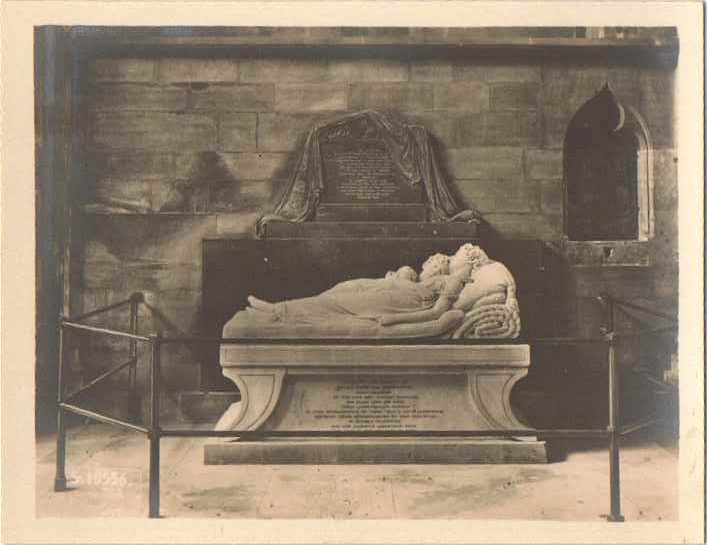
An old photograph of The Sleeping Children Monument in Lichfield Cathdral
Sources:
1. ‘Lichfield: Manors and other estates’, A History of the County of Stafford: Volume 14: Lichfield (1990), pp. 67-72.
2. Sales particulars of Beacon House estate 1826, accessed at Lichfield Records Office
3. The Gentlemans Magazine By Sylvanue Urban Vol XXIX
4. ‘Lichfield: The 19th century’, A History of the County of Stafford: Volume 14: Lichfield (1990), pp. 24-32.
5. Cathedral City by Howard Clayton
6. Inventory & Valuation of Beacon House for Probate accessed at Lichfield Records Office
7. ‘Lichfield: Manors and other estates’, A History of the County of Stafford: Volume 14: Lichfield (1990), pp. 67-72.
8. https://lichfieldlore.co.uk/wp-content/uploads/2011/09/howell.pdf
9. Sales particulars of Beacon House estate 1880, accessed at Lichfield Records Office








 Lichfield Lore