The Streets of Lichfield

It’s quite well known that Bishop Roger de Clinton laid out the main streets of Lichfield in a grid pattern, still in evidence over 800 years later.

Lichfield 2011-ish

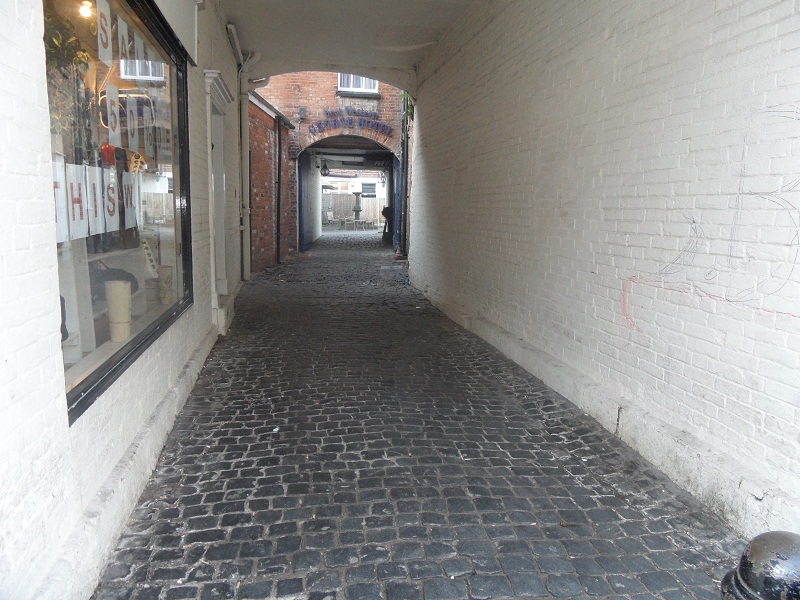
What about those in between though? An email from Pat and a chance conversation about a book ‘A Walk Around the Snickelways of York’ by Mark W Jones (1) got me thinking about the alleys, the passageways, the shortcuts and the entries, winding themselves around buildings and connecting one Lichfield street with another.

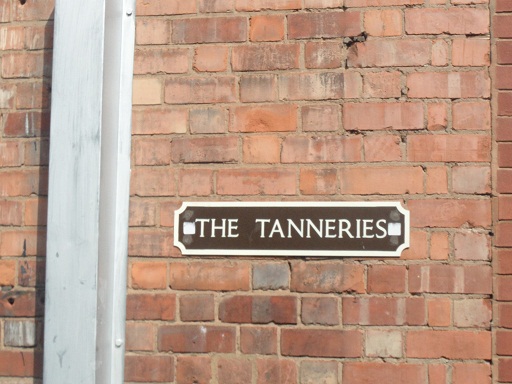
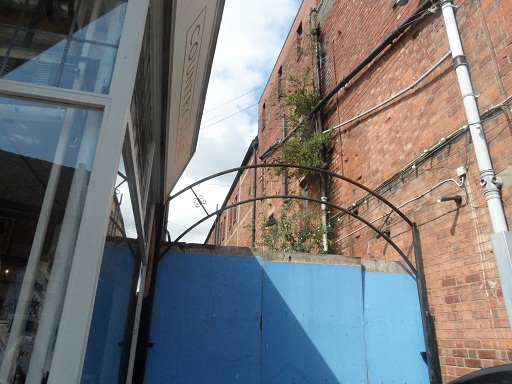
Pat’s email asked if I knew anything about The Tanneries, running from Tamworth St, along the left handside of what was the old Kwiksave building, (and the Regal Cinema before that) to Cross Keys carpark.

The Tanneries

The Tanneries is blocked off at present

I don’t, but I’m interested how long this pathway and the others around the city have been around for.

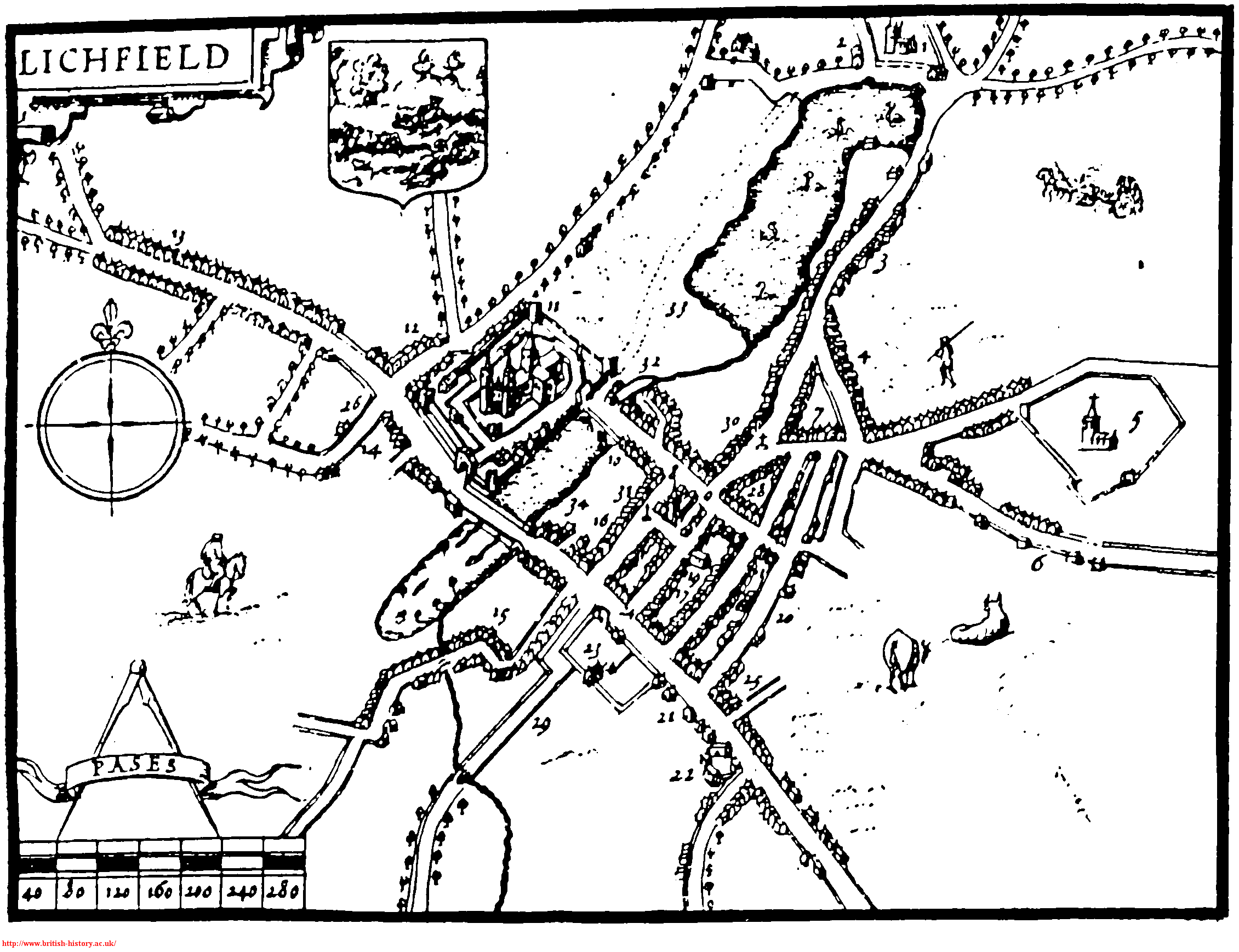
Some are documented better than others. Friar’s Alley running alongside the edge of the site of the old Friary and onto Bird St appears as Friers Lane on John Speed’s 1610 map (no 29).

1610 map of Lichfield

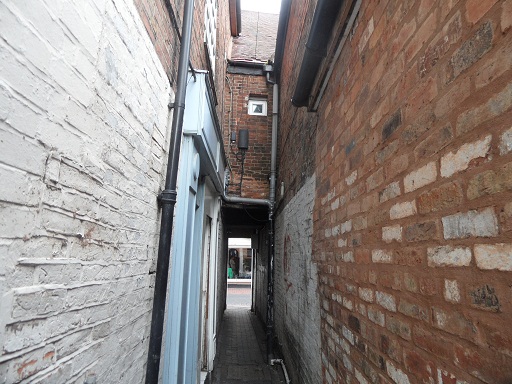
Later it shows up on John Snape’s map as Friers Alley in 1781. On later maps, the narrow part leading to (or from depending which way you are going!) Bird St was known as Moss’s Entry.

Moss's Entry/Friars Alley onto Bird St

One of my favourites is the old carriageway leading to the courtyard of the George Hotel. It takes you past doors and bricked up windows, but it’s the floor with its Rowley Ragstone Setts (2) that I really like, as this small side passage gives an idea how Lichfield’s main streets would have been paved in the late 18th century.

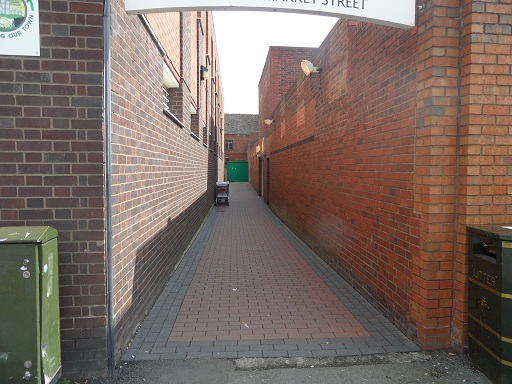
George Hotel from Market St
 

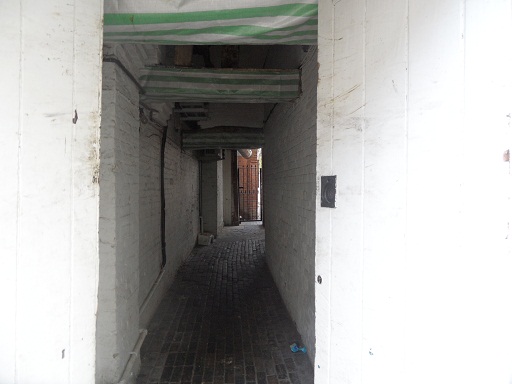
I’ve taken some photos of others I came across. Most are found in the city centre though I’m sure there are loads more to be found throughout Lichfield. Of course, if anyone wants to share one they know of, or has any more information about any of the above or below, that’d be fantastic!


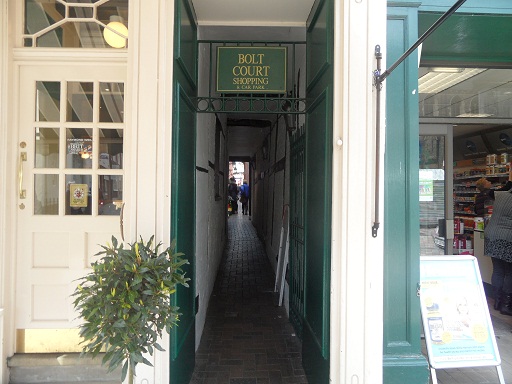
Bolt Court - a really busy little street


Inside Bolt Court


Alongside butcher shop on Market St


From Market St...


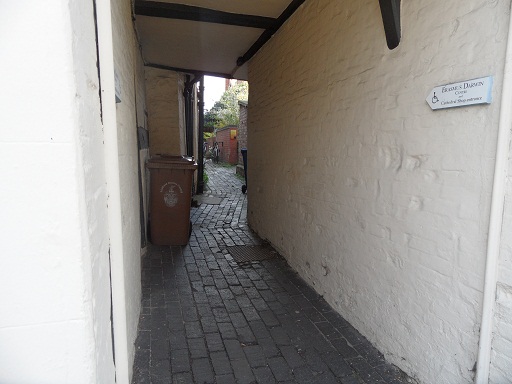
The Close to Erasmus Darwin House

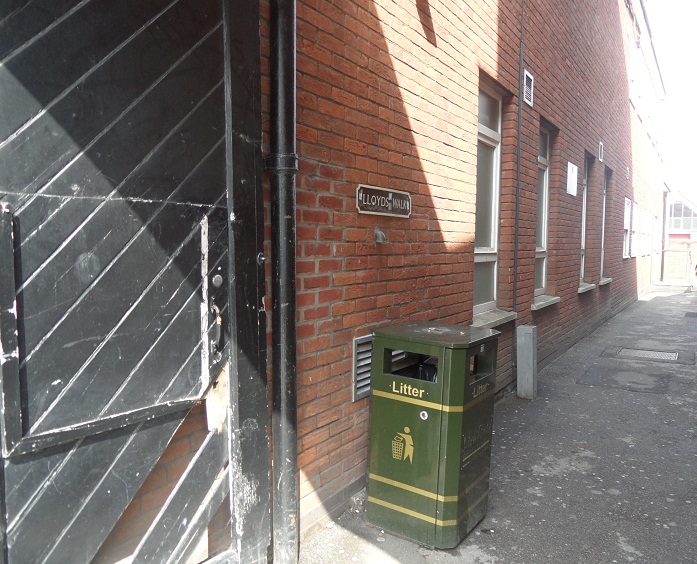
Lloyds Walk


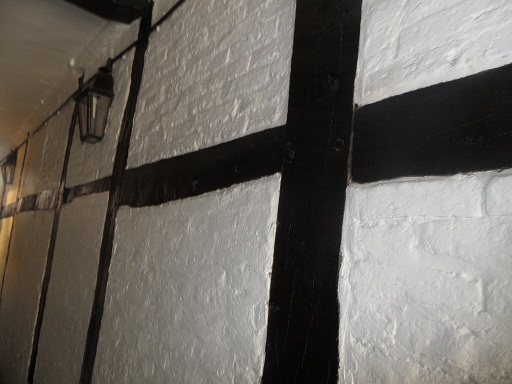
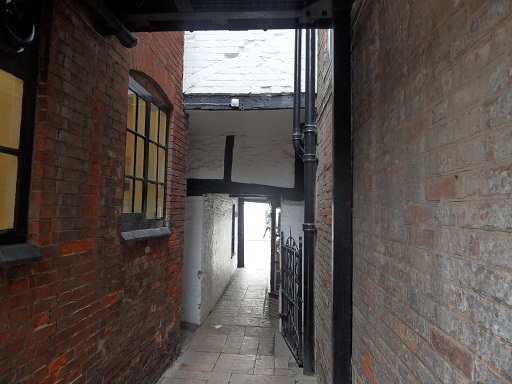
Tudor Row out onto Bore St

You see buildings differently walking these paths, maybe I’ll explore the backside of Lichfield a little more……

Footnotes:

(1)Snickelway is a great word created by Mark W Jones. It’s a portmanteau (which is in itself a great word!) of Snicket, Ginnel and Alleyway and Mr Jones explains, ‘A Snickelway is a narrow place to walk along, leading from somewhere to somewhere else, usually in a town or city, especially in the city of York’.

(2) Information taken from Staffordshire Pastrack website.

Map information from: ‘Lichfield: The place and street names, population and boundaries ‘, A History of the County of Stafford: Volume 14: Lichfield (1990), pp. 37-42. URL: http://www.british-history.ac.uk/report.aspx?compid=42340

Fruit & Nut

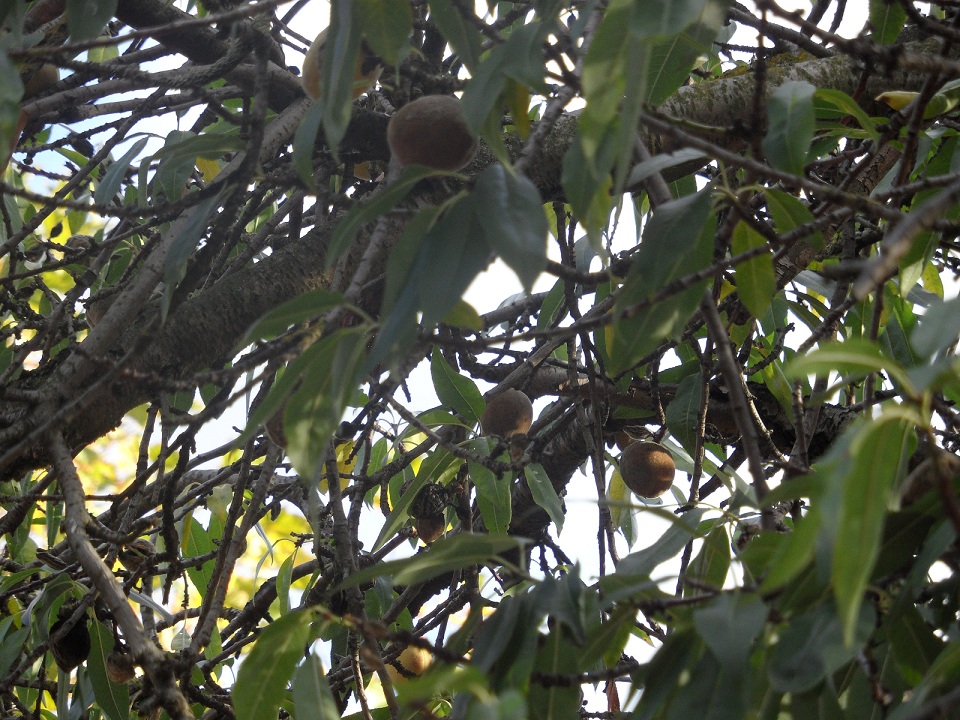
Following on from the apple tree & walnut tree post, Pat (someone who makes a fantastic contribution to this blog via his comments & in other ways), got in touch to say that he knew of an almond tree in Lichfield.

I admit that I don’t know much about thses things, but to me that seems unusual. I associate almonds with warmer climates and so I didn’t expect one to be growing near to the Friary car park. However, there it was, boughs laden. With a lemon tree also growing nearby, perhaps this part of Lichfield has a mediterranean micro-climate?!

Something that I didn’t know until today was that almonds, are not true nuts, but are part of the ‘prunus’ family, together with apricots, cherries & peaches. The edible part of almonds is the seed, but only for the sweet variety. As Pat pointed out these almonds are likely to be wild, bitter almonds and therefore contain cyanide!   So, don’t get picking them to grind up into your Bakewell Tart …

Many thanks to Pat, for sharing this information.

Malus John Downie

I’ve been going on about the Elford Pippin since before the summer, but a few days ago I noticed this at the Friary by the Festival Gardens in Lichfield.

First raised in Whittington in 1875

Another local apple. Unlike the Elford Pippin this one is still around. Actually, I looked for its ‘rich, orange red fruits’ today (it’s in season in October) but I couldn’t find any evidence of the tree at the Festival Gardens. However,  you can still buy it from all good tree shops! It was apparently raised by a Mr E Holmes at Whittington & was named after his friend and fellow nurseryman John Downie.  I hear that the apples are the finest of all crabs – good to eat when ripe and make an excellent jelly.

It seems quite an appropriate day to do this post, as there is an association between apples & Halloween. Along with apple bobbing, I can also remember being told that if I peeled an apple and threw the peel over my shoulder it would show me the initial of who I’d marry. I seem to recall doing this several times over until I got the initial I wanted…..There was something about sticking apple pips to your face as well!

I had thought aboutdoing a post about spooky goings on in the area, mainly because I wanted to do a post with the title ‘Witchfield’ 😉 Sadly,  I ran out of time but if anyone does have any tales to share…….


The Lichfield Underground

St Mary's House, The Close.

My introduction to Lichfield’s underground world came a couple of years ago, on the thoroughly enjoyable Gruesome & Ghostly City tour.

Then, back in January 2011, there was a series of great posts on TamworthTimeHikes about underground mysteries in Tamworth. As a result, information came to light (sorry!)about tunnels in Lichfield and Mark kindly passed the information on to me. Since then, tunnels have resurfaced several times (sorry again!), most recently in conversations with Vickie Sutton, Brownhills Bob , the folks at the BeaconStBlog, and as you may already have seen, in the comments section of the Monks Walk post. So, I thought I should finally get around to doing something on them! Here’s what I’ve heard/read/speculated about so far…..

1)      Under Sandford St

My first tunnel! Standing on the corner of Sandford St on a chilly October night we were told that tunnels led from that area to the Cathedral. In recent conversations on the Monks Walk post, ‘Born a Lichfeldian’ has contributed more to the story of the tunnel, suggesting that the tunnel also runs to The Friary.  You can read the discussion here.

2)      White Hall on Beacon St

In a book ‘Lichfield & its Cathedral’ by H Snowden Ward (1893) is the following description “From the cellars of the inn, an underground passage ran some distance and was popularly believed to terminate as St Chad’s Church. That is went so far is extremely unlikely, and what was its object or termination will never be known, for a few years ago the late owner of the White Hall caused the portion under that house to be filled up, and without having the passage explored through its whole length”.

Edit 15/11/2011

City librarian & historian J W Jackson (who I’ll introduce you properly to another time) noted in his weekly history column in the Lichfield Mercury of the 1930s that the tunnel under White Hall was dug out by a previous owner during the plague. Presumably he wished to go about his business without soming into contact with carriers of the disease or the bad air that some thought caused the plague at the time. Would be interesting to see if there are stories of any tunnels elsewhere being dug for this purpose?

3)      Under Dam St

Some information from googling,  that I think came may have originally come from the Staffs Books Shop that used to be on Dam St, says that there is speculation that a passage runs along Dam St from the Cathedral to the Guildhall, and was used as an escape route during the Civil War. In an 1819 book, ‘A Short Account of the Ancient & Modern State of the City & Close of Lichfield’, it says ‘A large subterraneous passage of stone, several feet beneath the surface, has been traced from the middle of Quonians Lane, under the houses on the west side of the street, for a considerable distance in the gardens; its use cannot now be ascertained.”

4)      St Mary’s House in The Close

In the Lichfield Records Office there is a copy of Lomax’s Pictoral Book of Lichfield, edited by Alan J Bull. It describes St Mary’s House as the oldest house in Lichfield and says that the East & South walls are part of the original building which dates back to before 1321 and formed part of the Close’s defences – at the base the walls are 6ft thick and you can still see the arrowslits. The book goes on to say that tradition has it that below this building are underground passages leading to St Chad’s, White Hall, the Friary, St John’s Hospital and the Old Brewery on Sandford St.

5)     Beacon Street again!

Vickie’s Aunt remembers seeing a very large tunnel somewhere in the vicinity of Beacon St, which she describes as being whitewashed and large enough for a coach & horses to get through.

6)      Tudor Tea Rooms

On their own website, there is a description of a passage going from their cellars to the Cathedral. They speculate that it may have been dug out  during the Civil War. Apparently, the “passage has been followed for some distance in recent years, but is too dangerous to pursue further”

7)      Greenhill

A rumour of a tunnel behind a building on Greenhill, which used to be a pub called the Spread Eagle. (You can still see the archway for the coaches & the building is called ‘Spread Eagle House’).

As well as discussing tunnels, I’ve also been talking to people recently about the importance of stories & legends, like these. Do we really need to get to the truth or should we leave them be & enjoy them for what they are? I still haven’t made my mind up, so, I’ll leave it for you to decide in this case.

Therefore, this next part is a bit like a Choose your Own Adventure book (remember those? I used to have my fingers bookmarking about 5 different options at a time!). If you would like to investigate the truth behind Lichfield’s mysterious tunnels you could start by clicking here or exploring some old maps of Lichfield here. Just suggestions though, can’t guarantee you’ll find the answers!

If you’re happy to accept the stories as they are, then relax and perhaps go & make yourself a nice cup of tea 🙂

Edit:

I’ve been told about another tunnel by someone on Twitter – one between Gaia Lane and the Cathedral. Apparently it leads to a house that used to be used as a laundry/servants quarters. A relative of my tunnel informant has actually been in the tunnel, and says it is blocked off. We’re thinking laundry tunnel, servants passage – anyone else know anything?

Interestingly there was a daughter and mother,  Ellen Stone and a Mary Skelton, both described as a ‘Laundress’ living at Gaia Lane on the 1851 census. Going off topic somewhat, Ellen’s son Henry lived with them. He was illegitimate and there is some interesting speculation on who his Father may have been. You can read more at the Stone Family History site here.

Edit: 10/3/2012

I’ve come across a scribbled note I made some time ago which says there is a tunnel underneath Farewell Church. Interestingly, there is a work of semi- fiction set at the nunnery that preceded the church. The story is set at the time of the dissolution of the monasteries and is called ‘A Tale of Fairwell’. The last scene of the book is set in ‘the subterranean vaults of Fairwell Priory’.

Also, Hanch Hall has a confirmed underground passage of some description – the listed building description says there are ‘extensive brick vaulted cellars with vaulted passage or drainage channel leading into the park’.
The Tombstone at Lichfield Library

I may be wrong but I’m assuming that there aren’t many libraries which have a 14th century tombstone embedded in their wall. I couldn’t quite believe that Lichfield library did either and so after watching the Queen travel up Bird St to the Cathedral, it was time for the really exciting part of yesterday to commence! Sorry Ma’am.

I was reading a copy of ‘Hyacinths and Haricot Beans: Friary School Memories’ by Jean Bird.  The book tells of a slab from a tomb found during renovations in 1926 being incorporated in the Friary building itself, which of course housed the school prior to its move to Eastern Avenue.

Checking the site’s listed building description confirmed this:

“…window to right of entrance has ex-situ gravestone of C14 or earlier below: calvary cross fleury and worn inscription to Richard the Merchant, found in 1746”

Another fairly recent reference was the Public Monument and Sculpture Association National Recording Project which described the stone as being placed ‘at the rear of Tamworth & Lichfield College, set into the wall by founder’s door’.

Anyone passing would never notice the stone....

At the rear? Well, at least that would explain how I managed to visit at least once a week, without noticing a large tombstone embedded into the wall.  In fact, once I got to the back of the building and the founder’s door, it was clear that few would notice the stone. Partially obscured by a shrub, a faint carving of a cross can be detected. Time and weather have not treated the stone well.

The fading stone

A trip to the Staffs Past track website reveals a drawing of the stone as it was around 250 years ago. It seems the stone was found in 1746 and then somehow lost and then rediscovered in 1926!  Bulldozers working on the new Friary Road in the 1920s cut through the site of the Grey Friars cemetery.  One of the contributors to the Friary School book recalls the bones that were uncovered being reburied ‘in the site opposite’.  Perhaps that’s where the remains of Richard are today.

Whilst round the back of the library, I also discovered the wonderful Monk’s Walk garden, which I shall do a separate post on.  Something else I hadn’t noticed on all of my visits to the library. That’s one of the things with Lichfield, you just never know what’ll turn up next……

Edit 29/8/2011

In ‘A Topographical History of Staffordshire ed. William Pitt’ (1817), I came across a description of how the tombstone turned up in 1746. Apparently on October 14th of that year, Mr Michael Rawlins was living at the Friary and was building a wall with a gate. Whilst digging the foundations, he found the grave stone about 6 foot under the surface with a coffin and bones underneath it. He placed the stone in a niche in the wall of the stables.

 Sources:

Hyacinths and Haricot Beans: Friary School Memories 1892 – 1992 by Jean Bird

From: ‘Lichfield: Education’, A History of the County of Stafford: Volume 14: Lichfield (1990), pp. 170-184. URL: http://www.british-history.ac.uk/report.aspx?compid=42354 Date accessed: 20 July 2011.

http://lichfielddc.limehouse.co.uk/portal/planning/conservation_area_appraisals/lichfieldcaa?

http://www.staffspasttrack.org.uk

Public Monument and Sculpture Association National Recording Project