Bricks & Water

With traces of snow on the ground, but the sun shining, I headed back to Farewell last weekend.  Following my previous visit, I’d had a look at some old maps and another extremely helpful conversation with BrownhillsBob on the subject of wells. I was hopeful that this time I’d be able to find the site of the well, that gave the place its name.

This description of the well is from ‘A Tale of Fairwell’, set at the priory in 1527 and published in the early 1800s  – ‘Exactly in the centre, the sparkling tide of a large well or rather fountain leapt from a carved stone basin and hurrying hither and thither amidst rich grass floated under an arch in the wall into the pool that supplied the mill.’ Whether there is any element of truth in this description or whether it’s completely imagined, I don’t know!

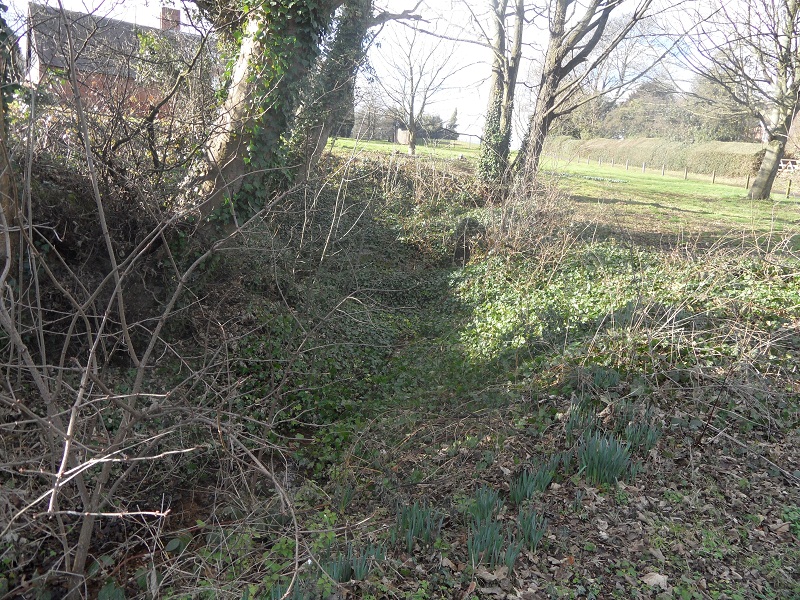
All I could find is this hollow, which is marked on maps ranging from 1884 to the late 1960s, as a pond. The maps also show a well or spring to the north east marked as ‘Well’ or ‘Fare Well’.
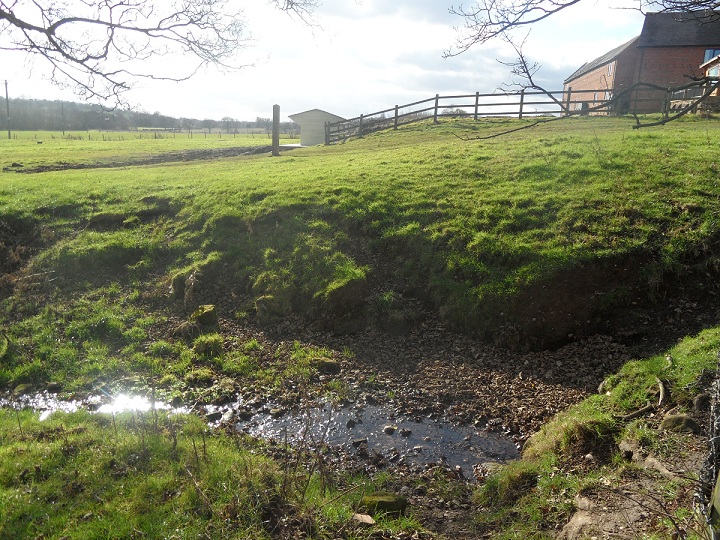
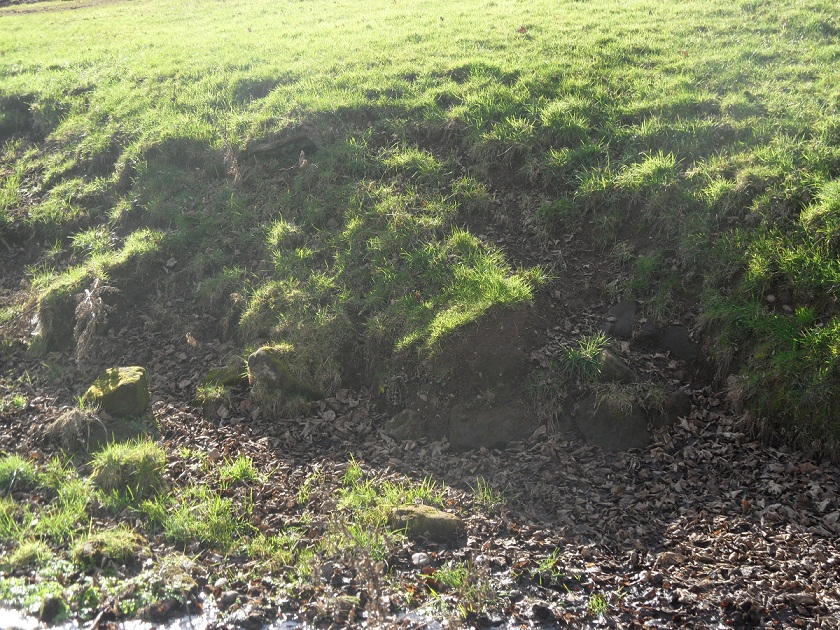
 Just down from this old pond, is a small brook in which there are some big chunks of stone. This brings me onto the next question! What remains of the priory of St Mary, initially founded as a hermitage but shortly afterwards converted into a nunnery?
The priory was dissolved in 1527. It seems that the old nunnery chapel was retained as a church but most of it was rebuilt in 1747 in brick,  leaving only the stone chancel.
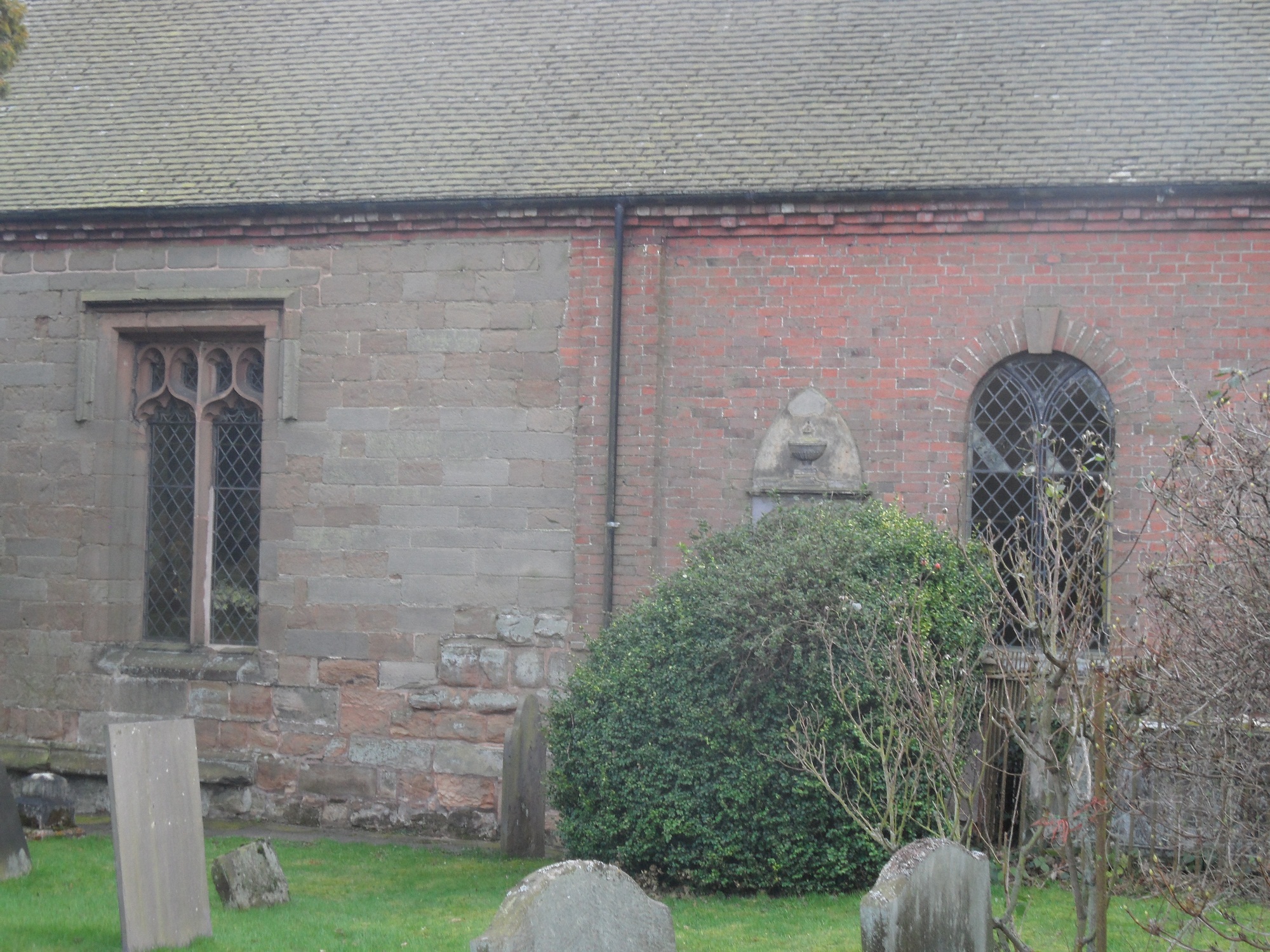
The two different parts of the church.

Pat suggested that a nearby wall might contain some of the stone from the earlier building(s).
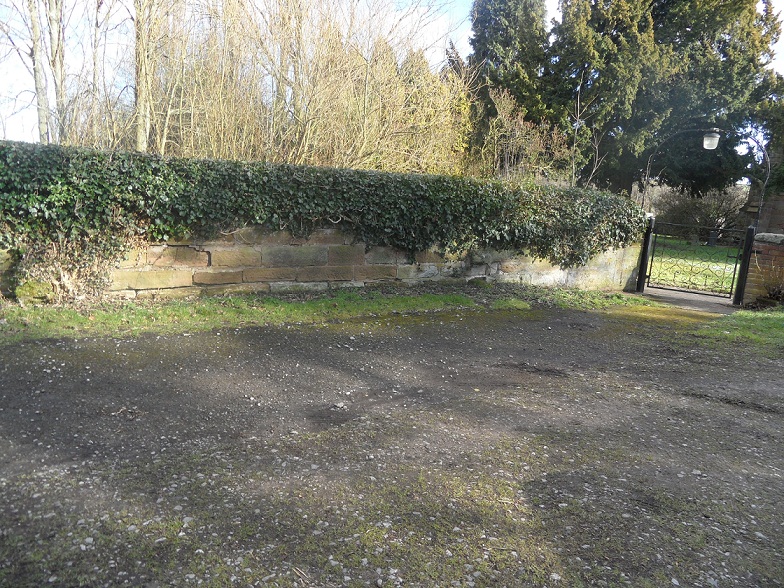
A brick wall has been built around the church yard, and this too seems to incorporate some older stone?
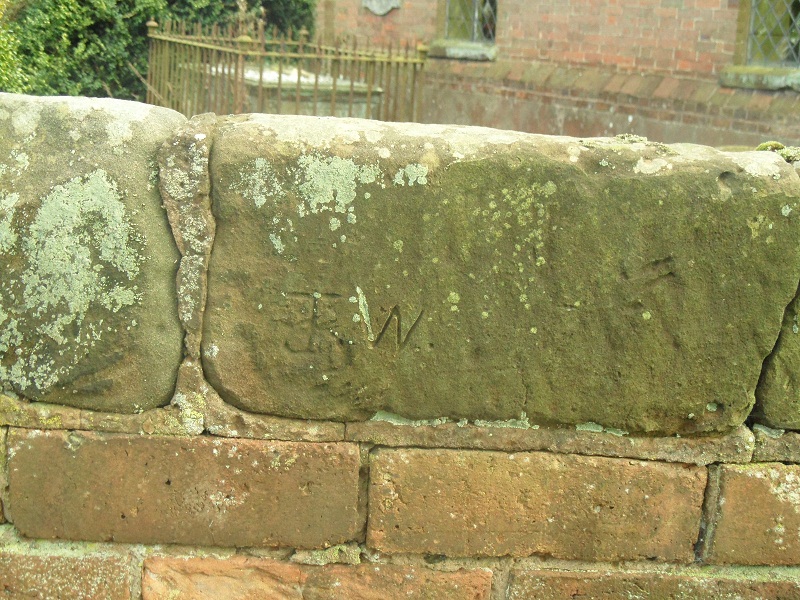
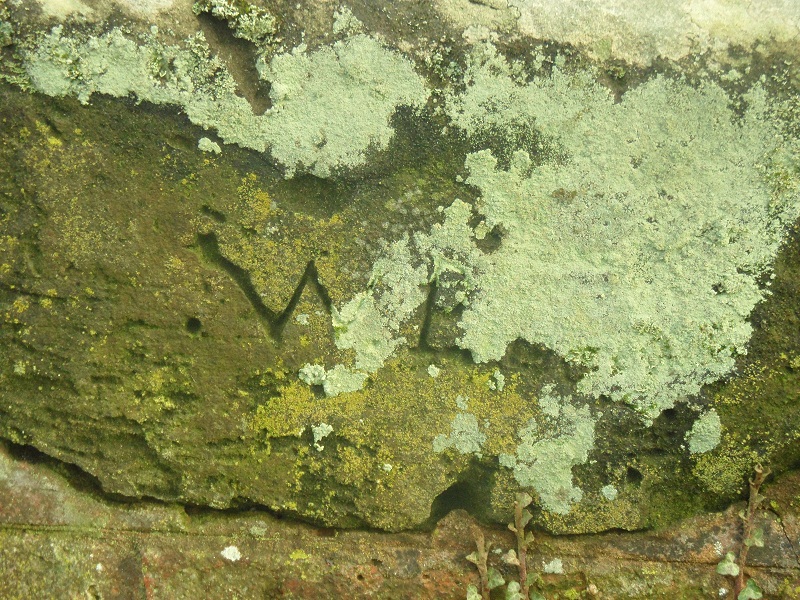
A archaeological resistivity survey carried out in 1992 located areas of higher resistivity thought to relate to demolition debris from structures associated with the church. Staffordshire Record Office hold the results of the survey which ‘revealed significant archaeological remains relating to the priory, including walls of buildings and the remains of the precinct wall’. I wonder whereabouts?

Until I can get my grubby mitts on a copy of this or any other real evidence, I’ll just have to be content that Farewell is a lovely place to speculate about!

Farewell Tour

From doing a bit of research on Cross in Hand Lane, I knew Farewell had been the site of Benedictine nunnery and also that the placename (sometimes spelt as ‘Fairwell’) refers to a nearby ‘fair or clear spring’. I had no idea what was left of either, the nunnery or the spring, so on the way home from Castle Ring, we stopped off for a look around.

St Bartholomew, Farewell

The most striking thing about the church is the mixture of  the two different building styles and materials. It seems the original church (which you can see here on the Staffordshire Past Track website) is thought to have contained parts of the nunnery which was dissoved in 1527.  Most of the old building was demolished & rebuilt in brick in 1745. However, the stone chancel remains. Below are a couple of photos  showing the contrast between the chancel and the rebuilt part of the church . I’m not sure but the bottom right corner of the older, stone built part of the building looks different again?

The two different parts of the church.

Have a look from a slightly different angle.

Whilst these renovations were being carried out, workman made a discovery. According to Richard Greene, in the south wall, six feet off the ground were three rows of earthen vessels. Each row contained vessels  of a different size (the smallest was 6 1/4 inches high) lying on their side, openings covered by a thin coat of plaster, facing towards to interior of the church.  All but three were broken in the process and one of them was kept at Richard Greene’s museum. You can see the picture here on the Staffs Pastrack website plus the letter written by Richard Greene to The Gentleman’s Magazine outlining the finds.

Initially, I found a couple of reference to the discovery of the Farewell Jars but no explanations or suggestions to why they were there.  Eventually, after a bit of searching, I came across a book on Church Lore (1), with a whole chapter devoted to ‘Acoustic Jars and Horses’ Skulls’ which specifically mentions the jars found at ‘Fairwell, Staffordshire’, describing how jars were used for enhancing the acoustics of a building. The idea is thought to date back to a Roman architect called Vitruvius. There are other examples of this idea throughout the country, and Europe, including St Andrews, Lyddington as below.

Acoustic jar in chancel wall, parish church of St. Andrews, Lyddington, Rutland 05/04/2009. Credit: Walwyn (taken from their Flickr photstream)

If you’re anything like me, you’ll be wondering what the ‘Horses’ Skulls’ element of the Church Lore chapter title was about. Apparently, animal skulls were also used to improve acoustics in a building and examples have been found in various places. Although this is fascinating, I’m not going to go into too much detail here as it isn’t directly related to Farewell. However, it is worth noting that there is some debate as to whether these skulls and to a lesser extent, the jars relate to something altogether different. Something along the lines of foundation sacrifices…

I’d love to know what others think about this and want to look more into this acoustic jar business. I’m also wondering where the rest of the nunnery, dedicated to St Mary, is ? I’m not saying farewell to Farewell, just yet….

Sources:
(1) Thomas Firminger Dyer Church Lore Gleanings, Chapter VII,

(2) Ralph Merryfield Folk-lore in London Archaeology Part 2, The Post Roman Period

Staffordshire Places website http://www.places.staffspasttrack.org.uk/

William Dugdale Monasticon Angelicanum