Lichfield Brewery & The Bridge Tavern

The Lichfield Brewery Co was formed in 1869, a merger of two local breweries, owned by the Griffith Brothers Co and The Lichfield Malting Co.1 The name is fading, but just about legible on this building behind Lichfield City railway station. Observant readers will notice that the date on the building of 1858 predates the company by 11 years  – it’s thought the building originally belonged to the Griffith Brothers. Perhaps Lichfield Brewery Co was added at the time of the merger.
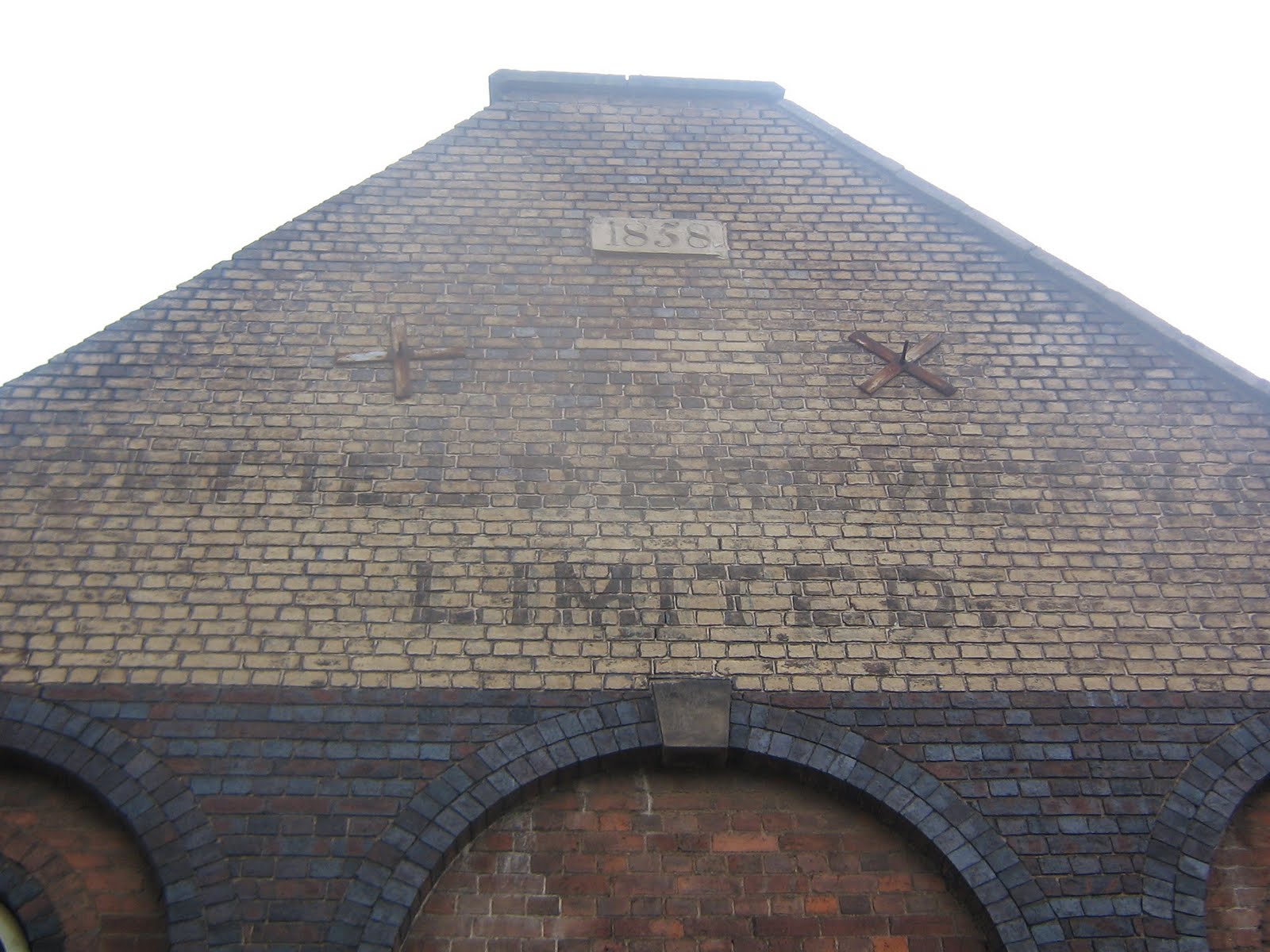
In Howard Clayton’s Victorian Lichfield, there is reproduction of a Lichfield Brewery Co advert. On offer are Pale Ales, Light Pale Ale ‘AK’ (intriguingly recommended for family use!), Strong Ale, Mild Ales, Stout and Porter along with Harvest Burgundy (Red or White) and Tintara wines.

The company was taken over by Samuel Allsopp and Co in 1930 and production at the Lichfield Brewery ceased soon afterwards. In 1931, The Lichfield Aerated Water Co set up at the site, but were taken over by a Derby company, Burrows & Sturgess (who produced soft drinks and who claimed to have produced the first Iron Bru.2 I always thought it was made in Scotland, from girders!). A new company called the Birmingham Chemical Co was established from this takeover. Apparently, the site became known as the ‘Wiltell Works’, after this company’s slogan ‘Quality Will Tell’, and there’s a Wiltell Rd nearby too!3

The majority of the buildings were demolished in 1969.  However, still standing are the Brewery Offices with their roll of honour, still actively used to pay tribute to the 13 employees killed in the First World War.  Their names are also included on the memorial in the Remembrance Garden.

On the opposite side of Upper St John St is a building that was once the Bridge Tavern4. Staffordshire Pasttrack has two photographs taken outside the pub around 1910. The first depicts the publican, stood outside by a horse & cart. The second, shows the pub decorated with greenery, and a huge crowd of people gathered for a celebration, possibly the Bower.

You can still see where the pub sign used to be, and a little further down, the place where a board proudly announced:

‘William Whatkiss Licensed Retailer Ale, Beer, & Foreign and British Wines and Spirits. Dealer in Tobacco’

In my previous post, I said I’d like to find out about current local breweries. It’s been a lot easier to find out about the old Lichfield Brewery than it has about the new Lichfield Brewery!  I’m sure I had one of their beers at the Lichfield Medieval Market a couple of years back, called Festival Ale.  I’ve been trying to find out if the brewery is still going.  You can buy pump clips on ebay for their beers such as Steeple Jack and MT Pocket, but I can’t find much more at the moment.

Sources:
1. ‘Lichfield: Public services’, A History of the County of Stafford: Volume 14: Lichfield (1990)
2. http://www.bygonederbyshire.co.uk/
3 & 4 The Old Pubs of Lichfield – John Shaw*

*I had a copy of this ages ago and lent it out.  Chatting on Twitter with @brownhillsbob a while ago he reminded me about what a great book it is and I treated myself to another copy.   Loads of info & some great photos too. If you’re interested in Lichfield History (and if you’re here, I’m assuming you are ;0), you should invest in a copy. Go on, go on, go on….
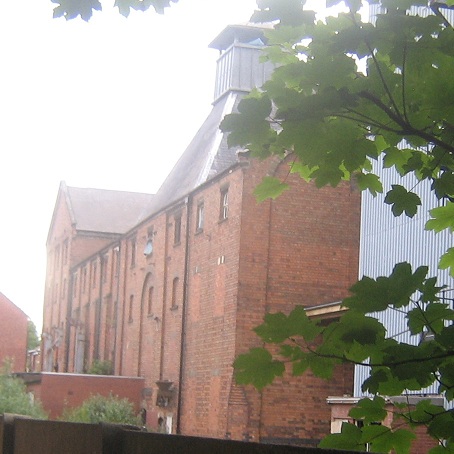
City Brewery Co (Lichfield) Fire 1916

Lichfield Maltings taken from Magnet car park
moments before my camera broke!


During the 19th century beer boom, brewing was the most important industry in Lichfield(1), which was home to five breweries during the period(2). Eventually, most of these merged and were taken over by some of the big companies but we do still have some interesting buildings around the City to remind us of the industry.

One of these is the former Lichfield Maltings (a grade II listed building), on the Birmingham Rd, once the malthouse for The City Brewery Co, formed in 1874. Along with the manager’s house/offices, it survived the huge fire that destroyed the rest of the brewery.

The fire started a few hours before dawn, on an October morning in 1916. The Lichfield Mercury reported that ‘Never has a conflagration of such magnitude ever been witnessed in the City’. The fire burned for around 10 hours, and it took five local Fire Brigades and 750,000 gallons of water to extinguish it.

The Mercury suggested that the people of Lichfield would ‘extend their sincerest sympathies to the directors and shareholders for the severe loss’, with estimates for the damage running to ‘not less than £30,000’, although this was covered by insurance. I’m sure the people of Lichfield’s sincerest sympathies would be also have been extended to the 70 workmen, left without a job following the blaze.(3)

In the days that followed, the City’s provision for dealing with fires was criticised. People wanted to know why it had taken thirty minutes for the Lichfield brigade to arrive at the scene of the fire, when other brigades in surrounding areas were said to turn out in less than ten. It added fuel to the ongoing campaign for a motor fire engine in Lichfield. Presumably, the brigade was still using the steam engine presented to Lichfield by Albert Worthington (the brewer!) in 1898, which was housed in the former police station at the Guildhall5. Opponents of a motor engine had argued that when attending rural fires (which most fires at the time were), the wheels wouldn’t be able to grip ploughed land and fields. It took another six years, but in 1922 the city got its first motor engine, with half the cost being met by the City’s rural district.(4)

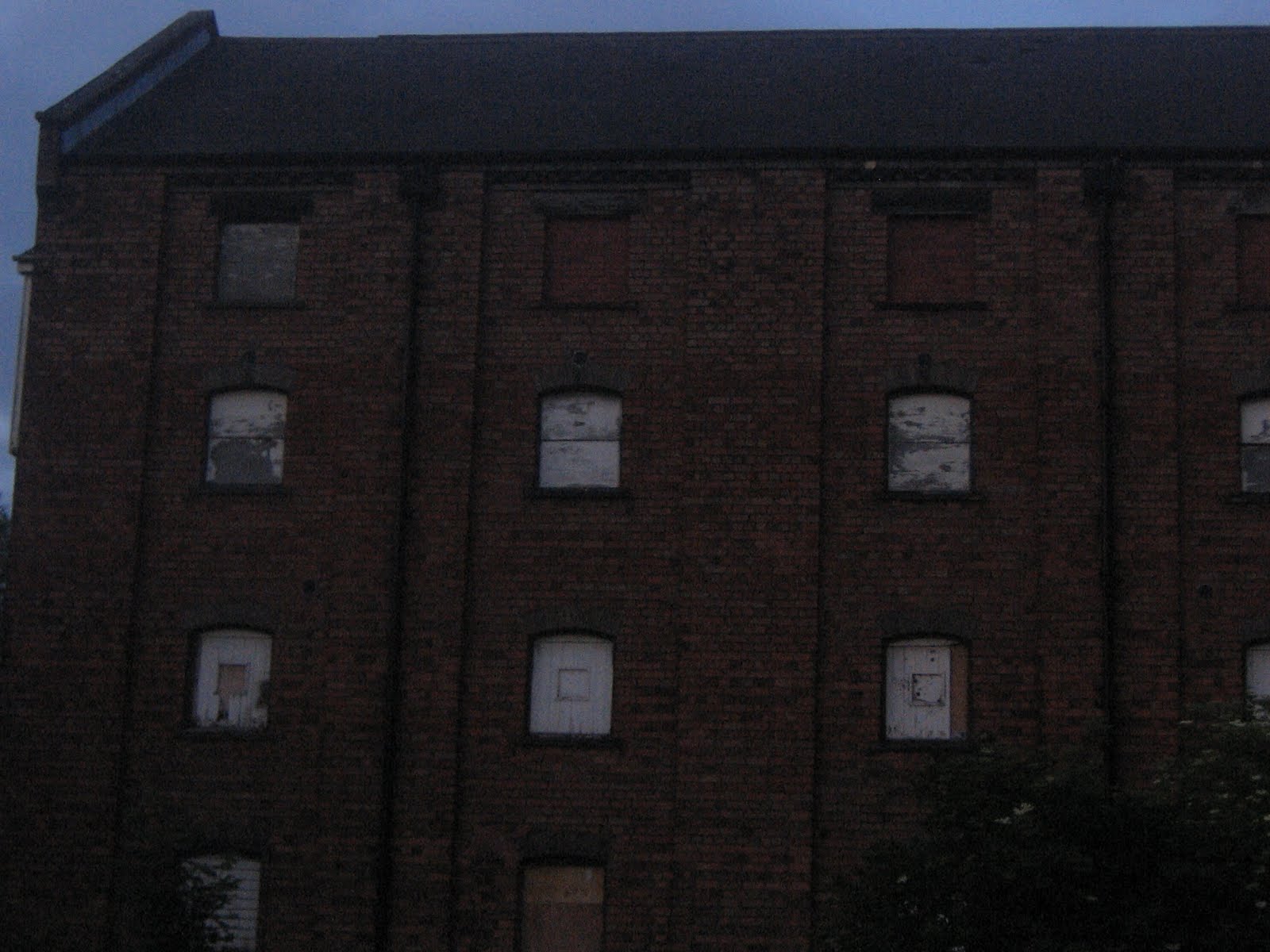
Another view of the Maltings, taken at dusk, hence the gloom

Following the fire, the City Brewery was bought by Wolverhampton & Dudley Breweries and the Maltings remained in operation until 2005. A visit by the Brewery History Society to the site at this time suggests a range of economic and practical reasons led to its closure, including a reduction in demand for floor made malt and new hygiene regulations. The building is currently owned by a property development company, who submitted an successful application to Lichfield District Council in 2008 for the building to be converted into apartments. Perhaps I should get out more, but the planning application actually makes for interesting reading as it includes a historic building assessment.

I’ll try and have a look at some of the other old breweries in the coming weeks.

Sources:

1 & 4 Lichfield: Public services’, A History of the County of Stafford: Volume 14: Lichfield (1990)
2 The Old Pubs of Lichfield – John Shaw
3 The Lichfield Mercury Archives, accessed at Lichfield Records Office

Milling about in Leomansley

Leomansley grew up around the mill built by John Hartwell in 1791, on the edge of Pipe Green. Pipe Green was a meadow which had originally been left to the poor widows of Beacon St as pasture for their geese and was being used as common land.(1) As compensation for cutting a watercourse through the green, Hartwell made an agreement to give the poor inhabitants of Beacon St 10 shillings worth of bread each year.(2) Probably a lot of dough in those days….

Bullocks on Pipe Green


Anyone who has been for a walk over there will know that Pipe Green is home to around 12 bullocks.  I remember there being an advert in the Lichfield Mercury a few years ago, asking for someone to graze their herd there
. It’s still owned by Pipe Green Trust, which is made up of residents of Beacon St.

Back to the mill, and in 1841, the census shows several Leomansley residents working as wool combers or spinners. I’m wondering if the row of cottages on Christchurch between Leomansley Wood and the Old Vicarage (Easter Hill) were purpose built for the mill’s employees? It appears that some of these people moved on once the mill closed around 1860, as on the 1881 census, several of the properties in ‘Old Leomansley’ are listed as ‘uninhabited’.

On the subject of employment, the 1881 census also shows several men employed in railway related work. In fact men from three neighbouring households were all platelayers and there was also a signal man and a coal heaver in the area. I’ve found a great post about platelayers and what their work involved at turniprail.blogspot.com. Once again, I’m speculating, but I wonder if the Leomansley platelayers were responsible for the Sandfields stretch of track on the Lichfield to Walsall line, which opened in 1849 and would have been just across the fields (which are now the Darwin Park estate). There is a photo from 1924 of the track at Sandfields on the South Staffs Railway website as well as plenty of other fantastic photos and other interesting things!

Sources:

1) History of the Cathedral & City of Lichfield by John Jackson 2) A Short Account of the City and Close of Lichfield by Thomas George Lomax, John Chappel Woodhouse and William Newling 3) ‘Lichfield: Economic history’, A History of the County of Stafford: Volume 14:Lichfield (1990)

Pomology

Now, I know it’s not apple season, but I couldn’t wait until August!  I have found a couple of old books on the internet (thank you google books!) devoted to Pomology, in which each apple with its sometimes fabulous name, is described in a manner reminiscent of fine wines.

Listed amongst the hundreds of different varieties, such as Bigg’s Nonesuch, Poorman’s Profit and Cornish Aromatic  I found the Elford Pippin. Described as an excellent dessert apple, it was a round, medium sized fruit with yellowish green skin, with markings of russet on the shaded side and red stripes on the closest to the sun side. It had a yellow, tender, crisp flesh with a fine, brisk, sugary and vinous flavour.

The Pomological Society tells us “it was raised at Elford, near Lichfield, where it is a very popular variety, and to which locality it is at present chiefly confined”. As with so many tradtional varieties, it is no more.
Not only did Elford have its own variety of apple, it also had its own rhubarb – according to gardening tomes it was one of the most valuable varieties of rhubarb and was raised by Mr. William Buck, gardener to the Honourable Fulke Greville Howard, at the Elford estate. The green-fingered Mr Buck also grew a seedling grape (described as tolerably good), from seed sown in January 1821, and exhibited on the 1st of October 1822.
In the 19th century, in some parts of Lichfield, market gardening was a thriving industry. According to J Martin, Fisherwick Park gardens regularly sent cabbage, broccoli, asparagus and fruit to Birmingham and London in the early 1800s and the County History tells us that by the mid-century, there were 68 market gardeners in Lichfield delivering their produce by horse and cart to the neighbouring Black Country markets. I’ve been told that the land around the old City Brewery, and gardens on the Walsall Rd and Christchurch Lane were used for growing produce.
Green fields from Pipe Hill
Though it’s not famed for its fresh produce as somewhere like Evesham is (the fruit and vegetable basket of England, as their tourist office calls it!), there is still a fair bit grown in the Lichfield area. We’ve always been to Coulter Lane Fruit Farm for PYO berries and yesterday, I picked up my first fantastic vegetable box from the Woodhouse Community Farm scheme (which was part of the old Elford estate!). A few days ago I read on the Lichfield Blog that local growers won an award for their parsnips and the fields around Leomansley are full of potatoes and other crops.  I’m no evangelist about such matters but I do think we should try to support local food growers directly, so that neither they nor us are entirely dependent on supermarkets (though I do use them a fair bit). So go on, pop down to Coulter Lane & treat yourself to some strawberries, or order a box from Woodhouse farm.  Every little helps….
Sources:
The Apple and its Varieties by Robert Hogg, Vice-President of the British Pomological Society 1859
A Guide to the Orchard & Fruit Garden by George Lindley, John Lindley
The Social and Economic Origins of the Vale of Evesham Market Gardening Industry by J M MARTIN
An Encyclopedia of Gardening  by John Claudius Loudon
‘Lichfield: Economic history’, A History of the County of Stafford: Volume 14: Lichfield (1990),

Miss Seward's Prize Enigma

Anna Seward’s will, was said to have contained a riddle, with instructions to her executors to pay £50 to the first person to provide the correct solution. The enigma ended with the verse:

Now, if your nobler spirit can divine
A corresponding word for every line,
By all these letters clearly shall be shown,
An ancient City of no small renown.

In a compilation of Thomas Sedgwick Whalley’s Journals and Correspondence, there is a letter from Mrs Whalley, to her husband in 1816, enquiring whether he had been told the solution to the rebus by Miss Seward, as someone had managed to make the word ‘Litchfield’ but she had not heard whether the executors had agreed the claim. The editor of the compilation has added a footnote.  He asked a friend to find out more about the enigma. On January 31st 1863, the friend wrote to tell him that “ having been carefully through both the will and the codicils, which are very lengthy….there is nothing in either which in any way refers to “an enigma” which could be so construed”. Reuben Percy claimed the enigma was a shortened copy of a puzzle published in the Gentleman’s Magazine in March 1757, attributed to Lord Chesterfield. A solution offered by Solyman Brown was IEROSOLUMA, which I think is Greek name for Jerusalem.  You can find various versions of the enigma, and the solution, on Google Books. If, as it seems, The Swan of Lichfield’s will did not contain the ‘enigma’, it would be interesting to discover where the story originated.

Sources
Gleanings from the Harvest Fields of Literature – Charles Carroll Bombaugh Relics of Literature – Reuben PercyAn Essay on American Poetry – Solyman Brown
Journals & Correspondence – by Thomas Sedgwick Whalley, ed. Rev Hill Wickham

Kings of Lichfield

Borrowcop Gazebo
Down yon meridian fields afar
When Mercia led her chiefs to war,
Fell in one hour three monarchs brave,
And Lichfield’s bower protects their grave.
Her stately spires amidst the skies
Ting’d by the orient sun arise,
With golden vanes invite the gale,—
Triumphant ladies of the vale!
Extract from Needwood Forest by Francis Noel Clark Monday

Over the centuries, there has been a succession of structures on Borrowcop Hill.  There’s the (possible) Saxon Fort mentioned in my Lichfield Castle post; something called the Temple in the late 1600s; an arbour in the 1720s replaced by a summerhouse and finally the Gazebo that is still there today.  It was also the site of beacons, lit to warn of invasions. It’s hardly surprising given the views.

Lichfield tradition says Borrowcop is the final resting place of three Christian Kings, slain together with their outclassed army by the Romans in the time of the heathen Emperor Diocletian (around 288AD).  In John Jackson’s version of the legend, the bodies of the Kings were, “burnt and heaped upon a hill, according to the ancient custom of burial after a battle, and covered with a mound of earth, or tumulus, where, probably if dug into, the urns and ashes will be still discovered”.  However, a series of explorations have found no evidence of burials, although an anonymous source from 1819 is recorded as saying Erasmus Darwin recovered burnt fragments of bone from the site.
The legend gave rise to the theory that Lichfield meant ‘Field of the Dead’.  Perhaps being far more evocative than the currently accepted explanation for the name of ‘common pasture beside grey wood’, the ‘Field of the Dead’ theory still persists today.
Lichfield was incorporated by the protestant King Edward VI in 1548.  The following year, the city corporation chose to depict the ‘Martyrs’ legend on the city seal.  It’s been suggested that the corporation was keen to disassociate Lichfield from the Catholic connotations of St Chad. (The Victoria County History tells us that a previous seal is believed to have been a Bishop (presumably St Chad), with two angels either side and the Cathedral in the background).
You can still find the ‘Three Kings’ seal on the St John St railway bridge.  The legend is also portrayed on the the Martyrs Plaque, which originally adorned the front of the old Guildhall in 1707. The plaque was moved to a rockery in Beacon Park after the Guildhall’s victorian restoration.  After years of decay, the plaque was restored in 2010 and now stands in the Rose Gardens in Beacon Park.
St John’s railway bridge
Martyrs Plaque, Beacon Park (from Wikipedia)


Sources:
History of the City & Cathedral of Lichfield by John Jackson
English Heritage Past Scape
‘Lichfield: Town government’, A History of the County of Stafford: Volume 14: Lichfield (1990)
Public Sculpture of Staffordshire & the Black Country by George Thomas Noszlopy, Fiona Waterhouse

South Staffordshire Archaeological & History Society Transactions

Woe unto the bloody City of Lichfield


Plaque on St Marys Church. Lichfield Market Square


You may have guessed from the fact that George Fox ‘stood without shoes on a market day in this Market Place and denounced the City of Lichfield’, that his visit was a little out of the ordinary! Here is the full story, based on the founder of the Quaker’s own version events.(1)

Following his release from Derby Gaol, Fox was walking with friends when he noticed the three spires of Lichfield Cathedral in the distance.Leaving his companions behind, he headed towards the City.When he was within a mile of Lichfield, he was commanded by God to remove his shoes.Leaving the footwear with some startled shepherds, he carried on into the City, where God once again spoke to him, telling him to “Cry woe unto the bloody City of Lichfield”. Fox made his way into the bustling Market Place, where he did exactly that.He continued to wander the streets of Lichfield, crying out the phrase over and over again.Whilst doing this, Fox had a vision that there was a channel of blood running through the streets and the market place appeared to him like a pool of blood.Eventually, he returned to the shepherds for his shoes, but found that the fire of the Lord was still in his feet where it remained until he washed them.

Spence, Robert 1871-1964.
“Woe to the Bloody City of Lichfield”
From Lichfield District Council collection


The reaction of the people of Lichfield is interesting. Rather than be frightened or hostile towards this strange man ranting in their midst, they seem to have been concerned.Fox says “friendly people came to me and said, ‘Alack George, where are thy shoes?'”. It’s not recorded but they may have asked if he’d like a nice cup of tea too!

Some people believe that Fox’s behaviour was caused by a fragile mental state, having been recently released from prison. However, Charles Haddon Spurgeon had a theory that it was some kind of PR stunt – no one would take notice of yet another dull sermon, but few could fail to ignore the dramatic ravings of a barefooted man in the snowy market place. Explaining the events of that day, Fox claimed that God had wished him to preserve the memory of the thousand Christian Martyrs slaughtered by the Romans at Lichfield in the time of the Emperor Diocletian. It had been their blood that had filled the streets and market place during his vision.

It’s been suggested that the martyrs Fox actually had in mind were those burnt in the Market Place for heresy.(2) Why would he claim otherwise? Perhaps, on reflection, he thought better of associating himself so publicly with heretics, having been so recently imprisoned for the same crime.

George Fox may have made a lasting impression in Lichfield, but surely not in the way he’d have hoped.  He founded the Society of Friends the following year, but according to a talk given by one of the Friends in Lichfield Cathedral in 1996, Quaker meetings scarcely feature in Lichfield history.(3)

Sources:

1Autobiography of George Fox
2.Classic Encylopedia (based on the 11th edition of the Encyclopedia Britannica 1911)
3.Talk in Lichfield Cathedral by Lichfield Friend Anthony Wilson

One Sweet Apple…..

On my way up to Borrowcop Hill,  a house name jumped out at me  – Sweet Apple Cottage. Unlike its neighbours, it made no obvious allusion to its surroundings. It’s here on Borrowcop Lane.

Sweet Apple Cottage, Borrowcop Lane

The name is on the kind of plaque you often see on similar Victorian houses, together with the date of 1883, so I don’t think it’s a case of more recent owners just choosing a quaint name.
My first thoughts were perhaps it referenced an orchard.  However, a search on google has turned up one possible clue.  A place called Sweet Apple Court elsewhere in the country was named after a man called Sweetapple.  It’s apparently a Saxon surname, one that I’d never heard of until today.  So was there a Sweetapple in Lichfield that gave his unusual name to this house?  Or is there another explanation?

Pinfolds in Lichfield

Last night on Twitter, I was complaining about slugs snacking on my tomato plants. Down at the allotments, we are all in competition with rabbits, pigeons and field mice as to who gets to the fruit and veg first. Thankfully, I do not also have to contend with cattle, as people in years gone by did! Stray animals were a serious threat to food production and so pinfolds and pounds were erected, where the rogue livestock could be impounded. The animals would be released to their owners on payment of a fine, although there were stories of animals mysteriously disappearing from the pounds overnight….!  In England in Particular’s section on pinfolds, they liken the animals to today’s wrongly parked cars! (1)

Here in Lichfield in the 1500s, the person responsible for rounding up and impounding the animals was the ‘Warden of the Fields’. By the mid 1600s, the job title had changed to ‘Pinner’. Two Pinners were elected in Lichfield, with one taking responsibility for St Chad’s parish and the other St Michael’s parish. They were appointed at the ancient manorial court of St George,  which still takes place every year.

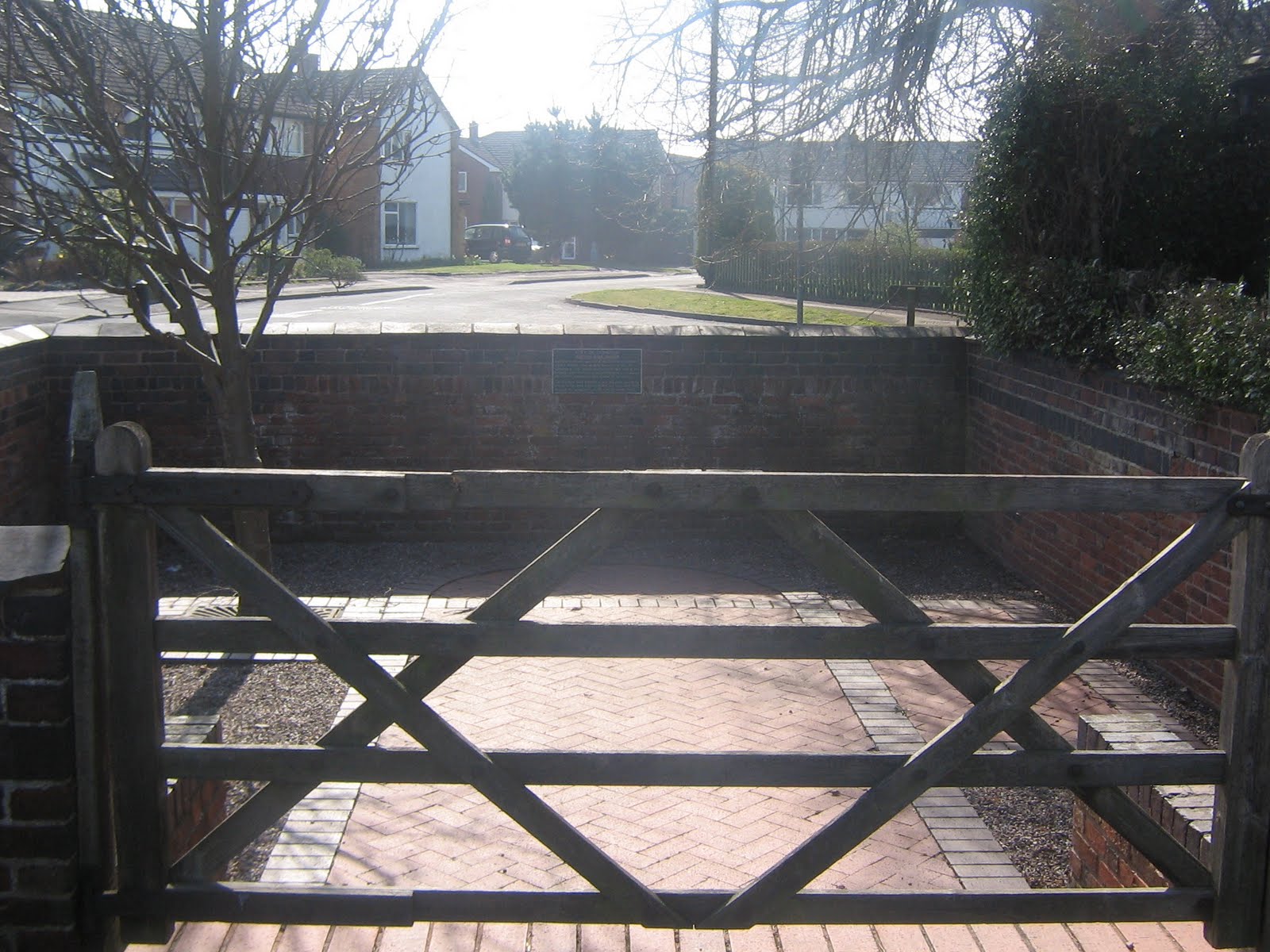
We are lucky to have a well preserved pinfold here in Lichfield, located at Pinfold Road (where else?), where Beacon St becomes the Stafford Rd. The listed building description says the present structure dates to the 18th century, but that it has earlier origins. According to the County History, there was an earlier pinfold in Beacon Street by 1645, near the corner of the later Anson Avenue.  This was removed in 1809 and replaced by the Stafford Rd pinfold.

The County History also says that another pinfold stood at Greenhill in 1498 and it is thought it was relocated in the early 19th century to the junction of Broad Lane and Boley Lane. I have had a look at www.old-maps.co.uk and the Boley pinfold can be seen on a 1955 map of Lichfield, but has disappeared by 1966.  Sadly, no trace of it exists. The Greenhill pinfold can still be seen on John Snape’s 1781 plan of Lichfield .


The terms pounds and pinfolds both seem to be used interchangeably in Lichfield, although pounds is the more common of the two. A fantastic website called Pounds and Pinfolds has been set up, the intention of which “is to raise awareness of these modest buildings by identifying all of the surviving examples, recording their location and condition and encouraging their restoration or preservation”. Our pinfold doesn’t feature on the National Register that the website is compiling, so I’m sending details over to them for inclusion.


This little fellow must have been rounded up last night….

Sources

1.England in Particular by Sue Clifford & Angela King
2. www.thurgartonhistory.co.uk
3.
History of the County of Stafford: Volume 14: Lichfield (1990)
4.www.lichfield.gov.uk

For what the bell tolls…

Easter Hill is the former vicarage of Christ Church at Leomansley built in the 1840s, around the same time as the church.  The older front part of the house is divided into flats and the rear, added later, is now a separate house.
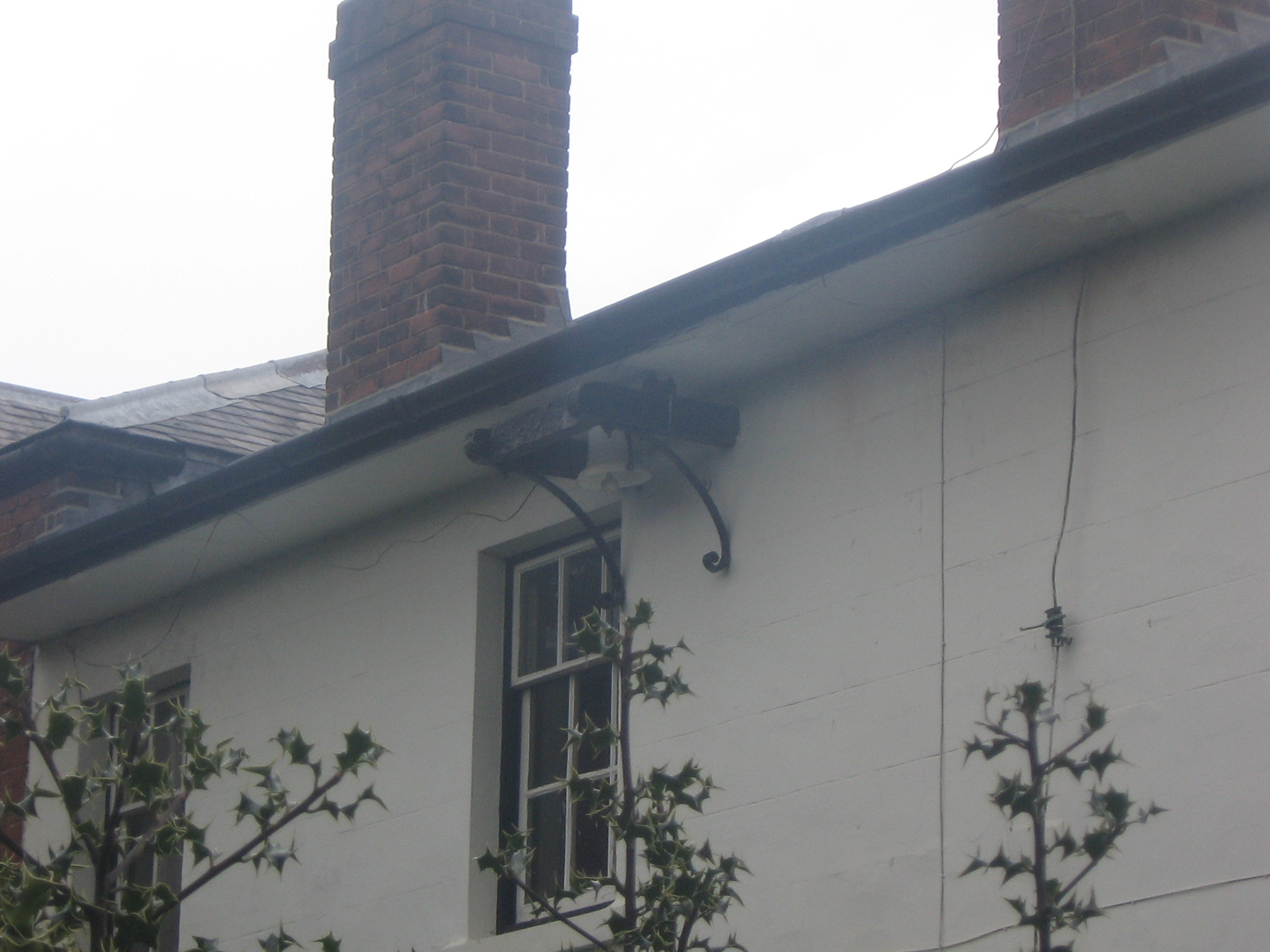
What has always puzzled me is the bell on the left side of the building, under the eaves.

I have always assumed the bell had a religious use e.g. to call people to church, but couldn’t understand why this would be necessary.  Christ Church has always had a bell and it is easily within earshot of its flock.  In 1851 there were only 27 households in Leomansley.  However, BrownhillsBob came up with the suggestion that it could be a firebell, used to alert the local brigade and distinct from the church bell.  Bob has informed me there is such a bell on the council house at Brownhills.  This secular use seems much more likely and definitely warrants investigation.

If anyone else has any suggestions as to what the bell could have been for, please let me know!