If ever there was an instance of picking on the wrong person, it was at Fenton Toll Gate on a January morning in 1834. Mr Dawes, a surgeon from Stoke on Trent, was walking back home from Lane End, later to become known as Longton, when he passed three men. One of them raised their arm and struck him in the face, knocking him to the ground. As Mr Dawes lay stunned, the man began to rifle through his pockets whilst the two others assisted with this daylight robbery. As the surgeon regained his senses, he started to shout, ‘Murder!’ but one of the thieving trio place his hand across his mouth to silence him.
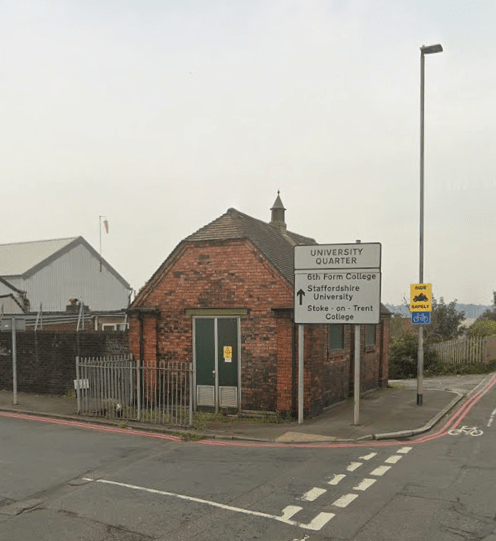
I think this might be the site of the Fenton Toll Gate (taken from Google maps). I also think the Sixth Form College the sign here points to was the first purpose built sixth form college in the UK which is nothing to do with this story but is a great bit of Staffordshire history,
Dawes saw an opportunity to defend himself and managed to bite down on the man’s forefinger. The more he struggled, the harder Dawes held on. Eventually, the failed footpad managed to escape but left part of his finger in the jaws of Dawes.
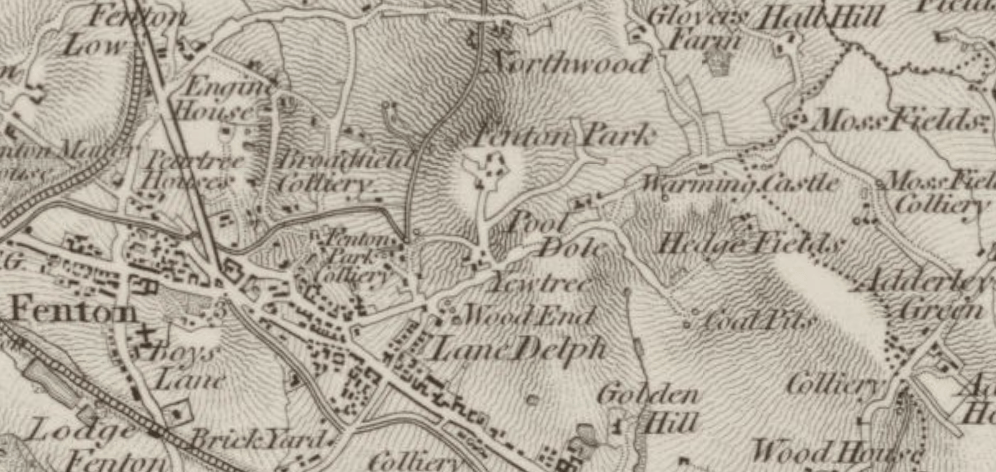
Lane Delph, where the Evans Bros. came to the end of the road. Think we need to continue on our journey to the intriguing sounding Warming Castle however
When another Stokie surgeon called Mr Chadwick heard of the attempted robbery, he tipped off the police that he has just attended to a collier who was missing the end of his index finger and pointed them in the direction of the Evans brothers of Lane Delph. Apprehended at the their residence, the missing finger (carefully preserved by Dawes in a bottle of spirits) was found to be a match for Charles Evans’ manual wound and they were arrested. Out of shear desperation at the trial, he claimed he had cut it off when carving mutton in a public house but, despite their denial of any wrongdoing, the Evans brothers were nailed and sentenced to 14 years transportation. Who needs fingerprints when you have the actual finger?
What became of their accomplice and perhaps more interestingly, the incriminating index finger, remains a mystery. Is this body of evidence still preserved in a bottle of spirits somewhere on a shelf in Stoke?
When John Duncalf was released from the House of Correction in Kingswinford in 1675, he swore he would never set his feet in the town again as long as he lived. It was a promise that was to become grimly prophetic.
On leaving Kingswinford, he embarked on a life of petty crime and sin. He would later confess to, ‘Idleness, Stealing, Cursing, Swearing, Drunkeness and Uncleanness with Women’, although he explained that he had not actually committed actual Fornication or Adultery with a woman except in the thoughts of his heart, and by lascivious words and gestures, whereby he had endeavoured to tempt them to lewdness in divers places. I think we can infer from this that his lack of lewd action was not for want of trying.
The chapter of crime he was to become truly infamous for was the theft of a bible. If he’d only read one of them, paying particular attention to the eight commandment, things could have turned out a lot differently. But, on 5th January 1677, Duncalf turned up on the doorstep of Grange Mill, masquerading as a beggar. It was the home of Margaret Babb and when she charitably invited him in for a drink to celebrate Twelfth Night, the bad man stole her good book.
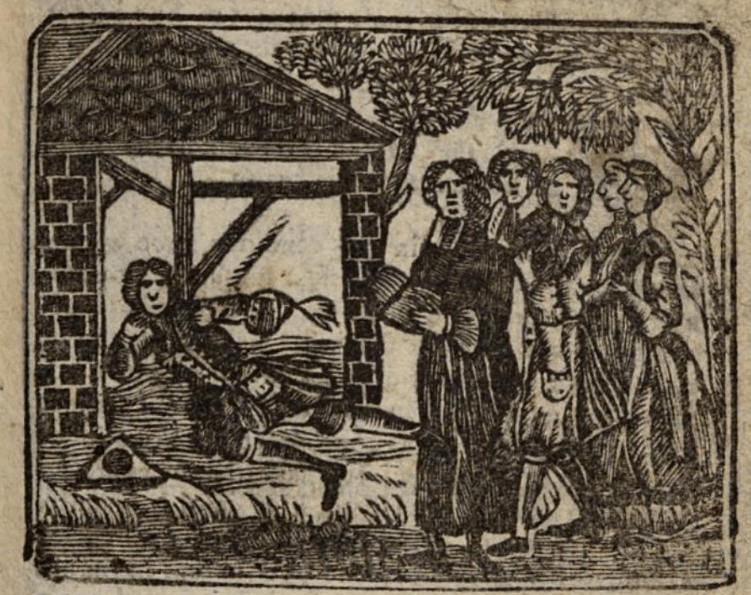
Duncalf stealing the Bible from Margaret Babb as she fetched him a drink. I’m not quite sure exactly what Mr Babb is doing. (Woodcut from Divine Judgement and Mercy Exemplified In a Variety of Surprising Instances)
Duncalf sold Babb’s Bible on to a maid at Heath Forge at Wombourne but its provenance was discovered and suspicion fell on Duncalf. He swore it wasn’t him apparently, ‘wishing his hands might rot off, if that were true’. It would turn out to be the second prescient statement Duncalf would make. Soon afterwards, the flesh around his wrists began to turn black. His ungodly wish was about to be granted.
A few weeks later, Duncalf was working in Dudley with a joiner called Thomas Osborn when he felt weak and faint and feverish. It was Shrove Tuesday and he headed home towards Codsall but collapsed in a barn at Perton Hall in Tettenhall en-route. After two days and two nights, he was discovered unable to walk and so was carried back to his last place of settlement. And so it was that John Duncalf found himself back in the town of Kingswinford but, just as he had sworn, without actually set foot in the place. He was taken in by a man called John Bennett and at first he was lodged in a barn belonging to the Three Crowns Inn on the Wolverhampton to Kidderminster Road. After a fortnight, he was taken to Bennett’s house in Wall Heath where his blackened flesh began to rise in lumps at his hands and wrists before beginning to decay.
A vicar visits Duncalf just before he’s about to lose his left hand (Woodcut from Divine Judgement and Mercy Exemplified In a Variety of Surprizing Instances)
The account I’ve read comes from James Illingworth, one of the clergymen who visited him amidst the crowds. He says that by the end of April, ‘many little Worms came out of the rotten flesh, such as are usually seen in the dead Corpes (sic)’. Many visitors also appeared, posies pressed to their nostrils to block out the putrid smell, hoping to see the man who they believed was being literally and directly punished by God for his sins. Despite everything, Duncalf did not appear to have learned his lesson. Illingworth heard him tell his keeper John Bennet that he wished his visitors’ noses might drop off and asked why he did not dash out their teeth to stop them from grinning at him.
Eventually, Duncalf asked for Margaret Babb to visit, and she came with the maid he had sold the stolen book to. He confessed his crime to them and asked their forgiveness, which both of them granted. When his hands rotted off, there was hope that penance had now been paid and that God would punish him no more. Yet, the suffering continued. By 8th May, both of his lower legs had fallen off at the knee, although he didn’t realise it until Bennett held them up to show him.
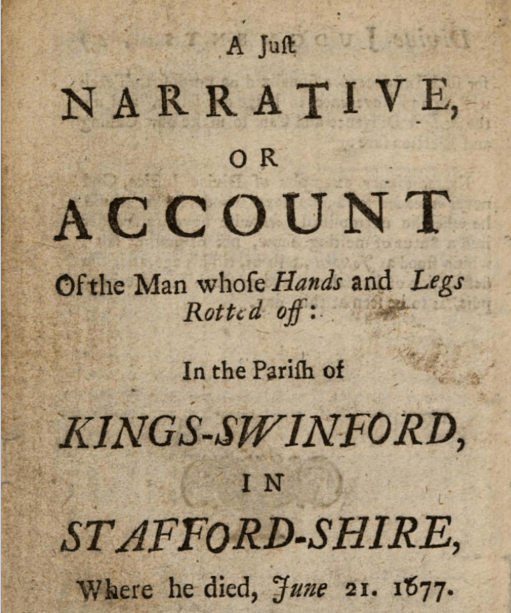
According to the Dudley Archives and Local History Service, the entry in the parish register at Kingswinford shows that John Duncalf was buried on 22nd June 1677, and is described as, ‘the man that did rott both hands & leggs’. The entry notes that he stole a bible, a charge, ‘he wickedly denyed with an imprecation, wishing that if he stole it his hands might rot of which afterwards they did in a miserable manner’. It adds that, ‘many people (I verily believe hundreds) saw him as hee lay with his hands & leggs rotting off, being a sad spectacle of God’s justice and anger’ and ends by saying it was registered as, ‘a certain trueth, to give warning to posterity to beware/ of false oathes’.
Clearly there is a certain trueth to this story which elevates the death of John Duncalf to more than mere folklore but what did cause his terrible demise if it wasn’t a punishment dished out via divine judgement?
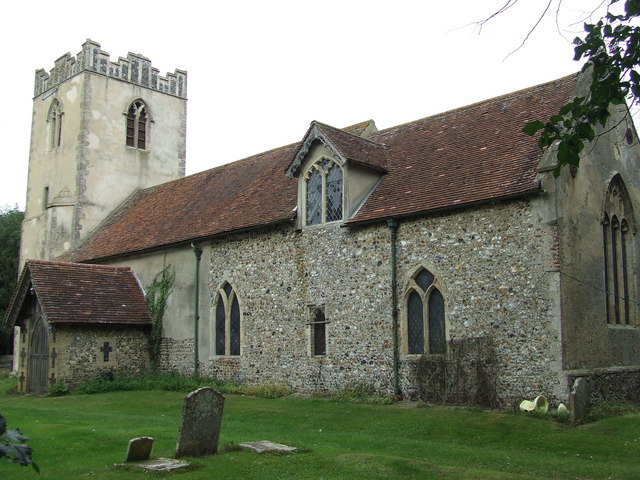
Keith Evans / St Nicholas Wattisham / CC BY-SA 2.0
A memorial in the tower (which you can see here around 13m20s in) and an entry in the parish register at the now disused church of St Nicholas at Wattisham in Suffolk describe the sad fate of the Downing family who all lost their feet in 1762, although four of them survived. I’ll spare you from the full gory details but belief amongst local people was that the poor family were victims of witchcraft. The local vicar Rev Bones (I kid you not) was not convinced and set out to ascertain the cause of their affliction sending several letters to the Royal Society who concluded the culprit was gangrenous ergotism caused by eating grains infected by the fungus Claviceps purpurea.
I’ve seen this ‘tragic ‘singular calamity’ as Rev Bones called it, described as the only recorded case of ergot poisoning in England. However, I strongly suspect that John Duncalf may have been another of its victims and possibly, had John Bennett and others sought medical attention for him rather than condemning him to be some sort of religious freak-show, he may even have survived.
I definitely wouldn’t swear on it though…
Sources
Ian Atherton (2022): ‘John Duncalf the Man that Did Rott Both Hands & Leggs’: Chronicle of a Staffordshire Death Retold in the Long Eighteenth Century, Midland History, DOI: 10.1080/0047729X.2022.2126237
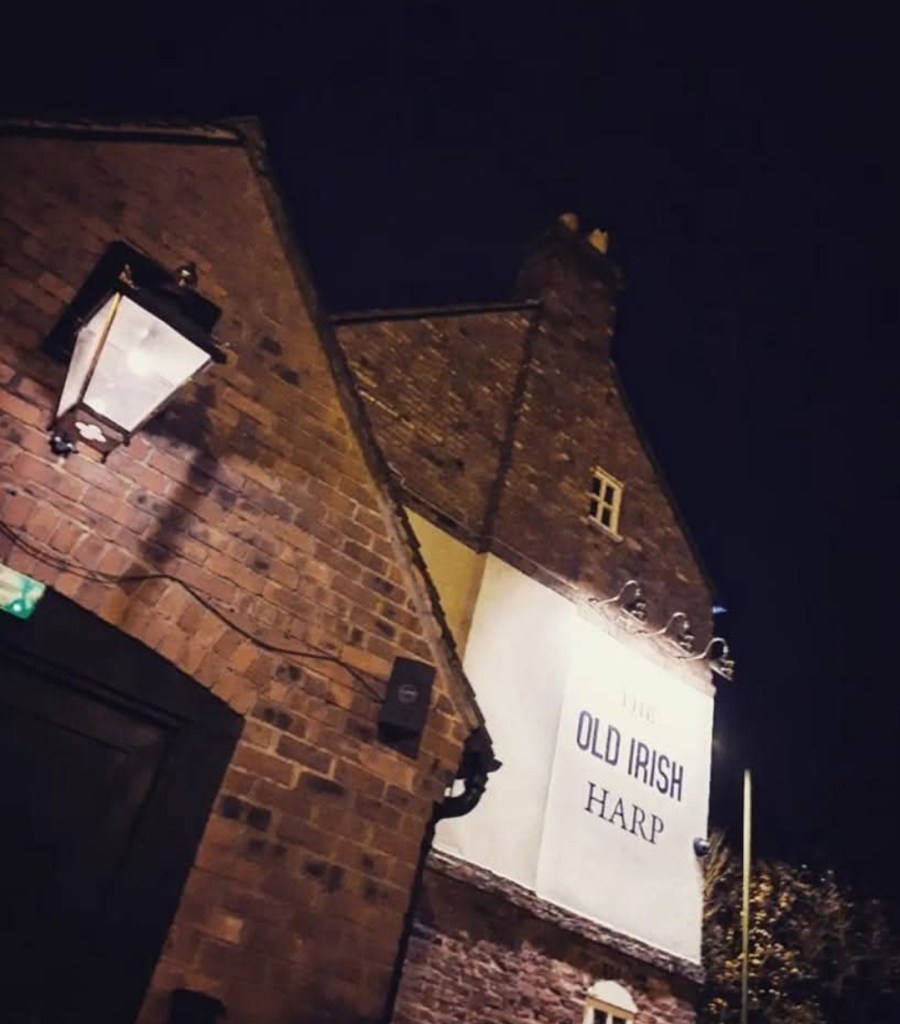
I feared from the looks on my family’s faces that my interest in the macabre may have gone too far when I happened to mention during a meal at the Old Irish Harp that an inquest on the body of a genteelly dressed woman found ‘wilfully murdered’ in a wood near Sutton Coldfield had taken place not far from where we were sat, albeit 250 years prior. I thought perhaps it was time to find a different hobby. Embroidery perhaps? A pleasant pastime for sure, but turns out that for me it’s no substitute for finding and sharing a ripping yarn. And now that we’ve established that I am beyond all redemption, I want to regale you with a post about crime and punishment on the mean streets of Staffordshire.
Back when the inquest took place it was just known as the ‘Irish Harp’.
On the evening of 26th October 1764, a little after 8 o’clock in the evening, Mr Thomas Hurdman of Alrewas was stopped by a footpad opposite St Michael’s churchyard. The Aris’s Birmingham Gazette cryptically reported the rogue was suspected to be a W_____ C_____ of Greenhill. I’m not sure why such nominal secrecy though, when they also published a description of him in the same report (not yet 20, about 5 feet 5 inches high, wide mouthed and wearing his own hair, if not altered, which was brown and short cut’). Despite being caught by one of the city’s constables, WC managed to quite literally give him the slip by sliding out of his coat, and legging it out of Lichfield in a linen frock. His freedom (and any semblance of anonymity) was short-lived however. In March the following year, newspaper reports reveal that the ID of WC was William Cobb and that he’d been sentenced by the High Steward of Lichfield, Fettiplace Nott, to be transported for his assault on Thomas Hurdman and making many violent threats of murder.
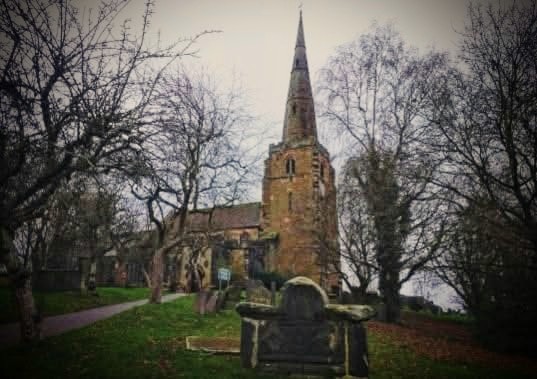
St Michael’s Lichfield is the graveyard for some who went to the gallows
Ashmoor Brook, up Cross in Hand Lane, was the scene of another robbery which went awry. In Lichfield March 1833, a notorious local character known as Crib Meacham, a name apparently derived from his success in various pugilistic encounters, was charged with robbing a Mr Lees of Stoneywell. According to Lees, Meacham was one of a gang of four who attacked him and his wife. The pair were in possession of a large sum of money but it was Mrs Lees who was holding the purse strings at the time and the thieves had allowed her to run away. She soon returned with assistance and it was the robbers turn to run, leaving a gagged Mr Lees unharmed but relieved of his relatively empty purse and hat. Meacham was arrested later that evening but as of yet, I cannot tell you anymore about him, neither the fights which earned him his nickname in the past nor the fate he earned from his part in the robbery.
Cross in Hand Lane is only just outside Lichfield but must have felt like the back of beyond travelling through here after dark
I can tell, however, tell you much more about Robert Lander aka Bradbury a cordwainer of Milford near Stafford who robbed Solomon Barnett, a wax chandler of Liverpool in March 1798. The newspaper reports at the time give not only a physical description (Lander was a stout built man, 5ft 5 inches, 25 years of age wearing a blue coat, a striped fancy coloured waistcoat, and thickest breeches, torn upon the left thigh and patched upon both the knees). It also gives his villain origin story, starting at his childhood home of Haywood near Stafford. When his Dad died, he inherited a few hundred pounds. At the age of 21 he got turned down for a job at the Board of Excise and so went to work for a gentleman in the wine and spirit trade instead. This, it seems, may have been the start of his downfall. During his employment he is said to have remained in a permanent state of intoxication, eventually absconding and taking with him a watch belonging to his master. He sold it at Stafford where he enlisted into a Regiment of Foot but ended up, somewhat ironically, in the shoe making business. This didn’t last long either and neither did his subsequent enlistment into four other regiments. His career in crime also came to an abrupt end when he was found guilty of the robbery of Solomon Barnett and sentenced to death at the Stafford Assize. When the judge prayed that the Lord would have mercy on his soul, it was reported Lander replied, ‘G__d d___n you and the gallows too. I care for neither’. I assume he said it in full but that his blasphemy was censored by the Chester Chronicle. He was executed in August 1798 and the parish register of St Mary’s Stafford records that, along with Edward Kidson, Robert Lander alias Bradbury was executed _ _ _ _ _ _ _.
These are all true crime stories, but it would’t be Lichfield Lore without a bit of folklore would it folks? You’ll be relieved to know I’m not going to go down the Turpin turnpike road but I am going to give a dishonorable mention to Tom ‘Artful’ Arnott, a highwayman who was supposedly executed, gibbeted and, eventually, buried at this crossroads in Cannock.
Although Arnott’s grave is marked on old maps there are no records of anyone of that name ever being executed. Intriguingly though, there is a record of a Thomas Arnott being buried on 1st September 1777 at St Luke’s in Cannock. Clearly a man can’t be buried in two places at once but it’s the right kind of era and area. Then there’s a Thomas Arnott mentioned in Aris’s Birmingham Gazette in October 1792 for absconding from his master’s service in Birmingham. Intriguingly, after given a description of him (35 years old, five feet five inches, marked with the Small Pox, dark lank hair, and lightly made, wearing a blue coat), it mentions that prior to his work as a stamp, press, lathe and die maker, he had been employed as a forger. Do they mean the criminal variety and if so, does this strengthen the case for him being our Tom? Just to add an extra layer of intrigue, there was yet another absconding Thomas Arnott, who was apprenticed to a Whitesmith in Worcester but ran away on 5th April 1803. He’s described as 5 feet two inches, black curled hair, wearing a blue coat with yellow buttons, a green striped cashmere waistcoat with yellow buttons and dark velveteen breeches. In that outfit, if he did become a highwayman, he’d have been a very dandy one indeed. Could any of these be the legendary Arnott? Did he even exist in the first place? All I do know is that this story is one T__B__C__________.
Arnott’s Grave. Unless it turns out to be at St Luke’s Cannock.
Sources Aris’s Birmingham Gazette 5th November 1764
Whilst researching something in the Staffordshire Sentinel, another story caught my attention and it’s so strange that I just had to share it, despite it having no links to Lichfield or the local area. In fact, the tale takes us away from England altogether and to France where a series of true yet unbelievable events took place in the early twentieth century.
It was September 1929 when the first of what would be a series of peculiar letters was posted to the offices of ‘Le Matin’ newspaper in Paris. It said, ‘We have the honour of informing you that we are a powerful secret society composed of persons of the highest authority. Our purpose is to rid France of the unscrupulous crooks and swindlers who prey on their fellow men”. Well, it said that but in French obviously.
The note also stated that the notorious Marquis de Champaubert was to be the society’s first victim. Now, this is where we need a bit of backstory because the Marquis was no nobleman but a master criminal whose real name was Clément Passal. His crooked career included a fraudulent motor-car company in Nantes and a bogus perfume factory, but he was eventually caught out by a jeweller who smelled a rat when he received an invitation to meet de Champaubert at the Chateau du Prieure. In a sparkling bit of detective work, the diamond dealer noticed the Marquis had signed his name De Champaubert and deduced that someone from the upper class would never use an uppercase D to spell that part of their name. Further investigations revealed no-one had ever heard of the Marquis de Champaubert and so the jeweller gave the police a ring.
Le Petit Parisien 27th September 1924 reporting the arrest of Clément Passal
When they found out that four other jewellers had received the same invitation to take a selection of valuables to the Chateau du Prieure, they knew some sort of game was afoot. On raiding the castle, they found a crime scene in the making that would be too loopy even for an Arsène Lupin story. Five rooms had been set aside for each of the jewellers and each one had been made airtight. In the billiard room was a tank of choloroform with pipes leading from there to each of the five rooms. The plan was that the fumes would overcome the jewellers and as they lay in a state of stupor, Passal would pocket their precious stones and disappear. Thanks to the efforts of the police, Passal did not get to do it in the billiard room with the lead pipe but instead spent two years in irons at Loos Gaol.
It seemed that the secret society calling themselves the Knights of Themis did not feel that justice had been done. The next letter to be received at Le Matin revealed that following his release from prison, the ‘Marquis’ had been lured to their headquarters by Madame D’Orgeval, the only lady member of the Knights. She’d entrapped him by claiming she wanted to publish his autobiography but what awaited him was a series of twisted tortures, each one more terrifying than the last. The first horror he had faced was to be tied to a cot in his cell with an iron funnel placed in his mouth and one and a half gallons of water poured into it but the letter reported that, ‘He has the vitality of twenty men; he did not even complain. Tomorrow he has an appointment with Sam our giant orangutan. He cannot survive’.
Turns out that he could. In the next letter to arrive at the newspaper office it reported that, ‘Today, the Marquis met Sam, our orangutan. We keep this gigantic beast in a pit 14 feet deep, its sides so slippery that neither he, nor anyone else, can climb out. Sam had been starved for twenty-four hours and given a heavy club which he knew from experience how to use. The Marquis was lowered into the pit by a rope. Another man would have grovelled in fear. But not the Marquis. He bent over so that his hands touched the bottom of the pit. Then he managed to scoop up some of the dirt, stand up and hurl it into Sam’s bulging eyes’.
This apparently made the animal hysterical with agony and it dropped the club. The Marquis seized it and smashed it on the orangutan’s head, knocking it unconscious (possibly a more successful strategy than piping chloroform into a room). His next trial was to be bound into a parachute that would only open 200ft above ground and pushed out of a plane. However, he survived this deadly descent and so his captors decided to bury him 6ft underground. The letter ended with ‘Tell the whole world of our plans. Let all scoundrels know of Champaubert’s fate’.
On 2nd October a note arrived at Le Matin to inform them that it would be their last communication regarding the Marquis de Champaubert as their mission had been accomplished. Inspector Adam of the Sureté was informed and went to visit Passal’s mother. He found her in bed crying, and she passed him a letter from beneath her pillow in which he told his mother of the tortures he had endured, informed her that he had asked his captors to bury him with a photograph of her over his heart. That same morning George Durot, a friend of Passal’s, received another letter, signed by the mysterious Madame D’Orgeval who seemed to be having some misgivings about her role in the murder. ‘You can save him’, she wrote, ‘There is still time. The ventilating pipe will have brought him sufficient air. But hurry’. The letter contained details of the ditch in Verneuil Wood where Passal had been buried. Durot and another friend sped to the woods on a motorcycle to find the soon to be a murder site. They found the pipe protruding three inches from the ground and began to dig. Using pocket knives they tried to force open the lid of the coffin but without success and so headed to the nearest village. They returned to the coffin accompanied by two local gendarmes armed with axes and eventually prised open the premature tomb. It was too late though. Clement Passal had already passed away.
However, the story still doesn’t end even here! Georges Durot remembered that Passal and a man named Henri Boulogne, who had been imprisoned at Loos with him, had rented a nearby cottage. When the police searched the premises, they found Henri hiding. On a rubbish heap outside the cottage they also found a scrap of paper and a piece of wood.The wood was the same as that used to create the crude coffin and the paper matched the letters sent to Le Matin. As Boulogne confessed to the police, the whole thing had been a hoax gone horribly wrong.
The Knights of Themis were fictional and the letters had been penned by Passal. At the cottage, he’d built himself a coffin which Boulogne had then buried him in at Verneuil Wood. The pipe projecting out of the earth was intended to keep Clement alive but their not so cunning plan was flawed and Passal slowly suffocated.
Why did Passal partake in such a complex and dangerous ruse though? The answer may lie in a manuscript of memoirs found near where he was buried. There was also a packet of press articles, copies of letters sent by the non-existent Knights of Themis and a diary containing details of the crimes Passal had committed, others which he took credit for including the theft of the Mona Lisa in 1911 and some which I strongly suspect exist only in his imagination e.g. plans to fell the Eiffel Tower, a duel with American police and the discovery of invisible death rays. The theory is that the stunt had been contrived by the now penniless Passal to promote the memoirs of his alter ego the Marquis de Champaubert.
It seems that sometimes there is such a thing as bad publicity.
Many people are familiar with the story of John Neve, William Weightman and James Jackson, the last men to be hanged in Lichfield on 1 June 1810, for the crime of forgery. Their shared headstone can be seen tucked away under the tower at St Michael’s, although they are buried elsewhere in the churchyard in a now unmarked a communal grave. One particularly poignant postscript to these events is that after his execution, the friends of John Neve commissioned three mourning rings to be made, each with an inscription to his memory and containing a lock of his hair. I wonder whether it was these same friends who erected a headstone as to my knowledge there are no memorials to any of the other executed criminals buried here?
Amongst them is another tragic trio, Thomas Nailor, Ralph Greenfield and William Chetland who met the same end for the same crime at the same place on 13th April 1801. Prior to their execution, two of the men had attempted to escape from Lichfield gaol by filing through their irons and putting them back together with shoe maker’s wax. Their cunning plan had been to knock down the gaoler when he came to lock them up for the night and they would have gotten away with it had it not been for pesky Joseph Vaughton, a private in the 38th regiment of foot, to whom Nailor had given a pattern of the wrench he wanted making and a Bailiff called Mr Scott who discovered the file they had been using. Headstone they may not have but incredibly a tangible link to this execution does apparently exist. In 1947, the Town Clerk of Lichfield received a letter from a Mr Clayton W McCall of Canada to say a morbid memento had turned up in an antique shop in Vancouver in the form of a silver salver, ‘Presented by the Corporation of the City of Lichfield to Revd. Bapt. Jno. Proby, Vicar of St Mary’s, for his pious attention to three unhappy convicts who were executed in that City April 13th 1801’. However, as with the rings, its current location is unknown.
One very unhappy convict sentenced to be hanged at the gallows on 6th September 1782 was 62 year old William Davis who had been convicted of horse theft. The Derby Mercury, reported that in his final moments, David’s behaviour was bold, paying little attention to anything that was said to him. Then, just as the executioner was about to send him eternity, Davis threw himself from the cart with such force, that the rope snapped. After much confusion and delay, the rope was replaced and Davis’s last earthly words are recorded as having been, ‘This is murder indeed!’.
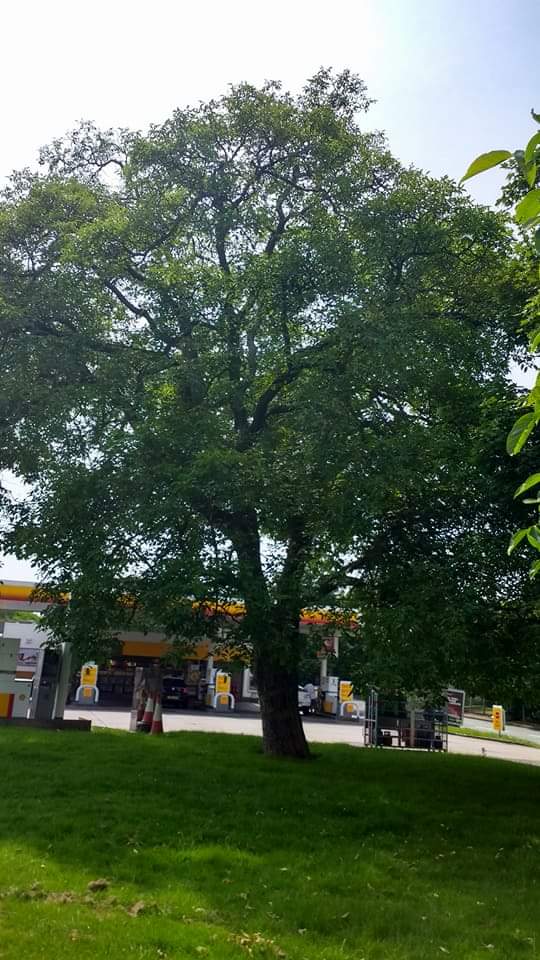
In 1935, the site of the old gallows was described as being ‘preserved and indicated to passers-by with an inscription recording its ghastly use in bygone days’. The area has developed significantly since then, but I was told by Janice Greaves, former Mayor and current Sheriff of Lichfield, that the exact spot where the gallows stood is now marked by a walnut tree growing on the patch of grass alongside the garage. There has been some discussion about what form the gallows actually took, but there is evidence to suggest that there was a permanent structure to which the cart carrying the condemned convicts would be brought. In Aris’s Birmingham Gazette it describes how ‘On Friday Night last, Richard Dyott Esq, who lives near Lichfield was going home from thence, he was stopp’d near the Gallows by two Footpads, who robb’d him of five Guineas, and in the Scuffle he lost his hat’.
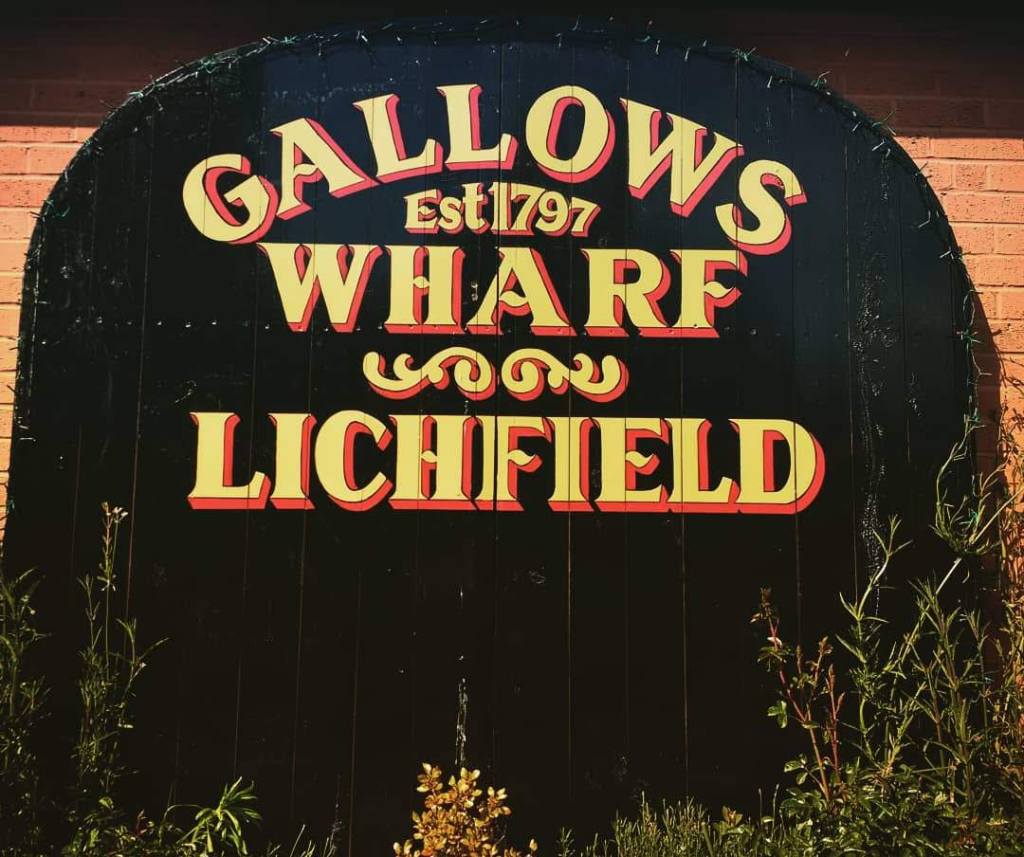
My plea to you this Halloween is to keep your eyes on Ebay for Neve’s mourning rings and the silver salver. If however you decide to take a wander over to Gallows Wharf in search of Richard Dyott’s hat, please be warned that an ex-executioner from centuries past appears to have been sentenced to linger at the spot and you may well feel a push from behind as he attempts to dispatch you to your doom.
I recently visited the Staffordshire village of Colwich. It’s a lovely place but as is my wont, the outcome of the outing is a tale of murder and mystery.
We start our story in May 1977, when a member of the congregation of St Michael’s and All Angels took a walk through the churchyard and almost disappeared into an unmarked vault. The vicar at the time was the daring David Woodhouse who decided to descend into the dark depths to discover what, or who, was down there. Inside the vault, he found two skeletons and whilst there is nothing unusual about bones beneath a graveyard per se, there was something not quite rite about these burials. Skeleton One lay in a coffin and Rev Woodhouse mentions two odd things about it. Firstly, a small hole in the skull and secondly, the finger bones were disarticulated suggesting that this may have been a victim of both murder and grave robbery. The strangeness doesn’t stop there though as the remains of Skeleton Two are described as surrounding the coffin containing the first. One of the keywords for me here is ‘remains’, suggesting to me that this corpse may not have been complete when it was interred here.
The vicar’s theory was the vault was built for a wealthy family who fell on hard times and were then unable to afford a memorial to the two individuals resting in peace (or more aptly in one case, pieces) within it. Everyone seemed satisfied with this explanation, the hole was bricked up and, as far as I am aware, no-one has ever thought anymore about it until I read about the mysterious vault and started doing a bit of digging that is…
Back now to 18th July 1773 and a woodland just outside of Stone, Staffordshire where John Challenor and his son, also John, are working together. The two men have just eaten lunch when an argument flares up and John Jnr throws the iron cooking pot at John Snr’s head. It’s thrown with such force that once of the metal legs pierces the older man’s skull. He dies three days later and his son is sent to gaol for parricide. On 23rd August 1773 John Challenor Jnr is executed and his body taken down and hanged in chains at a spot near to the scene of his crime.
I don’t think you need to be DCI Barnaby to work out the links between this high-summer murder and the skeletons below ground at Colwich. The hole in the skull of Skeleton One clearly corresponds with the fatal injury sustained by John Challenor Snr. What’s more, the lack of a coffin together with the seemingly jumbled and incomplete nature of Skeleton Two is in keeping with a body that’s been gibbeted and later cut down and hastily buried, although not seemingly not quickly enough to prevent time, the weather or macabre souvenir hunters from starting to take their their toll. Perhaps it was the Challenors, who not only had a very literal reminder of the skeletons in their family closet displayed for all to see at a spot near Stone, but who may also have been concerned that without a Christian burial of sorts, their relative would not be resurrected to heaven but condemned to eternal damnation. Was it enough to save John Challenor’s soul though?
Thanks to information provided by Fulford Parish Council I believe I have located the place where his body was hung in chains. On their website they say ‘On the left of Hilderstone Road when travelling towards the ‘Wheatsheaf’, and just a short distance from Spot Acre cross roads, is a stand of Beech trees known locally as ‘The Rookery’. According to local lore the gibbets used to stand here, hence the overgrown lane which runs down past Idlerocks to Moddershall being called Gibbets Lane’.
Now, as regular readers of the blog will know, I love ghost stories but if you Scooby Don’t, then stop reading now as the next part of this story requires a little belief in such matters. You see, Stone lore also tells of a boggart which haunts these parts. And what on earth is a boggart I hear the non-northerners amongst you ask? Well, you know us Lichfield people love a dictionary and so I’ve looked it up in the OED and found the following definition: “A spectre, goblin, or bogy; in dialectal use, esp. a local goblin or sprite supposed to ‘haunt’ a particular gloomy spot, or scene of violence”.
Could the the boggart be the unquiet spirit of John Challenor? I mean it doesn’t get much more gloomy than having your corpse displayed on a gibbet does it? If the naysayers are still with us at this point I’m sure they’re saying, well, nay way but I’m tempted to head over there to see if I can find any more answers. In 1933, a Mr P C Dutton of Stone told members of the North Staffordshire Field Club that the boggart took the form of a dog or a calf and so this may involve me quizzing the local cows and canines to see if they’re the spectral incarnation of an 18th century murderer. More Doctor Doolally than Doolittle I know.
On a slightly more serious note, I am increasingly keen to not only share the stories which give us a sense of place but to bring something along to the party as well. I hope my version of events has given people some food for thought but as we know from the iconic Marmite, when it comes to a Staffordshire legend there is always a risk that some people might hate it 🙂
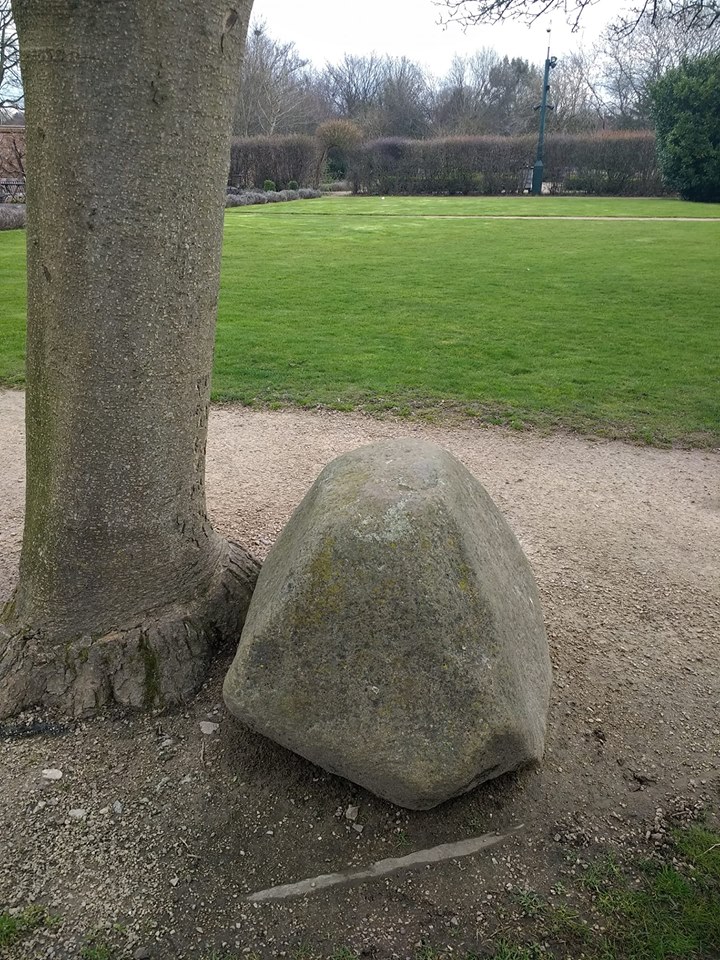
My friend thinks glacial boulders are rubbish and that this one on Cannock Chase is Staffordshire’s answer to Craggy Island’s stone of Clonrichert. She isn’t alone. Some years ago, the Express and Star included it in a list of top ten terrible attractions describing it as ‘just a medium sized rock on a plinth’.
A medium sized rock on a plinth
Surely, though a landmark as well known as the Chase’s Glacial Boulder must have a story or two to tell? There’s often a lot of mythology connected to lithology. The Gilbert Stone in Birmingham was taken there by a giant to mark his territory and the Webb stone in Bradley was nicked from the church by Old Nick who wanted to use it to rebuild hell and women who take it a (rock) cake on Halloween get to see their future spouse.
A medium sized rock not on a plinth (aka The Gilbert Stone)
Well I have found this….The boulder was found in a pit in Brocton around 1950 and was originally placed at the top of the wonderfully named Pudding Hill at Milford by the Association of the Friends of Cannock Chase. In September 1954, it was pushed off the hill by a gang of wrong ‘uns and so the friends group decided to cement it to the top of Spring Hill, which at 450ft above sea level was a fair bit higher than Pudding Hill. This did not prevent the boulder from going roly-poly again though. In May 1958, it was found at the bottom of Spring Hill having been chipped from its concrete base. Five men from the area were later arrested and fined £13 9s 2d each. The Birmingham Post and Gazette reported that they had, perhaps unsurprisingly, come up with the idea in the pub. “We only did it because it was a challenge and they said it could not be moved”. Apparently it took them four hours. It’s now located in a car park not on a hill which makes it easy to visit but do try not to get as excited as the couple spotted getting erotic on top of the erratic one boxing day.
I don’t think I’ve quite succeeded yet in my own challenge to convince my friend that Cannock Chase’s rolling stone is a rock star, but I’ll keep chipping away.
I know. It’s been a while. You don’t know what I did this summer but I’d quite like to confess. There have been visits to gibbets, wells, shrines, mausoleums, derelict churches, ruined abbeys, tunnels and places with names which sound a bit rude. It’s less about serious history and more about a series of stories told by the landscape that surrounds us. Sometimes you have to listen very carefully to hear them (especially over the sound of my friend Jacky eating crisps), sometimes they shout in your face via an interpretation board funded by the parish council. If you’re sitting comfortably*, then I’ll begin by sharing** evidence from some of the crime related activities we’ve been getting up to.
*unlike another friend Eddie the time we visited an old priory and had to stick him in the back of a van
**unlike Jacky with her crisps
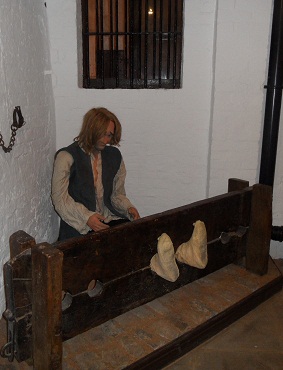
Once upon a time, there was a little girl called Katie. When she grew up she wanted to be Mavis Cruet from Willo the Wisp. For a short while, she lived in Coleshill in North Warwickshire and almost everyday she’d walk past the town’s pillory. At the time she didn’t realise that it was a rare example combining three methods of corporal punishment i.e. stocks, a pillory AND a whipping post, and was last used in 1863, but she was curious all the same.
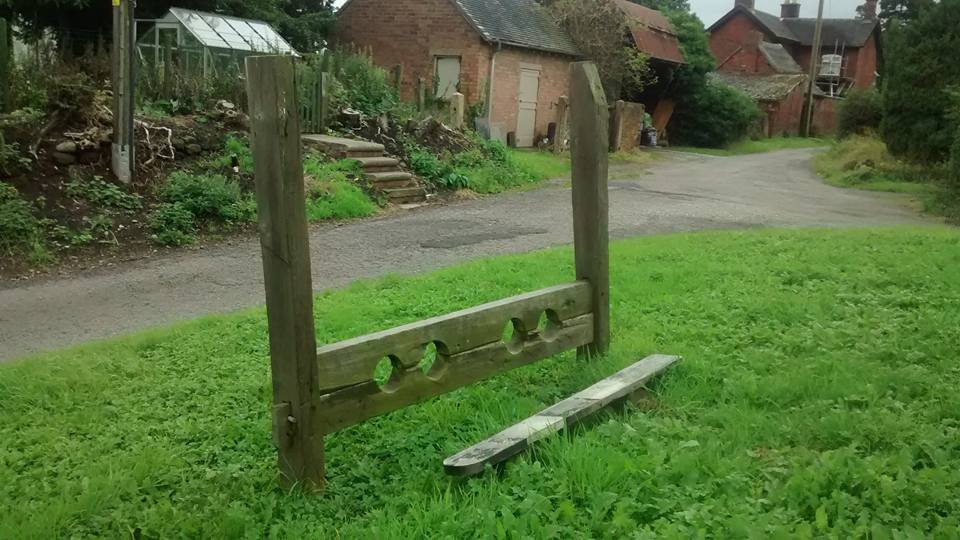
Many years passed and in August 2016, Katie was visiting her parents in Stone in Staffordshire when she turned off too early towards Hilderstone. This was in no way down to her lack of navigational skills, there was a tree obscuring the ‘Hilder’ bit of the sign. Around the corner was a patch of grass with a set of stocks.
Stocks just after Hilderstone turning on A51 near Stone
Despite extensive research (doing a google search), she couldn’t find any information on them. Katie hadn’t grown up to be Mavis Cruet, but she had continued to be curious. How many more sets of stocks were there around the country? Had anyone ever recorded them? Who had been publicly humiliated and punished here and what were the reasons? Our towns and cities are filled with monuments to the so-called great and good of society. Are these our monuments to those considered petty and bad who lived on its fringes? And so, after musing over these thoughts with friend Patti who already had a knowledge of and interest in this area, they decided to set up a discussion group called ‘Offending Histories’, with the aim of finding remaining physical evidence of crime and punishment across the Midlands and telling the sort of stories in which no one lives happily. Ever after or otherwise.
In just a month, we’ve already started to record a fascinating range of sites and objects. Here are some samples of the more local examples.
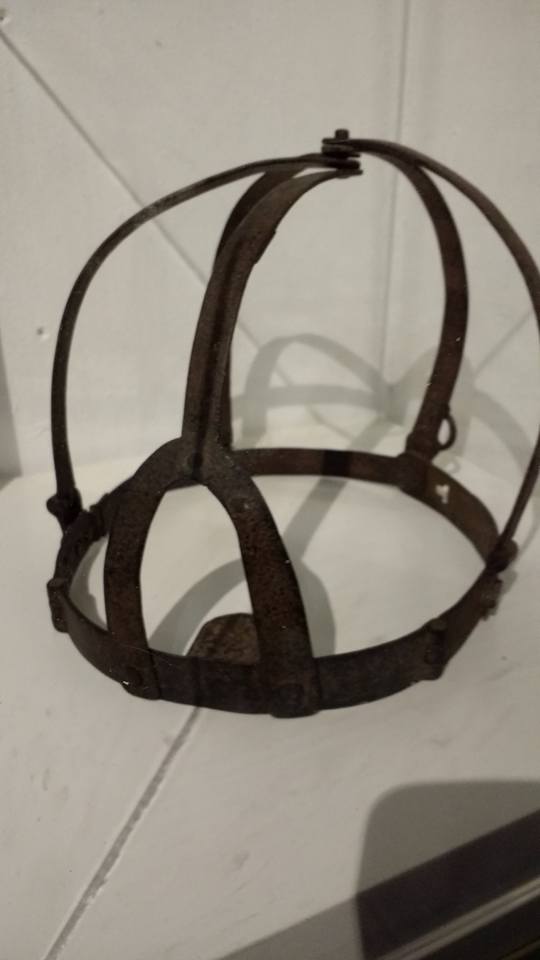
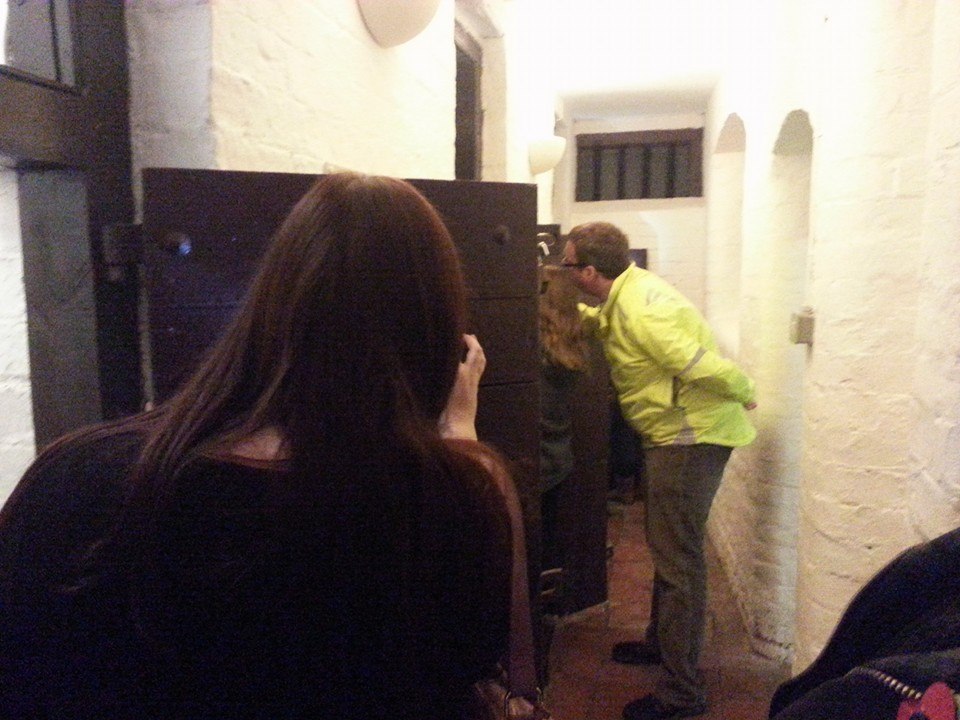
The old gaol cells in Lichfield have an example of a scold’s bridle or brank on display. There’s an excellent article from the Museum of Witchcraft and Magic exploring the history of these vile items here. Of particular interest is the following reference, “In 1789, the brank was used in Lichfield. A local farmer enclosed a woman’s head “to silence her clamorous Tongue” and led her round a field while boys and girls “hooted at her” “Nobody pitied her because she was very much disliked by her neighbours.”
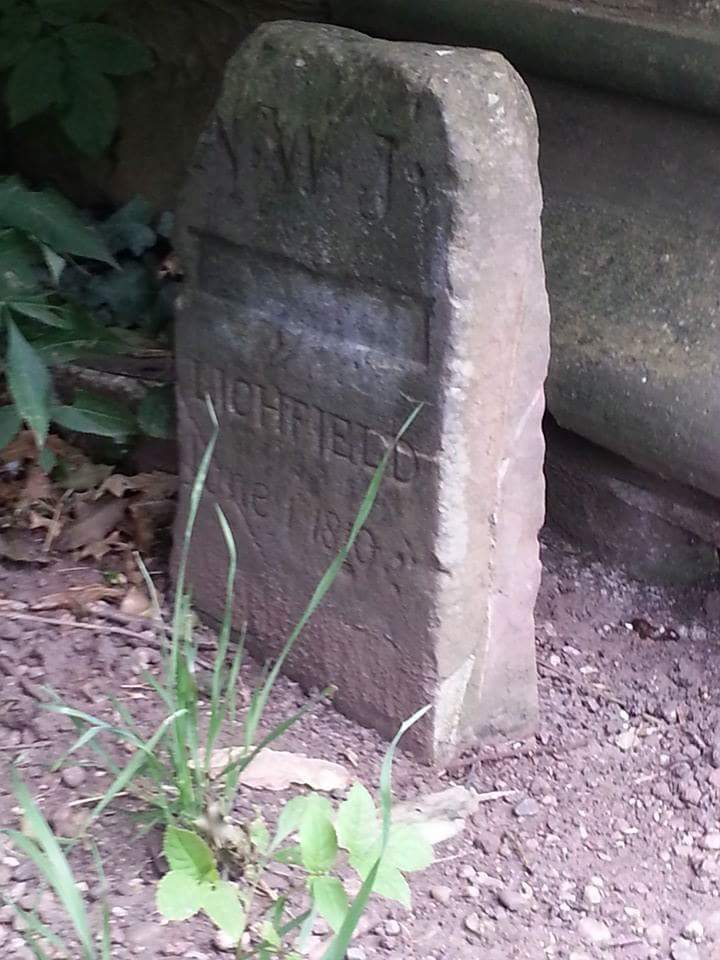
Outside St Michael’s church is the relocated headstone of the last three men to be executed in the city. On 1st June 1810, Neve, Jackson & Weightman were taken by cart from the city gaol & publicly hanged for forgery at the city gallows (where Tamworth St, Upper St John St & the London Road cross). Interesting that at some point, the word ‘hanged’ appears to have been obliterated from the monument. Although this appears to be the only marker to executed criminals buried here, the church register records the names of others e.g. John Wilson on Sept 23rd 1583 and, John Walle and Robert Hodgson described as prisoners executed and buried on 13 October 1587.
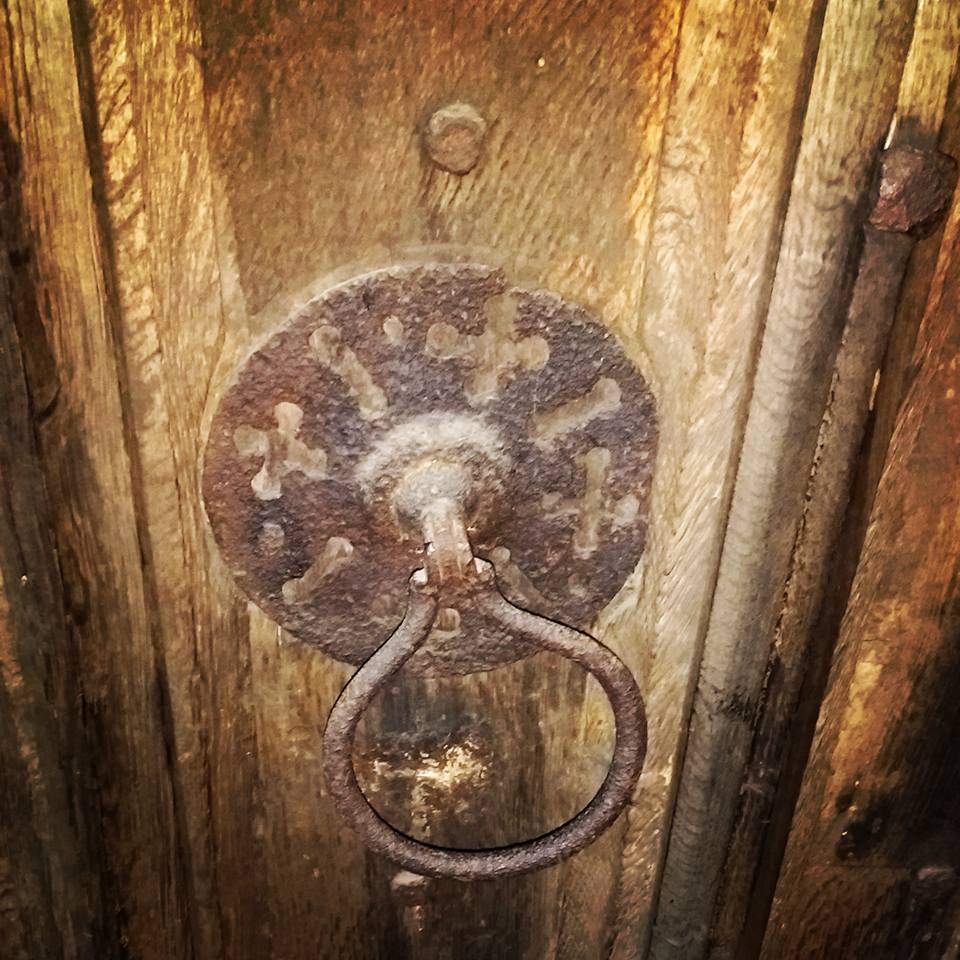
At St Peter’s in Elford, Patti pointed out this example of a sanctuary knocker on a door dating to circa 1450AD. By touching the knocker, a fugitive from the law could be given sanctuary in the church for a period of time (this seems to have been forty days which is a nice biblical number) . If they made it that far. One example given by Karl Shoemaker in his book ‘Sanctuary and Crime in the Middle Ages’ tells of Elyas, a chaplain imprisoned in Staffordshire to await trial for murder, who ‘killed the gaoler’s attendant, escaped from the prison & fled towards the church’. The gaoler & others from Staffordshire pursued him and cut off his head before he could reach the church’. Another example comes from Colton History Society – in 1270 Nicholas son of William De Colton stabbed Adam, son of Hereward in a brawl and fled to the church where he took sanctuary. Claiming sanctuary was officially abolished in 1623.
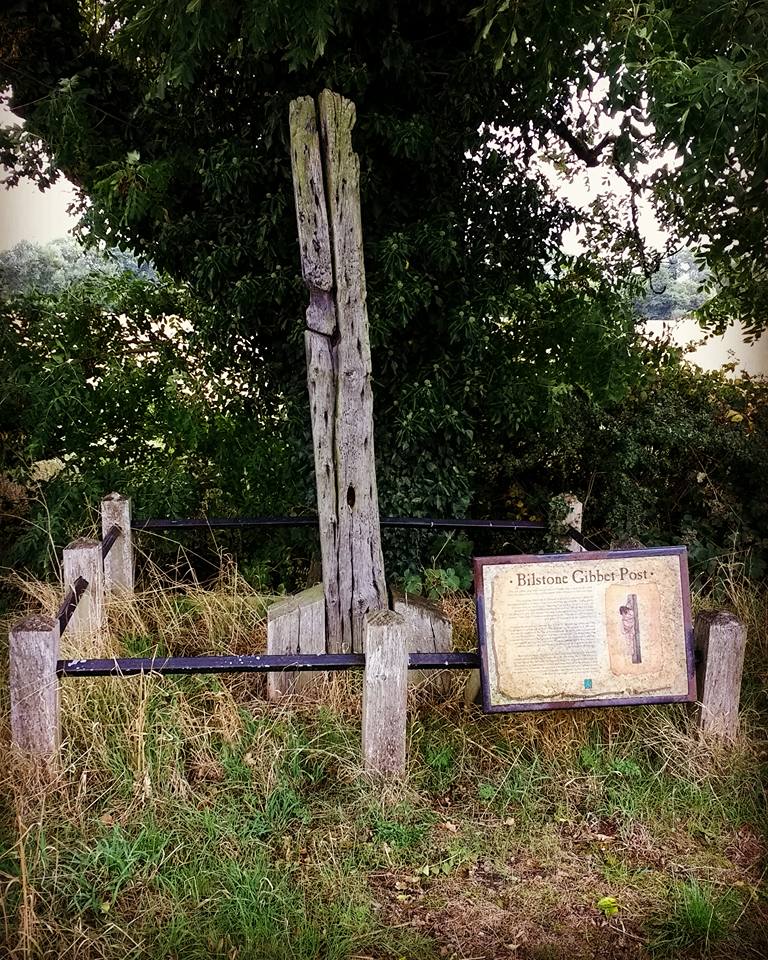
The Bilstone Gibbet Post, Leicestershire. Erected in March 1801 to display the body of local man John Massey, executed for murdering his wife Lydia and attempting to murder his step- daughter. Massey’s headless skeleton, wrapped in chains, remained hanging from the post for seventeen years, his skull apparently being used as a candle holder in a pub in Atherstone. In the early twentieth century, the post was a venue for religious meetings but today, there are rumours of more unusual behaviour taking place here.
Pillory outside the Cock Inn at Stowe by Chartley. Appears to have been relocated here at some point as not shown on early 19thc photographs of the pub
It is a dark subject at times but there are lighter moments too. Currently providing wry amusement is the question of how, and indeed why, was a seventeenth century cucking stool stolen from the church of St Edward at Leek? A meta-criminal mastermind at work? It’s very much an ongoing exploration and if you are interested or better yet, have something to contribute, and aren’t offended by an element of gallows humour, please do join our Offending History group here
The Lichfield Discovered gang will be back at the old Gaol Cells at Lichfield Guildhall this coming Saturday (21st February 2015) between 2pm and 4pm, to resume our quest to record the graffiti left behind by prisoners. There’s plenty of it, but we’re up against the ravages of time and liberal applications of varnish. We did manage to pick up one definite name on our last visit. John Lafferty who, judging by the reports in the Lichfield Mercury, appears to have been a serial offender from Sandford St in the late nineteenth century, scratched his name into one of the cell doors along with the words ‘7 days’, presumably the length of his stay…on that occasion.
The cells officially reopen to the public in April, and will then be open every Saturday between 10am and 4pm until September. Since 2012, over 7,000 people have visited and in order to continue to be able to give people access to this part of Lichfield’s history, Joanne Wilson, the city’s Museum and Heritage Officer, is recruiting a team of volunteers to welcome visitors to the cells, keep a record of visitor numbers, answer questions and provide information. You don’t need any previous experience just an interest in heritage, enthusiasm and the ability to smile when you hear, ‘You’re not going to lock us in, are you?’ for the twenty-seventh time that day. Each volunteer session usually lasts around three hours, but dates and times are flexible and you can do as much or as little as you are able to. It’s a great opportunity to get involved in the city’s history and to share it with all kinds of people – I volunteered a couple of years ago and welcomed local people, wedding guests, day trippers, and even someone who’d worked at the Guildhall for years without realising what was behind the red door at the end of the corridor.
If you would like to know more about volunteering, please contact Joanne on 01543 264 972 or via email at sjmuseum@lichfield.gov.uk. Alternatively, pop into the Samuel Johnson Birthplace Museum on Breadmarket St. You are also very welcome to join us on Saturday. And yes, we promise not to lock you in.
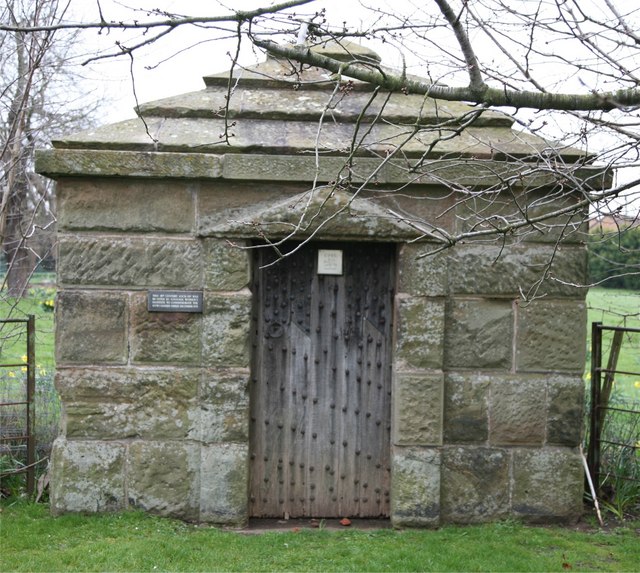
Gnosall’s lock-up dates to 1832 and was designed and built by local architect James Trubshaw of Great Haywood. It’s one of only four remaining in Staffordshire (1). Originally it stood at the junction of High Street, Brookhouse Road and Stafford Street but in the 1960s, Staffordshire County Council suggested that the building be moved to the county museum at Shugborough in order that the junction could be widened. Understandably, the Gnosall WI were keen that the lock-up remain in the village and set about securing a piece of land where it could be re-erected. As if to prove the council’s point about the road being a bit narrow, a lorry ran in to it in 1969 but fortunately didn’t cause enough damage to prevent it being rebuilt on its current site on Sellman St in 1971.
Gnosall lock-up
Why was the lock-up built in Gnosall in the first place? The English Heritage Listing says ‘…as a result of rising unemployment and low wages, Gnosall was plagued by unrest and poaching…. with the threat of the Swing Riots, a widespread uprising by agricultural workers in southern England, spreading northwards, it was decided to build a lock-up’. In Stafford Borough Council’s Conservation Appraisal of the area, they attribute it to ‘rising unemployment, poaching and agricultural riots in the south’.
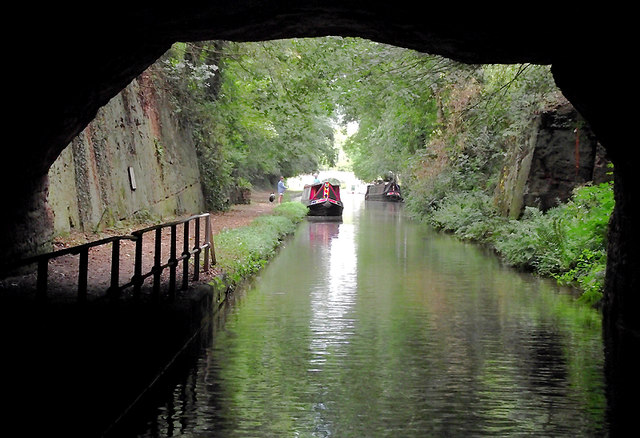
The arrival of canal navigators in the village may also have influenced the decision to build a lock-up. In November 1829, Aris’s Birmingham Gazette reported that two thousand labourers employed on the Birmingham and Liverpool Canal were living in the village (2). The Gazette suggested that the navigators were responsible for a spate of sheep and poultry thefts in the area and also reported that they ‘advanced from acts of midnight depredation to proceedings of a tumultuous and riotous description in the open day’. The most serious incident that I can find involving the navigators at Gnosall took place in March 1830 when it was reported that a labourer working on the canal was attacked in the Horseshoes pub at Gnosall by two men described as ‘navigators’, as they tried to steal his watch. A judgement of death was recorded against the prisoners, but their lives were spared (2). Apparently, these proceedings so alarmed the inhabitants of Gnosall and the neighbourhood that they applied for the appointment of a large body of special constables and were also ‘desirous that a small military force be stationed in the parish’.
Whilst some navigators may have found themselves on the wrong side of the law at times, the Truck System operated by some of their employers was nothing short of criminal. According to a report in the Staffordshire Advertiser in February 1830, ‘none of his Majesty’s subjects are more imposed upon by the infamous ‘Truck System’ than these said ‘navigators’ who are ostensibly earning large wages under their gaffers but instead of money they receive a ticket to a Tommy (3) shop where they are charged 8d per lb for cheese (which they might purchase with money in Stafford Market for 4d) and bacon, butter, beef, bread and coffee at extravagant prices. The master of the Tommy shop returns the gaffer five percent on the gross amount of his monthly bill’.
Sometimes it was not crime but death which brought the names of the navigators to the pages of the local press. Richard Barnett was injured by a quantity of earth falling on the lower half of his body and died as he was being conveyed home on a cart. In December 1830, the Staffordshire Advertiser reported on ‘The Navigator’s Funeral’. James Wheeler was helping to cut a tunnel through the solid rock when he fell to the bottom of Cowley Quarry in Gnosall and later died of his injuries. One hundred of his colleagues each contributed one shilling to ensure he had a decent burial and when they discovered his coffin had already been nailed shut, demanded the lid be removed to check nothing was amiss. Six of the men were under-bearers and the wives of six men supported the pall. Six overseers of the works followed as chief mourners and behind them came one hundred fellow navigators, two abreast. The report noted that whilst the mourners were not wearing black, they were decently attired and looked clean and respectable. The women wore their brightly coloured clothes, the men wore smock-frocks. During the burial, some of those assembled at the graveside expressed anxiety about the security of the corpse and assisted the sexton in filling up the grave. Afterwards, the mourners held a wake at the Roe Buck and the Advertiser expressed sorrow that many of them had stayed out until late and ‘finished up the solemnities of the day with a fight’. However, it also commended the navigators for their praiseworthy practice of not only subscribing towards the funeral expenses of their colleagues but of also clubbing together something out of their wages every week to support the sick amongst them.
We are all familiar with the canals that run through our towns and villages, but what do we really know about the men that worked on the Shroppie in Gnosall and elsewhere? Where did they live? Did they rent rooms or live in makeshift camps on the outskirts of the village? One of the newspaper reports shows that the men were accompanied by their wives, but what role in the community did these women play? Did any stay on after the completion of the canal? How much of what appeared in the papers was based on fact and how much was based on rumour and reputation? The navigators are part of our history but for the most part we seem to have cast them in a peripheral role as hard-working, hard-drinking, trouble-making outsiders. We need to dig deeper than that.
Notes
(1) The others can be found at Alton, Stafford and Penkridge. References to other lock-ups in Staffordshire appear in documents and newspaper reports but without further research it’s unclear whether these refer to purpose built structures such as those at Gnosall, or rooms in other buildings used as lock-ups. I understand that sometimes rooms were attached to public buildings such as the town hall and in other places there were rooms in some public houses which were used as lock-ups. This is not to be confused with lock-ins.
(2) I understand that this seemingly confusing sentence handed out by the judge related to the Judgement of Death Act 1823, where judges were given the discretion to pass a lesser sentence on the two hundred or so offences which carried a mandatory death sentence but still had to record a sentence of death.
(3) Tommy was a word for food.
(With thanks to Cllr Kenneth Ingram, Norman and Sheila Hailes and the other residents of Gnosall for their warm welcome and for showing us around the village on such a cold and damp day, More to follow!).








 Lichfield Lore