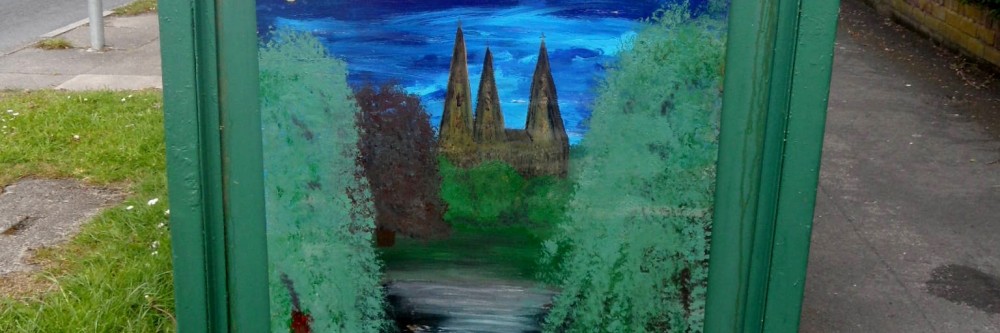
Lady Godiva was one of my childhood heroes along with Gladys from Hi-di-Hi and Hazel McWitch from Rentaghost. If I hadn’t already given my age away by referencing a Simply Red song I certainly have now.
Imagine my joy then when I discovered that my OG Lady G (see, I’m still down with the kids) is practically a neighbour of mine, separated by just six miles and 950 or so years. Well, in the summer at least. Her association with Coventry, where she rode naked through the streets to persuade her husband Earl Leofric to reduce the burden of taxation on the townspeople is well documented in art, literature and, as previously mentioned, an absolute banger from Mick Hucknall. Far less well known is the fact that the Saxon power couple had a holiday home in Staffordshire.

Leofric died at his Kings Bromley estate in 1057 and was buried at St Mary’s Priory and Cathedral in Coventry. Where was the Lady laid to rest though?. According to the chronicler William of Malmesbury, Godiva was buried alongside her husband after her death ten years later but the Chronicle of Evesham Abbey claims she was laid to rest in, perhaps unsurprisingly, Evesham Abbey. Until any hard evidence turns up to the contrary I think we can also entertain the local legend that she is buried beneath the eponymous churchyard cross at All Saints, Kings Bromley. Samuel Lewis makes the claim in his 1848 book, ‘A Topographical Dictionary of England’ that, ‘Leofric, the husband of the famous Lady Godiva, died here in 1057; and she was herself buried here’ and in Pigot’s Directory of 1842 it says, ‘The church, dedicated to All Saints, is a neat structure and contains the remains of Lady Godiva’.
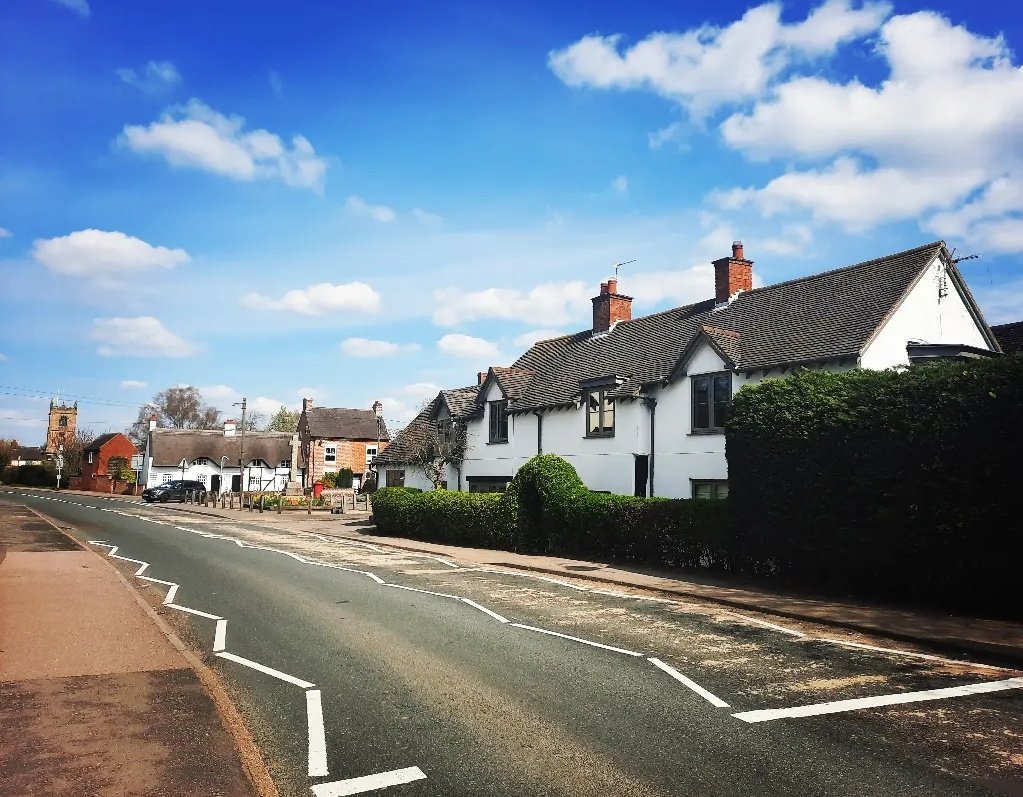
Along with the question of what happened to Godiva after she died, the location of where she and Leofric lived is also a subject for speculation. A half timbered and thatched building in the village known as ‘The Bungalow’ was used as a tearooms in in the early 20th century. A brass tablet on one of its beams made the bold claim that the timber had been take from Godiva and Leofric’s residence which had stood previously on the site. In 1923, a spark from a Staffordshire County Council steamroller set fire to the thatch and the building went up in flames. Until very recently I had assumed this meant that any possible links to Lady G had been lost but someone on Facebook posted a photo of both the beam and the plaque pronouncing it to be part of the palace.
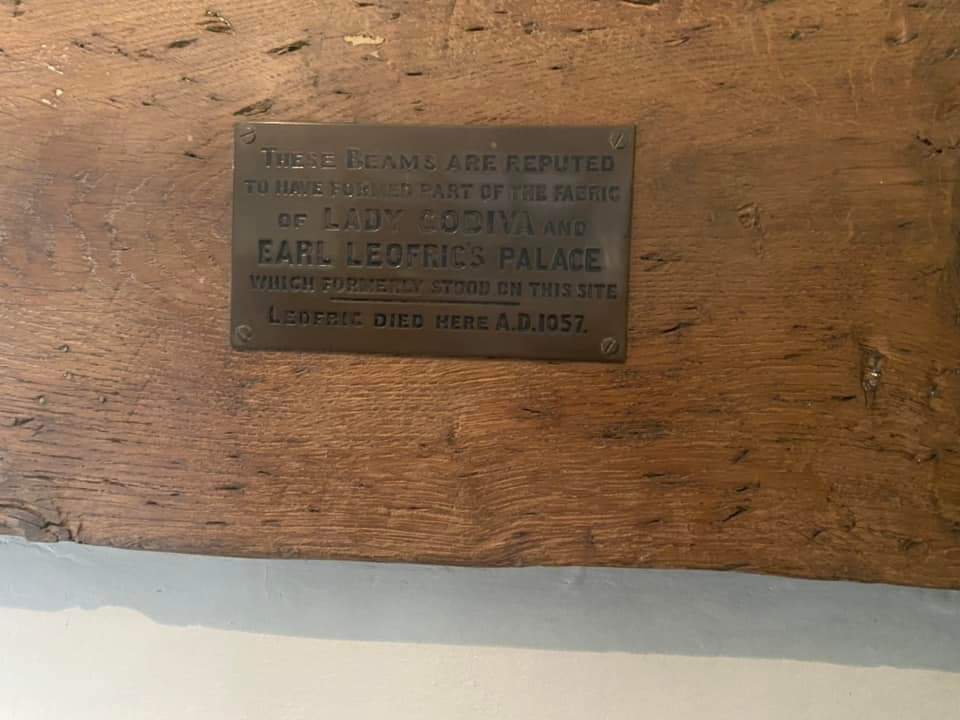
(c) David Brown
Is this just another myth to add to the legends surrounding one of history’s most compelling characters or could there really be a tangible link to her life in someone’s living room in Staffordshire?
Sources:
Rugeley Times 13th March 1976
Lichfield Mercury 3rd July 1903
Tamworth Herald 30th June 1923
Birmingham Gazette 26 June 1923
 Lichfield Lore