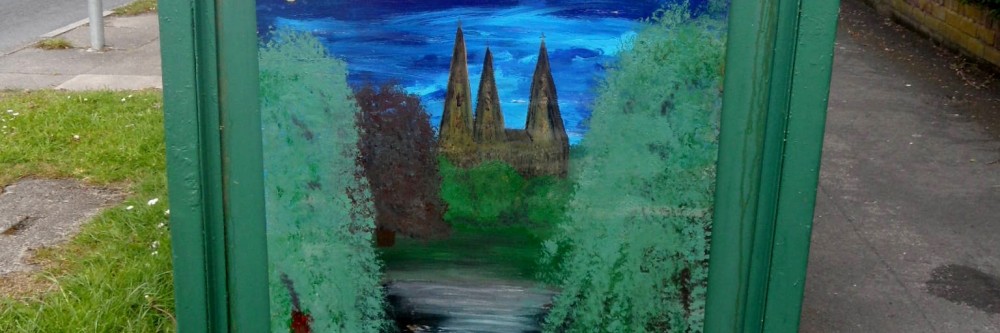
In April 1856, William Palmer was languishing in prison awaiting trial for the murder of his best friend John Cook at the Talbot Arms. There was also a strong suspicion he had poisoned several members of his own family and rumours relating to Rugeley’s most infamous son were in plentiful supply. As The Crown debated whether his notoriety would prevent a fair hearing at Stafford, the Birmingham Mercury announced his house was soon to open as an inn known as ‘The Strychnine Arms’. Elsewhere reports of Palmer’s death were greatly exaggerated.
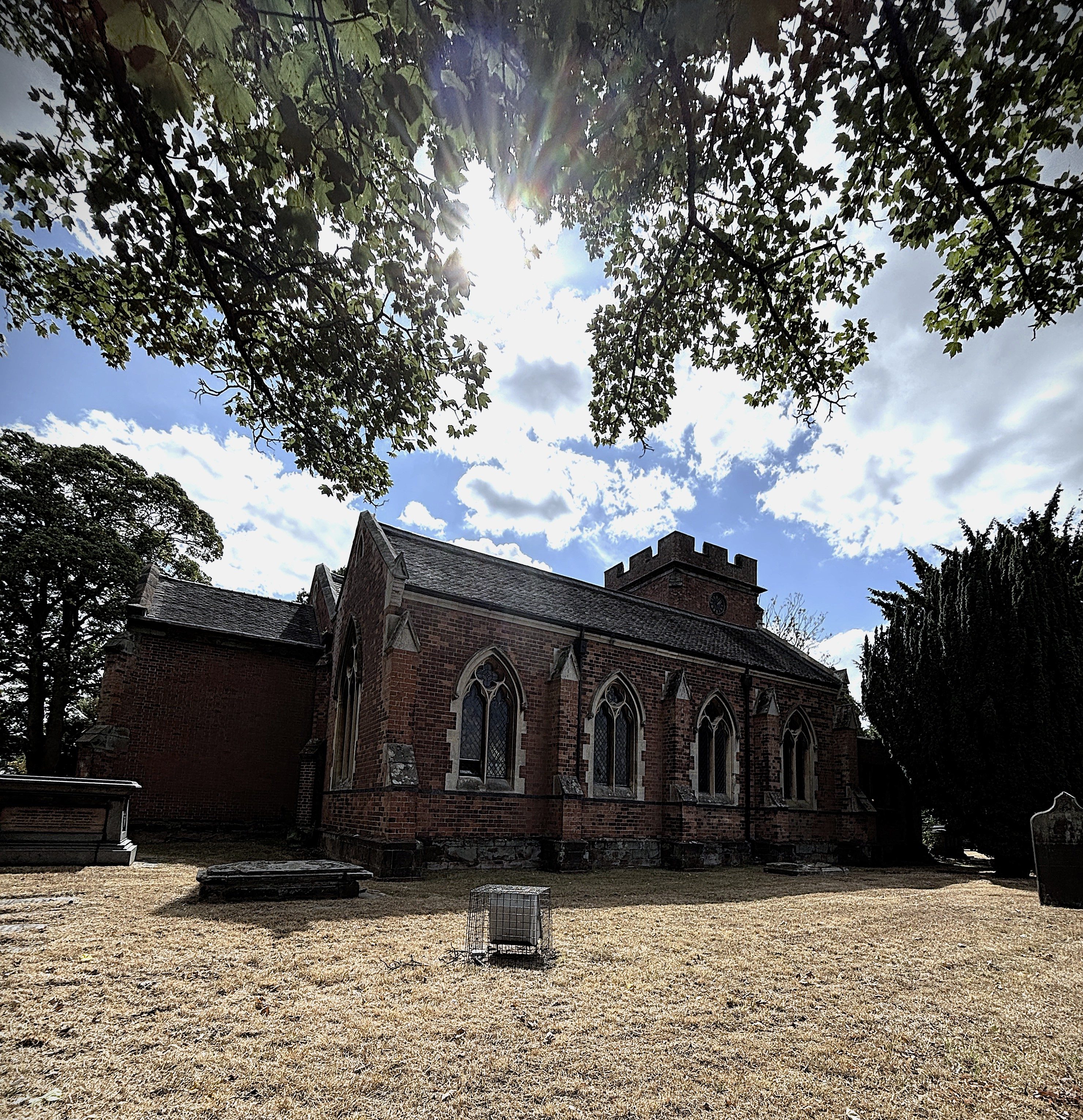
As Palmer awaited his fate, The Staffordshire Advertiser reported that ‘considerable excitement has prevailed in the neighbourhood of Burntwood, near Lichfield…in consequence of a rumour that the body of a female was to be exhumed, after an interment of twelve months, some suspicion having recently arisen that death had been occasioned by other than natural causes’. The female in question was Catherine Ashmall of Edial, a farmer’s wife who had died in March 1855.
A few months after the funeral, the newly widowed Joseph Ashmall had married his servant Sarah. This may have raised a few eyebrows in Edial but it seems to be the absence of a medical certificate stating the cause of Catherine’s death which persuaded the Coroner, William Webb Ward, and the Chief Constable of the County that a crime may have been committed. Both men wrote to the Home Secretary, Sir George Grey, who ordered that an inquest should be held on the body of Catherine Ashmall without delay.
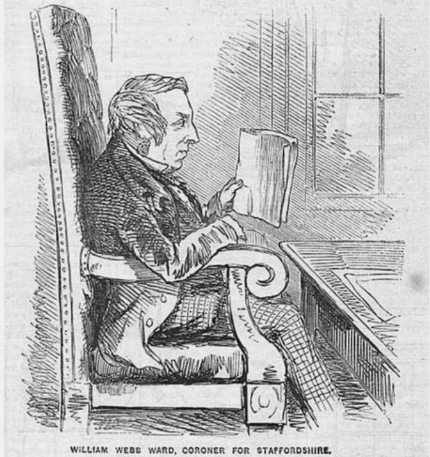
The grim task of exhuming the body took place at 7 o’clock in the morning on Friday 4th April 1856 at Christ Church. The Reverend Poole left soon after authorising the opening of the grave and who came blame him for not wanting to stay and bear witness to such a ghastly spectacle. Under the watch of churchwardens, John Tudor and Edward Woolley, a group of police officers raised the coffin from the brick built vault which should have been Catherine’s final resting place. They then took her to a barn at her former home at Edial Farm and kept watch over the corpse.
At ten o’clock a jury of 23 gentlemen was sworn in at The Star Inn and then taken to see the body in the barn which was ‘in a very advanced state of decomposition, almost every trace of personal identity being obliterated’. On re-assembling at the inn, where I imagine several stiff drinks were in order, the Coroner announced an adjournment was necessary to allow a post-mortem to be carried out on the corpse. The unfortunate physicians chosen to undertake the examination were Dr Monckton of Rugeley and Mr Welchman, a Lichfield surgeon. Mr Major Butler Morgan was also to be present on behalf of Joseph Ashmall. The post-mortem took place at 2pm during which Dr Monckton recommended the viscera should be analysed. The internal organs were taken out and sent to Professor Taylor at Guy’s Hospital and then what remained of Catherine Ashmall’s remains were placed back in her grave at Christ Church.
On 21st April the inquest reconvened and a series of local witnesses appeared to tell of Catherine’s delicate health prior to her death and to vouch that Joseph had been a kind husband who always behaved well to her. Dr Monckton advised that the cause of death was diarrhea which may have arisen from natural causes or the administration of medicine or poisonous substances. However, the final evidence presented to the jury was the analysis carried out by Professor Taylor which proved that no poison was present in the stomach or intestines of Catherine Ashmall and that death had been from natural causes.
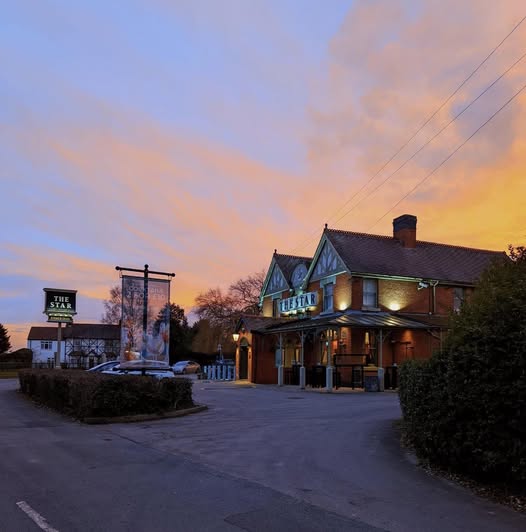
The verdict was met with cheers by the friends of her husband who had gathered at The Star. It was reported that the rumours of foul play had originated from a relative with malicious feelings towards Joseph Ashmall. One newspaper reports that this person was present in the pub as the verdict was revealed and only avoided a ducking in the horse trough after the landlady intervened.
When researching the events at Edial, I was astonished to find that another Ashmall had been falsely accused of murder around half a century earlier. In 1794, Thomas Ashmall of Farewell Hall was accused of poisoning Elizabeth Scaratt who had dropped down dead in his hay field. On this occasion there was no doubt that this was nothing more than defamation and no inquest or disinterment was required. Instead Isaac Startin of Ashmoor Brook, who had made the malicious allegation, was told to take out an advert in several local newspapers publicly begging forgiveness and admitting his motivation was bitterness that the license for his beerhouse in Chorley had been blocked by Ashmall.
There is one more case from Burntwood which rivals even that of The Rugeley Poisoner when it comes to notoriety. Perhaps we will return to this toxic topic another day to talk about Sarah Westwood, the last woman to be hanged in Staffordshire, who swore she was innocent right until the very end
Sources
County Advertiser & Herald for Staffordshire and Worcestershire Saturday, 12 April 1856
Staffordshire Advertiser Saturday, 5 April 1856
Staffordshire Advertiser Saturday, 12 April 1856
London Evening Standard, Tuesday, 22 April 1856
Birmingham Daily Mercury, Tuesday, 22 April 1856
 Lichfield Lore